
2027 What Can You Do with a Business Marketing Degree: Costs & Job Opportunities

Co-Founder and Chief Data Scientist
A business marketing degree is for students and working professionals who want to understand how companies market products, services, software, equipment, and solutions to other organizations. Unlike consumer marketing, business-to-business marketing often involves longer buying cycles, larger contracts, multiple decision-makers, and a stronger reliance on research, sales alignment, and measurable return on investment.
This matters in 2026 because employers are struggling to find marketing professionals who can combine strategy, analytics, digital execution, and business fluency. A 2026 Robert Half analysis reports that 45% of marketing heads found it harder to hire skilled professionals than the year before, and many organizations are trying to fill these roles quickly. A business marketing degree can help you build the specialized knowledge employers are looking for, especially if your program includes market research, data analysis, digital marketing, marketing technology, and B2B sales strategy.
This guide explains what a business marketing degree covers, how much it may cost, which jobs it can lead to, what salary ranges to expect, how degree levels compare, and how to decide whether this major is a practical fit for your goals. It also connects business marketing to related options such as a highest-paying college majors list, digital marketing programs, MBAs, certifications, and online learning paths.
Quick answer: What is a business marketing degree and is it worth it?
A business marketing degree prepares students to promote, sell, and position products or services for organizations rather than individual consumers. It usually covers marketing strategy, economics, market research, data analysis, digital marketing, sales, public relations, and business fundamentals. It can be worth considering if you want a career in B2B marketing, market research, digital strategy, product marketing, account-based marketing, or marketing management.
The degree is not automatically worth it for everyone. Its value depends on program cost, accreditation, internship access, transfer credit policies, your ability to build a portfolio, and whether the curriculum teaches current tools such as analytics, marketing automation, SEO, paid media, CRM platforms, and campaign measurement. Students comparing programs should look beyond tuition and ask whether the degree leads to practical projects, employer connections, and skills that match real job postings.
Business Marketing Degree Table of Contents
- What is a business marketing degree?
- Cost of Business Marketing Degree
- Business Marketing Degree Jobs
- Types of Degrees in Business Marketing
- Business Marketing Degree Requirements
- How can an advanced doctoral degree boost your business marketing career?
- How can an accelerated online business degree advance my marketing career?
- Can a low-cost online MBA complement your business marketing degree?
- Majors Related to Business Marketing
- How do emerging technologies shape business marketing education and career prospects?
- How can professional certifications and advanced degrees elevate your business marketing career?
- How can real-world projects and internships boost career readiness?
- How can interdisciplinary programs boost your business marketing skills?
- How does business psychology influence marketing strategies?
- How can networking enhance your success in business marketing degree program?
- What are the most affordable online social media marketing degree programs?
- What is the return on investment of a business marketing degree?
What is a business marketing degree?
Business marketing, often called B2B marketing, business-to-business marketing, or industrial marketing, focuses on marketing to companies, agencies, institutions, and other organizations. The buyer is not usually one person making an impulse decision. In many B2B settings, purchases are reviewed by executives, procurement teams, technical specialists, finance departments, and end users.
That difference changes the work of the marketer. B2B marketing often requires stronger research, clearer business cases, more technical messaging, and closer coordination with sales teams. A business marketing student learns how to identify target accounts, understand buyer needs, position a product or service, communicate value, and evaluate campaign performance.
A business marketing degree overlaps with general marketing and digital marketing degree programs, but it puts more emphasis on organizational buyers, business strategy, analytics, relationship management, and measurable revenue impact. Common coursework may include:
- Marketing strategies
- Economics
- Market research
- Data analysis
- Sustainable marketing
- Digital marketing
- Public relations
Business marketing vs. general marketing vs. digital marketing
| Path | Main focus | Best fit for students who want to | Typical skills emphasized |
| Business marketing | Marketing products and services to companies and institutions | Work in B2B strategy, account-based marketing, product marketing, sales enablement, or market research | Market research, buyer analysis, sales alignment, business writing, analytics, campaign strategy |
| General marketing | Broad marketing principles for consumer and business audiences | Keep career options open across industries and marketing functions | Branding, promotion, consumer behavior, communications, pricing, marketing planning |
| Digital marketing | Online channels, platforms, tools, and campaign performance | Specialize in SEO, paid media, email, analytics, social media, or marketing automation | Analytics, content strategy, digital advertising, SEO, social platforms, conversion measurement |
What can you do with a business marketing degree?
A marketing degree can support a wide range of roles because organizations need professionals who can understand customers, communicate value, and generate demand. Business marketing adds a more specialized B2B lens, which can be useful for students who want to work with enterprise buyers, complex sales cycles, technical products, professional services, or large client accounts.
Marketing remains a large field of study. In the fall of 2025, there were 159,451 enrolled undergraduate students in business marketing in the United States, according to the National Student Clearinghouse Research Center (2026). Business was also the most popular undergraduate field in four-year institutions in fall 2025, with 1,712,412 enrollment.
Labor market projections also point to continuing opportunity. The U.S. Bureau of Labor Statistics reports an average of about 95,600 openings per year for advertising, marketing, promotions, public relations, and sales managers through 2034, with overall employment growth of 5.2%. For market research analysts, projected employment growth is 6.7% over the same period.
The strongest candidates are usually those who pair the degree with evidence of applied skill. Employers increasingly look for graduates who can use digital tools, interpret campaign data, write clearly, conduct research, understand buyer behavior, and explain how marketing supports revenue. The International Journal of Market Research article “The changing role of the marketing researcher in the age of digital technology: Practitioner perspectives on the digitization of marketing research” notes that future marketing researchers need both digital tool knowledge and the ability to interpret and deliver insights from digital data. The authors also point out that many challenges are not simply technical; researchers must update traditional interpretive skills for new digital data sources (Cluley, Green, and Owen, 2020).
Graduate study can broaden options in management, research, consulting, and higher education. A master’s or doctorate is not required for every marketing career, but it may help professionals pursue senior roles, research-heavy positions, or academic work. NACE reports that graduates with a master's in marketing drive business growth by 16% (NACE, 2026).
Cost of Business Marketing Degree
The cost of a business marketing degree depends on degree level, institution type, residency status, delivery format, program length, transfer credits, and required fees. As with any business degree, tuition is only one part of the total price. Books, software, technology fees, commuting, housing, lost work time, and internship requirements can also affect affordability.
Online options may reduce some expenses, especially for students who need to keep working. More schools now use learning management systems and other platforms, and more colleges are adopting learning management systems to support online or hybrid courses. Some online programs charge a flat rate regardless of residency, but students should confirm this directly with the school.
How much does a business marketing degree cost?
Online doctorate degrees in business and marketing are among the most affordable online doctorate programs available. Tuition can range from $500 to $1,000 per unit, with total tuition of about $32,000 to $66,000.
A master’s degree in business marketing can cost from $28,500 to $75,000 per year. Online master’s programs in marketing may range from $230 to $1,000 per unit, or about $7,000 to $36,000 in total tuition.
Undergraduate business marketing programs can cost approximately $8,000 at an in-state school and up to $24,000 at an out-of-state institution. Private and top-tier schools can cost more.
An online associate’s degree that prepares students for further business marketing study can cost from $8,000 to $19,000 in total tuition. On-campus associate’s programs can cost about $2,000 to $15,000 for tuition.
Short certificate programs can also cost several thousand dollars. Some affordable digital marketing certificates range from $1,500 to $9,600 depending on the school and number of units. Students who prefer a full credential can also compare digital marketing degree programs at different education levels.
The figures below are tuition estimates only and do not include living expenses, books, fees, software subscriptions, transportation, or other education-related costs.
| Degree level | In-State | Out-of-State | Private Non-Profit |
| Associate's Degree | $5,000 | $11,427 | |
| Undergraduate Degree | $8,027 | $23,793 | $35,830 |
| Graduate Degree | $10,796 | $18,718 | $28,430 |
| *Values are estimates. |
How to think about return on cost
A business marketing degree may be financially reasonable if the program helps you qualify for roles that require a bachelor’s or graduate credential, gives you access to internships or employer networks, and teaches skills you can show in a portfolio. It may be less attractive if the program is expensive, light on applied work, not properly accredited, or disconnected from current marketing tools.
Students often ask, “Is getting a business degree worth it?” The answer depends on fit and execution. A business marketing program can give you transferable knowledge in market dynamics, customer behavior, communication strategy, research, and analysis. Those skills are useful in marketing and adjacent fields, but the degree’s value increases when you combine coursework with internships, certifications, measurable projects, and strong writing samples.
Business Marketing Degree Jobs
Business marketing graduates can work in many settings, including technology companies, manufacturers, professional services firms, healthcare organizations, financial institutions, agencies, nonprofits, and education providers. Roles may focus on research, digital campaigns, events, product positioning, content, sales enablement, analytics, or management.
Is business marketing in high demand?
Marketing is considered a good major by many students because nearly every organization needs to attract, inform, convert, and retain customers. Demand is not evenly distributed across all marketing jobs, however. Employers are often most interested in candidates who can connect marketing activity to measurable business outcomes.
During the Great Reshuffle, 618,000 people left marketing jobs, according to a LinkedIn report. The same report pointed to a 374% growth in marketing jobs. These shifts increased competition for skilled marketers and pushed companies to rethink hiring, training, and retention.
Robert Half identifies in-demand positions such as digital marketing specialists, digital project managers, email marketing specialists, UX/graphic designers, marketing managers, product managers, and social media specialists. This is one reason students may pair a business marketing background with a degree in public relations, an internet marketing degree, or certificates in analytics, SEO, paid media, and marketing automation.
Account-based marketing is another important B2B area because it targets high-value accounts with customized messaging and coordinated sales and marketing activity. Many employers still lack deep internal expertise in this approach, which can create opportunities for graduates who understand both strategy and execution.
Research on B2B selling also shows why adaptability matters. In “Business-to-business selling in the post-COVID-19 era: Developing an adaptive sales force,” the authors explain that the COVID pandemic disrupted traditional sales processes and that sustaining B2B sales requires a more adaptive and hybrid salesforce (Lyngdoh, Paesbrugghe, Rangarajan, and Sharma, 2021). For business marketing students, that means learning digital communication, sales collaboration, buyer research, and campaign measurement is no longer optional.
What jobs can you get with a business marketing degree?
| Role | What the role usually involves | Skills that matter most |
| B2B Marketing Manager | Plans, launches, and evaluates marketing strategies designed to generate qualified business leads, support sales, and improve return on investment. | Business strategy, campaign planning, analytics, sales collaboration, communication, budgeting |
| Event Marketer | Coordinates trade shows, roadshows, product demonstrations, field marketing programs, and other events where companies meet prospects and clients. | Logistics, branding, vendor coordination, presentation planning, lead capture, follow-up strategy |
| B2B Digital Marketing Manager | Manages digital campaigns, measures performance, and uses online channels to support specific business objectives. | Digital advertising, SEO, analytics, content strategy, marketing technology, creative problem-solving |
| Market Research Analyst | Collects and interprets data about markets, competitors, customers, and buying behavior to guide business decisions. | Research design, statistics, data analysis, reporting, presentation, critical thinking |
| Marketing Coordinator | Supports campaigns, content calendars, events, reports, and day-to-day marketing operations. | Organization, writing, project management, basic analytics, collaboration |
What salary can you earn with a business marketing degree?
Salary depends on your role, employer, location, experience, seniority, industry, portfolio, and technical skills. A degree can help you qualify for opportunities, but it does not guarantee a specific salary.
The U.S. Bureau of Labor Statistics reports that the median annual wage for marketing managers was $161,030. For market research analysts, the median annual wage was $76,950. Management analysts earned a median salary of $101,190.
Other reported salaries include $93,259 for brand marketing managers and $72,512 for SEO specialists. Higher-level roles may pay more: a marketing research director can potentially earn $119,966, while a director of digital marketing can earn $123,711 yearly.
| Occupation or role | Reported salary figure | How to interpret it |
| Marketing managers | $161,030 median annual wage | Often requires experience, management ability, and strong campaign or revenue results. |
| Market research analysts | $76,950 median annual wage | Suited to graduates who enjoy data, research, surveys, competitive analysis, and reporting. |
| Management analysts | $101,190 median salary | Can fit business marketing graduates interested in consulting, operations, or strategy work. |
| Brand marketing managers | $93,259 | Typically involves positioning, messaging, campaign planning, and cross-functional coordination. |
| SEO specialists | $72,512 each year | Requires search strategy, content optimization, analytics, and technical familiarity. |
| Marketing research director | $119,966 potentially | Usually a senior research leadership role with heavier strategy and management duties. |
| Director of digital marketing | $123,711 yearly | Typically oversees digital channels, teams, budgets, analytics, and performance goals. |
Types of Degrees in Business Marketing
Business marketing is available through several academic paths. Some students choose a dedicated marketing major. Others start with business administration, communications, economics, or degrees in finance and then specialize through electives, internships, certificates, graduate study, or work experience.
The right degree level depends on your career stage. An associate degree may help you enter support roles or transfer into a bachelor’s program. A bachelor’s degree is a common entry point for many marketing careers. A master’s degree can support specialization or management advancement. A doctorate is mainly for research, teaching, executive thought leadership, or advanced consulting.
Business marketing degree options in 2026
| Credential | Average time to complete | Best for | Example roles |
| Associate Degree in Business Marketing | Two years | Students seeking a lower-cost starting point, entry-level support roles, or transfer credit toward a bachelor’s degree. | Marketing Coordinator, Event Coordinator, Market Research Assistant |
| Bachelor’s Degree in Business Marketing | Four years | Students who want broad preparation for marketing, sales, analytics, communications, and business roles. | Communications Specialist, Social Media Marketing Specialist, Marketing Coordinator |
| Master’s Degree in Business Marketing | Two years | Professionals seeking advanced marketing, analytics, strategy, or management responsibilities. | Marketing Manager, Market Research Analyst, Digital Marketing Account Manager |
| Doctoral Degree in Business Marketing | Five to six years | Professionals interested in academic research, university teaching, executive leadership, or specialized consulting. | Chief Marketing Officer, Chief Executive Officer, Assistant Professor |
| Certificate in Business Marketing | Days to months | Students or professionals who need targeted skills in a specific platform, tool, or marketing function. | Digital Marketing, Social Media Assistant, Copywriter |
Associate Degree in Business Marketing
Average time to complete: Two years
An associate degree introduces the foundations of marketing, business communication, sales, promotion, and digital channels. It can be a practical first step for students who want to reduce initial costs, test their interest in the field, or transfer into a bachelor’s program later.
Coursework may include B2B sales, marketing design strategies, publicity and promotion, marketing management, and social media campaigns. Students may move directly into entry-level roles or continue their education.
Entry-level jobs: Marketing Coordinator, Event Coordinator, Market Research Assistant
Bachelor’s Degree in Business Marketing
Average time to complete: Four years
A bachelor’s degree is the most common academic route for students aiming for long-term marketing careers. It provides more time to study business, research, digital marketing, buyer behavior, finance, communications, and analytics. Some schools offer accelerated formats that let students earn your bachelor’s in two years or three, depending on prior credits and program design.
Typical courses may include macroeconomics, principles of finance, B2B marketing, digital marketing, quantitative methods, managerial communications, public relations, and principles of marketing.
Students may see several degree labels, including a Bachelor of Business Administration with a marketing concentration, a Bachelor of Arts in marketing, or a Bachelor of Science in marketing. A BBA or BA often includes broader business and communication coursework, while a BS may place more emphasis on applied analysis, data, and analytics.
Entry-level jobs: Communications Specialist, Social Media Marketing Specialist, Marketing Coordinator
Master’s Degree in Business Marketing
Average time to complete: Two years
A master’s degree is usually designed for students who already have a bachelor’s degree and want more advanced preparation. It may help professionals move toward management, analytics, market research, product marketing, strategy, or consulting. Students who want academic or research careers often continue into a doctoral program after the master’s level.
Master’s programs often combine theory, applied projects, and research. Courses may include data collection and analysis, price setting, digital marketing, brand management, market research, marketing analytics, and marketing science. Many programs require a thesis, capstone, or research project.
Two common options are the MBA and the master’s in marketing. An MBA usually emphasizes management, operations, leadership, finance, and business ethics, while a master’s in marketing often focuses more deeply on marketing strategy, international marketing, research, and analytics. Many programs overlap, so students should compare actual courses rather than relying only on the degree title.
High-level positions: Marketing Manager, Market Research Analyst, Digital Marketing Account Manager
Doctoral Degree in Business Marketing
Average time to complete: Five to six years
A doctorate is the most advanced academic credential in marketing. It is best suited to professionals who want to conduct original research, teach at the university level, pursue senior leadership, or build high-level expertise in marketing theory and practice.
Doctoral students study advanced methodologies, research design, business theory, and specialized marketing topics. Requirements often include seminars, comprehensive exams, research papers, dissertations, and sometimes teaching responsibilities.
Coursework may cover consumer psychology, research methodology, sustainable marketing, marketing analytics, and quantitative marketing. A Ph.D. in marketing is usually more research- and teaching-oriented, while a Doctorate in Business Administration is typically more applied and executive-focused.
High-level positions: Chief Marketing Officer, Chief Executive Officer, Assistant Professor
Certificate in Business Marketing
Average time to complete: Days to months
A certificate can be useful when you need a specific skill quickly or want to strengthen a degree with practical training. Certificates may focus on Google Analytics, Google Ads, social media marketing, HubSpot email marketing, inbound marketing, analytics, or campaign management.
Certificates are not a replacement for every degree requirement, but they can help show employers that you know current tools and platforms. Choose programs from accredited institutions, reputable companies, or recognized industry associations such as the American Marketing Association.
Entry-level jobs: Digital Marketing, Social Media Assistant, Copywriter
Business Marketing Degree Requirements
Admission requirements vary by school, degree level, and program format. Always review the official admissions page for each program before applying. Requirements may differ for first-year students, transfer students, adult learners, international applicants, and graduate applicants.
Admission requirements
- Academic records: Most colleges ask for transcripts and proof of graduation. Undergraduate applicants may also be asked for SAT or ACT scores, depending on the school’s policy. Strong grades can help, especially for selective programs.
- Graduate testing: Some master’s programs may require the Graduate Record Examinations General Test or the Graduate Management Admission Test, although policies vary by institution.
- Prerequisite coursework: Programs may require certain business, math, statistics, economics, or writing courses. Graduate business marketing programs often expect a relevant undergraduate background or professional experience.
- Supplemental materials: Schools may request essays, interviews, recommendation letters, resumes, portfolios, internship experience, or evidence of professional achievement.
Skill requirements
- Clear verbal and written communication: Business marketers write emails, briefs, reports, campaign copy, sales materials, presentations, and research summaries. The ability to explain complex ideas simply is a major advantage.
- Research and analytical thinking: B2B marketers must understand markets, competitors, decision-makers, account behavior, and campaign data. Statistics and analysis courses are especially useful.
- Emotional intelligence: B2B marketing depends on trust, relationship-building, stakeholder awareness, and the ability to understand client concerns. Emotional intelligence helps marketers communicate with sales teams, executives, customers, and partners.
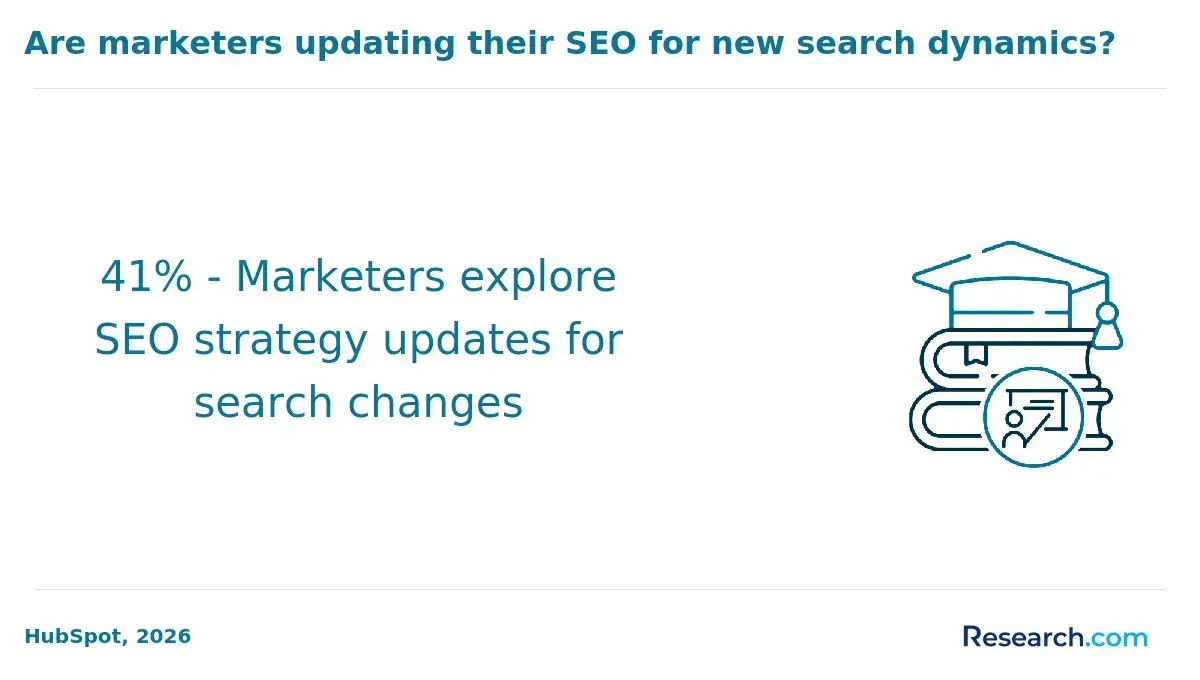
- Marketing technology fluency: Digital tools are now central to campaign planning and measurement. HubSpot (2026) reports that 41% of marketers constantly explore SEO strategies for search changes, which shows how quickly marketers must adapt to platform and search behavior shifts.
- Business judgment: Strong candidates understand pricing, revenue, customer lifetime value, competitive positioning, and how marketing supports business goals.
What to Look for in a Business Marketing Program
A well-known business school can be valuable, but reputation alone should not drive your decision. Many students can get strong outcomes from public, private, online, hybrid, or regional programs if the curriculum is current, the school is accredited, and the program provides practical experience. Students who need flexibility can also compare online marketing degrees with business or digital marketing concentrations.
Program selection checklist
| Factor | Why it matters | Questions to ask before enrolling |
| Accreditation | Accreditation can affect credit transfer, employer recognition, graduate admission, and financial aid eligibility. | Is the institution accredited? Is the business school or program accredited by a recognized organization? |
| Curriculum fit | The best program for you should match your target role, not just offer a generic marketing major. | Does it include B2B marketing, analytics, market research, digital marketing, sales, and strategy? |
| Applied learning | Employers want evidence that you can do the work, not only complete exams. | Are internships, capstones, client projects, simulations, or portfolio assignments required? |
| Faculty access | Support matters more in advanced programs where students complete theses, research, or dissertations. | What is the student-to-teacher ratio? How often can students meet faculty or advisors? |
| Career support | Marketing hiring often depends on networking, internships, referrals, and demonstrated skills. | Does the program offer employer partnerships, alumni networks, resume help, interview preparation, or job boards? |
| Total cost | Low tuition does not always mean low total cost, and high tuition does not guarantee strong outcomes. | What are the total tuition, fees, books, software costs, travel costs, and expected time to completion? |
Available specializations
Choose a program that supports the career you actually want. If you are interested in market research, look for statistics, analytics, survey design, and research methods. If you want corporate leadership, prioritize strategy, management, finance, and sales alignment. If you want digital roles, make sure the program includes analytics, SEO, email, paid media, content strategy, and marketing technology.
Accreditation
Accreditation helps show that a school or program meets recognized academic standards. It can also matter for transfer credits, graduate admissions, employer screening, and access to financial aid. Business marketing students may see accreditation or professional recognition from organizations such as:
- Accreditation Council for Business Schools and Programs (ACBSP)
- American Marketing Association (AMA)
- Association to Advance Collegiate Schools of Business (AACSB)
Student-to-teacher ratio
Large classes may be manageable at the introductory level, but smaller classes can be more useful in advanced coursework. Graduate and doctoral students often need more feedback on research papers, theses, dissertations, and applied projects. Some graduate schools report a 1:1 ratio, while others may have a 3:1 ratio in online or on-campus formats.
Financial aid options
Scholarships, fellowships, grants, employer tuition assistance, and financial aid can reduce the amount you pay out of pocket. Eligibility rules vary, so students should review deadlines and requirements early. Possible starting points include:
- Minorities in Government Finance Scholarship
- AMA Foundation Collegiate Scholarships
- National Business Association Scholarships
Common mistakes to avoid
| Mistake | Why it can hurt you | Better approach |
| Choosing only by school name | A famous name does not guarantee the right coursework, internship access, or career fit. | Compare curriculum, outcomes, projects, faculty support, and employer connections. |
| Looking only at tuition | Fees, books, software, housing, and lost work time can change the real cost. | Calculate total program cost before committing. |
| Ignoring accreditation | Unaccredited programs can create problems with transfer credits, graduate admission, and employer recognition. | Verify institutional and business program accreditation directly. |
| Assuming online means easier | Online programs still require time, writing, collaboration, deadlines, and self-management. | Ask about workload, weekly expectations, live sessions, and student support. |
| Graduating without a portfolio | Marketing employers often want proof of work, not just a transcript. | Save campaign plans, research reports, analytics projects, writing samples, and capstone work. |
| Assuming salary outcomes are guaranteed | Pay varies by role, location, industry, skills, and experience. | Use salary data as a benchmark, then research local job postings and employer requirements. |
How can an advanced doctoral degree boost your business marketing career?
A doctoral degree can help experienced marketers build deeper research, strategy, and leadership expertise. It is most useful for professionals who want to teach, publish research, lead advanced analytics or strategy functions, consult at a high level, or pursue executive roles where evidence-based decision-making is central.
Doctoral study goes beyond the typical master’s curriculum by emphasizing research methodology, theory development, complex problem-solving, and original scholarship. For professionals who need a flexible executive-oriented option, online DBA programs may offer a way to connect applied business problems with advanced academic study.
How can an accelerated online business degree advance my marketing career?
An accelerated online business degree can help working adults finish a credential faster while continuing to build professional experience. This format may be useful if you already have transfer credits, need a flexible schedule, or want to move into marketing, management, or business strategy without pausing your career for a traditional campus program.
For marketing professionals, the best accelerated programs are not simply shorter. They should still include practical projects, communication training, analytics, digital tools, and business decision-making. Students comparing options can review the fastest online business degree programs to see which formats match their timeline and career goals.
Majors Related to Business Marketing
- Business
- Marketing
- Communications
- Psychology
- Management
Can a low-cost online MBA complement your business marketing degree?
A business marketing degree teaches you how markets, buyers, campaigns, and messaging work. An MBA can add broader training in leadership, finance, operations, strategy, and organizational decision-making. This combination may be useful if your goal is to move from execution into management or from a marketing specialist role into a broader business leadership position.
A lower-cost online MBA can be especially practical for working professionals who want graduate-level business training without taking on unnecessary debt. Before enrolling, compare tuition, accreditation, schedule flexibility, concentrations, employer partnerships, and capstone requirements. A low-cost online MBA may be a strong complement if it strengthens the business skills your marketing degree does not fully cover.
How do emerging technologies shape business marketing education and career prospects?
Business marketing programs increasingly need to address artificial intelligence, automation, analytics, search changes, and marketing technology. These tools affect how marketers research accounts, segment audiences, personalize outreach, optimize campaigns, report performance, and coordinate with sales teams.
Technology does not remove the need for strategic thinking. It raises the bar. Marketers must know how to ask better questions, interpret data responsibly, protect brand trust, and explain results to nontechnical stakeholders. Students who want to manage technology-driven initiatives may consider pairing marketing training with an online MBA in one year, especially if they need stronger leadership, operations, and innovation management skills.
How can professional certifications and advanced degrees elevate your business marketing career?
Certifications can help you prove skill in specific tools or functions, while advanced degrees can deepen your strategic, analytical, and leadership preparation. They serve different purposes. A certificate may help you learn Google Analytics, paid media, email marketing, SEO, or CRM workflows. A graduate degree may be more useful for management, research, consulting, or executive-level responsibilities.
The strongest credential strategy is targeted. Do not collect certificates randomly. Review job postings for the roles you want, identify recurring tools and skills, and choose credentials that fill real gaps. Professionals seeking a faster route to graduate business training can compare a fast track MBA online program with specialized marketing master’s programs and certificate options.
How can real-world projects and internships boost career readiness?
Internships, client projects, simulations, and capstones help students turn marketing theory into evidence of ability. A strong project can show that you know how to define a market, research a buyer, build a campaign plan, write persuasive copy, analyze performance, and present recommendations.
Hands-on experience is especially important in marketing because employers often evaluate portfolios, writing samples, analytics reports, and campaign work. Students considering accelerated graduate business study can also compare MBA programs 1 year to see whether the curriculum includes practical projects, employer engagement, and leadership development.
How can interdisciplinary programs boost your business marketing skills?
Business marketing is not isolated from the rest of an organization. Marketers work with product teams, finance, sales, operations, customer success, legal, and executive leadership. Interdisciplinary study can make you more effective because it helps you understand technical products, operational constraints, customer needs, and business priorities.
For example, professionals in technical industries may benefit from combining marketing knowledge with project management, operations, or industry-specific coursework. Even programs outside traditional marketing, such as accelerated construction management online programs, show how business, technical expertise, and communication can intersect in industries that need specialized marketing and client development strategies.
How does business psychology influence marketing strategies?
Business psychology helps marketers understand how people make decisions inside organizations. B2B purchases often involve multiple stakeholders, high-value contracts, risk evaluation, internal politics, budget limits, and long approval cycles. A marketer who understands decision behavior can create clearer messages, stronger value propositions, and more useful sales materials.
Psychological concepts such as social proof, reciprocity, risk perception, authority, trust, and group dynamics can shape how buyers respond to proposals and campaigns. In B2B marketing, this does not mean manipulating buyers. It means understanding their concerns, clarifying value, reducing uncertainty, and communicating in ways that match organizational priorities.
Students who want to connect human behavior with business strategy can explore business psychology degree programs. This type of background can complement marketing by strengthening insight into motivation, persuasion, workplace behavior, leadership, and client relationships.
How can networking enhance your success in business marketing degree program?
Networking can make a business marketing degree more valuable because many opportunities come through referrals, internships, alumni contacts, faculty relationships, student organizations, and professional associations. This is especially important for students in accelerated marketing degree programs online, where the program moves quickly and students must be intentional about building connections.
- Industry insight: Conversations with practitioners can help you understand which skills, tools, and roles are gaining attention in the market.
- Internships and referrals: Professional relationships can lead to opportunities that may not be widely advertised.
- Mentorship: Faculty, alumni, and experienced marketers can help you choose electives, prepare a portfolio, and avoid common career mistakes.
- Project collaboration: Networking can lead to student consulting projects, volunteer marketing work, case competitions, or applied assignments that strengthen your resume.
- Career direction: Speaking with people in different marketing roles can help you decide whether you prefer analytics, content, events, product marketing, sales enablement, or management.
What are the most affordable online social media marketing degree programs?
Social media marketing can be a useful specialization for students who want to work in digital strategy, content, brand communication, audience engagement, analytics, or campaign management. In B2B marketing, social media is often used for thought leadership, demand generation, recruiting, community building, and executive visibility rather than only consumer-style promotion.
Affordable online programs can help students build these skills while managing cost and schedule demands. When comparing programs, look for coursework in content strategy, digital analytics, consumer and buyer behavior, campaign planning, paid social, platform strategy, and reporting. Students looking for budget-conscious options can review this guide to the cheapest online social media marketing degree programs.
What is the return on investment of a business marketing degree?
The ROI of a business marketing degree depends on what you pay, how long it takes to finish, how much debt you use, what role you pursue, and whether the program helps you gain marketable experience. A low-cost program with strong internships, relevant coursework, and a useful alumni network may provide better value than a more expensive program with limited career support.
To evaluate ROI, compare total cost against realistic salary expectations, local job postings, required credentials, and your current experience level. Also consider opportunity cost: if a full-time program requires you to stop working, the real cost may be higher than tuition alone. Students comparing flexible options can review can you get a business degree online to find programs that align with both financial and career goals.
Is a business marketing degree right for you?
A business marketing degree may be a good fit if you enjoy communication, research, strategy, data, persuasion, and business problem-solving. It is especially relevant if you want to work with organizational buyers, complex products, professional services, digital campaigns, market insights, or revenue-focused marketing teams.
You may want to consider another path if you dislike writing, data, presentations, collaboration, or ongoing technology changes. Marketing is not only creative work. It also involves deadlines, measurement, budget decisions, stakeholder feedback, and constant learning.
Online education can make this path more accessible for students who need flexibility, and online education is becoming more accessible. Still, students should compare online and campus programs carefully. Look at accreditation, total cost, transfer policies, internship access, faculty support, course quality, and how well the curriculum matches your target roles.
Questions to ask before choosing a business marketing program
- Is the school institutionally accredited, and does the business program hold relevant accreditation?
- Does the curriculum include B2B marketing, digital marketing, analytics, market research, and marketing technology?
- Will I graduate with a portfolio of projects, reports, campaigns, or case studies?
- Are internships, capstones, or employer-sponsored projects available?
- What is the total cost after tuition, fees, books, software, housing, and transportation?
- Can I transfer credits or receive credit for prior learning?
- Does the program offer career coaching, alumni access, resume help, and interview preparation?
- Do graduates enter the kinds of roles I want, or is the program too general for my goals?
Key Insights
- Business marketing is specialized: It focuses on selling and communicating value to organizations, where buying decisions often involve multiple stakeholders and longer sales cycles.
- Hiring demand favors practical skills: With 45% of marketing heads reporting more difficulty hiring skilled professionals than a year ago, graduates who can show analytics, digital marketing, research, and communication ability may be more competitive.
- Degree level should match your goal: An associate degree can be a starting point, a bachelor’s is common for entry-level marketing careers, a master’s can support advancement, and a doctorate is best for research, teaching, or high-level leadership.
- Costs vary widely: Estimated tuition ranges include $2,000 to $19,000 for associate options and about $32,000 to $66,000 for online doctorate degrees in business and marketing.
- Salary potential depends on role and experience: BLS reports $161,030 as the median annual wage for marketing managers and $76,950 for market research analysts, but individual outcomes are not guaranteed.
- Accreditation and applied learning matter: Before enrolling, verify accreditation and prioritize programs with internships, capstones, portfolio assignments, and current digital marketing tools.
- Technology is changing the field: AI, analytics, automation, SEO changes, and marketing technology are reshaping both coursework and employer expectations.
- ROI requires a full calculation: Compare total cost, time to completion, transfer credits, debt, work experience, salary benchmarks, and the strength of the program’s career support.
References
- American Marketing Association. (2025). Marketing in the Age of Disruption: The Skills Marketers Need in 2025 and Beyond. https://www.ama.org/2025/01/31/2025-marketing-skills-report
- Cluley R, Green W, Owen R (2020). The changing role of the marketing researcher in the age of digital technology: Practitioner perspectives on the digitization of marketing research. International Journal of Market Research. https://journals.sagepub.com/doi/pdf/10.1177/1470785319865129
- HubSpot. (2026). The State of Marketing 2026. https://www.hubspot.com/state-of-marketing
- Lyngdoh T, Paesbrugghe R, Rangarajan D, Sharma A (2021). Business-to-business selling in the post-COVID-19 era: Developing an adaptive sales force. Science Direct. https://www.sciencedirect.com/science/article/abs/pii/S000768132100032X
- Emeritus. Marketing salary overview. https://emeritus.org/blog/marketing-what-is-the-highest-paying-marketing-job/
- National Association of Colleges and Employers. (2026). Winter 2026 Salary Survey Report. https://www.naceweb.org/docs/default-source/default-document-library/2026/publication/executive-summary/nace-winter-2026-salary-survey-executive-summary.pdf
- National Student Clearinghouse Research Center. (2026, January 15). Final Fall Enrollment Trends. https://nscresearchcenter.org/final-fall-enrollment-trends
- Search Engine Journal. (2026). State of SEO 2026: How to Survive. https://www.searchenginejournal.com/state-of-seo
- U.S. Bureau of Labor Statistics. (2025, August 28). Occupational projections and worker characteristics. Retrieved March 2026, from https://www.bls.gov/emp/tables/occupational-projections-and-characteristics.htm
- ZipRecruiter. (2026). Director Of Digital Marketing Salary. Retrieved March 2026, from https://www.ziprecruiter.com/Salaries/Director-Of-Digital-Marketing-Salary
- ZipRecruiter. (2026). Marketing Research Director Salary. Retrieved March 2026, from https://www.ziprecruiter.com/Salaries/Marketing-Research-Director-Salary
Other Things You Should Know About Business Marketing Degrees
In 2027, job prospects for those with a business marketing degree are promising. Graduates can explore opportunities in digital marketing, brand management, market research analysis, and advertising, among others. The rise of digital platforms and analytics tools continues to drive demand for skilled marketers, offering diverse career paths.
The cost of a business marketing degree in 2027 varies by institution and program type. Public universities typically charge between $10,000 to $20,000 per year for in-state students, while private institutions can reach upwards of $30,000 annually. Additional expenses for materials, textbooks, and fees should also be considered.
In 2027, scholarships for a business marketing degree include merit-based awards, such as the Marketing Edge Scholarship, and needs-based options like the Pell Grant. Many universities also offer program-specific scholarships; check with your institution for available opportunities.
In 2027, entry-level positions for business marketing graduates include marketing coordinator, social media specialist, content creator, and brand assistant. These roles require a bachelor's degree as a common qualification and provide foundational experience in various aspects of marketing strategy and execution.
Most programs accept internships in marketing, sales, advertising, or market research if they last 120 to 150 hours and are supervised by a company mentor. Many schools require academic approval before the placement starts, and some award 3 to 6 credit hours for completion.
An associate degree typically takes two years, a bachelor's degree four years, a master's degree two years, and a doctorate degree five to six years. Certificate programs can range from a few days to several months.
Yes, many institutions offer online business marketing degrees. These programs provide flexibility and often have the same tuition rates for in-state and out-of-state students. Online degrees can be as comprehensive and valuable as on-campus programs.
Yes, pursuing a master's or doctorate in business marketing can lead to academic roles such as assistant professor or research positions. Advanced degrees provide the credentials needed for higher-level positions in education and research.


