2027 Online Ed.D. in Leadership and Learning in Organizations Admissions: Explaining a Shift from Technical Expertise to People Leadership
Audited and Verified:
Our Editorial and Data Verification Process
Research.com uses government datasets, official education statistics and primary institutional information to support its career and degree guides. Our review process checks factual accuracy, occupational definitions, source dates and the requirements associated with the credentials discussed.
How This Article Was Fact-Checked
Our editorial team verifies salary estimates, employment projections, education requirements and program information against original data providers and official organizations. Salary figures are checked against the relevant occupational definitions and reporting periods. Information about licensure, accreditation and required in-person training is reviewed separately.
Fact-checked and verified on:

Co-Founder and Chief Data Scientist
A strong technical track record does not automatically explain why you want to study leadership and organizational learning. Admissions readers need to see how your work has expanded—or how you are preparing to expand—from solving specialist problems to helping people, teams, and systems improve.
This guide is for engineers, analysts, healthcare specialists, technologists, and other professionals considering an online Ed.D. It shows how to present that shift honestly, evaluate admission requirements, and decide whether doctoral study is the right next step.
Key Things You Should Know
- Show the transition through decisions and actions: whom you influenced, what learning or change problem you addressed, and what evidence shaped your approach—not simply your technical accomplishments.
- A non-education degree does not automatically rule out admission. Check each program's degree, experience, research-preparation, and project requirements before applying.
- An Ed.D. is most useful when you intend to lead and evaluate organizational improvement; a management assignment, mentorship, or focused training may be a more direct first step if you have not yet tested that goal.
What Is an Online Ed.D. in Leadership and Learning in Organizations?
An Ed.D. in leadership and learning in organizations is a practice-oriented doctorate concerned with how people develop, how organizations change, and how leaders use evidence to improve practice. The exact award title and curriculum vary by university. "Online" describes where much instruction occurs; it does not establish that attendance is self-paced or that campus visits are unnecessary.
For a technical professional, the appeal is not another credential in the original specialty. It is preparation to diagnose a problem that technical fixes alone cannot resolve—for example, why staff do not adopt a sound process—and to design, implement, and evaluate a response with stakeholders. An Ed.D. generally emphasizes applied organizational inquiry, while a research-focused PhD is more closely aligned with producing scholarship. A DBA or MBA may better suit a primarily business-strategy goal. For a broader map of these distinctions, try comparing Doctor of Education program types and match them with your professional goals.
What Are the Admission Requirements for an Online Ed.D.?
Requirements depend on the institution and entry term. Programs may specify a completed graduate degree, relevant professional experience, transcripts, recommendations, a statement of purpose, an interview, or evidence of readiness for applied research. Some set grade or test policies; others do not. A technical undergraduate major or a master's outside education is not, by itself, a universal disqualifier. Likewise, prior graduate credits used to establish eligibility are not necessarily credits that transfer into the doctorate.
The central application task is to connect your technical work to an emerging leadership purpose. A useful account identifies the organizational problem, your actual authority, the people affected, what you did with them, the limits of the evidence, and what you now need to learn. The distinction below helps prevent a statement of purpose from reading like a specialist résumé:
| Application evidence | Technical-only account | People-leadership account |
| Scope of work | Describes a system or method built | Explains who needed to use it and how their needs shaped decisions |
| Influence | Claims to have "led" because of technical ownership | Identifies collaboration, coaching, negotiation, or decisions within actual authority |
| Results | States that a solution succeeded without qualification | Separates observed outcomes from assumptions and unresolved problems |
| Doctoral purpose | Requests advanced leadership knowledge generally | Names a learning or change question that applied study could help investigate |
For example, an applicant who introduced a new clinical workflow could explain how they trained colleagues, incorporated feedback, and noticed a persistent adoption problem. They should not claim to have managed those colleagues or proved an improvement unless the record supports it. Choose recommenders who can describe your judgment and collaboration, not just your technical skill.
Before applying, ask admissions which degrees and experiences qualify, whether preparatory methods coursework is expected, and how the program evaluates applicants without formal supervisory titles. Applicants with an education specialist credential can also examine education specialist to education doctorate programs while confirming admission and transfer decisions directly with each school.
How Do You Choose an Accredited Online Ed.D. Program?
First, confirm the institution's recognized accreditation and the exact doctoral degree it awards. Then compare the published curriculum and requirements against your intended transition. Institution-level accreditation does not mean a leadership doctorate prepares graduates for a regulated education position.
For an applicant moving beyond technical expertise, the strongest fit is a program that offers sustained work in adult learning, organizational change, evidence use, and leadership practice—not one that merely places "leadership" in its name. Ask how students receive faculty feedback, whether they can investigate problems in their sector, and what approvals an applied project requires. If your goal is university administration, college leadership development through organizational leadership doctoral study offers a more targeted comparison; verify each program's actual preparation and outcomes.
Relevant study may include adult learning, organizational culture, leadership theory, change implementation, needs assessment, and qualitative or quantitative inquiry. Applied coursework can help a specialist distinguish a skills gap from an incentive, workflow, or governance problem. Research preparation should help the student judge what organizational evidence supports—and what it cannot establish.
Look beyond course titles. If your weakness is facilitating cross-functional change, ask where you will practice stakeholder engagement and receive feedback. If your goal is evaluating workforce training, examine the depth of methods and program-evaluation coursework. A course in either subject does not, on its own, make someone an experienced manager or researcher. Confirm whether the final requirement is a capstone, dissertation in practice, or another project, and whether your proposed setting is eligible.
Online study can let a working specialist remain employed while developing leadership experience. It may still require live classes, group meetings, scheduled presentations, and campus convenings. Campus-based study may make in-person collaboration easier but can demand a commute or relocation. Neither format guarantees stronger mentorship; compare actual access to faculty and project partners.
Ask for a typical term schedule, attendance rules, travel dates, and the policy if your job or project site changes. Online access also widens the schools you can consider, including leadership doctorate programs with lower tuition. Compare total requirements rather than treating a lower advertised tuition rate as a lower total cost.
Time to completion and price depend on required credits, course sequencing, enrollment pace, fees, and the time needed to finish the applied project. Without a specific school's published charges and curriculum, a reliable total cannot be stated. Request a written estimate for your intended entry term that includes tuition, mandatory fees, travel, and the cost of additional terms if the project takes longer than planned.
Compare that estimate with employer reimbursement terms, expected work hours, and any leave you may need. Reimbursement may depend on continued employment or satisfactory grades; it is not the same as guaranteed funding. For a starting point when comparing published prices, conduct online Ed.D. affordability and degree planning, then verify charges and aid directly with each institution.
Possible directions include learning and development management, organizational development, workforce training, internal consulting, and education or nonprofit administration. The transition depends on your prior responsibilities. A software engineer who has coached teams and led adoption efforts has different evidence of readiness than one whose work has remained entirely individual and technical.
Target the work before targeting the title: leading a training function requires budgets, staff development, and evaluation; consulting requires diagnosing client problems and communicating feasible recommendations. Build evidence through supervised initiatives, measurable—but honestly described—projects, and mentorship. If your immediate goal is your first people-management role, seek that experience before assuming a doctorate is necessary.
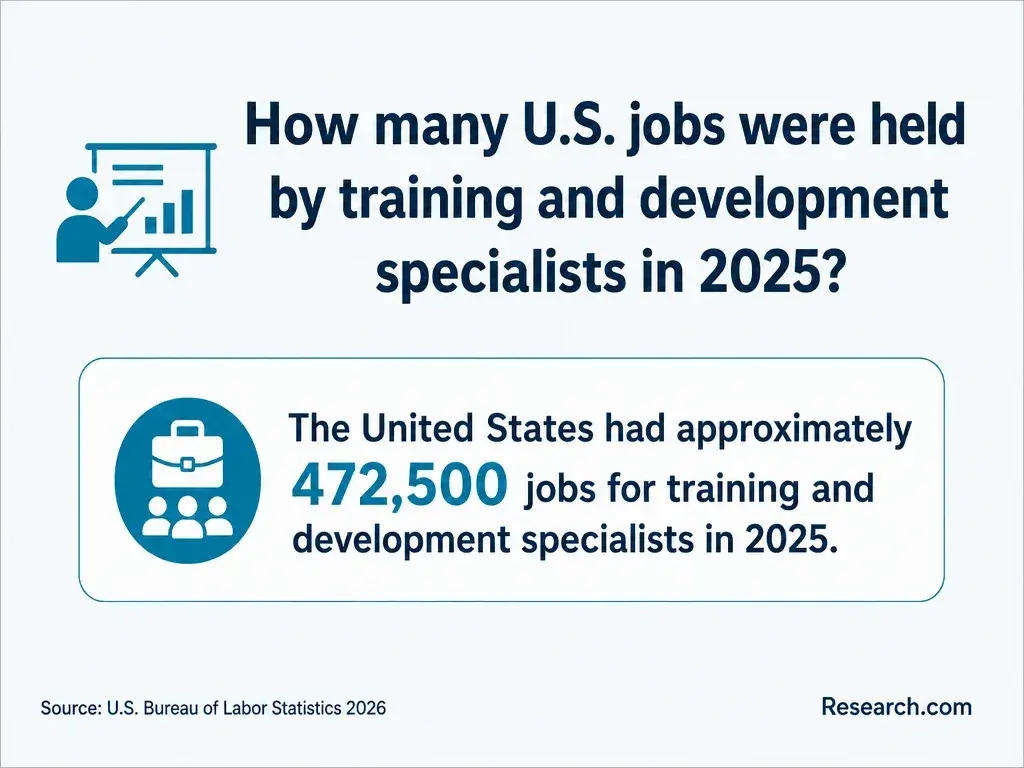
The U.S. Bureau of Labor Statistics reports a May 2025 median annual salary of $133,000 for training and development managers. That is an occupation-wide figure, not an Ed.D. graduate salary or an expected raise. It includes workers with different degrees, experience levels, employers, and locations.
For a realistic financial decision, compare pay ranges for roles you could credibly pursue now and after gaining leadership experience. Weigh any potential change against the full program cost; do not base the decision on a senior-role median you would not yet qualify to earn.
BLS projects 2025-2035 employment growth of 6.4% for training and development managers. The projection describes an occupation, not demand specifically for Ed.D. graduates. It also does not show how many openings will be accessible to applicants changing functions.
Read job postings in your target sector alongside the projection. If employers consistently request management experience, budget responsibility, or particular learning-design skills, plan how to acquire that evidence. An applied doctorate may strengthen your approach to organizational improvement, but it cannot replace role-specific experience.
Does an Online Ed.D. Require a License or Professional Certification?
General organizational leadership and learning roles do not have one universal license required because the degree is online or because it is an Ed.D. An employer may prefer a professional certification, but that preference is separate from the academic award.
School administrators, teachers, counselors, and other regulated roles are different. A broadly focused leadership Ed.D. should not be assumed to satisfy state licensure requirements. If a regulated role is your goal, check the program's licensure disclosures and the relevant state authority before enrolling.
Other Things You Should Know About EdD Leadership
No. Describe documented influence through coaching, facilitation, cross-functional decisions, or implementation work. Be clear about what you owned and what others decided.
Yes, if you can explain what happened without blaming others or inventing results. A well-supported account of what you would investigate next can demonstrate readiness for applied study.
Use nonidentifying descriptions and only information you are authorized to share. Ask the organization before submitting restricted data, internal documents, or identifiable employee details.
Choose people who have observed your collaboration, judgment, and capacity to learn from feedback. Follow the program's rules about recommender roles; a prominent title is less useful than firsthand evidence.
- Evaluating and supporting leadership, management... - PMC https://pmc.ncbi.nlm.nih.gov/articles/PMC12259699/
- School-Determined Requirements - FSA Partner Connect https://fsapartners.ed.gov/knowledge-center/fsa-handbook/2025-2026/vol1/ch1-school-determined-requirements
- Framework for Program Evaluation in Public Health | cdc.gov https://www.cdc.gov/mmwr/preview/mmwrhtml/rr4811a1.htm
- General Schedule Qualification Policies | U.S. Office of Personnel Management https://www.opm.gov/policy-data-oversight/classification-qualifications/general-schedule-qualification-policies/
- Letters of Recommendation | The Harry S. Truman Scholarship Foundation https://www.truman.gov/apply/advice-guidance/letters-recommendation
- Leadership and Learning in Organizations Online Ed.D. | Peabody College of Education and Human Development https://peabody.vanderbilt.edu/academics/edd-programs/online-leadership-learning-organizations/
- Online Doctorate in Education Leadership and Innovation | NYU https://leadershipinnovation.steinhardt.nyu.edu/
- Online Ed.D. in Leadership and Learning in Organizations | VU-EDU https://peabodyonline.vanderbilt.edu/edd-in-organizational-learning/
- How to Apply | Nicholas School of the Environment https://nicholas.duke.edu/admissions/how-apply
- Top 10 Best Organizational Change Management Strategies | Champlain College Online https://online.champlain.edu/blog/best-organizational-change-management-strategies