2027 Online Ed.D. in Leadership and Learning in Organizations: Moving from Department Leadership to System-Level Leadership
Audited and Verified:
Our Editorial and Data Verification Process
Research.com uses government datasets, official education statistics and primary institutional information to support its career and degree guides. Our review process checks factual accuracy, occupational definitions, source dates and the requirements associated with the credentials discussed.
How This Article Was Fact-Checked
Our editorial team verifies salary estimates, employment projections, education requirements and program information against original data providers and official organizations. Salary figures are checked against the relevant occupational definitions and reporting periods. Information about licensure, accreditation and required in-person training is reviewed separately.
Fact-checked and verified on:

Co-Founder and Chief Data Scientist
Leading a department gives you authority over a team. Leading a system requires you to align decisions across teams that may have different priorities, budgets, and measures of success. An online Ed.D. in Leadership and Learning in Organizations may help experienced managers develop that broader perspective, but a doctorate cannot substitute for cross-functional responsibility. This guide explains the degree's practical value, likely career paths, and the program features to check so you can decide whether doctoral study - or a more direct leadership opportunity - is the right next step.
Key Things You Should Know
- The strongest reason to pursue this Ed.D. is a recurring, cross-unit leadership problem you have authority and organizational access to investigate - not a desire for a more senior title alone.
- Compare programs by their systems-thinking coursework, applied research requirements, access to faculty, and fit with your work schedule; "online" does not necessarily mean self-paced.
- The U.S. Bureau of Labor Statistics reports a $133,000 median annual salary for training and development managers in May 2025, but that occupational figure is not an Ed.D. graduate salary or a promised return on tuition.
What is an online Ed.D. in Leadership and Learning in Organizations?
It is a practice-oriented doctorate that examines how people learn, how organizations change, and how leaders use evidence to improve performance. Exact degree names and requirements vary by university. Some programs emphasize workforce learning; others lean toward education, organizational development, or general leadership. A program's title alone cannot tell you which emphasis dominates its curriculum.
For a department leader, the important shift is from improving one team's output to understanding the conditions that shape results across an organization. A training problem, for example, may also involve conflicting incentives, uneven manager support, or a process that prevents employees from applying new skills. Doctoral study can strengthen your ability to diagnose and evaluate such problems; it does not give you authority to change those systems.
An Ed.D. generally emphasizes using research in professional practice. A PhD is usually a better fit if your primary goal is to produce disciplinary research. An MBA or employer leadership program may be more direct if you chiefly need financial, operational, or executive-management experience.
What careers can an Ed.D. in Leadership and Learning prepare you for?
The most plausible next move depends on what you already lead. A department training manager might seek responsibility for enterprise learning strategy; a public-sector manager might pursue agency-wide workforce development. Both moves require evidence that they can work across reporting lines, not simply a doctoral credential.
The following distinctions help connect potential roles to the experience an employer is likely to assess.
| Role direction | System-level responsibility | Experience to demonstrate |
| Learning or talent development leader | Align development priorities, managers, and performance measures across units | Program ownership, stakeholder influence, and evaluation |
| Organizational development or change leader | Diagnose barriers and coordinate implementation across functions | Change initiatives, facilitation, and organizational analysis |
| Management analyst or consultant | Assess client or agency processes and recommend improvements | Problem framing, evidence-based recommendations, and client communication |
| Higher education administrator | Coordinate institutional programs within governance and budget constraints | Relevant campus operations and administrative leadership |
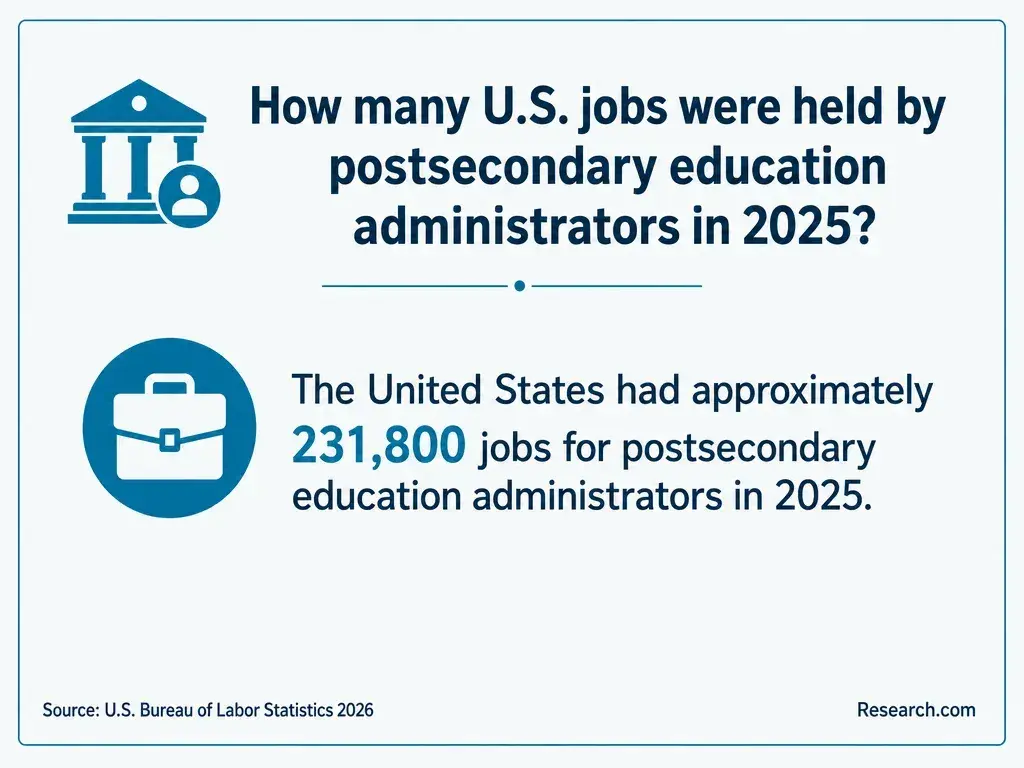
For a higher education move, doctoral study in organizational leadership for higher education careers deserves a separate comparison: campus experience and the particular administrative function may matter more than a broadly framed doctorate. Likewise, school-administrator roles can have state-specific licensure requirements that a general organizational Ed.D. does not meet.
How do online Ed.D. programs in organizational leadership compare with campus programs?
Online delivery removes some commuting barriers, not necessarily the obligations that make doctoral work demanding. Live seminars, cohort meetings, group projects, and campus convenings may still be required. Campus study may offer more routine in-person contact, while an online format can let a working leader remain embedded in an organization where applied inquiry is possible.
For a prospective system-level leader, the better format is the one that supports sustained collaboration beyond your own department. Ask whether you will work with peers from other sectors, receive substantive faculty feedback on organizational diagnosis, and have realistic time to coordinate an applied project. Confirm attendance rules and travel requirements in writing before assuming either format fits your job.
Curricula vary, but relevant areas may include adult learning, organizational theory, systems thinking, change leadership, program evaluation, and qualitative or quantitative methods. The test is not whether these words appear in a catalog; it is whether required courses help you connect a cross-unit problem to evidence, decisions, implementation, and evaluation.
Consider a manager asked to improve leadership development across several departments. Adult learning helps assess whether participants can use what they learn. Systems thinking helps identify policies or incentives that impede that use. Evaluation methods help distinguish participation and satisfaction from meaningful changes in practice. Those capabilities work together, but a course in each does not itself establish executive or advanced research competence.
If you need a particular academic emphasis, use Ed.D. concentration planning for doctoral applicants to frame your comparison, then confirm whether the concentration is formally awarded and whether its courses will be offered during your enrollment.
Programs set their own rules for prior degrees, graduate coursework, grades, professional experience, recommendations, statements, interviews, and any entrance tests. An education master's or an executive title is not a universal requirement. Relevant leadership experience may come from business, healthcare, government, nonprofits, or education if the program accepts it.
As an applicant moving beyond department leadership, describe decisions you actually made: whom you coordinated with, what constraints you faced, what evidence informed your approach, and where your authority ended. A credible proposed organizational problem is more useful than claiming a system-wide impact you cannot substantiate. Ask admissions staff whether your academic background meets formal eligibility rules and whether your experience matches the program's definition of relevant practice. Prior graduate credits considered for admission should not be mistaken for credits approved to shorten the Ed.D.
Completion time depends on the program's course sequence, enrollment pace, research or capstone requirements, and rules for pauses or extensions. Published timelines may assume continuous enrollment and timely approval of an applied project. A manager's busiest period may arrive when coursework overlaps with stakeholder coordination and data collection.
If speed is important, compare Ed.D. programs designed around faster completion against your actual calendar. Request a term-by-term plan showing live meetings, project milestones, campus visits, and what happens if your employer or project site changes. A shorter advertised pathway is only useful if you can sustain its pace.
Without a named institution and entry term, there is no reliable single price. Request the published charge per credit or term, required credits, mandatory fees, and expected enrollment schedule. Then account for travel to any convenings, materials, possible leave from work, and the cost of continuing if an applied project takes longer than planned.
For an initial shortlist, affordable practice-focused education doctoral study can help identify options, but compare each school's complete cost estimate rather than tuition labels alone. If your employer offers assistance, obtain its reimbursement cap, grade and continued-employment conditions, and repayment terms in writing. An Ed.D. is not automatically funded like a research PhD; weigh its cost against a sponsored cross-functional assignment or focused development program that might achieve your immediate goal.
Yes. Verify that the degree-granting institution holds recognized institutional accreditation and that the status covers the period in which you plan to enroll. Accreditation is a baseline check, not proof that a program's curriculum fits your goal or that employers prefer its graduates.
Do not confuse institutional accreditation with approval for a regulated profession. If your target job requires principal, superintendent, teacher, or another license, obtain the program's licensure disclosure and check requirements with the relevant state authority. A broadly focused organizational leadership Ed.D. should not be presumed to meet them.
There is no defensible salary that applies to all graduates. Pay follows occupation, sector, location, scope of responsibility, and prior experience. The U.S. Bureau of Labor Statistics reports a May 2025 median annual salary of $101,860 for management analysts, an occupation that includes organizational consulting work. Its projected employment growth for 2025-2035 is 10.1%. Neither figure measures outcomes for Ed.D. graduates specifically.
Use the occupation matching your intended job - not the highest-paying role associated with a program - as your benchmark. For an internal move, compare posted pay bands and promotion criteria at your employer. In public institutions, established classifications and hiring rules may limit how quickly added education affects compensation.
How do you choose a reputable online Ed.D. leadership program?
Start with a leadership problem you can describe without assuming its cause: for example, why a development initiative works in one division but not another. Then assess whether the program can help you investigate and act on that kind of problem. This keeps prestige and convenience from displacing fit.
Use these checks when speaking with program staff and potential employers:
- Request the required curriculum and an example of how students study cross-unit learning, change, and evaluation.
- Confirm the exact applied-project or dissertation requirement, faculty supervision, and rules for employer approval and data access.
- Obtain the live-session schedule, convening requirements, completion policies, and full cost estimate for your entry term.
- Ask the employer or hiring manager what system-level responsibilities and demonstrated results would make you competitive, with or without the doctorate.
For the financial comparison, comparing online leadership doctorate program prices is a starting point, not a substitute for current institutional figures. Choose the Ed.D. if its research and learning focus addresses a capability gap you cannot readily close through experience, mentorship, or shorter study. If you mainly need your first cross-functional assignment, pursue that responsibility before committing to a doctorate.
Other Things You Should Know About EdD Leadership
Identify a sponsor with authority across those units and ask the program what approvals it requires. Interest from colleagues is not the same as permission to conduct the project or access their data.
Yes, if you can accurately explain your decisions, the constraints, what evidence you gathered, and what you would revise. Do not claim results the initiative did not produce.
Ownership and sharing depend on university rules, employer agreements, and the data involved. Clarify confidentiality, intellectual property, and publication permissions before committing to a project topic.
Only within your program's academic-integrity rules and your organization's data-security requirements. Do not upload restricted employee or learner information to a tool without authorization.
- The Federal Work-Study Program - FSA Partner Connect https://fsapartners.ed.gov/knowledge-center/fsa-handbook/2024-2025/vol6/ch2-federal-work-study-program
- What Financial Aid Offers Don't Tell You About the Cost of College | U.S. GAO https://www.gao.gov/blog/what-financial-aid-offers-dont-tell-you-about-cost-college
- Accreditation in the U.S. | ed.gov http://www.ed.gov/laws-and-policy/higher-education-laws-and-policy/college-accreditation/accreditation-in-the-us
- Understanding U.S. Accreditation | EducationUSA https://educationusa.state.gov/understanding-us-accreditation
- Grad School and Working Full-Time | ASU Online https://asuonline.asu.edu/newsroom/online-learning-tips/grad-degree-while-working-full-time/
- MSSW Application Requirements and Instructions | columbia.edu https://apply.ssw.columbia.edu/register/app_requirements
- UNC EdD Online: Organizational Learning and Leadership https://online.unc.edu/online-doctoral-programs/online-edd-organizational-learning-and-leadership/
- EdD Organizational Leadership Online | Saint Leo University https://onlinedegrees.saintleo.edu/programs/edd-organizational-leadership-online
- EdD in Organizational Change and Leadership | USC Online https://online.usc.edu/programs/organizational-change-leadership/
- What Is a Problem of Practice? | spalding.edu https://online.spalding.edu/blog/what-is-problem-practice