2027 Online Ed.D. in Leadership and Learning in Organizations: Degree Fit for Leaders Tackling Burnout Linked to Poorly Designed Work
Audited and Verified:
Our Editorial and Data Verification Process
Research.com uses government datasets, official education statistics and primary institutional information to support its career and degree guides. Our review process checks factual accuracy, occupational definitions, source dates and the requirements associated with the credentials discussed.
How This Article Was Fact-Checked
Our editorial team verifies salary estimates, employment projections, education requirements and program information against original data providers and official organizations. Salary figures are checked against the relevant occupational definitions and reporting periods. Information about licensure, accreditation and required in-person training is reviewed separately.
Fact-checked and verified on:

Co-Founder and Chief Data Scientist
When employees face unmanageable workloads, unclear priorities, or little control over how work gets done, another resilience workshop may not solve the problem. Leaders and learning professionals need to know whether they can change the work itself, and whether doctoral study would help them do it well.
This guide examines how an online Ed.D. in leadership and learning in organizations could support that work, where its limits lie, and what to check before committing. It is for professionals weighing a practice-focused doctorate against more immediate ways to diagnose and redesign work.
Key Things You Should Know
- An Ed.D. can strengthen organizational diagnosis, change leadership, and evaluation; it cannot give a graduate authority to fix workloads or staffing decisions they do not control.
- Burnout prevention linked to work design calls for examining demands, autonomy, staffing, and incentives, not assuming employees need more training.
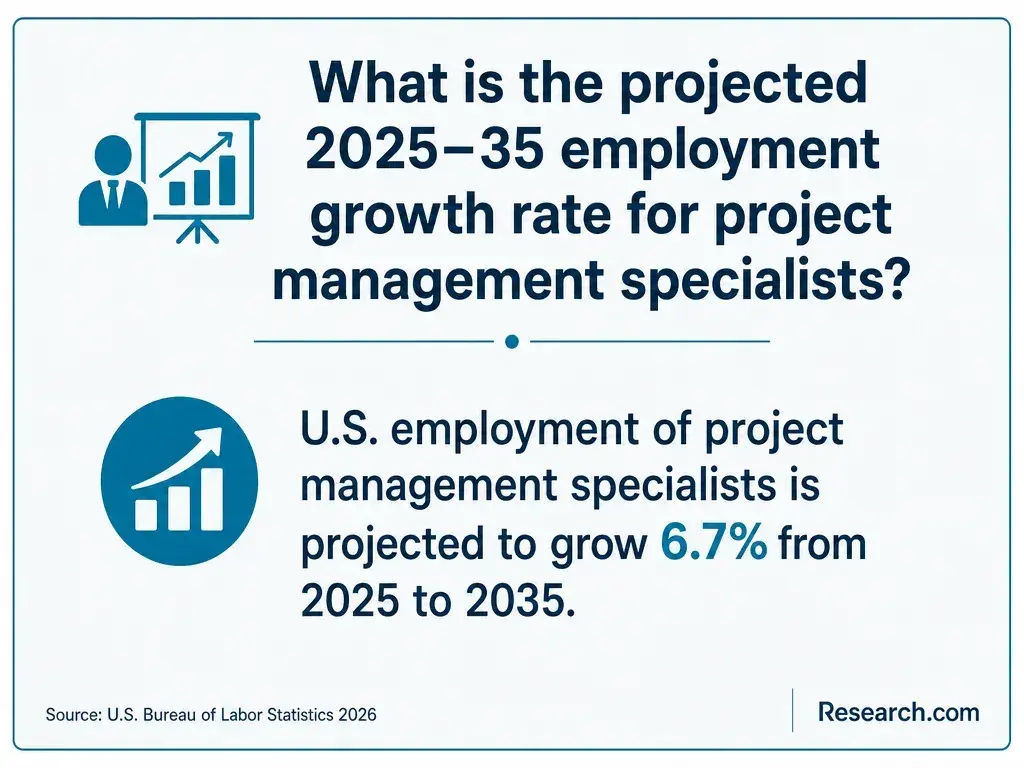
- The U.S. Bureau of Labor Statistics projects 10.8% employment growth for training and development specialists from 2025 to 2035, but that occupation-wide outlook is not a forecast for Ed.D. graduates.
What Is an Online Ed.D. in Leadership and Learning in Organizations?
An Ed.D. in leadership and learning in organizations is a practice-oriented doctorate focused on how people learn, lead, and implement change in workplaces and other institutions.
Programs with similar names can differ substantially: one may emphasize organizational development and adult learning, while another centers on education administration. Online describes where much instruction occurs, not a uniform curriculum or fully self-paced experience.
For a leader concerned about burnout, the relevant academic work connects organizational systems with human development. It might include diagnosing a performance problem, examining how managers allocate work, engaging employees in a change process, and evaluating whether a redesign improves conditions.
A capstone or dissertation in practice may provide a setting for applied inquiry, but the required deliverable and permission to use workplace data depend on the program and organization. Readers considering dissertation-free Ed.D. study options to evaluate should still check what substantial final project, if any, replaces a dissertation.
Is an Online Ed.D. in Leadership and Learning Right for Burnout Prevention?
It can be a good fit if you already influence organizational decisions and need deeper skills to investigate and change how work is designed. It is a weaker fit if the immediate need is a staffing decision, a safety response, or permission from senior leadership to change priorities.
The World Health Organization describes burnout as an occupational phenomenon associated with chronic workplace stress that has not been successfully managed - not as a medical diagnosis. An Ed.D. can help a leader examine organizational conditions, but it does not replace healthcare or employment protections.
Start by separating symptoms from possible causes. Reports of exhaustion or turnover do not, by themselves, establish that training is deficient.
A team may face conflicting deadlines, insufficient capacity, unpredictable schedules, limited discretion, or incentives that reward excessive availability. Adult-learning coursework could help managers adopt new practices, but instruction alone cannot resolve a workload that remains impossible.
The best educational route depends on the authority and expertise you need. The comparison below distinguishes sustained organizational inquiry from narrower development options; none guarantees that an employer will implement a proposed change:
| Pathway | Best-aligned need | Important limitation |
| Leadership and learning Ed.D. | Leading complex change and evaluating organizational learning or improvement | Substantial commitment; workplace authority and access still matter |
| Targeted organizational development or evaluation training | Building a specific diagnostic or measurement skill | Usually less depth and sustained faculty-guided inquiry |
| Employer-led operational redesign | Changing staffing, priorities, schedules, or decision rights now | May require specialist support, but not necessarily another degree |
Before applying, document the decisions you can actually influence, the stakeholders who would need to approve a redesign, and the evidence available without exposing confidential employee information.
Ask prospective programs how faculty guide work-design problems, whether applied projects can involve your organization, and what happens if employer access disappears. If the organization already knows the cause and can act, implementing and evaluating a smaller change may be more useful than enrolling in a doctorate.
What Careers Can You Pursue With This Online Ed.D.?
The degree is most useful as an extension of experience, not an entry ticket to leadership. An established learning and development professional might move toward training management or organizational development work; an experienced manager might use applied inquiry to lead cross-functional improvement.
Organizational consultants may help clients examine work processes, while higher-education or public-sector administrators must also work within governance and budget constraints.
For burnout-focused roles, employers will look for evidence that you can distinguish a learning problem from a structural one, work with operations and human resources, and assess a change without overclaiming its effects.
A carefully authorized project can demonstrate those skills. If your goal is college administration, comparing organizational leadership Ed.D. pathways for college administration can help you assess sector fit; relevant institutional experience remains important.
Online study can let a working leader remain in the organization whose practices they hope to improve. Campus study may make in-person faculty contact and local collaboration easier. Neither format establishes whether a program teaches organizational diagnosis well, and neither guarantees access to an approved project site.
Compare actual attendance rules rather than format labels. Ask about live classes, group meetings, required campus convenings, faculty availability, accessible participation, and expectations during the final project.
An online cohort with fixed evening meetings may be less workable than a nearby campus program with a predictable schedule. Travel and time away from work also affect the comparison; readers exploring affordable practice-focused education doctoral study should compare total participation costs, not tuition alone.
Course titles vary, but a strong fit for this problem would connect organizational leadership and adult learning with research methods and change implementation. Leadership or systems-thinking courses can help examine how priorities and decision rights shape work.
Organizational development can support diagnosis and stakeholder engagement. Qualitative, quantitative, or evaluation coursework can help determine whether a proposed redesign is feasible and what the evidence can, and cannot, show.
Look beyond a course labeled "well-being." Ask whether students study workload and job design, measurement quality, ethical use of employee information, and implementation across teams.
Check whether those subjects are required, available electives, or merely mentioned in marketing. A program focused chiefly on teaching methods may be less suitable than one that permits sustained inquiry into organizational operations.
Requirements differ by institution. Programs may request a completed graduate degree, transcripts, recommendations, a statement of purpose, and evidence of professional or leadership experience. Some assess research preparation or interview applicants.
An education master's degree, a particular job title, and prior publication should not be assumed to be universal requirements.
For this topic, an application is stronger when it describes decisions you have made, a work-design problem you can investigate, and the limits of your authority - without claiming to have proved its cause. Ask admissions staff whether your background meets formal requirements and ask the program how students secure a suitable applied-project setting.
Prior graduate study may support admission without transferring into doctoral requirements. ABD education students comparing online doctoral pathways should request a written evaluation of how their previous work would be treated rather than assuming it shortens the degree.
Completion time depends on the program's course sequence, enrollment pace, and final-project requirements. Published minimum timelines may not account for delays obtaining organizational approval or data access.
Request the required credits, course schedule, project milestones, and rules for continuing enrollment if a project takes longer than planned.
Calculate more than advertised tuition: include mandatory fees, books or technology, any campus travel, and time away from paid work. Employer reimbursement may depend on continued employment or satisfactory progress, so obtain its terms in writing.
An online doctoral education program cost guide can provide a starting point, but use each institution's applicable charges to build your own total. If the goal is a near-term workload redesign, compare that expense with targeted training or qualified external support.
Confirm that the institution holds recognized institutional accreditation and that the accreditation covers the institution awarding the degree. Use the institution's and accreditor's official records, then verify the exact Ed.D. program, degree designation, and any relevant program-level claims.
Institutional accreditation does not establish that a curriculum specializes in burnout prevention or qualifies graduates for a regulated role.
Accreditation is a baseline check, not a substitute for evaluating faculty expertise, project supervision, and the practical schedule. This matters particularly when comparing lower-cost options: a program must be both academically credible and suitable for the work-design questions you want to study.
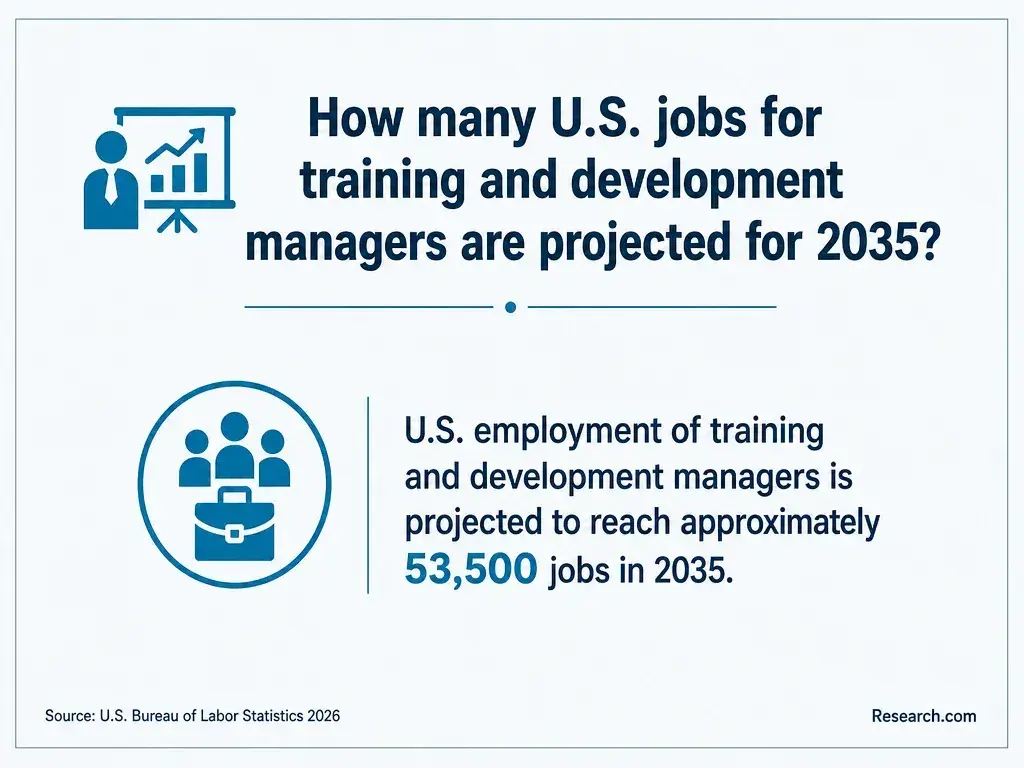
The U.S. Bureau of Labor Statistics reports a May 2025 median annual salary of $133,000 for training and development managers and projects 6.4% employment growth for that occupation from 2025 to 2035.
That figure describes an occupation, not the earnings of Ed.D. graduates or a salary increase attributable to the degree. Management responsibility and relevant experience remain central to such roles.
For a realistic financial decision, compare openings and pay in your target occupation and location with your current position.
Ask employers whether doctoral preparation is preferred, required, or simply one way to demonstrate the skills they value. Public-sector pay structures and internal promotion rules may further limit any immediate financial return.
Do Ed.D. Graduates Need Licensure or Professional Certification?
Organizational learning, development, and consulting roles generally are not made available through an Ed.D.-specific license. Employers may value relevant professional certifications, but a certification and an academic doctorate serve different purposes.
Neither substitutes for demonstrated ability to lead an ethical, feasible work-design change.
School administrator and other regulated education positions are different: eligibility can depend on state rules and completion of an approved preparation pathway.
A broadly focused organizational leadership Ed.D. does not automatically meet those requirements. If a regulated role is your goal, confirm eligibility with the program and the appropriate state authority before enrolling.
Other Things You Should Know About EdD Leadership
No. Take concerns seriously now, follow applicable workplace procedures, and involve people with authority over workload, staffing, and safety. Doctoral study is a longer-term capability-building choice.
Not by itself. Survey responses can reveal patterns, but changes may reflect other factors. Define measures in advance, protect confidentiality, and report conclusions in proportion to the evidence.
Ask the program what alternative project settings or data sources it permits before enrolling. Do not assume that access through your job gives you permission to use employee records for doctoral work.
When someone needs medical or mental health help, direct them to appropriate qualified support and workplace resources. Individual care matters, but it should not be used as a substitute for addressing harmful work conditions.
- Students & Recent Graduates | U.S. Office of Personnel Management https://www.opm.gov/policy-data-oversight/hiring-information/students-recent-graduates/
- Cost of Attendance (Budget) | 2025-2026 Federal Student Aid Handbook https://fsapartners.ed.gov/knowledge-center/fsa-handbook/2025-2026/vol3/ch2-cost-attendance-budget
- Organizational interventions and occupational burnout: a meta-analysis with focus on exhaustion - PMC https://pmc.ncbi.nlm.nih.gov/articles/PMC10560169/
- Employer-offered educational assistance programs can help pay for college | Internal Revenue Service https://www.irs.gov/newsroom/employer-offered-educational-assistance-programs-can-help-pay-for-college
- Module 2 Outline: What burnout is and is not | NIOSH https://www.cdc.gov/niosh/learning/publichealthburnoutprevention/module-2/outline.html
- Burnout and stress are everywhere | apa.org https://www.apa.org/monitor/2022/01/special-burnout-stress
- EdD vs. PhD in Education: What's the Difference? | Campus Insider https://insider.augusta.edu/edd-vs-phd-education/
- What Can You Do With an EdD in Leadership? Top Careers | University of the Cumberlands https://www.ucumberlands.edu/blog/what-can-you-do-with-an-edd-in-leadership
- Design Work to Prevent Burnout | MIT Sloan Management Review https://sloanreview.mit.edu/article/design-work-to-prevent-burnout/
- EdD vs. PhD in Education: Choosing the Right Program | Goodwin College of Professional Studies https://drexel.edu/soe/resources/career-path/edd-vs-phd/