2027 Online Ed.D. in Leadership and Learning in Organizations: Comparing Coursework in Learning Climate
Audited and Verified:
Our Editorial and Data Verification Process
Research.com uses government datasets, official education statistics and primary institutional information to support its career and degree guides. Our review process checks factual accuracy, occupational definitions, source dates and the requirements associated with the credentials discussed.
How This Article Was Fact-Checked
Our editorial team verifies salary estimates, employment projections, education requirements and program information against original data providers and official organizations. Salary figures are checked against the relevant occupational definitions and reporting periods. Information about licensure, accreditation and required in-person training is reviewed separately.
Fact-checked and verified on:

Co-Founder and Chief Data Scientist
A program can promise to develop organizational leaders without teaching them how to tell whether people actually have the support, time, and trust to learn at work. For learning and development professionals and emerging leaders, that distinction matters when comparing online Ed.D. curricula.
This article explains what learning climate means, which courses and applied experiences build the ability to assess it, and how to compare programs without mistaking a course title for a skill. It also covers the practical constraints that can determine whether doctoral study is worth pursuing.
Key Things You Should Know
- Prioritize curricula that connect adult learning and organizational culture with change implementation and evaluation; a leadership course alone may not teach learning-climate assessment.
- Look for opportunities to examine supervisor support, psychological safety, access to learning, and on-the-job application using evidence, not just satisfaction surveys.
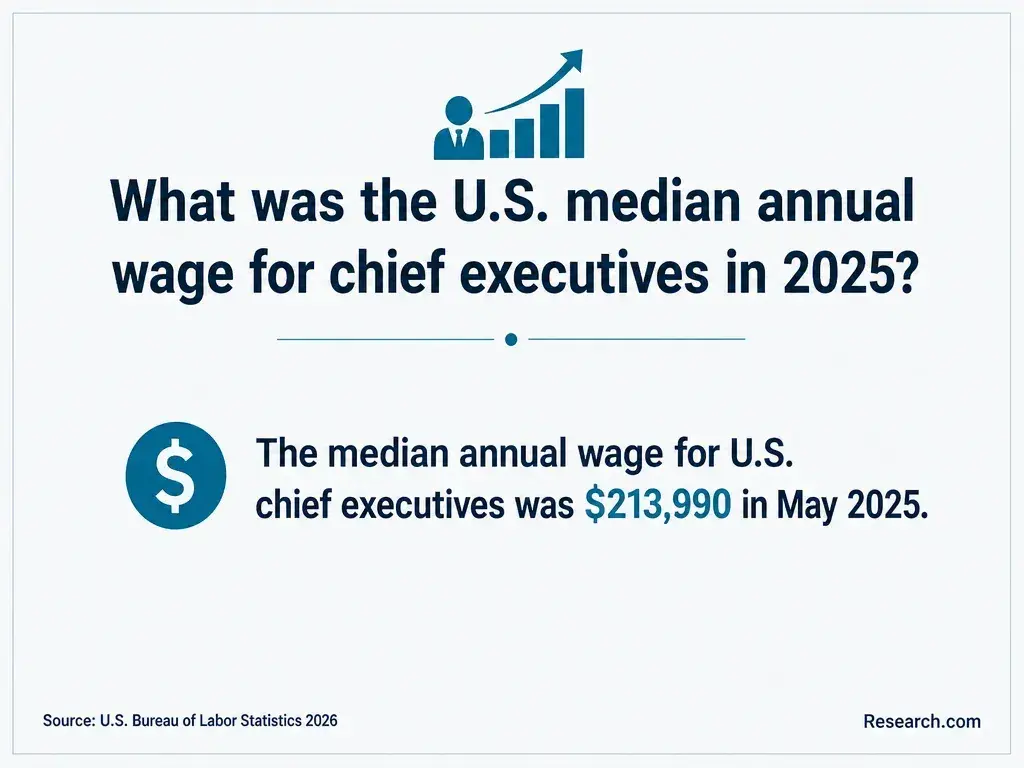
- Use career outcomes cautiously: the U.S. Bureau of Labor Statistics reports a $133,000 median annual salary for training and development managers in May 2025, not for Ed.D. graduates specifically.
What is an online Ed.D. in Leadership and Learning in Organizations?
An online Ed.D. in leadership and learning is a practice-oriented doctorate concerned with how organizations develop people, use evidence, and implement change.
Program names and requirements vary. A degree with this focus may serve professionals in business, healthcare, nonprofits, government, or education; it should not be assumed to be a school-administrator preparation program.
Learning climate refers to employees' or learners' experience of conditions that encourage or inhibit learning: whether questions are welcomed, feedback is useful, development is accessible, and supervisors allow new skills to be used.
It is narrower than an organization's overall culture. The relevant doctoral question is not simply whether training exists, but whether organizational conditions help learning transfer into practice.
Readers whose goal is specifically university administration should also consider comparing Ed.D. organizational leadership study for higher education. A cross-sector curriculum and one centered on higher education may address different governance and stakeholder problems.
How does coursework address learning climate and organizational change?
Strong coursework treats learning climate as something to investigate, not a label to attach to a workplace. Adult learning courses explain motivation and learning transfer; organizational theory examines norms, incentives, and authority; change courses address implementation; and research or evaluation courses test whether an intervention is working. The value lies in how these courses connect.
The table shows what to look for in syllabi or project descriptions. Course names alone cannot establish the depth of instruction:
| Curricular area | Learning-climate question it can address | Evidence of deeper coverage |
| Adult learning and development | Can people practice and apply what they learn? | Assignments examine feedback, motivation, and learning transfer in a real setting. |
| Organizational culture and leadership | Do norms and management practices support learning? | Students distinguish reported attitudes from observable processes and decisions. |
| Change and organizational development | What must change beyond the training itself? | Work addresses stakeholder involvement, implementation barriers, and competing incentives. |
| Research and evaluation | How would we know whether conditions improved? | Students assess measurement quality, alternative explanations, and data limitations. |
For example, low participation in professional development might reflect poor course design, but it might also reflect scheduling, supervisor resistance, or unequal access.
Coursework should help a student investigate those possibilities before prescribing more training. A before-and-after survey may reveal a change in reported perceptions; by itself, it does not prove what caused that change.
What careers can an Ed.D. in Leadership and Learning prepare you for?
The closest fit is often an experienced learning and development, talent development, or organizational development professional who wants greater responsibility for diagnosing problems and leading improvement.
Training and development managers oversee learning strategy and staff; organizational consultants may assess processes and recommend changes. Neither role follows automatically from completing a doctorate.
For an emerging leader, the strongest career evidence may be a record of leading a cross-functional initiative, evaluating a program, and explaining how decisions changed, not the credential alone. If the immediate goal is to design training or move into a first management role, targeted study, mentorship, and supervised project experience may be more direct.
Before committing to a doctorate, compare its full cost with likely opportunities in your target role; organizational leadership doctorate tuition comparisons can help frame that financial question.
Online delivery changes where students participate, not necessarily what they must accomplish. Either format may require live discussion, collaborative work, faculty supervision, and an applied project.
Campus study may make in-person collaboration easier; online study may allow a working professional to remain in their organization while investigating a workplace problem. Actual attendance, travel, and project rules depend on the program.
For learning-climate work, compare access to research guidance and a feasible project site, not just classroom location. Ask whether the program requires live meetings or campus convenings, permits a project at your workplace, and provides a way to continue if you change employers. Also verify the final deliverable: programs may require different forms of dissertation or capstone.
If that requirement affects your choice, review online Ed.D. capstone alternatives to compare, then confirm each program's published completion rules.
Relevant curricula may include leadership theory, adult learning, organizational development, change, qualitative and quantitative methods, and program evaluation. These are areas to check, not a universal required-course list.
Some programs integrate learning-climate questions across courses; others may offer a relevant elective or applied assignment without naming the subject explicitly.
Compare the sequence as well as the catalog. Ideally, students learn to define a workplace problem, select credible measures, examine stakeholder perspectives, and plan implementation before undertaking a major applied project.
Ask for recent syllabi and the degree map: Is the relevant course required? Is the elective regularly offered? Does the methods sequence support the kind of climate inquiry you want to conduct?
Required research and project stages also matter when comparing Ed.D. completion timelines; an advertised pace is less useful if a needed course is offered infrequently.
Requirements are set by each institution. Applicants commonly need to document prior graduate study, professional experience, and a reason for pursuing practice-focused doctoral work, but the acceptable degree, experience, grades, recommendations, and tests must be checked for the intended entry term. A master's in education should not be assumed necessary for every cross-sector program.
For this subject, an effective application can identify a genuine learning or change problem and explain your role in addressing it without claiming access to data or authority you do not have.
Ask admissions whether prior graduate coursework satisfies eligibility requirements and, separately, whether any credits can apply to the doctorate. Those are different decisions, and neither should be presumed to shorten the program.
Time and cost cannot be stated reliably for this degree category without a specific program and entry term. Compare required credits, course sequence, enrollment pace, and the time allowed for the final project. An employer-based investigation can be particularly sensitive to approval and data-access delays.
Request a written estimate covering tuition, mandatory fees, any campus travel, and charges that continue during project work. Then check employer reimbursement limits and whether support depends on continued employment or grades.
Affordable distance learning Ed.D. degrees may provide a starting shortlist, but compare total expected costs and curricular fit rather than tuition alone. If the organization needs an immediate climate assessment, a focused evaluation course or experienced adviser may cost less and deliver useful work sooner.
Accreditation must be checked for the university awarding the degree; online delivery does not itself confer or remove accreditation. Verify the institution and its accreditation status through the accreditor or the U.S. Department of Education's accreditation records, then confirm the exact degree being offered.
Do not infer that a course on learning or leadership carries a separate programmatic accreditation or qualifies graduates for a regulated profession.
Most organizational learning and development roles do not have a universal license tied to an Ed.D. Employers instead assess relevant experience and role-specific skills. Optional professional certifications may be useful for a particular job, but the doctorate does not automatically award them.
School leadership is different: principal or superintendent positions may have state-specific licensure requirements. Anyone pursuing a regulated education role should ask the program whether its exact curriculum is approved for that pathway and confirm eligibility with the relevant state authority before enrolling.
How much do Leadership and Learning Ed.D. graduates earn?
There is no single reliable salary for graduates of this degree type because they enter different occupations with different levels of experience.
The U.S. Bureau of Labor Statistics reports a May 2025 median annual salary of $133,000 for training and development managers, with projected employment growth of 6.4% from 2025 to 2035. Those figures describe an occupation, not a starting salary, a doctorate premium, or a predicted outcome for any graduate.
For a personal comparison, look at postings for the role and region you actually want. Note which require management experience, which prefer a doctorate, and whether your current organization offers a credible path to broader responsibility. That evidence is more useful than assuming the degree will produce a raise.
Other Things You Should Know About EdD Leadership
No. Satisfaction describes how people feel about their work; learning climate concerns whether workplace conditions support learning and applying new skills. The two can overlap without measuring the same thing.
Potentially. An approved project might use voluntary interviews, observations, or suitably aggregated information. The organization and program must approve the approach, and privacy obligations still apply.
They can be a drafting aid if program and organization rules permit it. Questions still need review for clarity, bias, privacy, and whether they measure the intended concept; AI output is not a validated instrument.
No. A well-scoped assessment can identify conditions, explain evidence limitations, and recommend next steps. It should not claim improvement or causation that the project's design cannot establish.
- School Culture and Climate | New York State Education Department https://www.nysed.gov/student-support-services/school-culture-and-climate
- Creating a Course Climate that Enhances Learning | northeastern.edu https://learning.northeastern.edu/creating-a-course-climate-that-enhances-learning/
- Doctor of Education in Educational Leadership - USC Online https://online.usc.edu/programs/educational-leadership/
- Develop a Capstone | Assessment and Curriculum Support Center https://manoa.hawaii.edu/assessment/resources/capstone-experiences/
- Creating a Context for Change: Leading through Organizational Development | Tulane PACE Learning Management System https://pace.tulane.edu/leadership-development/content/creating-context-change-leading-through-organizational-development
- Capstone Project - School of Education | Adams State University https://www.adams.edu/academics/graduate/teacher-education/capstone/
- Doctor of Education in Organizational Leadership, Culture and Change | Thomas Edison State University https://www.tesu.edu/degrees-programs/doctoral/edd.php
- Online EdD in Organizational Leadership | Pepperdine University https://gsep.pepperdine.edu/doctorate-organizational-leadership/
- UNC EdD Online: Organizational Learning and Leadership https://online.unc.edu/online-doctoral-programs/online-edd-organizational-learning-and-leadership/
- Ed.D. in Educational Leadership | Online https://online.uark.edu/programs/doctor-education-educational-leadership.php