2027 Choosing an Online Ed.D. in Leadership and Learning in Organizations Around a Product Launch Cycle
Audited and Verified:
Our Editorial and Data Verification Process
Research.com uses government datasets, official education statistics and primary institutional information to support its career and degree guides. Our review process checks factual accuracy, occupational definitions, source dates and the requirements associated with the credentials discussed.
How This Article Was Fact-Checked
Our editorial team verifies salary estimates, employment projections, education requirements and program information against original data providers and official organizations. Salary figures are checked against the relevant occupational definitions and reporting periods. Information about licensure, accreditation and required in-person training is reviewed separately.
Fact-checked and verified on:

Co-Founder and Chief Data Scientist
A product launch can give learning and development professionals a valuable organizational problem to study - and leave them with little control over their schedule or access to evidence. If you are considering an online Ed.D. while preparing teams for a launch, the right program must fit both the work and the academic inquiry you hope to pursue.
This guide explains how to compare program formats, project requirements, costs, and career value against the demands of planning, release, and post-launch evaluation.
Key Things You Should Know
- Choose around the launch's busiest weeks, not an average week: online cohorts may still require live classes, group meetings, and campus convenings.
- Confirm that a proposed launch-related project meets academic rules and that your employer permits the necessary data access; a workplace assignment is not automatically an Ed.D. capstone. Test the investment against your career goal.
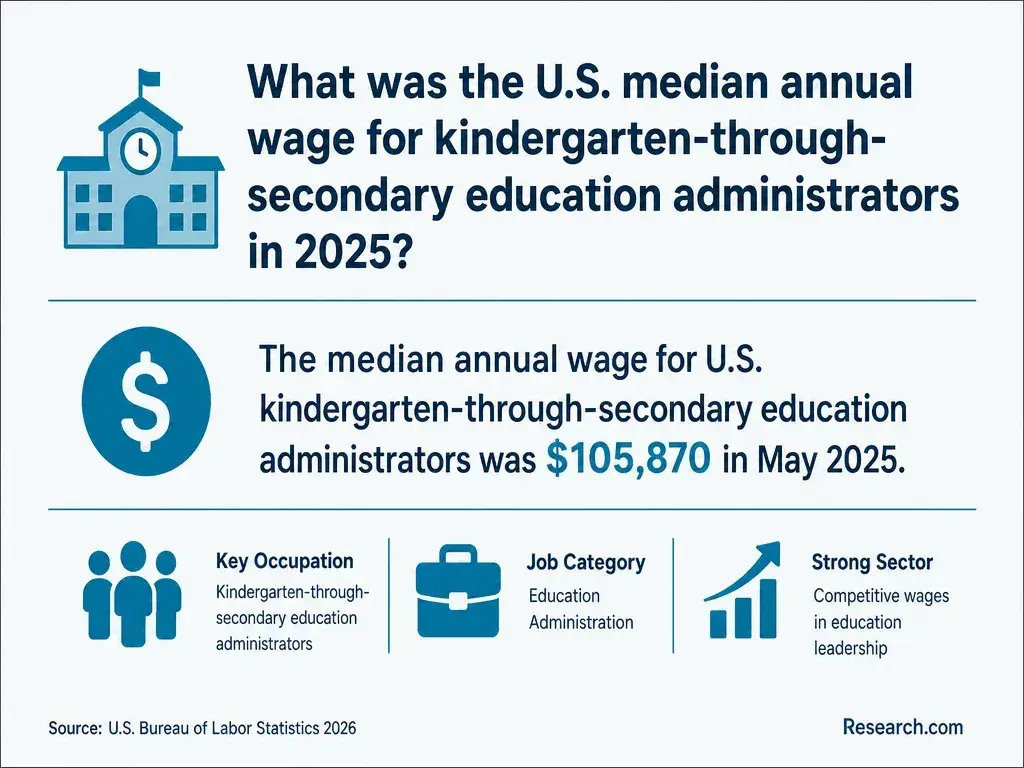
- The U.S. median annual salary for training and development managers was $133,000 in 2025, but that occupational figure is not a forecast for Ed.D. graduates.
What is an online Ed.D. in Leadership and Learning in Organizations?
An Ed.D. in leadership and learning in organizations is a practice-oriented doctorate focused on how people learn, lead, and implement change at work. Programs with similar names can differ substantially: one may emphasize adult learning and organizational improvement, while another concentrates on school administration. Confirm the degree's exact title, curriculum, and final project rather than relying on a broad description of "leadership."
For a product launch, the relevant work might include preparing sales or support teams, improving knowledge transfer across departments, or evaluating whether training supports employees in their new responsibilities. A doctorate can help a leader investigate those problems systematically; it does not replace product expertise or authority over the launch. A guide to choosing the right Doctor of Education study emphasis can help distinguish organizational learning from other Ed.D. directions.
Why choose an online Ed.D. in Leadership and Learning?
The strongest reason is a sustained goal to lead learning and change across initiatives - not simply to deliver training for one release. A launch can expose recurring questions about readiness, communication, incentives, and performance. Doctoral study may help an experienced professional frame those questions, assess evidence, and work with stakeholders over time.
Compare the credential with the outcome you need. If the immediate task is to design launch training, a focused instructional design course, mentorship, or employer development program may be faster and less expensive. If your goal is to study organizational learning through original academic research, a research-oriented PhD may fit better. An Ed.D. becomes more compelling when you expect to apply rigorous inquiry to repeated leadership and learning problems and can sustain study through future launch cycles.
How do you choose an accredited online Ed.D. program?
First, verify the institution's accreditation with its recognized accreditor and confirm that the credential offered is an Ed.D. Then compare the actual online experience: required live meetings, attendance rules, group work, campus convenings, faculty access, and the approved form of dissertation or capstone. Institution-level accreditation does not establish that a program grants school-administrator licensure or any professional certification.
A launch-calendar comparison should be concrete. Ask each program when required meetings occur, whether attendance can be made up during release week, and when project proposals, data collection, and final submissions normally fall. Request written requirements for using an employer as a project site, including alternatives if a product, team, or employer changes. Compare lower-tuition Ed.D. program choices only after confirming that their schedules and project rules are workable for you.
Relevant curricula may cover adult learning, organizational change, leadership, needs assessment, research methods, and program evaluation. For launch work, the useful connection is between a learning intervention and a decision: whether people can perform a new task, what support they need, and which obstacles training cannot fix. A delayed handoff, for example, might reflect unclear ownership rather than a knowledge gap.
Look for opportunities to develop a feasible inquiry across the launch cycle: establish a baseline before release, document implementation without disrupting operations, and assess learning or performance afterward. Check the depth and sequence of methods courses and whether faculty can supervise the kind of project you propose. Course exposure alone does not establish expertise in causal evaluation, analytics, or product management; organizational data access and ethical oversight also matter.
Requirements vary by institution and entry term. Programs may ask for a completed graduate degree, transcripts, recommendations, a statement of purpose, and evidence of relevant professional experience. Some assess research preparation or interview applicants. Do not assume that an education master's degree, a senior title, or a fixed number of leadership years is universally required.
Use the application to show what you actually did during past initiatives: the decisions you owned, people you worked with, and problems you can examine without claiming unverified results. If you hold an Education Specialist degree, distinguish credits that support admission from credits formally accepted toward the doctorate; guidance for education specialist graduates considering a doctorate can help you formulate questions for an official credit evaluation. If you hope to study an upcoming launch, describe it as a proposed inquiry, not an approved project.
Completion time depends on a program's course sequence, enrollment pace, required convenings, and final-project milestones. An online format does not necessarily permit self-paced study. Cohort courses or team projects can limit how easily you move an academic deadline when a launch date changes.
Map the program calendar against planning, release, and post-launch support - not just the announced release date. Identify periods when live attendance, research approvals, data collection, or writing would overlap with peak work demands. Ask about part-time enrollment, leaves, and the consequences of missing a course offered only in a particular term. A realistic plan includes a project that can remain academically viable if the launch slips.
There is no reliable single price for an online leadership Ed.D. Total cost depends on the school's tuition structure and required credits, plus fees, materials, technology, and any travel or lodging for campus convenings. For someone working through a launch, reduced work hours, unpaid leave, or a longer enrollment period may matter as much as the advertised tuition rate.
Request a written cost estimate for your expected pace and ask what happens financially if you pause or extend your project. Check whether employer assistance is reimbursement or upfront payment, what grades or continued employment it requires, and whether the benefit covers doctoral study. Compare those terms alongside lower-tuition pathways to an education doctorate; a cheaper program that requires unmanageable travel or timing may not be the lower-cost choice for you.
For a learning and development professional, the most plausible use is advancement into broader responsibility for workforce learning, leadership development, or organizational change. Experienced practitioners may also pursue consulting or higher-education administration. The tasks differ: a training manager oversees programs and teams, while an organizational consultant diagnoses problems and advises clients. Neither role follows automatically from earning a doctorate.
Translate launch experience into evidence employers can assess: the scope of your decisions, cross-functional collaboration, learning design, and appropriately documented evaluation. Redact confidential product and employee information from any portfolio. For an education-sector move, compare employer requirements and doctoral study in organizational leadership for higher education careers before assuming corporate launch experience transfers directly to an administrator role.
Salary depends on the occupation, sector, location, and experience - not the degree alone. The U.S. Bureau of Labor Statistics reports a 2025 median annual salary of $133,000 for training and development managers. That is a midpoint for workers in the occupation, not the starting salary, expected pay increase, or placement outcome of an Ed.D. graduate.
For a personal financial decision, compare your current compensation with actual openings you could plausibly qualify for after graduation. Consider whether the positions require demonstrated management experience, whether your employer has a degree-based pay policy, and whether added responsibility would be available without doctoral study.
What is the job outlook for education and organizational leaders?
Outlook varies by role. U.S. Bureau of Labor Statistics projections for 2025-2035 show 10.8% employment growth for training and development specialists. That suggests demand for learning-related work, but specialist openings are not evidence of equivalent growth in senior leadership positions or a guaranteed return on a doctorate.
Use the target role - not a broad "education leadership" label - to judge opportunity. A launch-focused learning professional should examine openings for the responsibilities they want next and identify gaps in management, evaluation, or sector experience. If those gaps can be addressed through an expanded assignment or targeted training, that may be a more direct next step than enrolling immediately.
Other Things You Should Know About EdD Leadership
Only if your employer's rules and the program's requirements permit it. Ask what must be redacted or replaced with nonconfidential examples before sharing materials with classmates or faculty.
Ownership and sharing rights depend on university policies, employment agreements, and any project-site agreement. Clarify intellectual property and publication restrictions before committing to the topic.
Do not assume routine access to customer feedback authorizes academic use. Confirm organizational permission, applicable privacy rules, and the university's required review before collecting or analyzing it.
Ask the program whether a change of project site or topic is permitted and what approvals it requires. Also review any employer tuition-repayment obligation before changing jobs.
- Employer-offered educational assistance programs can help pay for college | Internal Revenue Service https://www.irs.gov/newsroom/employer-offered-educational-assistance-programs-can-help-pay-for-college
- Frequently Asked Questions | Columbia University Pre-College Programs https://precollege.sps.columbia.edu/frequently-asked-questions
- EdD in Organizational Change and Leadership | USC Online https://online.usc.edu/programs/organizational-change-leadership/
- Adult Learning, Training and Organizational Development | temple.edu https://education.temple.edu/altod
- Leadership and Learning in Organizations Online Ed.D. | Peabody College of Education and Human Development https://peabody.vanderbilt.edu/academics/edd-programs/online-leadership-learning-organizations/
- Attendance Options | Miami Dade College https://www.mdc.edu/registration/options/
- Return to School | Employer Tuition Assistance Programs | UMass Global https://www.umassglobal.edu/blog-news/get-your-employer-pay-college-tuition-assistance-programs
- Grad school requirements: Everything you need to apply | About the University of Cincinnati https://www.uc.edu/blog/grad-school-requirements.html
- Academic Residencies, Labs, and Intensives Requirements | Academics at Walden University https://academics.waldenu.edu/handbook/learning-modalities/residency-lab-intensive-requirements