2027 Vanderbilt Ed.D. in Leadership and Learning in Organizations: How to Compare the Capstone with a Traditional Dissertation
Audited and Verified:
Our Editorial and Data Verification Process
Research.com uses government datasets, official education statistics and primary institutional information to support its career and degree guides. Our review process checks factual accuracy, occupational definitions, source dates and the requirements associated with the credentials discussed.
How This Article Was Fact-Checked
Our editorial team verifies salary estimates, employment projections, education requirements and program information against original data providers and official organizations. Salary figures are checked against the relevant occupational definitions and reporting periods. Information about licensure, accreditation and required in-person training is reviewed separately.
Fact-checked and verified on:

Co-Founder and Chief Data Scientist
Vanderbilt's online Ed.D. in Leadership and Learning in Organizations culminates in a capstone rather than the traditional dissertation many applicants expect from a doctorate. That distinction matters if you want to investigate a workplace problem, build a research career, or need a project that fits alongside a demanding job.
This guide compares the two deliverables, explains what to verify about Vanderbilt's requirements, and places admissions, scheduling, cost, and career considerations in the context of that central choice.
Key Things You Should Know
- Vanderbilt's capstone is oriented toward an organizational problem and a usable response; a traditional dissertation generally places greater emphasis on an individual scholarly research contribution.
- Neither format is automatically easier: a capstone can require partner access, collaborative work, data permissions, and an implementable recommendation.
- Choose by the work you want to do after graduation, then confirm the current capstone rules, total attendance obligations, and full cost with Vanderbilt before applying.
What is Vanderbilt's Ed.D. in Leadership and Learning in Organizations?
Vanderbilt University's Peabody College offers the online Doctor of Education in Leadership and Learning in Organizations for professionals interested in how organizations develop people, use evidence, and lead change. Its cross-sector focus makes it distinct from a doctorate designed specifically for school-principal preparation or a PhD primarily organized around academic research.
The degree is most relevant when you already have responsibility for an organizational challenge, or a credible path to such responsibility, and want doctoral-level tools for diagnosing and addressing it.
A learning and development manager might examine whether a leadership program transfers into workplace practice; a nonprofit leader might investigate why a staff-development initiative is not reaching its intended participants. Neither example establishes that a particular project would be approved as a Vanderbilt capstone.
Program labels can conceal substantial differences. Use education doctorate specialization comparisons to distinguish a broad organizational-learning doctorate from programs built around curriculum, higher-education administration, or licensure.
How does Vanderbilt's capstone compare with a traditional doctoral dissertation?
The clearest distinction is the primary purpose. Vanderbilt's practice-focused capstone is intended to bring disciplined inquiry to an organizational problem and communicate findings or recommendations useful to a partner.
A traditional research dissertation typically asks a question intended to contribute to a scholarly field and defends an original research argument. Both can demand rigorous methods, ethical review, substantial writing, and revision.
The comparison below describes typical emphases, not a rule that applies to every doctorate. Some Ed.D. programs require individual dissertations in practice, while dissertation-based programs may study real organizations:
| Decision factor | Vanderbilt-style organizational capstone | Traditional research dissertation |
| Principal audience | An organizational partner and academic evaluators | Academic evaluators and the relevant research field |
| Central question | What can this organization learn or do about a defined problem? | What does an original study add to knowledge about a defined question? |
| Typical output | An evidence-based analysis and practical recommendations | A sustained scholarly research manuscript |
| Major dependency | Partner cooperation, feasible access, and an actionable scope | A defensible research design, sufficient evidence, and a scholarly contribution |
| Collaboration | May involve a student team and external stakeholders | Usually an individually authored dissertation with faculty supervision |
Do not equate "applied" with "less rigorous," or "dissertation" with "better preparation" for every job. A capstone can be harder to execute when an organization changes priorities or restricts data.
Conversely, applicants who want to develop a sustained individual research agenda, publish discipline-focused studies, or compete for research-intensive faculty roles should examine dissertation-based PhD programs closely. Ask each program for its actual assessment rubric and examples of permissible final work rather than judging by the deliverable's name.
What does Vanderbilt's Leadership and Learning in Organizations capstone involve?
Vanderbilt describes its capstone as applied work with an organizational partner. The useful way to assess it is as a faculty-guided academic project with a real client or partner context, not simply an assignment completed at your job.
Confirm the current cohort's rules for team composition, partner selection, milestones, final products, and presentation before relying on a particular project arrangement.
A workable proposal starts with a decision the organization actually faces. For example, a partner considering changes to supervisor training might need evidence about participation, perceived usefulness, and obstacles to applying new skills. That question is narrower, and more feasible, than promising to prove that training caused organization-wide performance gains.
Before committing to a project site, separate four permissions that applicants often conflate: academic approval of the topic; an authorized partner representative's agreement to participate; lawful access to the specific records or people needed; and permission to report or publicly share findings.
Employer sponsorship alone does not establish all four. Employee records, student information, interviews, and internal performance data may require confidentiality safeguards, a data-use agreement, consent, or institutional review. Vanderbilt and the partner, not the student alone, must determine the applicable procedures.
Ask the program what happens if a partner withdraws, a teammate changes roles, or the available evidence cannot answer the original question. A feasible fallback, such as a narrower evaluation question using authorized aggregate data, matters more than an ambitious proposal with no secure access.
Vanderbilt University is institutionally accredited by the Southern Association of Colleges and Schools Commission on Colleges. Institutional accreditation applies to the university; it should not be mistaken for a separate accreditation of this Ed.D. or for approval to practice a regulated profession.
This distinction matters particularly for educators. An organizational leadership doctorate does not, by itself, establish eligibility for teacher, principal, or superintendent licensure.
If a licensed position is your goal, ask Vanderbilt whether this specific program has a relevant state-approved preparation pathway and check the licensing authority in the state where you intend to work.
For other roles, confirm the employer's degree and experience requirements rather than assuming accreditation alone establishes job eligibility.
The curriculum centers on leadership, organizational learning and change, and the inquiry skills needed to examine a problem of practice. Those areas matter to the capstone: leadership study helps frame decisions and stakeholders; learning and change study helps distinguish a training gap from a structural problem; research and evaluation study supports credible evidence gathering and interpretation.
Applicants should review Vanderbilt's catalog for their intended entry cohort rather than rely on a sample course list. Course titles, sequencing, credit requirements, and elective availability can change. In particular, check how much preparation the curriculum provides in qualitative and quantitative methods, organizational diagnosis, and evaluation before the capstone begins.
If you hope to conduct advanced statistical research or specialize deeply in instructional design, compare the actual required courses - not the degree title - with that goal. Exposure to a method in a course is not the same as research specialization.
Vanderbilt's admissions office and the application instructions for your entry term are the authorities on required degrees or graduate study, professional experience, transcripts, recommendations, essays, interviews, and any testing policy. Do not treat a prior degree used to establish admission eligibility as credit that will automatically replace Ed.D. coursework.
For a capstone-focused applicant, eligibility is only one part of readiness. Your application should show what decisions you have influenced, how you have used evidence, and why an organizational learning or leadership problem merits deeper study.
A credible example identifies your responsibility and the limits of what you know; it does not invent improvements or claim guaranteed access to confidential data.
Before applying, ask admissions whether your academic record meets the current rules, and ask the program how students obtain suitable capstone partners. A promising workplace problem can strengthen your case for fit, but it is not a substitute for admission or later project approval.
Vanderbilt presents the online program as a multi-year course of study for working professionals. Your actual finish date depends on the required sequence, enrollment continuity, and successful capstone completion; a marketed minimum timeline is not a personal completion guarantee.
For a defensible cost estimate, obtain Vanderbilt's current tuition schedule and required-credit total for your entry term, then add mandatory fees and any required travel, lodging, books, and technology expenses.
Ask how tuition changes are handled across a multi-year program and whether additional enrollment is charged if the capstone takes longer than planned. Employer reimbursement should be counted only under its written eligibility, annual-limit, and repayment terms.
Price matters because the capstone's practical value does not automatically translate into a raise. When evaluating the cost of an online education doctorate, compare full expected attendance costs and the project support you will receive, not tuition alone. Vanderbilt should provide the current figures before you make a financing decision.
Online delivery removes a routine commute; it does not make a cohort doctorate self-paced. Vanderbilt applicants should verify the current live-class schedule, attendance policy, group-work expectations, and any required in-person convenings. The capstone may add meetings with teammates, faculty, and an organizational partner outside normal class time.
Test the schedule against your busiest work period, not an average week. If you manage staff, work shifts, travel frequently, or care for family members, ask which meetings are fixed, how teams coordinate across time zones, and what options exist if your employment or partner organization changes.
Also check whether your employer will permit project work and meetings during paid hours; online enrollment does not provide that permission.
If the attendance pattern or project coordination is unworkable, compare affordable practice-focused education doctoral study with different scheduling and final-project models. A less expensive program is not necessarily a better fit if its residency or dissertation demands conflict with your responsibilities.
The degree may complement experience in learning and development, organizational development, consulting, nonprofit management, or higher-education administration.
Its capstone is especially relevant when a role requires diagnosing an organizational issue, working with stakeholders, evaluating evidence, and presenting a practical recommendation. Employers will still assess sector knowledge, management experience, and demonstrated results.
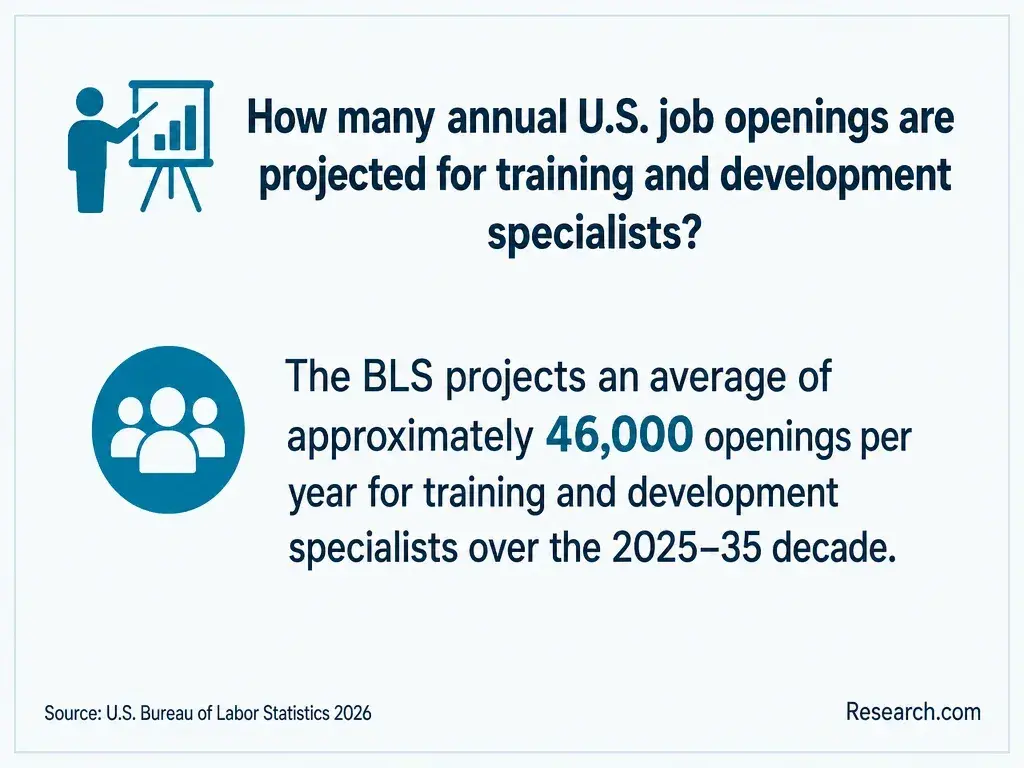
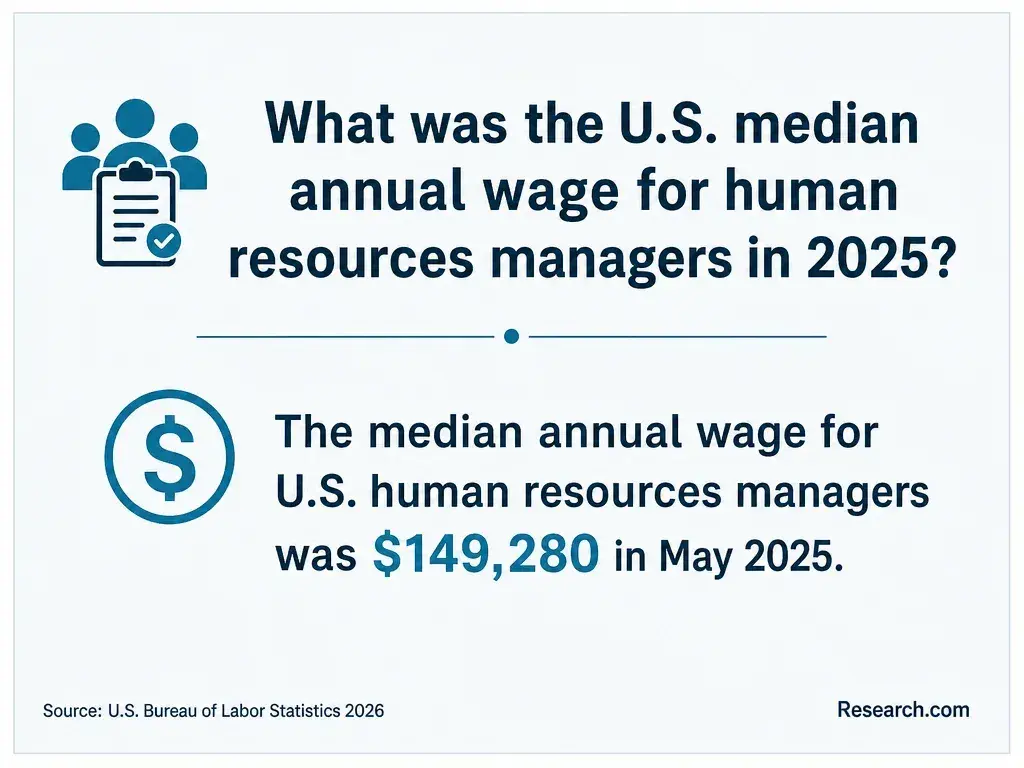
For context, the US Bureau of Labor Statistics reports a May 2025 median annual salary of $133,000 for training and development managers, with projected employment growth of 6.4% from 2025 to 2035. That is an occupational benchmark, not a Vanderbilt graduate salary, an entry-level offer, or evidence that the Ed.D. is required for the role.
If your goal is advancement within a university or public institution, investigate its promotion rules and education benefits before assuming a doctorate will change your pay grade.
Resources on funding for higher education leadership doctorates can help frame questions about aid and employer support, but only a written award or employer policy establishes what you would receive.
How should applicants evaluate Vanderbilt's Ed.D. against other doctoral programs?
Start with the final work you want to be able to produce. Vanderbilt is a stronger candidate when you want to investigate a bounded organizational problem with collaborators and turn evidence into a useful partner-facing response.
A dissertation-based PhD may fit better when your priority is an individually developed scholarly research agenda. Another Ed.D. may suit you better if you want an individual dissertation in practice, a different schedule, or a program explicitly aligned with school-administrator licensure.
Use the same questions in every program conversation so that similar-sounding degrees become comparable:
- What exactly must the final project contribute, and who approves its topic, partner, methods, and final product?
- Is the work individual or team-based, and what happens if partner access or team membership changes?
- What methods training, faculty guidance, and ethical-review support are available before data collection?
- What are the complete attendance and cost obligations through a realistic completion date?
Request a current catalog, capstone handbook or rubric, attendance requirements, and individualized cost estimate. Then compare like with like: comparing online leadership doctorate program prices is useful only after you account for required credits, fees, travel, and the type of doctoral project each price buys.
If your immediate goal is simply to lead a better training initiative, a supervised workplace project or targeted evaluation course may be more direct than another degree.
Other Things You Should Know About EdD Leadership
Potentially, but do not assume you can share a partner's data or the full report. Ask about intellectual-property and publication rules, obtain any required permission, and prepare a redacted summary of your methods and contribution when appropriate.
It can if you document your specific responsibilities and decisions. Ask Vanderbilt how individual contributions are assessed, then describe your own work accurately on a résumé or in interviews.
Possibly, subject to academic approval and your employer's authorization. Confirm access, privacy, and reporting limits before treating internal records or employee participation as available.
No. A capstone may use rigorous research methods without being designed for journal publication or broad generalization. Publication requires a suitable contribution and compliance with any partner, ethics, and authorship requirements.
- Ethical Guidelines and the Institutional Review Board - PMC https://pmc.ncbi.nlm.nih.gov/articles/PMC10885741/
- Institutional Review Boards Frequently Asked Questions | fda.gov https://www.fda.gov/regulatory-information/search-fda-guidance-documents/institutional-review-boards-frequently-asked-questions
- Careers Leaders Can Pursue with an Ed.D. | Peabody Online | VU-EDU https://peabodyonline.vanderbilt.edu/edd-in-organizational-learning/edd-careers/
- Thesis & Dissertation Guidelines - Vanderbilt Graduate School https://gradschool.vanderbilt.edu/academics/thesis-dissertation-guidelines/
- How Long Does It Take to Get an EdD? Full Online Timeline Guide | Alverno College https://edd.alverno.edu/articles/how-many-years-is-a-doctorate-in-education/
- Instructional Leadership, Doctor of Education | St. John's University https://www.stjohns.edu/academics/programs/instructional-leadership-doctor-education
- K-12 and Higher Education Leadership and Policy (Ed.D.) | Peabody College of Education and Human Development https://peabody.vanderbilt.edu/academics/departments/leadership-policy-organizations/doctor-of-education-edd/
- Where leaders learn: Inside Vanderbilt's online Leadership and Learning in Organizations doctoral program https://news.vanderbilt.edu/2025/05/13/where-leaders-learn-inside-vanderbilts-online-leadership-and-learning-in-organizations-doctoral-program/
- Doctoral Program Milestones | Student Handbook American Public University | American Public University (APU) https://www.apu.apus.edu/student-handbook/doctoral-programs/academic-success/academic-policies/doctoral-program-milestones/
- EdD and PhD Research (LPO, LLO): LLO Capstone Projects | Research Guides at Vanderbilt University https://researchguides.library.vanderbilt.edu/PBDY_EdD_PhD/capstone_project