2027 Online Ed.D. in Leadership and Learning in Organizations: Degree Fit for Leaders Tackling A Culture That Punishes Reporting Mistakes
Audited and Verified:
Our Editorial and Data Verification Process
Research.com uses government datasets, official education statistics and primary institutional information to support its career and degree guides. Our review process checks factual accuracy, occupational definitions, source dates and the requirements associated with the credentials discussed.
How This Article Was Fact-Checked
Our editorial team verifies salary estimates, employment projections, education requirements and program information against original data providers and official organizations. Salary figures are checked against the relevant occupational definitions and reporting periods. Information about licensure, accreditation and required in-person training is reviewed separately.
Fact-checked and verified on:

Co-Founder and Chief Data Scientist
When employees expect punishment for reporting mistakes, leaders lose information they need to prevent repeat problems. An online Ed.D. in leadership and learning may help an experienced leader diagnose that pattern and evaluate change - but doctoral study cannot substitute for fair policies and action now.
This guide is for leaders in workplaces, schools, healthcare organizations, government, and nonprofits who are weighing the degree against more immediate options. It explains what to examine in the reporting system, what an Ed.D. could add, and how to decide whether the commitment fits your authority and goals.
Key Things You Should Know
- An Ed.D. is a strong fit when you have responsibility for sustained organizational change and need advanced skills in diagnosis, adult learning, implementation, and applied evaluation - not merely a new reporting form.
- First examine incentives, supervisor responses, confidentiality, and consequences for reporting. More training alone will not fix retaliation or a policy that rewards hiding errors.
- For career context, the US Bureau of Labor Statistics reports a 2025 median annual wage of $133,000 for training and development managers; that occupation-wide figure is not an expected Ed.D. graduate salary.
What Is an Online Ed.D. in Leadership and Learning in Organizations?
An online Doctor of Education in leadership and learning is a practice-oriented doctorate focused on how organizations develop people, use evidence, and lead change. Depending on the institution, students may study organizational culture, adult learning, research methods, and improvement while completing a capstone, dissertation in practice, or another approved doctoral project. "Online" describes delivery, not necessarily self-paced study; live classes, group work, or campus visits may still be required.
For a leader addressing suppressed mistake reporting, the degree's potential value lies in connecting workplace learning to governance and management decisions. It may help you investigate why people stay silent and evaluate changes without presuming that a workshop will solve the problem. Program titles and curricula differ, so use education doctorate specialization comparisons to distinguish an organizational-learning focus from school-administration or other education pathways.
Is an Online Ed.D. in Leadership and Learning Right for Leaders Addressing Mistake Reporting?
It may be, if your work involves leading a long-term change effort and you need deeper preparation to study and improve organizational systems. It is less likely to be the right first response if employees face active retaliation, reporting channels are unsafe, or leaders have not enforced existing protections. Those conditions call for prompt action through appropriate management, compliance, human resources, or other responsible channels.
A low reporting rate is not proof of a healthy culture; it could reflect few mistakes, weak detection, or fear. Likewise, an increase in reports after a change is not, by itself, proof that more mistakes are occurring. The distinction matters because leaders can inadvertently reward the appearance of safety while discouraging disclosure.
The options below differ in both speed and purpose. Compare them against your authority to change policy and the depth of inquiry your role requires.
| Option | Best fit | Main limitation |
| Immediate policy and management action | Retaliation, unclear escalation, or inconsistent responses need correction now | May not build lasting internal capacity to diagnose wider patterns |
| Targeted coaching or change-management training | Leaders need practical feedback and implementation skills | Does not independently resolve conflicting incentives or governance failures |
| Online leadership and learning Ed.D. | An experienced leader needs sustained study and applied inquiry across teams or systems | Requires substantial time and expense; authority to implement change still comes from the organization |
Before choosing a degree, define the problem without treating an untested explanation as fact. A useful initial sequence is:
- Separate reporting volume from possible causes: who can report, what counts as a mistake, and what happens afterward?
- Identify who controls supervisor accountability, confidentiality, incentives, and corrective action.
- Determine what evidence can be examined lawfully and safely, without exposing individual reporters.
- Decide whether the remaining gap is doctoral-level leadership and evaluation capability or a more immediate policy, legal, technical, or coaching need.
An Ed.D. is most compelling when you can use its learning over time, have a feasible setting for approved applied work, and expect the credential to support responsibilities you already hold or can realistically pursue.
How Do You Choose an Accredited Online Ed.D. Leadership Program?
Start by confirming the institution's current institutional accreditation with the accreditor and the school. Then inspect the exact degree - not just its marketing language - for organizational-learning coursework, faculty guidance in applied inquiry, the required final project, and access to research support. Accreditation establishes an institutional quality baseline; it does not establish that a program teaches the methods you need or qualifies you for a regulated role.
Ask a program representative whether a project about mistake reporting could meet its academic requirements, whether an external organization is permitted, and what happens if employer access disappears. Confirm live attendance, group-work schedules, campus convenings, and the published costs for your entry term. If you work in higher education, resources on reducing higher education leadership doctoral study costs can inform your questions about aid, but verify every funding condition with the institution.
Relevant study connects organizational diagnosis with learning and change. Adult learning can help leaders design useful feedback after an error; leadership and organizational-change study can help them examine whether managers' responses and performance incentives contradict that message. Research and evaluation methods can help distinguish a reporting-process change from a broader shift in trust and behavior.
For example, a proposed workplace inquiry might compare how reporting procedures are understood across teams, examine permitted aggregate reporting patterns, and assess whether responses are consistent. Those are possible lines of inquiry, not a diagnosis or a claim that any intervention works. Surveys and interviews involving employees require careful attention to voluntary participation, confidentiality, employer permission, and the institution's review rules. A small pre/post comparison cannot, on its own, prove that a course or policy caused a culture change.
Check actual course descriptions and project requirements. Exposure to research methods is not the same as advanced statistical expertise, and a leadership elective is not necessarily a formal concentration.
Requirements vary by school. Programs may ask for prior graduate study, transcripts, relevant professional experience, recommendations, a statement of purpose, and evidence that applicants can undertake doctoral work. An education degree or executive title is not universally required. For this topic, a stronger application explains the decisions you have been responsible for, the limits of your authority, and a genuine organizational question - without claiming access to employees or data you have not obtained.
Ask admissions which prior degrees and credits establish eligibility, and ask the program separately whether any credits can apply toward the doctorate. Those are different decisions. If you previously left a doctorate unfinished, doctoral completion options for ABD education students may be worth comparing; do not assume earlier coursework will transfer or that a new program will accept an existing project.
Completion time depends on the required coursework, enrollment pace, course availability, and final-project milestones. A workplace topic can take longer if organizational approval, data access, or leadership sponsorship changes. Request the program's course sequence and completion rules rather than relying on its advertised fastest path.
Compare online Ed.D. programs with intensive pacing against the time your job and project can actually support. Faster coursework offers little advantage if you cannot attend required sessions or obtain timely approval for the applied work.
Calculate the cost using the school's published tuition basis and required credits or terms, then add mandatory fees, materials, any travel and lodging, and expenses associated with extending enrollment. Employer reimbursement may reduce your personal cost, but confirm its eligibility rules, payment timing, grade conditions, and any obligation to repay it after leaving the organization.
Compare written estimates, not headline tuition alone. Information on organizational leadership doctoral fees and total costs can help you identify expense categories; the institution must confirm charges for your program and term. If the workplace problem needs an immediate fix, also weigh the opportunity cost of delaying action while pursuing a doctorate.
An Ed.D. may support experienced professionals pursuing learning and development management, organizational development, workforce leadership, internal consulting, or related education and nonprofit leadership work. In these roles, useful evidence of readiness includes having led cross-functional changes, developed managers, evaluated programs, and handled sensitive information responsibly.
The degree does not turn a reporting-system project into automatic qualification for an executive job. If you are moving from training delivery into organizational change, look for opportunities to lead an approved improvement initiative and document your decisions and limitations without disclosing employee reports. Employers will still evaluate your functional experience, sector knowledge, and leadership record.
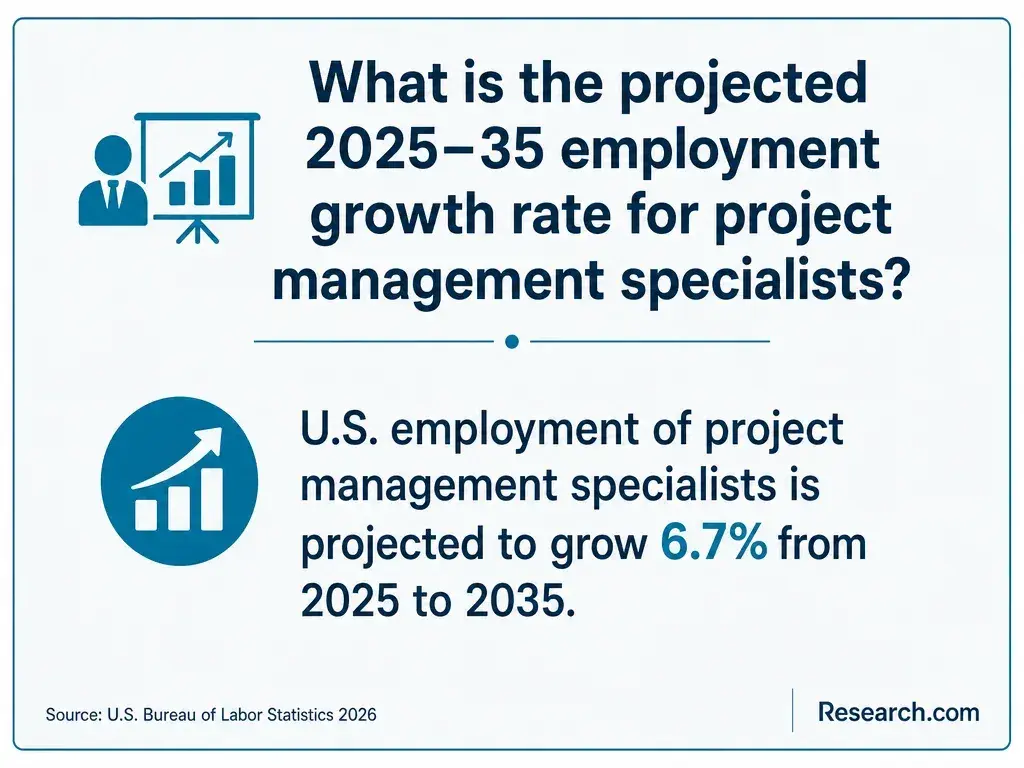
The US Bureau of Labor Statistics reports a 2025 median annual wage of $133,000 for training and development managers and projects 6.4% employment growth for that occupation from 2025 to 2035. The figures describe an occupation, not Ed.D. graduates: pay and access to management roles depend on experience, employer, location, and responsibilities.
Use the occupation that matches the job you actually want when assessing return on investment. A leader improving reporting in a public agency, for example, should not assume private-sector training-manager compensation or a promotion tied to completing the degree.
Do Ed.D. Leadership Graduates Need Licensure or Professional Certification?
Organizational leadership and learning roles generally do not have a single Ed.D.-specific license. Employers may value particular professional certifications, but a doctorate does not award them automatically. If your target is a regulated education position, check the applicable state authority and the program's licensure disclosure: a broadly focused organizational leadership Ed.D. should not be presumed to prepare graduates for principal, superintendent, or other educator licensure.
Other Things You Should Know About EdD Leadership
Not necessarily. Employees may still fear being identified from the details of an incident or punished indirectly. Review who receives reports, how information is restricted, and how retaliation concerns are handled.
Use caution: the incentive may discourage reporting. Examine whether measures distinguish the frequency of errors from willingness to disclose them and whether managers respond consistently.
Only if the organization and program permit the specific use, tool, and data. Do not enter confidential reports into an unapproved service; verify privacy, security, and research-review requirements first.
The leader should not investigate allegations about their own conduct. Follow the organization's independent escalation process and preserve appropriate records; doctoral coursework is not a substitute for impartial review.
- Accreditation in the U.S. | ed.gov http://www.ed.gov/laws-and-policy/higher-education-laws-and-policy/college-accreditation/accreditation-in-the-us
- Tip Lines Can Lower Violence Exposure in Schools | National Institute of Justice https://nij.ojp.gov/topics/articles/tip-lines-can-lower-violence-exposure-schools
- Error Reporting and Disclosure - Patient Safety and Quality https://www.ncbi.nlm.nih.gov/books/NBK2652/
- EdD vs. PhD in Education: Choosing the Right Program | Goodwin College of Professional Studies https://drexel.edu/soe/resources/career-path/edd-vs-phd/
- Online Ed.D. in Leadership and Learning in Organizations | VU-EDU https://peabodyonline.vanderbilt.edu/edd-in-organizational-learning/
- 2026 UNC Online EdD in Organizational Learning & Leadership https://online.unc.edu/online-doctoral-programs/online-edd-organizational-learning-and-leadership/
- Learning Over Blaming: A Better Approach to Accountability in a Healthcare Setting | Center for Interprofessional Health https://ipe.umn.edu/news-media/collaboration-insights/learning-over-blaming-better-approach-accountability-healthcare
- Doctor of Education in Organizational Leadership, Culture and Change | Thomas Edison State University https://www.tesu.edu/degrees-programs/doctoral/edd.php