2027 Online Ed.D. in Leadership and Learning in Organizations: Degree Fit for Leaders Tackling Poor Coordination Between Headquarters and Local Teams
Audited and Verified:
Our Editorial and Data Verification Process
Research.com uses government datasets, official education statistics and primary institutional information to support its career and degree guides. Our review process checks factual accuracy, occupational definitions, source dates and the requirements associated with the credentials discussed.
How This Article Was Fact-Checked
Our editorial team verifies salary estimates, employment projections, education requirements and program information against original data providers and official organizations. Salary figures are checked against the relevant occupational definitions and reporting periods. Information about licensure, accreditation and required in-person training is reviewed separately.
Fact-checked and verified on:

Co-Founder and Chief Data Scientist
Headquarters sets a direction, but local teams receive conflicting instructions, work around central processes, or struggle to explain what customers need. For leaders responsible for that gap, an online Ed.D. in Leadership and Learning in Organizations may offer a way to study organizational change while continuing to work.
It is not necessarily the fastest way to improve coordination. This guide shows how to distinguish a learning problem from a structural one, assess whether doctoral study adds value, and compare programs against the authority, time, and resources you can actually bring to the work.
Key Things You Should Know
- An Ed.D. is most useful when headquarters-local coordination is a recurring organizational problem that you can investigate and influence - not merely a missing meeting or unclear procedure.
- Start by checking decision rights, incentives, information flow, and local capacity; training alone will not fix a process or governance failure.
- Career value depends on experience as well as the degree: the US median for training and development managers was $133,000 in May 2025, not a salary prediction for Ed.D. graduates.
What is an online Ed.D. in Leadership and Learning in Organizations?
An Ed.D. is a practice-oriented doctorate. Programs with leadership and learning in their names generally examine how people learn at work, how organizations change, and how leaders use evidence to improve practice. The exact degree title, curriculum, online format, and final project vary by institution; a similarly named program may serve a different audience.
For a headquarters-local coordination problem, the potential value is combining organizational diagnosis with adult learning and applied inquiry. A leader might examine why a centrally designed process is interpreted differently across sites, then evaluate a feasible improvement.
That is different from assuming the problem can be solved by teaching local employees to follow instructions. Compare Ed.D. study tracks and career fit against the work you want to do, rather than selecting a program by title alone.
A PhD is generally a better fit for someone whose primary aim is an academic research career. An MBA or targeted operations training may be more direct when the need is financial, operational, or managerial rather than sustained inquiry into organizational learning.
How can this Ed.D. help leaders improve headquarters-local team coordination?
Poor coordination is a symptom, not a diagnosis. Headquarters may change priorities without explaining trade-offs; local teams may lack capacity to implement them; or both sides may use the same terms to mean different things. An Ed.D. can help a leader investigate those possibilities, engage affected teams, and assess whether a change works. It does not give the student authority to alter reporting lines, budgets, or policy.
A useful first pass separates evidence from assumptions before anyone commissions another training module:
- Define the breakdown: identify a specific handoff, decision, or recurring exception, and establish how it currently works across sites.
- Compare perspectives: ask headquarters and local representatives where instructions, authority, resources, and feedback diverge.
- Match the response to the cause: consider clearer decision rights or process changes for structural gaps, and learning support when people need new knowledge or practice.
- Evaluate a limited change: agree in advance on indicators such as handoff delays, avoidable rework, or documented exceptions, while checking for unintended burdens on local teams.
These steps could form the basis of applied doctoral work, but a proposed workplace project is not automatically an approved dissertation or capstone. Employer permission, faculty approval, data access, confidentiality rules, and any required research review must be established before collecting restricted information. If the cause is already clear and the leader can implement a process fix now, coaching or a focused improvement project may deliver value sooner than a doctorate.
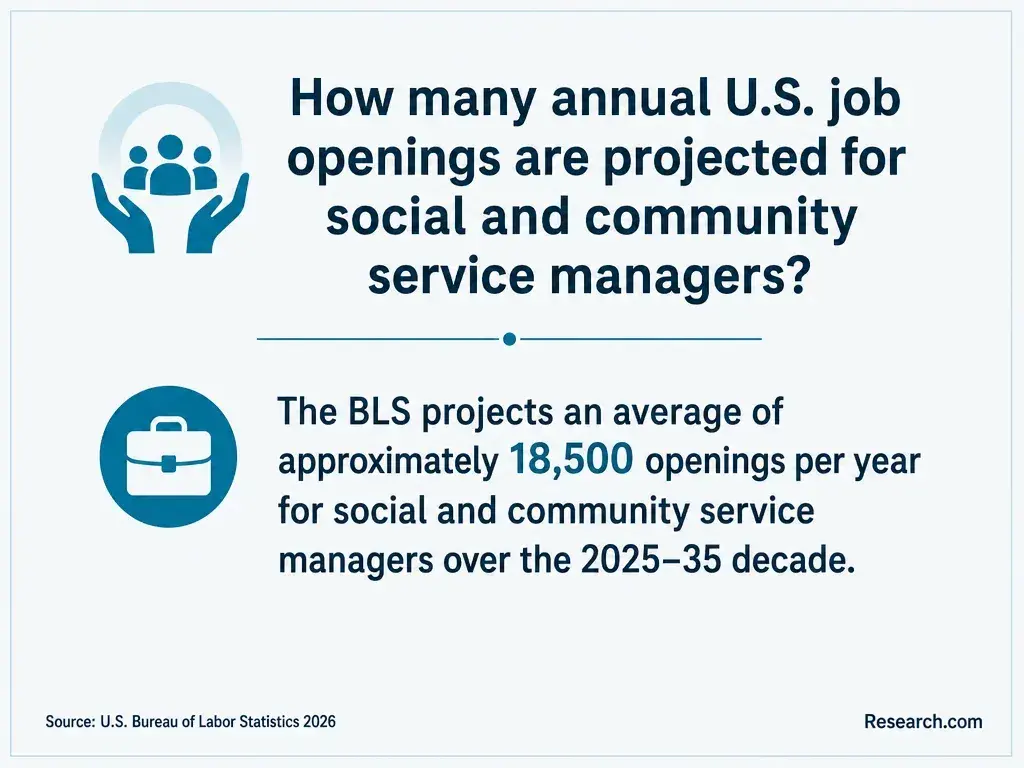
What careers can you pursue with an Ed.D. in Leadership and Learning?
The degree may support advancement for an experienced learning and development, organizational development, operations, nonprofit, or public-sector leader. Relevant work includes designing leadership development, improving cross-site implementation, evaluating workforce initiatives, or advising organizations on change. Employers still assess sector knowledge, management responsibility, and demonstrated results.
The distinction below helps connect a target role to the coordination work you already do; the doctorate alone does not qualify someone for a senior appointment.
| Role | Relevant responsibility | Experience to demonstrate |
| Training and development manager | Leads workforce learning across locations | Program ownership, staff management, and evaluation |
| Organizational development leader | Addresses processes, culture, and change adoption | Cross-functional influence and implemented change |
| Management analyst or consultant | Diagnoses coordination and recommends improvements | Credible analysis, client communication, and implementation support |
A leader seeking an internal promotion should compare the program with the employer's actual job requirements. Someone moving into consulting may benefit just as much from supervised projects and a portfolio of work that can be shared without exposing confidential information.
Relevant study may include organizational learning, adult learning, systems thinking, change leadership, research methods, and program evaluation. For headquarters-local coordination, the important question is whether students learn to distinguish a knowledge gap from a problem with incentives, governance, workflow, or resources - and can test that distinction responsibly.
Look beyond course titles. Ask whether assignments let you examine multi-site implementation, learn qualitative and quantitative methods appropriate to your question, and receive feedback from faculty with relevant expertise. Confirm which courses are required, which are electives actually offered during your enrollment, and whether the final deliverable can address a workplace problem. Exposure to a topic is not proof that a program develops advanced expertise in it.
Accreditation must be checked for the institution offering the degree; the word "online" neither establishes nor rules out accreditation. Verify the institution and its accreditor through official institutional and accreditor records, then confirm the exact Ed.D. being awarded. Any claimed program-specific recognition should be checked separately rather than inferred from institutional accreditation.
A broadly focused organizational leadership Ed.D. should not be assumed to meet teacher, principal, or superintendent licensure requirements. If a regulated education role is your goal, obtain the program's licensure disclosure and check the relevant state authority before enrolling.
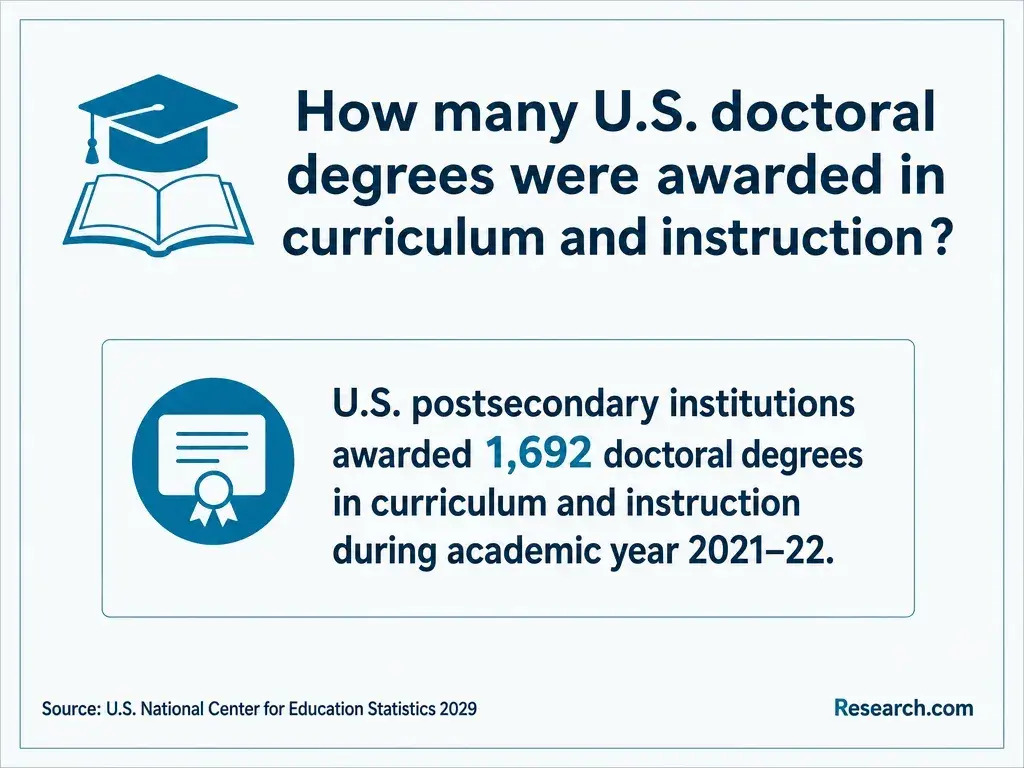
Requirements vary. Programs may request a completed graduate degree, transcripts, a statement of purpose, recommendations, a résumé, and evidence of relevant professional experience. Some also specify grades, an interview, or an entrance test. An education master's, executive title, or published research record is not a universal prerequisite.
For this problem, a persuasive application would describe a coordination challenge you have actually encountered, the decisions you were responsible for, what remains uncertain, and why doctoral inquiry fits your goals.
Do not claim access to employee data or permission to run a project before receiving it. Applicants with an Education Specialist degree can review evaluating education specialist to doctorate pathways, but must ask each program separately whether prior study meets admission conditions or applies to degree requirements.
Completion time depends on the program's credit and course sequence, enrollment pace, required convenings, and dissertation or capstone milestones. Published timelines are planning estimates, not promises - particularly if employer access or project approval is delayed.
Online delivery also does not necessarily mean self-paced study. Confirm live-class attendance, group-work expectations, campus visits, and what happens if you change employers before the final project. If a traditional dissertation is a barrier, explore Ed.D. study with dissertation alternatives, then verify the actual final deliverable and its likely workload with each school.
There is no reliable single price for this degree. Request a written estimate based on the credits you must complete and the school's current tuition and fee schedule. Add required travel and lodging, materials, possible project expenses, and the cost of time away from paid work. A longer-than-planned project can change the total even when the advertised tuition rate stays the same.
When comparing online leadership doctorate program prices, check whether figures cover the whole program or only a credit rate. Obtain employer reimbursement rules in writing, including eligibility, payment timing, and any obligation to remain employed. Do not treat a possible promotion or salary increase as guaranteed repayment of the investment.
US Bureau of Labor Statistics occupational data provides context, not an Ed.D. graduate earnings forecast. Training and development managers had a median annual salary of $133,000 in May 2025, with employment projected to grow 6.4% from 2025 to 2035. Those figures describe an occupation whose hiring depends heavily on management and learning experience, not possession of a particular doctorate.
If your target is organizational consulting rather than leading an internal learning function, assess the qualifications employers or clients request for that work. A credible estimate of your own prospects depends on your current role, sector, location, leadership record, and realistic openings - not the highest-paid occupation that could conceivably employ an Ed.D. graduate.
How do you choose a reputable online Ed.D. program?
Choose against the headquarters-local problem you expect to work on, not a generic leadership label. Request the current curriculum, attendance and travel rules, final-project handbook, faculty advising arrangements, total-cost estimate, and any available completion-outcome definitions. Compare lower-tuition pathways to an education doctorate only after checking that their curriculum and project requirements serve your purpose.
Before applying, put the decisive questions to the program and your organization:
- Can the required project examine a multi-site organizational problem, and who approves its scope?
- What support is available if site access, an employer sponsor, or a project partner changes?
- Which classes, team meetings, and campus convenings are mandatory?
- Who can authorize the proposed data use, and what academic review may be required?
If the answers reveal little opportunity for relevant applied work - or if you lack authority to act on findings - a shorter change-management course, mentor-supported project, or operational improvement effort may be the better next step.
Other Things You Should Know About EdD Leadership
Do not assume access. Ask what information can be shared, define a narrower question using authorized materials, and check whether the revised scope still satisfies your program's project rules.
Not necessarily. Separate decisions that require consistency from practices that need local adaptation, and make the reason for each explicit to both sides.
Possibly, but removing names alone may not prevent identification in small teams. Check organizational privacy rules, data-use permissions, and the program's review requirements before collecting information.
An organizational owner - not the student alone - should have authority to maintain the process, review feedback, and revise it. Agree on ownership before treating a pilot as a lasting solution.
- Cost of Attendance (Budget) | 2025-2026 Federal Student Aid Handbook https://fsapartners.ed.gov/knowledge-center/fsa-handbook/2025-2026/vol3/ch2-cost-attendance-budget
- General Schedule Qualification Policies | U.S. Office of Personnel Management https://www.opm.gov/policy-data-oversight/classification-qualifications/general-schedule-qualification-policies/
- Maximizing the Impact and ROI of Leadership Development | nih.gov https://pmc.ncbi.nlm.nih.gov/articles/PMC11505461/
- Educational Leadership, EdD - Graduate School of Education https://ed.buffalo.edu/academics/doctorate/ed-leadership.html
- Online Doctorate in Educational Leadership & Management (EdD) | Drexel University Online https://www.online.drexel.edu/online-degrees/education-degrees/oelm/index.aspx
- What Is a Capstone Project? Types, Examples, and Tips | SCU https://www.scu.edu/business/blog/business-concepts/what-is-a-capstone-project/
- Online Doctorate in Education Leadership and Innovation | NYU https://leadershipinnovation.steinhardt.nyu.edu/
- Online Doctor of Education in Leadership (EdD) | spalding.edu https://online.spalding.edu/programs/online-doctor-education-leadership
- What Topics Do EdD Students Research in the EdD Program? | Fairfield University https://www.fairfield.edu/news/insights/education-human-development/what-topics-do-edd-students-research.html
- Top 14 Salary Opportunities for Master's in Education with a Concentration in Organizational Leadership Graduates https://gsep.pepperdine.edu/blog/posts/top-14-salary-opportunities-for-ms-in-org-leadership-graduates.htm