2027 Paying for an Online Ed.D. in Leadership and Learning in Organizations: A Scholarship Restricted to Returning Adults
Audited and Verified:
Our Editorial and Data Verification Process
Research.com uses government datasets, official education statistics and primary institutional information to support its career and degree guides. Our review process checks factual accuracy, occupational definitions, source dates and the requirements associated with the credentials discussed.
How This Article Was Fact-Checked
Our editorial team verifies salary estimates, employment projections, education requirements and program information against original data providers and official organizations. Salary figures are checked against the relevant occupational definitions and reporting periods. Information about licensure, accreditation and required in-person training is reviewed separately.
Fact-checked and verified on:

Co-Founder and Chief Data Scientist
A scholarship described as "for returning adults" may sound like a way to fund an online Ed.D., but many such awards exclude doctoral study. That distinction matters before you commit to application fees, a course schedule, or borrowing.
This guide is for professionals returning to school who want to study leadership and learning in organizations. It explains how to check scholarship eligibility, build a realistic funding plan, and decide whether the doctorate's cost fits your professional goal.
Key Things You Should Know
- A returning-adult scholarship is useful only if its rules also permit doctoral study, your online enrollment, and your particular break from education; do not infer eligibility from the award's name.
- No specific award should be counted toward an Ed.D. budget until its current terms and your eligibility are confirmed in writing.
- Compare the full degree cost - not tuition alone - with confirmed grants, employer support, available loans, and the value of a less expensive route to your goal.
What Is an Online Ed.D. in Leadership and Learning in Organizations?
An online Doctor of Education in leadership and learning in organizations is a practice-oriented doctorate focused on how organizations develop people, use evidence, and implement change. Depending on the program, students may study adult learning, organizational development, leadership, and applied research. "Online" describes where much of the instruction occurs; it does not establish that classes are self-paced or that campus visits are unnecessary.
For a returning professional, the degree is most relevant when a substantial leadership or organizational-learning problem calls for sustained study and an applied doctoral project. It is not inherently a school-administrator credential, and it does not by itself confer educator licensure. If the immediate goal is a narrower skill - such as evaluating a training program - a targeted course or employer development opportunity may cost substantially less.
How Can Returning Adults Pay for an Online Ed.D. With Scholarships?
Start with the scholarship's eligibility language, not its promotional description. "Returning adult" might mean a minimum age, a specified interruption in schooling, or a return after caregiving or employment. An award may meet that description yet fund only undergraduate degrees. Ask the sponsor to confirm that a professional doctorate, your institution, your enrollment intensity, and online study all qualify.
Build a funding plan in this order so that uncertain awards do not become assumed income:
- Request the program's written cost estimate, including required credits, fees, and any campus travel.
- Ask the financial aid office for doctoral scholarships and institutional grants, then check local foundations and professional associations against their current eligibility rules.
- Get an employer's tuition policy in writing, including reimbursement timing, grade requirements, annual caps, and repayment obligations if you leave.
- Subtract only confirmed support from expected costs; identify what remains before considering loans or reducing work hours.
A scholarship paid after enrollment may not cover the first tuition bill. If affordability is the deciding factor, use education doctorate tuition and affordability comparisons to identify programs worth requesting detailed estimates from - not as substitutes for an individual aid offer.

What Scholarships Are Restricted to Returning Adult Doctoral Students?
There is no named scholarship in this article whose current terms are verified as both restricted to returning adults and open to online Ed.D. students. That is not a claim that no such award exists. It means a reader should not budget for one without checking an active award's rules. Well-known "reentry" or "nontraditional student" awards often have degree-level restrictions, while doctoral fellowships may have no returning-adult requirement.
To find a genuinely matching award, screen opportunities through three separate tests. Passing one does not establish that the award passes the others:
- Returning-adult restriction: Does the sponsor require an age, time away from school, or a defined interruption - and do you meet it?
- Doctoral eligibility: Does "graduate" explicitly include a professional doctorate or Ed.D., rather than only a master's degree?
- Enrollment eligibility: Are online students, your institution, your state of residence, and your expected course load eligible?
Ask the doctoral program's aid office whether it administers awards specifically for returning students. For outside awards, request the sponsor's current written terms and deadline. If a page lists only an award name and no degree-level criteria, treat eligibility as unconfirmed.
There is no defensible single price for this degree: programs charge by credit, term, or another published schedule, and completion requirements differ. Request a cost estimate for the entry term you intend to use. The components below show why a tuition quote alone can understate the amount a returning adult must finance.
| Cost component | What to verify | Why it affects the decision |
| Tuition | Rate, required credits or terms, and possible rate changes | Determines the core program charge |
| Mandatory fees | Technology, registration, and graduation charges | May not be included in advertised tuition |
| Campus requirements | Required visits, travel, lodging, and time away from work | Online instruction may still create in-person costs |
| Study and project expenses | Materials, software, and any approved project-related costs | Can vary with the program's research requirements |
| Household and work costs | Childcare, reduced hours, or unpaid leave | May matter more than a small tuition difference |
Calculate a net planning cost as required program charges plus foreseeable travel and household costs, minus confirmed nonrepayable aid and employer payments. Keep loans separate: they finance a cost rather than reduce it. When comparing affordable Doctor of Education degrees, use the same completion and travel assumptions for each school.
Possible sources include institutional grants or scholarships, outside awards, employer assistance, and federal graduate student loans for eligible students at eligible institutions. Submit the Free Application for Federal Student Aid (FAFSA) if the school uses it to assess aid. Undergraduate-focused aid, including Pell Grants, generally is not available for an Ed.D.; a professional doctorate also should not be assumed to carry the funding package of a research PhD.
Ask each school for an aid offer showing what is a grant, what is a loan, and what must be renewed. Confirm enrollment and satisfactory-academic-progress conditions, borrowing limits, and whether outside scholarships change institutional aid. Employer reimbursement is a separate agreement: it may arrive only after a course ends and may depend on continued employment. An aid counselor can explain how these rules apply to your specific enrollment plan.
Requirements vary by institution. Programs may ask for a completed graduate degree, transcripts, a statement of purpose, recommendations, a résumé, and evidence of relevant professional experience. Some assess whether applicants can identify a meaningful organizational problem for applied study. A break from education does not automatically disqualify you, but it is worth showing how your recent work has prepared you for doctoral writing, evidence use, and collaboration.
If you have prior graduate coursework, ask two different questions: whether it helps establish admission eligibility and whether any credits can actually satisfy Ed.D. degree requirements. Only an authoritative program evaluation can establish the latter. Applicants returning after an education specialist degree can explore doctoral progression after an education specialist degree, then request a written assessment from each prospective school.
Relevant coursework commonly connects adult learning and leadership to organizational problems: how to assess a learning need, design a response, lead change, and evaluate whether the response worked. Research-methods training can help students distinguish evidence of participation or satisfaction from evidence of improved performance. Specific courses, electives, and the required final project vary by program.
For a returning adult seeking employer support, the curriculum should address an identifiable work objective. A learning and development professional might need stronger evaluation and change-implementation skills; a nonprofit manager might need program assessment within a limited budget. Neither should assume that a broad leadership course supplies specialized technical expertise. Compare actual course descriptions and project requirements with the skills your role requires.
Completion time depends on the school's course sequence, enrollment pace, and final project requirements. Cohort scheduling may limit how quickly a student can move through required courses, while a dissertation or other applied project can extend beyond scheduled classes. Ask for the program's expected schedule and completion policies rather than treating its shortest advertised timeline as a personal guarantee.
Time is also a funding variable. An additional term can bring another tuition bill, delay employer reimbursement, or affect scholarship renewal. Confirm live-class attendance, group-work obligations, campus convenings, and leave rules before deciding what pace is workable alongside employment or caregiving. If the final project is a concern, Ed.D. study with dissertation alternatives can inform your search, but verify each program's actual capstone and graduation requirements.
The degree may support experienced professionals pursuing greater responsibility in learning and development, organizational improvement, consulting, nonprofit management, or higher education. Employers will still assess sector knowledge, management experience, and evidence that you can implement and evaluate work - not merely the doctoral title.
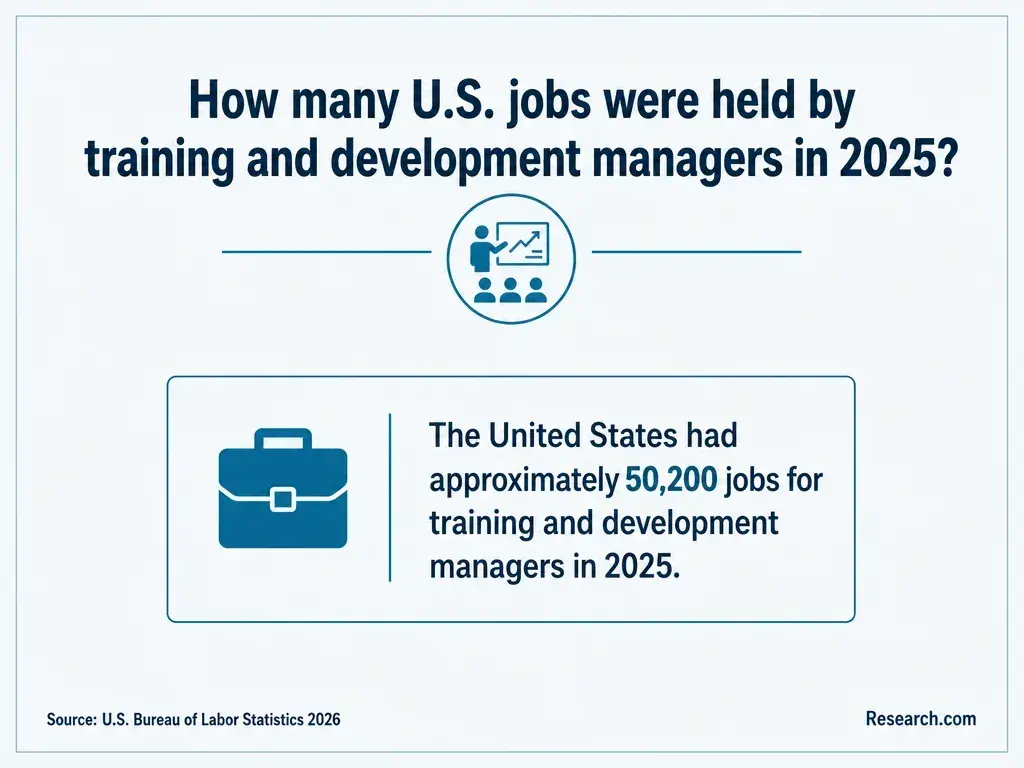
For context, the U.S. Bureau of Labor Statistics reports a May 2025 median annual salary of $133,000 for training and development managers. That is an occupational median, not an expected salary for Ed.D. graduates or a return on tuition. If your aim is improvement work within a college, Ed.D. options for organizational improvement in colleges may help narrow the program search. Check the requirements of your target jobs before paying for a credential they may not require.
How Can You Choose an Accredited Online Ed.D. Program?
Confirm the institution's accreditation and the exact degree it awards, then evaluate the program's fit rather than assuming accreditation alone establishes quality for your goal. Check the accreditor's recognized status, the school's current accreditation listing, and any relevant licensure disclosures. A general organizational leadership Ed.D. should not be assumed to meet requirements for principal or superintendent licensure.
Before enrolling, request written answers about total required credits, tuition and fees, live sessions, campus visits, project supervision, aid renewal, and completion rules. Compare those answers against your work schedule and a budget that excludes unconfirmed scholarships. If a doctorate is not required for the responsibility you seek, compare its net cost with a focused credential, mentorship, or an employer-sponsored improvement project.
Other Things You Should Know About EdD Leadership
Not necessarily. Some awards are tied to one institution or require sponsor approval before a change. Check the award agreement before transferring.
Tax treatment depends on how the money is used and your circumstances. Keep the award terms and expense records, and consult current IRS guidance or a qualified tax professional.
Be cautious of any service that promises an award or requires payment to reveal its eligibility rules. Verify the sponsor and apply through its official process.
Often you can describe a proposed project's professional relevance. Do not present it as approved research or promise access to employer data without the required organizational and academic permissions.
- Employer-offered educational assistance programs can help pay for college | Internal Revenue Service https://www.irs.gov/newsroom/employer-offered-educational-assistance-programs-can-help-pay-for-college
- FAFSA® Application | Federal Student Aid https://studentaid.gov/h/apply-for-aid/fafsa
- Cost of Attendance (Budget) | 2025-2026 Federal Student Aid Handbook https://fsapartners.ed.gov/knowledge-center/fsa-handbook/2025-2026/vol3/ch2-cost-attendance-budget
- Tuition and Required Fees - Bursar's Office | University of South Carolina https://sc.edu/about/offices_and_divisions/bursar/tuition_and_required_fees/
- There's no age limit for financial aid | wisc.edu https://dcs.wisc.edu/blog/theres-no-age-limit-for-financial-aid/
- Doctorate of Education in Leadership and Adult Learning in Organizations (EdD) - William Woods University https://www.williamwoods.edu/academics-programs/leadership-and-adult-learning-in-organizations-edd-online/
- Financial Aid as An Older Student or Returning to College | Campus https://campus.edu/blog/financial-aid/how-to-find-financial-aid-when-youre-an-older-student
- Tuition and Fees Charts - Student Financial Services https://sfs.gsu.edu/resources/student-acct/tuition-breakdown/
- Educational Leadership, Ed.D. | College of Education https://education.arizona.edu/majors/educational-leadership-edd
- Cost to Attend UCF | Office of Student Financial Assistance https://www.ucf.edu/financial-aid/cost/