2027 Online Ed.D. in Leadership and Learning in Organizations After a Master of Social Work: Admission and Credit Questions
Audited and Verified:
Our Editorial and Data Verification Process
Research.com uses government datasets, official education statistics and primary institutional information to support its career and degree guides. Our review process checks factual accuracy, occupational definitions, source dates and the requirements associated with the credentials discussed.
How This Article Was Fact-Checked
Our editorial team verifies salary estimates, employment projections, education requirements and program information against original data providers and official organizations. Salary figures are checked against the relevant occupational definitions and reporting periods. Information about licensure, accreditation and required in-person training is reviewed separately.
Fact-checked and verified on:

Co-Founder and Chief Data Scientist
An MSW can prepare you to lead programs and evaluate services, but it does not answer two crucial doctoral questions: whether a leadership and learning Ed.D. will admit you and whether your graduate credits will count toward the degree. Those decisions can affect your application, budget, and completion timeline. This guide is for social work graduates considering organizational leadership in nonprofits, healthcare, government, or education. It explains what your MSW may establish, what it may not, and which written answers to obtain before committing to an online program.
Key Things You Should Know
- A completed MSW may satisfy an Ed.D. master's-degree requirement; a master's in education is not universally required. The program must confirm whether your degree and experience meet its rules.
- MSW credits used to establish admission eligibility are not automatically transferable into Ed.D. requirements. Ask for a course-by-course evaluation and a revised degree plan.
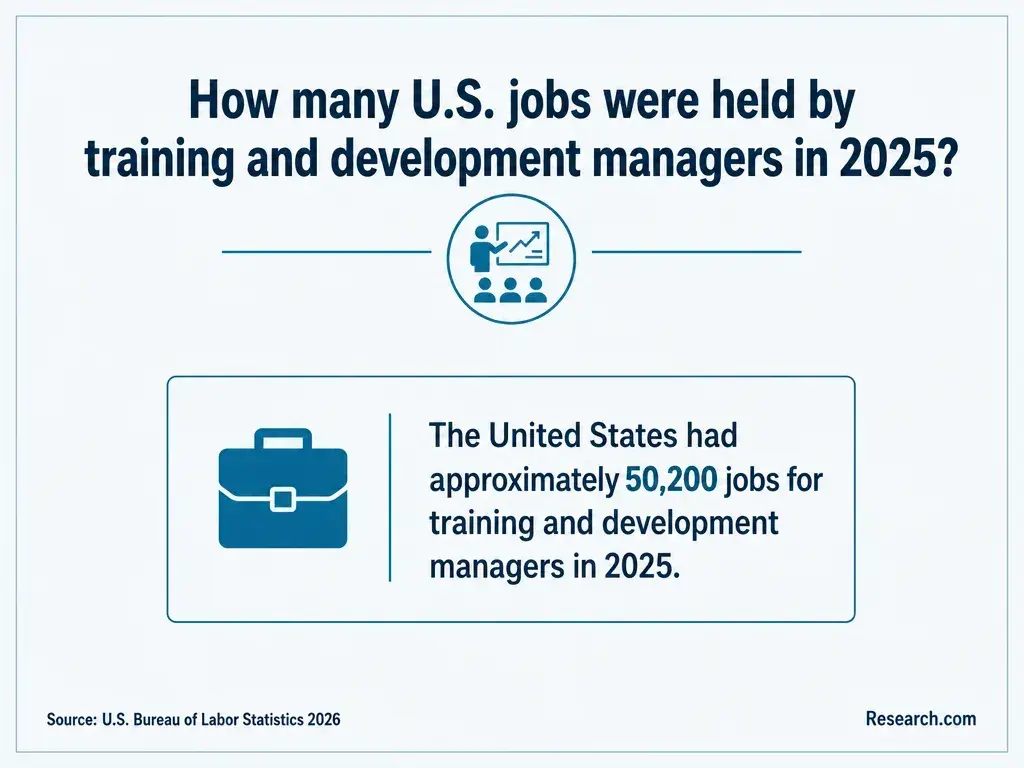
- Career value depends on the role, not the credential alone: the U.S. median pay for training and development managers was $133,000 in May 2025, but that is not an expected salary for Ed.D. graduates.
What Is an Online Ed.D. in Leadership and Learning in Organizations?
It is a practice-oriented doctorate focused on how organizations develop people, lead change, and use evidence to improve their work. Vanderbilt Peabody uses the name Leadership and Learning in Organizations for an online Ed.D.; other schools may offer related degrees under different names. The awarding institution - not the subject matter alone - determines the curriculum, admissions rules, and final project.
For an MSW graduate, the distinction is practical. Social work education may emphasize client and community needs, services, policy, and evaluation. A leadership and learning Ed.D. may extend that work toward staff development, organizational change, and applied inquiry across whole agencies. It is not a clinical social work qualification or, without a specifically approved pathway, a school-administrator license. Final requirements also vary: readers who prefer a particular project format can compare Ed.D. study with dissertation alternatives, then confirm what each program actually requires.
Can You Earn This Online Ed.D. After a Master of Social Work?
Potentially, yes. An accredited, completed MSW can be a relevant graduate foundation for organizational leadership study. An education master's is not a universal prerequisite. Admission still depends on the particular program's accepted degrees, academic record, professional-experience criteria, and assessment of your fit.
Your strongest connection may be work you have actually done: supervising staff, improving referral processes, training volunteers, evaluating programs, or coordinating change across agencies. Explain your decision-making responsibility and the organizational problem you want to study; do not present clinical experience alone as evidence of organization-wide leadership. If your goal is advanced clinical practice rather than organizational change, compare the Ed.D. with supervision, licensure-related development, or targeted clinical training before applying.
What Admission Requirements Apply to MSW Applicants?
Separate eligibility from competitiveness. A program may formally require a completed master's degree and transcripts while also assessing professional experience, recommendations, a statement of purpose, or research readiness. Minimum grades, test policies, experience definitions, and deadlines vary by institution and entry term; none should be inferred from the degree title.
Prepare an application that lets the admissions office evaluate your specific background:
- Provide official transcripts for the MSW and any other graduate study, including coursework taken elsewhere or before the degree was awarded.
- Document leadership through responsibilities and decisions - for example, supervising a team or redesigning staff onboarding - rather than relying on a job title.
- Describe a feasible organizational learning problem, why doctoral study fits it, and what evidence you could realistically access with appropriate permission.
- Ask whether prior research-methods work is required, recommended, or eligible for a waiver; also confirm any applicable GPA, recommendation, interview, or test rule.
Request an admissions decision on your MSW eligibility from the program or graduate admissions office. A faculty member's encouraging assessment of your interests is useful, but it is not a substitute for an official admission decision.
Do not assume so. A program can recognize your MSW for admission yet apply none of its courses toward doctoral graduation. Some curricula permit eligible prior graduate work; others require the prescribed doctoral sequence. Even an approved course substitution may remove a prerequisite without reducing the total credits, tuition, or time required.
The distinctions below show why a single question - "Will my MSW credits count?" - is not specific enough.
| Decision | What it establishes | What it does not establish |
| Degree accepted for admission | Your MSW meets a prior-degree condition. | Its courses transfer into the Ed.D. |
| Prior course accepted as equivalent | A particular requirement may be met or waived. | Total graduation credits necessarily decrease. |
| Credits formally transferred and applied | Approved credits appear in the doctoral degree audit. | Your remaining courses will be offered sooner. |
| Prior doctoral work reviewed | Earlier doctoral study may receive separate consideration. | An unfinished doctorate or "all but dissertation" status automatically transfers. |
For a useful written evaluation, send course descriptions or syllabi alongside transcripts and ask the registrar or designated transfer-credit office about eligible course level, minimum grades, recency, quarter-to-semester conversion, credit limits, and required credits completed at the new institution. Ask your program advisor how any approval changes the actual degree audit and projected schedule. Previous doctoral study is a different case from MSW coursework; readers in that position should evaluate online all-but-dissertation Ed.D. pathways separately.
Verify the university's institutional accreditation through the accreditor or a U.S. Department of Education-recognized accreditation record, and confirm that the institution awards the Ed.D. you intend to pursue. Institutional accreditation matters for the degree's recognition and can affect federal-aid eligibility; it does not establish that an organizational leadership program meets state requirements for principal, superintendent, teaching, or clinical social work licensure.
Your MSW's background matters separately. If a program requires a master's from an institution with specified accreditation or recognition, ask how it evaluates the institution that awarded your MSW. If you need a regulated credential for a future job, obtain the program's licensure disclosure and check with the relevant state licensing authority before enrolling.
Common subjects include adult learning, leadership and organizational change, research methods, and evaluation. Those labels do not guarantee identical content or depth. An MSW graduate who has evaluated client services may already bring stakeholder-engagement experience but still need preparation in workforce learning, organizational measurement, or leading change beyond a single program.
Compare required courses - not just electives - against the work you want to do. For nonprofit staff development, look for needs assessment, learning transfer, and implementation. For agency-wide improvement, examine organizational diagnosis, qualitative and quantitative methods, and how students handle confidential data. Ask whether the culminating work is an individual dissertation in practice, a team project, or another approved deliverable, and whether your proposed organization can support it.
There is no reliable universal completion time or price for this degree. Required credits, cohort pacing, course availability, and the final project determine how long you remain enrolled. A transfer approval saves money only if it reduces billable requirements or terms; a waiver alone may not.
Build a program-specific budget from published tuition and fees, required credits or term charges, technology expenses, any campus travel, and the cost of continuing enrollment during the project stage. Check whether employer reimbursement requires particular grades or continued employment. If you are considering a college-based leadership role, higher education leadership doctoral scholarships can be a starting point for funding research, but confirm award eligibility and terms with each institution.
Before paying a deposit, request a written estimate using your expected course load and any officially approved transfer credits. Compare that expense with a certificate, employer leadership program, or supervised improvement project if your immediate goal does not require a doctorate.
Online study may let you remain employed and live away from campus, but it does not necessarily mean self-paced study. Live sessions, cohort assignments, group meetings, and required convenings can affect a social worker's client-facing schedule. Campus-based study may make in-person collaboration easier while adding commuting or relocation demands.
Ask each program for the live-class schedule, attendance policy, expected group-work hours, residency requirements, and options if your job or project site changes. Compare total costs rather than online tuition alone; choosing a lower-cost online Ed.D. still requires accounting for fees, travel, and time away from paid work.
The most direct opportunities build on your social work experience: directing community programs, leading nonprofit or public-agency workforce development, managing training, or evaluating and improving services. A transition into organizational consulting or higher education may also be possible, but employers will assess relevant management, instructional, analytical, and sector experience - not just the doctorate.
If you want a college administration role, compare its specific hiring requirements with your background and with online organizational leadership Ed.D. choices for college leaders. An applied project and documented leadership results may strengthen your candidacy. Neither an MSW nor a general leadership Ed.D. automatically qualifies you for a regulated school leadership position or an executive appointment.
What Salaries and Job Outlook Can Ed.D. Graduates Expect?
There is no single "Ed.D. salary." The U.S. Bureau of Labor Statistics reports a May 2025 median annual salary of $133,000 for training and development managers. That occupation generally involves substantial experience; its median describes workers in the role, not new doctoral graduates or MSW holders seeking to enter it.
For a different possible route, BLS projects 10.1% employment growth for management analysts from 2025 to 2035. Growth can signal opportunity in consulting and organizational improvement, but it does not measure demand for this specific Ed.D. Compare job postings for your target role with your current qualifications, then weigh the degree's full cost against advancement opportunities available without it.
Other Things You Should Know About EdD Leadership
Generally, doctoral enrollment does not replace or extend your social work license. Continue to meet your state board's licensing, supervision, and continuing-education requirements independently.
Do not assume it can. The Ed.D. faculty must approve the project under its doctoral requirements, and a former placement site would need to authorize any new work or data access.
Not without appropriate organizational authorization and required privacy and research review. Ask your program and agency about permissible data, consent, confidentiality, and whether an aggregated or deidentified approach is feasible.
Tell your advisor promptly. Whether you can continue, change sites, or revise the project depends on program approval and the permissions and data access available at each organization.
- Rule 3359-60-06.4 | Doctoral degree requirements. https://codes.ohio.gov/ohio-administrative-code/rule-3359-60-06.4
- Leadership and Learning in Organizations Online Ed.D. | Peabody College of Education and Human Development https://peabody.vanderbilt.edu/academics/edd-programs/online-leadership-learning-organizations/
- Ed.D. Admissions - Peabody | Vanderbilt University Online https://peabodyonline.vanderbilt.edu/edd-in-organizational-learning/admissions/
- Transfer Credit Policy - College of Education | Missouri State https://education.missouristate.edu/EdD/transfer-credit-policy.htm
- Credit for Prior Learning | University of Arizona Catalog https://catalog.arizona.edu/policy/courses-credit/credit/credit-prior-learning
- Transfer Credit Policies and Procedures | Prince George's Community College https://www.pgcc.edu/hs/transfer-credit-policies-and-procedures/
- Transferring Coursework | Adler Graduate School https://www.alfredadler.edu/admission-aid/transferring-coursework/
- How Long Does It Take to Get an EdD? Full Online Timeline Guide | Alverno College https://edd.alverno.edu/articles/how-many-years-is-a-doctorate-in-education/