2027 Choosing an Online Ed.D. in Leadership and Learning in Organizations Around a New Executive Appointment
Audited and Verified:
Our Editorial and Data Verification Process
Research.com uses government datasets, official education statistics and primary institutional information to support its career and degree guides. Our review process checks factual accuracy, occupational definitions, source dates and the requirements associated with the credentials discussed.
How This Article Was Fact-Checked
Our editorial team verifies salary estimates, employment projections, education requirements and program information against original data providers and official organizations. Salary figures are checked against the relevant occupational definitions and reporting periods. Information about licensure, accreditation and required in-person training is reviewed separately.
Fact-checked and verified on:

Co-Founder and Chief Data Scientist
A new executive appointment changes what an online doctorate must accommodate: a demanding start-up period, decisions you cannot delegate, and information you may not be free to use for academic work. An Ed.D. in leadership and learning in organizations could strengthen your approach to change, but its value depends on the role you have accepted and the program's actual obligations.
This guide helps newly appointed and incoming leaders assess doctoral fit, compare delivery and cost, and identify what to confirm with a school and employer before enrolling.
Key Things You Should Know
- Choose an Ed.D. if you want sustained, practice-focused study of organizational learning and change - not simply a credential to accompany your appointment.
- Confirm live attendance, campus visits, project approvals, and data access before committing; an online format does not make those obligations optional.
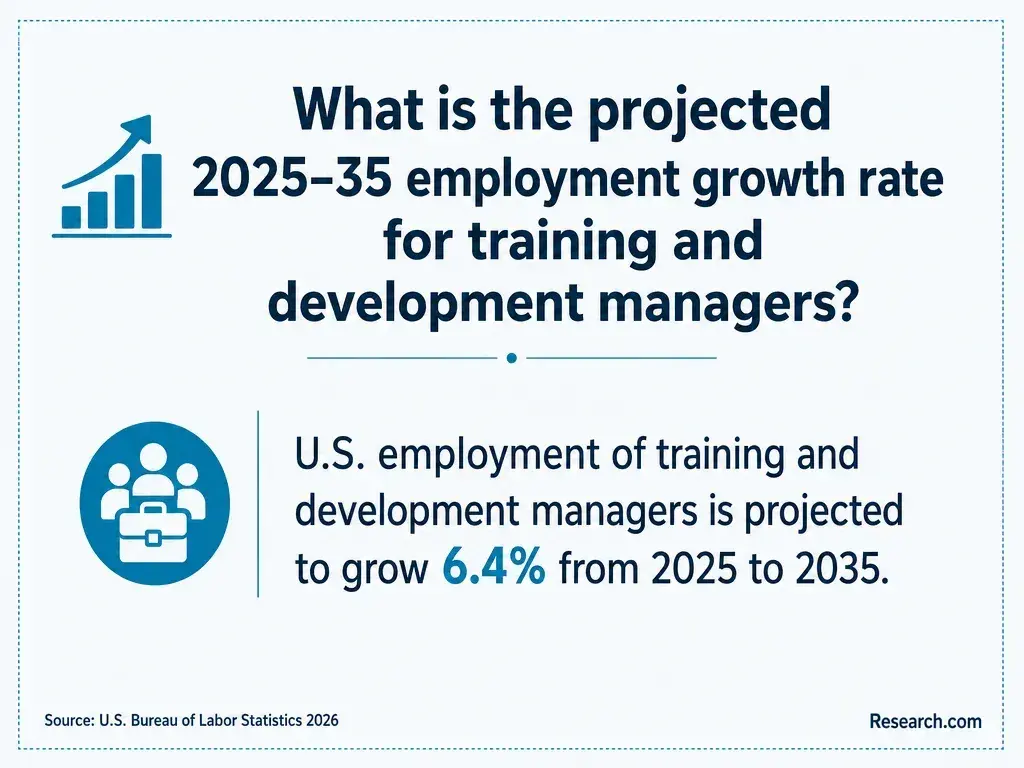
- For context, the U.S. Bureau of Labor Statistics reports a $133,000 median annual salary for training and development managers in 2025, but that occupational median is not a projected return on an Ed.D.
What Is an Online Ed.D. in Leadership and Learning in Organizations?
An Ed.D. in leadership and learning in organizations is a practice-oriented doctorate focused on how people learn at work, how organizations change, and how leaders use evidence to improve practice. The exact degree title, curriculum, and final project vary by institution. Some programs address multiple sectors; others concentrate on educational settings.
For a newly appointed executive, the degree is most relevant when the job includes a persistent learning or change problem that warrants careful investigation - for example, developing leaders across divisions or evaluating whether a workforce initiative transfers into practice. It is less direct preparation for immediate operational needs such as mastering a new budget, negotiating a contract, or learning an unfamiliar regulatory system.
Programs also differ in their final work: professional education doctorates with applied projects are worth examining if a conventional dissertation is not your preferred route, but "no dissertation" does not mean no substantial research or writing.
How Does an Online Ed.D. Prepare Leaders for Organizational Change?
A strong program connects organizational diagnosis, adult learning, change implementation, and evaluation. That sequence matters after an appointment: a leader may be asked to launch training immediately when the underlying obstacle is unclear authority, conflicting incentives, or a process that makes new skills difficult to use. Doctoral study can help the leader test the diagnosis before committing resources to an intervention.
Applied inquiry can also create a useful feedback cycle: define a decision, identify appropriate evidence, consult stakeholders, implement a feasible change, and examine its limitations. Your executive position does not automatically authorize an academic project. Ask the program what qualifies as its capstone or dissertation in practice, and ask the organization who may approve a project and access to employee, learner, or operational information. Faculty oversight, employer permission, confidentiality rules, and possible research review are separate questions.
If the appointment calls for an urgent turnaround, coaching, a targeted change-management course, or experienced operational support may deliver help sooner. An Ed.D. is a better fit when you can make sustained inquiry part of your leadership practice without treating the organization as an unrestricted research site.
Which Accreditation Should an Online Ed.D. Program Hold?
Start by confirming that the institution awarding the Ed.D. holds recognized institutional accreditation. Check the accreditor's scope and the school's standing through the accreditor or U.S. Department of Education, then confirm that the advertised program leads to the degree you intend to earn. Do not assume that an accreditation statement for another campus, entity, or program answers that question.
Institutional accreditation does not, by itself, establish approval for a regulated occupation. A broadly focused organizational leadership Ed.D. should not be presumed to qualify you for principal, superintendent, teacher, or other professional licensure. If your new appointment or future position requires a license, request the program's applicable disclosure and check the relevant state licensing authority before enrolling.
Course names vary, but useful curricula commonly address leadership and ethics, adult learning, organizational culture, change, research methods, and evaluation. For an executive, the important question is not how many leadership courses appear in the catalog; it is whether their sequence helps you investigate a problem, choose a defensible response, and assess what happened.
Compare required courses with your starting strengths. A leader with extensive strategy experience but little evaluation training may need stronger qualitative and quantitative methods. A learning and development executive may instead benefit from organizational governance, resource allocation, and implementation work. Check the published course sequence and actual elective availability: a course on analytics or coaching is not proof of a formal concentration or advanced technical preparation.
Requirements vary by program and entry term. Schools may review prior degrees and transcripts, professional experience, recommendations, a statement of purpose, and evidence that an applicant is ready for doctoral-level work. Some specify a master's degree or particular graduate preparation; others assess applicants differently. A new title alone does not establish qualifying leadership experience.
Explain the responsibilities behind the appointment: decisions you have made, people or resources you have led, and organizational problems you can discuss without claiming outcomes you have not achieved. If the role has not begun, distinguish your confirmed appointment from your previous work. Applicants with an education specialist credential can also investigate online Ed.S.-to-Ed.D. study pathways, while requesting a written determination of admission eligibility and any credits that would actually apply to the doctorate. Credits considered during admission do not necessarily shorten the degree.
Online study removes some commuting, not necessarily fixed attendance. For a new executive, compare formats against the first year of the appointment - not an ordinary week in the previous job. The table identifies obligations that can change whether either format is workable.
| Decision factor | Online program | Campus-based program |
| Scheduled participation | May require live classes and scheduled group meetings | Requires travel to regularly scheduled classes |
| In-person time | May still require campus convenings | Usually builds campus attendance into the normal schedule |
| Workplace project | May allow inquiry at an approved organization, subject to program rules | May offer local faculty or partner connections, subject to program rules |
Request the actual timetable, attendance policy, convening schedule, group-work expectations, and leave rules. Ask what happens during a board meeting, business trip, or executive transition that conflicts with class. If online delivery is essential, affordable online Ed.D. programs can provide comparison candidates, but verify both the full cost and the schedule of each program rather than treating its delivery label as a feasibility guarantee.
Completion time depends on required credits, enrollment pace, course sequencing, and the final project. Ask each school for its published degree plan and whether the advertised timeline assumes uninterrupted enrollment or a readily available project site. A demanding appointment can make the fastest permitted pace an impractical one.
Calculate the commitment from the school's charges for your intended entry term: required tuition and fees, technology costs, any campus travel and lodging, and the cost of additional terms if completion takes longer. Then review the employment side - reimbursement caps, grade conditions, continued-service obligations, and whether doctoral study is covered at all.
A guide to choosing an education doctorate with a manageable tuition budget can help frame the comparison, but an employer's informal encouragement is not a funding agreement. Do not base the decision on an assumed promotion or salary increase when the appointment has already occurred.
Relevant paths include learning and development leadership, organizational development, workforce development, consulting, and some higher-education or public-sector leadership roles. Responsibilities differ: a training manager oversees learning strategy and delivery, while an organizational consultant diagnoses and advises on broader performance problems. An executive may use the doctorate to deepen effectiveness in a role already held rather than to enter a new occupation.
Before choosing a program for career mobility, inspect actual job descriptions in your target sector. Employers may prioritize budget ownership, people management, industry knowledge, or a record of implementing change over a doctorate. Faculty positions can have different research and hiring expectations, and regulated education roles may require separate credentials. Build evidence through work you are authorized to describe, not confidential claims presented as a public portfolio.
There is no single "Ed.D. graduate salary." Compensation depends on occupation, sector, location, and prior responsibility. The U.S. Bureau of Labor Statistics reports a 2025 median annual salary of $133,000 for training and development managers and projects 6.4% employment growth for that occupation from 2025 to 2035. Those figures describe the occupation - not a salary premium caused by earning a doctorate.
If your appointment is in consulting, education, government, or nonprofit leadership, a training-manager median may be a poor comparison. Use occupational figures that match your actual responsibilities, then compare the degree's cost with benefits you can reasonably identify: stronger evaluation capability, access to work that explicitly values doctoral preparation, or a more credible long-term transition. None is automatic.
How Should You Choose a Reputable Online Ed.D. Program?
Choose against the constraints of the appointment, not a generic ranking. First, define the leadership or learning problem you hope to become better equipped to address. Then compare accredited institutions using the published curriculum, attendance requirements, faculty support, final-project rules, total expected charges, and any outcomes data whose cohort and measurement period are clear.
Before paying a deposit, request written answers to the decisions most likely to change your choice:
- What live sessions, campus visits, and group commitments are required during the proposed entry term?
- What final deliverable is required, and can a project at my organization be approved if access or employment changes?
- Who guides project design and determines whether organizational permission and research review are needed?
- What is the full published cost at my intended pace, and which charges or employer benefits remain uncertain?
If the appointment is in higher education, comparing funding for higher education leadership doctorates may help you examine sector-relevant options; confirm eligibility and terms directly with each school and employer. If a program cannot explain how its academic requirements fit your schedule, project access, and budget, delaying enrollment is a sound leadership decision - not a missed opportunity.
Other Things You Should Know About EdD Leadership
Discuss it when you need schedule flexibility, tuition support, or permission to use organizational information. Explain the expected commitments without implying that the employer has agreed to sponsor a project.
Coaching may be more useful for immediate feedback on a new role. It does not provide the sustained coursework and supervised inquiry of an Ed.D.; choose based on the capability you need now.
Yes, if you describe it accurately as an accepted or confirmed appointment and state when it begins. Base claims about accomplishments on work you have already done.
Not necessarily, but do not assume confidentiality can be guaranteed. Ask the program what the final submission must contain, who can access it, and whether approved redaction or another project setting is possible before using sensitive information.
- Cost of Attendance (Budget) | 2025-2026 Federal Student Aid Handbook https://fsapartners.ed.gov/knowledge-center/fsa-handbook/2025-2026/vol3/ch2-cost-attendance-budget
- Maximizing the Impact and ROI of Leadership Development | nih.gov https://pmc.ncbi.nlm.nih.gov/articles/PMC11505461/
- Ed.D. in Executive Leadership - Degrees & Requirements | Columbia University https://www.tc.columbia.edu/organization-and-leadership/edd-in-executive-leadership/degrees--requirements/executive-leadership-edd/
- Doctoral dissertation or capstone: how to choose the right program | PhD/Doctorate | Capella University Blog https://www.capella.edu/blog/phd-doctorate/the-difference-between-a-dissertation-and-doctoral-capstone/
- Learning and Organizational Change | Northwestern University https://sesp.northwestern.edu/graduate-professional/learning-and-organizational-change/
- EdD in Organizational Change and Leadership | USC Rossier https://rossier.usc.edu/programs/doctoral/organizational-leadership/
- EdD vs. PhD in Education: Choosing the Right Program | Goodwin College of Professional Studies https://drexel.edu/soe/resources/career-path/edd-vs-phd/
- UNC EdD Online: Organizational Learning and Leadership https://online.unc.edu/online-doctoral-programs/online-edd-organizational-learning-and-leadership/
- Career Paths For Degree in Organizational Leadership/Learning | The Graduate School of Education and Human Development https://gsehd.gwu.edu/what-can-you-do-organizational-leadership-and-learning-degree
- Academic Residencies, Labs, and Intensives Requirements | Academics at Walden University https://academics.waldenu.edu/handbook/learning-modalities/residency-lab-intensive-requirements