2027 Online Ed.D. in Leadership and Learning in Organizations Admissions: Submitting Graduate Credits from More Than One University
Audited and Verified:
Our Editorial and Data Verification Process
Research.com uses government datasets, official education statistics and primary institutional information to support its career and degree guides. Our review process checks factual accuracy, occupational definitions, source dates and the requirements associated with the credentials discussed.
How This Article Was Fact-Checked
Our editorial team verifies salary estimates, employment projections, education requirements and program information against original data providers and official organizations. Salary figures are checked against the relevant occupational definitions and reporting periods. Information about licensure, accreditation and required in-person training is reviewed separately.
Fact-checked and verified on:

Co-Founder and Chief Data Scientist
If your graduate coursework is spread across universities, the crucial distinction is whether those credits help you qualify for admission or actually replace courses in an online Ed.D. Vanderbilt University's Leadership and Learning in Organizations program makes that distinction especially important for applicants with an unfinished graduate degree, nondegree study, or credits earned after a master's.
This guide explains what to submit, which decisions require Vanderbilt's approval, and how to avoid budgeting for a shorter doctorate before your records have been evaluated.
Key Things You Should Know
- You can submit graduate transcripts from more than one university for evaluation; submitting credits does not mean Vanderbilt will combine them to satisfy an admissions requirement or transfer them into the Ed.D.
- Ask for separate written decisions on admission eligibility, transfer credit, and any course substitution. Even accepted prior coursework may not reduce the program's required enrollment or completion time.
- Request an evaluation of every institution's official transcript, including unfinished or nondegree study, before relying on prior credits in your application or budget.
What Is an Online Ed.D. in Leadership and Learning in Organizations?
Vanderbilt University's online Ed.D. in Leadership and Learning in Organizations is a practice-oriented doctorate concerned with leadership, learning, and organizational improvement. Its focus is broader than preparation for a K-12 administrator license: an applicant might work in workforce development, higher education, healthcare, government, consulting, or another organization.
That distinction matters when evaluating prior study. A graduate course in organizational behavior, for example, may help demonstrate readiness even if it does not replace a required doctoral course. If your goal is still taking shape, selecting a professional focus for an Ed.D. can help you judge whether this degree's organizational emphasis fits your work rather than assuming any education doctorate will serve the same purpose.
Can You Submit Graduate Credits From Multiple Universities?
Yes, you can present graduate work from multiple universities for Vanderbilt to evaluate. The separate question is what Vanderbilt will count it toward. Do not assume credits from two unfinished programs can be pooled into the equivalent of a completed master's, or that coursework supporting admission will shorten the doctorate. Vanderbilt's admissions and academic-policy offices must determine how the rules for your entry term apply to your record.
The distinctions below show why an applicant needs more than a general statement that prior graduate work is "accepted."
| Possible decision | What it means | What it does not establish |
| Admission eligibility | Prior degrees or coursework meet an entry requirement. | That any Ed.D. course has been waived or replaced. |
| Transfer credit | Approved prior credits count toward degree credit requirements. | That a particular required course is satisfied or the cohort schedule changes. |
| Course substitution or waiver | The program permits a different course or excuses a requirement under its rules. | That total degree credits, tuition, or time to completion decrease. |
Request a decision for each category that matters to you. A completed master's, unfinished graduate enrollment, and later nondegree courses can receive different treatment even when all appear on official transcripts.
What Transfer-Credit Rules Apply to This Online Ed.D. Program?
Do not rely on a general university transfer policy as proof that a course will apply to Vanderbilt's online Ed.D. The controlling questions include whether this program permits transfer at all for your entry term, which credits are eligible, who approves them, and whether any program residency or required-course rules limit their use. An admissions review is not necessarily a final doctoral degree audit.
Ask the program to address the following items in writing before you calculate potential savings:
- Whether graduate credits earned at multiple institutions may be considered separately or together, and whether credits already used for a completed degree are eligible.
- Any rules on course level, minimum grade, pass/fail work, age of coursework, nondegree enrollment, and academic standing.
- How quarter credits convert to semester credits and what syllabus or catalog descriptions are needed to assess equivalence.
- Whether an approved transfer, substitution, or waiver changes total credits, tuition charges, the prescribed course sequence, or the earliest possible graduation date.
Send official transcripts from every institution and keep syllabi for courses you want reviewed. If your main objective is lower cost rather than recognition of specific coursework, compare the confirmed Vanderbilt cost with lower-tuition pathways to an education doctorate; uncertain transfer credit is a poor foundation for a financing plan.
Use Vanderbilt's application instructions for your intended entry term to confirm acceptable prior degrees, any graduate-credit threshold, academic records, professional-experience expectations, recommendations, essays, interviews, and deadlines. A master's degree requirement is not interchangeable with a specified amount of coursework unless Vanderbilt explicitly says it is. Likewise, submitting several transcripts does not guarantee that credits from unfinished programs satisfy a threshold.
Applicants returning after an academic break should explain their current readiness through concrete work: a leadership decision they helped make, a learning or performance problem they investigated, and the evidence they used. This is more useful than relying on a senior title alone. If your record includes low grades or an incomplete, ask admissions whether there is an applicable exception or way to demonstrate readiness; do not assume either exists.
Institutional accreditation helps establish the standing of a US university, but it does not require Vanderbilt to accept its courses for this Ed.D. Transfer decisions can also depend on the course's level, content, grade, timing, and fit with Vanderbilt's doctoral requirements. A course from an accredited institution may be valid graduate study yet have no equivalent in the receiving program.
For each school you attended, identify the institution named on the transcript and confirm its recognized institutional accreditation for the period of enrollment. For study outside the United States, ask Vanderbilt whether it requires a credential evaluation and what documentation it accepts. Final authority over admission and application of credit rests with Vanderbilt, not the sending university or an applicant's interpretation of accreditation status.
Leadership and learning doctorates commonly connect organizational change, adult learning, evidence use, and applied inquiry. Those themes explain why prior graduate work can be relevant without being equivalent: a master's-level leadership survey may support an application but not replace doctoral work that integrates research methods with an organizational problem.
Compare the curriculum published for your entry term with your transcripts course by course. Identify where you have studied research design, data interpretation, learning or development, and organizational systems - and where you may need preparation before starting. Confirm Vanderbilt's actual required courses and final applied-research expectations rather than assuming that an earlier thesis, workplace project, or methods class fulfills them.
Use Vanderbilt's published cohort sequence, required credits, tuition, and fees for your proposed entry term to build a budget. Add any required travel, technology, books, and time away from work. Then ask whether approved prior credit would remove a billed course or merely appear on a degree audit; those outcomes have different financial effects.
Do not subtract the price of prior courses from the advertised program cost until Vanderbilt confirms that your individual plan of study changes. Employer reimbursement may also depend on continued employment or satisfactory grades. For a meaningful comparison, price the full Vanderbilt pathway alongside budget-friendly online education doctorates using each school's actual requirements, not an assumed transfer-credit discount.
Online delivery can remove a routine commute, but it does not necessarily make doctoral study self-paced. Check Vanderbilt's attendance expectations, live-session schedule, group-work requirements, and any campus convenings for the entry term you are considering. Prior credit may not let a student skip a cohort experience even when a similar course was completed elsewhere.
A campus-based program may be easier to fit around local workplace partnerships or in-person faculty meetings; an online program may better suit someone who cannot relocate. Neither format resolves a credit-evaluation question automatically. Compare both against the time you can reliably commit, especially if professional or caregiving obligations could interrupt the prescribed sequence.
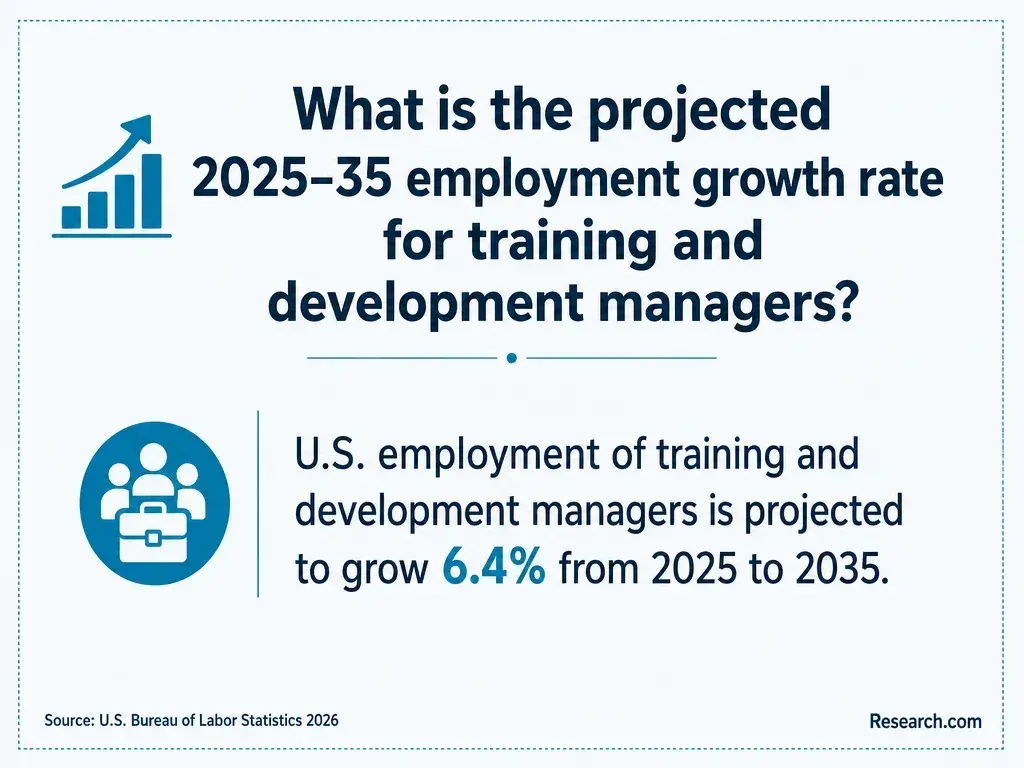
This degree may support experienced professionals seeking more responsibility in organizational learning, talent development, consulting, or education-related administration. Advancement still depends on demonstrated work, sector knowledge, and an employer's requirements. For context, the US Bureau of Labor Statistics reports a 2025 median annual salary of $133,000 for training and development managers; that occupation-wide figure is not a salary forecast for Ed.D. graduates.
Applicants already working in a university can also consider practice-focused Ed.D. study for higher education organizational work. A broadly focused leadership doctorate does not, by itself, qualify someone for a regulated school-administrator role. If your immediate goal is a narrower promotion or a specific technical skill, employer-sponsored development or targeted coursework may be more direct than a doctorate.
How Can You Evaluate a Reputable Online Ed.D. Program?
For an applicant with several graduate transcripts, the most useful comparison is not simply which school advertises transfer credit. Compare written decisions showing what each school accepts, where those credits apply, and whether they change your actual study plan. Also confirm institutional accreditation, the awarded degree, delivery obligations, research supervision, and any licensure disclosures relevant to your goal.
Ask Vanderbilt for the policy applicable to your entry term, the office authorized to approve transfer or substitutions, and an individualized evaluation when available. Keep the written response with your proposed degree plan and cost estimate. If higher education is your workplace, budget planning for higher education leadership doctoral study offers another way to compare financing options without treating unapproved credits as savings. Apply on the basis of the full program commitment unless an authoritative evaluation establishes otherwise.
Other Things You Should Know About EdD Leadership
Yes, if the application asks for every postsecondary institution attended. Follow Vanderbilt's instructions even if you do not seek credit for that course.
Check the application deadline and document rules with admissions. An uploaded copy, if permitted for review, may not satisfy a later official-transcript requirement.
Ask its designated transcript custodian or state higher education agency how records are issued, then confirm with Vanderbilt what documentation it will accept.
Keep them available for any course-equivalency review. Ask the program when and how to submit them rather than assuming a transcript's course title provides enough detail.
- Accreditation in the U.S. | ed.gov http://www.ed.gov/laws-and-policy/higher-education-laws-and-policy/college-accreditation/accreditation-in-the-us
- .14 Evaluation and Review Process for Transfer of Courses and Credits. | Library of Maryland Regulations https://regs.maryland.gov/us/md/exec/comar/13B.06.02.14
- Transfer Course Evaluation Process - Registrar-UMD https://registrar.umd.edu/transfer-credit/transfer-course-evaluation-process
- Graduate Residency Transfer Credit - Stanford Student Services https://studentservices.stanford.edu/my-academics/earn-my-degree/graduate-degree-progress/graduate-residency-transfer-credit
- Waiver of Program Requirements for Students with Previous Graduate Work | UMD College of Education https://education.umd.edu/waiver-program-requirements-students-previous-graduate-work
- Requirements - Educational Foundations and Leadership https://foundations.louisiana.edu/programs/doctoral/higher-education-executive/requirements
- Transfer Credit Policies and Processes - The College | UVA College of Arts & Sciences https://college.as.virginia.edu/transfer-credit-policies-and-processes
- Transferring Coursework | Adler Graduate School https://www.alfredadler.edu/admission-aid/transferring-coursework/
- Foreign Credential Evaluation | BCTC https://bluegrass.kctcs.edu/admissions/information-for/international-students/foreign-credential-evaluation.aspx
- Course Evaluation Request - WSU Transfer Center https://transfercredit.wsu.edu/tools/course-evaluation-request/