2027 Online Ed.D. in Leadership and Learning in Organizations: How to Evaluate a Learning Design Component
Audited and Verified:
Our Editorial and Data Verification Process
Research.com uses government datasets, official education statistics and primary institutional information to support its career and degree guides. Our review process checks factual accuracy, occupational definitions, source dates and the requirements associated with the credentials discussed.
How This Article Was Fact-Checked
Our editorial team verifies salary estimates, employment projections, education requirements and program information against original data providers and official organizations. Salary figures are checked against the relevant occupational definitions and reporting periods. Information about licensure, accreditation and required in-person training is reviewed separately.
Fact-checked and verified on:

Co-Founder and Chief Data Scientist
A program can promise both leadership development and learning design while offering little practice designing learning that changes workplace performance. That distinction matters if you lead training, talent development, or organizational change and are considering an online Ed.D. This guide shows you how to examine course sequences, design assignments, evaluation methods, and project requirements - not just course titles. It also covers the practical checks that can determine whether the degree fits your schedule, budget, and career goal.
Key Things You Should Know
- Look for a complete design cycle: diagnose a performance need, design and test a learning solution, support its use at work, and evaluate results. A course titled "learning design" alone is insufficient evidence.
- Ask for syllabi and permitted examples of assessed work. Confirm whether design courses are required, how much feedback students receive, and whether an applied project can address an organizational learning problem.
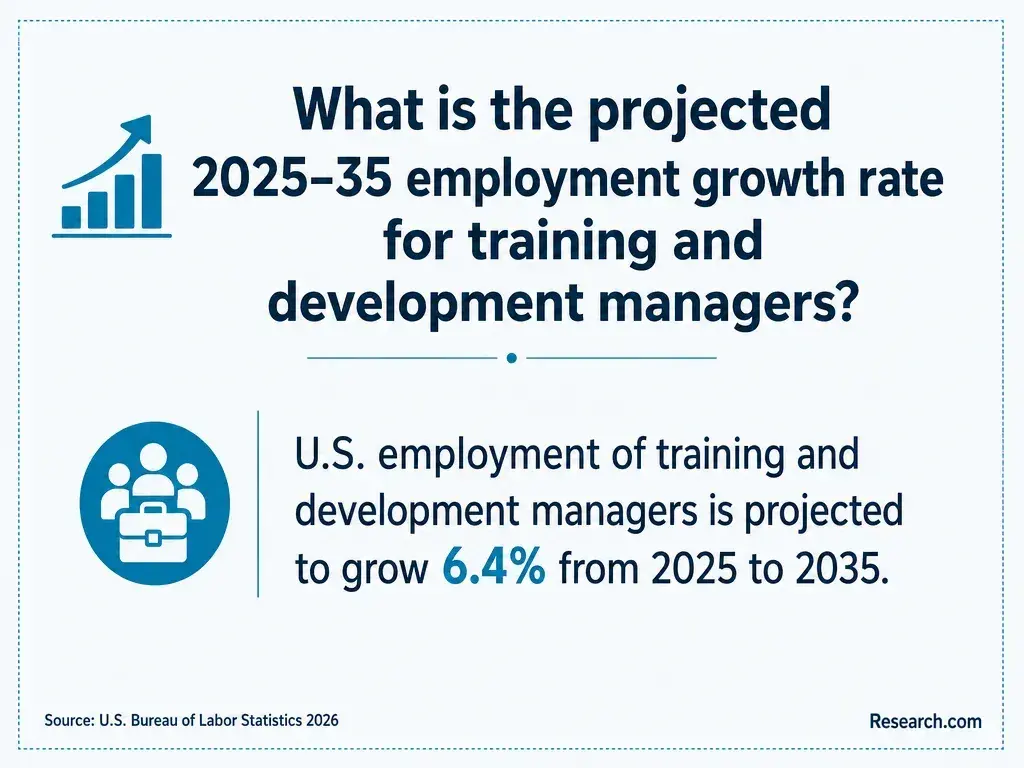
- Connect the curriculum to your target role, not an assumed salary gain. The U.S. Bureau of Labor Statistics reports a $133,000 median annual salary for training and development managers in May 2025; that is an occupational median, not an Ed.D. graduate outcome.
What Is an Online Ed.D. in Leadership and Learning in Organizations?
An online Ed.D. in leadership and learning in organizations is a practice-oriented doctorate focused on how people learn and how leaders improve organizational systems. Programs with similar names can differ substantially: one may emphasize adult learning and instructional design, while another centers on strategy, culture, or education administration. "Online" describes delivery, not a uniform curriculum or a self-paced schedule.
Learning design is the deliberate development of learning experiences and performance support for a defined audience and need. In an Ed.D., its value lies in connecting that work to organizational diagnosis and evidence-based change. A training course, for example, may help employees practice a new process; it cannot by itself repair unclear decision authority or conflicting incentives.
The degree may suit an experienced learning and development professional seeking broader responsibility for organizational improvement. Someone whose immediate goal is to build e-learning modules may get a more direct return from an instructional design certificate, supervised projects, or a focused master's degree. A research-focused PhD is generally a better question to investigate if the primary goal is producing original scholarship rather than improving practice in an organization.
How Does the Learning Design Component Prepare Students for Organizational Change?
A strong learning design component teaches students to decide whether learning is the appropriate intervention before developing it. It should connect adult learning and motivation to the conditions under which people apply new skills: manager support, time to practice, usable tools, and organizational expectations. This is where design becomes relevant to change leadership rather than merely content production.
To judge that connection, trace a representative assignment or project through the following stages. Ask what students actually produce and what evidence faculty use to assess it.
- Diagnose: Identify the intended performance, affected groups, and plausible barriers; distinguish a knowledge gap from a process, resource, or incentive problem.
- Design: Set observable learning objectives, choose suitable practice and feedback, and justify the format for the learners and workplace.
- Implement: Plan for stakeholder involvement, accessibility, manager support, and revisions when the design meets operational constraints.
- Evaluate: Check more than satisfaction or completion; specify credible measures of learning and workplace use, while acknowledging what the evidence cannot prove.
For instance, a hypothetical manager-training project might examine whether supervisors use a new coaching practice after training. An assignment that stops at a slide deck demonstrates less organizational-change preparation than one that also plans observation, feedback, and follow-up. Neither a favorable survey nor a simple before-and-after comparison would, on its own, establish that the training caused a performance change.
What Courses Are Included in an Online Leadership and Learning Ed.D.?
Course names and required sequences vary by institution. Compare syllabi and degree audits rather than assuming that a leadership course includes substantial learning design. The table shows how common curriculum areas can contribute to the specific capability you are evaluating.
| Curriculum area | Relevant learning-design contribution | Limit to watch for |
| Adult learning and motivation | Explains how adults acquire and use knowledge in context | Theory without design or workplace application |
| Instructional or learning design | Develops objectives, practice, feedback, and usable learning materials | Content creation without a needs assessment |
| Organizational change and leadership | Addresses stakeholder support and implementation conditions | Change theory disconnected from a designed intervention |
| Research methods and evaluation | Supports measurement, interpretation, and revision | Methods courses with no opportunity to evaluate a learning initiative |
Depth matters as much as coverage. Ask whether students revise a design after critique, work with a real or realistically constrained audience, and assess transfer to practice. Check whether the relevant courses are required or merely electives offered intermittently. An applied project can provide useful integration, but a course assignment, capstone, and dissertation in practice are not interchangeable requirements. Online Ed.D. capstone alternatives to compare can help frame questions about the final deliverable; confirm the specific program's rules directly.
Delivery mode affects how you practice and discuss learning design, but neither format guarantees stronger instruction. Online courses can provide opportunities to design for distributed learners and collaborate remotely. Campus-based courses may make in-person workshops and informal access easier. In either format, the decisive questions are how often you receive expert feedback, whether you can test a design, and how you work with organizational partners.
Ask for the actual timetable: live-session attendance, group meetings, campus convenings, and deadlines during project stages. An online cohort with fixed evening meetings may be less workable for a shift-based learning manager than a campus program with predictable intensive sessions. Conversely, limited travel can make sustained study possible for someone who cannot relocate. If speed is important, compare intensive online education doctoral pathways against their weekly workload and project milestones; a shorter advertised schedule is not necessarily more flexible.
Confirm that the institution is accredited by an accrediting agency recognized by the U.S. Department of Education or the Council for Higher Education Accreditation, and verify that status with the accreditor. Then check that the Ed.D. is an authorized degree offered by that institution. Accreditation supports institutional quality assurance; it does not establish that a particular learning design course is strong or that graduates qualify for a specific job.
If a program advertises specialized accreditation or professional recognition, identify its exact scope rather than assuming it applies to the Ed.D. A general leadership and learning doctorate also should not be presumed to prepare graduates for teacher, principal, or superintendent licensure. Applicants pursuing a regulated role need to verify program disclosures and the relevant state authority's requirements.
Requirements vary. Programs may ask for a completed master's degree, transcripts, a statement of purpose, recommendations, and evidence of relevant professional experience; some also specify academic thresholds, an interview, or a proposed practice problem. An education master's, a particular job title, and prior instructional design employment are not universal requirements.
For an applicant from learning and development, the strongest preparation to document is often a concrete problem they helped investigate: who needed to learn or perform differently, what constraints shaped the work, and what evidence informed their decisions. Describe your own responsibility accurately rather than claiming organizational results you cannot substantiate. If the degree requires workplace inquiry, ask whether your proposed setting is suitable and what approvals may be needed later; employer support is not the same as academic project approval.
There is no reliable universal duration or price for an online Ed.D. Credit requirements, enrollment pace, course availability, and the final project all affect completion. A published minimum timeline may assume uninterrupted study and timely access to an approved project site. Request the degree plan for your intended entry term and ask what happens if a needed course is unavailable or a workplace project changes scope.
For a usable cost comparison, obtain the school's written tuition basis - per credit, term, or program - and add mandatory fees, required travel, lodging, materials, and any cost of reduced work hours. Separate confirmed employer reimbursement from assistance you merely hope to receive, including any grade or continued-employment conditions. Higher-education employees can also examine financial aid for higher education leadership doctoral students, while verifying eligibility and actual award terms with each school and employer.
The most direct use is often advancement from an existing practice area: a learning and development professional may take on broader responsibility for needs assessment, leadership development, evaluation, or organization-wide change. Related paths include training management, organizational development, consulting, workforce development, and some higher-education leadership roles. Their day-to-day work differs; designing instruction is not the same job as managing a training function or advising an organization on change.
Assess the gap between your current work and the target position. An Ed.D. project and portfolio can demonstrate how you frame a problem and use evidence, but employers may also expect budgets, staff management, sector knowledge, or a record of implementation. Readers aiming specifically at universities can use comparing Ed.D. organizational leadership study for higher education to refine that sector-specific comparison. The doctorate alone does not confer an executive appointment, faculty position, or regulated credential.
Occupational figures provide context, not a forecast for graduates. The U.S. Bureau of Labor Statistics reports a May 2025 median annual salary of $133,000 for training and development managers. That figure describes workers across the occupation, with varied education and experience; it is not an entry salary or a measured payoff from this doctorate.
For outlook, BLS projects 10.8% employment growth for training and development specialists from 2025 to 2035. The specialist occupation is distinct from management, so its growth rate should not be applied to a director-level job search. Compare postings in your location and sector for required experience, management scope, and pay before treating any national statistic as relevant to your decision.
How Can You Choose a Reputable Online Ed.D. Program?
Start with the learning design work you want to be able to do, then request evidence that the curriculum develops it. Use the same questions with each program so appealing descriptions do not substitute for comparable facts.
- Verify the degree: Obtain the current degree audit, accreditation information, delivery schedule, and final-project requirements for your entry term.
- Inspect the sequence: Identify required design, adult-learning, change, and evaluation courses; ask when each runs and how they build on one another.
- Examine assessment: Request syllabi or appropriately shared assignment descriptions showing diagnosis, design decisions, critique, revision, and evaluation - not just a finished learning product.
- Test project feasibility: Ask faculty what organizational access, supervision, data permissions, and ethical review a proposed learning project could require.
- Compare the full commitment: Obtain written cost and attendance details, then weigh the program against a narrower credential or supported workplace project if those would meet your goal.
When comparing affordable distance learning education doctorates, do not let a lower advertised tuition figure obscure a weak design sequence or substantial travel and project costs. The best fit is the program whose verified assignments, faculty feedback, and practical obligations match the capability you need - not simply the one with the most learning-related terms in its description.
Other Things You Should Know About EdD Leadership
Usually not as a general condition of doctoral study. Check the software and technical prerequisites for specific courses; the central skill is making and evaluating defensible design decisions.
Only within your employer's permissions and any applicable confidentiality agreements. A redacted account of the problem, your process, and nonrestricted artifacts may be safer than sharing learner or employee data.
Learning design can still use facilitated practice, job aids, coaching, or other formats. Evaluate a program on whether it teaches sound design choices, not dependence on one platform.
Not by itself. You still need to justify the need, check accuracy and accessibility, design meaningful practice, and evaluate use. Follow the program's AI-use rules and your organization's data policies.
- Salient syllabi: Examining design characteristics of science online courses in higher education - PMC https://pmc.ncbi.nlm.nih.gov/articles/PMC9632807/
- Learning Design and Technology Graduate Certificate (Online) | Harvard Extension School https://extension.harvard.edu/academics/programs/learning-design-and-technology-graduate-certificate/
- Asynchronous Teaching | psu.edu https://eldig.psu.edu/asynchronous-teaching/
- The Teaching & Learning Pathway | educause.edu https://pathways.educause.edu/pathways/teaching-learning
- Designing Assessments for Learning | Goodwin College of Professional Studies https://drexel.edu/teaching-and-learning/resources/assessment/designing-assessments
- What is an instructional designer and what do they do? | Penn State World Campus https://www.worldcampus.psu.edu/about-us/news-and-features/what-is-an-instructional-designer-and-what-do-they-do
- Engaging Connections: Cooperative Learning in an Online Asynchronous Setting | educause.edu https://er.educause.edu/articles/2025/1/engaging-connections-cooperative-learning-in-an-online-asynchronous-setting
- Design Assessment Methods - opair - Penn State https://opair.psu.edu/assessment/loa-handbook/choose-and-design-assessment-methods/
- Glossary - Learning Outcomes Assessment - UC Davis https://assessment.ucdavis.edu/glossary
- What's the Difference Between Asynchronous and Synchronous Learning? | Ohio State Online https://online.osu.edu/content-hub/blogs/whats-the-difference-between-asynchronous-and-synchronous-learning/