2027 Is an Online Ed.D. in Leadership and Learning in Organizations a Good Fit for School District Professional Learning Directors?
Audited and Verified:
Our Editorial and Data Verification Process
Research.com uses government datasets, official education statistics and primary institutional information to support its career and degree guides. Our review process checks factual accuracy, occupational definitions, source dates and the requirements associated with the credentials discussed.
How This Article Was Fact-Checked
Our editorial team verifies salary estimates, employment projections, education requirements and program information against original data providers and official organizations. Salary figures are checked against the relevant occupational definitions and reporting periods. Information about licensure, accreditation and required in-person training is reviewed separately.
Fact-checked and verified on:

Co-Founder and Chief Data Scientist
A school district professional learning director may already know how to organize workshops and coach educators. The harder question is whether doctoral study would help them lead districtwide improvement - or add an expensive credential without changing their authority or opportunities.
This article examines when an online Ed.D. in Leadership and Learning in Organizations fits that work, what it may leave out, and how to compare programs against district leadership goals. It also covers the practical checks that matter before enrolling: research access, scheduling, cost, accreditation, and school leadership licensure.
Key Things You Should Know
- An organizational learning Ed.D. is most useful when a director can influence districtwide learning systems, investigate a persistent practice problem, and apply findings - not simply deliver more training.
- The Bureau of Labor Statistics reports a $77,440 median annual salary for instructional coordinators in May 2025; that occupation-wide figure is not an Ed.D. graduate salary or a promised raise.
- Confirm the program's live-session and project requirements, full cost, and state licensure status. A broadly focused Ed.D. does not automatically qualify someone for principal or superintendent certification.
Is an online Ed.D. in Leadership and Learning in Organizations a good fit for professional learning directors?
Often, yes - but only for a particular kind of next step. A professional learning director who wants to diagnose why development initiatives do or do not change instruction, coordinate learning across departments, and evaluate implementation has a credible reason to pursue a practice-oriented Ed.D. The degree is less compelling if the immediate need is a pay-lane credential, a state administrator license, or technical training in one instructional tool.
The distinction is between managing professional development events and leading a learning system. Districtwide work can involve principals, teachers, unions, curriculum teams, budgets, and board priorities. An Ed.D. can strengthen a director's ability to examine that system, but it cannot confer decision-making authority the district has not assigned.
These contrasts help identify whether doctoral study addresses the director's actual constraint.
| Immediate goal | Likely better starting point | Why |
| Investigate and improve a recurring districtwide learning problem | Practice-oriented Ed.D. with relevant applied research | Offers sustained study of organizational learning, implementation, and evaluation. |
| Qualify for a regulated school administrator position | State-approved administrator preparation pathway | Eligibility depends on state rules, not the word "leadership" in a degree title. |
| Improve one program or acquire a specific skill | Targeted coursework, coaching, or a supervised improvement project | May address a narrower need faster and at lower cost. |
| Build a research career focused on producing generalizable scholarship | Research-oriented PhD | Typically places greater emphasis on independent scholarly research. |
Before applying, identify one decision you could realistically influence - for example, how the district supports principals in helping teachers use new curriculum materials. If you cannot secure the time, sponsorship, or appropriate evidence to investigate such a question, build that foundation before committing to a doctorate.
What does an online Ed.D. in Leadership and Learning in Organizations cover?
These programs generally study how adults learn at work, how organizations change, and how leaders use evidence to improve practice. Coursework may connect learning theory, organizational culture, leadership, research methods, and program evaluation. The exact balance varies: an organizational learning doctorate may examine multiple sectors rather than concentrate on K-12 curriculum or district administration.
For a district director, the useful application is not necessarily another workshop design. It may be distinguishing a training gap from obstacles such as limited principal follow-through, conflicting initiatives, or insufficient planning time. Applied doctoral work could involve assessing a professional learning system or evaluating an improvement effort, subject to the program's actual project requirements.
Do not assume every Ed.D. uses the same final assignment. Compare dissertation-in-practice and capstone requirements directly; online Ed.D. capstone alternatives to compare can help frame that inquiry. District permission to work on a problem is also distinct from academic project approval and authorization to use staff or student information. Ask the program and district how they handle research review, confidentiality, and applicable student-record protections before proposing a project.
What careers can an online Ed.D. in Leadership and Learning in Organizations support?
For an established professional learning director, the most plausible benefit is stronger performance or competitiveness in roles with broader responsibility: district professional learning leadership, curriculum and instruction leadership, school-system improvement, or education consulting. Moving into central-office executive work still depends on a district's hiring criteria, demonstrated leadership, and, where applicable, administrator certification.
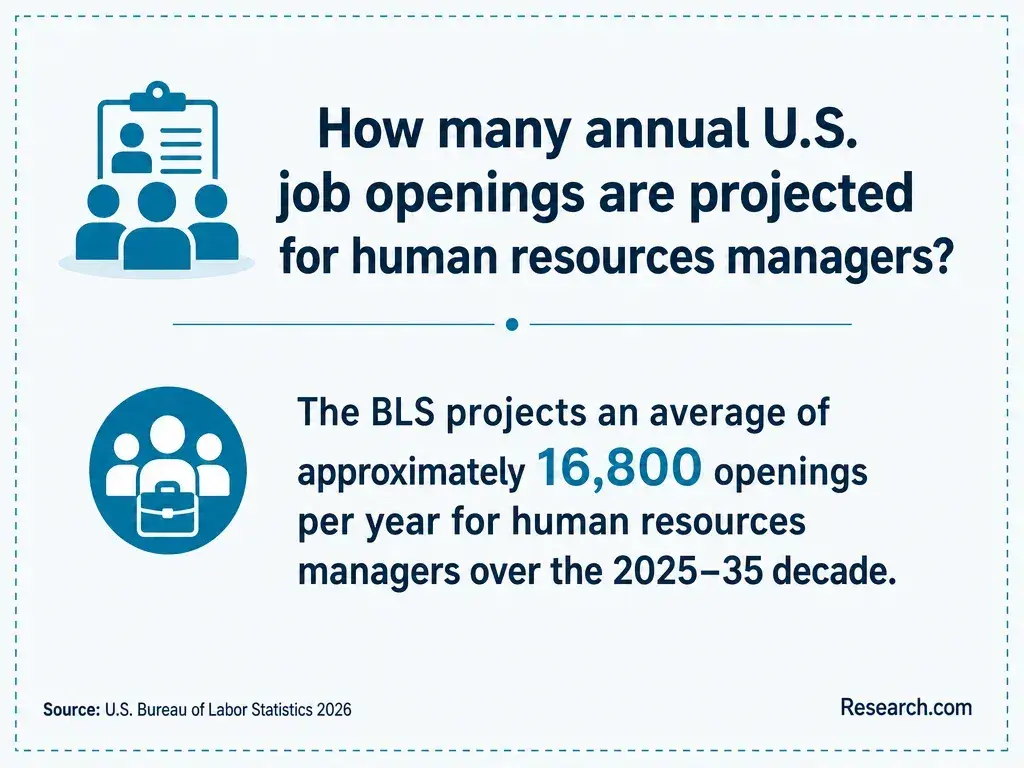
Related occupational data provide context, not a forecast for doctoral graduates. The Bureau of Labor Statistics projects 1.6% employment growth for instructional coordinators from 2025 to 2035. That modest occupation-wide projection is one reason to investigate actual district openings and advancement rules rather than assume a doctorate will create a new position.
Cross-sector opportunities may include organizational development or learning leadership in higher education, government, or nonprofits. They call for evidence that district experience transfers beyond K-12, such as leading cross-functional change and communicating evaluation findings to decision-makers. Readers specifically considering a university setting can compare doctoral leadership study for higher education organizations; a district-focused project alone does not establish readiness for every higher education role.
Prioritize coursework by the decisions you expect to make, not by the number of courses labeled "leadership." Adult learning and learning transfer can help a director assess what happens after training. Organizational change and systems thinking can help explain why an initiative succeeds in some schools but stalls in others. Research methods and evaluation can help the director select credible measures and interpret results without claiming that a simple before-and-after comparison proves causation.
Three course-to-work connections are especially worth examining in a syllabus or course sequence:
- Needs assessment and organizational diagnosis: Does the course teach students to investigate performance conditions before prescribing professional development?
- Implementation and stakeholder leadership: Does it address principals' roles, teacher voice, resource constraints, and adaptation across schools?
- Applied evaluation: Does it cover feasible evidence of practice change, measurement limitations, and responsible use of district data?
Check whether these are required courses, electives offered regularly, or merely topics mentioned in a description. A director aiming for curriculum leadership may also need subject-specific expertise, supervision experience, or state credentials that a general organizational learning curriculum does not provide.
Requirements differ by institution. Applicants may need a completed graduate degree, transcripts, recommendations, a statement of purpose, and evidence of relevant professional work; some programs also specify experience, grades, interviews, or research preparation. A master's in education is not universally required. District directors should describe decisions they have owned, stakeholders they have coordinated, and problems they want to investigate rather than rely on their job title alone.
Ask admissions staff to distinguish eligibility from credit toward completion. Prior graduate study may support admission without reducing Ed.D. coursework. That distinction matters for education specialist graduates considering a doctorate, who should request a written evaluation of any proposed transfer or substitution.
A strong application problem statement can be specific without claiming results: identify a district learning challenge, explain your authority and likely collaborators, and describe what evidence might be available. Do not promise access to teacher or student records before district and program approvals are established.
There is no reliable single completion time across online Ed.D. programs. Required credits, cohort schedules, enrollment intensity, course availability, and the final project all affect the timeline. A published sample plan may also assume continuous enrollment and timely approval of each research stage.
For a district director, workload is not evenly distributed across the school year. Budget preparation, summer professional learning, school openings, and implementation reviews may collide with live classes or project deadlines. Ask for a term-by-term course map, required meeting times, campus visits, maximum time to degree, and policies for a leave or employer change. Then compare that schedule with your busiest district commitments - not just an average week.
Without a named program and verified charges, a responsible total cannot be quoted. Request the institution's charges for the full required course sequence, including mandatory fees and any required travel. Check whether tuition is assessed per credit, term, or program and whether continued enrollment during the final project carries additional charges.
For a working director, the decision also includes time away from district responsibilities and the conditions of employer assistance. A reimbursement policy may have annual limits, grade requirements, continued-employment obligations, or restrictions on doctoral study. Organizational leadership doctoral tuition planning is a useful comparison starting point, but confirm the current charges and requirements of each program under consideration.
Evaluate affordability against a realistic career outcome. If a district's salary schedule or job classification does not reward the credential, its value must come from work you want to do and opportunities you can substantiate - not an assumed raise.
Online delivery reduces routine commuting and may let a director study without leaving the district. It does not necessarily mean self-paced coursework: live seminars, group meetings, and campus convenings can still be required. A campus-based program may offer easier in-person collaboration and access to a local professional network, but travel or relocation can make it impractical for a full-time district employee.
Compare the two formats on the commitments that would affect your work: attendance rules during the school year, access to faculty who understand K-12 systems, the ability to conduct an approved district-based project, and support if your employment changes. Compare equivalent total costs rather than online tuition against campus tuition alone. If a campus option is tied to a move into higher education, grant and scholarship options for higher education leadership research study may broaden the funding questions to ask; verify each award's eligibility rather than assuming it applies to district work.
Do not assume it does. A degree in Leadership and Learning in Organizations can develop relevant leadership skills without being an approved principal or superintendent preparation program. Institutional accreditation establishes that an institution meets an accreditor's standards; it does not, by itself, establish eligibility for a regulated school leadership credential.
If certification is part of your goal, identify the state and exact credential first. Ask the program whether its specific Ed.D. pathway is approved for that credential, whether it includes required field experiences, and whether it prepares applicants in your state. Confirm the answer with the relevant state licensing authority before enrolling. An existing administrator credential may change which degree features matter most, but it does not turn every organizational leadership Ed.D. into licensure preparation.
How can professional learning directors choose an accredited online Ed.D. program?
Start with institutional accreditation recognized by the U.S. Department of Education or the Council for Higher Education Accreditation, then inspect the specific degree rather than treating accreditation as an endorsement of every career outcome. The program's published curriculum, format, project rules, and licensure disclosures must match your intended use.
Before applying, request answers to these decision-critical questions from the program and, where needed, your district:
- Which required courses directly address adult learning, district-scale change, and applied evaluation, and which relevant electives will actually be available?
- What live attendance, group work, campus visits, and project milestones are mandatory?
- Can a district problem serve as the required project, who approves the site, and what happens if access or employment changes?
- What is the full expected cost under the published course plan, and what written employer support is available?
- What licensure outcome, if any, does the program formally disclose for my state?
The strongest choice is the one whose requirements fit a real district leadership problem and your authority to work on it. If the answers reveal a curriculum mismatch, inaccessible project requirements, or no credential benefit you need, postponing the Ed.D. in favor of targeted development is a sound decision.
Other Things You Should Know About EdD Leadership
Possibly, but do not plan on it without a course calendar. Live classes, group deadlines, and project approvals may fall during the school year even if you reserve major writing time for breaks.
Only its applicable contract, salary schedule, or personnel policy can answer that. Obtain written confirmation that this specific degree qualifies before including a pay change in your financial plans.
Usually you can describe your role and methods, but follow district agreements and program rules. Do not share identifiable records, restricted findings, or internal documents without permission.
It may meet a degree requirement for some positions, but hiring also depends on the discipline, teaching experience, research expectations, and institution. Review actual postings rather than treating the doctorate as a faculty appointment credential.
- Accreditation in the U.S. | ed.gov http://www.ed.gov/laws-and-policy/higher-education-laws-and-policy/college-accreditation/accreditation-in-the-us
- Types of Financial Aid: Grants, Work-Study, and Loans | studentaid.gov https://studentaid.gov/understand-aid/types
- Employer-offered educational assistance programs can help pay for college | Internal Revenue Service https://www.irs.gov/newsroom/employer-offered-educational-assistance-programs-can-help-pay-for-college
- Admissions Process and Requirements - Buffalo https://www.canisius.edu/academics/programs/graduate/higher-education-leadership-administration-hela/admissions-process
- EdD Organizational Leadership Online | Saint Leo University https://onlinedegrees.saintleo.edu/programs/edd-organizational-leadership-online
- EdD vs. PhD in Education: Choosing the Right Program | Goodwin College of Professional Studies https://drexel.edu/soe/resources/career-path/edd-vs-phd/
- EdD vs. PhD in Education: What's the Difference? | Northeastern University Charlotte https://charlotte.northeastern.edu/news/edd-vs-phd-in-education-whats-the-difference/
- Doctoral Degree (EdD) in Educational Leadership - UK Online https://online.uky.edu/doctoral/educational-leadership/edd
- Online Ed.D. in Leadership and Learning in Organizations | VU-EDU https://peabodyonline.vanderbilt.edu/edd-in-organizational-learning/