2027 Is an Online Ed.D. in Leadership and Learning in Organizations a Good Fit for Enterprise Program Managers?
Audited and Verified:
Our Editorial and Data Verification Process
Research.com uses government datasets, official education statistics and primary institutional information to support its career and degree guides. Our review process checks factual accuracy, occupational definitions, source dates and the requirements associated with the credentials discussed.
How This Article Was Fact-Checked
Our editorial team verifies salary estimates, employment projections, education requirements and program information against original data providers and official organizations. Salary figures are checked against the relevant occupational definitions and reporting periods. Information about licensure, accreditation and required in-person training is reviewed separately.
Fact-checked and verified on:

Co-Founder and Chief Data Scientist
Enterprise program managers already coordinate complex initiatives, but leading an organization's learning and change efforts calls for more than delivering projects on schedule. An online Ed.D. in leadership and learning in organizations may help managers who want to diagnose persistent performance problems, develop leaders, and evaluate whether changes work. It also demands substantial time and money without guaranteeing a promotion.
This guide connects the degree to program management work, compares more direct alternatives, and identifies the career and program details to check before applying.
Key Things You Should Know
- An online Ed.D. is a stronger fit when your goal is to lead organizational learning or evidence-based change, not simply advance to a larger program management portfolio.
- Training and development managers had a $133,000 median annual salary in May 2025, according to the U.S. Bureau of Labor Statistics; that occupational figure is not an expected salary for Ed.D. graduates.
- Before enrolling, verify live-class and travel requirements, the applied project, total cost, and whether your employer will permit the organizational access your work may need.
Is an Online Ed.D. in Leadership and Learning in Organizations a Good Fit for Enterprise Program Managers?
Enterprise program managers bring experience with cross-functional delivery, budgets, stakeholders, and implementation risk. An Ed.D. adds the most value when they want to investigate why changes fail to stick, build organizational learning capacity, or evaluate leadership and workforce initiatives. It is less direct preparation for a role centered on portfolio controls, technical delivery, or financial strategy.
These routes address different gaps. Compare the work you want to own with the preparation each route emphasizes.
| Target work | Potentially better-fit route | Key limitation to consider |
| Lead organizational learning, leadership development, or sustained change | Practice-oriented Ed.D. plus relevant workplace responsibility | Doctoral study cannot substitute for experience owning people and change outcomes |
| Advance in enterprise delivery or portfolio governance | Larger assignments, mentorship, and targeted program management development | May provide less preparation for applied organizational inquiry |
| Lead business strategy or pursue management consulting | MBA, DBA, or focused consulting experience, depending on the role | These routes may not emphasize adult learning or workforce development |
A useful test is to identify a recurring problem you have authority to investigate - for example, inconsistent adoption of a new process across business units. If the work requires understanding incentives, learning transfer, and implementation evidence, an Ed.D. may complement your program management skills. If the obstacle is primarily a technical dependency or an under-resourced schedule, doctoral study may not be the most direct solution.
What Is an Ed.D. in Leadership and Learning in Organizations?
An Ed.D., or Doctor of Education, is a doctoral degree that commonly emphasizes using research to improve professional practice. In a leadership and learning program, the organization - not necessarily a school - is the setting for questions about adult development, culture, change, and performance. A PhD generally places greater emphasis on producing research for an academic field, although requirements vary by institution.
Program managers should examine the actual degree requirements rather than the title alone. One school may require a dissertation in practice; another may use a different research or capstone format. An existing employer initiative does not automatically qualify as doctoral work. When comparing professional education doctorates with applied projects, check who approves the topic, what evidence is required, and how faculty supervise completion.
What Careers Can Enterprise Program Managers Pursue With This Ed.D.?
The most plausible move is often broader responsibility within an existing organization: leading transformation that includes workforce adoption, managing leadership development initiatives, or overseeing evaluation of enterprise-wide change. Depending on their functional experience, program managers may also pursue organizational development, talent development, training management, or organizational consulting. Those jobs differ: a training manager owns development operations, while an organizational consultant diagnoses and advises on wider performance problems.
A doctorate can strengthen an application, but employers will still look for evidence of functional expertise. Before changing roles, seek responsibility for needs assessment, change implementation, or evaluation, and document what you decided and measured without disclosing confidential results. A move into higher education administration is possible but may require sector-specific experience; if that is the goal, comparing funding for higher education leadership doctorates is more relevant than assuming a corporate-focused program offers the same preparation.
Online delivery removes a routine commute, not necessarily fixed attendance. Some programs schedule live classes, cohort meetings, group projects, or campus convenings. A campus-based option may make in-person faculty contact and local networking easier, while an online option may let a manager stay employed and apply coursework to a current organization.
Ask for the weekly class schedule, attendance policy, convening calendar, and group-work expectations before deciding. Then compare those commitments with reporting cycles, launch periods, and travel in your program management role. If a capstone depends on workplace access, ask how the school handles a change of employer during the degree.
Relevant study may include adult learning, organizational change, leadership, research methods, and program evaluation. For an enterprise program manager, the distinction between delivery metrics and learning or performance evidence is especially useful: completing a rollout does not establish that employees can use the new process or that it improved operations.
Look for opportunities to practice diagnosing a problem, selecting credible measures, interpreting qualitative and quantitative evidence, and revising an intervention. Check the course sequence and actual elective availability rather than assuming every topic in a program description receives equal depth. If a proposed project involves employee or customer information, obtain organizational permission and follow the institution's applicable ethics review and data-handling requirements before collecting or using it.
Requirements vary. Programs may ask for a completed master's degree, transcripts, professional experience, recommendations, a statement of purpose, and evidence that the applicant is ready for doctoral research. An enterprise program manager should describe decisions made, people influenced, organizational problems addressed, and limits of their authority - not rely on a senior-sounding title alone.
Ask admissions whether your prior graduate degree qualifies, what preparation in research methods is expected, and how the program evaluates professional leadership. Prior credits considered for admission are not necessarily transferable into doctoral requirements. Managers with an education specialist degree can explore evaluating education specialist to doctorate pathways, but should obtain a written, program-specific credit assessment before expecting a shorter degree.
Completion depends on required coursework, enrollment pace, research milestones, and the time needed to secure an acceptable project setting. Published minimum timelines may not account for an employer change or delays in obtaining data access. Request the program's expected sequence and maximum completion period, then test both against your work calendar.
For cost, compare required credits and tuition with fees, books, technology, travel, and any income lost to reduced work. Employer reimbursement can change the calculation, but its conditions may depend on continued employment or course completion. When comparing affordable Doctor of Education degrees, calculate the cost of the full degree rather than comparing advertised per-credit rates alone. If you mainly need one skill, a targeted course or employer-funded development program may be the better investment.
Enterprise program management and most organizational learning roles do not require an Ed.D.-specific professional license. The degree also does not automatically confer a project management credential, educator certification, or eligibility to serve as a school administrator.
If your target job is regulated - particularly in K-12 leadership - check the relevant state authority and the school's licensure disclosures before applying. For a corporate role, review employer job postings instead: a professional certification may be valued, but neither certification nor the doctorate replaces demonstrated leadership and functional experience.
There is no single salary for Ed.D. graduates. The U.S. Bureau of Labor Statistics reports pay and projections by occupation, not by this degree. The roles below show why your intended job - and your prior experience - matter more than the credential alone.
| U.S. occupation | Median annual salary, May 2025 | Projected employment change, 2025-2035 |
| Training and development managers | $133,000 | +6.4% |
| Management analysts | $101,860 | +10.1% |
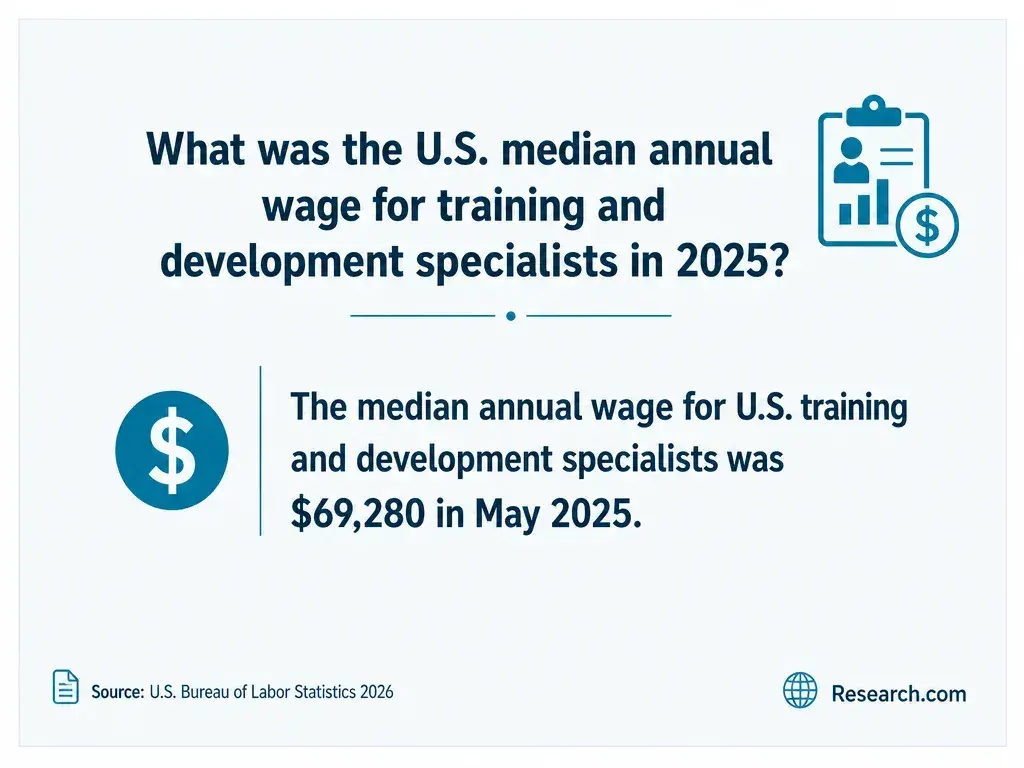
| Training and development specialists | $69,280 | +10.8% |
The manager occupation has the highest median pay of these examples, but it generally calls for relevant management experience. The specialist and analyst projections describe occupational demand, not openings reserved for doctorate holders. Use postings for your target role, location, and sector to assess whether an Ed.D. is preferred, required, or largely incidental.
How Can You Choose an Accredited Online Ed.D. Program?
First, confirm the university's institutional accreditation through the accreditor's records and verify that the school awards the exact Ed.D. you are considering. Accreditation establishes institutional standing; it does not establish fit for your career goal, guarantee credit transfer, or confer occupational licensure.
Next, request the current curriculum, total degree requirements, delivery schedule, project handbook, and full cost information. Ask whether faculty can supervise inquiry involving enterprise change and whether an approved project can be completed without access to your current employer's data. Compare programs on those answers and on support available if your work circumstances change. Applicants returning after unfinished doctoral study may also investigate Ed.D. pathways for students with prior doctoral study; only the receiving institution can determine whether earlier work applies.
Other Things You Should Know About EdD Leadership
Possibly. The project must satisfy the school's academic rules, and your employer must authorize the necessary work and data access. Get both decisions before building your degree plan around it.
A change may affect access, sponsorship, or project scope. Ask the program in advance about changing sites or revising a proposal; do not assume completed workplace work will transfer unchanged.
Do not assume so. A certification can demonstrate professional preparation, but the university decides whether any prior learning meets its doctoral credit policies.
Only within the permissions granted by the organization and university. Check confidentiality, intellectual property, and publication rules; a description of your methods and decisions may be safer than sharing internal data.
- Change Management: From Theory to Practice - PMC https://pmc.ncbi.nlm.nih.gov/articles/PMC9462626/
- Accreditation in the U.S. | ed.gov http://www.ed.gov/laws-and-policy/higher-education-laws-and-policy/college-accreditation/accreditation-in-the-us
- Employer-offered educational assistance programs can help pay for college | Internal Revenue Service https://www.irs.gov/newsroom/employer-offered-educational-assistance-programs-can-help-pay-for-college
- Requirements - UW Graduate School https://grad.uw.edu/prospective-students/how-to-apply/requirements/
- EdD in Educational Leadership - The University of Alabama | UA Online https://online.ua.edu/degrees/edd-in-educational-leadership/
- Admissions | Organizational Leadership MS | CU Boulder Online https://online.colorado.edu/organizational-leadership-ms/admissions
- Doctor of Education in Organizational Leadership, Culture and Change | Thomas Edison State University https://www.tesu.edu/degrees-programs/doctoral/edd.php
- Online Doctor of Education in Leadership (EdD) | spalding.edu https://online.spalding.edu/programs/online-doctor-education-leadership
- 2026 UNC Online EdD in Organizational Learning & Leadership https://online.unc.edu/online-doctoral-programs/online-edd-organizational-learning-and-leadership/
- and Ask For - Employer Tuition Reimbursement Benefits | Harvard Extension School https://extension.harvard.edu/blog/how-to-use-and-ask-for-employer-tuition-reimbursement-benefits/