2027 Online Ed.D. in Leadership and Learning in Organizations Admissions: Organizing Evidence of Community Leadership
Audited and Verified:
Our Editorial and Data Verification Process
Research.com uses government datasets, official education statistics and primary institutional information to support its career and degree guides. Our review process checks factual accuracy, occupational definitions, source dates and the requirements associated with the credentials discussed.
How This Article Was Fact-Checked
Our editorial team verifies salary estimates, employment projections, education requirements and program information against original data providers and official organizations. Salary figures are checked against the relevant occupational definitions and reporting periods. Information about licensure, accreditation and required in-person training is reviewed separately.
Fact-checked and verified on:

Co-Founder and Chief Data Scientist
Community leadership does not always come with a managerial title, a formal budget, or a tidy set of performance metrics. That makes it easy to undersell meaningful work in an Ed.D. application - or to overstate what a project achieved. For nonprofit staff, volunteers, coalition organizers, and other community-serving professionals, this guide shows how to identify credible evidence, connect it to organizational learning, and present it within a program's actual admissions requirements.
You will also learn which program features to verify before investing time and money in an application.
Key Things You Should Know
- Build a concise evidence file around three questions: What decision or change did you help lead, who was involved, and what can you substantiate?
- Separate your contribution from the coalition's results; meeting records, approved reports, and informed recommenders are stronger than unsupported claims of impact.
- No universal number of volunteer hours, years of leadership, or community projects qualifies someone for an Ed.D. Check each program's definition of professional experience before applying.
What Is an Online Ed.D. in Leadership and Learning in Organizations?
An Ed.D. in leadership and learning in organizations is a practice-oriented doctorate concerned with how people learn, lead change, and use evidence in workplaces and other organizations. A community-serving applicant might examine volunteer development, cross-agency collaboration, or how a nonprofit evaluates a training initiative. The degree is not necessarily a school-administrator preparation program, and its exact title, curriculum, and final project depend on the institution.
For admissions, the most useful connection is between your community work and a problem you could investigate responsibly: for example, why a training effort is difficult to sustain across partner organizations. You do not need to present a finished research study. You do need to show that you can distinguish an observed problem from an untested explanation.
Programs also differ in their culminating work; exploring non-dissertation Ed.D. program options can help you identify questions to ask about capstones, dissertations in practice, and other requirements.
What Are the Admission Requirements for an Online Ed.D. Program?
Requirements are set by the individual program and entry term. Applicants should distinguish eligibility rules from evidence that makes an eligible application persuasive. Community leadership may strengthen either a required professional-experience account or the broader case for admission, but volunteer service does not automatically meet a program's definition of qualifying employment.
The distinction below helps you avoid treating a strong portfolio as a substitute for a missing formal requirement.
| Admissions item | What to verify | Where community leadership helps |
| Prior education | Required degree level, recognized institution, transcripts, and any grade rules | Shows how you apply academic preparation; it does not replace a required credential |
| Professional experience | Whether paid, volunteer, part-time, or coalition roles count and how experience is documented | Demonstrates responsibility for decisions, people, resources, or change |
| Application materials | Statement prompts, résumé format, recommendations, interview, and any test policy | Provides specific examples that different materials can corroborate |
| Applied-project readiness | Whether an organization or project site must be identified at admission | Shows a feasible area of inquiry without promising access you lack |
If you have an Ed.S. or other graduate study, ask admissions separately whether it establishes eligibility and whether any credits can apply to the doctorate. Neither follows automatically from the other. Applicants considering advanced study options after an Ed.S. should request a written, program-specific evaluation rather than assume a shorter path.
How Do You Organize Evidence of Community Leadership for Admission?
Build a small, verifiable record of leadership rather than an archive of every event you attended. Admissions readers need to understand your responsibility, the organizational challenge, how you worked with others, and what the available evidence actually supports. A useful file has a private source folder and a shorter, application-ready summary; do not submit sensitive source records unless the program requests and permits them.
Use the following sequence to turn community work into evidence you can adapt to a résumé, statement, or interview.
- Select two or three substantial efforts. Favor work involving decisions, coordination, learning, or change over the largest-sounding events. Record the organization, dates, your role, and whether the work was paid or volunteer.
- Write a contribution statement for each. Identify the problem, your authority, the stakeholders, the action you took, and what others controlled. "Coordinated partner input on a volunteer orientation redesign" is more precise than "transformed community engagement."
- Match claims to permissible evidence. Consider a public program report, an approved project plan, meeting agenda, training material you may share, or a recommender who directly observed your work. Note the source beside each claim in your private file.
- Label outcomes honestly. Distinguish an output, such as a revised orientation, from an observed result, such as attendance recorded by the organization, and from an impact claim that would require stronger evaluation. Include setbacks and what you learned when relevant.
- Connect one effort to doctoral readiness. Explain what you still need to learn about leadership, adult learning, or evaluation and frame a feasible question for study - not a promised capstone topic or a claim of future organizational access.
For example, an applicant who facilitated a coalition's training redesign could describe how partners identified inconsistent onboarding, what the applicant coordinated, and whether a revised resource was adopted. Without an approved evaluation, the applicant should not claim the redesign improved retention. This distinction demonstrates sound judgment, not a weak application.
Ask before sharing beneficiary information, internal reports, photographs, or employee records. Redact identifiers where appropriate, follow organizational confidentiality rules, and obtain permission for any document you intend to submit. A recommender's account can corroborate your role without exposing protected information. If your role was informal, identify who made final decisions and how your contribution influenced them; leadership does not require sole authority.
Online study can let a community leader remain engaged with a local organization, which may make application examples and later inquiry more relevant. It does not necessarily mean self-paced study: live classes, cohort meetings, group assignments, and campus convenings may still be required. Campus-based study may offer easier in-person access to faculty and peers but impose relocation or commuting costs.
Before applying, ask for the live-session schedule, attendance policy, required travel, group-work expectations, and rules for completing an applied project with an external partner. If you coordinate evening volunteer activities or work across agencies, compare those commitments with an actual term schedule - not simply the program's "online" label.
Depending on the program, relevant study may cover adult learning, organizational change, leadership ethics, research methods, and program evaluation. For a community-serving applicant, the important distinction is between learning to design a workshop and learning to diagnose whether training is the right response to a problem. A volunteer retention challenge, for instance, might also involve scheduling, supervision, or unclear responsibilities.
Compare required courses and available electives against the skills your evidence file reveals you need. If you can lead stakeholders but have limited evaluation experience, look for substantial methods preparation and faculty-guided applied work. A course title alone does not establish depth or a formal concentration; review education doctorate concentration and curriculum choices alongside each institution's current catalog.
Time and cost depend on required credits, enrollment pace, tuition structure, fees, and the culminating project. A working community leader should also account for travel to any required convenings, reduced paid-work hours, and the time needed to secure an appropriate project setting. Do not assume prior graduate credits shorten the degree without a written credit evaluation.
Request the program's current tuition and fee schedule, credit requirements, expected course sequence, and continuation charges if the project extends beyond coursework. Compare the full expected expense - not just a quoted per-credit rate - when researching affordable practice-focused education doctoral study.
If your employer offers reimbursement, verify eligibility, annual limits, grade conditions, and repayment obligations. For a goal such as improving one nonprofit program, targeted evaluation training or mentorship may be more economical than a doctorate.
Verify that the institution holds recognized institutional accreditation and that it awards the exact Ed.D. you intend to pursue. Check the accreditor's listing and the institution's current catalog rather than relying on an advertisement. Programmatic recognition, where applicable, must be checked for its actual scope; institutional accreditation alone does not establish that a degree prepares students for a regulated education role.
For an applicant proposing community-based inquiry, accreditation is only one check. Confirm that the program permits your intended type of organizational project and provides appropriate faculty oversight. Those academic rules determine whether your experience can become a viable doctoral project.
Experienced community professionals may use doctoral study to strengthen work in nonprofit leadership, workforce development, organizational learning, program evaluation, or consulting. The relevant qualification is usually a combination of sector experience, evidence of leading change, and role-specific skills - not the degree alone.
A coalition organizer seeking a training-management role, for example, may also need experience supervising staff, managing a budget, and evaluating learning initiatives.
Higher education is another possible setting, but administrative positions have distinct hiring expectations. If that is your goal, consider comparing organizational leadership Ed.D. pathways for college administration against the experience requested in actual job postings. For an immediate move into a new function, a supervised project or relevant certificate may close a skills gap more directly.
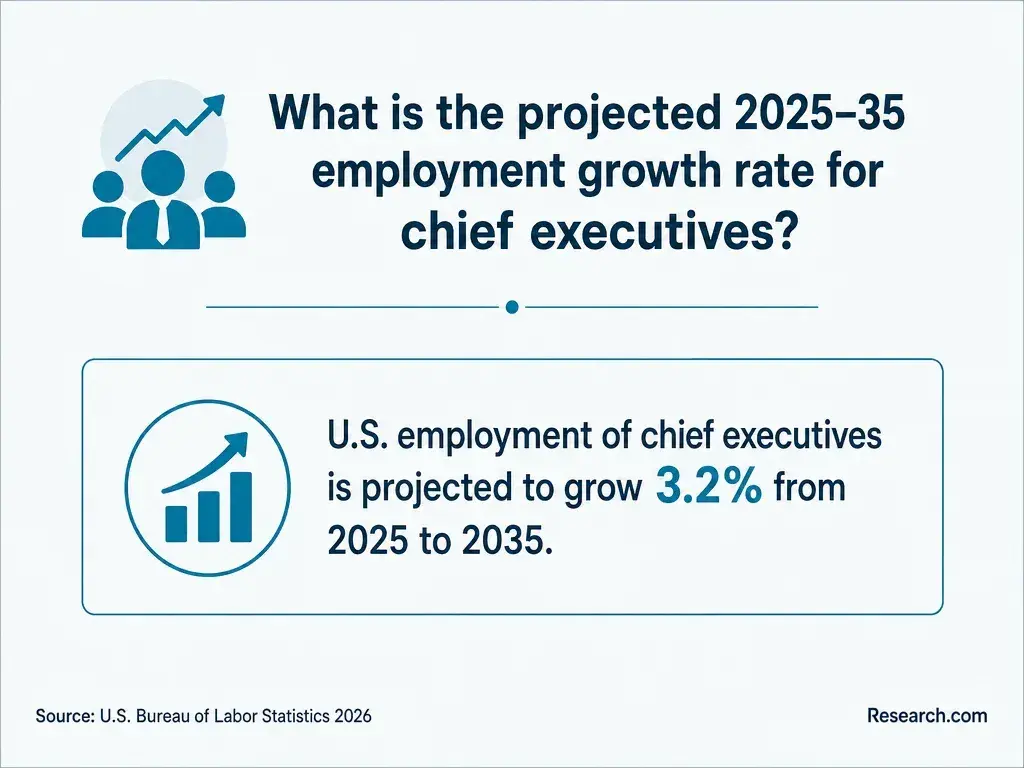
There is no single salary or employment outlook for graduates of this degree. US Bureau of Labor Statistics occupational data offer context, not a forecast of an applicant's earnings. Training and development managers had a median annual salary of $133,000 in May 2025, with employment projected to grow 6.4% from 2025 to 2035. That figure describes an occupation whose jobs generally require substantial relevant experience; it is not a starting salary or a return promised by an Ed.D.
Before using salary data to justify tuition, identify the specific role you want, examine its responsibilities and local pay, and assess whether your current experience meets employers' requirements. Nonprofit budgets and public-sector pay structures may differ considerably from those of other employers.
Do Ed.D. Graduates Need Licensure or Professional Certification?
Community leadership, nonprofit management, and many organizational learning roles generally do not require a license merely because the practitioner holds an Ed.D. Individual employers may prefer particular certifications or experience. By contrast, school principal and other regulated education positions can have state-specific preparation and licensure rules; a broadly focused leadership doctorate should not be assumed to satisfy them.
If your target job is regulated, check its requirements with the relevant state authority and ask the university for a written licensure disclosure covering the exact program and your intended state. If it is not regulated, prioritize the skills and experience named in job postings over collecting credentials without a clear purpose.
Other Things You Should Know About EdD Leadership
Yes, if together they show sustained responsibility and learning. Explain the progression between roles rather than presenting an unrelated list of activities.
Describe what was attempted, what you observed, what remains uncertain, and how you adjusted. Honest reflection can demonstrate stronger doctoral readiness than an unsupported success claim.
That is sensible when the description involves shared decisions, unpublished results, or sensitive information. Confirm your role and what may be disclosed before submitting the application.
Often, but follow the program's recommender rules. Choose someone who directly observed your decisions and collaboration and can provide specific examples rather than a general endorsement.
- Collecting and Analyzing Qualitative Data | Field Epi Manual https://www.cdc.gov/field-epi-manual/php/chapters/qualitative-data.html
- Ten simple rules for writing compelling recommendation letters | nih.gov https://pmc.ncbi.nlm.nih.gov/articles/PMC7906297/
- Online Doctorate in Educational Leadership & Management (EdD) | Drexel University Online https://www.online.drexel.edu/online-degrees/education-degrees/oelm/index.aspx
- Evaluating Community Impact - Ginsberg Center https://ginsberg.umich.edu/community-impact
- Requirements - Educational Foundations and Leadership https://foundations.louisiana.edu/programs/doctoral/higher-education-executive/requirements
- Content Analysis Method and Examples | Columbia University Mailman School of Public Health https://www.publichealth.columbia.edu/research/population-health-methods/content-analysis
- How to Craft the Perfect MBA Recommendation Letter (Sample) - Master of Business Administration | Augsburg University https://www.augsburg.edu/mba/mba-recommendation-letter-sample/
- Admissions Requirements - School of Leadership and Education Sciences - University of San Diego https://www.sandiego.edu/soles/academics/phd-leadership-studies/admissions-requirements.php
- Comprehensive Admissions Review Criteria - Graduate School https://graduateschool.colostate.edu/comprehensive-admissions-review-criteria/
- 2026 UNC Online EdD in Organizational Learning & Leadership https://online.unc.edu/online-doctoral-programs/online-edd-organizational-learning-and-leadership/