2027 Online Ed.D. in Leadership and Learning in Organizations: Degree Fit for Leaders Tackling A Training Catalog That Does Not Match Critical Skill Needs
Audited and Verified:
Our Editorial and Data Verification Process
Research.com uses government datasets, official education statistics and primary institutional information to support its career and degree guides. Our review process checks factual accuracy, occupational definitions, source dates and the requirements associated with the credentials discussed.
How This Article Was Fact-Checked
Our editorial team verifies salary estimates, employment projections, education requirements and program information against original data providers and official organizations. Salary figures are checked against the relevant occupational definitions and reporting periods. Information about licensure, accreditation and required in-person training is reviewed separately.
Fact-checked and verified on:

Co-Founder and Chief Data Scientist
Your organization offers plenty of courses, yet teams still lack skills needed for critical work. Adding more training may not help if the catalog reflects outdated priorities - or if the problem lies in workflows, incentives, or access to practice.
For leaders responsible for learning and performance, an online Ed.D. in Leadership and Learning in Organizations could build the skills to investigate and address that mismatch. This guide explains what doctoral study can contribute, when a faster alternative is better, and what to verify before committing time and money.
Key Things You Should Know
- Diagnose before expanding the catalog: Compare required job tasks and performance evidence with existing learning options; a course-completion count cannot establish that a critical skill improved.
- An Ed.D. fits a sustained leadership problem, not an urgent course request: It can develop organizational diagnosis, adult-learning, change, and evaluation skills, but a targeted assessment or instructional design project may solve a narrower gap faster.
- Do not base the investment on a presumed raise: The U.S. Bureau of Labor Statistics reports a $133,000 median annual salary for training and development managers in 2025, not an expected salary for Ed.D. graduates.
What is an online Ed.D. in Leadership and Learning in Organizations?
An Ed.D. is a practice-oriented doctorate. In a leadership and learning program, students generally study how organizations develop people, make decisions, implement change, and use evidence to improve practice.
Online describes where much of the instruction occurs; it does not establish that classes are self-paced or that campus visits are unnecessary.
For a leader facing a misaligned training catalog, the central question is not simply "Which courses are missing?" It is "Which capabilities does the work require, what evidence shows a gap, and why have current learning and operating systems failed to close it?"
A relevant Ed.D. should help the leader investigate those questions and lead a response. Program names, required courses, and final projects vary, so the degree title alone cannot confirm that fit.
Is an online Ed.D. in Leadership and Learning worth it for organizational leaders?
It may be worth considering if the catalog mismatch is part of a recurring, organization-wide challenge that you have the authority and support to investigate over time.
It is less likely to be the right first move when the organization needs a near-term course update, a technical skills audit, or a change to a broken process. The distinction matters because training is only one possible response to poor performance.
The following comparisons separate plausible causes from the visible symptom. They are hypotheses to test, not diagnoses of your organization:
| Possible source of the mismatch | What the pattern might look like | Potential value of doctoral study |
| Outdated learning priorities | Courses reflect past roles while current tasks require different capabilities. | Needs assessment, stakeholder inquiry, and evaluation can inform a durable learning strategy. |
| Weak learning transfer | Relevant courses exist, but employees have little opportunity, feedback, or support to apply them. | Adult-learning and organizational-change study can help examine conditions around training. |
| Nontraining barriers | Employees know what to do, but tools, staffing, incentives, or decision rights obstruct performance. | Systems thinking can improve diagnosis, though the solution may be operational rather than educational. |
Start with a bounded inquiry: identify one critical task, the standard of performance it requires, existing evidence of the gap, and who can authorize a response.
Compare the catalog with that task, then speak with employees and supervisors before deciding that another course is needed. An Ed.D. becomes more compelling if leading and evaluating this kind of work across teams is a continuing responsibility, not a one-off assignment.
Compare the full expense and time commitment with an employer-sponsored project, a focused graduate certificate, or specialist support. Leaders comparing tuition-focused choices for a leadership doctorate should still check whether each program actually teaches organizational learning and applied evaluation at the depth their problem requires.
What careers can you pursue with an Ed.D. in Leadership and Learning?
For an established leader, the most realistic benefit is often greater responsibility within an existing field: directing learning strategy, leading workforce development, managing organizational change, or evaluating development initiatives.
Training and development managers typically oversee programs, staff, and resources; organizational consultants may diagnose performance problems and recommend changes. Those responsibilities require demonstrated experience, not just a doctorate.
An Ed.D. can also support work in nonprofit, public-sector, healthcare, corporate, or higher-education organizations when the role involves learning and change.
A leader moving into a new sector should still examine its hiring rules and build relevant project experience. A broadly focused organizational Ed.D. does not, by itself, qualify someone for a regulated school-administrator position or guarantee an executive appointment.
For this particular challenge, useful learning spans more than course design. Adult-learning theory helps explain how people acquire and apply skills; organizational diagnosis tests whether the barrier is instructional; change leadership addresses implementation; and research and evaluation methods help determine whether a response improved the work that matters.
Look for opportunities to practice distinguishing a skills gap from a catalog gap. A catalog may omit a needed topic, but employees may also lack practice, coaching, access to tools, or clarity about expectations.
A strong applied assignment could compare role requirements, existing offerings, and appropriately authorized performance evidence, then propose a response with measurable indicators. Course exposure alone does not establish that a graduate can independently conduct advanced research or lead a major transformation.
Check the final-project rules before assuming your workplace assessment can become a capstone or dissertation in practice. Project scope, faculty approval, employer permission, and data access may all matter. If the required deliverable is a deciding factor, compare online education doctorates with alternative final projects while confirming what each school actually requires.
Online study may let a working leader remain near the organization whose learning systems they want to examine. Campus-based study may make in-person collaboration easier. Neither format guarantees better access to workplace evidence, faculty guidance, or a suitable applied project.
The practical comparison is between actual schedules: live-class attendance, group meetings, required campus convenings, research milestones, and time away from work.
Ask whether classmates collaborate across time zones and whether your employer can accommodate periods of heavier project work. An online format offers location flexibility only to the extent that its attendance and travel rules allow it.
Requirements vary by institution. Programs may review prior degrees and transcripts, professional experience, recommendations, a statement of purpose, and evidence of readiness for doctoral inquiry. Do not assume that every Ed.D. requires an education master's degree, a particular managerial title, or a publication record.
For this topic, a persuasive application would describe your actual responsibility for learning decisions and a genuine problem you are positioned to investigate.
Explain what you know about the catalog mismatch, what remains uncertain, and which stakeholders could help clarify it; do not claim that training caused an outcome you have not established. Ask admissions staff how the program defines qualifying experience and whether access to a project site is expected before enrollment.
If you previously began a doctorate, ask separately whether that work affects admission and whether any credits could apply to this degree. All-but-dissertation education doctorate admission options warrant a particularly careful written review: prior doctoral study does not automatically waive new coursework or final-project requirements.
Completion time depends on the program's credit requirements, course sequence, enrollment pace, and final project. An organizational assessment can also take longer than expected if the project needs new approvals, a changed sponsor, or access to different data.
Request the program's published sequence and ask when students begin the applied project, which courses must be taken in order, and what happens if work responsibilities interrupt enrollment.
Prior graduate study may help establish admission eligibility without reducing the doctoral curriculum or time to completion; obtain a written credit evaluation before planning around a shorter route.
There is no reliable single price for this degree category. Compare each school's published tuition basis, per credit, term, or program, with required credits and fees. Add technology charges, required travel and lodging, books, and any income lost to reduced work hours. A workplace project may also require time from colleagues, even if it does not appear on a tuition bill.
Employer assistance can change the decision, but verify reimbursement limits, grade or employment conditions, and repayment obligations before treating it as available funding.
When reviewing budget-conscious Ed.D. degree options, calculate the likely total under your enrollment plan rather than comparing advertised tuition figures alone. If a limited needs assessment could resolve the catalog problem, compare its cost with the full doctorate before borrowing or committing employer funds.
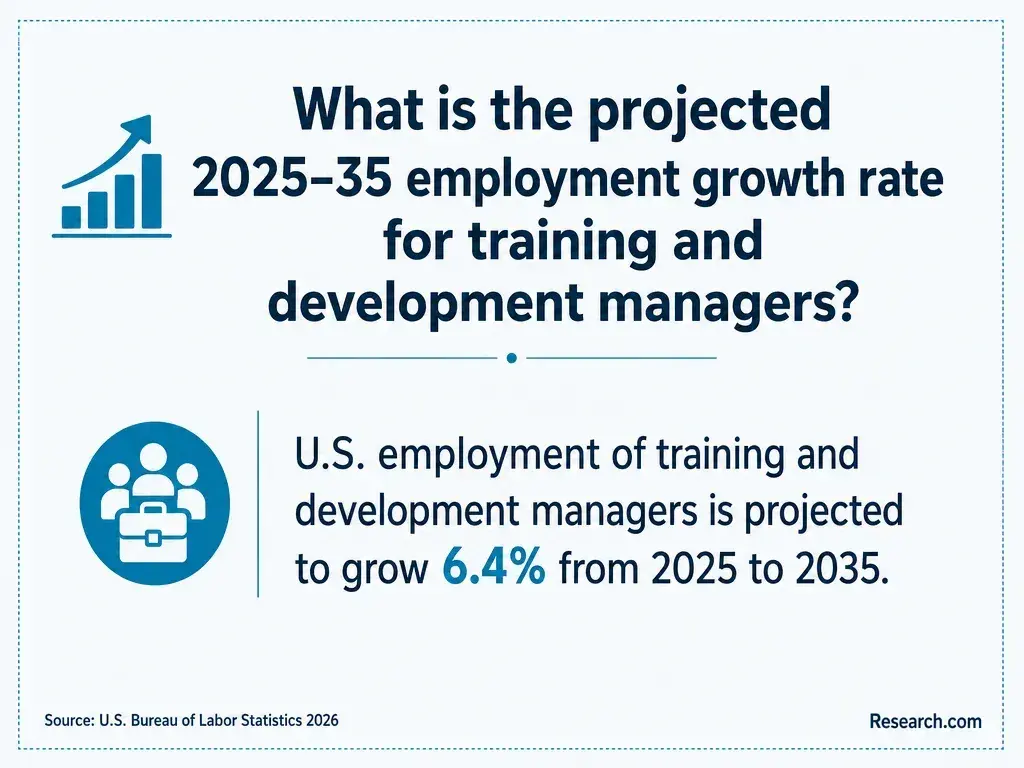
Occupational figures describe jobs, not returns from a specific degree. The U.S. Bureau of Labor Statistics reports a 2025 median annual salary of $133,000 for training and development managers and projects 6.4% employment growth for that occupation from 2025 to 2035.
Those figures can help a leader understand the market for management roles, but they do not show that an Ed.D. is required or that earning one will produce that salary.
For a catalog-misalignment specialist, the better career test is whether prospective roles call for the capabilities you can demonstrate: setting learning priorities, coordinating stakeholders, managing implementation, and evaluating performance.
Compare actual job postings and internal promotion criteria with your experience before attributing a potential career move to the credential.
How can you choose an accredited online Ed.D. program?
Confirm the institution's accreditation through the institution and its recognized accreditor, then verify the exact degree name and curriculum. Institutional accreditation is not evidence that a program prepares graduates for school-administrator licensure or any other regulated credential.
For a leader tackling a misaligned catalog, the decisive program questions concern access and application: Does the curriculum include organizational diagnosis and learning evaluation? What is the required final deliverable? Can a student propose a workplace-based project, and who approves its site, methods, and data use? What faculty guidance is available if the initial explanation for the skills gap proves wrong?
Ask for written answers about delivery, project requirements, and total charges for your entry term. Lower-tuition pathways to an education doctorate are worth comparing, but a lower price is useful only if the program's scope, schedule, and applied-work rules fit the leadership problem you intend to address.
Other Things You Should Know About EdD Leadership
Not without checking organizational rules. Remove identifying information only when permitted, and obtain any required employer, data-use, or academic approvals before using employee records or internal reports.
It can suggest terms to investigate, but it cannot verify how work is performed in your organization. Check proposed skills against actual tasks, supervisors' expectations, and employee experience without entering restricted information into an unapproved tool.
The accountable business or service leader should help set performance priorities, while employees, supervisors, and learning staff contribute evidence about the work. A definition imposed by one group can miss important constraints or capabilities.
Agree on the immediate decision and document its assumptions. A limited pilot may meet an urgent need, but specify what evidence would show whether a course helped or whether a different barrier still needs attention.
- Assess Training Needs: Conducting Needs Analysis | cdc.gov https://www.cdc.gov/training-development/php/about/assess-training-needs-conducting-needs-analysis.html
- Partnering with Students to Develop a Capstone for a... - PMC https://pmc.ncbi.nlm.nih.gov/articles/PMC11732519/
- Cost of Attendance (Budget) | 2025-2026 Federal Student Aid Handbook https://fsapartners.ed.gov/knowledge-center/fsa-handbook/2025-2026/vol3/ch2-cost-attendance-budget
- PhD vs. EdD in Education: Nine expert tips to help you choose [with infographic] | USC Rossier https://rossier.usc.edu/news/phd-vs-edd-in-education-nine-expert-tips-to-help-you-choose-with-infographic/
- What's the Difference Between Asynchronous and Synchronous Learning? | Ohio State Online https://online.osu.edu/content-hub/blogs/whats-the-difference-between-asynchronous-and-synchronous-learning/
- How to use a skills gap analysis in the workplace | University of Phoenix https://www.phoenix.edu/workforce-solutions/workforce-resources/posts/skills-development/how-to-use-a-skills-gap-analysis-in-the-workplace.html
- EdD vs. PhD in Education: Choosing the Right Program | Goodwin College of Professional Studies https://drexel.edu/soe/resources/career-path/edd-vs-phd/
- Program: Education, EdD | south.edu https://catalog.south.edu/preview_program.php
- Time Commitment & Course Formats - Cornell SCE https://sce.cornell.edu/pc-serv-time-commitment-format/
- Leadership and Learning in Organizations Online Ed.D. | Peabody College of Education and Human Development https://peabody.vanderbilt.edu/academics/edd-programs/online-leadership-learning-organizations/