2027 Choosing an Online Ed.D. in Leadership and Learning in Organizations for Leadership in Public School Districts
Audited and Verified:
Our Editorial and Data Verification Process
Research.com uses government datasets, official education statistics and primary institutional information to support its career and degree guides. Our review process checks factual accuracy, occupational definitions, source dates and the requirements associated with the credentials discussed.
How This Article Was Fact-Checked
Our editorial team verifies salary estimates, employment projections, education requirements and program information against original data providers and official organizations. Salary figures are checked against the relevant occupational definitions and reporting periods. Information about licensure, accreditation and required in-person training is reviewed separately.
Fact-checked and verified on:

Co-Founder and Chief Data Scientist
An online Ed.D. in leadership and learning can strengthen a school district leader's ability to develop staff, evaluate initiatives, and manage change. It may not, however, prepare someone for principal or superintendent licensure. That distinction matters when district roles carry state credential requirements and salary decisions follow established schedules. This guide is for educators and district professionals deciding whether a broadly focused organizational doctorate fits their next role. It explains what to verify in a program, where the degree can add value, and when a licensure-focused pathway or shorter professional development would be the better choice.
Key Things You Should Know
- Match the degree to the position: An organizational leadership and learning Ed.D. can support district improvement work, but it does not automatically qualify graduates for principal or superintendent licensure.
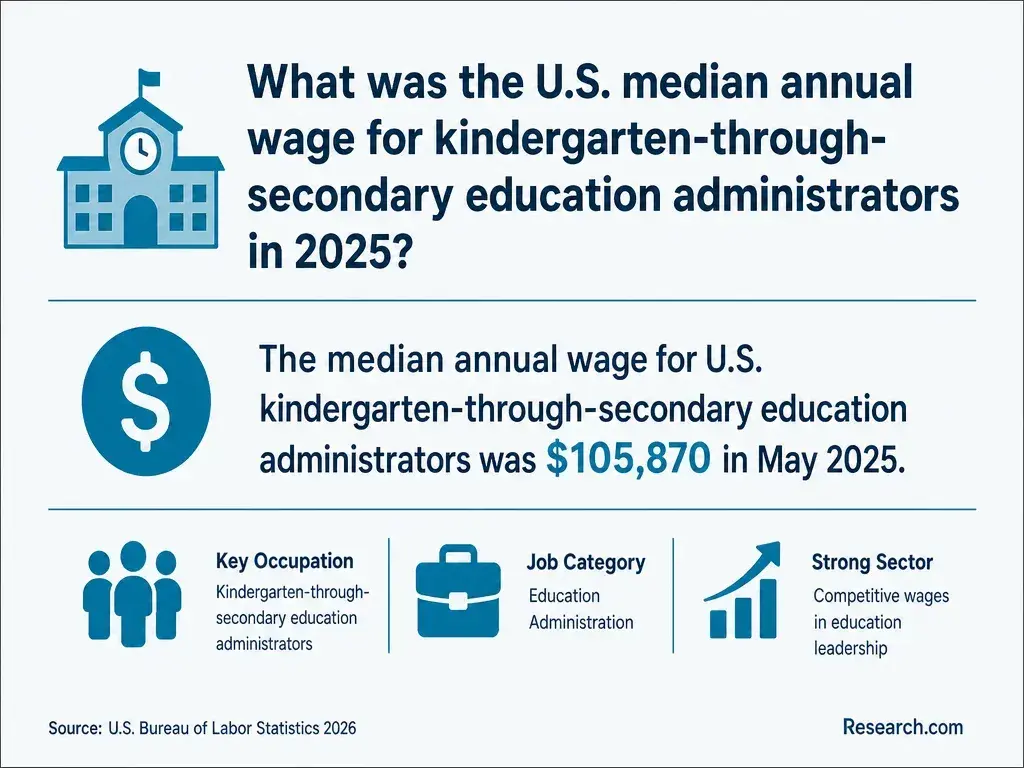
- Check the role, not just the salary: The U.S. Bureau of Labor Statistics reports a May 2025 median annual salary of $105,870 for school principals; that occupational figure is not a projected salary for Ed.D. graduates or superintendents.
- Verify the full program: Compare institutional accreditation, state licensure disclosures, district-relevant coursework, live attendance and travel requirements, applied-project rules, and total cost before enrolling.
What Is an Online Ed.D. in Leadership and Learning in Organizations?
An Ed.D., or Doctor of Education, is a doctoral degree commonly oriented toward applying research to problems of practice. In a leadership and learning in organizations program, those problems may involve how people learn at work, how leaders implement change, and how organizations assess whether an initiative is working. "Online" describes the delivery format, not necessarily self-paced study or an absence of campus visits.
The degree's broad organizational focus can be useful to a district leader overseeing professional learning across schools. It is not the same as a K-12 educational administration program built around state administrator standards. Program names alone cannot establish that distinction: examine required courses, the awarded degree or concentration, and the institution's licensure disclosure.
A district professional whose goal is instead a university administrative role should compare programs designed for that setting, including organizational leadership doctorates for university leadership work. Similar degree labels can lead to substantially different projects and professional networks.
How Can an Online Ed.D. Prepare You for Public School District Leadership?
The strongest fit is often a district professional who already has responsibility for an improvement effort and needs better ways to diagnose, implement, and evaluate it. For example, a director of professional learning could investigate why a training initiative has not changed classroom practice. Adult learning and evaluation coursework could help that leader distinguish weak training from barriers such as limited coaching time, competing priorities, or insufficient resources. Coursework alone would not establish which cause applies in a particular district.
Potential applications include designing principal development, coordinating instruction across schools, evaluating staff learning, and communicating evidence to a superintendent or school board. District governance, collective bargaining agreements, budgets, procurement rules, and family concerns shape what a leader can actually implement. Ask whether faculty and assignments address those constraints rather than treating a school system like a private company.
An applied project can be especially valuable if it addresses a district decision and produces a defensible analysis. Compare the program's actual project requirements before choosing an Ed.D. with an applied capstone option; a capstone is not necessarily quicker or less demanding than a dissertation. District sponsorship, permission to access records, FERPA obligations, confidentiality, and any required institutional review must be resolved before collecting or sharing learner or staff data.
Does an Online Ed.D. Lead to Principal or Superintendent Licensure?
Not automatically. A doctorate in organizational leadership and learning is an academic credential; a principal or superintendent credential is governed by the state where the applicant seeks to work. Requirements can involve an approved preparation program, prior educator credentials, qualifying experience, assessments, and supervised practice. A district's job posting may impose additional conditions.
If licensure is your immediate objective, obtain written answers from both the program and the relevant state licensing authority. Ask whether the specific online program and entry term meet that state's preparation requirements, whether field experiences can be completed in your district, and what prior credentials you must hold. Do not infer approval from institutional accreditation, an "educational leadership" course title, or another graduate's experience in a different state.
Already licensed administrators may find a broadly focused Ed.D. useful for district-wide work. An aspiring principal who still needs an administrator credential may be better served by an approved preparation pathway first, even if it awards a different degree.
Start by confirming that the institution holds recognized institutional accreditation and that the credential is awarded by that institution. Check the accreditor and the institution's status through the accreditor's directory or the U.S. Department of Education's accreditation database; do not rely solely on advertising language. Institutional accreditation applies to the school, not automatically to every possible professional credential its graduates might seek.
Next, separate three questions that are easy to conflate: Is the institution accredited? Does a particular education program hold any relevant programmatic recognition? Is the specific pathway approved for the administrator credential you need in your state? The final question belongs with the state authority. Programmatic accreditation, where present, should be evaluated for its actual scope rather than treated as a substitute for state approval.
Online study can let a district employee remain in place and use local challenges as a basis for coursework. Campus-based study may make in-person collaboration easier. Neither format is inherently stronger for district leadership; the important differences are access to faculty, relevant peers, project supervision, and a schedule the applicant can sustain.
Online does not always mean asynchronous. Live evening classes, cohort meetings, group assignments, and required campus convenings can conflict with board meetings, school-year deadlines, and travel restrictions. A campus program may be feasible if meetings are scheduled predictably and the district supports attendance. Request a sample term schedule and attendance policy for each option, including what happens when work obligations or a district emergency interrupt a required meeting.
Course titles vary, but district-relevant study commonly spans leadership and organizational change, adult learning, research methods, and evaluation. The key question is what students must do with those subjects. A professional learning leader, for example, needs to assess staff needs, plan implementation, measure meaningful changes in practice, and explain limitations - not merely complete a course about learning theory.
Compare course descriptions and assessments for opportunities to examine school-system governance, equity, budgeting, stakeholder engagement, and improvement across multiple schools. Determine whether quantitative and qualitative methods provide enough preparation for the required doctoral project. An elective may be unavailable in a particular term, and a single K-12 assignment does not make a broadly focused degree a formal school administration concentration.
For applicants with extensive leadership experience, shorter pathways through Ed.D. coursework may be worth examining. Confirm which requirements are actually removed or accelerated and whether the pace leaves adequate time for methods training, district permissions, and the final project.
Programs set their own requirements. Applicants may be asked for graduate transcripts, a statement of purpose, recommendations, a résumé, and evidence of professional leadership; some also require an interview or specify prior graduate study. A master's in education, a particular job title, and a research publication should not be assumed to be universal requirements.
For a district applicant, strong evidence is specific: describe the decisions you owned, the people or schools affected, how you worked within district constraints, and what you learned from results you can substantiate. Frame a possible doctoral problem without claiming access to student records or approval for a study you have not received. Ask admissions staff separately whether previous graduate work establishes eligibility and whether any of it can actually count toward the Ed.D.
If you previously left a doctorate after completing coursework, returning to Ed.D. study after reaching ABD status raises a distinct policy question. Request a written review of credit age, transfer limits, research requirements, and the time remaining to complete the new program; prior progress does not guarantee a shortened degree.
Time to completion depends on required credits, course sequencing, enrollment pace, and the dissertation or capstone. A published minimum timeline is not a promise: district approvals, project data access, and revisions can extend the final stage. Ask for the standard course map, maximum completion period, leave policy, and recent completion information with its cohort size and definition.
Because no single price represents all online Ed.D. programs, build a written estimate for each school. Include tuition under its actual charging model, mandatory fees, books or technology, required travel and lodging, and any additional terms needed to finish a project. Ask when tuition may change and what continued enrollment costs after scheduled coursework ends.
Compare that estimate with district reimbursement rules, including annual limits, required grades, eligible expenses, and repayment obligations if you leave. District salary schedules and administrator contracts - not a general claim about doctoral earnings - should inform any financial calculation. Education doctoral degrees by tuition level can help narrow a search, but confirm the full cost directly with each institution before committing.
A leadership and learning Ed.D. may support advancement for experienced professionals in district professional learning, curriculum and instruction, school improvement, evaluation, or central-office administration. It can strengthen evidence of applied leadership, but hiring still depends on experience, role-specific skills, and any required state credential. It does not itself appoint a graduate as a superintendent.
The U.S. Bureau of Labor Statistics reports a May 2025 median annual salary of $105,870 for elementary, middle, and high school principals and projects −0.3% employment growth from 2025 to 2035. Those national occupational figures describe employed principals, not Ed.D. graduates; they should not be used to forecast a district applicant's raise. Superintendent and central-office compensation must be checked against relevant district postings, contracts, and public pay schedules.
If the next position requires administrator licensure, meeting that requirement may be more urgent than earning a doctorate. If the goal is to lead a better professional learning initiative within a current role, supervised district experience or targeted evaluation training may deliver useful skills with less time and expense.
How Should You Choose a Reputable Online Ed.D. Program?
Start with the position you want and the credential it requires. The comparison below separates program orientations that can sound similar in marketing but serve different district goals. It describes common emphases, not guarantees about any individual school.
| Program orientation | Likely strength for district work | Potential mismatch to investigate |
| Leadership and learning in organizations | Staff development, organizational change, and applied evaluation across schools | May not include state-approved administrator preparation |
| K-12 educational leadership | School-system administration, instruction, governance, and district improvement | Program title alone does not establish licensure approval |
| Administrator licensure pathway | Preparation aligned with a specified state credential | May offer less doctoral-level study of organizational learning or research |
Once you have a shortlist, request the documents that can settle the decision rather than relying on a program summary. These checks are especially important if you expect to study while holding a full-time district position.
- Confirm the exact degree, required courses, accreditation status, and state-specific licensure disclosure for your intended entry term.
- Request the live-class schedule, attendance rules, campus-visit dates, course sequence, and written total-cost estimate.
- Ask who supervises the final project, whether a district partner is required, and how students handle permissions, protected data, or a change of employer.
- Compare any published completion or career outcomes using the cohort size, observation period, and definition of "completed" or "employed."
Choose the program whose verified requirements fit your target role, available district support, and realistic schedule. If no program clears those tests, postponing doctoral study while gaining administrator credentials or leading a substantial improvement project can be a sound decision.
Other Things You Should Know About EdD Leadership
Possibly, but not automatically. Check the district's current salary schedule, collective bargaining agreement, and rules for recognizing doctoral credits or degrees before estimating a pay change.
Usually only to the extent permitted by the district and program. Obtain approval before sharing documents, remove protected information, and describe your own contribution accurately.
Ask the program whether an external partner, a different district-approved topic, or another project model is allowed. Do this before enrollment if workplace access is central to your plan.
It may be if the primary goal is sustained scholarly research or a research-intensive faculty career. Compare actual methods training, faculty mentorship, research opportunities, and dissertation expectations rather than deciding by degree label alone.
- College Accreditation | U.S. Department of Education http://www.ed.gov/laws-and-policy/higher-education-laws-and-policy/college-accreditation
- Administrative Services Credential California Prepared (CL-574c) | Commission on Teacher Credentialing https://www.ctc.ca.gov/credentials/leaflets/cl-574c/
- School-Determined Requirements - FSA Partner Connect https://fsapartners.ed.gov/knowledge-center/fsa-handbook/2026-2027/vol1/ch1-school-determined-requirements
- Types of Financial Aid: Grants, Work-Study, and Loans | studentaid.gov https://studentaid.gov/understand-aid/types
- DAPIP | Homepage - Office of Postsecondary Education (OPE) https://ope.ed.gov/dapip/
- What's the Difference Between Asynchronous and Synchronous Learning? | Ohio State Online https://online.osu.edu/content-hub/blogs/whats-the-difference-between-asynchronous-and-synchronous-learning/
- Four Models for Course Delivery | UChicago Online https://online.uchicago.edu/pedagogical_approach_to_online_learning/four-models-for-course-delivery/
- 4.1.21 Instructional Modalities and Distance Education | Illinois State https://policy.illinoisstate.edu/academic/4-1-21
- Graduate Admissions Information | Cal State LA https://www.calstatela.edu/business/gradprog/graduate-admissions-information
- Doctoral dissertation or capstone: how to choose the right program | PhD/Doctorate | Capella University Blog https://www.capella.edu/blog/phd-doctorate/the-difference-between-a-dissertation-and-doctoral-capstone/