2027 Is an Online Ed.D. in Leadership and Learning in Organizations a Good Fit for Small Business Owners Moving into Executive Leadership?
Audited and Verified:
Our Editorial and Data Verification Process
Research.com uses government datasets, official education statistics and primary institutional information to support its career and degree guides. Our review process checks factual accuracy, occupational definitions, source dates and the requirements associated with the credentials discussed.
How This Article Was Fact-Checked
Our editorial team verifies salary estimates, employment projections, education requirements and program information against original data providers and official organizations. Salary figures are checked against the relevant occupational definitions and reporting periods. Information about licensure, accreditation and required in-person training is reviewed separately.
Fact-checked and verified on:

Co-Founder and Chief Data Scientist
Running a small business builds judgment, accountability, and leadership experience, but moving into an executive role at a larger organization may require different skills: leading through layers of management, developing talent at scale, and making decisions with evidence.
An online Ed.D. in Leadership and Learning in Organizations can help with some of those gaps, but it is neither a standard executive credential nor a substitute for relevant experience. This guide helps business owners judge the degree against their target role, available time, financial capacity, and more direct alternatives.
Key Things You Should Know
- Best fit: An applied Ed.D. is most useful when your next role centers on organizational change, leadership development, or workforce learning - not simply because you want an executive title.
- Career reality: The U.S. median annual pay for training and development managers was $133,000 in May 2025, but that occupational figure is not a predicted salary for Ed.D. graduates or business owners changing careers.
- Before enrolling: Confirm the program's actual schedule, total charges, research requirements, and whether its graduates enter roles like the one you want; compare those findings with an MBA, executive education, or a larger-scope leadership assignment.
Is an online Ed.D. in Leadership and Learning in Organizations right for small business owners?
It can be, if you want to lead how people learn and organizations change. An Ed.D. is a practice-oriented doctorate. In this field, it typically connects leadership theory, adult learning, organizational improvement, and applied inquiry. The fit is weaker if your main gap is corporate finance, industry-specific operations, or access to executive recruiters.
Ownership gives you evidence of decisions made under real constraints. It does not necessarily show that you have led managers across departments, worked within a board-governed enterprise, or implemented change without the authority that comes with owning the company. Compare your experience with the scope of the executive jobs you intend to pursue, not just their titles.
The most useful distinction is the problem you expect to solve next. If you want to build leadership pipelines, improve knowledge-sharing across locations, or evaluate a workforce-development initiative, doctoral study may deepen your practice. If you need to learn enterprise budgeting or qualify for a particular industry's operating role, a relevant assignment, mentor, MBA, or focused executive program may be more direct.
What does an Ed.D. in Leadership and Learning in Organizations teach?
Programs with this focus study how leaders shape organizations and how adults acquire, apply, and share knowledge at work. The point is not merely to design training. It is to distinguish a learning problem from a problem caused by incentives, workflow, resources, or decision rights - and then test an appropriate response.
For a business owner, that distinction matters when growth exposes limits in informal management. A doctoral project might examine why newly promoted supervisors struggle to delegate. It should not presume that a workshop is the solution: interviews, operational measures, and a review of management practices could point to a different cause. Any workplace inquiry involving employees requires appropriate organizational permission, privacy protections, and the academic review the program requires.
Course titles alone reveal little about depth. Examine syllabi and project requirements to see whether students actually practice organizational diagnosis and evaluation. If your intended move is into a university, also examine how higher education leadership through an organizational leadership Ed.D. differs from corporate leadership; university governance and hiring expectations may require separate preparation.
How can this Ed.D. support a transition into executive leadership?
The degree's strongest contribution is a disciplined way to diagnose problems, involve stakeholders, and assess whether a change worked. That can strengthen an owner's case for roles overseeing talent development, organizational effectiveness, or a substantial transformation initiative. It cannot, by itself, establish experience managing a large budget, reporting to a board, or leading executives in a new industry.
Translate both business ownership and doctoral work into evidence an employer can assess: the scope of teams led, decisions you controlled, constraints you managed, and what you learned from results. Describe an applied project accurately as an academic project unless it was separately implemented and evaluated by an organization. Seek cross-functional responsibilities or an advisory role during your studies so that the résumé shows increasing organizational scope as well as a new credential.
Before committing, compare the degree with one concrete alternative for your target job. An MBA may better address finance and general management; a DBA may better fit sustained business-focused inquiry; executive education may close a narrow skill gap faster. An Ed.D. is more persuasive when learning, culture, and change are central to the work you want to do.
Curricula vary by institution, but the subjects most relevant to an owner-to-executive transition are leadership and organizational theory, adult learning, change implementation, research methods, and evaluation. Look for opportunities to apply those subjects together rather than treating a course list as proof of executive preparation.
For example, adult learning can inform how supervisors develop; organizational diagnosis can reveal whether training is even needed; and qualitative or quantitative methods can help assess an intervention without overstating its effects. A program may also offer electives in talent management, coaching, or learning technology, but an elective is not necessarily a formal concentration.
Ask how students move from coursework to the final doctoral deliverable. Programs may require a dissertation in practice, a capstone, or another approved project, with different expectations for faculty supervision, organizational access, and research review. Choose the structure that supports the kind of evidence-based work you expect to do as an executive.
Online study can preserve the ability to run a business, but it does not necessarily offer control over when work happens. Live classes, group projects, campus convenings, and deadlines may still collide with client obligations or a seasonal sales cycle. Campus-based study may offer more routine in-person contact, at the cost of commuting or relocation.
Compare the formats against your actual operating calendar. Ask for required live-session times, attendance policies, travel dates, group-work expectations, and the busiest stages of the final project. If speed matters, use accelerated education doctorate completion planning as a starting point, then confirm whether a faster sequence leaves enough time for both your business and the required research.
Neither format guarantees a stronger executive network. Investigate who participates in the cohort, how students work with faculty and peers, and whether those relationships are relevant to the sectors where you hope to lead.
Requirements depend on the school and entry term. Programs commonly evaluate prior degrees and transcripts, professional experience, a statement of purpose, and recommendations; some add an interview, writing sample, or other conditions. A business degree or ownership background should not be assumed to disqualify you, nor should an executive title be assumed to secure admission.
Present specific evidence of leadership: whom you supervised, decisions you made, changes you led, and a credible organizational problem you want to investigate. Ask admissions staff whether a completed master's degree or particular graduate coursework is required, how the program evaluates business experience, and what research preparation it expects. Graduate credits considered for admission are not automatically transferred into the doctorate.
If you previously began a doctorate, ask for a written evaluation of what, if anything, can count toward the new program. Guidance on continuing an education doctorate after unfinished research may help frame your questions, but only the admitting institution can determine credit applicability and remaining requirements.
Completion time and total cost depend on the required credits, course sequence, enrollment pace, final project, and the school's charges. Do not equate an advertised minimum timeline with the time available to someone still responsible for payroll, clients, and business operations.
Build a written estimate using the institution's charges for your proposed entry term. Include tuition, mandatory fees, books or technology, required travel and lodging, and the cost of delegating work while you study. Ask how tuition is charged, what happens if the project takes longer than planned, and whether taking a leave changes your enrollment or aid eligibility. When comparing online leadership doctorate program prices, use the same assumptions about credits and additional charges for every school.
Estimate the payoff conservatively. A possible future promotion is not a funding source. If your business will pay, clarify its cash-flow effect and tax treatment with qualified advisers; if another employer offers tuition assistance, obtain its eligibility and repayment conditions in writing.
Generally, no license is required to pursue or use an organizational leadership Ed.D. in ordinary business roles. The doctorate itself does not grant a professional license, executive appointment, or specialized certification.
Regulated positions are different. A principal or superintendent position, for example, may require state-specific credentials and an approved preparation pathway. Do not assume that institutional accreditation or a course labeled "educational leadership" makes an organizational leadership doctorate a licensure program. If a regulated role is your goal, ask the school for its licensure disclosure and confirm eligibility with the relevant state authority before enrolling.
Potential paths include training and development management, organizational consulting, talent or organizational development leadership, and - in some settings - higher education administration. These roles involve different work: a training manager oversees development programs; a management analyst advises on organizational performance; and a senior executive typically owns broader strategy, operations, and accountability. Employers assess relevant experience alongside education.
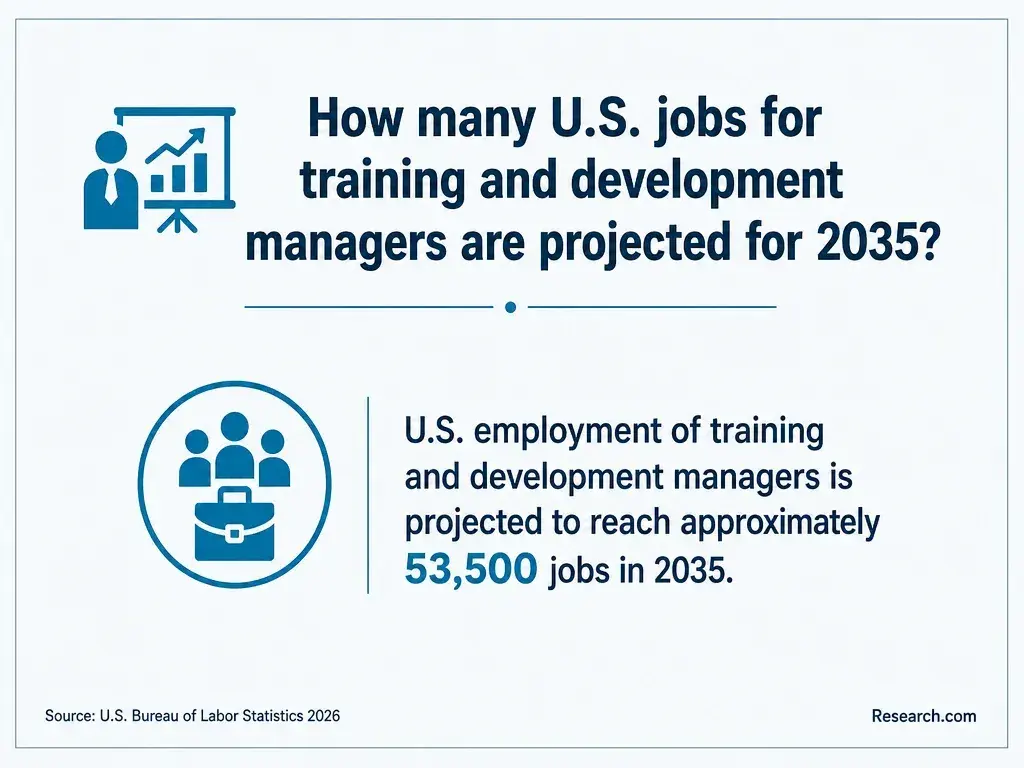
The U.S. Bureau of Labor Statistics figures below describe occupations, not Ed.D. graduate outcomes. They provide a market reference for two plausible paths, but cannot predict your offer or establish that a doctorate is required.
| Occupation | Median annual pay, May 2025 | Projected employment growth, 2025-2035 |
| Training and development managers | $133,000 | 6.4% |
| Management analysts | $101,860 | 10.1% |
These figures favor researching actual openings over assuming that "executive leadership" has one salary or hiring standard. For a move into higher education, compare the institution's job requirements and compensation with your business experience; explore low-cost higher education leadership doctoral funding options only if that sector is a serious target. The strongest next step is to review postings for your intended role and identify which missing qualifications an Ed.D. would - and would not - address.
How can small business owners choose an accredited online Ed.D. program?
Start with the job you want, then evaluate programs against it. Confirm the institution's accreditation with the recognized accreditor and the school, and verify the exact degree name; accreditation of an institution does not establish licensure eligibility or the quality of a particular executive network. Request current, program-specific answers rather than relying on general descriptions of online doctorates.
A short comparison process can prevent an expensive mismatch:
- Identify target job postings and separate requirements for organizational scope, industry experience, and education.
- Compare required coursework and final projects with the leadership and learning skills those jobs demand.
- Obtain written details on live attendance, convenings, project-site rules, total charges, and continuation policies.
- Ask what graduate outcome information the school can substantiate, including how it defines and tracks those outcomes.
- Choose the Ed.D. only if its distinctive learning justifies its cost and time compared with gaining broader responsibility or taking shorter training.
If your current business cannot support the required project or your target employers chiefly seek experience at a larger scale, address that gap before - or instead of - enrolling. The best program is one whose verified requirements and learning outcomes fit your transition, not simply one marketed to working leaders.
Other Things You Should Know About EdD Leadership
Yes, but ask how a change in employment would affect any required workplace project. A program may require a new approved site, sponsor, or project scope.
Possibly. The program must approve the setting and project, and ownership does not remove employee-privacy, consent, data-access, or research-review obligations.
It may strengthen your perspective on leadership and organizational change, but boards also assess governance experience, industry knowledge, financial judgment, and the expertise they currently need.
Yes, after the degree is awarded. In professional materials, identify it as an Ed.D. so the credential is clear and is not mistaken for a medical qualification.
- Cost of Attendance | HESC - NY. Gov https://hesc.ny.gov/dictionary/tap-coach/term/cost-attendance
- Executive Development Programs | U.S. Office of Personnel Management https://www.opm.gov/agency-services/training-and-development/for-individuals/executive-development-programs/
- Cost of Attendance (Budget) | 2025-2026 Federal Student Aid Handbook https://fsapartners.ed.gov/knowledge-center/fsa-handbook/2025-2026/vol3/ch2-cost-attendance-budget
- Understanding College Costs | studentaid.gov https://studentaid.gov/resources/prepare-for-college/students/choosing-schools/consider-costs
- Maximizing the Impact and ROI of Leadership Development | nih.gov https://pmc.ncbi.nlm.nih.gov/articles/PMC11505461/
- Admissions Eligibility | Colorado Department of Higher Education Home https://cdhe.colorado.gov/admissions-eligibility
- How Many Hours a Week Does an Online College Take? | University of the People https://www.uopeople.edu/blog/how-many-hours-a-week-does-an-online-college-take/
- All But Dissertation Option, DBA - Capstone Project Track https://catalog.baker.edu/preview_program.php
- Learning Opportunities for Mission-Driven Leaders | Harvard Business School https://www.hbs.edu/socialenterprise/for-organizations/learning
- Is an Executive MBA Worth It? Costs, ROI, and Real Value | SCU https://www.scu.edu/business/blog/mba/is-an-executive-mba-worth-it/