2027 Online Ed.D. in Leadership and Learning in Organizations: Comparing Coursework in Learning Experience Design
Audited and Verified:
Our Editorial and Data Verification Process
Research.com uses government datasets, official education statistics and primary institutional information to support its career and degree guides. Our review process checks factual accuracy, occupational definitions, source dates and the requirements associated with the credentials discussed.
How This Article Was Fact-Checked
Our editorial team verifies salary estimates, employment projections, education requirements and program information against original data providers and official organizations. Salary figures are checked against the relevant occupational definitions and reporting periods. Information about licensure, accreditation and required in-person training is reviewed separately.
Fact-checked and verified on:

Co-Founder and Chief Data Scientist
Two online Ed.D. programs can both promise expertise in leadership and learning while offering very different preparation in learning experience design. One may teach you to build and test learning experiences; another may focus on leading the teams and systems that deliver them. For learning and development professionals and emerging organizational leaders, that difference matters more than the degree title alone.
This guide shows you how to compare course sequences, design practice, evaluation methods, and program constraints so you can choose a doctorate that fits your work - or recognize when a shorter credential is the better investment.
Key Things You Should Know
- For hands-on learning experience design, look for required work in needs assessment, prototyping, accessibility, and evaluation - not just a course titled "Learning Design."
- For L&D leadership, prioritize organizational diagnosis, change implementation, and evidence use alongside design coursework; neither emphasis automatically supplies the other.
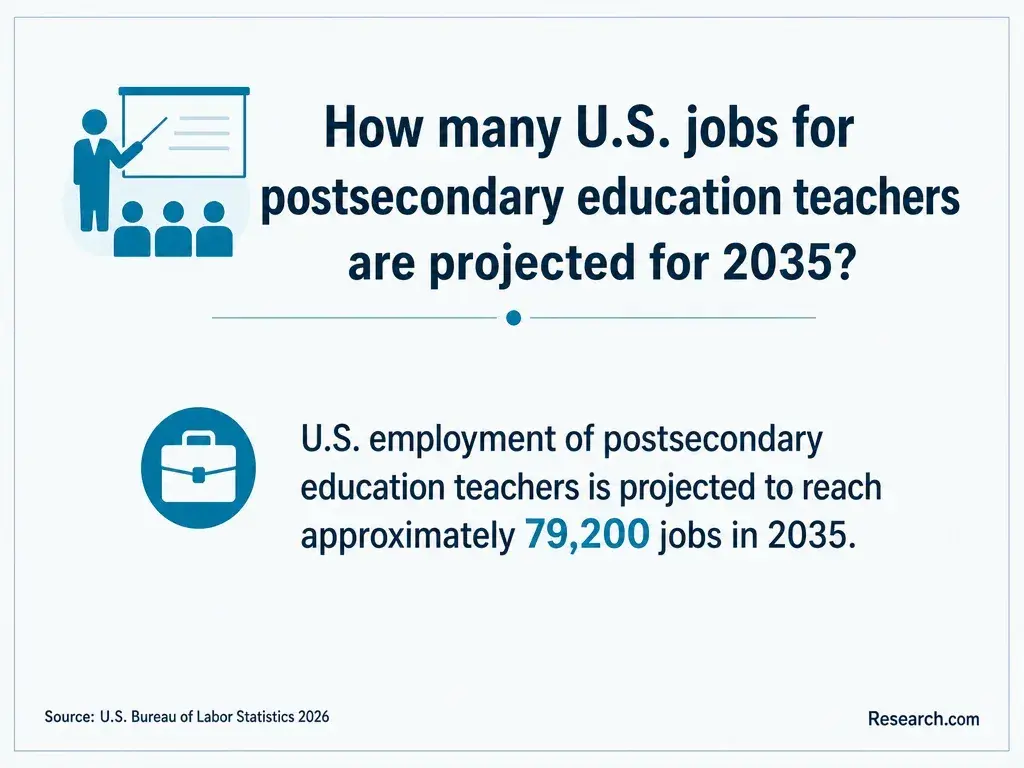
- The U.S. Bureau of Labor Statistics projects 10.8% growth for training and development specialists from 2025 to 2035, but that occupation-wide forecast does not establish demand for an Ed.D. or predict graduates' outcomes.
What Is an Online Ed.D. in Leadership and Learning in Organizations?
An Ed.D. in leadership and learning in organizations is a practice-oriented doctorate concerned with how people learn, how organizations change, and how leaders use evidence to improve practice. Program titles and requirements vary. An online format describes where much of the instruction occurs; it does not establish that classes are self-paced or that campus visits are unnecessary.
Learning experience design means deliberately designing and improving a learner's full experience, including the performance problem, activities, technology, accessibility, support, and evidence of learning transfer. That is narrower than organizational leadership but broader than producing slides or selecting an e-learning platform. An Ed.D. may connect design decisions to budgets, culture, stakeholder needs, and implementation across an organization.
The final doctoral deliverable also matters. Some programs require a dissertation, while others use a dissertation in practice or another approved applied project. A design prototype completed for a course is not necessarily the doctoral project. Compare the institution's actual requirements; an overview of education doctorates with applied final projects can help frame questions, but the program must confirm what it requires.
How Does Learning Experience Design Coursework Compare Across Online Ed.D. Programs?
Compare required work and assessed outputs, not course names alone. A catalog description can establish that a topic appears; a syllabus, assignment description, or program-provided sample can show whether students practice it at the depth your goal requires.
The following curriculum patterns are comparison categories, not claims that any particular school offers all the listed courses. They show what each emphasis is most likely to help an L&D professional do.
| Curriculum emphasis | Coursework and assessed work to look for | Best fit - and likely gap |
| Design-intensive | Adult learning, needs assessment, accessible design, prototyping, learner feedback, and iteration of a usable learning experience | Fits a practitioner who wants to improve design judgment; may offer less preparation for leading organization-wide change. |
| Leadership and organizational change | Organizational diagnosis, stakeholder engagement, implementation planning, leadership development, and resource decisions | Fits someone managing learning strategy; may offer limited hands-on design or tool practice. |
| Evaluation and applied inquiry | Research methods, measurement, program evaluation, data interpretation, and a feasible workplace inquiry | Fits someone accountable for learning impact; may not teach how to create an effective experience from scratch. |
The strongest fit often combines elements of all three, but depth matters more than breadth. A working instructional designer moving toward L&D leadership may reasonably favor change and evaluation courses. A leader who already manages people but has never designed instruction may need supervised design practice before claiming design expertise.
To compare actual programs, request the current degree plan and recent syllabi, then examine the sequence: Does a needs assessment precede design? Do students prototype and revise work using feedback? Are accessibility and learning transfer assessed? Can they choose electives that are actually offered during their enrollment? Finally, ask whether the doctoral project permits a design-and-evaluation question under faculty supervision. A single design elective does not constitute a formal concentration, and exposure to analytics does not establish advanced measurement skill.
For example, if your organization reports low course completion, a design-focused assignment might test clearer navigation or more relevant practice activities. A leadership-focused assignment might examine scheduling, manager support, or incentives first. Neither approach should assume that course design caused the problem; good coursework teaches you to investigate before prescribing training.
What Accreditation Should an Online Ed.D. Program Have?
Verify that the degree-granting institution holds recognized institutional accreditation and that the specific online Ed.D. is offered by that institution. Check the institution's current accreditation information and the accreditor's directory, rather than relying on a third-party description. Institutional accreditation is not proof that learning experience design is a formal specialization or that coursework meets an employer's technical requirements.
If your goal is a regulated school leadership role, ask the program whether it is approved for that state's credential and confirm eligibility with the relevant state authority. A broadly focused organizational leadership Ed.D. should not be assumed to prepare graduates for principal, superintendent, or teacher licensure.
Requirements differ by institution. Programs may consider a completed graduate degree or specified graduate coursework, academic record, professional experience, recommendations, a statement of purpose, and an interview. Check the entry-term rules for the programs on your shortlist; do not assume an education master's, a managerial title, a test score, or a fixed number of years is universally required.
For a learning experience design applicant, the most useful preparation to document is a real learning or performance problem, your responsibility for addressing it, and what evidence informed your decisions. A portfolio of design work can demonstrate practice, while an honest account of its limitations shows readiness for doctoral inquiry. Someone with an education specialist credential can separately investigate education specialist to doctoral degree planning; credits accepted for admission are not automatically credits applied to the doctorate.
Completion depends on the program's required credits, course rotation, enrollment pace, and final-project milestones. Ask for a term-by-term plan showing when design electives, methods courses, and project supervision occur. An attractive elective is of little use if it is not scheduled before your planned graduation.
Online study can still require live meetings, group design work, and substantial project time. If an employer change could interrupt access to a workplace project, ask how the program handles a new site or revised research question. Time to completion also affects total expense: comparing lower-cost online education doctoral programs is most useful when you account for the full expected enrollment period, not just an advertised per-credit rate.
Without a named institution and entry term, there is no defensible single price. Request the published tuition basis, required credits, mandatory fees, expected enrollment schedule, and charges that continue during the final project. Add any required travel, lodging, design software or equipment, and the cost of reducing paid work hours. An employer reimbursement policy is valuable only to the extent that you meet its approval, grade, continued-employment, and repayment conditions.
Use online Ed.D. fees and cost comparisons to identify questions for each school, then obtain a written program-specific estimate. If your goal is primarily to build accessible modules or learn a particular authoring tool, compare that full doctoral cost with a focused course, certificate, and supervised portfolio work before enrolling.
The important distinction for learning experience design is access to feedback, not simply location. Online programs may support collaboration through live critique and shared projects; campus programs may offer more face-to-face studio time. Either can be effective if you can receive substantive faculty and peer feedback on work you actually design and revise.
Ask both types of program how often students meet live, how group assignments are scheduled, which campus convenings are mandatory, and whether faculty can supervise the organizational setting you hope to study. Online delivery can reduce routine commuting without removing travel or scheduling costs. For someone employed in a college or university, employer support may change that comparison; guidance on reducing higher education leadership doctoral study costs is a starting point, not a substitute for confirming your employer's and program's terms.
For an established L&D professional, the doctorate may support movement toward learning strategy, leadership development, organizational development, or evaluation work. The responsibilities differ: an instructional designer builds and improves experiences; a training manager coordinates people, resources, and delivery; an organizational consultant diagnoses broader performance or change problems. An Ed.D. can deepen preparation across these tasks, but it does not replace the relevant design portfolio, management record, or sector knowledge an employer expects.
Match the curriculum to the next responsibility you want, not the most senior job title in a program's marketing. If you already lead a learning team but need stronger evaluation skills, look for methods courses and a viable applied project. If you are trying to enter instructional design from an unrelated role, targeted design training and portfolio experience may be a more direct first step than a doctorate.
"Learning experience designer" is not a single Bureau of Labor Statistics occupation, so salary depends on the work and level of responsibility attached to the job. The BLS reports a median annual salary of $69,280 for U.S. training and development specialists in May 2025. That is an occupation-wide reference point, not an expected starting salary for designers or an earnings estimate for Ed.D. graduates.
When assessing a role, compare its actual duties - design, facilitation, evaluation, or management - with the employer's pay range and your experience. Senior management pay should not be used to justify doctoral tuition unless you have a credible path to the management responsibilities involved.
What Certifications Support Careers in Learning Experience Design?
A certification can complement doctoral coursework when it addresses a specific skill gap. Options in talent development, instructional design tools, accessibility, project management, or change management serve different purposes; verify the issuing organization's eligibility rules, assessment, renewal requirements, and employer recognition before paying. A tool certificate demonstrates a different capability from designing an evidence-informed learning strategy.
Choose based on the work you need to show next. An experienced designer seeking organizational influence may gain more from an Ed.D. with change and evaluation depth. Someone who needs to produce accessible digital learning now may benefit more immediately from focused training, feedback on completed work, and a portfolio. Neither credential substitutes for demonstrated results or responsible handling of learner data.
Other Things You Should Know About EdD Leadership
Not necessarily. Some roles use authoring platforms without coding; others require technical development. Check target job descriptions and choose coursework or training that matches the tools and responsibilities you want.
Follow the program's academic-integrity rules and the organization's data policies. Disclose permitted use, review outputs for accuracy and accessibility, and do not enter confidential learner or employee information into an unapproved tool.
Only if you have permission to share them. Confirm ownership and confidentiality rules, remove restricted information, and describe your decisions and contributions without presenting private results as public evidence.
Depending on the decision, you may be able to use aggregated performance indicators, approved observations, or voluntary feedback. Establish access and privacy rules first, and avoid claiming that a change in outcomes was caused by training without an appropriate evaluation design.
- Leveraging learning experience design: digital media... - PMC https://pmc.ncbi.nlm.nih.gov/articles/PMC9552131/
- Department Expectations: Curriculum | New York State Education Department https://www.nysed.gov/college-university-evaluation/department-expectations-curriculum
- Courses | Organization and Leadership | Columbia University https://www.tc.columbia.edu/organization-and-leadership/courses/
- Leadership and Human Resource Development, Ph.D. | lsu.edu https://catalog.lsu.edu/preview_program.php
- Synchronous or Asynchronous Activities? Choosing a Modality that Works | Online Teaching https://onlineteaching.umich.edu/articles/synchronous-or-asynchronous-activities-choosing-a-modality-that-works/
- Course Planning for MA, Learning Technology and Experience Design | NYU Steinhardt https://steinhardt.nyu.edu/degree/ma-learning-technology-experience-design/course-planning
- Online Ed.D. in Leadership and Learning in Organizations | VU-EDU https://peabodyonline.vanderbilt.edu/edd-in-organizational-learning/
- An Introduction to Learning Experience Design (LXD) - UCATT https://ucatt.arizona.edu/news/introduction-learning-experience-design-lxd
- EdD in Educational Leadership & Learning | University of St. Thomas https://education.stthomas.edu/leadership-degrees-licensures/post-graduate-studies/ed-d-educational-leadership-learning/
- Asynchronous Engagement - CNDLS @ Georgetown https://cndls.georgetown.edu/resources/asynchronous-engagement/