2027 Online Ed.D. in Leadership and Learning in Organizations After a Master's in Adult and Continuing Education: Admission and Credit Questions
Audited and Verified:
Our Editorial and Data Verification Process
Research.com uses government datasets, official education statistics and primary institutional information to support its career and degree guides. Our review process checks factual accuracy, occupational definitions, source dates and the requirements associated with the credentials discussed.
How This Article Was Fact-Checked
Our editorial team verifies salary estimates, employment projections, education requirements and program information against original data providers and official organizations. Salary figures are checked against the relevant occupational definitions and reporting periods. Information about licensure, accreditation and required in-person training is reviewed separately.
Fact-checked and verified on:

Co-Founder and Chief Data Scientist
A master's in adult and continuing education may be strong preparation for an online Ed.D. in leadership and learning in organizations - but qualifying for admission and receiving doctoral credit are separate decisions. That distinction matters before you commit to another degree, especially if you expect prior coursework to shorten the program. This guide is for working educators, trainers, and learning professionals who want to assess their eligibility, request an accurate credit review, and decide whether a practice-focused doctorate fits their next leadership goal.
Key Things You Should Know
- A completed master's in adult and continuing education may satisfy an Ed.D. degree requirement; the program must still confirm its rules for prior degrees, experience, and academic preparation.
- Master's courses used to establish admission eligibility do not automatically transfer into doctoral requirements. Request a written, course-by-course evaluation before assuming any reduction in credits, tuition, or time.
- Compare the actual doctoral curriculum and project requirements with your existing skills. The most valuable program may be one that adds organizational leadership and applied research - not one that repeats adult learning coursework.
What Is an Online Ed.D. in Leadership and Learning in Organizations?
An online Doctor of Education, or Ed.D., in leadership and learning in organizations is a practice-oriented doctorate focused on improving how organizations lead, develop people, implement change, and use evidence. Students may study leadership, organizational learning, evaluation, and research methods, then complete the doctoral project required by their program. "Online" describes where much of the instruction occurs; it does not necessarily mean self-paced study or no campus visits.
Your adult and continuing education master's provides a relevant starting point, particularly if it covered adult learning, program design, or workforce education. The doctoral-level question is what you still need to learn: leading change across an organization, evaluating its effects, or making decisions with imperfect evidence. Program titles and emphases vary, so choosing the right Doctor of Education study emphasis matters more than finding a familiar-sounding course title.
This degree is distinct from a research-oriented PhD and does not, by itself, confer school-administrator licensure or qualify someone for an executive position.
Can a Master's in Adult and Continuing Education Meet Ed.D. Admission Requirements?
Yes, potentially. A completed master's in adult and continuing education is directly relevant to many leadership and learning doctorates. But each institution decides whether the degree meets its admission standard, including requirements concerning the awarding institution, academic standing, professional experience, and any specified graduate preparation. A related master's can establish eligibility without making an applicant automatically competitive.
Describe how your graduate study connects to your work: for example, designing continuing education, assessing learners' needs, or evaluating a training program. Then show where your responsibilities extended beyond course delivery into decisions about people, resources, implementation, or improvement. Programs may define qualifying leadership experience differently, and a job title alone cannot settle that question.
If your degree is unfinished, comes from an institution whose recognition needs review, or includes coursework from multiple schools, ask admissions to evaluate those facts explicitly. Submit transcripts from every relevant institution rather than assuming that the master's diploma alone answers all credit and prerequisite questions.
How Much Master's Credit Can Transfer Into an Online Ed.D. Program?
There is no universal transfer amount. Some programs allow eligible master's credits to count toward doctoral requirements; others use the completed degree for admission but require students to take the full Ed.D. curriculum. A school may also waive a prerequisite without reducing the credits needed to graduate.
The following distinctions help you read a program's policy and ask for the decision you actually need.
| Decision | What it establishes | What to confirm |
| Admission eligibility | Whether your degree or graduate study meets an entry requirement | Accepted degree level, institution, field, grades, and transcript rules |
| Transfer acceptance | Whether specific prior courses qualify for doctoral credit | Credit limits, course level, grades, recency, and quarter-to-semester conversion |
| Degree applicability | Whether accepted credit fulfills a named Ed.D. requirement | Course equivalency, substitutions, required credits taken at the doctoral institution, and remaining sequence |
| Prerequisite waiver | Whether prior learning excuses an entry or foundation course | Whether the waiver changes total credits or only which courses you take |
A course in adult learning might be relevant yet fail to replace a doctoral seminar with different research or leadership outcomes. Send the registrar or transfer-credit office official transcripts and, when requested, syllabi showing learning outcomes, assignments, and credit hours. Ask the Ed.D. program director which requirements any accepted credits will satisfy, then obtain a written degree audit for your proposed entry term. Only that evaluation can show whether you would save time or tuition.
Prior doctoral work raises a different policy question from master's transfer. If you have also left a doctorate before completion, investigate comparing education doctorate ABD completion routes separately; those routes do not establish how a new Ed.D. will treat your master's courses.
Start by verifying that the university holds institutional accreditation recognized by the U.S. Department of Education or the Council for Higher Education Accreditation. Check the accreditor's directory and confirm that the status applies to the university awarding the Ed.D. For an online program, also ask whether the institution can enroll students in your state.
Do not treat institutional accreditation as proof that the doctorate has specialized programmatic accreditation or meets a licensing board's requirements. If your goal is principal, superintendent, or another regulated education role, ask the university whether the specific program is an approved preparation pathway and confirm eligibility with the relevant state authority. A broadly focused organizational leadership Ed.D. may serve a different purpose.
Requirements vary by program and entry term. Beyond a qualifying graduate degree, an application may call for transcripts, recommendations, a statement of purpose, a résumé, an interview, or evidence of relevant professional responsibility. Do not assume that every program requires a GRE score, a master's thesis, or a fixed number of years in management.
Before applying, use these questions to separate published requirements from judgments the admissions committee will make about your preparation:
- Will my completed adult and continuing education master's satisfy the degree requirement, and are any specific courses or minimum grades required?
- How does the program define relevant leadership experience, and can I document decisions or improvement work rather than relying on my title?
- What research or quantitative preparation is expected, and are there bridging courses if my master's emphasized practice?
- What organizational problem could I investigate, and what approvals would be needed before using workplace information?
Request answers from admissions about eligibility and application rules; direct questions about curriculum equivalencies and doctoral project feasibility to the program. In your statement, connect a genuine learning or leadership problem to the program's approach without claiming access to data or organizational approval you do not yet have.
Coursework commonly brings together leadership and organizational change, learning in workplaces, and qualitative or quantitative inquiry. The precise sequence differs by institution. For someone with an adult education master's, the key comparison is whether the doctorate advances beyond familiar learning theory into organizational diagnosis, implementation, ethical evidence use, and evaluation of change.
Review required courses - not just electives - and identify the doctoral deliverable. A capstone, dissertation in practice, and research dissertation can involve different questions, approvals, and expectations. If a practice-based project is important to you, investigate choosing an Ed.D. with an applied capstone option, then verify the selected program's actual requirements with its faculty.
Prior experience teaching adults is valuable, but it may not substitute for preparation in research design or leading cross-functional change. Conversely, if the proposed curriculum largely duplicates your master's and your goal is a narrower skill - such as program evaluation - a targeted course or supervised workplace project may be a better investment.
Time to completion depends on required credits, enrollment pace, course sequencing, and progress on the doctoral project. An online format does not remove research, revision, or faculty-review stages. Even when a school accepts transfer credit, prerequisites and cohort course schedules can limit how much earlier you finish.
To estimate cost, request the program's required-credit total and its tuition and mandatory-fee schedule for your entry term. Add any required travel, lodging, books, technology, and time away from paid work. Ask whether employer reimbursement applies to doctoral courses and what happens if you change jobs or pause enrollment. Without a written credit evaluation and current charges, a promised total cost or saving is unreliable.
If affordability is decisive, use low-cost doctoral study in organizational leadership as a starting point for comparison, not as evidence that differently named programs will accept the same credits or offer the same curriculum.
Online study can reduce routine commuting and broaden your choice of institutions. Campus-based study may make in-person collaboration easier. Neither format determines instructional quality, admission eligibility, or transfer policy; compare the specific programs' faculty guidance, research support, and required participation.
Ask online programs whether classes meet live, when group work occurs, and whether campus convenings are mandatory. Ask campus programs whether attendance can accommodate your employment schedule. If you are weighing travel against tuition, education doctorate tuition and affordability is useful context, but your decision should rest on each school's full attendance requirements and estimated costs.
For an adult and continuing education professional, plausible directions include greater responsibility in learning and development, workforce education, organizational development, program leadership, or consulting. The strongest transition usually builds on work you already do: identifying learning needs, coordinating stakeholders, improving programs, and showing how decisions were evaluated.
An Ed.D. may help you take on more complex leadership and evidence-based improvement work, but employers also assess management experience, sector knowledge, and results. Before enrolling for a particular job, review actual postings and speak with people in that function. If the gap is experience managing a team or implementing a change initiative, an employer-sponsored leadership assignment may address it more directly than another degree.
What Salary and Job Outlook Can Ed.D. Graduates Expect?
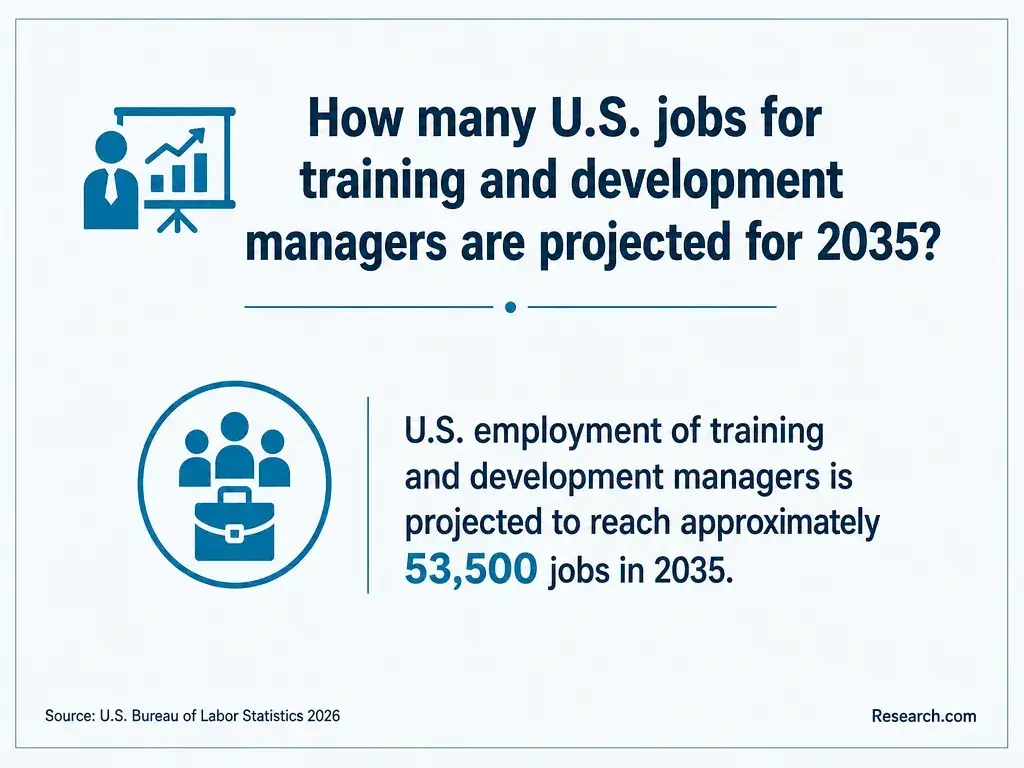
There is no single salary or employment outlook for Ed.D. graduates. The relevant comparison is the occupation you seek, not the degree name. U.S. Bureau of Labor Statistics figures put the May 2025 median annual salary for training and development managers at $133,000, with employment projected to grow 6.4% from 2025 to 2035. That figure describes workers in the occupation; it is not a starting salary, a typical Ed.D. graduate outcome, or evidence that the doctorate causes a pay increase.
If you already manage learning programs, compare doctoral costs with the requirements and compensation of roles you could realistically pursue. If you are moving from teaching or training delivery into management, first assess the leadership experience employers request. A degree can strengthen preparation without replacing that experience.
Other Things You Should Know About EdD Leadership
Some programs may consider an application while your degree is in progress, but they can require proof of completion before enrollment. Ask admissions for the applicable deadline and documentation rules.
Do not assume so. A certificate may demonstrate preparation, while credit toward an Ed.D. depends on whether the institution accepts the underlying coursework under its graduate-transfer policy.
That depends on the program's project rules. Ask whether an external organization is permitted and what faculty, partner, data-access, and ethical approvals would be required.
Ask the program how a job change affects an approved project site, data access, and your study schedule. Check separately whether leaving your employer triggers tuition-reimbursement obligations.
- UNC Charlotte Academic Policy: Ed.D. Degree Requirements https://provost.charlotte.edu/policies-procedures/academic-policies-and-procedures/edd-degree-requirements/
- Can I transfer credits into a doctoral program? | Capella University https://www.capella.edu/blog/phd-doctorate/can-i-transfer-credits-into-a-doctoral-program/
- Online Doctorate in Educational Leadership & Management (EdD) | Drexel University Online https://www.online.drexel.edu/online-degrees/education-degrees/oelm/index.aspx
- Doctor of Education in Organizational Leadership, Culture and Change | Thomas Edison State University https://www.tesu.edu/degrees-programs/doctoral/edd.php
- Requirements - Educational Foundations and Leadership https://foundations.louisiana.edu/programs/doctoral/higher-education-executive/requirements
- How Do Transfer Credits Work When You Go Back to School? | Whitworth Online https://online.whitworth.edu/news-articles/how-do-transfer-credits-work-when-you-go-back-to-school/
- Online Ed.D. in Organizational Leadership | UMass Global https://www.umassglobal.edu/academic-programs/doctor-education-organizational-leadership
- EdD in Educational Leadership | How to Apply | USC Rossier https://rossier.usc.edu/programs/doctoral/educational-leadership/educational-leadership-application-instructions/
- 2026 UNC Online EdD in Organizational Learning & Leadership https://online.unc.edu/online-doctoral-programs/online-edd-organizational-learning-and-leadership/
- Degree Category: Educational Leadership & Policy Analysis | Graduate School https://gradschool.missouri.edu/degreecategory/educational-leadership-policy-analysis/