2027 Choosing an Online Ed.D. in Leadership and Learning in Organizations Around Grant Reporting Deadlines
Audited and Verified:
Our Editorial and Data Verification Process
Research.com uses government datasets, official education statistics and primary institutional information to support its career and degree guides. Our review process checks factual accuracy, occupational definitions, source dates and the requirements associated with the credentials discussed.
How This Article Was Fact-Checked
Our editorial team verifies salary estimates, employment projections, education requirements and program information against original data providers and official organizations. Salary figures are checked against the relevant occupational definitions and reporting periods. Information about licensure, accreditation and required in-person training is reviewed separately.
Fact-checked and verified on:

Co-Founder and Chief Data Scientist
Grant reporting can turn a promising doctoral project into a scheduling and data-access problem. If you lead learning or evaluation work in a nonprofit, public agency, or grant-funded education program, an online Ed.D. may let you study that work without leaving your role - but online study does not necessarily accommodate a funder's deadlines.
This guide shows how to compare programs, costs, and research requirements against your reporting calendar, so you can decide whether a doctorate is feasible and whether it is the right investment.
Key Things You Should Know
- Compare the funder's submission date, the organization's data cutoff, and the university's research-approval timeline before proposing a workplace project.
- Favor a program whose live classes, project milestones, and required travel remain workable during reporting season; "online" does not mean self-paced.
- A grant report may inform an Ed.D. project, but it is not automatically an approved capstone or dissertation, and restricted grant funds should not be assumed to cover tuition.
What is an online Ed.D. in Leadership and Learning in Organizations?
An online Doctor of Education in leadership and learning in organizations is a practice-oriented doctorate concerned with how people learn, lead change, and improve performance in workplaces or community-serving institutions. Programs may use different official degree and concentration names. Coursework often connects leadership theory, adult learning, organizational change, and applied inquiry; the final requirement might be a dissertation in practice, capstone, or another approved project.
For a grant-funded organization, the fit is strongest when you have sustained responsibility for decisions about programs, staff learning, or evaluation - not simply a need to finish the next report.
A PhD may better fit a goal of producing disciplinary research, while a focused evaluation course or mentorship may address an immediate reporting skills gap more directly. Comparing academic focuses within Ed.D. programs can help you distinguish organizational learning from school-administration preparation.
How do you choose an accredited online Ed.D. in organizational leadership?
Start with the institution's recognized accreditation, then inspect the exact doctoral program rather than assuming accreditation establishes a particular research model or professional outcome. Confirm the award name, required courses, live attendance, campus visits, project format, faculty supervision, and any published licensure disclosures for your proposed entry term.
For a grant-dependent workplace, program fit turns on control of the project calendar. Ask whether students can use an external organization, change project sites if funding ends, or adjust a research question after a funder changes its measures.
Request written guidance on when project proposals, ethics review, and organizational permissions are due. Compare the published requirements - not just tuition or marketing descriptions - when reviewing affordable distance learning education doctorates.
What careers can an online Ed.D. in Leadership and Learning prepare you for?
Relevant paths include learning and development management, organizational development, program leadership, evaluation, consulting, and some higher-education administrative work. In a community organization, the degree may strengthen your ability to diagnose a learning problem, involve staff and beneficiaries, and explain credible findings to decision-makers. It does not substitute for experience managing budgets, people, or funded programs.
Match the degree to the work you want next. Someone already leading cross-functional improvement may benefit from doctoral-level inquiry; someone seeking a first evaluation position may gain more from supervised projects, methods training, and a portfolio. If your target is a college or university role, examine practice-focused Ed.D. study for higher education organizational work alongside the qualifications in actual job postings.
Online delivery can reduce routine commuting while allowing you to remain close to a grant-funded project. Campus-based study may make in-person faculty contact and research collaboration easier. Neither format guarantees flexibility: online cohorts can require live evening classes, team meetings, and campus convenings, while a local campus program may offer a schedule that better fits your reporting cycle.
Compare actual calendars. If reports consume several weeks each term, ask when attendance, group assignments, and project submissions peak; whether recordings replace required participation; and what happens if a funder deadline moves. The better format is the one whose nonnegotiable obligations you can meet during your busiest reporting period, not merely during an ordinary workweek.
Course titles and depth vary, but useful areas include adult learning, organizational culture and change, leadership ethics, research methods, and program evaluation. For grant-funded work, look closely at whether students practice defining outcomes, assessing data quality, interpreting qualitative feedback, and communicating limitations. A general leadership course is not a substitute for hands-on evaluation preparation.
Compare syllabi or course descriptions against your responsibilities. If you must assess whether training changed service delivery, prioritize measurement and implementation study. If the main obstacle is staff turnover or inconsistent practice across sites, organizational diagnosis and learning-transfer work may be more relevant. Confirm which courses are required, which are electives, and whether the project sequence gives you time to secure approvals before collecting data.
Requirements differ by institution. Programs may request a qualifying prior degree, transcripts, recommendations, a statement of purpose, and evidence of professional leadership or organizational problem-solving. Some assess research preparation or conduct interviews. Do not assume a master's in education, a particular job title, or access to an employer project is universally required.
Describe your grant-related experience accurately: identify decisions you made, stakeholders you worked with, and a problem you want to investigate without claiming unmeasured impact. Ask admissions whether your background meets formal eligibility rules, then ask the program separately whether your proposed organization could support an approved project.
Prior graduate work may support admission without reducing doctoral requirements; prior doctoral credit considerations in Ed.D. completion programs are a separate question requiring an official evaluation.
Completion time depends on required credits, course availability, enrollment pace, and the time needed to approve and finish the doctoral project. Obtain a term-by-term plan rather than relying on an advertised minimum. A delayed data agreement or a grant that ends before follow-up measurement can extend the project even when coursework stays on schedule.
For a usable cost comparison, request the total required credits and current tuition and fees, then add travel for any convenings, technology, and the cost of time away from work.
Check whether employer reimbursement covers doctoral courses, requires passing grades, or must be repaid if you leave. Nonprofit professionals should not presume that a restricted grant can pay for personal tuition. Compare those terms with any available institutional aid; resources on higher education leadership doctoral scholarships may help frame questions, but funding eligibility must be confirmed with each school.
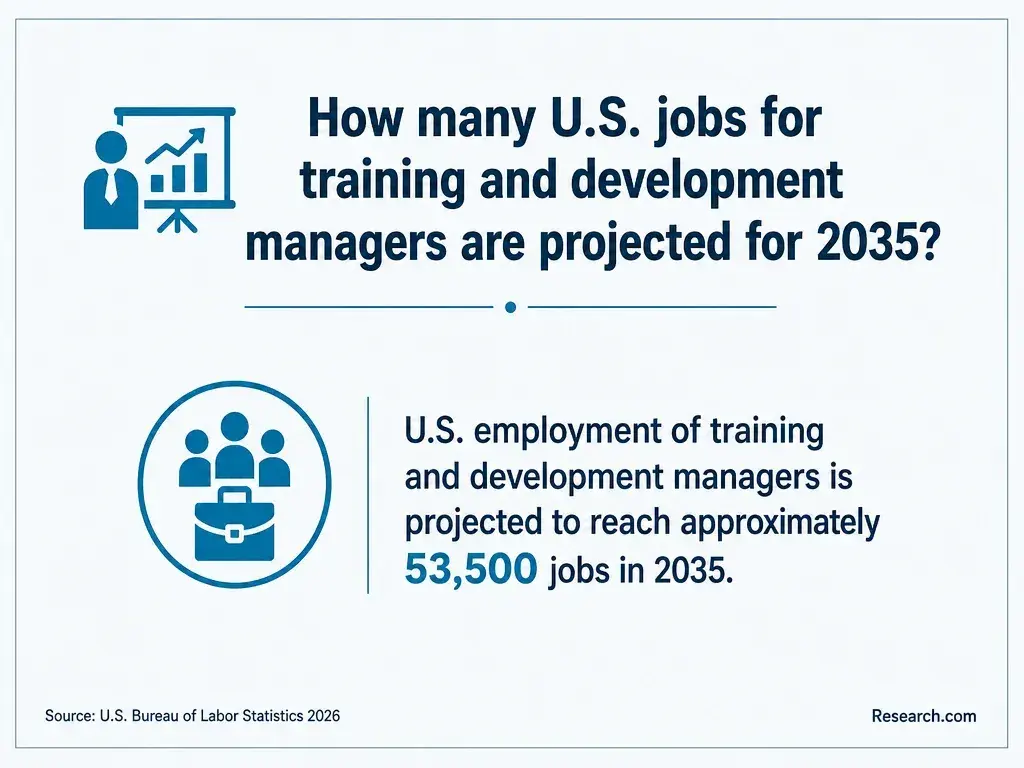
There is no single Ed.D. graduate salary. Pay depends on occupation, sector, location, responsibility, and prior experience. The U.S. Bureau of Labor Statistics reports a May 2025 median annual salary of $133,000 for training and development managers, with employment projected to grow 6.4% from 2025 to 2035. That is an occupational benchmark, not a forecast for new doctorate holders or a typical nonprofit salary.
For a realistic decision, compare compensation for positions you could qualify for now with positions you could credibly pursue after building further leadership and evaluation experience. Account for your organization's pay structure and the full cost of study; do not assume a doctoral credential will produce a raise.
Many organizational learning and nonprofit leadership roles do not have a single mandatory professional license. Employers may nonetheless prefer particular evaluation, human resources, or project-management experience or credentials. An organizational leadership Ed.D. does not itself grant those certifications.
School leadership is different: principal or superintendent positions may require state-specific credentials and approved preparation. If that is your goal, check the program's licensure disclosure and the relevant state authority before enrolling. For an unregulated role, judge optional certifications by the skills requested in target job postings rather than collecting credentials by default.
How can grant reporting deadlines affect doctoral research and organizational learning projects?
A funder's report and a doctoral project can draw on the same program, but they answer to different authorities. The funder determines its reporting period, measures, and submission rules. The university determines academic questions, supervision, project approval, and any required ethical review. Your organization controls access to operational records and what may be disclosed. Meeting one set of requirements does not satisfy the others.
The timing problem often starts before the report is due. Staff may close records weeks earlier, leaving no opportunity to add a baseline measure or ask participants a new question. A report may count activities within a grant period, while a doctoral study needs evidence about implementation or learning over another interval. Treating those figures as interchangeable can produce a project that is neither feasible nor persuasive.
Before selecting a program or promising an employer-based capstone, build a provisional schedule with these checkpoints:
- Record the funder's data cutoff, internal review dates, submission deadline, and any restrictions on changing approved measures.
- Ask the program when a project proposal, faculty approval, and any institutional research review must occur relative to data collection.
- Confirm who at the organization can authorize access to records, staff time, interviews, and release of findings.
- Choose a question answerable with permitted data within the academic timeline, plus a fallback if funding or access changes.
For example, a grant report might require a count of completed staff workshops, while a proposed Ed.D. project examines how staff apply a new practice. Workshop counts alone cannot establish learning transfer. Interviews or follow-up observations might help, but only if the organization permits them and the university determines the appropriate oversight. Protect identifiable employee or learner information, and check applicable confidentiality, data-use, and FERPA obligations where relevant.
A routine internal evaluation is not automatically exempt from university review.
If the next report is the immediate priority, first improve the organization's measurement process with targeted evaluation support. Choose an Ed.D. when you can sustain a broader learning or leadership question beyond a single grant cycle - and when both your employer and the program can support the proposed work without compromising either obligation.
Other Things You Should Know About EdD Leadership
Yes, they can provide context about a program's stated purpose. They do not establish what happened inside the organization or give you access to participants or records.
Possibly. First confirm university requirements, organizational permission, funder terms, and what information may be shared. Remove confidential details only under an approved plan; anonymization alone may not prevent identification.
That may be possible, but authority over staff or participants creates risks of bias and perceived pressure. Discuss recruitment, consent, interpretation, and independent oversight with your faculty advisor and organization.
Do not assume so. The award terms, approved budget, organizational policies, and funder authorization control allowable spending. Seek written confirmation before treating tuition as a project expense.
- Qualified Ed expenses | Internal Revenue Service https://www.irs.gov/credits-deductions/individuals/qualified-ed-expenses
- The Grant Lifecycle | Grants.gov https://grants.gov/learn-grants/grants-101/the-grant-lifecycle
- Standard Due Dates | Grants & Funding https://grants.nih.gov/grants-process/submit/submission-policies/standard-due-dates
- Article - Independent Study Courses P... - UNC Policies https://policies.unc.edu/TDClient/2833/Portal/KB/Article/159791/Independent-Study-Courses-Policy
- Online EdD in Education Policy and Leadership | American University https://www.american.edu/baker/graduate/edd/
- synchronous Archives | Ohio State Online https://online.osu.edu/tag/synchronous/
- UNC EdD Online: Organizational Learning and Leadership https://online.unc.edu/online-doctoral-programs/online-edd-organizational-learning-and-leadership/
- Graduated Student Outcomes | LSU Career Center https://www.lsu.edu/career/outcomes/index.php
- Mentorship and Advising Support - UChicagoGRAD https://grad.uchicago.edu/academic-support/mentorship-and-advising-support/
- Dissertation Resources | Center for Teaching and Learning https://ctl.stanford.edu/students/dissertation-resources