2027 Choosing an Online Ed.D. in Leadership and Learning in Organizations Around a Return to Full-Time Work After Leave
Audited and Verified:
Our Editorial and Data Verification Process
Research.com uses government datasets, official education statistics and primary institutional information to support its career and degree guides. Our review process checks factual accuracy, occupational definitions, source dates and the requirements associated with the credentials discussed.
How This Article Was Fact-Checked
Our editorial team verifies salary estimates, employment projections, education requirements and program information against original data providers and official organizations. Salary figures are checked against the relevant occupational definitions and reporting periods. Information about licensure, accreditation and required in-person training is reviewed separately.
Fact-checked and verified on:

Co-Founder and Chief Data Scientist
Returning to full-time work after leave changes the calculation for an online Ed.D. A program that looked manageable while you were away may require live classes, group meetings, and an applied project just as your work responsibilities intensify. This guide is for professionals weighing doctoral study alongside that transition. It explains what to verify about schedules, organizational access, cost, and career value - and when postponing the degree or choosing a shorter development option may be the better decision.
Key Things You Should Know
- Choose around your post-leave work schedule, not your availability during leave: confirm live attendance, group meetings, campus visits, and deadlines before enrolling.
- An applied doctoral project may depend on employer permission and data access; a new or changed role can make the proposed project impractical.
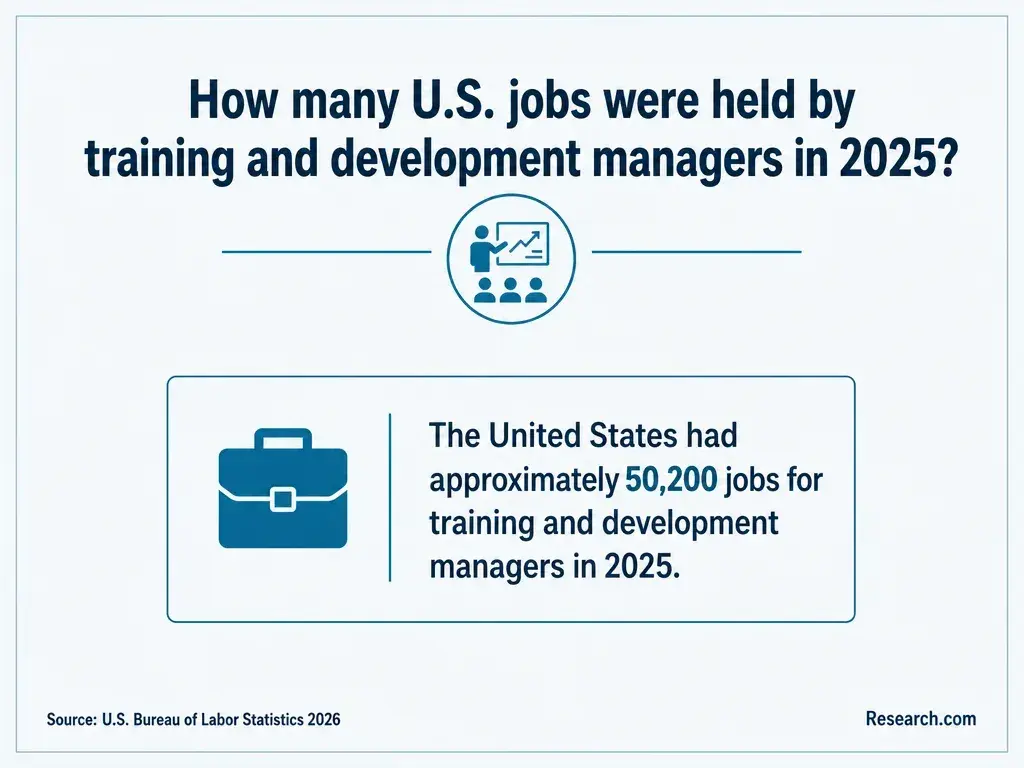
- The U.S. median annual pay for training and development managers was $133,000 in May 2025, but that occupational figure is not a forecast of an Ed.D. graduate's earnings.
What is an online Ed.D. in Leadership and Learning in Organizations?
An Ed.D. in leadership and learning is a practice-oriented doctorate focused on how people learn, lead, and implement change within organizations. Depending on the university, students may study adult learning, leadership development, organizational culture, and applied inquiry. "Online" describes where much of the instruction occurs; it does not necessarily mean self-paced study or no travel.
For someone returning to full-time work, the strongest fit is a program whose assignments can inform a real professional problem without depending on access you do not yet have. A new employer may not permit employee interviews or internal-data use, and your first months back may be better spent establishing responsibilities and relationships.
If you are comparing degree titles and cost structures, lower-cost distance learning in doctoral leadership study offers additional options to investigate; confirm each program's actual curriculum rather than assuming similarly named degrees are interchangeable.
Is an online Ed.D. in Leadership and Learning accredited?
An online Ed.D. can be awarded by an institution with recognized institutional accreditation, but accreditation must be checked for the specific university and entry term. Confirm the institution's status with its recognized accreditor and the U.S. Department of Education's accreditation database. Then check that the doctorate is an officially awarded degree at that institution, not a marketing label for a certificate or concentration.
Institutional accreditation does not establish that an organizational leadership Ed.D. qualifies you for a state-regulated school leadership role. If licensure matters to your return-to-work plan, obtain the program's written disclosure and check the relevant state authority before treating the degree as a qualifying credential.
What careers can you pursue with this organizational leadership Ed.D.?
The degree may support advancement in learning and development, organizational development, workforce training, consulting, higher education administration, or nonprofit and public-sector leadership.
Your experience remains decisive: a returning training manager might use applied evaluation skills to lead a broader initiative, while someone entering learning and development for the first time will usually need functional experience and a work portfolio as well as a degree.
The U.S. Bureau of Labor Statistics projects 10.8% employment growth for training and development specialists from 2025 to 2035. That signals demand for the occupation, not a doctoral requirement or a promise of promotion. Compare target job postings with your current responsibilities: if the gap is facilitation, instructional design, or people management experience, a supervised project or targeted training may be more direct than an Ed.D.
Online study can reduce routine commuting during a return to work, while campus-based study may make in-person collaboration easier. Neither format guarantees a lighter workload.
The comparison that matters is how each program's required activities intersect with your work hours and travel capacity.
| Commitment | Online Ed.D. | Campus-based doctorate |
| Class attendance | May include mandatory live evening or weekend sessions | Usually requires travel to scheduled on-campus classes |
| Collaboration | Group meetings may occur outside class hours | In-person meetings may be easier to arrange but require local availability |
| Travel | May still require campus convenings | Regular commuting or relocation may be necessary |
| Applied work | Organizational access and faculty oversight may still be required | Organizational access and faculty oversight may still be required |
Ask for a term calendar, attendance policy, and description of the final project - not just a statement that classes are online. If project format affects feasibility, review online Ed.D. capstone alternatives to compare, then verify whether a particular program requires a dissertation, dissertation in practice, team capstone, or another deliverable.
Coursework commonly connects leadership theory and adult learning with organizational change, research methods, and evaluation. A useful curriculum for a returning professional should help distinguish a training need from a problem rooted in staffing, incentives, processes, or governance. Methods courses can then help you assess an intervention without mistaking positive feedback for evidence of improved performance.
Inspect the required sequence rather than relying on a list of electives: an appealing course may not be offered when you need it. Also ask when the applied project begins. A program that requires an organizational partner early may be difficult if you are still settling into a new position, whereas a later project start may give you time to secure an appropriate site and approvals.
Requirements vary by institution and may include prior graduate study, transcripts, professional experience, recommendations, a statement of purpose, and an interview. A career break does not by itself determine eligibility. Admissions staff can explain how their program assesses experience gained before leave and what academic preparation it expects; only the institution can decide whether prior credits satisfy admission or transfer rules.
Use your application to describe responsibilities and decisions you actually held, plus a leadership or learning problem you hope to investigate. Do not claim employer sponsorship or project-data access before it is granted. If you hold an Ed.S., online doctoral program choices after an Ed.S. can inform your comparison, but request a written credit evaluation before expecting reduced coursework or a shorter timeline.
Employer Confidence in Online vs. In-Person Degree Skills, Global 2024

There is no reliable single timeline or price for this degree. Required credits, course sequencing, enrollment pace, project approvals, tuition structure, fees, and travel vary by program. A return to full-time work can also change your realistic pace, particularly if project work peaks during a demanding work term.
Compare the published total degree requirements with a budget that includes tuition, mandatory fees, technology, required travel and lodging, and any caregiving or reduced-work-time costs. Check whether employer assistance is available immediately after leave, requires continued employment, or must be repaid if you leave.
For budget-conscious doctoral study in education, compare the full expected cost and payment timing - not just the advertised per-credit price. Request a personalized estimate and ask how a slower pace or academic leave would affect charges and aid.
Many organizational learning and development roles do not require a license simply because you hold an Ed.D. Employers may instead prioritize relevant leadership, training, evaluation, or sector experience. Voluntary professional certifications can be useful when target employers recognize them, but they are separate from the doctoral degree.
School-based positions are different: principal, superintendent, teacher, and other regulated roles may have state-specific preparation and licensure rules. Do not assume a broadly focused leadership and learning doctorate meets those rules. Confirm eligibility with the state licensing authority and the university before enrolling for that purpose.
There is no single Ed.D. salary. Pay depends on occupation, sector, location, responsibility, and experience - not simply on earning the credential. The U.S. Bureau of Labor Statistics reports a May 2025 median annual salary of $133,000 for training and development managers. That is the median for people employed in the occupation, not an expected starting salary or a measured return on this doctorate.
For a practical financial decision, compare the pay range for roles you could credibly pursue after returning to work with your current compensation and the full cost of study. A public-sector pay scale or a role requiring substantial management experience may limit any near-term salary change even if the degree strengthens your skills.
How can you choose the right online Ed.D. program after career leave?
Make the decision using the work schedule you expect after leave, and treat uncertain employer access as a risk rather than an assumption. The following checks turn a general program comparison into a workable enrollment decision.
- Map the first working term: compare required live classes, group meetings, deadlines, and convenings with your likely work and caregiving hours.
- Test the project plan: ask when a site is needed, who approves it, whether an external partner is allowed, and what happens if you change employers.
- Price a sustainable pace: obtain a written cost estimate and check aid, reimbursement, part-time enrollment, and academic-leave rules.
- Check the career payoff: identify responsibilities the curriculum would help you take on and compare the doctorate with mentorship, an employer program, or targeted coursework.
For applicants returning to higher education roles, higher education leadership doctoral scholarships may be worth investigating alongside institutional and employer aid; verify eligibility and award conditions directly. If your schedule, funding, or project access remains uncertain, postponing enrollment until your full-time routine is established can protect both your finances and your chance of finishing.
Other Things You Should Know About EdD Leadership
Yes, if it helps explain your timeline or goals. Keep the explanation brief, then focus on relevant experience and your readiness to study while working.
Possibly. The program must accept the site, and the organization must authorize the work and any data access. A past employment relationship is not permission.
Ask the program how students change project sites, adjust pacing, or take academic leave. Get the applicable policy before relying on any of those options.
Yes. Waiting can give you a clearer schedule, a firmer budget, and a more feasible project setting. A shorter course or workplace initiative can keep you moving toward your goal meanwhile.
- Accreditation in the U.S. | ed.gov http://www.ed.gov/laws-and-policy/higher-education-laws-and-policy/college-accreditation/accreditation-in-the-us
- Understanding College Costs | studentaid.gov https://studentaid.gov/resources/prepare-for-college/students/choosing-schools/consider-costs
- Cost of Attendance (Budget) | 2025-2026 Federal Student Aid Handbook https://fsapartners.ed.gov/knowledge-center/fsa-handbook/2025-2026/vol3/ch2-cost-attendance-budget
- Cost of Attendance (COA) | fitnyc.edu https://www.fitnyc.edu/admissions/costs/cost-of-attendance.php
- Doctoral dissertation or capstone: how to choose the right program | PhD/Doctorate | Capella University Blog https://www.capella.edu/blog/phd-doctorate/the-difference-between-a-dissertation-and-doctoral-capstone/
- Leave, Withdrawals and Refund Policy | Meridian University https://meridianuniversity.edu/admissions/tuition-and-financial-aid/leave-withdrawals-and-refund-policy
- How Do Online Classes Work? What to Expect as an Online Student - Online Degrees & Programs | Kent State University https://onlinedegrees.kent.edu/blog/how-do-online-classes-work-what-to-expect-as-an-online-student
- Leave of Absence Policy | The New School Catalog https://catalog.newschool.edu/academic-progress-standing/withdrawal-and-leaves/leave-of-absence-policy
- What Is the Process for Completing a Dissertation or Doctoral Study? | Walden University https://www.waldenu.edu/online-doctoral-programs/resource/what-is-the-process-for-completing-a-dissertation-or-doctoral-study