2027 Choosing an Online Ed.D. in Leadership and Learning in Organizations Around a School-Year Leadership Calendar
Audited and Verified:
Our Editorial and Data Verification Process
Research.com uses government datasets, official education statistics and primary institutional information to support its career and degree guides. Our review process checks factual accuracy, occupational definitions, source dates and the requirements associated with the credentials discussed.
How This Article Was Fact-Checked
Our editorial team verifies salary estimates, employment projections, education requirements and program information against original data providers and official organizations. Salary figures are checked against the relevant occupational definitions and reporting periods. Information about licensure, accreditation and required in-person training is reviewed separately.
Fact-checked and verified on:

Co-Founder and Chief Data Scientist
A school-year leadership job rarely has a predictable quiet season. Opening weeks, evaluations, budget decisions, and end-of-year reporting can collide with doctoral deadlines - even when classes are online. This guide is for principals, district leaders, higher education professionals, and other education-sector staff considering an Ed.D. in Leadership and Learning in Organizations. It explains how to compare program calendars, attendance rules, applied projects, and costs so you can choose a workable route - or decide that shorter professional development better fits your goal.
Key Things You Should Know
- Online does not mean self-paced: Verify live attendance, group meetings, campus visits, and project deadlines against your busiest school-year periods.
- Calendar fit matters more than advertised speed: An accelerated route can intensify coursework precisely when a school leader has the least control over their schedule.
- Check the career case separately: The U.S. median salary for training and development managers was $133,000 in 2025, but that occupational figure is not an Ed.D. graduate salary or a reason to expect a raise.
What is an online Ed.D. in Leadership and Learning in Organizations?
An online Doctor of Education in this area is a practice-oriented doctorate focused on how people learn, lead, and improve organizations. Its coursework may connect leadership theory, adult learning, organizational change, and applied inquiry. Schools use different degree names and structures; "Leadership and Learning in Organizations" should not be assumed to be a formal concentration at every institution.
For a school-year leader, the distinction is consequential: a broadly focused organizational Ed.D. may support work on staff development or systemwide change without being designed for principal or superintendent licensure. Compare the exact curriculum and credential rather than relying on a similar-sounding title. An overview of understanding different Ed.D. degree formats and focuses can help frame that comparison.
How does an online Ed.D. prepare leaders for a school-year leadership calendar?
The strongest fit is a program whose learning and deadlines can coexist with the decisions you already make during the academic year. Applied coursework may help you examine a staff-learning need, evaluate an initiative, or plan organizational change. Whether you can use your own workplace depends on program rules, employer permission, and appropriate oversight - not merely on having a relevant job.
The table identifies common collision points. They are planning examples, not a universal school calendar or a description of any particular Ed.D.
| School-year period | Likely leadership demand | Potential doctoral conflict |
| Opening weeks | Staff onboarding, schedules, and urgent operational decisions | Orientation, first assignments, or fixed cohort meetings |
| Midyear | Evaluations, improvement reviews, and budget preparation | Group-project coordination or research-plan deadlines |
| Year-end and summer | Reporting, hiring, planning, or summer programming | Final submissions, project approvals, or required convenings |
Ask each program for a sample term schedule, not just a statement that classes are online. The answers to these questions reveal whether flexibility is real when your work peaks:
- Which sessions require live attendance, and what happens if an unavoidable school event conflicts?
- When do teams meet, and can working students influence meeting times?
- Are campus convenings required, and how far in advance are dates published?
- Can a student slow their pace or take an approved leave, and how would either choice affect course sequencing?
Also test a busy week: reserve time for reading and writing, a possible live session, and team coordination before adding unexpected school duties. If that schedule only works during a quiet week, choosing an accelerated Ed.D. study route may increase rather than solve the problem.
What careers can you pursue with an Ed.D. in Leadership and Learning?
The degree may be relevant to education leadership, professional learning, workforce development, organizational development, or consulting. For an existing district or campus leader, its most direct value may be improving current practice or competing for a role with broader responsibility. Moving into training management or consulting is a different transition: employers will also look for evidence of relevant projects, management experience, and sector knowledge.
Choose a target role before choosing electives or an applied project. A leader seeking to improve districtwide professional learning should look for opportunities to assess needs and evaluate implementation. Someone aiming for organizational consulting needs credible examples of diagnosing problems and communicating recommendations. Neither pathway follows automatically from the diploma; an employer-sponsored leadership program or a focused certificate may be more direct if the immediate goal is a specific skill or internal promotion.
Relevant study may include adult learning, organizational culture, change implementation, program evaluation, and qualitative or quantitative inquiry. The useful question for a school-year leader is whether the required sequence lets you connect those subjects to decisions you can ethically and realistically investigate - not whether a catalog lists every leadership topic.
Examine the final requirement closely. A dissertation in practice, team capstone, and conventional research dissertation can differ substantially in scope, collaboration, and timing. If sustained research writing is a concern, explore Ed.D. study without a conventional research dissertation, then confirm what the alternative project actually requires. A shorter-looking deliverable may still involve extensive coordination, data access, and revisions.
A workplace project also needs more than a useful idea. Before planning to examine employee or student information, check organizational authorization, confidentiality rules, applicable student-record protections, and the university's review requirements.
Check the institution's accreditation status with its recognized institutional accreditor and confirm that the doctoral degree is awarded by that institution. Then check the program's own disclosures for the credential and career you want. Institutional accreditation does not, by itself, establish specialized program approval or eligibility for a regulated school role.
Professional recognition is a separate question. An employer may value an applied doctorate while still requiring particular administrative experience, a state credential, or evidence of leading school improvement. Ask the program for its current accreditation and licensure disclosures, and ask your employer or relevant state authority how the degree would be treated for your intended position.
Requirements vary. A program may request graduate transcripts, evidence of professional experience, recommendations, a statement of purpose, and an interview; another may define eligibility differently. Do not assume that an education master's degree, a particular job title, or prior publication is universally required.
For a school-year leader, readiness includes time and project feasibility as well as academic preparation. Use your application to describe decisions you have actually influenced and a learning or leadership problem you want to study without claiming results you have not measured. Before applying, ask admissions whether your prior degree meets its rules, and ask the program - not just admissions - whether your proposed workplace setting could support its applied requirement. Admission and project approval are distinct decisions.
There is no reliable universal completion time or total price. Required credits, term schedules, project progress, and any leave can change the timeline. Request a degree plan showing when each required course is offered; a course unavailable during a lighter work period may matter more than the advertised minimum duration.
For cost planning, request the program's current tuition basis - per credit, term, or program - and a list of mandatory fees. Add required travel and lodging, technology needs, and any income or caregiving costs associated with time away from work. Online Doctor of Education tuition planning is a useful starting point, but compare written estimates based on your expected enrollment pace.
Check employer reimbursement before counting it as funding: eligibility, annual limits, grade requirements, and repayment obligations may affect what you actually pay. A less intensive schedule might protect your job performance but extend enrollment and associated costs.
Online study reduces routine commuting, but it may replace campus meetings with fixed video sessions and coordinated team work. Campus-based study offers in-person contact, yet travel to class can be difficult during the school year. Neither format is inherently more flexible; compare attendance policies and the full schedule.
Budget comparisons should include more than published tuition. A nearby campus program could cost less overall than an online program with required travel, while a fully remote option could save substantial workday travel. Resources on budget-conscious doctoral study in education can help you identify candidates, but use each school's current charges and convening requirements to compare them.
The degree itself is an academic credential, not a general leadership license. Many organizational learning and development roles are not licensed. Principal, superintendent, teaching, counseling, and other regulated positions can have separate state-specific requirements; a broad leadership Ed.D. should not be treated as licensure preparation unless the program and relevant authority confirm it.
If your goal is a particular school-system role, compare its requirements with the program's written disclosures before enrolling. That check is especially important when the doctorate's title sounds education-focused but its curriculum is designed for leadership across several sectors.
What salary and job outlook can Ed.D. graduates expect?
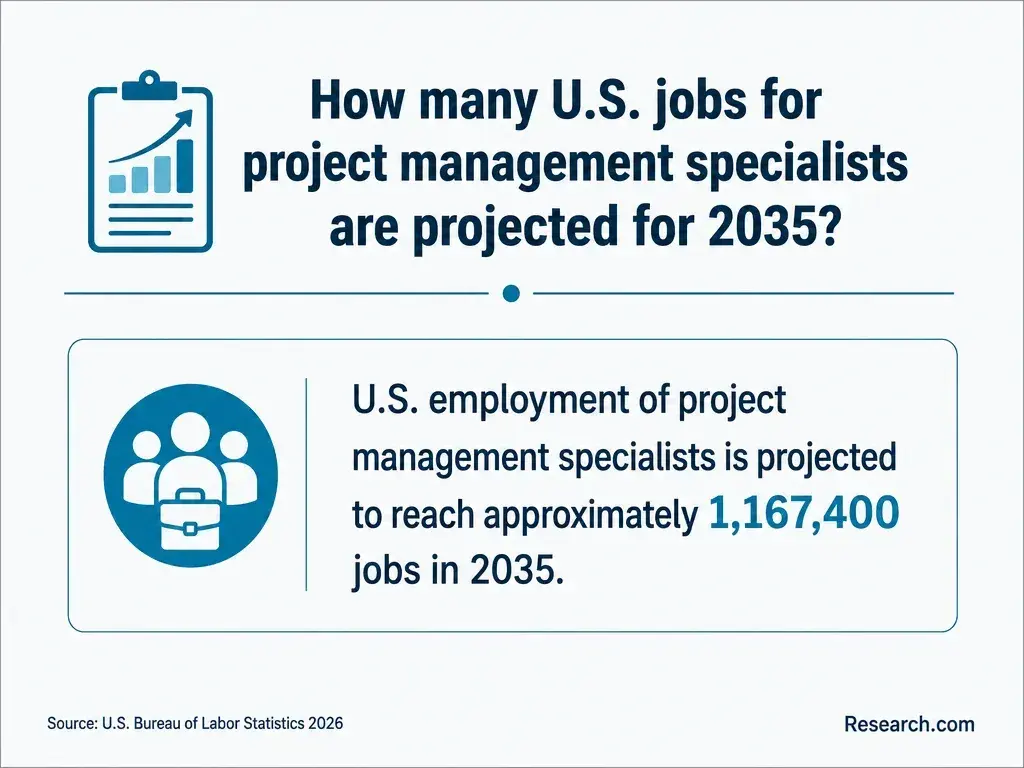
There is no single Ed.D. salary: pay depends on occupation, experience, employer, and location. The U.S. Bureau of Labor Statistics reports a 2025 median annual salary of $133,000 for training and development managers and projects 6.4% employment growth for that occupation from 2025 to 2035. Those figures describe an occupation, not graduates of a particular doctoral program; management experience remains central to candidacy.
For a current school leader, use the pay scale and hiring rules for your actual district or prospective employer instead of applying a cross-sector median. Compare any documented promotion or salary opportunity with the degree's total cost and the time it would take from work and family. If the target role does not call for doctoral preparation, a smaller learning investment may offer a better fit.
Other Things You Should Know About EdD Leadership
Possibly. Your employment calendar does not determine the university's enrollment calendar. Check summer course dates and whether your contract permits outside study or requires approval for related work.
Check district technology and data policies first. Personal coursework, research software, and storage of organizational information may be subject to different rules.
Do not assume so. Obtain the permissions required by your institution and workplace, and follow applicable student-record and confidentiality rules before collecting or sharing examples.
Tell your advisor promptly. Access and permissions from the former district may end, so the program must determine whether you can revise the project or need another approved setting.
- Cost of Attendance (Budget) | 2025-2026 Federal Student Aid Handbook https://fsapartners.ed.gov/knowledge-center/fsa-handbook/2025-2026/vol3/ch2-cost-attendance-budget
- Walden University's Guide to Doctoral Capstone Projects https://www.waldenu.edu/online-doctoral-programs/resource/guide-to-doctoral-capstone-projects
- State Authorization and Programmatic Licensure | Golden Gate University https://ggu.edu/state-authorization-and-program-licensure/
- What Topics Do EdD Students Research in the EdD Program? | Fairfield University https://www.fairfield.edu/news/insights/education-human-development/what-topics-do-edd-students-research.html
- Doctoral dissertation or capstone: how to choose the right program | PhD/Doctorate | Capella University Blog https://www.capella.edu/blog/phd-doctorate/the-difference-between-a-dissertation-and-doctoral-capstone/
- State Authorization | Office of Academic Affairs https://oaa.osu.edu/academic-administration/state-authorization
- Online (Ed.D.) in Leadership for Organizations | UD-EDU https://educationonline.udayton.edu/edd/