2027 Online Ed.D. in Leadership and Learning in Organizations: Comparing a Doctorate with a Major Consulting Engagement
Audited and Verified:
Our Editorial and Data Verification Process
Research.com uses government datasets, official education statistics and primary institutional information to support its career and degree guides. Our review process checks factual accuracy, occupational definitions, source dates and the requirements associated with the credentials discussed.
How This Article Was Fact-Checked
Our editorial team verifies salary estimates, employment projections, education requirements and program information against original data providers and official organizations. Salary figures are checked against the relevant occupational definitions and reporting periods. Information about licensure, accreditation and required in-person training is reviewed separately.
Fact-checked and verified on:

Co-Founder and Chief Data Scientist
A leadership team facing a difficult learning or change problem may consider two very different investments: hire a consulting firm to address it now, or develop an internal leader through an online Ed.D. The choice matters because an immediate organizational deliverable is not the same as building long-term capacity to diagnose and evaluate future problems.
This guide is for experienced leaders and learning professionals weighing those options, whether they control a budget or are proposing doctoral study to an employer. It explains what each investment can deliver, where their costs and risks differ, and when combining them makes sense.
Key Things You Should Know
- Choose consulting when the organization needs a defined deliverable, specialized capacity, or an independent assessment on a near-term deadline; choose an Ed.D. when the primary goal is developing a leader's lasting research and change capabilities.
- An Ed.D. student's applied project is not a substitute for a contracted consulting scope: academic approval, organizational permission, data access, and timelines may differ.
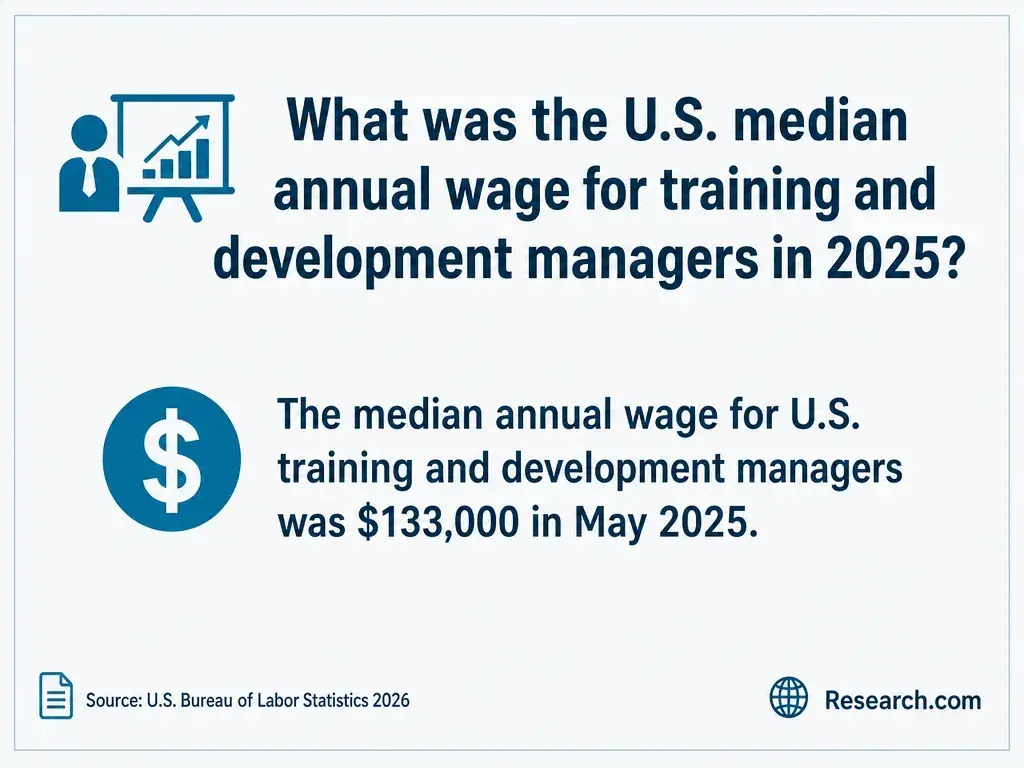
- Budget for the full commitment, not just tuition or a consultant's quoted fee. As career context, the US Bureau of Labor Statistics reports a $133,000 median annual salary for training and development managers in 2025 - not an expected salary for Ed.D. graduates.
What is an online Ed.D. in Leadership and Learning in Organizations?
An online Doctor of Education focused on leadership and learning in organizations is a practice-oriented doctorate for professionals studying how people learn, how organizations change, and how leaders use evidence to improve practice. Coursework may address adult learning, organizational development, research methods, and applied inquiry.
The exact award name and requirements vary by university; the wording in this article should not be taken as a verified program title at any particular school.
Unlike a consulting contract, the degree primarily develops the student's capabilities. An organizational problem may inform coursework or a capstone, but the university determines academic requirements, supervision, and assessment. A prospective student should compare Ed.D. study tracks and career fit rather than assuming every leadership doctorate emphasizes workplace learning.
How does an online Ed.D. compare with a major consulting engagement?
The useful comparison is not "Which is more prestigious?" but "What must the organization have at the end?" The table separates a purchased service from an educational investment; neither guarantees that a proposed change will work.
| Decision factor | Online leadership and learning Ed.D. | Major consulting engagement |
| Primary output | A professional's doctoral education and required academic work | Contracted findings, recommendations, implementation support, or other specified deliverables |
| Timing and control | Course and project milestones follow university rules; the employer cannot simply reset them | Scope, deadlines, staffing, and acceptance criteria can be negotiated in a contract |
| Expertise after completion | Knowledge stays with the graduate, provided the organization retains and empowers that person | Internal capability depends on agreed knowledge transfer and follow-through |
| Evidence and independence | Faculty-guided inquiry may strengthen analysis but has academic, access, and ethics constraints | An external team can bring specialized skills or an independent perspective; methods still need scrutiny |
| Financial exposure | Tuition, fees, study time, travel, and possible employer support | Contract fees, staff time, change orders, and implementation costs |
For a time-sensitive merger integration or an independent review, consulting is usually the more direct purchase. For recurring workforce-learning challenges, developing an internal leader may be more valuable - but only if that person will have authority, data access, and time to apply what they learn.
A hybrid can work: contract for urgent technical or diagnostic work while an employee develops the ability to challenge findings, lead implementation, and evaluate results. Specify those responsibilities separately; do not count on an academic project to fulfill a consultant's contractual obligations.
What careers can an online Ed.D. in organizational leadership lead to?
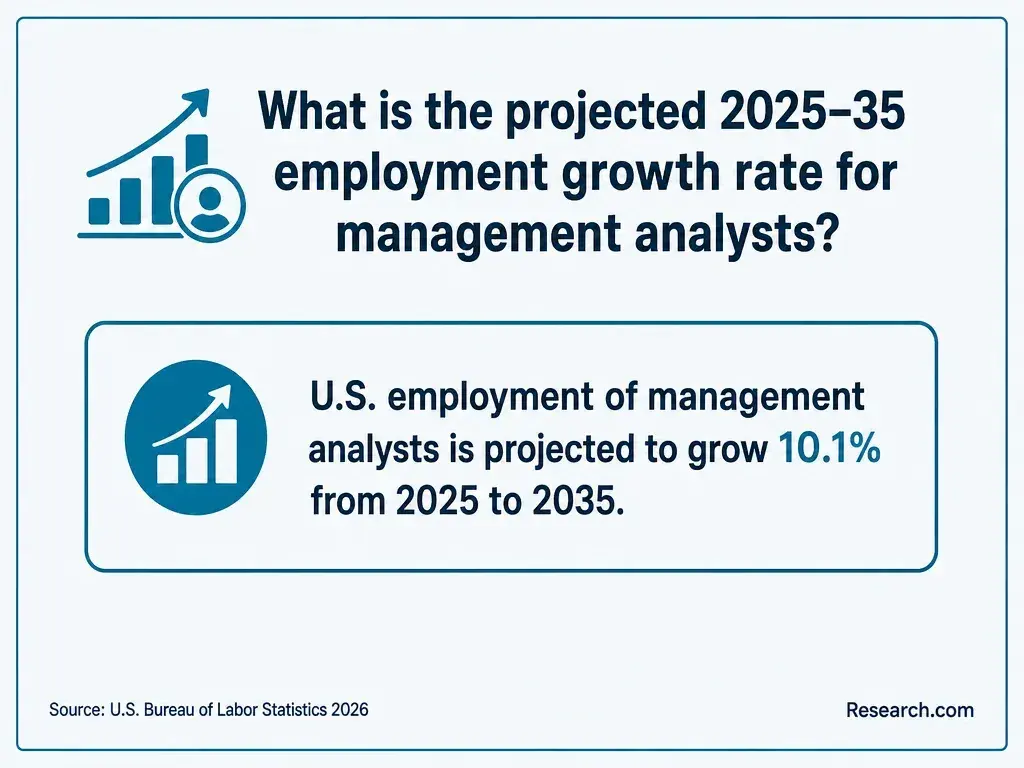
For an established learning and development professional, the degree may support a move toward training management, organizational development, or leadership development. Experienced managers may apply its methods in nonprofit, public-sector, healthcare, or corporate change roles. Organizational consultants, commonly classified as management analysts, also need client-facing judgment, project delivery, and sector knowledge; the doctorate alone does not supply a client base.
The Bureau of Labor Statistics reports a 2025 median annual salary of $133,000 for US training and development managers. That occupational median reflects workers with varied education and experience, not the pay an Ed.D. graduate can expect. Compare actual job postings and internal promotion criteria with your present responsibilities before treating a doctorate as a career investment.
Relevant study can help a leader distinguish a training gap from a problem caused by incentives, workflow, management, or resources. Adult learning and instructional design inform development programs; organizational diagnosis and change theory inform implementation; research methods and evaluation help test whether an intervention met its stated aims. These are capabilities a consulting firm may bring to a project, but doctoral coursework develops them over a longer period in the student.
Review the actual curriculum and final-project rules. A dissertation in practice, team capstone, and conventional dissertation are not interchangeable, and a workplace assignment does not automatically satisfy any of them. Readers comparing project formats can examine online Ed.D. programs without a traditional dissertation, then confirm each university's required deliverable and faculty oversight.
If a proposed project involves employee interviews, performance records, or learner data, the student needs authorized access and must follow university review procedures and employer privacy rules. Findings from a limited workplace evaluation should not be presented as proof that an intervention caused an organization-wide improvement.
Completion time and total price depend on the program's required credits, enrollment pace, tuition structure, fees, and final-project progression. Consulting is priced differently: a proposal may cover a fixed scope or specified staff time, while implementation and scope changes may cost more. Without a particular university's published charges and an actual consulting proposal, a numerical cost comparison would be misleading.
Build two comparable budgets around the decision at hand. For the Ed.D., request a term-by-term tuition and fee estimate, required travel costs, and expected study and project time; check whether employer reimbursement has employment or repayment conditions.
For consulting, request deliverables, staffing, expenses, change-order terms, and the internal staff time needed to use the work. Compare organizational leadership doctoral study on a budget only after checking whether the listed programs actually match your learning and project goals.
A shorter advertised completion path is valuable only if its course sequence and workload are feasible. Neither a quick degree nor a rapid consulting report creates organizational change without implementation.
Requirements vary. Programs may evaluate prior degrees and transcripts, professional experience, recommendations, a statement of purpose, and evidence of readiness for doctoral research. Some specify a master's degree or particular graduate coursework; others set different eligibility rules. Relevant experience can come from managing training, leading cross-functional change, or evaluating organizational programs - not only from holding an education job title.
An applicant planning workplace-based inquiry should also identify a feasible organizational problem without claiming access or approval they do not have. Ask admissions staff which qualifications are mandatory, and ask the program whether a proposed project setting is plausible.
Returning doctoral learners should distinguish credits considered for admission from credits accepted toward completion; online Ed.D. study for returning doctoral applicants is a separate question from whether a new program will recognize previous doctoral work.
Online delivery changes where students participate, not necessarily when they must participate. Live classes, cohort projects, faculty meetings, and required campus convenings can constrain a working leader's schedule. Campus-based study may make in-person collaboration easier but add commuting or relocation demands. Neither format removes the need to secure organizational cooperation for an applied project.
Before committing, request the published attendance schedule, residency requirements, group-work expectations, and final-project milestones. Test those obligations against recurring work deadlines and the time an employer can release for study. If speed is decisive, investigate shorter pathways through Ed.D. coursework, but verify the actual completion conditions rather than equating an accelerated course schedule with a finished doctorate.
Check the university's current institutional accreditation in the US Department of Education's accreditation database or the accreditor's directory, then confirm that the institution - not merely an unrelated campus or entity - awards the proposed degree.
Check the university catalog for the exact degree name and any claims about specialized accreditation. Institutional accreditation does not, by itself, establish that a leadership program meets a state's school-administrator licensing requirements.
Also check that the program's published delivery format, project requirements, and state authorization information apply to your location and intended entry term. If an employer requires a particular credential, obtain its acceptance criteria before enrolling.
Many corporate learning, organizational development, and consulting positions do not have a universal government-issued leadership license; employers instead assess experience and role-specific skills. A general organizational leadership Ed.D. does not automatically confer a professional certification or qualify someone for teacher, principal, or superintendent licensure.
For a regulated school role, identify the state and position first, then check the licensing authority's requirements and the university's licensure disclosure. For an unregulated role, prioritize the hiring organization's expectations: demonstrated management, evaluation, facilitation, or consulting work may matter more than an additional credential.
How do you choose a reputable online Ed.D. in Leadership and Learning?
Start with the outcome you can name: a new leadership capability, a career move, or a specific organizational decision. Then compare programs against the same proposed use, rather than choosing on format or degree title alone. The following checks are especially important when an Ed.D. is being considered instead of a consulting contract:
- Ask for the catalog, required-course sequence, full cost estimate, attendance rules, and final-project handbook for your intended entry term.
- Confirm who approves a workplace project, what happens if the employer changes, and how organizational permission, confidential data, and academic review are handled.
- Compare the time until the organization needs a result with the program's milestones; seek consulting bids if the deadline cannot wait for doctoral progression.
- Identify the role and decision authority the graduate would have afterward, then compare that lasting capacity with the consulting proposal's knowledge-transfer commitments.
If the immediate deliverable is all that matters, a well-scoped consultant may be the better choice. If the organization repeatedly faces related problems and will give a developing leader room to act, doctoral study may serve a different, longer-term purpose.
Other Things You Should Know About EdD Leadership
Possibly, but a paid client assignment is not automatically an approved academic project. Ask the program about scope, faculty supervision, research review, confidentiality, and whether contractual deadlines conflict with academic requirements.
An employer may restrict disclosure of confidential information, while the university may require a submission or presentation. Resolve publication, redaction, and intellectual-property terms with both parties before relying on the project setting.
If internal capability matters, specify training, documentation, handoff meetings, and staff responsibilities in the contract. A final report alone may not prepare employees to maintain the work.
Some universities offer nondegree courses or other ways to explore graduate study, but enrollment and later credit recognition are program-specific. Request written guidance before paying for a course you hope will count toward an Ed.D.
- Fast Facts: Tuition costs of colleges and universities (76) | ed.gov https://nces.ed.gov/fastfacts/display.asp
- Consulting as a Strategy for Knowledge Transfer - PMC - NIH https://pmc.ncbi.nlm.nih.gov/articles/PMC2690143/
- EdD vs PhD in Organizational Leadership | Which Doctorate Is Right for You? | Northwest University https://www.northwestu.edu/center-leadership-studies/blog/edd-vs-phd-in-organizational-leadership-which-doctorate-is-right-for-you
- Organizational Development Consultant Career Explained | Claremont Lincoln https://claremontlincoln.edu/news-blog/organizational-development-consultant/
- The Dissertation Completion Pathway | mville.edu https://www.mville.edu/programs/doctoral-dissertation-completion.php
- Doctor of Education in Instructional Leadership (EdD) | cuny.edu https://education.hunter.cuny.edu/admissions/doctor-of-education-in-instructional-leadership-edd/
- 2026 UNC Online EdD in Organizational Learning & Leadership https://online.unc.edu/online-doctoral-programs/online-edd-organizational-learning-and-leadership/
- Ed.D. in Executive Leadership - Degrees & Requirements | Columbia University https://www.tc.columbia.edu/organization-and-leadership/edd-in-executive-leadership/degrees--requirements/executive-leadership-edd/
- Is a Graduate Business Degree Worth the Investment? | Master of Accounting (MAC) Program https://mac.ncsu.edu/2026/05/12/is-a-graduate-business-degree-worth-the-investment/
- Online Ed.D. in Educational Leadership | sbu.edu https://online.sbu.edu/programs/online-doctor-educational-leadership