2027 Is an Online Ed.D. in Leadership and Learning in Organizations a Good Fit for Management Consultants Seeking Applied Research Skills?
Audited and Verified:
Our Editorial and Data Verification Process
Research.com uses government datasets, official education statistics and primary institutional information to support its career and degree guides. Our review process checks factual accuracy, occupational definitions, source dates and the requirements associated with the credentials discussed.
How This Article Was Fact-Checked
Our editorial team verifies salary estimates, employment projections, education requirements and program information against original data providers and official organizations. Salary figures are checked against the relevant occupational definitions and reporting periods. Information about licensure, accreditation and required in-person training is reviewed separately.
Fact-checked and verified on:

Co-Founder and Chief Data Scientist
Management consultants often recommend organizational change with limited time to establish what works. An online Ed.D. in leadership and learning in organizations may offer a structured way to strengthen research design, evaluation, and evidence-based recommendations - but it is a substantial commitment, not a prerequisite for consulting. This guide helps practicing consultants judge whether doctoral study would improve the work they actually do, what methods to expect, and when a shorter or differently focused pathway would deliver more value.
Key Things You Should Know
- An online Ed.D. is most useful when your consulting work requires sustained organizational inquiry, evaluation, and change implementation - not simply a stronger credential on proposals.
- Compare programs by methods depth, supervised applied projects, access to organizational data, schedule, and total cost; "online" does not necessarily mean self-paced.
- The US Bureau of Labor Statistics reports a $101,860 median annual wage for management analysts in May 2025 and projects 10.1% employment growth from 2025 to 2035. Neither figure predicts an Ed.D. graduate's earnings.
Is an Online Ed.D. in Leadership and Learning in Organizations Right for Management Consultants?
It can be a good fit for an experienced consultant who wants to investigate why organizational learning or change initiatives succeed or fail, evaluate interventions responsibly, and lead longer-term improvement work. It is a weaker fit if the immediate goal is to learn a single analytics tool, win a promotion on the strength of a credential, or become a full-time academic researcher.
Leadership and learning in organizations refers to how people develop capabilities, share knowledge, make decisions, and adapt within organizational systems. For a consultant, that can mean distinguishing a genuine training need from a problem caused by incentives, workflow, management practices, or technology. Doctoral study is valuable when it helps you test that diagnosis rather than merely attach a theory to a recommendation.
The right pathway depends on the work you want to produce. These options differ in research depth and professional emphasis; individual programs can depart from the general pattern.
| Pathway | Best fit for a consultant | Principal trade-off |
| Practice-oriented Ed.D. | Studying organizational problems and applying evidence to learning or change decisions | Substantial time and expense; methods depth varies |
| Research-oriented PhD | Producing original scholarship and pursuing research-intensive roles | Research agenda may be less tied to current client work |
| DBA | Investigating business and management problems through doctoral study | Organizational learning may receive less attention |
| Methods courses or supervised evaluation work | Closing a specific research-design or analysis gap | Less sustained faculty guidance across a complex project |
Before applying, name a recurring consulting decision you cannot yet investigate well - for example, whether a leadership-development program changes supervisory practice after participants return to work. If a focused course and a supervised client evaluation could answer your skill need, try that route before committing to a doctorate.
What Applied Research Skills Does an Online Ed.D. in Leadership and Learning Teach?
A relevant Ed.D. should teach consultants to move from a client's broad concern to a feasible question, appropriate evidence, a defensible interpretation, and a usable recommendation. Look for supervised practice in organizational diagnosis, qualitative and quantitative inquiry, measurement, program evaluation, and communicating uncertainty - not just courses with "research" in their titles.
Consider a hypothetical client that wants to know whether manager training improves coaching conversations. The consultant could define what a useful coaching conversation looks like, examine existing measures, gather appropriately authorized observations or interviews, and compare findings over time. A before-and-after improvement alone would not establish that training caused the change: participants may have been selected because they were especially motivated, or other workplace changes may have occurred simultaneously.
Strong preparation also covers sampling, survey quality, missing data, interview protocols, and mixed-methods interpretation. A credible report may conclude that implementation improved while evidence of employee performance remains inconclusive. That distinction protects both the client and the consultant from overstated claims.
Research access needs separate scrutiny. A client's permission to advise its managers is not automatically permission to use identifiable employee data for coursework, share findings with classmates, or publish results. Ask the program how it determines required academic oversight, and secure applicable client authorization, confidentiality protections, and data-use terms before collecting information. Also confirm the actual culminating requirement: programs may require a dissertation, dissertation in practice, capstone, or another approved project. Consultants comparing education doctorates using alternative research projects should check whether the deliverable still provides the methods supervision they want.
How Does an Online Ed.D. Compare With Campus-Based Leadership Doctorates?
The academic question is not whether online study is inherently easier. It is whether the program's delivery model supports your research development while you continue consulting. Online classes can reduce routine travel, but scheduled live sessions, group projects, faculty meetings, and required campus convenings may still conflict with client travel or deadlines.
Campus-based study may offer more in-person contact with faculty and peers, while an online cohort may allow you to investigate a problem in your existing professional setting. Neither format guarantees access to suitable data or a willing project partner. Ask for the live-meeting timetable, attendance policy, any travel requirements, faculty-advising process, and rules for changing project sites if a client engagement ends. Compare those obligations with your busiest consulting periods, not your average week.
Course names and requirements vary, but a consultant seeking applied research skills should look beyond general leadership theory. The most relevant sequence connects organizational learning and adult development with research design, evaluation, change implementation, and a supervised project. Courses in statistics or qualitative methods should provide opportunities to justify a method and interpret its limitations, not merely operate software.
Program catalogs may also include organizational culture, systems thinking, talent development, ethics, or learning analytics. Check which are required, which are electives offered often enough for your planned enrollment, and which support your proposed research question. A course about leadership development does not, by itself, establish a formal concentration. Comparing Ed.D. study tracks and career fit can help you separate an advertised theme from the curriculum you would actually complete.
Requirements belong to the specific institution, not to the Ed.D. degree as a whole. Programs may ask for a qualifying graduate degree, transcripts, recommendations, a statement of purpose, professional experience, and evidence that the applicant can undertake doctoral research. Some specify grades, tests, interviews, or particular preparation; others do not. A management consultant should not assume that an education master's or a publication record is universally required.
Make your application concrete: describe the decisions you have owned, the organizational problems you have investigated, and a question you want to examine more rigorously. Distinguish work you led from recommendations a client chose to implement. If you have prior graduate coursework, ask whether it satisfies admission requirements and separately whether any credit can apply to the doctorate; one decision does not establish the other.
Expect a multiyear commitment, but request each program's required credits, course sequence, project milestones, and completion policies before estimating your own timeline. Consulting workloads can make a seemingly manageable course schedule difficult during data collection or major client deliverables. Prior graduate study should not be assumed to shorten the degree without a written credit evaluation.
No single price describes an online Ed.D. Total cost depends on the school's tuition structure, enrollment pace, fees, and any required travel. Build a comparison that includes tuition, technology and other mandatory charges, campus-convening expenses, and income lost if study displaces billable work. Ask whether employer assistance covers a doctorate and whether reimbursement requires continued employment or particular grades. Leadership doctorate programs with lower tuition can provide comparison candidates, but verify each program's full cost and research fit rather than choosing by advertised tuition alone.
For an established consultant, the most plausible benefit is deeper capability within an existing practice: organizational-development consulting, leadership-development evaluation, workforce-learning strategy, or internal transformation work. An Ed.D. may also support a move into a training and development manager role when paired with experience managing programs, budgets, and teams. The degree does not replace that operational record.
A move into higher education requires closer attention to the target job. Consulting experience with universities may transfer to organizational improvement or staff development, but academic administration roles can have distinct institutional experience requirements. Consultants considering that transition can compare online organizational leadership Ed.D. choices for college leaders against actual job descriptions and their own sector experience.
Portfolio evidence matters alongside the credential. With appropriate client permission, show how you framed a problem, selected measures, acknowledged limitations, and translated findings into a decision - without disclosing confidential data or claiming outcomes you did not establish.
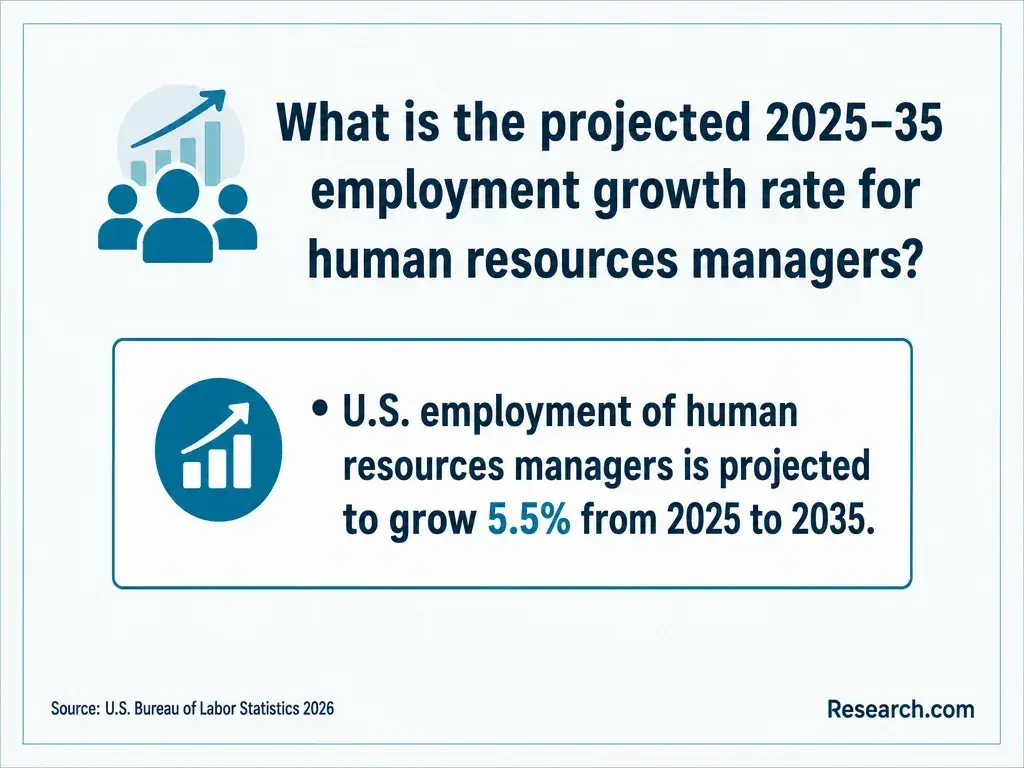
The US Bureau of Labor Statistics reports a May 2025 median annual wage of $101,860 for management analysts, an occupation that includes organizational consultants. It projects 10.1% employment growth for that occupation from 2025 to 2035. These are occupation-wide figures, not earnings or placement results for Ed.D. graduates; compensation also depends on experience, employer, specialization, location, and, for independent consultants, available client work.
Use salary information to evaluate a realistic next role, not to calculate an automatic return on tuition. If you already consult successfully, the financial question is whether stronger research capability is likely to improve the services clients will buy or the positions for which you are otherwise qualified.
Management consulting generally does not require an Ed.D.-specific license, and earning the degree does not automatically confer a professional certification. Employers or clients may prefer particular experience or credentials for specialized work, but those preferences are distinct from a legal requirement.
Do not confuse a broadly focused leadership and learning doctorate with a state-approved educator or school-administrator preparation program. If your goal changes to a regulated school role, confirm the exact degree's licensure disclosures with the institution and the relevant state authority before enrolling.
How Can You Choose an Accredited Online Ed.D. Program?
First, confirm the institution's recognized accreditation and the exact degree it awards. Then compare the program on the evidence that matters for your consulting practice: required methods courses, faculty expertise, the approved project format, access to research guidance, live attendance and travel obligations, and published completion rules. Institutional accreditation is not proof that a particular curriculum meets your methods goals or qualifies you for a regulated profession.
Request a sample course sequence and project handbook. Ask whether an externally sponsored consulting problem can be used, who approves the site and data access, what happens if a client withdraws, and how much individual methods feedback you can expect. Obtain a written cost breakdown for your intended enrollment pattern. If your target is college-sector consulting, low-cost higher education leadership doctoral funding options may broaden the comparison, but confirm aid eligibility and any conditions directly with each school.
Choose an Ed.D. when its supervised research experience addresses a recurring professional gap that shorter training cannot adequately close. Otherwise, build the skill through targeted methods study and carefully scoped evaluation work before taking on doctoral costs and obligations.
Other Things You Should Know About EdD Leadership
Do not assume so. A program may permit a professional problem to inform coursework, but academic credit depends on its assignments, assessment rules, and approvals - not hours billed to a client.
Ownership depends on the client contract, employment terms, and university policies. Resolve intellectual-property and sharing rights before using engagement materials in an academic submission.
Possibly, but a change may require faculty approval and a revised project plan. Ask the program about its procedure and timing before relying on one short-term engagement.
An earned Ed.D. supports use of the doctoral title, but describe the degree accurately and avoid implying clinical licensure, a research specialization, or expertise outside your demonstrated practice.
- Types of Financial Aid: Grants, Work-Study, and Loans | studentaid.gov https://studentaid.gov/understand-aid/types
- Cost of Attendance (Budget) | 2025-2026 Federal Student Aid Handbook https://fsapartners.ed.gov/knowledge-center/fsa-handbook/2025-2026/vol3/ch2-cost-attendance-budget
- Maximizing the Impact and ROI of Leadership Development | nih.gov https://pmc.ncbi.nlm.nih.gov/articles/PMC11505461/
- EdD vs. PhD in Education: Choosing the Right Program | Goodwin College of Professional Studies https://drexel.edu/soe/resources/career-path/edd-vs-phd/
- 2026 UNC Online EdD in Organizational Learning & Leadership https://online.unc.edu/online-doctoral-programs/online-edd-organizational-learning-and-leadership/
- What Is a Capstone Project? Types, Examples, and Tips | SCU https://www.scu.edu/business/blog/business-concepts/what-is-a-capstone-project/
- What Is a Problem of Practice? Definition, Examples, and Writing Tips - JHU School of Education https://education.jhu.edu/news/what-is-a-problem-of-practice-definition-examples-and-writing-tips/
- Doctor of Education | UNE Online - University of New England https://online.une.edu/program/doctor-of-education/
- Leadership for Organizations Ed.D. | University of Dayton https://udayton.edu/academics/programs/leadership-for-orgs-edd/index.php
- How many hours per week should I expect to spend on coursework? - UW-Madison Online https://online.wisc.edu/knowledgebase/how-many-hours-per-week-should-i-expect-to-spend-on-coursework/