2027 Paying for an Online Ed.D. in Leadership and Learning in Organizations: An Employer Tuition Benefit with an Annual Cap
Audited and Verified:
Our Editorial and Data Verification Process
Research.com uses government datasets, official education statistics and primary institutional information to support its career and degree guides. Our review process checks factual accuracy, occupational definitions, source dates and the requirements associated with the credentials discussed.
How This Article Was Fact-Checked
Our editorial team verifies salary estimates, employment projections, education requirements and program information against original data providers and official organizations. Salary figures are checked against the relevant occupational definitions and reporting periods. Information about licensure, accreditation and required in-person training is reviewed separately.
Fact-checked and verified on:

Co-Founder and Chief Data Scientist
An employer tuition benefit can make an online Ed.D. more affordable, but an annual cap may cover only part of each year's bill - and reimbursement may arrive after tuition is due. For working leaders and learning and development professionals, the decision is not simply whether the employer offers assistance. It is whether the benefit applies to this doctorate, how much you can use before it expires, and what you must finance yourself.
This guide shows how to compare the benefit with program costs and identify the terms to confirm before enrolling.
Key Things You Should Know
- An employer's annual reimbursement cap is set by its policy; it is not necessarily the same as the federal tax-free educational assistance limit, generally $5,250 per calendar year.
- Compare eligible charges and reimbursement dates with the Ed.D.'s actual billing schedule. An unused benefit in one year may not carry forward, while tuition above the cap remains your responsibility.
- Get written confirmation that the specific doctoral program qualifies, including approval rules, grade requirements, continued-employment terms, and any repayment obligation.
What Is an Online Ed.D. in Leadership and Learning in Organizations?
An online Doctor of Education in leadership and learning in organizations is a practice-oriented doctorate focused on how people learn, lead, and implement change at work. Depending on the program, students may study adult learning, organizational development, leadership, and applied research while completing a capstone or dissertation. "Online" describes where instruction occurs; it does not establish that classes are self-paced or that campus visits are unnecessary.
The degree may fit an experienced learning professional or organizational leader seeking to investigate and improve a persistent workplace problem. It is not automatically a school-administrator licensure program or the shortest route to a promotion. When comparing programs, matching an Ed.D. focus to leadership goals matters as much as finding a manageable price: paying for a curriculum unrelated to your intended work is poor value even with reimbursement.
How Does an Employer Tuition Benefit Cover an Online Ed.D.?
Most employer education benefits operate through a written policy or individual agreement, not an automatic promise to pay for any degree. Some employers reimburse approved expenses after a course ends and a qualifying grade is posted; others pay the school directly. A benefit may cover tuition but exclude fees, books, travel, or a course taken without advance approval.
The payment arrangement changes your cash-flow risk. This comparison distinguishes an annual allowance from funding you can actually use when a bill comes due.
| Arrangement | When the employer pays | Potential employee exposure |
| Reimbursement | After required documentation is accepted | Upfront tuition, ineligible charges, and any amount above the cap |
| Direct payment | According to an approved school or employer billing arrangement | Charges excluded by the agreement and any amount above the cap |
| Individual sponsorship agreement | As specified in a signed agreement | Costs or repayment obligations specified in that agreement |
Before committing, send HR the exact degree name, school, delivery format, proposed course load, and itemized charges. Ask for the applicable policy and written approval, including when a course counts against the cap and what happens if you leave your job. Public- and education-sector employees should also check collective bargaining agreements or agency rules. Readers in higher education can explore reducing higher education leadership doctoral study costs, while confirming which options their own employer permits.
What Is the Annual Employer Tuition Assistance Cap for Graduate Study?
There is no universal employer cap for an Ed.D. Your employer might set a separate annual limit, restrict doctoral study, or require approval beyond the standard benefit. The commonly cited $5,250 is instead the general federal limit on employer educational assistance that can be excluded from an employee's income per calendar year under a qualifying program. It does not require an employer to offer that amount, and an employer may provide more; the tax treatment of amounts above the exclusion depends on the circumstances.
A calendar-year cap can interact awkwardly with an academic-year schedule. If an employer reimburses up to $5,250 annually and you receive the full eligible amount in each of three calendar years, the arithmetic total would be $15,750. That is an illustration of a benefit, not an Ed.D. price or a funding guarantee: course approval, continued eligibility, reimbursement timing, and the employer's definition of a benefit year all matter.
Ask HR whether the cap resets by calendar year, fiscal year, or another period; whether payment date or course date determines the year charged; and whether unused funds expire. Have payroll or a qualified tax adviser clarify how the employer treats any assistance above the federal exclusion rather than assuming every reimbursed expense is tax-free.
There is no reliable single price for this degree category. Schools may charge by credit, term, or program, and the published tuition figure may omit mandatory fees and required travel. Request an itemized estimate for your expected pace and entry term, then compare it with eligible employer reimbursement, not merely the advertised annual cap.
A useful calculation is: total required tuition and fees, plus required travel and other study expenses, minus confirmed employer payments and other confirmed aid. Calculate a separate upfront amount for each term if your employer pays only after grades arrive. Consider these sources of a funding gap:
- Required credits or terms beyond the program's advertised minimum, including any continuation charges during the final project.
- Technology fees, books, campus-convening travel and lodging, or approved project expenses the employer will not reimburse.
- Reduced work hours, unpaid leave, or other earnings lost to meet attendance and research commitments.
Compare the resulting out-of-pocket cost with a less expensive program that meets your goals; inexpensive organizational leadership doctoral pathways can provide starting points, but confirm each school's current charges and degree requirements. If a shorter employer-sponsored course or leadership assignment would accomplish the same professional goal, the Ed.D. may not justify its remaining cost.
Verify that the degree-granting institution holds recognized institutional accreditation and that the accreditation covers the school offering the program. Check the accreditor's current listing and the institution's own disclosures rather than relying on a marketing statement. Institutional accreditation can affect recognition of the degree and eligibility for federal student aid, but it does not establish that an employer will reimburse it.
If your goal is a regulated education position, ask the institution and the relevant state licensing authority whether the specific program meets that position's requirements. A general leadership and learning Ed.D. should not be treated as principal, superintendent, or teacher licensure preparation without explicit confirmation. Give HR the exact institutional and program information it requests for benefit approval.
Coursework commonly addresses leadership, adult or organizational learning, change, and research or evaluation methods. The sequence and depth vary: one program might emphasize workplace learning design, while another concentrates on organizational strategy. Review required courses - not just electives - to determine whether the skills you need will be taught within the employer-funded portion of your study.
Also identify the culminating requirement and its cost implications. A dissertation, dissertation in practice, or capstone may require different supervision, enrollment periods, and access to organizational data. If extended research enrollment would push you beyond another benefit year, ask the program for its continuation and completion policies. Comparing online Ed.D. capstone alternatives to compare can help frame that inquiry; "no dissertation" does not mean no substantial final project.
Requirements vary by school. Programs may request a qualifying prior degree, transcripts, professional experience, recommendations, a statement of purpose, and evidence that the applicant can pursue an applied leadership problem. Do not assume that a master's in education, a particular job title, or an entrance test is universally required.
For a tuition-supported application, confirm two separate decisions: whether the university admits you and whether your employer approves reimbursement. Ask admissions whether prior graduate study affects eligibility or degree requirements; credits considered during admission do not necessarily reduce doctoral tuition. If employer approval depends on job relevance, describe your actual leadership or learning responsibilities and intended development - not a promotion or project outcome you cannot substantiate.
Completion time depends on the required curriculum, course availability, enrollment pace, and final project. A slower pace may make annual tuition bills easier to absorb under a cap, but it can add fees, delay completion, or extend the period during which you must remain employed to qualify. Faster enrollment can reduce elapsed time while producing bills that exceed the annual benefit.
Request a term-by-term plan showing when tuition is billed, when required courses run, and when project enrollment begins. Map it against each employer benefit reset and any reimbursement deadline. Online cohorts may also require live meetings, group work, or campus convenings. Applicants returning after unfinished doctoral study can investigate resuming doctoral education through an Ed.D. completion route, but should obtain a written credit and completion evaluation before assuming it saves time or money.
The degree can support work in learning and development, leadership development, organizational change, consulting, and some education or public-service administration roles. The credible next step depends on your existing responsibilities: an experienced training manager might use applied research to improve development programs, while someone new to the field may first need direct experience designing and evaluating workplace learning.
Before accepting substantial out-of-pocket cost, identify a target role and review its actual hiring requirements. An employer-funded doctorate can deepen your practice and provide a relevant project, but it does not replace managerial experience, sector knowledge, licensure where required, or evidence that you can lead implementation. Discuss potential internal assignments or advancement with your employer without treating tuition approval as a promotion commitment.
What Salary and Job Outlook Can Ed.D. Leadership Graduates Expect?
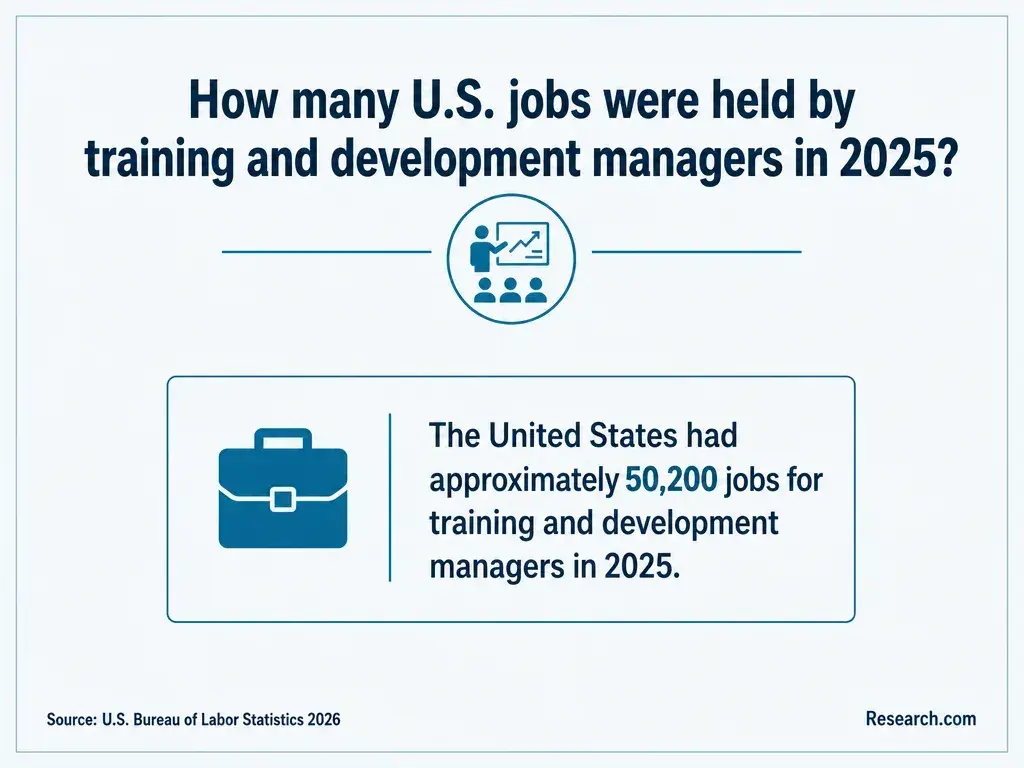
The U.S. Bureau of Labor Statistics reports a $133,000 median annual salary for training and development managers in May 2025 and projects 6.4% employment growth for the occupation from 2025 to 2035. These are occupation-wide figures, not salaries or placement results for Ed.D. graduates. Manager roles generally depend on relevant experience, and some positions do not require a doctorate.
For a personal return-on-investment decision, use compensation for roles you could realistically obtain with your present experience, then compare any plausible advancement with your documented out-of-pocket cost and time commitment. Do not build a financing plan around an assumed raise. A benefit that reduces tuition is valuable even without a promotion - but the remaining expense must still fit your goals and budget.
Other Things You Should Know About EdD Leadership
Possibly. Eligibility may depend on scheduled hours, employment classification, and length of service. Ask HR for the policy that applies to your position.
Not necessarily. Some employers impose a waiting period or require approval before a course begins. Confirm eligibility before paying a nonrefundable deposit.
Often, but the school and employer may coordinate awards or limit reimbursement to charges you actually owe. Report employer assistance to the financial aid office and request a revised funding estimate.
Ownership and permission to share the work depend on university rules and employer agreements. Clarify intellectual property, confidential data, and publication restrictions with both parties before proposing the project.
- Types of Financial Aid: Grants, Work-Study, and Loans | studentaid.gov https://studentaid.gov/understand-aid/types
- Employer-offered educational assistance programs can help pay for college | Internal Revenue Service https://www.irs.gov/newsroom/employer-offered-educational-assistance-programs-can-help-pay-for-college
- Academic Years, Academic Calendars, Payment Periods, and Disbursements | 2025-2026 Federal Student Aid Handbook https://fsapartners.ed.gov/knowledge-center/fsa-handbook/2025-2026/vol3/ch1-academic-years-academic-calendars-payment-periods-and-disbursements
- Employer Tuition Reimbursement: How It Works and How to Pay for College | Winston-Salem State University https://ramsonline.wssu.edu/blog/employer-education-benefits/
- Strategic guide to tuition reimbursement - Purdue Business https://business.purdue.edu/graduate-programs/blog/posts/find-and-navigate-tuition-assistance.php
- Online Doctorate in Education Leadership and Innovation | NYU https://leadershipinnovation.steinhardt.nyu.edu/
- Employer-Provided Educational Assistance Benefits | aau.edu https://www.aau.edu/resource-library/employer-provided-educational-assistance-benefits-irc-sec-127
- Employee Tuition Reimbursement: What Is It and How Does It Work? | University of Oklahoma Outreach Tech Bootcamps https://bootcamp.outreach.ou.edu/blog/employee-tuition-reimbursement
- 2026 UNC Online EdD in Organizational Learning & Leadership https://online.unc.edu/online-doctoral-programs/online-edd-organizational-learning-and-leadership/
- Employee Reimbursements | Finance & Budget https://finance.arizona.edu/payments/emp-reimb