2027 Choosing an Online Ed.D. in Leadership and Learning in Organizations Around a Need for Captioning in Live Sessions
Audited and Verified:
Our Editorial and Data Verification Process
Research.com uses government datasets, official education statistics and primary institutional information to support its career and degree guides. Our review process checks factual accuracy, occupational definitions, source dates and the requirements associated with the credentials discussed.
How This Article Was Fact-Checked
Our editorial team verifies salary estimates, employment projections, education requirements and program information against original data providers and official organizations. Salary figures are checked against the relevant occupational definitions and reporting periods. Information about licensure, accreditation and required in-person training is reviewed separately.
Fact-checked and verified on:

Co-Founder and Chief Data Scientist
Live classes can be central to an online doctorate, so unreliable captioning can make an otherwise strong Ed.D. difficult to complete. This guide is for working professionals comparing Leadership and Learning in Organizations programs who need captions to participate fully in discussions, group work, and applied research. It explains what to verify before enrolling, how to distinguish live access from recordings, and how to weigh accessibility alongside academic fit, time, and cost. The goal is to help you choose a program you can participate in - not merely one you can access after class.
Key Things You Should Know
- Confirm captions for required live classes, breakout rooms, presentations, and other assessed activities; a captioned recording does not provide live participation.
- Ask the accessibility office how caption accuracy, delays, technical failures, and individualized accommodations are handled before committing to a cohort.
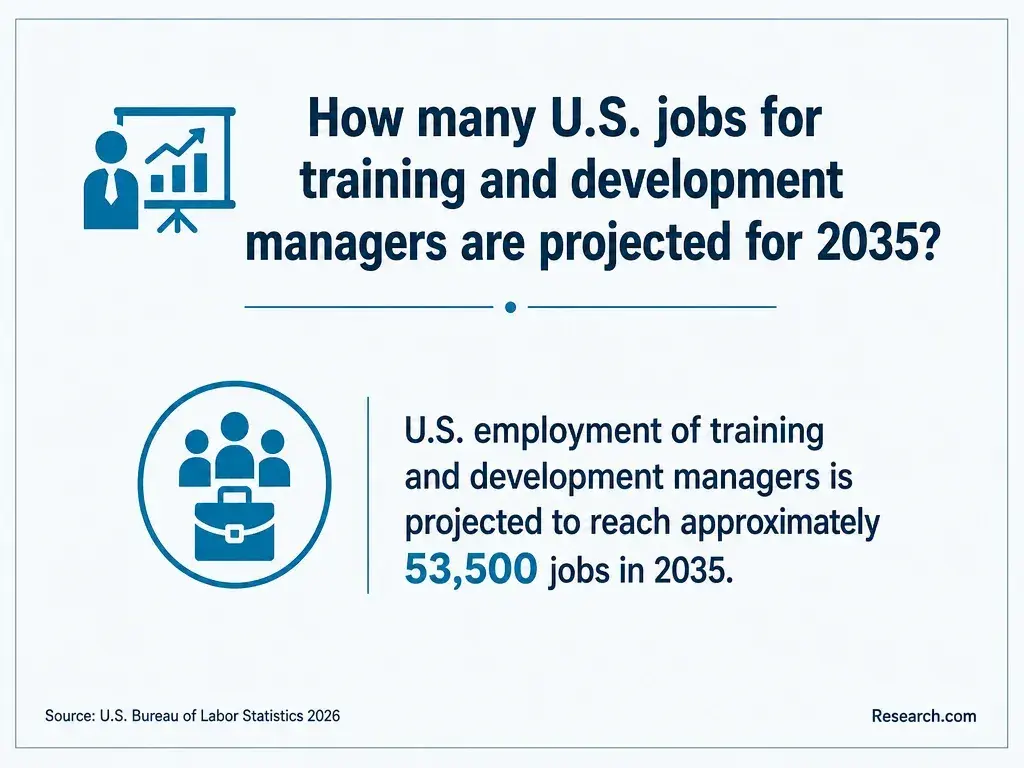
- The U.S. Bureau of Labor Statistics reports a $133,000 median annual salary for training and development managers, but that occupational figure is not an Ed.D. graduate salary or a reason to overlook an inaccessible program.
What is an online Ed.D. in Leadership and Learning in Organizations?
An Ed.D. in Leadership and Learning in Organizations is a practice-oriented doctorate focused on how people learn, lead, and implement change within organizations. Depending on the institution, it may serve professionals in workplace learning, higher education, healthcare, government, nonprofits, or other sectors. The exact degree title, required courses, and final project vary by school.
"Online" describes where students access instruction, not necessarily when they attend it. A program may combine independent coursework with scheduled video classes, team meetings, and campus convenings. If live captions are essential, the delivery schedule and accessibility process are as important to your decision as the curriculum.
How does live-session captioning support accessibility in online Ed.D. programs?
Live captions display spoken content while a session is happening. They can help students follow rapid discussion, unfamiliar terminology, and multiple speakers while contributing in real time. A transcript or captioned recording made available afterward supports review, but it cannot restore an opportunity to ask a question, respond to a classmate, or participate in assessed group work.
Captioning methods differ in ways that matter during doctoral seminars. This comparison identifies what to confirm rather than assuming that a platform's "captions available" setting settles the issue.
| Captioning approach | Potential benefit | Point to verify |
| Automatic live captions | May be available within the meeting platform | Accuracy, delay, speaker identification, and access in breakout rooms |
| Live captioning by a trained provider | May better support specialized vocabulary and complex discussion | How it is arranged, which activities it covers, and what happens if the provider is unavailable |
| Captioned recording or transcript | Allows later review of course content | Release time, accuracy, retention, and whether live participation is still required |
Contact the institution's accessibility office - not just the admissions representative - to discuss your participation needs. Ask whether captions extend to required small-group meetings, guest speakers, student presentations, and any in-person convenings. Request the process for reporting poor captions during class and for arranging other appropriate accommodations when captions alone do not provide effective access. Do not assume that automatic captions, an interpreter, and a captioned recording are interchangeable.
What accreditation should an online Ed.D. program have?
Verify that the university holds institutional accreditation recognized by the U.S. Department of Education or the Council for Higher Education Accreditation, and confirm that the accreditation covers the institution awarding the degree. Check the university's current accreditation and degree disclosures rather than relying on an advertisement. A separately advertised programmatic recognition is not a substitute for checking the awarding institution.
Accreditation does not establish that live classes will be captioned effectively or that a general organizational leadership Ed.D. qualifies you for educator licensure. If you need a regulated school leadership credential, check the program's licensure disclosures and the relevant state authority's requirements separately. For this decision, institutional credibility and workable access are both necessary checks.
Relevant study may include adult learning, leadership, organizational change, research methods, and evaluation. For a learning and development professional, the key question is whether coursework strengthens the ability to diagnose a performance problem, design an appropriate response, and evaluate it - not simply whether "leadership" appears in course titles.
Review the required course sequence and final deliverable. A dissertation in practice, capstone, or other applied project can create periods of intensive faculty and team interaction, so ask how meetings, presentations, and research supervision are made accessible. These deliverables are not interchangeable across institutions. Applicants returning with unfinished doctoral work may also want to compare online all-but-dissertation Ed.D. pathways, while obtaining a written evaluation of any prior work before assuming it will count.
Requirements vary. Programs may review prior graduate education, professional experience, recommendations, a statement of purpose, and evidence that the applicant can investigate an organizational problem. An education master's or senior job title is not a universal prerequisite. Describe responsibilities you have actually held and a learning or leadership challenge you could realistically study.
Admission and accessibility are separate conversations. Ask admissions which credentials and experience qualify you; ask the accessibility office how to arrange participation in live coursework and any accessible admissions activities. If you hold an education specialist degree, education specialist to education doctorate programs may be worth comparing. Credits considered during admission do not automatically transfer into Ed.D. requirements or shorten the program.
Completion time depends on the required credits, course sequence, enrollment pace, convenings, and final-project progress. Ask for the published plan for your intended entry term, including the scheduled time and time zone of every required live activity. Also ask whether classes run in a fixed cohort and what happens if you need to pause or repeat a course.
A faster advertised route may leave less room to resolve access problems or balance employment with group research. If timing is a priority, compare choosing an accelerated Ed.D. study route against the actual weekly meeting schedule and the support available during the final project. Online location flexibility should not be mistaken for self-paced study.
No single price applies across programs. Request an itemized estimate based on the credits and enrollment plan you would actually follow, including tuition, mandatory fees, technology charges, required travel, and potential continuation charges if the final project takes longer. Compare the estimated total rather than a per-credit figure alone.
Accessibility services should be discussed directly with the institution; do not assume you must purchase a captioning service yourself to attend required classes. If your employer offers tuition assistance, verify reimbursement limits, grade conditions, and repayment obligations in writing. A comparison of affordable online organizational leadership doctorates can help form a shortlist, but confirm each school's current charges and captioning arrangements before treating a program as affordable for you.
The degree can support experienced professionals pursuing more complex work in learning and development, organizational development, leadership development, program evaluation, or consulting. Those roles differ: a training manager oversees learning strategy and staff, while a consultant diagnoses organizational problems and recommends changes. Employers will still assess relevant experience, sector knowledge, and evidence of completed work.
For university staff considering institutional leadership, organizational leadership Ed.D. programs for university professionals provide a more targeted comparison. A general leadership doctorate does not by itself confer school-administrator licensure, a faculty appointment, or an executive promotion. If your immediate goal is a specific workplace skill, a focused course or employer-sponsored project may be more direct than a doctorate.
Salary depends on the occupation, employer, location, and experience - not the Ed.D. title alone. The U.S. Bureau of Labor Statistics reports a May 2025 median annual salary of $133,000 for training and development managers and projects 6.4% employment growth for that occupation from 2025 to 2035. These figures describe an occupation, not the earnings or placement rate of graduates from any particular program.
Use occupational data to identify the role you want, then examine its hiring requirements and your own experience gap. When evaluating the financial case for an Ed.D., compare the program's full cost with realistic opportunities available through your current employer or field; do not treat a national median as a projected raise.
How can you choose a reputable online Ed.D. program with captioned classes?
Shortlist programs that fit your professional goal, then test accessibility against the activities you would actually have to complete. Written answers from the program and accessibility office are more useful than a general statement that the learning platform supports captions.
Before accepting an offer, use these checks to expose gaps that may not appear on a program page:
- Request the required live-class schedule, attendance rules, breakout-room expectations, and dates and accessibility arrangements for any campus convenings.
- Ask the accessibility office how live captions are arranged, how specialized vocabulary and technical failures are handled, and which process applies to an individualized accommodation request.
- Confirm whether required team meetings, faculty supervision, presentations, and final-project activities receive comparable access.
- Check institutional accreditation, the current curriculum, the final-project requirement, and an itemized cost estimate for your entry term.
- Ask what options exist if an access problem interrupts a required session and whom to contact while that session is underway.
Choose based on the whole participation pathway. A strong curriculum cannot compensate for inaccessible required discussion, while excellent captions alone do not make a costly degree the right credential for your career goal.
Other Things You Should Know About EdD Leadership
Ask the institution about its admissions and accommodation processes. You can discuss access arrangements with the designated accessibility office without assuming that your application statement must include medical details.
Check the university's recording, privacy, and course policies first. An app may capture classmates' contributions or confidential workplace material, so it should not be treated as an automatic substitute for an approved accommodation.
Do not assume they are. Tell the accessibility office which forms of faculty interaction you expect to use and ask how to arrange effective access when meetings are scheduled individually.
Contact the accessibility office promptly to discuss updated arrangements and their implementation timeline. Keep the program informed about scheduling implications without relying on an informal promise that every course activity can be changed.
- ADA Requirements: Effective Communication https://www.ada.gov/resources/effective-communication/
- Accessible Meetings | Section508.gov https://www.section508.gov/create/accessible-meetings/
- Captioning Request - Accessibility - University of Denver https://accessibility.du.edu/accessibility/content/captioning-request
- Synchronous vs. Asynchronous Online Classes - ANU Alumni https://alumni.an.edu/synchronous-vs-asynchronous-online-classes-which-works-better-for-adult-learners/
- Doctor of Education in Organizational Leadership, Culture and Change | Thomas Edison State University https://www.tesu.edu/degrees-programs/doctoral/edd.php
- Live Captioning for Online Events - ASC Tech https://asctech.osu.edu/resources/digital-accessibility-resources/live-captioning-online-events
- Remote Learning and Hearing-Related Accommodations | Dickinson College https://www.dickinson.edu/info/20236/disability_services/3995/remote_learning_and_hearing-related_accommodations/3
- Live Captions - UGA DASH - University of Georgia https://dash.uga.edu/accessibility-techniques/live-captions/
- Providing Accommodations in Online Courses | fsu.edu https://odl.fsu.edu/providing-accommodations-online-courses
- Calculating contact hours in online and hybrid classes | usc.edu https://annenberg.usc.edu/faculty-and-staff-resources/calculating-contact-hours-online-and-hybrid-classes