2027 Online Ed.D. in Leadership and Learning in Organizations After a Master's in Human Resource Development: Admission and Credit Questions
Audited and Verified:
Our Editorial and Data Verification Process
Research.com uses government datasets, official education statistics and primary institutional information to support its career and degree guides. Our review process checks factual accuracy, occupational definitions, source dates and the requirements associated with the credentials discussed.
How This Article Was Fact-Checked
Our editorial team verifies salary estimates, employment projections, education requirements and program information against original data providers and official organizations. Salary figures are checked against the relevant occupational definitions and reporting periods. Information about licensure, accreditation and required in-person training is reviewed separately.
Fact-checked and verified on:

Co-Founder and Chief Data Scientist
A master's in human resource development (HRD) can be strong preparation for an online Ed.D. in Leadership and Learning in Organizations, but it does not settle the two questions that matter most: whether a program will admit you and whether any of your graduate credits will count toward the doctorate.
If you work in learning, talent development, or organizational change, those answers affect your application strategy, budget, and timeline. This guide shows you what to document, what to ask each program, and how to judge whether doctoral study adds something your existing degree and experience do not.
Key Things You Should Know
- An HRD master's may meet an Ed.D. program's graduate-degree requirement; admission still depends on that program's academic and professional criteria.
- Credits used to establish admission eligibility are not automatically transferred into doctoral requirements. Request a written, course-by-course decision before assuming savings in time or tuition.
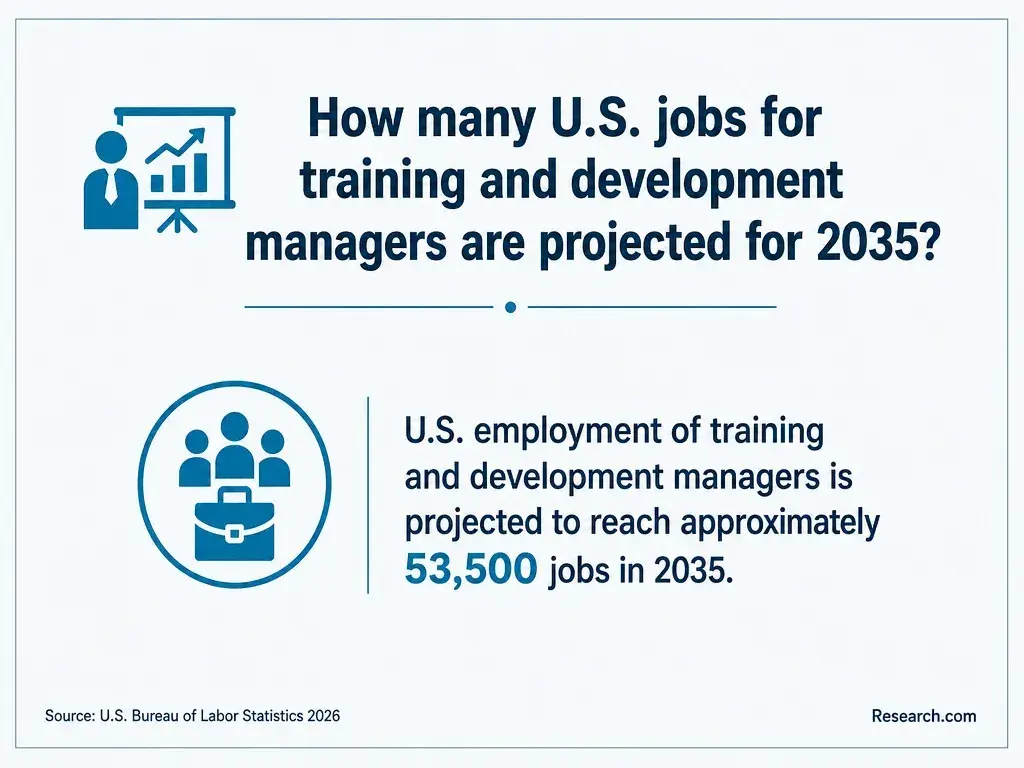
- The US median annual salary for training and development managers was $133,000 in May 2025, but that occupational figure is not an expected salary for Ed.D. graduates.
What Is an Online Ed.D. in Leadership and Learning in Organizations?
An Ed.D. in leadership and learning focuses on improving how organizations develop people, make decisions, and implement change. It is generally a practice-oriented doctorate: students connect leadership and learning theory with organizational problems, evidence, and applied inquiry. "Online" describes where much instruction happens, not necessarily a self-paced program without live meetings or campus visits.
Programs with similar names can differ substantially. One may emphasize workplace learning and a team-based applied project; another may require an individual dissertation or focus on school administration. Compare the awarded degree and required curriculum, not just the title. A guide to comparing Doctor of Education program types can help you distinguish an organization-focused Ed.D. from other doctoral concentrations.
For an HRD graduate, the central distinction is depth and responsibility. An HRD master's may already prepare you to design development initiatives. The Ed.D. is more compelling if you need sustained practice in diagnosing organization-wide problems, evaluating interventions, and leading change across stakeholders.
Can You Pursue This Ed.D. After a Master's in Human Resource Development?
Yes, potentially. A completed HRD master's is relevant preparation for organizational learning study, and an education master's is not a universal prerequisite. The program must still determine whether your degree meets its requirements for graduate level, institutional recognition, academic standing, and any specified field of study. If you mean a particular program called "Leadership and Learning in Organizations," use that institution's admissions rules for your intended entry term rather than relying on requirements from similarly named Ed.D. programs.
Your application should show what you have done with your HRD training. Designing a course is different from deciding whether training addresses a performance problem, gaining stakeholder support, and assessing what changed. Document your actual responsibilities, decisions, and evidence of impact without claiming results you cannot substantiate.
Academic fit and readiness are separate questions. If your master's offered little research-methods preparation, ask whether the Ed.D. teaches the needed methods, expects prior coursework, or permits bridging study. A gap is not automatically disqualifying, but it may affect how you prepare.
What Are the Admission Requirements for an Online Organizational Leadership Ed.D.?
Requirements vary by institution and entry term. Programs may review official graduate transcripts, academic performance, relevant professional experience, recommendations, a statement of purpose, and an interview or writing sample. Do not assume a fixed number of leadership years, a GRE score, a master's thesis, or an employer endorsement is universally required.
Before applying, separate formal eligibility from evidence that makes your application persuasive. Ask admissions which degrees and transcripts they accept, whether any minimum grade or GPA applies, and how the program evaluates professional experience. Then use your statement to connect a specific learning or leadership challenge to your proposed study - not to promise a particular capstone result before you have approval or data access.
If your credits came from more than one institution or your master's is unfinished, ask whether each record can be considered for admission and whether an offer could be conditional. The admissions office decides eligibility; a separate academic or registrar review may decide transfer credit.
A qualifying master's and transferable coursework are not the same thing. Some doctorates are designed to follow a master's degree but still require students to complete their entire prescribed doctoral curriculum. Others permit a limited number of applicable prior credits. Even when a course is accepted, it may satisfy an elective rather than replace a required doctoral course.
This comparison shows the distinct decisions to request in writing. A favorable answer at one stage does not establish approval at the next.
| Decision | What the school evaluates | Possible outcome |
| Admission eligibility | Completed degree, institution, transcripts, grades, and any graduate-credit threshold | You qualify to be considered for admission |
| Transfer eligibility | Credit level, grade, age of coursework, and program transfer limits | A course may be considered for doctoral credit |
| Requirement equivalency | Syllabus, learning outcomes, credit hours, and fit with a required course or elective | Approved credit applies to a named degree requirement |
| Degree audit | Remaining courses, institutional credit rules, and course sequence | Your actual remaining credits and feasible timeline are documented |
Gather official transcripts from every graduate institution, course descriptions and syllabi, credit-hour information, and evidence of any course-numbering or grading changes. Ask how quarter credits convert to semester credits, whether master's-level work can replace doctoral-level work, and whether a waiver removes a requirement without reducing the credits needed to graduate. Request the approved degree audit from the office authorized to issue it. Neither admission nor a prerequisite waiver guarantees lower tuition or earlier completion.
Relevant study may include adult learning, organizational culture, leadership and change, research methods, and evaluation of workplace initiatives. For an HRD graduate, the useful question is not whether a course repeats a familiar term such as "learning transfer." It is whether the doctoral work requires more rigorous diagnosis, cross-functional implementation, and defensible interpretation of evidence than your previous study did.
Review the required course sequence and final project separately. An applied project might examine a leadership-development initiative or a workforce-learning process, but the school determines the acceptable deliverable and oversight. Guides to professional education doctorates with applied projects can help you frame questions about project formats; a program described as "without a dissertation" may still require substantial doctoral inquiry.
Workplace access matters. Before planning to study employees or learners, confirm organizational permission, data restrictions, confidentiality obligations, and the institution's review requirements. Access to HR records through your job does not automatically authorize their use in academic research.
An online Ed.D. can let an employed HRD professional remain with their organization and examine problems encountered at work. A campus-based doctorate may offer more routine in-person faculty and peer contact. Neither format is inherently more rigorous; compare the required research work, faculty guidance, and opportunities to collaborate.
Confirm live-class attendance, meeting times, group-work expectations, campus convenings, and the availability of courses in the required sequence. Online access may reduce routine travel while leaving substantial evening, weekend, or project-stage commitments. If you have previously begun doctoral study, resources on online Ed.D. study for returning doctoral applicants may help you identify additional questions, but "all but dissertation" standing at another school does not establish transfer or advanced standing here.
There is no reliable program-wide timeline or price to apply to every online leadership Ed.D. Duration depends on the required course sequence, enrollment pace, approved transfer credits, and time needed to complete doctoral inquiry. A credit award has limited financial value if cohort sequencing does not allow you to finish sooner.
Ask for a personalized estimate showing remaining required credits, tuition by credit or term, mandatory fees, and likely enrollment through the final project. Add any required travel, lodging, technology expenses, and reduced earnings. Compare that estimate with your employer's written reimbursement rules, including eligibility and any obligation to repay support after leaving. An Ed.D. tuition comparison guide is a starting point, not a substitute for a program-specific cost and degree audit.
If your goal is a particular promotion, compare the full doctoral investment with a smaller leadership assignment, targeted methods course, or employer development program. The lower-cost option may be better if it supplies the experience your target role actually requires.
An experienced HRD professional may use the degree while pursuing broader responsibility in learning and development, talent development, organizational development, workforce initiatives, or consulting. Those paths involve different work: a training manager oversees learning strategy and teams; an organizational consultant diagnoses client problems and recommends changes. An Ed.D. can strengthen applied inquiry and leadership practice, but employers will also assess your management record, sector knowledge, and demonstrated results.
Map your intended move to the experience you still need. If you already lead cross-functional development projects, doctoral study may support a move toward more complex organizational decisions. If you have not managed a budget, supervised staff, or implemented change, seek those responsibilities rather than expecting the credential alone to confer director-level readiness. A general organizational leadership Ed.D. also should not be assumed to qualify you for school-administrator licensure.
The US Bureau of Labor Statistics reports a May 2025 median annual salary of $133,000 for training and development managers, with employment in that occupation projected to grow 6.4% from 2025 to 2035. This is an occupational benchmark, not a salary forecast for someone who earns an Ed.D.; workers in the occupation have varied credentials, experience, employers, and locations.
Use the role - not the degree name - as the basis for a financial decision. Check postings in your target sector for required management experience and preferred education, then compare likely opportunities with the program's complete cost. If your employer has a structured pay scale, verify whether a doctorate changes your eligibility or compensation before assigning it a financial return.
How Can You Choose an Accredited and Reputable Ed.D. Program?
First, verify the institution's accreditation and confirm that the advertised award is an Ed.D. in the field you intend to study. Institution-level accreditation does not by itself establish transfer-credit acceptance, specialized professional recognition, or licensure eligibility. Read the current program catalog for required credits, project rules, delivery expectations, and policies that apply to your proposed entry term.
For an HRD applicant, the most revealing comparison is a written review of your own record. Send each serious candidate the same transcripts and relevant syllabi, then ask for its admissions determination, transfer-credit evaluation, remaining-course plan, and total cost estimate. If you are weighing affordable online organizational leadership doctorates, compare those written answers as carefully as advertised tuition; a cheaper program that accepts fewer credits or requires travel may cost you more overall.
Finally, ask who advises applied work, what organizational access students need, and what happens if an employer cannot support a proposed project. Choose the program whose documented requirements fit both your academic history and the leadership work you want to do - not one that merely promises to value prior experience.
Other Things You Should Know About EdD Leadership
Possibly. Ask whether the program accepts an application with a degree in progress, what final transcript it requires, and whether any offer would be conditional on graduation.
Not unless the program explicitly allows an alternative to its degree requirement. A professional credential may support your application, but it is not automatically equivalent to graduate study.
It may be relevant, but hiring departments set their own expectations for disciplinary expertise, teaching experience, and scholarship. Check actual openings before treating the doctorate as a teaching qualification.
Tell your advisor promptly. You may need a new approved setting, sponsor, or data-access arrangement, and the change could affect your timeline. Ask about the program's contingency process before enrolling.
- Rule 3359-60-06.4 | Doctoral degree requirements. https://codes.ohio.gov/ohio-administrative-code/rule-3359-60-06.4
- General Schedule Qualification Policies | U.S. Office of Personnel Management https://www.opm.gov/policy-data-oversight/classification-qualifications/general-schedule-qualification-policies/
- Ed.D. in Executive Leadership - Degrees & Requirements | Columbia University https://www.tc.columbia.edu/organization-and-leadership/edd-in-executive-leadership/degrees--requirements/executive-leadership-edd/
- 2026 UNC Online EdD in Organizational Learning & Leadership https://online.unc.edu/online-doctoral-programs/online-edd-organizational-learning-and-leadership/
- AEHRD: EDD Program | Florida International University Catalog https://catalog.fiu.edu/programs/AEHRD%3AEDD/requirements-uz47h
- UNC Charlotte Academic Policy: Ed.D. Degree Requirements https://provost.charlotte.edu/policies-procedures/academic-policies-and-procedures/edd-degree-requirements/
- Degree Requirements | usf.edu https://catalog.usf.edu/content.php