2027 Is an Online Ed.D. in Leadership and Learning in Organizations a Good Fit for Learning Sciences Program Leaders?
Audited and Verified:
Our Editorial and Data Verification Process
Research.com uses government datasets, official education statistics and primary institutional information to support its career and degree guides. Our review process checks factual accuracy, occupational definitions, source dates and the requirements associated with the credentials discussed.
How This Article Was Fact-Checked
Our editorial team verifies salary estimates, employment projections, education requirements and program information against original data providers and official organizations. Salary figures are checked against the relevant occupational definitions and reporting periods. Information about licensure, accreditation and required in-person training is reviewed separately.
Fact-checked and verified on:

Co-Founder and Chief Data Scientist
Leading a learning sciences program can mean turning research on how people learn into programs that work across teams, institutions, or communities. An online Ed.D. in leadership and learning in organizations may strengthen that work - but it may not provide the technical research training or career advantage every leader needs.
This guide is for professionals who already manage learning initiatives or are moving toward that responsibility. It explains where the degree fits, where another pathway may be stronger, and what to verify before committing time and money.
Key Things You Should Know
- Best fit: Leaders responsible for implementing, evaluating, and improving learning programs across an organization, rather than primarily developing new learning-sciences theory.
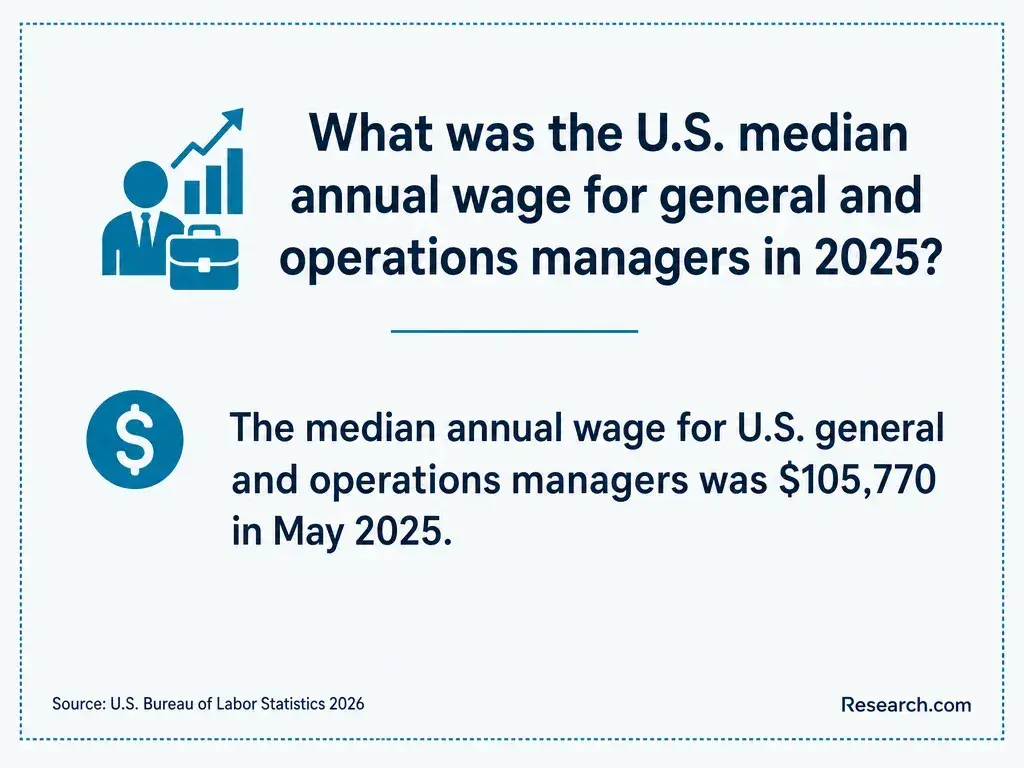
- Career reality: The Bureau of Labor Statistics reports a $133,000 median annual salary for training and development managers in 2025; that occupational figure is not an expected salary for Ed.D. graduates.
- Deciding factor: Compare actual methods coursework, applied-project requirements, organizational access, and total cost. A learning-sciences PhD or targeted methods training may better serve a research-intensive goal.
What Is an Online Ed.D. in Leadership and Learning in Organizations?
It is a practice-oriented Doctor of Education focused on how leaders develop people, use evidence, and improve learning within organizations. The exact degree name and curriculum vary by university. "Online" describes where much of the instruction occurs; it does not establish that classes are self-paced or that campus visits are unnecessary.
For a learning sciences program leader, the distinction is between studying learning and leading its application. A learning sciences research degree may emphasize generating knowledge about learning processes and environments. An organizational leadership Ed.D. is more likely to emphasize decisions about implementation, stakeholder engagement, change, and evaluation. Neither label alone proves what methods or learning-sciences courses a program requires. Compare the actual curriculum with other Doctor of Education study areas to compare before treating similarly named degrees as equivalent.
Is This Ed.D. a Good Fit for Learning Sciences Program Leaders?
Usually, yes - if your next challenge is organizational implementation. The strongest fit is a leader who already understands learning design or research and now must coordinate researchers, designers, educators, technology teams, and decision-makers. Doctoral study can help such a leader diagnose why a promising intervention is not adopted, choose defensible evaluation measures, and lead change without mistaking training for a solution to every performance problem.
Fit depends on the work you want to do more of. These distinctions help separate a useful doctorate from an impressive but indirect credential.
| Primary goal | Likely stronger pathway | Reason |
| Lead cross-functional learning programs and evaluate implementation | Applied leadership and learning Ed.D. | Connects organizational change, adult learning, and practice-focused inquiry. |
| Develop original learning-sciences research or pursue research-intensive faculty work | Research-focused PhD | Typically offers deeper preparation for sustained scholarly research; examine faculty and methods training. |
| Improve one technical skill, such as learning analytics or instructional design | Focused coursework, certificate, or supervised project | May address the gap more directly without a full doctorate. |
A useful test is whether you can identify a consequential decision you influence: for example, whether a learning program should scale, be redesigned, or end. If you lack decision authority, organizational partners, or time to apply the work, gaining those first may offer more value than enrolling immediately. If your goal is advanced experimental design rather than leading implementation, scrutinize the Ed.D.'s research sequence especially closely.
What Careers Can an Online Ed.D. in Leadership and Learning Prepare You For?
Potential directions include learning and development leadership, organizational development, workforce-training management, learning-program leadership in higher education or nonprofits, and consulting. The degree is most useful when it builds on relevant experience: managing a learning team, securing stakeholder support, evaluating a program, or making budget and implementation decisions. It does not substitute for those responsibilities.
A learning sciences program leader may move toward broader oversight of research-to-practice partnerships or organization-wide learning strategy. Those roles differ from instructional design, which centers more directly on creating learning experiences, and from research positions that may require a stronger publication record or specialized methods expertise. The Bureau of Labor Statistics projects 10.1% employment growth for management analysts from 2025 to 2035. That outlook describes an occupation that can include organizational consultants - not demand for Ed.D. holders specifically. Assess openings in your target sector and the experience employers request before using salary or growth figures to justify the degree.
Relevant study may combine adult learning, organizational culture, change leadership, needs assessment, program evaluation, and qualitative or quantitative inquiry. For a learning sciences leader, the important question is not whether those terms appear in a course catalog; it is whether assignments let you connect evidence about learning to decisions about implementation, resources, and outcomes.
Look for a coherent methods sequence and faculty feedback on research design. Evaluating whether participants liked a program is different from measuring learning transfer or establishing that the program caused a performance change. Also check whether a proposed workplace study can use the data you need: employer permission, confidentiality rules, and university review may constrain access or reporting.
Completion requirements vary substantially. Some programs require a dissertation, others a dissertation in practice or another approved applied project; a course consulting assignment is not automatically a doctoral capstone. If the deliverable affects your choice, compare Ed.D. study with dissertation alternatives, then confirm each institution's actual requirements and supervision model.
Online study can let an employed program leader remain close to the learning initiative they manage, which may make applied assignments more relevant. Campus-based study may offer more routine in-person interaction and easier access to certain research communities. Neither format guarantees stronger mentoring or a lighter workload.
The practical comparison is a typical term, not a marketing label. Ask for live-class times, attendance rules, group-meeting expectations, campus-convening dates, and the schedule for major research milestones. A leader coordinating multiple sites may find location flexibility valuable but still struggle with fixed evening sessions or team projects. Compare faculty access, research support, and opportunities to collaborate with learning scientists in both formats.
Requirements differ by institution and entry term. Programs may evaluate prior degrees and transcripts, professional experience, recommendations, a statement of purpose, and evidence of readiness for doctoral writing and inquiry. Some require a master's degree; others define graduate preparation differently. A particular job title, publication record, or education major is not a universal condition.
A learning sciences leader can make a stronger case by describing decisions they actually influenced: the learning problem, their role, the evidence available, and what remained uncertain. They should distinguish leading a program from designing a study or claiming outcomes they did not establish. Applicants with prior specialist-level study can explore education specialist coursework and doctoral progression, but must ask the receiving university separately whether coursework meets admission criteria and whether any credits apply to the doctorate.
Duration depends on required credits, course sequencing, enrollment pace, and how long the doctoral project takes. Published accelerated schedules may assume uninterrupted enrollment and timely project approvals. Review the sequence behind Ed.D. programs designed around faster completion rather than assuming their advertised timeline will fit a demanding leadership role.
No single price represents online Ed.D. programs. Build a program-specific estimate from published charges and the enrollment plan you can realistically maintain. Include tuition and mandatory fees, any required travel and lodging, books or technology, and the cost of extending enrollment during the project stage. Employer reimbursement should count only under its written eligibility, grade, employment, and repayment conditions. A shorter program is not necessarily less expensive, and a prospective promotion is not a reliable funding source.
Verify that the institution holds recognized institutional accreditation and that the credential awarded is the doctorate you intend to earn. Accreditation matters for academic credibility and may affect aid or how another institution evaluates the degree. It does not establish that the curriculum is strong in learning sciences, that credits will transfer elsewhere, or that an employer will prefer the credential.
Check the institution's accreditation status with the accreditor and confirm the program's exact title, degree designation, and any claimed specialized recognition with the university. Then judge academic fit separately: faculty expertise, required research methods, and the quality of support for applied work matter more to this decision than an accreditation claim alone.
Learning and development or organizational learning leadership generally does not require a license simply because someone holds an Ed.D. Individual employers may prefer certifications or experience with particular methods and technologies. A broadly focused leadership and learning doctorate also does not automatically qualify a graduate for teacher, principal, or superintendent licensure.
If your intended position is regulated, obtain the program's written licensure disclosure and check the relevant state authority's requirements before enrolling. If it is not regulated, prioritize the competencies and documented results the employer asks for rather than collecting credentials without a clear purpose.
How Can You Choose a Reputable Online Ed.D. Program?
Start with the leadership decision you want to handle better, then ask each program for evidence that its curriculum and doctoral work address it. A comparison is only useful when it covers the obligations you would actually take on.
- Match the work: Request the required course sequence, methods syllabi, and a description of the approved doctoral deliverable.
- Test project feasibility: Ask who approves a project site, what organizational permissions are needed, and what happens if your employer or role changes.
- Check participation: Confirm live meetings, campus visits, cohort requirements, faculty advising, and expected project-stage enrollment.
- Check the financial exposure: Obtain current tuition and fee schedules and calculate costs under a realistic, not ideal, completion timeline.
Ask how outcomes such as completion are defined and over what period they are measured; testimonials are not a substitute for comparable data. If cost is a constraint, use budget-conscious organizational leadership doctoral programs as a starting point, then verify current charges and whether each program actually provides the learning-sciences-to-leadership preparation you need. Enroll when the academic work, workplace opportunity, schedule, and financial commitment align - not merely because the doctorate is available online.
Other Things You Should Know About EdD Leadership
Yes, particularly by strengthening how the leader translates research into implementation questions and organizational decisions. Research collaboration still depends on the project, partners, and the expertise each person brings.
Only if the project has a clear learning question, feasible measures, and appropriate oversight of learner or employee data. Using AI is not, by itself, evidence that learning improved.
Access and permissions may change. Before committing to a workplace-based project, ask the program whether a new site, revised question, or alternative data source can be approved.
Possibly, but academic approval does not grant permission to disclose organizational information. Check employer agreements, participant protections, university requirements, and publication rights before sharing findings.
- Building Sustainable Models of Research-Practice... - PMC https://pmc.ncbi.nlm.nih.gov/articles/PMC9567312/
- Understanding College Costs | studentaid.gov https://studentaid.gov/resources/prepare-for-college/students/choosing-schools/consider-costs
- YOU Belong in STEM | ed.gov http://www.ed.gov/about/initiatives/you-belong-stem
- Cost of Attendance (Budget) | 2025-2026 Federal Student Aid Handbook https://fsapartners.ed.gov/knowledge-center/fsa-handbook/2025-2026/vol3/ch2-cost-attendance-budget
- What's the Difference Between Asynchronous and Synchronous Learning? | Ohio State Online https://online.osu.edu/content-hub/blogs/whats-the-difference-between-asynchronous-and-synchronous-learning/
- Frequently Asked Questions - Online Programs | Columbia University School of Professional Studies https://sps.columbia.edu/academics/online-learning-sps/frequently-asked-questions-online-programs
- Leadership and Learning in Organizations Online Ed.D. | Peabody College of Education and Human Development https://peabody.vanderbilt.edu/academics/edd-programs/online-leadership-learning-organizations/
- What is Learning Sciences? | Vanderbilt University https://blog.peabody.vanderbilt.edu/the-peabody-blog/what-is-learning-sciences
- EdD vs. PhD in Education: Choosing the Right Program | Goodwin College of Professional Studies https://drexel.edu/soe/resources/career-path/edd-vs-phd/
- Future Careers - UNC School of Education https://ed.unc.edu/academics/programs/learning-sciences-and-psychological-studies/future-careers/