2027 Remote & Telehealth Career Opportunities for BCBAs

Co-Founder and Chief Data Scientist
Remote BCBA work is no longer a side option for behavior analysts who want flexibility. It has become a major service model for ABA agencies, schools, healthcare organizations, and consulting teams that need qualified clinicians but cannot always rely on in-person coverage. For BCBAs, the decision is practical: can you deliver ethical, effective, data-driven care through telehealth while gaining more control over your schedule, caseload, and career path?
This guide explains the main types of remote BCBA jobs, why demand is rising, where opportunities are strongest, what compensation can look like, and which skills matter most in a virtual environment. It is written for certified behavior analysts considering a transition, supervisees planning their career path, and experienced clinicians weighing whether remote work can provide a more sustainable alternative to clinic-based or travel-heavy roles.
Telehealth remains widely used across healthcare, a trend noted by the U.S. Department of Health and Human Services. In ABA, that shift has expanded access for families, created new staffing models for providers, and raised expectations for BCBAs who can combine strong clinical judgment with secure technology, clear communication, and careful attention to licensure and ethics.
Key Benefits of Remote and Telehealth Opportunities for BCBAs
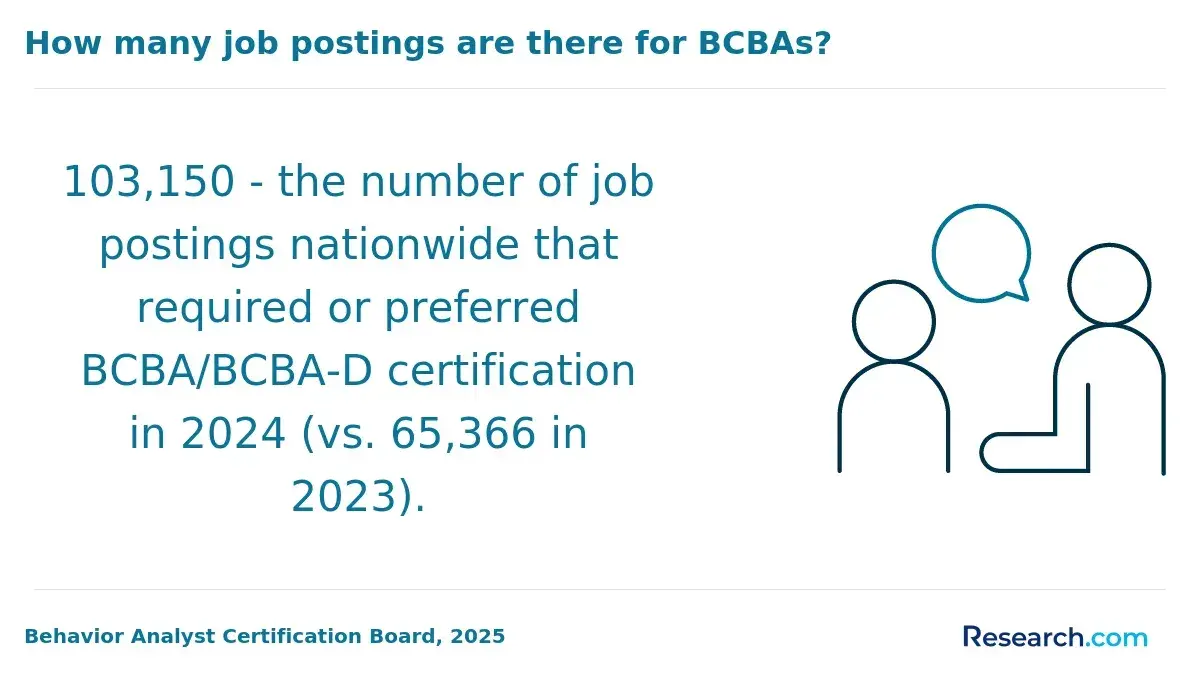
- Step into a field with exceptional job security. The Behavior Analyst Certification Board (BACB) documented a staggering 58% increase in demand for BCBAs from 2023 to 2024, ensuring a wealth of opportunities.
- Your specialized skills are highly valued, with the national average salary for a BCBA reaching approximately $89,075 per year, according to 2025 data.
- Become part of a large and influential community of practitioners. By the end of 2024, the BACB reported that the number of certified BCBAs had grown to over 74,000 worldwide.
What are the primary types of remote BCBA positions available in 2027?
The most common remote BCBA role is telehealth clinical supervision. In this position, you oversee treatment plans, review client data, modify programs, coach RBTs, and provide caregiver training through secure video platforms. You remain clinically responsible for quality of care, even when direct services are delivered by staff or caregivers in another location.
Remote BCBA jobs now extend beyond traditional case supervision. Employers increasingly need clinicians who can assess, consult, train, and manage programs virtually. The right fit depends on how much direct client interaction, staff coaching, documentation, and systems-level work you want in your week.
| Remote BCBA role | Typical focus | Best fit for |
| Telehealth Clinical Supervisor | Supervising RBTs, monitoring treatment plans, analyzing data, and leading caregiver meetings | BCBAs who enjoy ongoing cases and team-based clinical oversight |
| Remote Assessment Specialist | Conducting intakes, functional behavior assessments, interviews, and treatment recommendations virtually | Clinicians with strong assessment, interviewing, and report-writing skills |
| School-Based Teleconsultant | Supporting teachers, school teams, and behavior intervention plans through virtual consultation | BCBAs comfortable with education systems, IEP teams, and classroom-based interventions |
| Corporate or Organizational Consultant | Applying Organizational Behavior Management principles to staff training, performance improvement, and workplace systems | BCBAs interested in OBM, leadership training, and non-clinical applications of behavior analysis |
When comparing roles, look closely at caseload size, billable-hour expectations, documentation time, supervision support, crisis protocols, and whether the employer provides administrative help. A remote position can still be stressful if productivity targets are unrealistic or if you are expected to manage complex cases without adequate support.
How has telehealth changed the landscape for behavior analysts?
Telehealth has changed ABA by separating many clinical responsibilities from a fixed physical location. BCBAs can now observe sessions, review data, coach caregivers, consult with RBTs, and meet with interdisciplinary teams without spending hours traveling between homes, clinics, and schools. This has made service delivery more flexible and, in many cases, more consistent.
The biggest change is not simply convenience. Telehealth has expanded the reach of qualified behavior analysts. Families in rural or underserved areas, school districts with limited local specialists, and agencies with multi-state service areas can connect with clinicians who would otherwise be unavailable. Remote supervision also allows experienced BCBAs to mentor trainees and early-career professionals across broader geographic regions.
What changed for BCBA practice?
- Supervision is more flexible: BCBAs can observe sessions, model strategies, and give feedback through secure video when the case is clinically appropriate for remote support.
- Caregiver training is more central: Many telehealth models depend on parents, guardians, or school staff implementing strategies with BCBA coaching.
- Documentation and data systems matter more: Remote teams rely heavily on accurate digital data collection, timely notes, and clear communication.
- Clinical judgment is still essential: Telehealth is not appropriate for every client, behavior, or family situation. BCBAs must know when in-person support is necessary.
Telehealth has also influenced professional preparation. Students and clinicians exploring ABA programs should consider how well a program builds practical skills in remote collaboration, ethical technology use, supervision, and data-based decision-making. These skills are now part of the modern ABA workplace, not optional extras.
What is driving the high demand for remote BCBAs?
Demand for remote BCBAs is driven by a simple supply-and-access problem: many families and organizations need ABA expertise, but qualified BCBAs are not evenly distributed across the country. Telehealth helps agencies and schools reach clients who may have limited local provider options, long waitlists, or difficulty traveling to in-person services.
Several forces are reinforcing that demand. Telehealth reimbursement by major insurance payers and state Medicaid programs has made remote services more financially viable for providers. At the same time, secure video platforms, electronic data systems, and digital practice management tools have made virtual ABA delivery easier to organize and monitor.
Key demand drivers
- Access gaps: Rural and underserved communities often have fewer local BCBAs, making remote consultation and supervision especially valuable.
- Provider staffing needs: ABA agencies can serve broader regions when they hire BCBAs who can supervise cases remotely.
- Caregiver-centered models: Telehealth works well for parent training and consultation when caregivers are available and the clinical goals are appropriate.
- Insurance and payer acceptance: Reimbursement policies have helped remote ABA become a sustainable operating model for many organizations.
- Workforce retention: Remote roles may help reduce travel-related burnout and keep experienced BCBAs in the field longer.
For job seekers, high demand does not mean every remote job is a good job. Carefully evaluate whether the employer has clear telehealth procedures, realistic caseloads, compliant documentation systems, and policies for emergencies, supervision, and state licensure.
The national average salary for a remote BCBA is approximately $89,075 per year, according to 2025 ZipRecruiter data. Actual pay can vary based on experience, geographic market, employer type, caseload expectations, billable-hour requirements, specialty area, and whether the position is full-time, part-time, contract, or salaried.
Remote compensation should be evaluated as a full package, not only as a base salary. A higher salary may be less attractive if the role requires excessive billable hours, unpaid documentation time, minimal clinical support, or contractor status without benefits. A slightly lower salary may be more sustainable if it includes strong benefits, protected admin time, continuing education support, and reasonable caseloads.
What to review in a remote BCBA offer
- Base pay: Confirm whether the salary is fixed, hourly, billable-hour based, or tied to productivity.
- Benefits: Review health insurance, retirement benefits, paid time off, parental leave, and disability coverage.
- Technology support: Ask whether the employer provides a laptop, secure software, phone stipend, internet stipend, or home-office reimbursement.
- Continuing education: Look for CEU allowances, conference support, supervision training, and paid professional development time.
- Caseload and billable expectations: Clarify the number of clients, required billable hours, documentation requirements, and cancellation policies.
- Employment classification: Understand whether you are an employee or independent contractor, because taxes, benefits, liability coverage, and schedule control may differ.
Remote work can reduce commuting costs and travel time, but it can also shift certain expenses to the clinician, such as internet reliability, workspace setup, and professional equipment. Before accepting an offer, compare take-home pay, workload, and support systems rather than focusing on salary alone.
The states with the highest overall demand for behavior analysts, which also influences telehealth hiring, are California, Massachusetts, Texas, New Jersey, and Florida. According to a 2025 report from the Behavior Analyst Certification Board, these five states represent 40% of the total U.S. demand for BCBAs. California is the largest market, accounting for 19% of all job postings nationwide.
These states are important employment hubs, but remote ABA work is not as simple as living in one state and serving clients anywhere. BCBAs must pay close attention to state licensure rules, payer requirements, employer policies, and telehealth regulations. In many cases, where the client is located matters as much as where the clinician lives.
How to think about location strategically
- High-demand states may offer more openings: Large markets often have more agencies, school contracts, and telehealth service lines.
- Licensure can expand your options: Holding authorization in multiple states may make you more useful to multi-state providers, but requirements vary and must be verified carefully.
- Rural service areas can create demand: Telehealth roles may focus on underserved regions even when the employer is headquartered elsewhere.
- Time zones affect scheduling: Remote work can still require evening availability, caregiver-friendly hours, or coordination across regions.
Before applying across state lines, confirm the employer’s licensure expectations, whether they support applications or renewals, and how they handle compliance for clients in different jurisdictions. A strong remote BCBA candidate is not only clinically qualified but also careful about practicing within legal and ethical boundaries.
A successful telehealth BCBA needs the same clinical foundation as an in-person clinician, plus stronger skills in virtual communication, caregiver coaching, digital documentation, and independent case management. Remote work reduces travel, but it also removes some of the informal supports available in a clinic or school setting. You must be organized, responsive, and able to make sound clinical decisions without constant in-person backup.
Core skills for remote BCBA work
- Clear virtual communication: You need to explain procedures, give feedback, and build rapport through video, phone, and written messages.
- Caregiver coaching: Many telehealth cases depend on parents, guardians, or school staff implementing interventions while you observe and guide remotely.
- Data-based decision-making: You must interpret electronic data quickly and adjust treatment plans based on measurable progress.
- Technology fluency: You should be comfortable with HIPAA-compliant telehealth platforms, data collection tools, scheduling systems, and secure documentation workflows.
- Clinical adaptability: You need to know how to modify assessments, observations, and interventions for a virtual setting without weakening ethical or clinical standards.
- Boundary management: Remote work requires clear expectations around availability, communication channels, emergency procedures, and professional limits.
- Time management: Without a commute or clinic schedule, you must protect time for supervision, documentation, parent meetings, team collaboration, and breaks.
One common mistake is assuming that strong in-person clinical skills automatically translate to telehealth. Some do, but not all. Remote BCBAs must be deliberate about camera positioning, observation quality, caregiver instructions, environmental constraints, and follow-up documentation. The best remote clinicians are not just comfortable online; they know how to preserve clinical quality in a virtual format.
Technology is now central to modern ABA service delivery. In remote and hybrid models, it supports supervision, parent training, scheduling, treatment documentation, data collection, billing workflows, and team communication. For telehealth BCBAs, technology is not merely an administrative tool; it is part of how clinical decisions are made and delivered.
That does not mean technology replaces clinical judgment. A platform can collect data, host a video session, or organize notes, but the BCBA is still responsible for interpreting behavior, evaluating intervention effects, protecting confidentiality, and deciding whether telehealth is appropriate for a client’s needs.
Technology areas BCBAs should understand
| Technology area | Why it matters |
| Secure telehealth platforms | Support confidential video sessions, remote observation, caregiver training, and team meetings |
| Electronic data collection | Allows timely review of client progress and faster treatment-plan adjustments |
| Practice management systems | Organize scheduling, documentation, authorizations, billing, and communication workflows |
| Digital training tools | Help BCBAs train caregivers, RBTs, teachers, and staff across locations |
| Secure communication systems | Reduce privacy risks and keep case-related communication organized and traceable |
For students comparing ABA masters programs online, it is worth asking how the curriculum prepares learners for technology-enabled practice. Online coursework alone is not enough; strong preparation should also build habits around ethical documentation, virtual collaboration, data interpretation, and professional communication.
Transitioning into a remote BCBA role works best when treated as a planned career move, not just a job search. Start by identifying which parts of your current work translate well to telehealth and which skills need development. Strong candidates can explain how they maintain clinical quality, supervision fidelity, and ethical practice without being physically present for every session.
Step-by-step transition plan
- Assess your readiness: Review your strengths in independent decision-making, caregiver coaching, documentation, technology use, and time management.
- Fill telehealth skill gaps: Seek continuing education in remote supervision, telehealth ethics, virtual assessment, caregiver-mediated intervention, and digital documentation.
- Update your resume: Highlight telehealth experience, software proficiency, remote supervision, parent training, multi-site collaboration, and outcomes tied to data-based decisions.
- Clarify licensure requirements: Determine where you are legally allowed to practice and what additional state requirements may apply.
- Network with remote BCBAs: Ask about caseload norms, employer expectations, technology platforms, productivity pressures, and red flags.
- Apply selectively: Prioritize employers with clear clinical support, realistic productivity expectations, compliant systems, and transparent compensation.
- Prepare for interviews: Be ready to discuss how you handle caregiver engagement, crisis escalation, confidentiality, data review, and treatment fidelity in a virtual setting.
If you are still preparing for certification, a master's in applied behavior analysis online may help you become comfortable with remote learning, virtual collaboration, and digital communication. However, degree format alone does not determine readiness. You still need supervised experience, strong mentorship, and deliberate practice applying ABA principles in real service settings.
When evaluating remote jobs, ask direct questions: How many clients will I carry? What are the billable-hour expectations? Who handles scheduling and cancellations? What happens during a crisis? How is RBT supervision documented? What systems protect client privacy? The answers will tell you whether the role is sustainable.
To become a Board Certified Behavior Analyst, candidates must meet education, coursework, supervised fieldwork, and examination requirements established by the Behavior Analyst Certification Board. The pathway is intentionally rigorous because BCBAs are responsible for assessment, intervention design, supervision, ethical decision-making, and client outcomes.
The primary education requirement is a master's or doctoral degree from an accredited institution that includes the required behavior-analytic coursework. Many candidates pursue a behavioral analysis degree because it is designed to align more directly with certification preparation, though candidates should always verify that a program meets current requirements before enrolling.
Core steps toward BCBA certification
- Complete the required graduate education: Earn a qualifying master's or doctoral degree from an accredited institution.
- Complete approved behavior-analytic coursework: Ensure the coursework meets the required content standards for BCBA eligibility.
- Accumulate supervised fieldwork: Gain practical experience under a qualified BCBA supervisor while applying behavior-analytic principles in real settings.
- Apply for the certification exam: Submit documentation showing that education, coursework, and supervised experience requirements have been met.
- Pass the BCBA certification exam: Demonstrate knowledge of behavior analysis, ethics, assessment, intervention, supervision, and professional practice.
- Maintain certification and compliance: Complete ongoing requirements, follow ethical standards, and meet any applicable state licensure rules.
Certification is not the same as state licensure. Some states have separate licensing requirements for behavior analysts, and telehealth practice can add another layer of compliance. Anyone planning to work remotely should verify both certification requirements and state-specific rules before serving clients.
What is the long-term career outlook for telehealth in ABA?
The long-term outlook for telehealth in ABA is strong because remote service delivery addresses problems that are unlikely to disappear: provider shortages, uneven geographic access, family scheduling barriers, and the need for efficient supervision models. Telehealth is no longer viewed only as an emergency substitute for in-person care. For many organizations, it is now part of standard operations.
The most durable career opportunities will likely go to BCBAs who can use telehealth appropriately rather than universally. Some clients and goals are well suited to remote consultation, parent training, and supervision. Others require in-person assessment, direct support, or a hybrid model. Employers will value clinicians who can make those distinctions clearly and ethically.
Where remote ABA careers may grow
- Hybrid clinical supervision: BCBAs may combine remote oversight with targeted in-person support when clinically necessary.
- School consultation: Districts may continue using virtual specialists to support behavior plans, staff training, and team problem-solving.
- Caregiver-mediated intervention: Telehealth can strengthen parent and guardian involvement when coaching is structured and consistent.
- Multi-state provider networks: Larger organizations may hire BCBAs who can support clients across approved service areas.
- Specialized consulting: Experienced BCBAs may build remote roles in assessment, supervision, training, OBM, and program quality improvement.
For BCBAs, the best strategy is to build a career that is both flexible and clinically grounded. Strengthen your telehealth skills, stay current on ethics and licensure, document outcomes carefully, and choose employers that treat remote care as a serious clinical model rather than a shortcut. Done well, remote ABA work can expand access for clients while giving behavior analysts a more sustainable way to practice.
Other Things You Should Know About Remote and Telehealth BCBA Opportunities
In 2027, working as a remote BCBA typically requires a reliable computer with high-speed internet, a secure platform for telehealth sessions conforming to HIPAA regulations, a quality webcam and microphone, and access to electronic data collection tools.
Remote BCBAs must follow HIPAA privacy and security rules, use encrypted video platforms, and verify client identity before each session. Many employers also require a private workspace, two-factor authentication, and documented procedures for protecting electronic protected health information during telehealth sessions.
- Behavior Analyst Certification Board. (2025). BACB certificant annual report data. Retrieved November 11, 2025, from BACB.
- Behavior Analyst Certification Board. (2025). BCBA Handbook. Retrieved November 11, 2025, from BACB.
- Behavior Analyst Certification Board. (2025). US employment demand for behavior analysts: 2010–2024. Retrieved November 11, 2025, from BACB.
- U.S. Bureau of Labor Statistics. (2024, September 4). Psychologists. Occupational Outlook Handbook. Retrieved November 11, 2025, from BLS.
- U.S. Department of Health and Human Services. (n.d.). Telehealth: Healthier people through connected care. HHS.gov. Retrieved November 11, 2025, from HHS.
- ZipRecruiter. (2025). BCBA salary. Retrieved November 11, 2025, from ZipRecruiter.