2027 How to Use LinkedIn to Land BCBA Opportunities

Co-Founder and Chief Data Scientist
Landing a BCBA role is not only a credentials question. It is also a visibility question: can hiring managers, clinical directors, school administrators, and ABA recruiters quickly understand what you are qualified to do? LinkedIn helps solve that problem when it is used as more than an online resume.
For Board Certified Behavior Analyst candidates and early-career BCBAs, the platform can support three goals at once: finding posted openings, building referral relationships, and proving professional credibility before an interview. This guide explains how to use LinkedIn more strategically for BCBA job searches, what employers look for in a profile, how certification and education requirements fit into hiring, and how to evaluate online BCBA programs if career mobility is part of your plan.
Key Things You Should Know
- Optimizing your LinkedIn profile with relevant BCBA certifications and ABA experience increases recruiter views by up to 40%, according to 2025 career analytics.
- Networking strategically via LinkedIn groups focused on ABA connects candidates to 30% more job postings than general job searches.
- Engaging with thought leaders and posting ABA-related content improves professional visibility, expanding career opportunities within licensed BCBA positions nationwide.
How can LinkedIn help land BCBA jobs?
LinkedIn can help BCBA job seekers by combining job search tools, professional networking, recruiter visibility, and personal branding in one place. For behavior analysts, this matters because many roles are filled through referrals, clinic networks, school contacts, and recruiters who search LinkedIn before posting broadly elsewhere.
The most direct benefit is targeted job discovery. Candidates can search for BCBA roles by location, employer type, remote or hybrid format, and experience level. This is especially useful for those applying for BCBA positions in Canada or comparing opportunities across regions. LinkedIn’s job alerts and “Easy Apply” tools can also help candidates respond quickly and track applications without relying on scattered spreadsheets or email folders.
LinkedIn is also useful for uncovering less visible opportunities. A clinic director may post a hiring need in a professional update before the role appears on a job board. A supervising BCBA may share a vacancy within their organization. Recruiters may search for profiles that include terms such as “Board Certified Behavior Analyst,” “functional behavior assessment,” “supervision,” “autism intervention,” and “behavior intervention plan.”
To use LinkedIn well, BCBA candidates should treat their profile as a hiring document, not a generic biography. The strongest profiles clearly show certification status, populations served, clinical settings, assessment and intervention skills, supervision experience, and measurable outcomes where appropriate. Recommendations from supervisors, colleagues, or clinical leaders can add credibility, especially when they describe judgment, ethics, documentation quality, and collaboration.
LinkedIn is most effective when profile optimization and relationship-building happen together. Joining ABA-related groups, commenting thoughtfully on field-relevant posts, and connecting with current BCBAs can improve visibility without sounding self-promotional. Candidates who want to strengthen their qualifications can also compare the best online ABA certificate programs to determine whether additional coursework supports their career goals.
What is a BCBA and certification requirements?
A Board Certified Behavior Analyst, or BCBA, is a graduate-level professional credential for practitioners trained to assess behavior, design behavior intervention plans, supervise implementation, analyze data, and adjust treatment based on client progress. BCBAs often work in schools, clinics, home-based programs, residential settings, healthcare organizations, and consulting environments.
The BCBA certification process and eligibility criteria are set by the Behavior Analyst Certification Board (BACB). Candidates generally need a master's degree or higher in behavior analysis, education, or psychology from an accredited institution. They must also complete graduate-level coursework that meets BACB standards, typically including 270 hours covering ethics, assessment, intervention, and experimental design.
Supervised fieldwork is another central requirement. Candidates complete between 1,500 and 2,000 hours depending on the approved pathway, such as concentrated practicum or supervised independent fieldwork. These hours are not just a formality; they are where candidates learn to apply behavior-analytic principles with real clients, document decisions, receive corrective feedback, and build professional judgment.
After meeting education and fieldwork requirements, candidates must pass the BCBA certification exam from BACB. Maintaining the credential also requires ongoing continuing education so practitioners stay aligned with current research, ethics expectations, and professional standards.
Board certified behavior analyst requirements in the United States remain rigorous, and demand for qualified professionals is visible across major job platforms. More than 336 BCBA job openings are actively listed on LinkedIn, and over 550 roles are available on free ABA job boards. Paid job listings on LinkedIn typically cost between $7 and $10 daily, which reflects ongoing employer demand across educational, clinical, and private sectors.
Because certification eligibility depends on approved coursework and fieldwork, prospective students should verify program alignment before enrolling. Reviewing accredited BCBA programs can help applicants compare options that support certification requirements and professional preparation.
What education is needed to become a BCBA?
To become a BCBA in the United States, candidates typically need a graduate degree in behavior analysis, education, psychology, or a related field from an accredited institution, along with coursework that meets Behavior Analyst Certification Board standards. The degree alone is usually not enough; the curriculum must include the required behavior-analytic content areas.
Most candidates complete a master's program with coursework in ethics, research methods, measurement, assessment, behavior-change procedures, supervision, and intervention design. This is the common route for students asking how to become a BCBA with an ABA degree because an ABA-focused graduate program is often built around certification preparation.
Candidates must also complete 1,500 to 2,000 hours of supervised fieldwork under a qualified BCBA. Fieldwork quality matters as much as the number of hours. A strong placement exposes candidates to assessment, treatment planning, data collection, caregiver or staff training, clinical documentation, and ethical decision-making in real service settings.
There are some variations based on previous education and professional background. For example, individuals with a doctoral degree in psychology and sufficient applied behavior analysis coursework may require fewer practicum hours. However, all applicants must follow BACB's current eligibility rules, which are periodically updated. Before choosing a program, candidates should confirm requirements directly with the credentialing body and the school.
Education planning is also a workforce decision. High turnover rates among Registered Behavior Technicians (RBTs), ranging from 45% to 75% annually, contribute to demand for BCBAs who can supervise, train, and retain frontline staff. Programs that include supervision practice, staff training, and applied experience can be especially valuable for candidates who want leadership responsibilities.
Prospective students should verify that their coursework meets BACB standards, ask how supervised fieldwork is arranged, and compare delivery formats carefully. An applied behavior analysis masters may be a practical option for working professionals who need flexibility while building certification eligibility.
A BCBA LinkedIn profile should make certification status, clinical competence, and hiring fit obvious within a few seconds. Recruiters and clinical leaders often scan quickly, so vague headlines such as “Behavior Specialist” or “Helping Families Thrive” are weaker than clear titles that include “Board Certified Behavior Analyst” or “BCBA.”
Start with the headline. Include your credential, primary setting, and one or two relevant specialties if space allows. Examples include school-based ABA, autism services, early intervention, parent training, supervision, severe behavior, or telehealth consultation. The goal is not to stuff keywords but to match the language employers use when searching.
The summary should answer three questions: what you do, who you serve, and what makes your experience relevant. Mention behavior assessment, behavior intervention planning, data-based decision-making, staff or caregiver training, and supervision if applicable. If you are still completing fieldwork or preparing for certification, state your status accurately rather than implying you already hold the credential.
The experience section should read like evidence. Instead of listing only duties, describe the settings, populations, methods, and outcomes of your work. A statement such as “Implemented behavior intervention plans resulting in a 30% reduction in negative behaviors” is stronger than “Provided ABA services,” as long as the metric is accurate and ethically shareable.
| LinkedIn section | What BCBA candidates should include | Common mistake to avoid |
| Headline | BCBA credential or candidate status, setting, and specialty keywords | Using a vague title that recruiters will not search for |
| About | Clinical focus, populations served, assessment and intervention strengths | Writing a long personal story without job-relevant evidence |
| Experience | Measurable outcomes, ABA techniques, supervision, documentation, collaboration | Listing duties with no context or impact |
| Licenses & Certifications | Current BCBA certification and other ABA-related credentials | Leaving expired or incomplete credentials unexplained |
| Skills | Functional analysis, data-driven treatment, supervision, parent training, behavior intervention plans | Adding unrelated skills that dilute search relevance |
Recommendations can strengthen credibility when they come from supervisors, colleagues, or interdisciplinary partners who can speak to ethics, clinical reasoning, teamwork, and reliability. Endorsements are useful, but written recommendations carry more weight because they explain how you work.
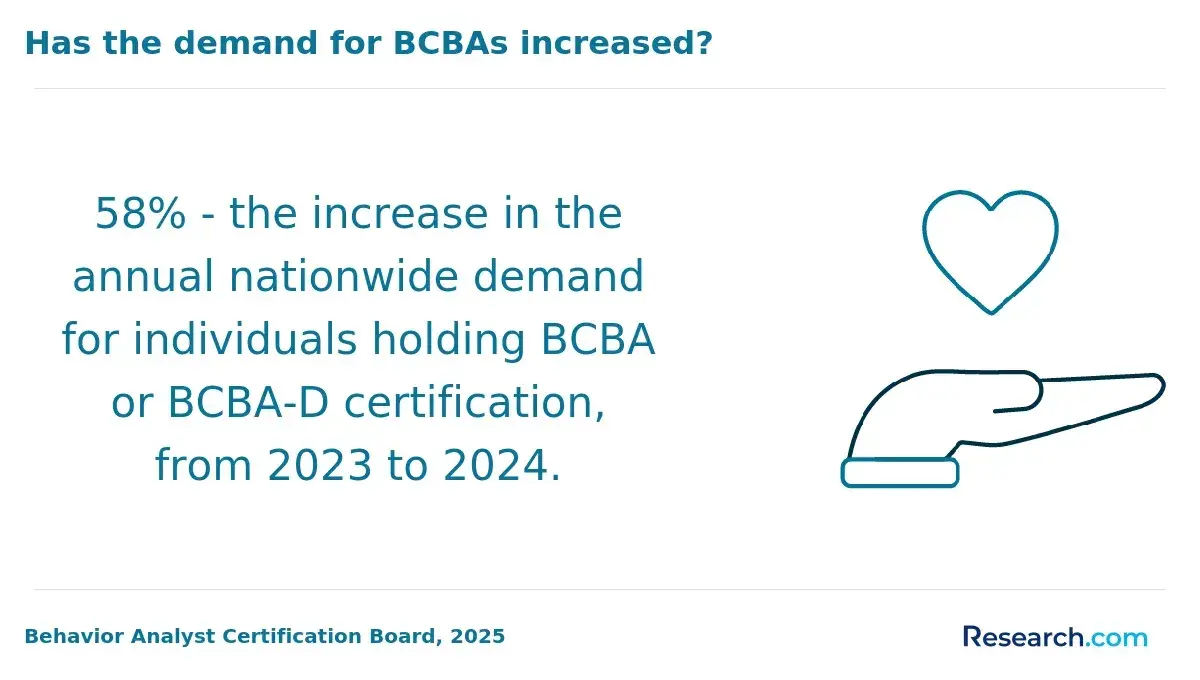
Demand conditions make profile quality especially important. The supply shortage-79,544 credentialed BCBAs versus 103,150 job postings, a 58% increase over previous years-means employers are looking actively, but strong candidates still need to stand out. Use relevant terms naturally, including “functional analysis,” “data-driven treatment,” and “supervision.” Keep activity professional by sharing research, conference takeaways, or practical reflections that show continuing engagement with the field.
Candidates planning further study can also consider a masters degree in behavioral science if it supports their certification pathway, clinical competence, or long-term career goals.
The best LinkedIn networking strategy for BCBAs is targeted, professional, and consistent. The objective is not to collect as many connections as possible. It is to build a visible professional network that includes supervisors, clinic leaders, recruiters, school administrators, alumni, faculty, and behavior analysts working in the settings you want to enter.
Start by connecting with people who already share a meaningful link with you: classmates, fieldwork supervisors, coworkers, conference contacts, faculty, alumni, and members of ABA professional groups. When sending a connection request, include a short note. Mention the shared program, organization, topic, or career interest so the request feels relevant rather than automated.
Engagement should be useful, not performative. Comment on posts when you can add a clinical, ethical, or practical perspective. Share research, continuing education reflections, job openings, or lessons learned from professional development without disclosing confidential client information. Over time, this signals that you are active in the field and thoughtful about practice.
Following organizations in high-demand areas can also help. California reported 20,258 BCBA job postings with a 3% increase year-over-year according to the ABA Resource Center. Tracking employers in markets like this can reveal hiring trends, expansion announcements, recruiter activity, and recurring qualifications in job descriptions.
Informational interviews are especially useful for early-career candidates. Ask experienced BCBAs about the realities of their setting, supervision models, caseload expectations, documentation systems, and career progression. Keep requests concise and respectful; ask for 15 to 20 minutes, not an open-ended mentorship commitment.
Use LinkedIn’s job search filters alongside networking. Set alerts for BCBA roles by location, remote status, employer type, and experience level. Then use your network to learn more about organizations before applying. A well-timed referral or informed application message can be more effective than sending the same resume to every posting.
Online BCBA programs are most useful for LinkedIn job hunters when they combine certification-aligned coursework, supervised fieldwork support, credible faculty, and career services that help students translate training into employable skills. Flexibility matters, but it should not be the only factor in choosing a program.
The first filter is eligibility. Programs should provide coursework that aligns with Behavior Analyst Certification Board requirements and clearly explain how students meet education and fieldwork expectations. Accreditation by the Behavior Analyst Certification Board (BACB) is essential for eligibility to become a BCBA and access key job opportunities.
The second filter is fieldwork support. Candidates should ask whether the program helps students locate supervised placements, whether it has partnerships with ABA providers, and how it verifies supervisor qualifications. A program may be convenient online, but if students must find all fieldwork independently, the pathway can become harder than expected.
Career support is also important for LinkedIn users. Strong programs help students describe their competencies in employer language, prepare for interviews, document supervised experience appropriately, and build professional networks. With a 28% year-over-year increase in BCBA job postings reported by ABA Matrix, programs that teach job-search communication and professional branding can give candidates a practical advantage.
Notable examples include the University of Cincinnati's online BCBA program and Florida Institute of Technology's distance courses, both integrating career services connected to social media platforms. Candidates should still compare curriculum, cost, fieldwork structure, faculty experience, student support, and completion expectations before deciding.
| Program feature | Why it matters for LinkedIn job hunters |
| BACB-aligned coursework | Helps ensure the education plan supports certification eligibility |
| Supervised fieldwork guidance | Builds practical experience that can be described credibly in applications and profiles |
| Career coaching | Helps students turn coursework and practicum experience into job-ready language |
| Flexible online delivery | Allows working professionals to study while gaining experience |
| LinkedIn or networking support | Improves profile quality, recruiter visibility, and professional connections |
Asynchronous classes can be helpful for working professionals because they allow students to update LinkedIn gradually as they complete coursework, fieldwork milestones, and continuing education. The best choice is the program that supports both certification readiness and a credible, evidence-based job search.
BCBA salary expectations vary by location, experience, work setting, caseload responsibility, and whether the role includes supervision, leadership, or specialized clinical duties. Board certified behavior analysts can expect median annual salaries between $65,000 and $85,000, with seasoned professionals in high-demand areas earning over $95,000. Entry-level roles usually start near $60,000.
Pay can differ substantially by employer type. Private healthcare settings may offer higher compensation, but benefits, schedule stability, productivity expectations, and caseload pressure can vary. School-based roles may offer more predictable calendars or public-sector benefits, though salary structures are often tied to district pay scales. Private practices and consulting roles can provide flexibility, but income may depend on billable hours, referrals, and administrative responsibilities.
| Work setting | Potential advantages | Trade-offs to review before accepting |
| Private healthcare or clinic | Often strong demand and potential for higher pay | Productivity targets, caseload intensity, and benefit differences |
| School-based role | Collaboration with education teams and structured schedules | District pay scales and complex IEP-related responsibilities |
| Private practice | Clinical autonomy and varied clients | Administrative load and business-development expectations |
| Rural or underserved area | Potentially faster hiring due to demand | Fewer peer networks and broader service responsibilities |
| Urban market | More employers and specialization options | More competition for desirable roles |
The job outlook remains strong because demand for certified BCBAs continues to outpace supply in many markets. Candidates willing to work in underserved or rural communities may find faster employment opportunities, while urban centers may offer more competition but also more specialized roles and advancement paths.
Career growth often depends on experience, supervision competence, and leadership readiness. Advancing certification and accumulating supervision hours can unlock leadership positions with salaries exceeding $100,000. Employers commonly look for strong clinical judgment, ethical documentation, communication skills, and familiarity with multiple applied behavior analysis treatment models.
Before accepting a role, candidates should look beyond salary. Ask about caseload size, supervision ratios, billable-hour expectations, documentation systems, mentorship, continuing education support, benefits, travel requirements, and ethical safeguards. A higher offer may not be better if the role creates unsustainable workload or weak clinical support.
To find BCBA jobs on LinkedIn effectively, combine precise searches, saved alerts, profile optimization, and direct networking. Searching only once a week for “BCBA jobs” is usually too broad and too passive. A better approach is to build a repeatable search system.
Use multiple keyword combinations, including “BCBA,” “Board Certified Behavior Analyst,” “Applied Behavior Analysis clinician,” “behavior analyst,” “clinical supervisor ABA,” and “ABA program supervisor.” Then narrow results by location, remote or onsite format, experience level, and employer type. If you are open to telehealth, part-time consulting, or school-based roles, create separate searches so those opportunities do not get buried in general results.
Set LinkedIn job alerts for each priority search. Apply early when a role fits, but do not rely only on the application button. Review the company page, identify recruiters or clinical leaders connected to the posting, and send a brief, professional message if appropriate. Mention the role, your relevant qualifications, and one reason your background fits the organization’s needs.
LinkedIn data highlights strong demand in this field, with BCaBA job postings rising by 14,479 in 2024-a 131% increase from the previous year-pointing to a growing workforce gap and more opportunities for qualified candidates. Still, demand does not eliminate the need for a careful application. Employers want to see that applicants understand the setting, population, and responsibilities.
Before applying, make sure your profile supports the resume you submit. Include certification status, ABA competencies, data collection skills, behavior intervention planning, clinical experience, supervision exposure, and populations served. Endorsements and recommendations related to applied behavior analysis can reinforce your qualifications.
Networking is essential for finding hidden or less-publicized roles. Connect with supervisors, clinic directors, alumni, recruiters, and BCBAs who work in your target setting. Join specialized LinkedIn groups and monitor posts from ABA organizations. Use LinkedIn’s “Open to Work” feature if you are comfortable signaling availability to recruiters, and tailor each application message to the employer’s stated needs rather than sending a generic note.
BCBAs use LinkedIn across several career paths, from direct clinical practice to school consultation, organizational behavior management, telehealth, research, and independent consulting. The platform is useful because each path depends on visibility to a different audience.
Clinical practice is one of the most common paths. BCBAs working in pediatric clinics, autism support programs, home-based services, and group practices use LinkedIn to find openings, connect with recruiters, and evaluate employers. Profiles for these roles should emphasize assessment, treatment planning, caregiver training, supervision, documentation, and collaboration with interdisciplinary teams.
School-based BCBAs use LinkedIn to connect with public and private schools, special education administrators, and education service agencies. These roles often involve supporting individualized education plans, training staff, consulting with teachers, and analyzing behavior data within school systems. Candidates should highlight experience with school teams, classroom interventions, legal or documentation awareness, and collaborative problem-solving.
Organizational behavior management, or OBM, is another path where LinkedIn can be especially useful. In OBM, BCBAs apply behavior-analytic principles to improve performance, training, safety, productivity, and systems in organizations. These roles may appear under titles that do not include “BCBA,” so candidates should search for consulting, performance improvement, training, and organizational effectiveness terms as well.
Research and academia also benefit from LinkedIn visibility. BCBAs interested in university, research institute, or policy-related roles can use the platform to follow faculty, share publications or presentations, and monitor grant-funded or project-based opportunities. For instance, states like North Carolina have seen a 63% increase in BCBA job postings, reflecting expanding career opportunities documented by the ABA Resource Center.
Telehealth and freelance consulting are growing options for BCBAs who want flexibility or specialized client work. These paths rely heavily on trust, referrals, and professional reputation, which makes LinkedIn particularly valuable. A strong profile should clearly state services offered, populations served, ethical boundaries, licensure or certification status where relevant, and evidence of competence.
How to showcase BCBA skills on LinkedIn?
To showcase BCBA skills on LinkedIn, present your abilities as evidence of professional competence rather than a long list of buzzwords. Employers want to know whether you can assess behavior, design ethical interventions, use data, supervise others, communicate with families or teams, and adapt plans when progress stalls.
Begin with your headline and summary. List your BCBA certification and ABA-related credentials clearly. In the summary, describe your strongest areas: functional behavior assessment, behavior intervention plans, data analysis, parent or caregiver training, staff supervision, treatment integrity, and collaboration with schools or clinical teams. If you include outcomes, make sure they are accurate, de-identified, and ethically appropriate.
The experience section should connect skills to real work. Identify the settings where you practiced, the populations you served, the ABA procedures you used, and the responsibilities you held. Examples may include children with autism, adults with developmental disabilities, clinic-based ABA, school consultation, severe behavior support, supervision of RBTs, or caregiver coaching. When appropriate, use measurable statements such as “increased communication skills by 30% over six months.”
Use the Skills section strategically. Add terms recruiters are likely to search for, such as functional behavior assessment, behavior intervention plans, data-driven decision making, supervision, parent training, behavior reduction, skill acquisition, and treatment planning. Endorsements can help, but they should support a profile that already provides context.
LinkedIn also allows candidates to show professional development. Share conference attendance, continuing education, publications, presentations, certificates, or field-relevant reflections. If you post case examples, avoid any client-identifying information and focus on general principles, ethical lessons, or practice insights.
Large organizations dominate LinkedIn's advertising budgets, which can make smaller ABA providers harder to notice and make individual candidates feel less visible. A keyword-rich, results-driven, and professionally active profile helps offset that disadvantage. The strongest profiles are specific, accurate, current, and grounded in the competencies employers actually need from a BCBA.
Other Things You Should Know About Applied Behavior Analysis
While some clinical experience is highly recommended and often required for BCBA certification, certain supervised experience hours can be gained in non-clinical settings, such as educational or research environments. However, most certification boards expect candidates to complete specific hours of applied clinical experience under supervision to ensure practical competence.
Yes. BCBA candidates can use LinkedIn to identify BCBAs and ABA clinic directors who may supervise fieldwork. To qualify for BCBA certification, applicants need 2,000 supervised fieldwork hours or 1,500 concentrated hours under a qualified supervisor approved under BACB requirements.
Applied behavior analysis is widely used with individuals with autism spectrum disorder, developmental disabilities, and behavioral challenges. It also supports populations in educational settings, healthcare, and organizations seeking behavior change in areas like employee training or organizational behavior management.
- What's the Job Outlook for a BCBA in 2024? | Level Ahead ABA https://www.levelaheadaba.com/blog/bcba-job-outlook
- Board-Certified Behavior Analyst (BCBA) Salary Guide â Trusted Health https://www.trustedhealth.com/allied-career-guide/behavior-analyst/salary-guide
- LinkedIn Profile Optimization: Step-by-Step Guide For Job Search https://agilemania.com/how-to-optimize-linkedin-profile
- BCBA Requirements: College Years Explained | Divine Steps https://www.divinestepstherapy.com/blog/bcba-exam-college-years
- The ultimate LinkedIn profile optimization guide https://www.heyreach.io/blog/linkedin-profile-optimization
- Best Practices for BCBA Job Postings: A Guide for ABA Hiring Managers https://www.abaresourcecenter.com/post/best-practices-for-bcba-job-postings
- 10 Best BCBA Job Boards to Find Behavior Analyst Jobs (2025) https://certifyndaba.com/blog/job-search/bcba-job-boards
- What Is A Board Certified Behavioral Analyst (BCBA)? https://www.psychology.org/resources/bcba-meaning-career-overview/
- What to Expect from a BCBA Job: Salary, Growth & Opportunities - Big Dreamers ABA https://www.bigdreamersaba.com/blog/what-to-expect-from-a-bcba-job-salary-growth-opportunities
- How to Build a LinkedIn Job Hunting AI Assistant With Bright Data https://brightdata.com/blog/ai/linkedin-job-hunting-agent