2027 How Employers View Online BCBA Degrees

Co-Founder and Chief Data Scientist
Choosing an online BCBA pathway is not just a question of convenience. It is a credentialing decision that can affect exam eligibility, fieldwork planning, employer trust, and long-term career options in applied behavior analysis. For career changers, educators, psychology graduates, healthcare workers, and professionals with unrelated undergraduate degrees, the main concern is usually the same: will an online BCBA degree be taken seriously by employers?
The short answer is that employers increasingly accept online BCBA degrees when the program meets Behavior Analyst Certification Board requirements, includes appropriate supervised fieldwork, and comes from a credible institution. The degree format matters far less than whether you can qualify for certification, explain ABA concepts clearly, document supervised experience, and perform competently in clinical, school, or organizational settings.
This guide explains how employers evaluate online BCBA programs, what accreditation and certification requirements matter most, how online and campus programs differ, what coursework to expect, how long completion may take, and how to choose a reputable program that supports both certification eligibility and employment.
Key Things You Should Know
- In 2026, 68% of U.S. employers accept online BCBA degrees, recognizing the rigorous accreditation standards by the Behavior Analyst Certification Board.
- Employers prioritize practical experience alongside online degrees, with 75% valuing supervised fieldwork completed during online Applied Behavior Analysis programs.
- Salary prospects remain comparable, as recent data shows online BCBA graduates earn within 5% of those with traditional degrees in equivalent Applied Behavior Analysis roles.
How do employers view online BCBA degrees?
Employers generally view online BCBA degrees as acceptable when the program is properly aligned with BACB requirements and the candidate has strong supervised fieldwork experience. In most hiring decisions, the key question is not whether the coursework was online or on campus. Employers want to know whether the applicant is eligible for, or already holds, BCBA certification and can apply behavior analysis safely and ethically with clients, students, or teams.
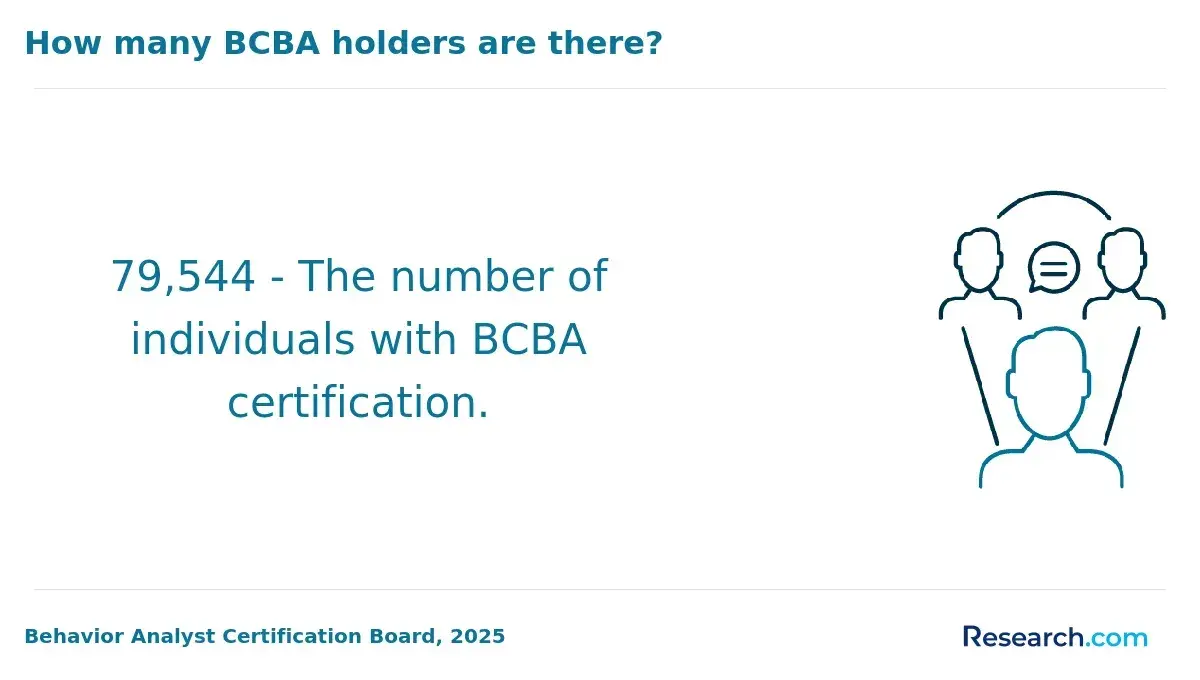
Demand also affects employer attitudes. The BACB Lightcast 2025 Report reported a 58% increase from 2023 to 2024 in nationwide demand for BCBA-certified professionals. As hiring needs grow, many school districts, clinics, healthcare organizations, and autism service providers have expanded their candidate pools and become more familiar with high-quality online programs.
What employers usually check
- Whether the program’s coursework meets BACB expectations or is tied to recognized behavior analysis standards.
- Whether the institution has credible accreditation and transparent program information.
- The quality, setting, and documentation of supervised practicum or fieldwork hours.
- The applicant’s ability to conduct assessments, write behavior intervention plans, analyze data, and explain clinical decisions.
- Professional readiness, including ethics knowledge, communication skills, and experience working with clients or students.
Employer acceptance can vary by setting. Large healthcare organizations and school districts often focus heavily on verified fieldwork and certification status. Smaller clinics may place more weight on hands-on ABA experience, references, and readiness to supervise Registered Behavior Technicians. Some employers remain cautious about online programs that are self-paced, weak on interaction, or leave students to arrange supervision without support.
To improve employer confidence, online students should keep detailed fieldwork records, choose supervisors carefully, prepare to discuss real cases during interviews, and highlight any synchronous coursework, clinical projects, assessment experience, or specialized training. Students comparing advanced options can also review online BCBA doctoral program pathways to understand how different credentials align with professional goals.
Overall, online BCBA degree acceptance is strongest when the program is rigorous, transparent, and connected to meaningful supervised practice. A flexible format can work well, but it should never come at the expense of certification eligibility or clinical preparation.
What is a BCBA degree and certification process?
A BCBA degree pathway is graduate-level preparation in applied behavior analysis that helps students meet educational requirements for Board Certified Behavior Analyst certification. The degree is typically completed at the master’s or doctoral level and covers behavior principles, assessment, intervention design, ethics, research methods, measurement, supervision, and data-based decision-making.
The BCBA credential itself is a certification process, not simply a degree title. Students must complete the required graduate coursework, obtain supervised fieldwork, and pass the certification exam. The original certification pathway described here includes 1,500 to 2,000 hours of supervised fieldwork depending on the chosen pathway. These hours are central because they connect classroom concepts to actual practice with clients, students, families, staff, or organizations.
Typical BCBA certification steps
- Earn an eligible graduate degree that supports the BCBA pathway.
- Complete coursework that satisfies BACB standards.
- Arrange and document supervised fieldwork under qualified supervision.
- Apply for exam eligibility after meeting education and fieldwork requirements.
- Pass the BCBA certification exam.
- Maintain the credential through ethics compliance and continuing education.
Students researching BCBA degree online program requirements should confirm early how the program supports each step. A program may offer strong coursework but limited fieldwork assistance, which can delay certification. Others may provide advising, supervisor networks, practicum coordination, or clear documentation tools that make the process easier to manage.
State-level demand can also influence planning. California BCBA certification process steps are especially relevant because the state accounted for 19% of all U.S. job postings preferring or requiring this certification. That level of demand makes certification more than a resume enhancement; it is often the credential that determines whether a candidate is considered for independent or supervisory behavior analyst roles.
Before enrolling, students should compare supervised independent fieldwork, practicum-style arrangements, and program-supported placements. For a broader view of accredited options and certification-focused pathways, review schools that offer BCBA certification.
Online vs campus BCBA programs: key differences?
The main difference between online and campus BCBA programs is delivery format, but the practical differences often show up in scheduling, supervision access, peer interaction, and local networking. Both formats can prepare students for certification if they meet BACB requirements. The better choice depends on how you learn, where you can complete fieldwork, and how much structure you need.
How the formats compare
| Factor | Online BCBA programs | Campus BCBA programs |
| Schedule | Often more flexible, with asynchronous or hybrid coursework that can fit around work and family responsibilities. | Usually follows set class times and may require commuting or relocation. |
| Fieldwork | Students may need to secure local approved supervisors, although some programs offer placement support. | Students may have easier access to university-affiliated clinics, school partnerships, or local agency relationships. |
| Interaction | Depends on the program design; stronger programs include live sessions, discussion, feedback, and applied assignments. | Offers face-to-face interaction with faculty and classmates, which may suit students who prefer in-person learning. |
| Cost considerations | May reduce commuting, relocation, and housing costs. | May offer assistantships, campus-based scholarships, or local practicum connections. |
| Employer perception | Generally accepted when the program is credible and the candidate meets certification and fieldwork expectations. | May offer stronger local recognition in some regions or employer networks. |
Online programs are often a better fit for working professionals, parents, rural students, and career changers who cannot attend scheduled campus classes. Campus programs may be better for students who want more immediate access to faculty, structured routines, university clinics, or local behavior analysis networks.
Fieldwork is the biggest practical difference. Campus programs may already have relationships with schools, clinics, or agencies. Online students often have more geographic freedom, but they must be proactive about finding qualified supervision and confirming that the arrangement meets certification requirements. Programs that provide fieldwork placement assistance can reduce this risk.
Employer recognition of online learning continues to grow as workforce demand expands. The BACB Lightcast 2025 Report notes a 131% surge in demand for BCaBA-certified assistant behavior analysts in 2024, which reflects broader demand for behavior analysis roles and supports wider acceptance of flexible training pathways.
When comparing formats, do not focus only on convenience. Ask how often students interact with faculty, how fieldwork is supported, what exam preparation is included, and whether graduates are successful in your intended employment setting. Many students find that online master’s in ABA programs provide the needed flexibility without sacrificing academic quality, provided the program is properly designed.
The most important credentialing factor for BCBA preparation is whether the coursework aligns with Behavior Analyst Certification Board requirements. Employers and certification reviewers care about whether your education supports exam eligibility, not simply whether the program uses the term “ABA” or “behavior analysis” in its title.
Institutional accreditation also matters. A program offered by a regionally accredited university generally carries stronger credibility with employers, graduate schools, and financial aid systems. The strongest combination is a reputable institution plus coursework that clearly supports BCBA eligibility.
What to verify before enrolling
- Confirm that the entire BCBA coursework sequence is BACB-approved or otherwise clearly aligned with current certification requirements, not just a few selected courses.
- Check whether the university has recognized institutional accreditation.
- Ask how the program documents coursework for certification review.
- Confirm whether fieldwork is included, coordinated, or left entirely to the student.
- Avoid programs that cannot clearly explain how graduates qualify for the BCBA exam.
Graduates from unaccredited or non-aligned programs may face serious barriers. They may need to repeat coursework, delay exam eligibility, or explain gaps to employers. Because behavior analysis roles often involve vulnerable populations and regulated service settings, hiring managers may scrutinize transcripts, supervision records, and certification status closely.
Program credibility is especially important in high-demand labor markets. Massachusetts ranked second in BCBA job demand and was among the top five states responsible for 40% of national job postings according to the BACB Lightcast 2025 Report. In competitive states, a recognizable and well-documented program can make hiring conversations easier.
Students seeking credible online options can compare ABAI accredited online programs and review each school’s accreditation, coursework sequence, fieldwork support, and graduate outcomes before applying.
BCBA program admission requirements usually include a bachelor’s degree, official transcripts, a minimum GPA near 3.0, and evidence that the applicant can succeed in graduate-level study. Preferred undergraduate backgrounds often include psychology, education, special education, human services, or related fields, but some programs admit students from other majors if they complete prerequisites.
Common prerequisites include basic statistics, research methods, introductory psychology, developmental psychology, or foundational behavior analysis. Applicants who lack these courses may be admitted conditionally or asked to complete bridge or leveling coursework before beginning the main graduate sequence.
Common application materials
- Official transcripts from prior colleges or universities.
- A statement of purpose explaining career goals and interest in applied behavior analysis.
- Letters of recommendation from faculty, supervisors, or professionals who can speak to readiness for graduate study.
- A resume showing work, volunteer, or clinical experience.
- GRE scores if required, although many schools are waiving this requirement.
Relevant experience can strengthen an application. Work with individuals with autism spectrum disorder, developmental disabilities, behavioral challenges, or school-based support needs can show that the applicant understands the field and is prepared for supervised practice. Experience as a teacher, paraprofessional, Registered Behavior Technician, case manager, counselor, or healthcare worker may also be useful, depending on the program.
Online programs usually use similar academic criteria but may also expect students to demonstrate self-direction, reliable internet access, time management, and the ability to arrange approved fieldwork in their location. Students in high-demand states such as California, Florida, Texas, Virginia, and Michigan should ask whether the program has fieldwork contacts, supervisor guidance, or state-specific advising. These states accounted for nearly half of the demand for BCaBA assistant behavior analysts per the BACB Lightcast 2025 Report.
Applicants from non-ABA backgrounds should look for programs that clearly explain prerequisite options, post-baccalaureate tracks, and advising for certification eligibility. The best admissions decision is not simply getting accepted; it is entering a program that matches your background and can realistically move you toward certification.
A typical BCBA curriculum is built around the knowledge and skills needed to assess behavior, design interventions, evaluate outcomes, supervise staff, and practice ethically. Coursework usually moves from foundational principles to applied assessment and intervention, then into advanced analysis, supervision, and professional practice.
Common course areas
- Principles of behavior analysis, including reinforcement, punishment, stimulus control, motivation, and behavior change processes.
- Measurement, data collection, graphing, and interpretation of behavioral data.
- Research methods, experimental design, and single-subject design.
- Functional behavior assessment and functional analysis.
- Behavior intervention planning and behavior support plans.
- Ethics and professional conduct in applied behavior analysis.
- Supervision, staff training, and performance management.
- Applications with individuals with developmental disabilities or autism spectrum disorder.
Strong programs emphasize applied decision-making, not memorization alone. Students should expect to learn how to define behavior objectively, collect reliable data, identify environmental variables, select interventions, monitor progress, and revise plans when data show limited improvement.
Advanced coursework may focus on verbal behavior, early intervention, organizational behavior management, severe behavior, school consultation, parent training, or systems-level service delivery. Program emphasis can affect career fit. For example, a student who wants to work in autism services may prefer a curriculum with extensive clinical case examples, while someone interested in workplace performance may value organizational behavior management coursework.
Online programs may use case simulations, recorded observations, live class discussions, interactive assignments, virtual collaboration, and supervised applied projects to build practice skills. Students should ask how the program evaluates clinical reasoning and whether assignments mirror real BCBA responsibilities, such as writing behavior intervention plans or analyzing treatment data.
Salary data reflect the value of comprehensive preparation. According to the BACB Ethics & Salary Survey 2024, the median BCBA salary was $98,000 and top earners exceeded $120,000 in certain states. These figures make curriculum quality important: higher-level roles typically require not only certification but also strong assessment, supervision, communication, and ethical decision-making skills.
Online BCBA programs generally take 12 to 24 months to complete, depending on enrollment status, program design, transfer credits, prior graduate coursework, and the pace of supervised fieldwork. Coursework may move quickly, but certification readiness depends on both academic requirements and documented supervised experience.
Full-time students in accelerated programs may finish the academic portion in about a year, especially if they enter with relevant preparation and can commit significant time each week. Part-time students often take 18-24 months because they are balancing coursework with employment, family responsibilities, and fieldwork scheduling.
What can speed up or slow down completion
- Course load: Taking more courses each term can shorten the academic timeline but increases weekly workload.
- Fieldwork access: Students with an approved worksite or supervisor may progress faster than those still searching for placements.
- Program format: Cohort-based programs may follow a fixed schedule, while flexible programs may allow faster or slower pacing.
- Prior experience: Students with behavior analysis experience may adapt more quickly to applied assignments and supervision expectations.
- Documentation: Poor fieldwork tracking can create delays even when hours have been completed.
Some accelerated options allow completion in as little as 12 months through intensive study and coordinated fieldwork. Other students intentionally choose a longer timeline to avoid burnout and to gain stronger clinical experience before sitting for the exam.
Financial planning should include both tuition and the time required to complete fieldwork. The original cost range for tuition is between $25,000 and $40,000. The potential return can be strong, with salaries commonly about 2.5 times higher than costs within two years post-completion. Students should still evaluate debt carefully, compare employer tuition support, and avoid assuming that every graduate will earn the same salary immediately.
The best timeline is the one that supports certification eligibility, high-quality supervision, and sustainable performance. Finishing quickly is useful only if the program also prepares you to pass the exam and work competently in the field.
A BCBA degree pathway can lead to roles in clinical treatment, schools, healthcare, residential programs, early intervention, private practice, and organizational behavior management. The exact job title depends on certification status, state requirements, experience, and employer setting.
Common BCBA-related job titles
- Board Certified Behavior Analyst
- Clinical behavior analyst
- Behavior intervention supervisor
- ABA program supervisor
- Clinical coordinator
- Program director
- School-based behavior analyst
- Autism services supervisor
- Organizational behavior management consultant
In schools, BCBAs may support behavior intervention plans, consult with teachers, train staff, analyze student data, and participate in multidisciplinary planning. In healthcare and autism service settings, they may conduct assessments, design treatment plans, supervise technicians, train caregivers, and monitor progress. In residential or community programs, they may support individuals with complex behavioral needs and coordinate with families, clinicians, and direct support staff.
Many BCBA roles include supervision. Certified behavior analysts often oversee Registered Behavior Technicians and other support staff, which requires not only technical knowledge but also communication, coaching, documentation, and ethical leadership. Supervisory roles can also come with greater responsibility for compliance, quality assurance, scheduling, and program outcomes.
According to the 2024 ABA Employer Hiring Survey, 78% of ABA employers report no preference between online and in-person BCBA degrees when candidates hold certification. This reinforces a practical point for job seekers: certification, fieldwork quality, references, and demonstrated competence usually matter more than whether courses were completed online.
To improve employment prospects, students should gain experience before graduation, build strong supervisor relationships, keep case examples they can discuss appropriately in interviews, and consider entry-level credentials or roles that build direct service skills. Employers often favor candidates who can show they understand both the science of behavior and the realities of service delivery.
BCBA salaries vary by region, experience, employer type, caseload complexity, and supervisory responsibility. Entry- to mid-level professionals generally range from $60,000 to $85,000 annually. More experienced BCBAs, especially those in supervisory, clinical leadership, or specialized roles, can earn upwards of $100,000.
Setting matters. Private practice and healthcare organizations may offer higher pay than some education or government roles, although school-based positions may provide steadier schedules, public-sector benefits, or academic-year calendars. Supervisory positions typically pay more than direct-service or entry-level roles because they involve staff oversight, compliance responsibilities, clinical review, and program accountability.
Factors that influence BCBA pay
- Employment type, including private practice, healthcare, education, government, or residential services.
- Years of experience and demonstrated clinical competence.
- Specialization, such as autism services, severe behavior, early intervention, supervision, or organizational behavior management.
- Certification status and continuing education.
- Regional demand, reimbursement environment, and cost of living.
- Supervisory duties and number of staff supported.
The job outlook remains positive because behavior analysis is used across healthcare, education, autism services, developmental disability supports, and organizational settings. The BACB Lightcast 2025 Report noted strong job market growth in states such as New Jersey, where wages may be higher because of regional demand and labor market conditions.
Students should treat salary figures as planning ranges, not guarantees. Before enrolling or relocating, compare local job postings, review required qualifications, ask employers about supervision expectations, and consider whether positions are salaried, hourly, school-year, full-year, or contractor-based. Career planning in high-demand regions such as New Jersey can improve opportunity, but the best prospects usually go to candidates with certification, strong fieldwork, ethical judgment, and clear communication skills.
How to choose a reputable online BCBA program?
Choosing a reputable online BCBA program starts with one nonnegotiable question: will this program help you meet certification requirements without leaving you uncertain about coursework, supervision, or documentation? A polished website is not enough. You need evidence that the program is credible, transparent, and designed for real certification and employment outcomes.
Use this checklist before applying
- Verify BACB alignment, including whether the program includes BACB-approved verified course sequences (VCS) or clearly supports board eligibility.
- Confirm institutional accreditation and make sure the school is recognized by employers and financial aid systems.
- Ask how fieldwork is handled, including whether the school helps identify supervisors or requires students to arrange everything independently.
- Review faculty qualifications and look for instructors with active BCBA credentials and relevant practice experience.
- Compare course delivery, including live sessions, feedback, applied projects, and opportunities to interact with faculty and peers.
- Ask for graduation rates and board exam pass rates when available.
- Review tuition, fees, financial aid, scholarships, and refund policies before committing.
- Look for academic advising, certification guidance, career support, and technical support for online learners.
Program flexibility is valuable, especially for working professionals, but it should not replace rigor. Be cautious with programs that are vague about certification eligibility, do not explain fieldwork expectations, rely entirely on self-paced modules, or cannot provide clear advising on the BCBA process.
Cost should be evaluated alongside outcomes. A lower-cost program may be a good choice if it is credible and well-supported. A more expensive program may be worthwhile if it provides strong supervision connections, faculty mentoring, exam preparation, and employer recognition. The right comparison is not simply tuition; it is total value, including time to completion, fieldwork support, certification readiness, and career fit.
Employment demand for BCBAs is growing rapidly, with a projected 25% annual increase in job postings through 2026, according to Lightcast Occupational Outlook 2025. That growth can create opportunity, but employers still expect competence. Choose an online BCBA program that prepares you to earn the credential, explain your clinical decisions, and practice ethically from the start of your career.
Other Things You Should Know About Applied Behavior Analysis
In 2027, employers increasingly recognize online BCBA degrees as credible, provided they are accredited by a recognized institution. Emphasis is placed on program accreditation and the quality of supervised experience. Online programs offer the flexibility that many students need, without compromising educational standards required by employers.
Employers usually verify BCBA certification through the Behavior Analyst Certification Board, active state licensure where required, and supervised fieldwork hours. In 2027, many also confirm that the degree came from a program aligned with BACB coursework and exam requirements before making hiring decisions.
Supervised experience is a mandatory component of BCBA certification. Candidates must complete a defined number of hours engaging in applied behavior analysis work under the supervision of a qualified BCBA. This practical experience ensures candidates develop the necessary skills to apply ABA principles effectively in real-world settings before sitting for the certification exam.
Practitioners of applied behavior analysis must adhere to the Behavior Analyst Certification Board's (BACB) Professional and Ethical Compliance Code. This code outlines standards for client welfare, confidentiality, informed consent, and professional competence. It ensures that behavior analysts maintain high ethical conduct in practice, research, and supervision roles within the field.
- BCBA Job Outlook in 2026 Explained | Divine Steps ABA https://www.divinestepstherapy.com/blog/bcba-job-outlook
- BCBA Programs and Schools: How to Choose https://www.apexaba.com/blog/bcba-programs-and-schools
- Understanding BCBA Fieldwork Hours | ABA Resource Center https://www.abaresourcecenter.com/post/bcba-fieldwork-hours
- Applied Behavior Analysis Master’s—100 % Online https://www.baypath.edu/academics/graduate-programs/applied-behavior-analysis-ms/
- How do employers look at online degrees? - MBA Crystal Ball https://www.mbacrystalball.com/blog/2017/01/27/online-degrees-how-employers-view-them/
- How Employers View Online Degrees: Interviews with Nine Hiring Executives https://www.onlineeducation.com/features/how-employers-view-online-degrees
- ABA Certification Explained: RBT, BCaBA, BCBA, BCBA-D https://onlinecounselingprograms.com/mental-health-careers/how-to-become-behavior-analyst-bcba/aba-certification-explained/
- BCBA Programs & Schools | Sunray ABA https://www.sunrayaba.com/post/bcba-programs-schools
- How Long Does It Take to Become a BCBA? | Timeline Guide https://www.appliedbehavioranalysisedu.org/2026/04/how-long-does-it-take-to-become-a-bcba/
- The Rate of Job Growth for BCBAs (In 2023) https://www.crossrivertherapy.com/behavioral-analysts/job-growth