2027 Best Online Bachelor's in Communication With Career Services

Co-Founder and Chief Data Scientist
Choosing an online communication degree is really a career decision: you need a program that teaches writing, strategy, media, and audience analysis while helping you turn those skills into work. The field remains practical for students who want flexible roles in public relations, marketing, media, corporate communication, and digital content.
The U.S. Bureau of Labor Statistics reported a May 2024 median pay of $69,780 for public relations specialists, showing why career-focused preparation matters. This guide helps you compare accredited programs, costs, support services, and likely career paths.
Key Things You Should Know
- The best online bachelor's in communication programs pair regional or national institutional accreditation with career services such as resume coaching, internship help, employer events, portfolio support, and access to the same career platform used by campus students.
- The College Board's 2024-2025 published tuition and fee averages were $11,610 for in-state public four-year colleges and $43,350 for private nonprofit four-year colleges, so transfer credit, online tuition rules, and fees can change total value significantly.
- Career outcomes depend on specialization and experience; BLS May 2024 median pay was $69,780 for public relations specialists, $76,950 for market research analysts, and $91,670 for technical writers, but entry-level salaries vary by region, industry, portfolio quality, and internships.
What is an online bachelor's in communication with integrated career services?
An online bachelor's in communication with integrated career services is a four-year undergraduate degree delivered fully or mostly online, designed to build professional communication skills while embedding career preparation into the student experience. The academic side usually covers writing, public speaking, media literacy, research, persuasion, intercultural communication, organizational communication, and digital strategy. The career side may include resume reviews, mock interviews, internship databases, alumni mentoring, portfolio development, and virtual recruiting events.
The phrase "integrated career services" matters because some online programs merely give students access to a general university career office, while stronger programs connect career preparation directly to courses, capstones, internships, and employer-facing projects. If you are comparing an online communications degree pathway, look for evidence that online learners receive active, remote-friendly support rather than a campus office that is technically available but difficult to use.
This degree is usually a good fit for students who want broad, transferable skills rather than a single licensed occupation. It can serve working adults, transfer students, military-affiliated learners, first-time college students, and career changers who want roles involving messaging, writing, audiences, media, or stakeholder relationships.
It may be a weaker fit if your target job requires a specialized license, a highly technical credential, or intensive laboratory training. For example, students interested in speech-language pathology, counseling, teaching licensure, or clinical work should check the graduate-level and state-specific requirements before assuming a general communication bachelor's degree will meet them.
How do online communication bachelor's programs compare to on-campus options for career support?
Online and on-campus communication programs can lead to similar degrees, but the career-support experience can feel different. Online students often need more intentional planning because they may not walk past a career center, hear about campus job fairs, or build local employer relationships organically. Strong online programs compensate by offering virtual appointments, remote internships, asynchronous workshops, digital portfolios, and employer events scheduled for working adults.
The table below compares career-support features that matter most when deciding whether an online or campus format is better for your situation.
| Feature | Online communication program | On-campus communication program | Best fit |
| Career coaching | Usually delivered through video calls, email feedback, and online career platforms | Often available in person with drop-in appointments and campus workshops | Online works well for working adults; campus may suit students who want frequent face-to-face help |
| Internships | May include remote, local, or employer-approved placements near the student | Often tied to local media, nonprofit, agency, or university-area employers | Online is flexible; campus can be stronger in markets where the school has deep employer ties |
| Networking | Depends heavily on virtual events, alumni platforms, LinkedIn groups, and course projects | Can include in-person events, student organizations, speaker series, and local alumni events | Campus may be better for highly social learners; online can work if the school designs networking intentionally |
| Portfolio development | Often built through digital assignments, capstones, blogs, campaigns, and multimedia work | Often built through class projects, campus media, clubs, agencies, or student publications | Both can be strong if the program requires polished, employer-ready work samples |
| Schedule flexibility | Higher flexibility, especially in asynchronous programs | More fixed class and event schedules | Online is usually better for adults balancing work, family, or military responsibilities |
The strongest online option is not automatically the cheapest or fastest one. It is the program that gives you access to real people, real feedback, and real work samples. Before enrolling, ask whether online students can attend employer events, complete internships in their own area, receive alumni introductions, and use the same job platform as campus students.
Which accredited schools offer the best online communication bachelor's degrees with career services?
The "best" online bachelor's in communication program depends on your goals: public relations, digital media, corporate communication, journalism-adjacent work, nonprofit advocacy, technical communication, or graduate study. For this guide, a strong program means it is offered by an accredited institution, has a communication-focused curriculum, supports online learners, and provides career services that can be used remotely.
The schools below are examples of accredited U.S. institutions that offer online communication-related bachelor's degrees and are useful comparison points. Always verify current program availability, tuition, transfer rules, and accreditation status directly with the school before applying.
| School | Example online communication degree | Institutional accreditation | Career-service strength to verify | Best for |
| Arizona State University Online | BA in Communication | Higher Learning Commission | Online career advising, employer connections, Handshake-style job tools, and alumni networking | Students who want a large online ecosystem and broad communication curriculum |
| University of Florida Online | BS in Public Relations | Southern Association of Colleges and Schools Commission on Colleges | Career planning, internship guidance, and public relations-focused professional preparation | Students focused on public relations, strategic messaging, and agency or corporate communication |
| Penn State World Campus | BA in Strategic Communications | Middle States Commission on Higher Education | Remote career counseling, alumni network access, and portfolio-oriented support | Students seeking a well-known public university brand and strategic communication focus |
| Washington State University Global Campus | BA in Integrated Strategic Communication | Northwest Commission on Colleges and Universities | Virtual career advising, internship resources, and communication-specific applied coursework | Students interested in advertising, public relations, and campaign strategy |
| University of Central Florida Online | BA in Communication and Conflict | Southern Association of Colleges and Schools Commission on Colleges | Online advising, career coaching, and support for workplace communication pathways | Students interested in conflict, organizational communication, training, or mediation-adjacent roles |
| Southern New Hampshire University | BA in Communication | New England Commission of Higher Education | Career services for online students, resume help, employer events, and transfer-friendly advising | Students seeking flexible terms, broad transfer policies, and multiple concentration options |
When comparing schools, do not rely only on brand recognition. A lesser-known program with strong transfer-credit acceptance, responsive career coaching, and a required capstone may be a better fit than a more famous program with limited support for remote students.
Watch for red flags before you submit a deposit. A program deserves closer scrutiny if it will not clearly identify its accreditor, cannot explain how online students access career services, has vague internship policies, lists tuition without required fees, or offers little information about communication faculty and course outcomes.
What admissions requirements and prerequisites do online communication bachelor's programs typically have?
Admissions requirements for online bachelor's in communication programs are usually accessible, but they vary by school and applicant type. First-year applicants are commonly evaluated on high school completion, GPA, transcripts, and sometimes test scores, while transfer applicants are often evaluated on prior college credits and cumulative college GPA.
Most programs do not require prior communication coursework. However, students who transfer into upper-division communication courses may need to complete general education, composition, speech, statistics, or introductory communication classes first. These prerequisites matter because they can affect how quickly you reach major-specific coursework.
Typical admissions materials often include the following items, and each one can affect your timeline or scholarship eligibility.
- Official high school transcript, GED record, or equivalent documentation for first-year applicants
- Official transcripts from every college previously attended for transfer applicants
- Minimum GPA requirement, often with a different standard for first-year and transfer students
- Application form and fee, with fee waivers available at some institutions
- Personal statement or short essay, especially at selective public or private universities
- English proficiency documentation for applicants whose prior education was not completed in English
- Optional or required standardized test scores, depending on the institution's current admissions policy
Transfer students should pay special attention to credit evaluation. A program that accepts 60 to 90 prior credits may reduce both time and cost, but only if those credits apply to degree requirements rather than being counted as unused electives.
A practical way to avoid surprises is to request a preliminary transfer evaluation before enrolling. Ask admissions which credits apply to general education, which apply to the major, how many upper-division credits must be taken at the institution, and whether there is a capstone or internship that cannot be transferred in.
How long does it take to complete an online bachelor's in communication and what does it cost?
Most online bachelor's in communication degrees require about 120 semester credits. A full-time first-year student may finish in about four years, while a transfer student with an associate degree may finish in about two years if credits apply cleanly. Part-time students often take longer, but that slower pace can make the degree more manageable for working adults.
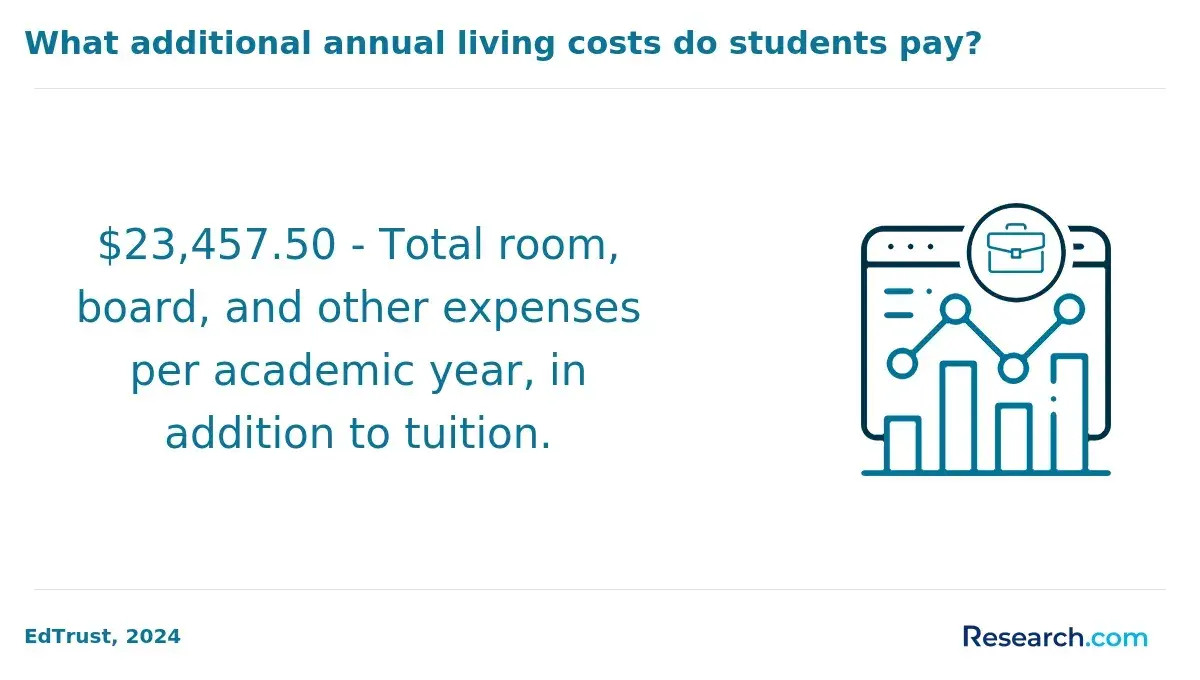
Cost depends on tuition, fees, transfer credits, residency rules, books, technology costs, and how long you stay enrolled. The College Board's 2024-2025 published tuition and fee averages were $11,610 for in-state public four-year colleges and $43,350 for private nonprofit four-year colleges. Online programs may cost less, more, or about the same depending on whether the school charges per credit, flat-rate tuition, or separate online fees.
The table below summarizes common timeline and cost variables so you can estimate the real investment rather than looking only at advertised tuition.
| Factor | How it affects completion | How it affects cost | What to ask |
| Transfer credits | Can shorten the degree if credits meet requirements | Can reduce tuition by replacing courses you would otherwise retake | How many credits will apply to my degree plan? |
| Full-time enrollment | Usually faster and more structured | May increase short-term costs but reduce time paying fees | Is there a flat tuition band for full-time students? |
| Part-time enrollment | Usually slower but easier to balance with work | Can spread payments over time but may extend fee costs | Will courses I need be offered often enough? |
| Residency requirement | Requires a minimum number of credits from the degree-granting school | Limits how much outside coursework can reduce cost | How many credits must I complete at this institution? |
| Online fees | Usually do not affect time | Can raise total cost beyond tuition | What mandatory fees apply to online students? |
| Internship or capstone | May require planning around work schedules | May involve software, travel, or unpaid time if not remote | Can I complete this requirement locally or online? |
To reduce cost without weakening the degree, compare public in-state options, transfer-friendly programs, employer tuition benefits, military education benefits, scholarships for adult learners, and community college pathways. Also complete the FAFSA if eligible, because grants, federal loans, and work-study options may be tied to that application.
What courses and specializations are common in online communication degrees focused on careers?
Online communication bachelor's programs usually combine communication theory with applied work. The best career-focused curricula do not stop at essays and exams; they require students to create campaigns, presentations, media plans, research reports, content samples, or capstone projects that can become portfolio evidence.
Common courses often include the following areas, and each one supports a different workplace skill.
- Public speaking and presentation, which develop confidence for briefings, pitches, interviews, and client communication
- Interpersonal and intercultural communication, which support teamwork, audience awareness, and relationship management
- Organizational communication, which prepares students for internal communication, training, employee engagement, and change messaging
- Media writing and digital content, which build practical writing skills for web, social, email, and campaign channels
- Public relations and strategic communication, which focus on reputation, stakeholders, messaging, campaigns, and crisis response
- Communication research methods, which teach students to analyze audiences, survey results, media effects, and campaign performance
- Ethics and media law, which help students understand responsible messaging, privacy, credibility, and professional risk
- Capstone, internship, or portfolio course, which helps convert coursework into employer-facing evidence
Specializations can make the degree more targeted. Public relations is useful for agency, nonprofit, corporate, and government communication. Digital media supports content strategy and social media roles. Technical communication fits students who can explain complex products or systems. Organizational communication fits students interested in HR-adjacent roles, training, internal communication, or leadership support.
Some students pair communication with business, analytics, design, or project coordination coursework. If you want to manage campaigns, events, product launches, or cross-functional communication work, comparing a project management bachelor degree online can help you decide whether you need a communication-first degree with project electives or a project-first degree with communication electives.
AI is also changing what employers expect. Communication students increasingly benefit from learning prompt-aware content workflows, search behavior, analytics dashboards, audience segmentation, accessibility, and fact-checking. The point is not to let AI replace your voice; it is to use technology responsibly while proving you can think strategically, write clearly, and verify information.
What types of career services do online communication students usually receive?
Career services are one of the biggest differences between a basic online degree and a career-ready online degree. For communication majors, the most valuable services are not just generic resume templates; they are supports that help students translate broad communication skills into specific job targets.
Strong programs commonly provide several forms of support, and you should confirm whether each service is available to online students before enrolling.
- One-on-one career coaching through video, phone, chat, or email
- Resume, cover letter, and LinkedIn profile reviews tailored to communication roles
- Mock interviews for public relations, marketing, media, nonprofit, corporate, and agency positions
- Internship search support, including remote and local placement guidance
- Digital portfolio guidance for writing samples, campaigns, presentations, media kits, and capstone projects
- Employer events, virtual career fairs, alumni panels, and networking sessions
- Access to job boards, internship platforms, and university recruiting systems
- Graduate school advising for students considering communication, business, law, education, or related fields
The practical test is whether the school can help you answer, "What job am I preparing for, and what proof will I show employers?" A communication major who wants public relations should leave with press releases, campaign plans, media lists, analytics examples, and internship experience if possible. A student aiming for internal communication should build samples such as employee announcements, change-management messages, training materials, and stakeholder presentations.
Students considering clinical communication careers should distinguish a communication degree from speech-language pathology preparation. If your long-term goal involves speech-language pathology licensure, an online SLP program at the graduate level may have specific prerequisites, clinical placements, and state licensure requirements that a general communication bachelor's program does not fulfill by itself.
A common mistake is waiting until senior year to use career services. Better programs encourage students to start early: first-year students can clarify goals, sophomores can explore internships, juniors can build portfolios, and seniors can move into targeted applications and interview preparation.
What jobs can you get with an online bachelor's in communication and what do they pay?
A bachelor's in communication can lead to many roles because employers need people who can write, explain, persuade, coordinate, research audiences, and manage messages. The degree is most valuable when students use electives, internships, and portfolios to point toward a specific career lane rather than applying broadly to anything labeled "communication."
The salaries below use U.S. Bureau of Labor Statistics May 2024 median annual wage data where available. They describe occupations, not guaranteed outcomes for graduates, and actual pay varies by experience, location, industry, employer, and portfolio strength.
| Role | Typical responsibilities | Relevant communication preparation | May 2024 median pay |
| Public relations specialist | Write media materials, manage reputation, coordinate campaigns, communicate with stakeholders | Public relations, strategic communication, media writing, crisis communication | $69,780 |
| Market research analyst | Analyze audiences, competitors, consumer behavior, campaign results, and market trends | Research methods, data interpretation, persuasion, marketing communication | $76,950 |
| Technical writer | Create manuals, guides, help content, documentation, and product information | Technical communication, editing, audience analysis, digital content | $91,670 |
| Editor | Review, revise, plan, and improve written content for accuracy, clarity, and audience fit | Writing, media law, editing, content strategy, publication workflows | $75,260 |
| Writer or author | Create articles, scripts, web content, brand copy, reports, or other written materials | Media writing, storytelling, digital publishing, research, portfolio development | $74,690 |
| Training and development specialist | Create and deliver workplace learning materials, presentations, and employee development content | Organizational communication, presentation, instructional messaging, interpersonal communication | $65,850 |
Entry-level communication graduates often start in titles such as communications coordinator, social media coordinator, marketing assistant, public relations assistant, content associate, development communications assistant, recruiting coordinator, or customer communications specialist. Advancement often depends on industry knowledge, measurable campaign results, writing samples, leadership experience, and comfort with analytics tools.
The degree may be worth it if you want flexible career options and are willing to build a portfolio. It may not be the best standalone investment if you avoid writing, dislike feedback, have no interest in audience behavior, or want a role where a different major is the standard entry requirement.
What is the job outlook for communication majors and which industries hire them most?
The job outlook for communication majors is mixed but generally useful for students who build applied skills. Employers continue to need strategic messaging, digital content, brand reputation support, audience research, and internal communication, but some traditional media roles face pressure from consolidation, automation, and changing advertising models.
BLS employment projections for 2024-2034 show stronger prospects in roles tied to strategy and analysis than in some traditional editing paths. For example, public relations specialists are projected to grow 6%, while editors are projected to decline 2%. This does not mean every public relations graduate will find work easily or every editing path is closed; it means students should align coursework and portfolios with areas where employers continue to invest.
The table below summarizes industries that commonly hire communication graduates and what they typically value.
| Industry | Common communication roles | What employers usually value | Career-service priority |
| Public relations and advertising | PR assistant, account coordinator, social media coordinator, campaign associate | Writing speed, client service, media awareness, campaign examples | Internships, portfolio reviews, agency networking |
| Corporate communication | Internal communication associate, employee communication coordinator, brand communication assistant | Professional writing, stakeholder awareness, confidentiality, business communication | Mock interviews and writing samples for workplace scenarios |
| Healthcare and nonprofits | Development communications assistant, outreach coordinator, patient communication associate | Clear public messaging, empathy, community engagement, compliance awareness | Local internship support and mission-driven resume positioning |
| Technology and software | Technical writer, content specialist, customer education associate, product communication assistant | Ability to explain complex topics, documentation skills, collaboration with subject-matter experts | Portfolio samples and technical writing electives |
| Government and public sector | Public information assistant, communications specialist, community relations coordinator | Accuracy, plain language, public trust, crisis communication awareness | Career coaching for public-sector applications and internships |
| Media and publishing | Content assistant, editorial assistant, digital producer, copy editor | Editing judgment, deadlines, content management systems, audience fit | Portfolio building and alumni networking |
AI and automation are reshaping entry-level tasks such as drafting, transcription, summarization, and content repurposing. Students can respond by developing higher-value skills: strategy, judgment, interviewing, source verification, analytics interpretation, ethical decision-making, and the ability to revise AI-assisted drafts into accurate, audience-appropriate communication.
How can you choose the best online communication program for your career goals?
Choosing the best online bachelor's in communication starts with your target outcome. A program that is excellent for public relations may not be ideal for technical writing, and a flexible adult-completion program may not provide the same networking intensity as a selective campus-linked option. Your goal is to match accreditation, curriculum, cost, format, and career support to the type of work you want after graduation.
Use the following steps to compare programs in a practical order rather than relying only on rankings or advertising claims.
- Confirm institutional accreditation through the school and the recognized accreditor so you know the degree is eligible for standard financial aid and widely understood by employers.
- Choose a career lane before comparing courses, such as public relations, digital content, corporate communication, technical communication, nonprofit outreach, or graduate study preparation.
- Ask for a degree plan showing exactly how transfer credits apply, which courses remain, and whether any classes are offered only once per year.
- Calculate total cost using tuition, fees, books, technology expenses, transfer credits, financial aid, employer benefits, and expected time to completion.
- Evaluate career services by asking how many appointments online students can book, whether internships can be completed remotely or locally, and whether portfolio coaching is available.
- Review sample assignments, capstone expectations, faculty backgrounds, and student work if available to see whether the program creates employer-ready evidence.
- Ask admissions and career staff what recent online communication students commonly pursue after graduation, while remembering that outcomes vary and are not guaranteed.
If you are choosing between communication and a more operations-focused path, compare the work you want to do every day. Communication degrees emphasize messaging, audiences, writing, and media strategy. By contrast, degrees in project management typically emphasize planning, budgets, timelines, risk, teams, and delivery. Many careers use both skill sets, but one should be your primary foundation.
Common mistakes include choosing the lowest tuition without checking fees, assuming online students receive the same career support automatically, ignoring transfer-credit limits, selecting a broad program without a specialization plan, and waiting too long to build a portfolio. A better approach is to identify three target roles, compare each program against those roles, and ask what concrete samples or experiences you will have by graduation.
The right program should make you more employable in visible ways. By the end, you should have polished writing samples, evidence of audience research, presentation experience, digital communication work, and a clear explanation of how your coursework connects to the roles you want.
Other Things You Should Know About Communication
Many programs are fully online, but requirements vary. Some may require an internship, capstone presentation, proctored exam, or optional campus event. Ask the school whether every required course and experience can be completed remotely from your location.
Pairing a communication major with a minor can enhance skills and expertise, making graduates more competitive in 2027’s job market. Common minors include marketing, journalism, or public relations, which complement communication studies and expand career opportunities.
Include polished work that proves job-ready skills: press releases, campaign plans, social media calendars, articles, presentations, research summaries, technical instructions, newsletters, media kits, or capstone projects. Quality and relevance matter more than quantity.
It can be, especially for roles in content, public relations support, social media, internal communication, editing, and technical writing. Remote competitiveness depends on writing ability, digital tools, portfolio strength, internship experience, and comfort collaborating online.
References
- Online Degree vs. Traditional: Choosing the Right Path https://beal.edu/online-degree-vs-traditional/
- An Online Course or Degree Can Help You Achieve Career Goals—Here’s How to Pick the Right One | The Muse https://www.themuse.com/advice/how-to-choose-online-course-degree
- Online Bachelor’s in Communications https://teach.com/online-ed/communications-degrees/online-bachelor-communications/
- How Online College Degree Programs Can Transform Your Life https://www.tuw.edu/school-news/online-degree-programs-transform-your-life/
- How to Choose the Best Online Degree Based on Your Career Goals https://careerambit.com/blog/how-to-choose-the-best-online-degree-based-on-your-career-goals
- How to Choose the Best Specialization for Your Online Degree https://dsuonline.com/resources/blogs/how-to-choose-the-best-specialization-for-your-online-degree/
- Use Communication and Counselors to Find the Right Career https://www.calbright.edu/newsroom/blog/how-communication-and-connecting-with-counselors-are-key-to-finding-the-career-you-want/
- Admissions Requirements for Master's in Communication Programs (Campus, Online) https://www.mastersincommunications.com/faqs/admissions-requirements
- 9 Ways to Engage Gen Z with Career Services - uConnect https://www.gouconnect.com/career-everywhere/9-ways-to-engage-gen-z-with-career-services/
- How To Choose The Best Online Degree Program For Your Career Goals - Time Education https://timeeducation.in/blog/how-to-choose-the-best-online-degree-program-for-your-career-goals/