
2027 How To Become A Case Manager

Co-Founder and Chief Data Scientist
Becoming a case manager is a practical career path for people who want to help clients move through complicated healthcare, social service, insurance, rehabilitation, mental health, or legal support systems. The work matters because many clients do not need only one service—they may need medical care, housing support, benefits navigation, counseling referrals, discharge planning, or long-term follow-up at the same time.
This guide explains how to become a case manager, what the job involves, which degrees and certifications matter, how long the process can take, what skills employers look for, and how to compare education options. It is written for students choosing a major, nurses and social workers considering case management, and working professionals who want to move into client coordination or care management roles.
Quick Answer: How Do You Become a Case Manager?
Most case managers start by earning a bachelor’s degree in social work, nursing, psychology, healthcare administration, or a related field. In fact, 64% of today's case managers hold a bachelor's degree. After that, candidates usually gain supervised experience in healthcare, social services, counseling, rehabilitation, or community programs. Some roles also require a license, such as an RN license for nurse case managers, while certifications such as the Certified Case Manager (CCM) or Accredited Case Manager (ACM) can strengthen credibility and job prospects.
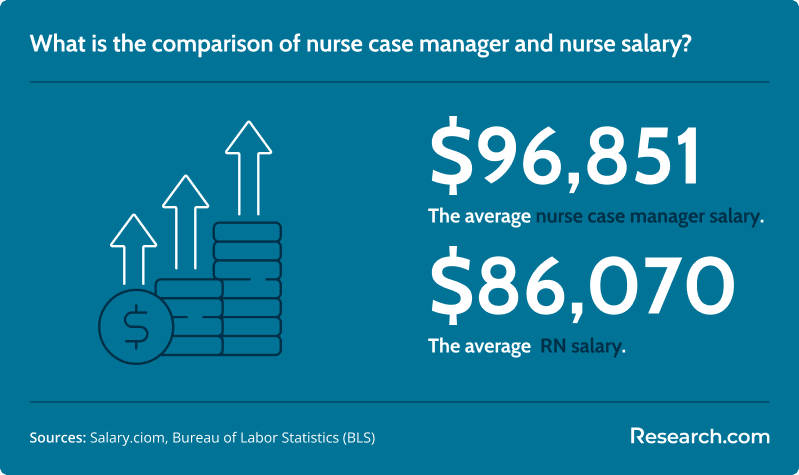
The full path commonly takes four to seven years, depending on the degree route, work experience requirements, and certification timeline. Pay varies by role, industry, location, and credential level. The average nurse case manager salary in 2023 was $96,851, while the pharmaceutical and biotechnology industry pays case managers the highest with an average salary of $66,236 annually.
Key Things You Should Know About Becoming a Case Manager
- Education is usually the starting point: Many employers expect at least a bachelor’s degree in a field tied to healthcare, behavioral health, social services, or human services.
- Credentials can improve mobility: The Certified Case Manager (CCM) and Accredited Case Manager (ACM) are widely recognized options for professionals who want to demonstrate formal case management knowledge.
- The timeline is not the same for everyone: Becoming a case manager can take anywhere from four to seven years, depending on your education, required experience, license status, and certification goals.
- Nursing is a major pathway: 86% of RN case managers account for the largest portion of the entire workforce.
- Work setting affects pay and responsibilities: Hospital, insurance, rehabilitation, government, nonprofit, and biotechnology roles can differ significantly in caseload, documentation, client needs, and salary structure.
- What does a case manager do?
- How to become a case manager
- How long does it take to become a case manager?
- Which degree path is best for case management?
- What skills do case managers need?
- How should you choose an education program for case management?
- Do advanced degrees help case managers advance?
- What challenges should future case managers expect?
- How do continuing education and networking support career growth?
- Can online education help case managers build expertise?
- What are the top certifications for case managers?
- Can Christian counseling training support case management work?
- How are digital tools and interdisciplinary training changing case management?
- Can a PsyD degree improve case management effectiveness?
- Can an accelerated psychology master’s help case managers?
- What career paths are available in case management?
- Can dual therapy licensure support a case management career?
- What is the job outlook for case managers?
- What is the average salary of case managers?
- What should you remember before choosing this career?
What does a case manager do?
A case manager helps clients identify needs, connect with services, follow care plans, and overcome barriers that prevent them from getting support. The Case Management Society of America (CMSA) describes case management as a collaborative process involving assessment, planning, facilitation, care coordination, evaluation, and advocacy to meet individual and family health needs through communication and available resources while supporting patient safety, quality care, and cost-effective outcomes.
In plain terms, a case manager is often the person who turns a complicated situation into a coordinated plan. They may help a patient understand discharge instructions, connect a family with housing assistance, coordinate benefits after an injury, arrange behavioral health services, or monitor whether a client is following a treatment or service plan.
Common case manager responsibilities
| Responsibility | What it means in practice | Why it matters |
| Client assessment | Reviewing client history, interviewing the client or family, checking records, and identifying medical, emotional, financial, social, or safety-related needs. | A strong assessment helps the case manager avoid one-size-fits-all solutions and build a plan around the client’s real situation. |
| Care or service planning | Creating a plan that outlines referrals, services, goals, timelines, responsibilities, and follow-up steps. | A written plan keeps the client, providers, and agencies focused on the same priorities. |
| Coordination | Communicating with hospitals, clinics, insurers, social service agencies, counselors, housing programs, employers, or family members. | Clients often need support from more than one organization, and poor coordination can delay care or services. |
| Advocacy | Helping clients understand rights, appeal denials, request accommodations, access benefits, or communicate with providers. | Many clients lack the knowledge, confidence, or resources to navigate systems on their own. |
| Monitoring and evaluation | Tracking progress, updating case notes, reviewing outcomes, and changing the plan when client needs shift. | Case management is not a one-time referral; it requires follow-through and adjustment. |
Where case managers work
- Hospitals, clinics, and long-term care facilities
- Health insurance companies and employee benefits departments
- Mental health and substance use treatment programs
- Child welfare, aging services, and disability service agencies
- Rehabilitation centers and workers’ compensation programs
- Nonprofits, community organizations, and government agencies
How to Become a Case Manager
The best route into case management depends on the population you want to serve. A hospital case manager, child welfare case manager, insurance case manager, and behavioral health case manager may all coordinate services, but the preferred degree, license, and experience can be different.
Step-by-step path to becoming a case manager
- Choose a relevant education path. Common majors include social work, nursing, psychology, human services, counseling, healthcare administration, and public health. Some advanced or specialized roles may prefer graduate study, including options such as a master's in behavioral psychology.
- Build direct service experience. Employers often value experience with clients, patients, families, benefits systems, crisis support, discharge planning, documentation, or community referrals. Internships, volunteer roles, entry-level social service jobs, hospital support roles, and behavioral health positions can all help.
- Meet any license requirements for your specialty. Nurse case managers generally need an RN license. Social work and counseling roles may have state-specific licensing expectations, especially when duties include clinical assessment or therapy.
- Consider professional certification. Credentials such as the CCM or ACM can signal that you understand case management standards, care coordination, ethics, and client advocacy.
- Keep learning after you are hired. Regulations, payer requirements, electronic records, telehealth practices, and community resources change. Workshops, continuing education, conferences, and employer training help case managers stay effective.
Which entry route fits your background?
| Your background | Best case management direction | What to focus on next |
| Current or future nurse | Nurse case management, hospital care coordination, utilization review, discharge planning | RN licensure, clinical experience, patient education, insurance processes, and care transition skills |
| Social work student | Social services, child welfare, aging services, housing support, community programs | Field placement, documentation, benefits navigation, crisis response, and client advocacy |
| Psychology or counseling student | Mental health case management, substance use services, behavioral health coordination | Assessment basics, trauma-informed care, referral networks, and boundaries between case management and therapy |
| Healthcare administration student | Insurance case management, population health, utilization management, healthcare operations | Health systems, compliance, data tracking, payer rules, and interdisciplinary communication |
| Career changer | Community services, nonprofit case work, patient navigation, benefits support | Relevant coursework, volunteer experience, transferable communication skills, and supervised client-facing experience |
How long does it take to become a case manager?
The shortest realistic timeline depends on your starting point. A bachelor’s degree usually takes four years, and many entry-level case management jobs are built around that level of education. Common academic backgrounds include social work, psychology, nursing, healthcare administration, and related human services fields.
Some healthcare positions require additional credentials. For example, nurse case management requires the nursing education and licensure needed to become an RN. Students who want to move into nursing more quickly may compare accelerated or fast track RN programs, but they should still verify licensure eligibility, clinical placement expectations, and state requirements before enrolling.
After education, employers may prefer one to two years of experience in healthcare, social services, counseling, rehabilitation, or community-based support. Certification may add several months to a year, depending on eligibility rules, exam preparation, and work experience requirements. Overall, becoming a case manager can take four to seven years.
Typical case manager timeline
| Stage | What happens | Decision point |
| Education | Complete a bachelor’s degree or a required professional pathway such as nursing. | Choose a major that matches the setting where you want to work. |
| Early experience | Work or intern in healthcare, social services, behavioral health, rehabilitation, or community programs. | Look for roles that include documentation, referrals, client contact, and service coordination. |
| Licensure, if required | Meet state or professional licensing rules for nursing, social work, counseling, or another regulated field. | Confirm requirements before assuming an online or out-of-state program will qualify you. |
| Certification | Apply for a credential such as CCM, ACM, C-SWCM, CRC, or RN-BC when eligible. | Choose the certification that fits your work setting, not just the one with the most name recognition. |
| Advancement | Move into senior case manager, supervisor, program manager, utilization review, or leadership roles. | Consider graduate study or specialized training if your target role requires deeper clinical or administrative expertise. |
Which degree path is best for case management?
There is no single “case manager degree” required for every position. The right program depends on the clients you want to serve, whether you need a professional license, and whether you want to work in healthcare, social services, behavioral health, disability support, or insurance.
| Degree or training area | Best fit | Potential limitation |
| Social work | Community agencies, child welfare, aging services, housing programs, social services case management | Clinical or advanced social work roles may require graduate education and state licensure. |
| Nursing | Hospital case management, care transitions, chronic disease coordination, insurance review | Requires meeting nursing education, clinical, and licensure requirements. |
| Psychology | Behavioral health programs, crisis services, substance use support, rehabilitation settings | A psychology degree alone may not qualify graduates for licensed counseling or therapy roles. |
| Healthcare administration | Insurance case management, utilization review, population health, healthcare operations | May provide less direct counseling or client intervention training than social work or nursing. |
| Human services | Entry-level nonprofit, community, and public service roles | Advancement may depend on experience, certification, or a more specialized graduate degree. |
What key skills are essential for successful case managers?
Case management is a people-centered job, but it is also a documentation-heavy, systems-focused, and deadline-driven role. Strong case managers combine empathy with structure. They know how to listen, but they also know how to follow policy, document accurately, and move a case forward.
- Clear communication: Case managers explain options to clients, summarize complex information for providers, write accurate notes, and keep multiple parties aligned.
- Critical thinking: Many cases involve incomplete information, limited resources, or competing priorities. Case managers must evaluate risks, identify barriers, and choose practical next steps.
- Organization and time management: A large caseload can quickly become unmanageable without reliable tracking systems, follow-up routines, and documentation habits.
- Empathy and emotional intelligence: Clients may be frightened, angry, grieving, overwhelmed, or distrustful. Case managers need patience, cultural awareness, and professional boundaries.
- Negotiation and advocacy: The job may involve requesting services, clarifying benefits, coordinating with agencies, or helping clients appeal decisions.
- Ethical judgment: Confidentiality, informed consent, mandated reporting, conflicts of interest, and scope of practice all affect case management decisions.
- Technology readiness: Many employers use electronic health records, case management platforms, telehealth tools, secure messaging, and data reporting systems.
How do I select the best education program for a career in case management?
Start by working backward from the job you want. A program that is useful for social service case management may not prepare you for nurse case management, and a counseling-focused program may not meet the requirements for a healthcare utilization review role. Accreditation, curriculum, field experience, and licensure alignment should matter more than marketing language.
Questions to ask before enrolling
- Is the school institutionally accredited?
- Does the program match the setting where I want to work: healthcare, social work, behavioral health, rehabilitation, or insurance?
- Will this program meet state licensing requirements if my target role requires a license?
- Are internships, practicums, clinicals, or field placements included?
- Can I transfer credits or receive credit for prior learning?
- What are the total costs beyond tuition, including fees, books, travel, technology, exams, and background checks?
- Does the school provide career advising, employer connections, resume support, or placement assistance?
- Are online courses asynchronous, scheduled live, or hybrid?
Students interested in behavior-focused client support may also compare related online options such as affordable online BCBA programs, but they should evaluate whether the curriculum aligns with their intended case management role.
How Do Advanced Degrees Influence Career Opportunities in Case Management?
An advanced degree is not required for every case manager role, but it can be useful for professionals who want to move into leadership, clinical coordination, policy, program design, supervision, or specialized behavioral health work. Graduate study may deepen knowledge in assessment, ethics, health systems, family dynamics, program evaluation, mental health, or organizational leadership.
A master’s degree can be especially relevant when the desired role requires advanced clinical knowledge or a pathway to professional licensure. For example, professionals who want broader family systems training may explore online marriage and family therapy master's programs. However, students should not assume that every graduate program automatically improves return on investment. The better question is whether the degree is required, preferred, or clearly rewarded in the jobs you want.
When an advanced degree may be worth considering
- You want to supervise case managers or manage a program.
- Your target employers prefer graduate-level training.
- You want a clinical license in social work, counseling, psychology, or therapy.
- You plan to work with high-acuity behavioral health, family systems, or complex healthcare populations.
- You want to move from direct service into policy, administration, quality improvement, or care management leadership.
What are the common challenges faced by case managers?
Case management can be meaningful, but it is not easy work. Clients may have urgent needs, limited resources, complex trauma histories, unstable housing, chronic illness, legal problems, or inconsistent access to care. Case managers also have to balance compassion with documentation, compliance, productivity expectations, and agency policies.
| Challenge | Why it is difficult | How to prepare |
| High caseloads | Too many open cases can make follow-up, documentation, and relationship-building harder. | Learn prioritization systems, use checklists, and ask about caseload expectations before accepting a job. |
| Limited resources | Clients may qualify for services that are full, underfunded, delayed, or unavailable locally. | Build a strong referral network and keep updated resource lists. |
| Emotional strain | Repeated exposure to crisis, illness, poverty, trauma, or family conflict can contribute to burnout. | Use supervision, peer consultation, boundaries, and self-care routines. |
| Complex rules | Insurance policies, state regulations, agency procedures, and confidentiality laws can affect every decision. | Stay current through continuing education and employer training. |
| Compensation differences | Pay can vary by industry, region, credential, and setting. Some helping professions face wage pressure despite demanding work. | Compare salary data by location and specialty, including related fields such as substance abuse counseling degree careers. |
How Can Continuous Education and Professional Networking Enhance a Case Manager's Expertise?
Case managers work inside systems that change frequently. Healthcare regulations, insurance practices, community resources, telehealth workflows, documentation standards, and evidence-based interventions can shift over time. Continuing education helps professionals avoid outdated practices and maintain certification when required.
Networking also matters. Professional associations, local coalitions, interdisciplinary meetings, conferences, and peer groups can help case managers discover resources, learn referral pathways, share problem-solving strategies, and find advancement opportunities. Professionals who want counseling-related training may review options such as CACREP-accredited online counseling programs, especially if their goals involve mental health or clinical practice.
How Can Online Education Enhance Case Management Expertise?
Online education can be useful for case managers who need flexibility while working full time or managing family responsibilities. It can also help professionals add targeted training in mental health, healthcare administration, counseling theory, ethics, data systems, or leadership without relocating.
However, online does not automatically mean easier, cheaper, or license-eligible. Before choosing a program, confirm accreditation, practicum requirements, state authorization, faculty support, technology expectations, and total cost. If you are comparing counseling-related options, resources on the most affordable online colleges for counseling degrees can help you evaluate cost-conscious pathways.
Online vs. campus programs for future case managers
| Format | Best for | What to watch carefully |
| Online | Working adults, rural students, caregivers, and professionals who need scheduling flexibility | Field placement support, licensure alignment, student support, and hidden fees |
| Campus | Students who prefer face-to-face learning, local networking, and structured schedules | Commute time, housing costs, course availability, and schedule rigidity |
| Hybrid | Students who want some in-person training with partial online flexibility | Required campus visits, clinical or practicum scheduling, and travel costs |
What are the top certifications for case managers?
Certification is not always mandatory, but it can help experienced professionals demonstrate knowledge, qualify for specialized roles, or compete for advancement. The right credential depends on your work setting. A hospital discharge planner, rehabilitation counselor, social work case manager, and RN case manager may not need the same certification.
Professionals comparing healthcare credentials can also review broader medical certifications that may support healthcare career growth.
| Certification | Best suited for | Key point to know |
| Certified Case Manager (CCM) | Case managers in healthcare, insurance, rehabilitation, and social service settings | Issued by the Commission for Case Manager Certification, this credential is widely recognized and requires eligible experience and an exam. |
| Accredited Case Manager (ACM) | Hospital and health system case managers | Offered by the American Case Management Association, this credential is especially relevant for acute care, discharge planning, and transitional care. |
| Certified Social Work Case Manager (C-SWCM) | Bachelor’s-level social workers doing case management | Issued by the National Association of Social Workers, this certification emphasizes ethics, advocacy, and social work case coordination. |
| Certified Rehabilitation Counselor (CRC) | Professionals working with disability, chronic illness, workplace injury, or vocational rehabilitation populations | Awarded by the Commission on Rehabilitation Counselor Certification, this credential is tied to rehabilitation counseling expertise. |
| Registered Nurse Case Manager Certification (RN-BC) | Registered nurses specializing in case management | Offered by the American Nurses Credentialing Center, this credential validates nursing-based care coordination and case management knowledge. |
Can a Christian counseling degree boost your case management expertise?
A Christian counseling background may be useful for case managers who work in faith-based organizations, pastoral care settings, family support programs, or communities where spiritual concerns are part of the client’s support system. Training in faith-informed counseling can strengthen listening skills, ethical reflection, cultural humility, grief support, and family communication.
That said, a Christian counseling degree should be evaluated carefully if your goal involves licensure or clinical practice. Make sure the curriculum, accreditation, supervised experience, and state requirements match the role you want.
How Can Digital Innovation and Interdisciplinary Training Drive Case Management Success?
Case management is becoming more technology-supported. Many employers expect professionals to use electronic health records, case tracking platforms, telehealth systems, secure communication tools, automated reminders, and data dashboards. These tools can improve follow-up and documentation, but they also require careful attention to privacy, accuracy, and client access.
Interdisciplinary training is just as important. Case managers often work with nurses, physicians, therapists, social workers, attorneys, benefits specialists, school staff, and family caregivers. Programs that combine behavioral science, technology, communication, and applied practice—such as accelerated online psychology programs—may help professionals build a wider foundation for client coordination.
Can a PsyD Degree Enhance Your Case Management Effectiveness?
A PsyD can strengthen clinical reasoning, assessment skills, psychological knowledge, and leadership capacity, but it is a major commitment and is not necessary for most case manager roles. It may make sense for professionals who want to become licensed psychologists, lead behavioral health programs, conduct advanced assessments, or work in settings where doctoral-level clinical expertise is required.
Prospective students should compare program outcomes, accreditation, supervised training requirements, and career goals before applying. Researching APA-accredited PsyD programs can help determine whether doctoral study fits your long-term case management or clinical leadership plans.
Can an Accelerated Master's Program in Psychology Enhance Your Case Management Skills?
An accelerated psychology master’s program may help case managers build stronger knowledge of human behavior, assessment, motivation, mental health conditions, and intervention planning. This can be valuable in behavioral health, rehabilitation, social services, and integrated care environments.
Speed should not be the only factor, though. A short program is only useful if it is rigorous, accredited, properly supported, and aligned with your professional goals. If you are considering a compressed graduate timeline, compare options such as a one-year master’s in psychology program while checking whether the degree supports your intended role.
What are the career paths of aspiring case managers?
Case management is not a single job title with one career ladder. It is a function used across healthcare, government, insurance, nonprofits, rehabilitation, behavioral health, and corporate benefits. Your career path will depend on your education, license, certification, client population, and preferred work environment.
| Career path | Typical work setting | Common background |
| Healthcare case manager | Hospitals, clinics, nursing homes, health systems, insurance companies | Nursing, healthcare administration, public health, or social work degree pathways |
| Social services case manager | Government agencies, nonprofits, housing programs, child welfare, aging services | Human services, social work, psychology, sociology, or online MSW programs |
| Mental health and substance abuse case manager | Behavioral health centers, addiction treatment programs, crisis teams, community clinics | Psychology, counseling, social work, behavioral health, or training related to becoming a counselor |
| Disability and rehabilitation case manager | Vocational rehabilitation agencies, disability service organizations, workers’ compensation programs | Rehabilitation counseling, occupational therapy, vocational services, social work, or psychology |
| Insurance case manager | Health insurers, disability insurers, benefits departments, managed care organizations | Nursing, healthcare administration, claims management, utilization review, or risk management |
Entry-level roles that can lead to case management
- Patient navigator
- Community support specialist
- Behavioral health technician
- Social services assistant
- Residential program coordinator
- Intake specialist
- Discharge planning assistant
- Benefits or eligibility specialist
Can Dual Licensure in Therapy Enhance Your Case Management Career?
Dual training in therapy and case management can be valuable for professionals who want to combine clinical insight with service coordination. It may help in behavioral health, family services, addiction recovery, integrated care, and private or nonprofit program leadership. However, therapy licensure is regulated and requires careful planning.
Before pursuing this route, confirm the degree, supervised hours, exams, and state rules for the license you want. You can also compare guidance on the fastest way to become a licensed counselor or therapist to understand how long the transition may take and what requirements are involved.
Common Mistakes to Avoid When Becoming a Case Manager
- Choosing a program without checking accreditation: Accreditation affects transfer credit, employer recognition, graduate study, financial aid eligibility, and licensure pathways.
- Assuming every case manager job has the same requirements: A hospital role may require nursing experience, while a community role may prioritize social services experience.
- Focusing only on tuition: Fees, books, transportation, clinical placement costs, exam fees, technology, and lost work hours can change the true cost of a program.
- Ignoring licensure rules: Online and out-of-state programs may not automatically meet your state’s requirements for nursing, social work, counseling, or therapy licensure.
- Waiting too long to get field experience: Case management is practical work. Internships, volunteer roles, and entry-level client service jobs can be just as important as coursework.
- Choosing a certification too early: Some credentials require specific experience. Review eligibility rules before paying for exam preparation.
- Assuming salary outcomes are guaranteed: Pay depends on location, employer, industry, degree level, license, certification, and experience.
What is the job outlook for case managers?
Demand for case management is tied to healthcare use, aging populations, chronic illness, behavioral health needs, social service demand, insurance complexity, and the need for coordinated care. According to the BLS, the number of medical and health services manager jobs will grow 29% from 2023 to 2033. Social and community service manager employment will also grow 8% within this timeframe.
As baby boomers enter older age groups, health and social service needs are expected to rise. That can increase demand for professionals who can coordinate care, manage transitions, connect people with community resources, and support efficient service delivery. RNs account for the largest portion of case managers, which reflects the importance of nursing-based care coordination in many healthcare environments.
Trends shaping case management work
- More coordinated care models: Employers increasingly value professionals who can connect clinical care, community resources, insurance requirements, and patient education.
- More technology in daily work: Electronic records, telehealth, secure messaging, and case management software are now common in many settings.
- Greater focus on behavioral health: Mental health, substance use, trauma, and social determinants of health frequently overlap with medical and social service needs.
- Stronger documentation expectations: Employers need accurate records for compliance, reimbursement, quality review, and continuity of care.
- Interdisciplinary teamwork: Case managers often work across professional boundaries, making collaboration skills essential.
What is the average salary of case managers?
Case manager salaries vary by source, methodology, location, industry, education, license, certification, and job setting. Glassdoor's 2024 report shows that a case manager's estimated total pay is $56,449 per year, with a median wage of $48,745 per year.
Location can make a significant difference. Zippia identifies California as the highest-paying state for case managers, with an average annual salary of $53,898. Utah is noted as the lowest-paying state, with an average salary of $35,372 per year. Industry also matters: the pharmaceutical & biotechnology industry pays case managers the highest with an average salary of $66,236 annually.
Salary should be evaluated alongside workload, caseload size, benefits, schedule, emotional demands, advancement opportunities, and license requirements. A higher-paying role may also involve more complex documentation, travel, utilization review, crisis response, or regulatory responsibility.
Here's What Case Managers Say About Their Jobs
"The most meaningful part of case management is helping people find their way through systems that can feel impossible to understand. I may be helping someone secure housing, connect with mental health care, or speak up for their rights. Seeing those supports change a person’s life is what makes the work worthwhile." – Joan
"This career keeps me learning because every case is different. I have to listen carefully, think through the problem, and work with other professionals to find a realistic solution. The relationships I build with clients and families remind me that case management is ultimately about people, not paperwork." – Ben
"I appreciate that no two days look exactly alike. Sometimes I am coordinating with medical teams; other times I am speaking with social workers or legal professionals. My role is to connect clients with the right support and keep the process moving. Watching clients make progress is what keeps me committed." – Claire
References
- BLS. (2024, August 29). Medical and Health Service Managers: Job Outlook. Retrieved January 31, 2025, from BLS.
- BLS. (2024, August 29). Social and Community Service Managers: Job Outlook. Retrieved January 31, 2025, from BLS.
- CMSA. (n.d.). What is a Case Manager? Retrieved January 31, 2025, from CMSA.
- Glassdoor. (2024, June 6). How much does a Case Manager make? Retrieved January 31, 2025, from Glassdoor.
- Zippia. (n.d.). Case Manager Demographics and Statistics in the US. Retrieved January 31, 2025, from Zippia.
Key Insights
- Most case managers enter the field through a bachelor’s degree in social work, nursing, psychology, healthcare administration, human services, or a related area.
- The best education path depends on your target setting. Nurse case management, social services, behavioral health, rehabilitation, and insurance roles can have different requirements.
- Becoming a case manager commonly takes four to seven years when education, experience, licensure, and certification are considered together.
- Certifications such as CCM and ACM can strengthen credibility, but the right credential depends on your work environment and eligibility.
- Salary varies widely by location, industry, role, and credential. Glassdoor's 2024 report lists estimated total pay of $56,449 per year and a median wage of $48,745 per year for case managers.
- Do not choose a program based only on convenience or tuition. Check accreditation, field experience, licensure alignment, total cost, and career support before enrolling.
- Case management is best suited for people who can combine empathy with organization, documentation, advocacy, problem-solving, and ethical decision-making.
Other Things You Should Know About Becoming a Case Manager
Most case managers do not need a state license to work, but some roles in nursing, social work, or counseling require a valid professional license. Employers may also expect certification such as CCM from the Commission for Case Manager Certification, which requires an approved degree, relevant experience, and a passing exam.
To become a case manager in 2027, you typically need a bachelor's degree in social work, nursing, or a related field. Some positions may require a master's degree or relevant certifications. Specific educational prerequisites vary by employer and state regulations.


