2027 Best Accredited Online Computer Science Degree Programs: Compare Tuition, Admissions, and Career Outcomes

Co-Founder and Chief Data Scientist
Choosing an online computer science degree is a high-stakes cost, time, and career decision. The field remains attractive because the U.S. Bureau of Labor Statistics reported a $105,990 median annual wage for computer and information technology occupations in May 2024, far above the national median for all occupations.
This guide is for working adults, transfer students, first-time college students, and career changers comparing accredited online programs. You will learn how to weigh tuition, admissions, accreditation, flexibility, support, and outcomes so you can choose a program that fits your budget and goals.
Key Things You Should Know
- The best value is usually not the cheapest program; it is the accredited option that minimizes total credits, offers strong student support, and aligns with software, data, cybersecurity, or graduate-school goals.
- Computer and IT occupations had a $105,990 median annual wage in May 2024, while software developer roles are projected to grow 15% from 2024 to 2034, making outcomes data especially important when comparing programs.
- Federal undergraduate Direct Loan limits range from $5,500 to $12,500 per year depending on dependency status and class level, so transfer credit, scholarships, employer aid, and tuition structure can materially change affordability.
Which Accredited Online Computer Science Degree Programs Offer the Best Overall Value?
The accredited online computer science programs that offer the best overall value are typically those with recognized institutional accreditation, transparent tuition, strong transfer-credit policies, rigorous computing coursework, and career services that support internships, projects, and technical interview preparation. For most students, "best" should mean the strongest fit for a specific goal rather than the highest brand name on a ranking list.
A useful value comparison starts by separating program strength from personal fit. A highly selective or nationally recognized program may be worth the added cost for students seeking research access, competitive internships, or graduate school preparation, while a lower-cost, transfer-friendly program may be the better return for working adults who already have credits or professional experience.
The table below summarizes common value profiles among accredited online computer science options. Use it as a decision framework, then verify each school's current tuition, curriculum, transfer policy, accreditation status, and online student outcomes before applying.
| Program value profile | Best fit | Why it can offer strong value | Watch for |
| Public university online computer science degree | Students who want broad recognition and a traditional academic structure | Often combines regional recognition, faculty-led coursework, and access to university career resources | Out-of-state tuition, limited course availability, or residency rules |
| Transfer-focused online bachelor's completion program | Community college transfers and adults with prior credits | Can lower total cost by accepting general education and lower-division credits | Upper-division major prerequisites that may extend time to graduation |
| Competency-based online computer science program | Self-directed learners with prior coding, IT, or math experience | Flat-term tuition can reward faster progress when students can complete courses quickly | Less structure, fewer live class meetings, and variable fit for beginners |
| Private nonprofit online program | Students who prioritize advising, frequent start dates, or simplified scheduling | May offer generous transfer policies, dedicated online advising, and predictable course sequencing | Higher sticker tuition if institutional grants or employer aid are unavailable |
| Specialized computing pathway | Students targeting AI, cybersecurity, data science, or software engineering | Can align electives and projects with a specific labor-market goal | May be narrower than a general computer science curriculum |
Students comparing computer science with newer technology-focused pathways may also want to review an AI degree online, especially if their goal is machine learning, automation, or data-driven product development rather than broad software engineering preparation.
Common mistake to avoid: choosing solely by tuition per credit. A program charging less per credit can cost more overall if it accepts fewer transfer credits, requires extra prerequisites, or has limited course availability that delays graduation.
What Accreditation Should Students Look for in an Online Computer Science Degree Program?
Accreditation is the baseline quality check for any online computer science degree. It affects federal financial aid eligibility, transfer credit acceptance, graduate school recognition, and employer confidence. Students should look first for institutional accreditation, then determine whether programmatic accreditation adds value for their goals.
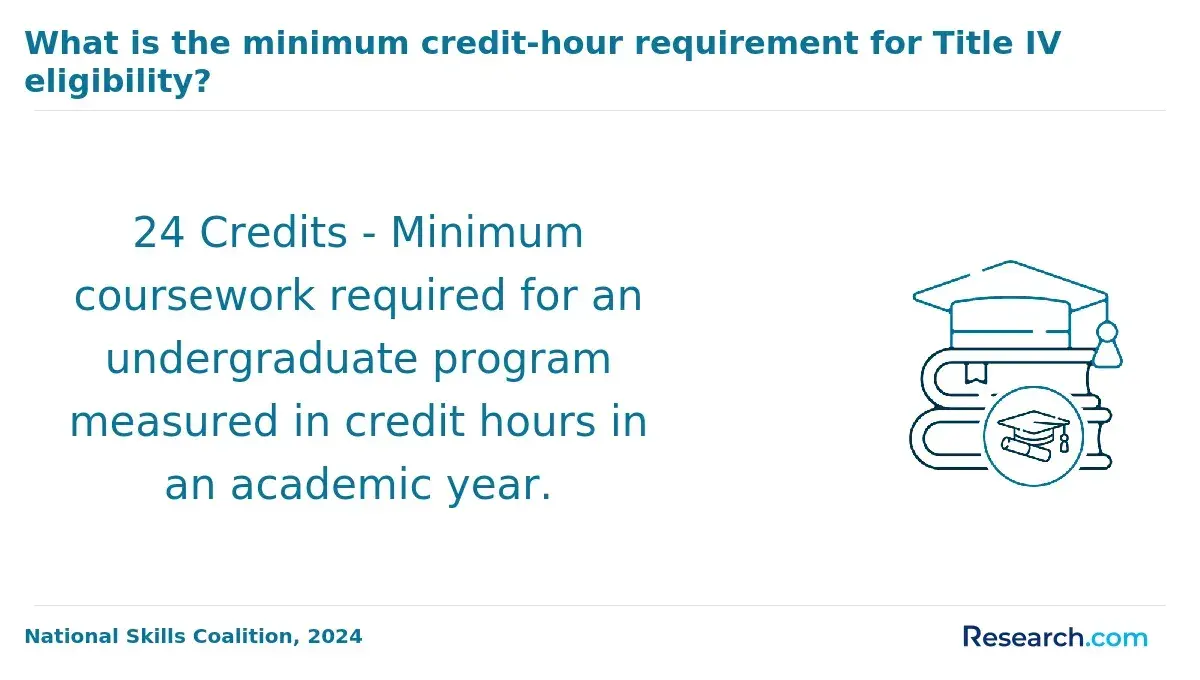
Institutional accreditation applies to the college or university as a whole. In the U.S., this is the key accreditation category students should verify before enrolling because it is tied to Title IV federal financial aid participation and general academic legitimacy.
Programmatic accreditation applies to a specific academic program. For computer science, the most recognized specialized accreditor is ABET's Computing Accreditation Commission. ABET accreditation is not required for every software or technology job, but it can matter for students who want a curriculum independently reviewed against computing education standards, plan to apply to certain graduate programs, or want a stronger quality signal.
Before applying, students should verify accreditation directly rather than relying on marketing copy. The safest process is straightforward:
- Confirm the institution appears in the U.S. Department of Education or Council for Higher Education Accreditation database.
- Check whether the specific online computer science degree, not just the university, has ABET or another specialized recognition if that matters to your goal.
- Ask whether the online program follows the same curriculum and faculty standards as the campus program.
- Confirm that credits earned online appear on the transcript the same way as credits earned on campus, if transcript wording matters to you.
- Save written confirmation from admissions or the registrar before enrolling.
A red flag is any school that emphasizes vague phrases such as "internationally approved," "career certified," or "licensed curriculum" without clearly naming a recognized accrediting agency. Those phrases may sound official, but they are not substitutes for recognized institutional accreditation.
How Do Tuition Costs Compare Across Accredited Online Computer Science Degree Programs?
Tuition for accredited online computer science programs varies widely because schools use different pricing models: per-credit tuition, flat-rate terms, in-state and out-of-state rates, online program fees, technology fees, and textbook or software costs. The most important number is not the posted tuition rate; it is the estimated total cost after transfer credits, aid, fees, and time to completion.
Federal data helps frame the cost environment. The National Center for Education Statistics reported that average undergraduate tuition and fees at public four-year institutions were far lower for in-state students than at private nonprofit four-year institutions in recent national data, which is why residency status and school type can heavily influence the starting price. Online programs may reduce housing and commuting costs, but they do not automatically reduce tuition.
The table below shows how common tuition models affect what students actually pay. The figures should be treated as comparison categories rather than quotes; always confirm current tuition and mandatory fees with each school.
| Cost factor | How it affects online computer science students | Best decision rule |
| Per-credit tuition | Multiplies across major, general education, elective, and prerequisite credits | Compare total required credits after transfer, not only the per-credit rate |
| Flat-term tuition | Charges one amount for a set term, often allowing faster students to complete more courses | Best for disciplined students who can sustain a heavy pace |
| Transfer credits | Can reduce both cost and time if accepted toward degree requirements | Request an official transfer evaluation before committing |
| Online and technology fees | May add recurring costs beyond tuition | Ask for a full cost-of-attendance estimate, not a tuition-only quote |
| Software, hardware, and exam costs | Computer science courses may require a capable laptop, cloud tools, proctoring, or lab platforms | Ask which costs are included and which are student-paid |
Students choosing between a lower-cost public program and a higher-cost nationally recognized program should ask whether the added price buys something measurable: stronger internship pipelines, deeper algorithms and systems coursework, ABET accreditation, research access, employer partnerships, or better completion support. If the answer is mostly brand recognition without services you will actually use, the lower-cost accredited option may be the stronger investment.
How Competitive Is Admission to Accredited Online Computer Science Degree Programs?
Admission to accredited online computer science programs ranges from open or transfer-friendly to selective and prerequisite-heavy. Competitiveness depends on the institution, degree level, math expectations, prior college performance, and whether the program is designed for first-time students, degree completers, or students seeking a second bachelor's degree.
Students should not assume that flexible admission means weak academics. Many online programs lower barriers to entry but still require demanding coursework in programming, discrete mathematics, data structures, computer architecture, operating systems, and algorithms once students enroll.
The table below outlines common admissions patterns so applicants can estimate fit before spending time and money on applications.
| Admissions model | Typical applicant profile | Common requirements | Best fit |
| First-year online bachelor's admission | Recent high school graduates or adults with little college credit | High school transcript, math readiness, application essay or test scores depending on policy | Students who want a full four-year pathway online |
| Transfer admission | Students with community college or prior university credits | Minimum college GPA, completed general education, prerequisite math or programming courses | Students seeking lower total cost and faster completion |
| Second bachelor's or post-baccalaureate admission | Degree holders changing careers into computing | Prior bachelor's degree, transcripts, possible prerequisite math or programming | Career changers who do not need another full general education sequence |
| Competency-based admission | Self-directed adults with work or technical experience | Prior college, work history, readiness assessment, or orientation | Students who can learn independently and move quickly |
Before applying, students should compare admissions requirements against their academic record and timeline. The most practical steps are:
- Check whether calculus, precalculus, statistics, or discrete math is required before major admission.
- Ask whether introductory programming can be taken after admission or must be completed first.
- Request a preliminary transfer review if you have previous college credit.
- Compare application deadlines, start dates, and course availability for the first two terms.
- Ask whether admission to the university also means admission to the computer science major.
A common mistake is applying only to highly selective programs because they appear prestigious. A balanced application list should include at least one program that is academically credible, accredited, affordable, and realistic based on your transcript and prerequisites.
Which Learning Formats Offer the Greatest Flexibility in Online Computer Science Degree Programs?
The most flexible online computer science programs are not always the easiest; they are the ones whose schedule, pacing, and assessment style match how you learn. Because computer science courses build sequentially, flexibility matters most when it helps students take the right courses in the right order without delaying graduation.
The table below compares common online learning formats and when each one works best.
| Online format | How it works | Best for | Potential drawback |
| Asynchronous courses | Students complete lectures, assignments, and discussions within weekly deadlines | Working adults and students across time zones | Requires strong self-management and consistent study habits |
| Synchronous online courses | Students attend live virtual sessions at scheduled times | Learners who want real-time faculty interaction | Less flexible for shift workers or caregivers |
| Hybrid or low-residency courses | Most coursework is online with occasional campus or live requirements | Students near campus or those who value in-person labs and networking | Travel or scheduling may reduce accessibility |
| Accelerated terms | Courses run in shorter sessions, often five to eight weeks | Motivated students who can focus on fewer courses at a time | Programming projects can feel compressed |
| Competency-based format | Students progress after demonstrating mastery | Experienced learners who can move quickly through familiar material | May provide less live instruction and peer interaction |
AI, automation, and cloud computing are also changing what students expect from online programs. A strong format should make room for coding practice, project feedback, version control, collaborative tools, and ethical use of AI-assisted development, not just recorded lectures and quizzes.
Students should choose fully online asynchronous programs when schedule control is the top priority. They should consider synchronous or hybrid formats when they need more structure, live help, or networking. Paying more for flexibility only makes sense if it prevents stop-outs, reduces commuting, or allows continued full-time employment.
What Student Support Services Improve Success in Online Computer Science Degree Programs?
Student support services can make the difference between enrolling and graduating, especially in computer science, where course sequences are cumulative and technical frustration can escalate quickly. Strong support is particularly important for online students who cannot simply walk into a campus lab or faculty office.
The most useful support services are those that directly reduce academic, technical, and career friction. Students should look for evidence that services are available to online learners during realistic hours, not only during daytime campus schedules.
- Academic advising: Helps students plan prerequisites, avoid course sequencing mistakes, and stay on track for graduation.
- Computer science tutoring: Supports difficult topics such as data structures, algorithms, discrete math, and systems programming.
- Technical support: Helps with learning platforms, coding environments, virtual labs, proctoring tools, and cloud access.
- Career services: Provides resume reviews, internship guidance, mock technical interviews, portfolio support, and employer connections.
- Faculty access: Gives students opportunities to ask deeper questions through office hours, discussion boards, or live sessions.
- Online community: Helps students form study groups, collaborate on projects, and stay motivated through difficult courses.
When comparing programs, ask how many advisors support online computing students, how quickly faculty respond to technical questions, whether tutoring is subject-specific, and whether career services include software engineering interview preparation. General student support is helpful, but computer science students need specialized academic and career support.
A red flag is a program that advertises "career services" but cannot describe concrete support for GitHub portfolios, coding assessments, internships, or technical interviews. For computing careers, generic resume advice is rarely enough.
Which Financial Aid Options Are Available for Accredited Online Computer Science Degree Students?
Accredited online computer science students may qualify for many of the same financial aid options as campus students, including federal grants, federal loans, state aid, institutional scholarships, employer tuition assistance, military education benefits, and private scholarships. Eligibility depends on accreditation, enrollment intensity, degree status, satisfactory academic progress, and individual financial circumstances.
The Federal Pell Grant maximum has remained $7,395 for recent award years, which makes grants meaningful but usually insufficient to cover the full cost of a bachelor's degree. That means students should compare financial aid packages, transfer credit, employer benefits, and total borrowing together rather than treating aid as an afterthought.
The following options are worth reviewing before committing to a program:
- Federal Pell Grants: Need-based aid that does not have to be repaid if eligibility rules are met.
- Federal Direct Loans: Student loans with annual undergraduate borrowing limits based on class level and dependency status.
- State grants: Aid that may require state residency, enrollment at an eligible institution, or minimum credit hours.
- Institutional scholarships: School-funded awards based on merit, need, transfer status, military status, or major.
- Employer tuition assistance: Workplace benefits that may reimburse approved courses or degree programs.
- Military and veteran benefits: Programs such as GI Bill benefits or tuition assistance, depending on service history and eligibility.
- Workforce and industry scholarships: Awards from technology employers, professional associations, or local workforce boards.
Students should compare aid offers by net cost, not award size. A school offering a larger scholarship may still cost more if its tuition and fees are higher. If you expect to pursue tech leadership later, undergraduate borrowing should also be weighed against possible graduate study, including business pathways such as AACSB accredited online MBA programs.
Common mistake to avoid: borrowing the maximum available without calculating expected monthly payments. Computer science can lead to strong opportunities, but aid decisions should still be based on conservative salary expectations, completion likelihood, and a realistic timeline to employment.
Which Career Outcomes Are Associated With Accredited Online Computer Science Degree Programs?
Accredited online computer science programs can prepare students for software development, systems analysis, data engineering, cybersecurity, quality assurance, cloud computing, database administration, and graduate study. Outcomes vary by student experience, internship access, portfolio quality, local labor market, and the strength of the program's career support.
The strongest salary signal for many computer science students is software development. The U.S. Bureau of Labor Statistics reported a $133,080 median annual wage for software developers in May 2024, and projected 15% growth for software developer employment from 2024 to 2034. This does not mean every graduate will earn that amount, but it shows why employers continue to value computing skills when paired with demonstrated project ability.
The table below connects common career goals to the program features students should prioritize.
| Career goal | Relevant responsibilities | Program features to prioritize |
| Software developer | Design, build, test, and maintain applications or systems | Data structures, algorithms, software engineering projects, Git, internships |
| Data analyst or data engineer | Work with databases, pipelines, analytics tools, and data-driven decisions | Databases, statistics, Python, SQL, cloud platforms, applied projects |
| Cybersecurity analyst | Monitor systems, investigate threats, and support secure infrastructure | Networking, operating systems, secure coding, labs, security electives |
| Systems analyst | Connect business needs with technology solutions | Systems design, databases, communication, project management, internships |
| Graduate school applicant | Prepare for advanced study in CS, AI, data science, or related fields | Calculus, discrete math, theory, algorithms, research or faculty-led projects |
Students focused on return on investment should compare programs by more than posted employment claims. Ask for recent graduation rates, internship participation, employer partners, career placement methodology, and examples of student projects. If a school reports career outcomes, confirm whether the data applies specifically to online computer science students or to all graduates across multiple programs.
Computer science is also relevant to broader earnings-focused planning. Students evaluating long-term payoff can compare computing careers with other highest paying jobs to understand how degree choice, technical specialization, and graduate education may influence options over time.
How Do Online and Campus-Based Computer Science Degree Programs Compare?
Online and campus-based computer science programs can lead to similar academic outcomes when they share accreditation, curriculum quality, faculty expectations, and access to career support. The best format depends on whether a student values schedule flexibility, campus networking, in-person labs, or a traditional residential experience.
The table below compares the practical differences that usually matter most when choosing between online and campus study.
| Comparison point | Online computer science degree | Campus-based computer science degree |
| Schedule | Often more flexible, especially with asynchronous courses | More fixed class times and campus commitments |
| Cost | May reduce relocation, housing, and commuting costs | May include higher living costs but can offer campus employment and facilities |
| Networking | Depends on virtual events, group projects, alumni access, and internships | Often easier to access clubs, hackathons, faculty, and local recruiters |
| Learning style | Best for self-directed students who can manage projects independently | Best for students who want routine, face-to-face support, and campus community |
| Career preparation | Strong when programs include portfolio projects, career coaching, and internship support | Strong when students use campus recruiting, labs, and faculty networks |
Online study is often the better fit for working adults, caregivers, military students, and students who cannot relocate. Campus study may be better for first-time students who want a traditional college environment, extensive peer interaction, or easier access to research labs and student organizations.
Students comparing online learning across majors may notice similar trade-offs in fields beyond computing, such as an online degree psychology program: flexibility is valuable only when the program also provides appropriate advising, experiential preparation, and credible outcomes.
How Should Students Choose the Best Accredited Online Computer Science Degree Program?
The best accredited online computer science degree program is the one that fits your career target, learning style, budget, transfer history, and risk tolerance. Rankings can help you discover programs, but they should not replace a structured comparison based on accreditation, total cost, curriculum, flexibility, support, and outcomes.
A practical selection process helps prevent the most common mistakes: overpaying for brand name alone, choosing the cheapest program without checking support, ignoring transfer-credit limits, or enrolling in a format that does not match your schedule.
- Define your goal first: software engineering, data, cybersecurity, graduate school, IT advancement, or career change.
- Verify institutional accreditation and, if relevant, programmatic accreditation for the exact online computer science degree.
- Request a transfer evaluation before comparing total cost.
- Map the curriculum against your target role, paying close attention to math, algorithms, systems, databases, and project requirements.
- Compare learning formats based on your weekly schedule and need for live instruction.
- Ask for online-specific student support details, including tutoring, advising, and career services.
- Review financial aid offers by net price, loan amount, and time to graduation.
- Ask for career outcome data and how the school collects it.
- Speak with current students or alumni if possible.
- Choose the program with the strongest combination of affordability, completion likelihood, and career alignment.
Students should avoid treating any single ranking as a final answer. The same principle applies across professional and online degree searches, including field-specific comparisons such as MSW best programs: the best choice is the one whose accreditation, curriculum, cost, and support match the student's actual goal.
If two accredited programs appear similar, prioritize the one that gives you clearer answers in writing. Transparent tuition, transfer policies, course sequencing, support availability, and outcomes data are signs that a school understands the needs of online students.
Other Things You Should Know About Computer Science
No, many bachelor's programs start with introductory programming. However, students with no coding background should choose a program with strong tutoring, beginner-friendly course sequencing, and enough time for practice.
Requirements vary by school, but most students need a reliable laptop that can run programming tools, video conferencing, virtual labs, and development environments. Ask the program for current hardware and operating system requirements before enrolling.
A bootcamp can help build job-specific coding skills quickly, but it usually does not replace the broader theory, math, systems, and credential value of an accredited degree. Some students use both: a degree for long-term mobility and a bootcamp-style project portfolio for practical skills.
Yes. A portfolio with well-documented projects, clean code, and evidence of problem-solving can help employers evaluate practical ability. Students should save class projects, contribute to collaborative work, and use version control throughout the program.
References
- The Best Computer Science Colleges and How to Get Accepted — Shemmassian Academic Consulting https://www.shemmassianconsulting.com/blog/best-computer-science-schools
- Best Computer Science Institutions in the US, Ranked by Graduate Earnings https://clema.ai/programs/computer-science
- Top Careers in Computer Science | Careers, Salaries, and Resources https://www.computerscience.org/careers/
- Top 10 Online Bachelor in Computer Science Degrees - GradLime https://gradlime.com/online-bs-computer-science-degrees/
- How much does MS Computer Science cost in USA? https://mentr-me.com/question/how-much-does-ms-computer-science-cost-in-usa
- Accreditation as a Strategic Driver of Alignment Across Higher Education and Industry https://acbspjournal.org/2026/05/22/accreditation-as-a-strategic-driver-of-alignment-across-higher-education-and-industry/
- Earn an Online Computer Science Degree | OEDb.org https://www.oedb.org/rankings/online-computer-science-programs/
- Polish Graduate tracking system - articles https://ela.nauka.gov.pl/en/labor-market/are_all_computer_scientists_equally_successful