2027 Cheapest Accredited Online Computer Science Degree Programs That Accept FAFSA

Co-Founder and Chief Data Scientist
Choosing an online computer science degree is really a cost-versus-opportunity decision: the right program should be accredited, FAFSA-eligible, affordable after aid, and strong enough to support software, data, cybersecurity, or AI-related goals. The stakes are high because the U. S. Bureau of Labor Statistics reported a $105,990 median annual wage for computer and IT occupations in May 2024, far above the national median for all jobs. This guide helps cost-conscious students compare low-tuition programs, understand federal aid, avoid common mistakes, and estimate whether a cheaper online CS degree is a smart investment.
Key Things You Should Know
- The cheapest FAFSA-eligible online computer science degrees are usually public online programs with resident rates, competency-based programs such as WGU, or transfer-friendly nonprofit universities; published tuition can range from about $129 per credit for some in-state online students to about $400 per credit before aid.
- FAFSA participation does not mean college will be free: the maximum Federal Pell Grant for the 2025-26 award year is $7,395, while federal undergraduate loan limits commonly range from $5,500 to $7,500 per year depending on dependency status and year in school.
- Career ROI depends on total net cost, borrowing, completion speed, and job fit; BLS projects software developer employment to grow 17% from 2023 to 2033, but students still need portfolio projects, internships, and marketable technical skills.
Which Are the Cheapest Accredited Online Computer Science Degree Programs That Accept FAFSA?
The table below highlights affordable online computer science bachelor's options that are commonly considered by cost-conscious U.S. students. Tuition can change by term, residency, and course load, so use these figures as a comparison starting point and confirm the current cost with each school before applying.
| School and online CS-related degree | Approximate published online tuition before aid | Accreditation status | FAFSA participation | Best fit |
| University of Florida Online, B.A. in Computer Science | About $129 per credit for Florida residents; higher for nonresidents | Regionally accredited | Yes | Florida residents seeking one of the lowest public online tuition rates |
| Fort Hays State University, B.S. in Computer Science | About $257 per credit for online undergraduates | Regionally accredited | Yes | Students who want a low flat online rate from a public university |
| Western Governors University, B.S. in Computer Science | About $4,000 per six-month term | Regionally accredited | Yes | Motivated students who can accelerate through competency-based coursework |
| Southern New Hampshire University, B.S. in Computer Science | About $330 per credit | Regionally accredited | Yes | Students who need frequent start dates and broad online support |
| Dakota State University, B.S. in Computer Science | Generally in the mid-$300s per credit for online undergraduates | Regionally accredited | Yes | Students interested in computer science with cybersecurity and technology depth |
| Colorado State University Global, B.S. in Computer Science | About $375 per credit | Regionally accredited | Yes | Adult learners seeking a fully online public-university option |
| Franklin University, B.S. in Computer Science | About $398 per credit | Regionally accredited | Yes | Transfer students and working adults who need flexible scheduling |
For many students, the lowest total cost will come from combining community college credits, a FAFSA-eligible online bachelor's program, and institutional scholarships. A higher posted tuition can still be cheaper in practice if the school accepts more transfer credits, offers stronger grants, or lets you finish faster.
How Does FAFSA Eligibility Work for Online Computer Science Degree Programs?
- Confirm that the institution participates in federal student aid by checking the school's financial aid office and federal school code.
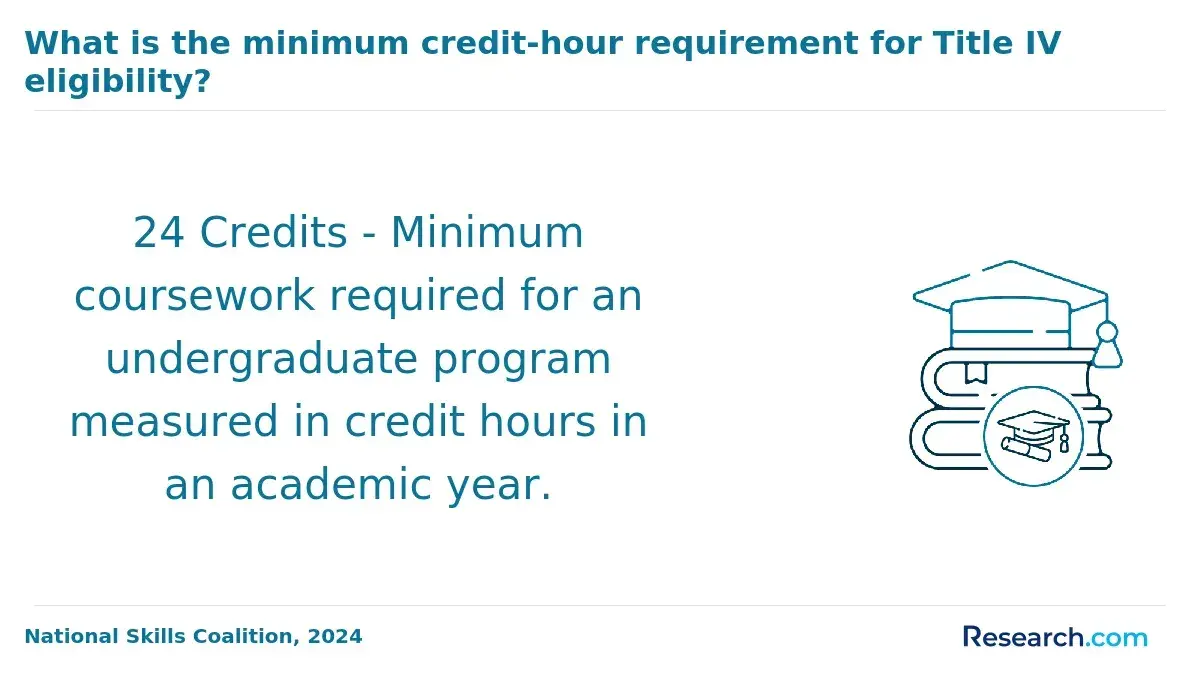
- Ask whether the specific online computer science degree is eligible for Title IV aid, especially if it is competency-based, self-paced, certificate-only, or delivered through a continuing education unit.
- Check whether you must enroll at least half time to receive federal loans, because part-time enrollment can change aid amounts and disbursement timing.
- Ask how satisfactory academic progress is measured, since failing to meet GPA, completion-rate, or pace requirements can interrupt aid.
- Request a written cost-of-attendance estimate that includes tuition, fees, books, technology costs, and living expenses used for aid packaging.
Students should also understand that FAFSA is an application, not a guarantee of free money. Eligibility depends on financial need, dependency status, enrollment intensity, citizenship or eligible noncitizen status, prior loan usage, and school-level packaging rules.
How Much Does an Online Computer Science Degree Cost After Financial Aid?
The maximum Federal Pell Grant for the 2025-26 award year is $7,395, which can make a major difference at a low-cost public online program but may cover a smaller share of tuition at a higher-priced private nonprofit institution. Students comparing CS with other online majors should use the same net-price approach they would use for an online degree psychology program, because the cheapest sticker price is not always the cheapest path to graduation.
The table below shows how aid can change the effective cost of a hypothetical 120-credit online computer science bachelor's degree. These are examples for comparison, not promises of what any student will receive.
| Cost scenario | Published tuition example | Potential aid or savings | Estimated student-paid tuition before loans | What it means |
| Low public in-state online rate | $15,480 total tuition at $129 per credit | $7,395 Pell Grant for one award year | $8,085 for that year's covered costs, before other aid | Grants can cover a large share when tuition is very low |
| Flat low online rate | $30,840 total tuition at $257 per credit | 60 transfer credits | About $15,420 before grants and scholarships | Transfer credit can matter as much as grant aid |
| Competency-based model | About $4,000 per six-month term | Faster completion in fewer terms | Depends on number of terms completed | Motivated students may reduce cost by accelerating |
| Mid-priced online nonprofit program | $39,600 total tuition at $330 per credit | Institutional scholarship plus transfer credits | Varies widely by package | Support services may justify cost if they improve completion |
Do not compare programs only by tuition per credit. Add required fees, software or lab costs, proctoring charges, books, graduation fees, repeated courses, and the cost of taking longer than planned.
Which Affordable Online Computer Science Degree Programs Offer the Best Value?
The best value program is the one that minimizes unnecessary cost while still helping you build credible technical skills. In computer science, value often comes from a strong programming sequence, algorithms, databases, operating systems, software engineering, discrete math, and electives aligned with high-demand areas such as cybersecurity, data systems, cloud computing, or AI.
Students interested in machine learning or automation may also compare a general CS degree with an AI degree online, but the best choice depends on whether they want broad CS foundations or a more specialized curriculum. A broad CS degree can be more flexible, while an AI-focused program may be useful for students already committed to data, machine learning, or applied automation roles.
Use the following value filters after you narrow your list to accredited FAFSA-eligible schools:
- Choose the lowest net price, not the lowest published tuition, after calculating grants, scholarships, transfer credits, and required fees.
- Look for required courses that match employer expectations, including Python or Java, data structures, algorithms, databases, software engineering, and systems concepts.
- Prioritize programs with portfolio-based projects, capstones, internship support, GitHub-ready assignments, or industry-aligned electives.
- Check whether the online format is asynchronous, synchronous, accelerated, or competency-based, because the wrong format can increase dropout risk and cost.
- Compare student support, tutoring, career services, and academic advising, especially if you are returning to math-heavy coursework after several years away from school.
A slightly more expensive program may be worth it if it accepts more credits, offers stronger advising, provides a better project sequence, or improves your chance of finishing. The cheapest program is not a good value if poor fit causes you to stop out, retake courses, or borrow without completing the degree.
Are the Cheapest Online Computer Science Degree Programs Properly Accredited?
The safest low-cost online computer science degrees are offered by institutions accredited by agencies recognized by the U.S. Department of Education or the Council for Higher Education Accreditation. Institutional accreditation is the baseline for federal student aid participation, transfer credit acceptance, graduate school consideration, and employer recognition.
Programmatic accreditation is less common in computer science than in fields such as nursing, engineering, or business. Some CS programs may have ABET accreditation, which can be valuable for certain technical employers or graduate pathways, but many legitimate online CS degrees are institutionally accredited without ABET programmatic accreditation.
Watch for these accreditation red flags before enrolling:
- The school says it is "licensed," "approved," or "internationally accredited" but does not list a recognized U.S. institutional accreditor.
- The program advertises FAFSA eligibility, but the financial aid office cannot confirm that the specific online degree qualifies for Title IV aid.
- The institution has unusually aggressive admissions pressure, vague graduation requirements, or unclear tuition and fee disclosures.
- The school will not provide a written transfer credit evaluation before or soon after admission.
- The degree title sounds like computer science, but the curriculum lacks core CS courses such as programming, data structures, algorithms, databases, and systems.
Accreditation is not a guarantee of job placement, but it is a minimum quality and eligibility checkpoint. If a program is not properly accredited, its low price may not translate into graduate school access, employer acceptance, or federal aid eligibility.
What FAFSA Grants and Federal Aid Can Pay for an Online Computer Science Degree?
FAFSA can connect eligible online computer science students to federal grants, federal student loans, and sometimes work-study. The exact package depends on financial need, dependency status, enrollment level, cost of attendance, prior borrowing, and the school's aid policies.
These are the main federal aid categories students should understand before comparing online CS programs:
- Federal Pell Grant: Need-based grant aid that does not usually need to be repaid if the student remains eligible and completes the enrollment period.
- Federal Supplemental Educational Opportunity Grant: Campus-based grant aid for students with exceptional financial need, available only at participating schools with limited funds.
- Direct Subsidized Loan: Need-based federal loan for eligible undergraduates where the government pays interest during certain in-school and deferment periods.
- Direct Unsubsidized Loan: Federal loan not based on financial need, with interest accruing while the student is in school.
- Federal Work-Study: Part-time work funding available at some schools, though online students should ask whether remote or local positions are realistic.
- Parent PLUS Loan: Federal loan option for parents of dependent undergraduates, subject to credit requirements and repayment obligations.
The biggest mistake is assuming grants will cover the full cost. At a low-tuition online program, Pell Grant funding can go far; at a higher-cost program, students may still need scholarships, employer assistance, savings, or loans.
How Do Transfer Credits Lower the Cost of an Online Computer Science Degree?
Transfer credits can be one of the strongest cost reducers for an online computer science degree. If a bachelor's program requires 120 credits and accepts 60 credits from a community college or prior university, the student may cut the remaining tuition roughly in half before grants and scholarships are even applied.
Transfer policies are especially important in computer science because general education courses often transfer more easily than upper-division technical courses. Programming, calculus, discrete math, data structures, and systems courses may require syllabus review to determine equivalency.
Ask each school these transfer questions before you commit:
- What is the maximum number of transfer credits accepted toward the online computer science degree?
- How many credits must be completed at the degree-granting institution?
- Will community college programming, calculus, statistics, or discrete math courses satisfy major requirements or only elective credits?
- Does the school award credit for AP, CLEP, military training, professional certifications, or prior learning assessment?
- Can you receive an official or near-official transfer evaluation before paying a deposit?
- Will transferred technical credits expire if they were completed several years ago?
A higher tuition program that accepts 75 transfer credits may cost less than a lower tuition program that accepts only 30. For adult learners, transfer policy can be as important as FAFSA eligibility.
Which Students Benefit Most From a Low-Cost Online Computer Science Degree With FAFSA?
Low-cost FAFSA-eligible online computer science programs are a strong fit for students who need flexibility, want to limit borrowing, and can handle math-heavy technical coursework without daily in-person structure. They are especially useful for working adults, community college transfers, parents, military-affiliated learners, and students in states where public online tuition is significantly lower than private alternatives.
They may not be the best fit for everyone. Students who dislike programming, need extensive in-person tutoring, or are choosing CS only because of salary headlines should compare adjacent fields before enrolling; for example, someone more interested in counseling, public service, or human services may find that MSW best programs align better with their long-term goals, even though the education path is different.
Students most likely to benefit usually share several traits:
- They have completed or can complete lower-cost general education credits before transferring.
- They are comfortable learning online and can schedule regular programming practice each week.
- They compare net price across multiple schools instead of relying on one advertised tuition figure.
- They plan to build a portfolio, complete projects, and pursue internships or applied experience while enrolled.
- They understand that FAFSA can reduce cost but may still require careful borrowing decisions.
Students should avoid choosing the cheapest CS degree if it lacks the courses, support, or credibility needed for their target role. Affordability matters most when it supports completion and employability, not when it simply lowers the first bill.
How Does the Cost of an Online Computer Science Degree Affect Career ROI?
Career ROI is the relationship between what you spend and the career opportunities the degree helps you pursue. For computer science students, cost matters because lower borrowing can make entry-level job searches less financially stressful and gives graduates more flexibility to pursue internships, junior developer roles, graduate school, or relocation.
BLS reported a May 2024 median annual wage of $133,080 for software developers, but that figure reflects workers across experience levels, industries, and regions, not a guaranteed outcome for new graduates. Students comparing CS with other strong-earning bachelor's options can review highest paying jobs to understand how degree choice, skills, and labor-market demand interact.
To estimate ROI realistically, compare total cost with likely early-career positioning rather than only median national wages. A practical ROI review should include these factors:
- Total tuition and fees after transfer credits, grants, scholarships, and employer assistance.
- Total borrowing at graduation, including federal and private loans if used.
- Time to completion, because an extra year of enrollment can add tuition and delay full-time earnings.
- Strength of the curriculum in programming, algorithms, systems, databases, and software engineering.
- Evidence of career preparation, including projects, internships, career coaching, and alumni outcomes where available.
- Local and remote job market fit for roles such as software developer, QA analyst, data analyst, systems analyst, cloud support specialist, or cybersecurity analyst.
A cheap degree with weak skill development may produce poor ROI. A moderately priced program with strong transfer acceptance, project-based learning, and better completion support may be a better investment if it reduces dropout risk and improves job readiness.
How Should Students Choose the Cheapest FAFSA-Eligible Online Computer Science Degree?
Students should choose the cheapest FAFSA-eligible online computer science degree by comparing net cost, accreditation, transfer acceptance, curriculum strength, flexibility, and career support in one decision process. The goal is not to find the lowest tuition number; it is to find the lowest credible path to a completed degree and marketable skills.
Use this step-by-step process before applying:
- Build a list of accredited institutions that offer a fully online computer science or closely related computing bachelor's degree.
- Confirm that the institution participates in federal student aid and that the specific online program is Title IV eligible.
- Request the current tuition, required fees, estimated books, technology costs, and any course-specific charges.
- Submit the FAFSA early and compare financial aid offers from multiple schools rather than relying on one estimate.
- Send all prior transcripts and ask for a transfer evaluation that identifies exactly which credits apply to the major, general education, and electives.
- Review the curriculum for core CS depth and practical projects, not just appealing elective names.
- Ask about online tutoring, math support, career services, internship resources, and employer partnerships.
- Calculate total expected borrowing and compare it with realistic early-career roles in your region or target remote market.
It is also smart to think beyond the bachelor's degree. Some CS graduates later move into product management, analytics leadership, or business roles, where comparing options such as AACSB accredited online MBA programs can help with long-term planning after technical experience is established.
Before committing, ask the financial aid office one direct question: "What is my estimated total out-of-pocket cost to finish this specific online computer science degree if I enroll at my planned pace and transfer these credits?" A clear answer can prevent expensive surprises.
Other Things You Should Know About Computer Science
Many programs are fully online, but some may require proctored exams, scheduled live sessions, internship components, or optional campus experiences. Always ask whether any in-person or time-specific requirements apply before enrolling.
In 2027, students can combine FAFSA with scholarships, grants, and employer tuition assistance for online computer science degrees. Check eligibility criteria for each aid type, as some may require maintaining certain academic standards or enrollment in specific programs.
Most CS bachelor's programs require math such as calculus, discrete mathematics, statistics, or linear algebra. Requirements vary, so students who are concerned about math should review the degree plan and ask about placement testing and tutoring.
Often, yes. Employer tuition assistance can sometimes be combined with federal aid, but coordination rules vary by school and employer. Ask the financial aid office how outside tuition benefits affect your aid package before classes begin.
References
- The 4 Best Online Colleges that Accept FAFSA https://joinjuno.com/financial-literacy/financial-aid/online-colleges-accept-fafsa
- 15 Best Affordable Online Computer Science Degree Options https://www.computerdegreesonline.org/affordable-online-computer-science-degree/
- Financial Aid for Online Programs | Illinois College https://www.ic.edu/online/tuition/financial-aid
- FAFSA Eligibility: Requirements & Income Limits | Ascent Funding https://www.ascentfunding.com/blog/fafsa-eligibility/
- Can You Get Financial Aid for Online College? Finding Out https://beal.edu/can-you-get-financial-aid-for-online-college/
- Admissions : Online Tuition | Full Sail University https://www.fullsail.edu/admissions/tuition-online
- Paying for a Computer Science Degree | Scholarships, Grants, Loans https://www.computerscience.org/resources/how-to-pay-for-a-degree/
- FAFSA as a Pathway to Postsecondary Education https://www.nasbe.org/fafsa-as-a-pathway-to-postsecondary-education/
- Is there an Income Cutoff on Eligibility for Financial Aid? https://www.savingforcollege.com/article/is-there-an-income-cutoff-on-eligibility-for-financial-aid
- 2025 Most Affordable Online Colleges & Degrees https://www.onlineu.com/most-affordable-colleges