2027 Fastest Accredited Online Computer Science Programs: Accelerated Degrees and Completion Times

Co-Founder and Chief Data Scientist
Choosing the fastest online computer science degree means balancing speed with accreditation, workload, cost, and career value. The U. S. Bureau of Labor Statistics reported a May 2024 median wage of $133,080 for software developers, which helps explain why adults, transfer students, and career changers are comparing accelerated CS options now. This guide explains which accredited online programs may be completed fastest, what "accelerated" really means, and why transfer credits, prerequisites, course load, prior learning, and any internship or capstone requirements can change your actual graduation date.
Key Things You Should Know
- The fastest realistic accredited online computer science bachelor's paths are usually degree-completion, postbaccalaureate, or competency-based programs; students with 60 to 90 transferable credits may finish in about 12 to 24 months, while first-time bachelor's students usually need closer to 3 to 4 years.
- Accelerated online CS programs commonly use 5-, 6-, 7-, or 8-week courses, year-round starts, or self-paced competency units, but shorter terms compress the same programming, math, systems, and theory work into less calendar time.
- Many fast online CS programs accept up to 90 transfer credits toward a 120-credit bachelor's degree, but residency rules, major-course limits, outdated technical credits, prerequisites, and minimum GPA policies can reduce how much time you actually save.
Which Colleges Offer the Fastest Accredited Online Computer Science Programs?
The fastest accredited online computer science programs are not always the ones with the shortest marketing claim. The best options for speed usually fall into three categories: bachelor's-completion programs for students with prior college credit, postbaccalaureate CS degrees for students who already hold a bachelor's degree, and competency-based programs that allow experienced students to move faster.
The table below compares well-known U.S. online computer science options that are frequently considered by students seeking faster completion. Use it as a shortlist, then verify current accreditation, course availability, transfer evaluation, and graduation requirements directly with each school before enrolling.
| College or university | Online computer science pathway | Acceleration feature | Fastest realistic fit | Important timeline caution |
| Western Governors University | B.S. in Computer Science | Competency-based terms; students progress by demonstrating mastery | Experienced learners with transfer credit, industry knowledge, or strong self-study habits | Speed depends heavily on how quickly assessments, projects, and proctored exams are completed |
| Oregon State University | Postbaccalaureate B.S. in Computer Science | Designed for students who already have a bachelor's degree; approximately 60 CS credits | Career changers who do not need a full 120-credit second bachelor's program | Math readiness and course sequencing can affect whether the shortest plan is realistic |
| Auburn University | Online B.S. in Computer Science completion pathway | Built for students who have already completed substantial core or general education coursework | Transfer students who can enter directly into upper-division CS requirements | Prerequisite gaps in calculus, discrete math, or programming may add terms |
| Old Dominion University | Online B.S. in Computer Science degree-completion option | Transfer-friendly online completion model with upper-division CS coursework | Students entering with an associate degree or equivalent lower-division credits | Residency and major-credit rules can limit how much prior coursework applies |
| Southern New Hampshire University | Online B.S. in Computer Science | Eight-week terms and generous transfer-credit policies | Adults with prior credits who want frequent starts and flexible pacing | Taking multiple accelerated courses at once can be difficult for students working full time |
| Franklin University | Online B.S. in Computer Science | Transfer-oriented adult learner model and shorter course formats | Students with community college, military, or professional training credits | Major requirements and institutional residency rules still determine the final timeline |
| University of Maryland Global Campus | Online B.S. in Computer Science | Multiple online sessions and strong transfer infrastructure | Working adults, military-connected students, and transfer students | Cybersecurity, data, and programming electives may not all be offered every session |
| Colorado State University Global | Online B.S. in Computer Science | Eight-week courses and monthly-style start flexibility | Students who need predictable online terms while accelerating steadily | Course load, math placement, and transfer review influence the real completion date |
No school can promise the same fastest timeline to every student. A student entering with 90 accepted credits and strong programming experience may finish far sooner than a first-time student who must complete general education, calculus, discrete mathematics, lab science, and all CS major courses from the beginning.
How Long Does It Take to Complete an Accredited Online Computer Science Degree?
An accredited online computer science bachelor's degree usually requires about 120 semester credits. "Fastest" means the shortest responsible path to meeting all degree requirements, not simply enrolling in the shortest terms. "Completion time" is the calendar time from enrollment to graduation after transfer credits, prerequisites, course availability, and enrollment intensity are applied.
The table below shows realistic timeline ranges by starting point. These are planning ranges, not guarantees, because each school evaluates transfer credit and prerequisite readiness differently.
| Student starting point | Credits usually remaining | Likely online format | Realistic completion range | Who this timeline fits best |
| Already has a bachelor's degree | About 45 to 60 CS-focused credits in some postbaccalaureate pathways | Postbaccalaureate or second-degree CS program | About 1 to 2.5 years | Career changers with strong study time and math readiness |
| Has an associate degree or about 60 transfer credits | About 60 credits | Bachelor's-completion or transfer-friendly online program | About 2 years full time; longer part time | Community college graduates and returning adults |
| Has 90 accepted transfer credits | About 30 credits | Accelerated term-based or competency-based program | About 12 to 18 months if courses are available and load is manageable | Students who already completed most general education and electives |
| Starts from scratch | About 120 credits | Traditional online or year-round accelerated terms | About 3 to 4 years full time; longer part time | First-time college students seeking a full bachelor's path |
| Works full time and takes one course per term | Varies | Part-time accelerated online terms | Often 4 or more years if starting with few credits | Students prioritizing income, family obligations, or sustainable pacing |
Eight-week courses can reduce calendar time because students can complete more sessions per year. However, a 3-credit programming or algorithms course still requires substantial practice, debugging, reading, assignments, and assessment time, so accelerating the calendar does not make the academic content lighter.
How Do Accelerated and Competency-Based Online Computer Science Programs Work?
Accelerated online computer science programs use scheduling, credit transfer, or assessment design to reduce the time between enrollment and graduation. The most common formats differ in how much structure they provide and how much independent learning they require.
The list below explains the main accelerated formats and why each can change the real pace of completion.
- Short-course terms: Five-, six-, seven-, or eight-week classes let students take more start dates per year, but each class moves quickly and may require weekly coding assignments, quizzes, labs, or projects.
- Year-round enrollment: Programs with summer, fall, spring, and multiple mini-terms reduce downtime between classes, which helps students maintain momentum.
- Competency-based education: Students advance by proving mastery rather than waiting for a semester to end, which can benefit learners with prior programming, IT, math, or software experience.
- Degree-completion pathways: These programs are fastest for students who already completed general education and lower-division coursework elsewhere.
- Postbaccalaureate CS degrees: These are designed for students who already hold a bachelor's degree and need the computer science core rather than another full general education sequence.
Competency-based CS programs can be attractive to students who already know Python, Java, data structures, databases, or discrete math. Students comparing computer science with adjacent fields such as an AI degree online should look closely at whether the curriculum emphasizes broad CS foundations, applied machine learning, software engineering, or data-focused electives.
What Accreditation Should an Online Computer Science Program Have?
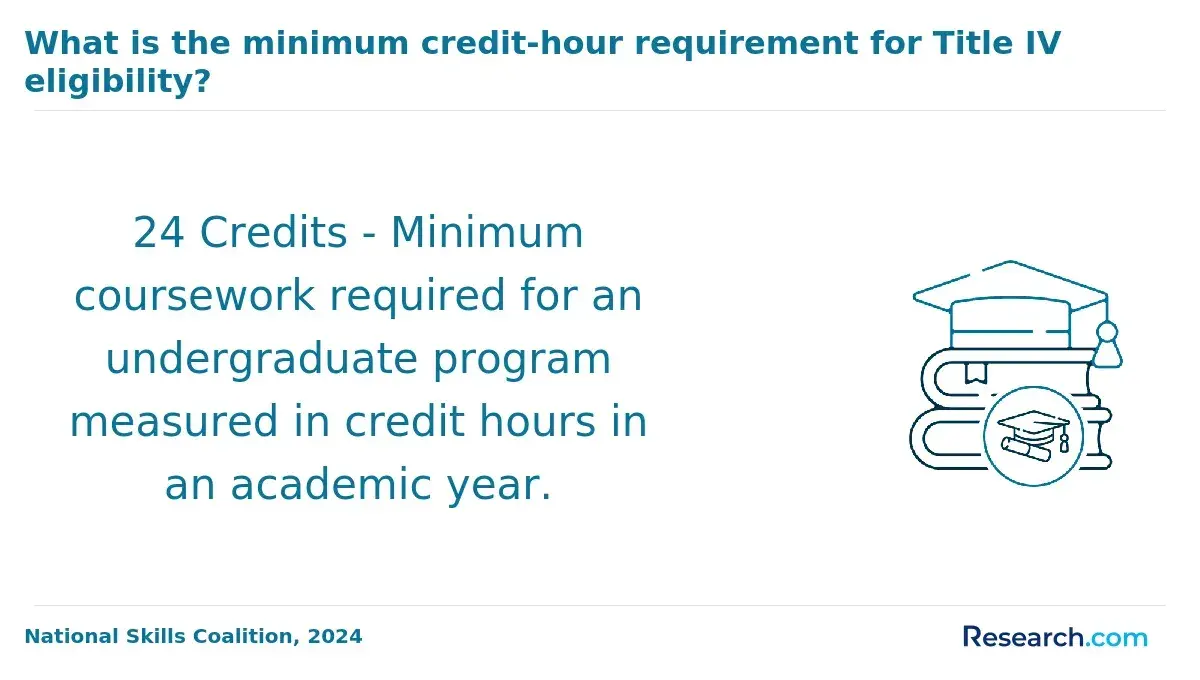
An online computer science program should have institutional accreditation from an accreditor recognized by the U.S. Department of Education or the Council for Higher Education Accreditation. Institutional accreditation is the baseline for federal financial aid eligibility, transfer-credit acceptance, graduate school review, and employer confidence.
Programmatic accreditation is different. In computer science, the best-known programmatic accreditor is ABET's Computing Accreditation Commission. ABET accreditation is valuable for some employers, graduate programs, and technically rigorous CS pathways, but many legitimate online computer science degrees are institutionally accredited without ABET programmatic accreditation.
Before choosing a fast program, take these steps to confirm that the speed of the degree does not come at the expense of recognition.
- Search the school's name in the U.S. Department of Education's accreditation database and confirm that the institution is currently accredited.
- Check whether the computer science program itself has ABET accreditation if that matters for your employer, graduate school, or long-term engineering-related goals.
- Ask whether online students earn the same diploma wording as campus students and whether the transcript identifies the delivery format.
- Confirm that transfer institutions, graduate schools, or licensing-related programs you may pursue later will recognize the credits.
Accreditation expectations vary by field. For example, students comparing professional programs such as MSW best programs often need to evaluate programmatic accreditation for licensure reasons, while computer science students usually focus first on institutional accreditation, curriculum rigor, and employer relevance.
How Can Transfer Credits and Prior Learning Shorten an Online Computer Science Degree?
Transfer credit is the biggest reason one accredited online computer science program may be much faster than another. A school may advertise a 120-credit bachelor's degree, but a transfer student who brings in accepted general education, elective, math, and lower-division CS credits may need far fewer credits after enrollment.
The table below shows how transfer credit can change the remaining workload. It is a planning tool only; actual results depend on course equivalency, grades, recency, residency rules, and whether credits satisfy major requirements or only electives.
| Accepted transfer credits | Credits remaining in a 120-credit degree | Possible time impact | Common limitation |
| 0 credits | 120 credits | Student completes the full degree sequence | Longest path; all general education and prerequisites remain |
| 30 credits | 90 credits | May save about one academic year for full-time students | Credits may apply mostly to electives, not CS major courses |
| 60 credits | 60 credits | Often supports a two-year completion plan if prerequisites align | Missing calculus, discrete math, or programming foundations can delay upper-division courses |
| 90 credits | 30 credits | Can create a 12- to 18-month pathway in some accelerated programs | Residency rules may require a minimum number of credits at the degree-granting school |
| Prior bachelor's degree | Often program-specific | May qualify for postbaccalaureate or second-degree CS pathways | Some programs still require specific math or science prerequisites |
Students can also ask about prior learning credit. Schools may evaluate Advanced Placement, International Baccalaureate, CLEP exams, ACE-reviewed workplace training, military training, industry certifications, or portfolios, but computer science departments may be cautious about granting major credit for older technical work because programming languages, tools, and security practices change quickly.
To avoid losing time, request an official transfer evaluation before committing. The most important question is not "How many credits do you accept?" but "How many accepted credits will count toward my exact computer science degree requirements?"
What Are the Admission Requirements and Start Dates for Accelerated Online Computer Science Programs?
Accelerated online computer science programs often have more frequent start dates than traditional semester programs. Some use monthly, six-term, or eight-week calendars, while others follow standard fall, spring, and summer starts. More start dates can reduce waiting time, but only if the required course sequence is available when you need it.
Admissions requirements vary by school and by whether the program is a full bachelor's, degree-completion pathway, or postbaccalaureate option. The list below highlights requirements that can directly affect how quickly you can begin and progress.
- High school diploma or equivalent: First-time bachelor's students usually need proof of graduation, transcripts, and sometimes placement information.
- College transcripts: Transfer and degree-completion students must submit official transcripts from every prior institution, and evaluation time can affect the first term.
- Minimum GPA: Some schools require a minimum cumulative GPA for admission or for transfer courses to count toward the major.
- Math readiness: Calculus, precalculus, statistics, or discrete mathematics placement can influence whether you can enter core CS courses immediately.
- Programming prerequisites: Students without prior coding coursework may need introductory programming before data structures, algorithms, operating systems, or software engineering.
- Postbaccalaureate eligibility: Second-degree CS programs usually require proof of an earned bachelor's degree from an accredited institution.
A common mistake is applying only to the school with the earliest start date. A later-starting program that accepts more of your credits, offers the right prerequisite sequence, or allows a heavier but manageable course load may get you to graduation sooner.
How Much Does a Fast Online Computer Science Degree Cost, and Is Financial Aid Available?
The cost of a fast online computer science degree depends on tuition model, transfer credits, fees, textbooks, software, hardware, and how long you remain enrolled. Faster graduation can lower some costs by reducing extra terms, but it does not automatically make a program cheaper, especially if tuition is charged per credit and you must complete the same number of credits.
Recent national tuition data gives helpful context before you compare online program prices. College Board reported the following average published tuition and fee figures for 2024-25, which can help you judge whether an online program's price is above or below the broader market.
- Public four-year in-state average published tuition and fees: $11,610 for 2024-25.
- Private nonprofit four-year average published tuition and fees: $43,350 for 2024-25.
Those figures are not online CS-specific prices, but they show why total cost matters as much as speed. A lower per-credit program with fewer accepted transfer credits may cost more than a higher per-credit program that leaves you with fewer credits to complete.
Financial aid may be available if the school is accredited and participates in federal student aid programs. Students should complete the FAFSA, ask about Pell Grant eligibility, compare federal loan options before private loans, and check for employer tuition assistance, military benefits, transfer scholarships, and state grants.
ROI should be evaluated carefully. Computer science can lead to strong career pathways, and readers comparing education-to-earnings options may also review broader research on highest paying jobs, but no degree guarantees a specific salary, employer, or promotion.
Can You Work Full Time While Completing an Accelerated Online Computer Science Degree?
You can work full time while completing an accelerated online computer science degree, but the schedule has to be realistic. Computer science courses often require long blocks of focused time for coding, debugging, math problem sets, systems projects, and group work. The compressed calendar of an accelerated term can make a two-course load feel much heavier than expected.
The table below compares common enrollment intensities for working adults. It can help you choose a pace that supports faster graduation without creating a high risk of withdrawal or burnout.
| Enrollment pace | Typical pattern | Best fit | Main risk |
| One course per accelerated term | Steady part-time study | Full-time workers, parents, and students new to programming | Longer total completion time |
| Two courses per accelerated term | Aggressive part-time or near full-time pace | Students with flexible jobs and prior coding or math experience | Overlapping projects and exams can become difficult quickly |
| Full-time year-round | Multiple courses across fall, spring, and summer | Students who can reduce work hours or have strong support systems | Limited recovery time between demanding CS courses |
| Competency-based acceleration | Self-paced completion of assessments | Experienced learners who can study independently | Progress can stall without disciplined weekly planning |
Students comparing online programs in different fields should not assume the workload feels the same. For example, an online degree psychology may involve heavy reading and research writing, while computer science often adds time-intensive labs, code testing, and technical troubleshooting.
A safer strategy is to begin with one demanding CS course in the first term, especially if you are returning to school after a long break. After you understand the platform, grading expectations, and weekly workload, you can decide whether adding another accelerated course is realistic.
Are Accelerated Online Computer Science Degrees Respected by Employers and Graduate Schools?
Accredited online computer science degrees can be respected by employers and graduate schools when the institution is legitimate, the curriculum is rigorous, and the student can demonstrate relevant skills. Employers in software, IT, data, cybersecurity, and systems roles often care about problem-solving ability, programming competence, project experience, internships, GitHub or portfolio work, and communication skills in addition to the degree itself.
The labor market context is favorable but competitive. The U.S. Bureau of Labor Statistics reported a May 2024 median annual wage of $133,080 for software developers, but that figure reflects a broad occupation and does not mean every CS graduate starts at that level. Location, experience, internships, technical stack, interview performance, and economic conditions all matter.
Graduate schools may evaluate whether your online CS degree came from an accredited institution, whether you completed prerequisites such as algorithms, discrete math, operating systems, databases, and theory, and whether your GPA and references meet program standards. If you plan to pursue a master's in computer science, data science, cybersecurity, or artificial intelligence, choose undergraduate electives that build the foundation you need.
Accreditation signals quality across many fields. Just as business students may compare AACSB accredited online MBA programs, computer science students should check institutional accreditation, ABET status when relevant, curriculum depth, faculty qualifications, and outcomes evidence rather than relying only on speed.
How Should You Compare the Fastest Accredited Online Computer Science Programs?
The right fast online computer science program is the one that gets you to a recognized credential quickly without creating hidden delays, unmanageable workload, or weak preparation. Compare programs using your actual starting point, not the fastest advertised completion time.
The table below summarizes the most important comparison factors and why each one affects time to graduation.
| Comparison factor | What to check | Why it affects speed |
| Accreditation | Institutional accreditation and ABET status when relevant | Unrecognized programs can create transfer, aid, employer, or graduate school problems |
| Transfer evaluation | How many credits apply to the degree, major, and prerequisites | Accepted credits that count only as electives may not shorten the CS sequence much |
| Course calendar | Five-, six-, seven-, eight-, or sixteen-week terms and summer availability | More sessions reduce waiting time, but required courses must be offered when needed |
| Prerequisites | Calculus, discrete math, programming, statistics, and science requirements | Missing prerequisites can delay upper-division CS courses |
| Maximum course load | How many courses students may take per term and whether overload approval is required | A program may be accelerated on paper but capped in practice |
| Capstone or internship | Required project, portfolio, practicum, or team-based experience | Scheduling and completion rules may add time near graduation |
| Cost model | Per-credit tuition, term-based tuition, fees, and aid eligibility | Fastest and cheapest are not always the same option |
| Student support | Tutoring, advising, coding help, career services, and transfer advising | Weak support can increase the chance of failed or repeated courses |
Before enrolling, ask admissions and academic advisors specific questions that reveal whether the advertised timeline applies to you.
- After my official transcript review, exactly how many credits will I have left to complete?
- Which remaining courses are prerequisites for later CS courses, and when are they offered?
- What is the maximum number of courses I can take per term without special approval?
- Are any required courses offered only once per year?
- Does the program require a capstone, internship, proctored exam, portfolio, or team project?
- How many students in my situation usually finish within the advertised accelerated timeline?
- Will my diploma or transcript identify the program as online?
- What happens if I need to slow down for one term?
Common red flags include vague accreditation language, pressure to enroll before a transfer evaluation, unclear tuition and fee disclosures, no published curriculum sequence, and promises that every student can finish at the same accelerated pace. A slightly slower accredited program with transparent transfer rules and strong CS support may be the better decision.
Other Things You Should Know About Computer Science
It is possible only in limited cases, usually when you already have a bachelor's degree and enter a postbaccalaureate CS pathway, or when you transfer close to the maximum number of credits and can handle a very intensive schedule. First-time bachelor's students should not expect a one-year completion timeline.
No. Competency-based programs may be faster for students who already understand the material, but they still require proof of mastery through exams, projects, papers, labs, or performance assessments. They can be difficult for students who need more instructor-paced structure.
Some require a capstone, portfolio, practicum, or internship, while others make internships optional. Even when not required, project and internship experience can strengthen job applications, so students should weigh speed against the value of practical experience.
Common delays include missing prerequisites, limited course availability, transfer credits that do not apply to the major, failed or withdrawn accelerated courses, residency requirements, financial holds, and taking on more courses than your schedule can realistically support.
References
- 2025 Most Affordable Online Bachelor's Degrees in Computer Science https://www.onlineu.com/most-affordable-colleges/computer-science-degrees
- How To Fast-Track Your Way Into High-Paying Tech Careers With Online Degrees https://elearningindustry.com/how-to-fast-track-your-way-into-high-paying-tech-careers-with-online-degrees
- What is an accelerated computer science degree? | ZDNET https://www.zdnet.com/education/computers-tech/what-is-accelerated-computer-science-degree/
- Accelerated Online Degree Programs: How to Finish Faster https://hakia.com/news/accelerated-online-degree-programs/