2027 Fastest Accredited Online Computer Science Degree Programs That Accept Transfer Credits

Co-Founder and Chief Data Scientist
If you already have college credits, the fastest path to an accredited online computer science degree is not always the school with the flashiest "accelerated" label. It is the program that applies the most credits to the right requirements. The National Student Clearinghouse Research Center reported that 36.8 million U. S. adults under 65 had some college and no credential, which makes credit recovery a major opportunity.
This guide helps transfer students and degree completers compare realistic timelines, accreditation, transfer limits, costs, and program formats before enrolling.
Key Things You Should Know
- The fastest legitimate route is usually a regionally accredited online bachelor's program that accepts up to about 90 transfer credits and requires roughly 30 credits in residence, making graduation in about 12 months possible for highly prepared full-time students.
- Transfer-friendly options often include Southern New Hampshire University, Western Governors University, University of Maryland Global Campus, Franklin University, Colorado State University Global, and Thomas Edison State University, but the fastest choice depends on how your prior credits apply to computer science, math, and upper-division requirements.
- A high transfer maximum does not equal a short timeline: credits that fill free electives may not reduce core requirements such as programming, data structures, algorithms, calculus, discrete math, software engineering, operating systems, or capstone coursework.
What Are the Fastest Accredited Online Computer Science Degree Programs That Accept Transfer Credits?
The fastest accredited online computer science programs for transfer students are usually degree-completion bachelor's programs with three features: regional accreditation, generous transfer-credit policies, and online course schedules that let students take multiple terms per year. The best fit is not simply the program with the highest transfer limit; it is the one that accepts your previous credits into the degree plan with the fewest unused credits.
Computer science is a structured major, so speed depends heavily on prerequisites. A student who has already completed calculus, discrete math, introductory programming, and lower-division general education may move faster than a student with 90 credits that are mostly unrelated electives. Students interested in newer technical fields may also compare computer science with an AI degree online, but computer science remains the broader foundation for software, systems, data, cybersecurity, and graduate study.
The table below compares well-known U.S. online options that are commonly considered by transfer students. Published policies can change, so students should request a written transfer evaluation before relying on any estimated timeline.
| Online program | Accreditation profile | Published transfer-friendly feature | Why it may be fast | Best fit |
| Southern New Hampshire University, BS in Computer Science | Regionally accredited by NECHE | Accepts up to 90 transfer credits toward a bachelor's degree | Eight-week undergraduate terms and a clear degree-completion model | Students with an associate degree or broad general education credits |
| Western Governors University, BS in Computer Science | Regionally accredited by NWCCU; program has ABET accreditation | May accept transfer credit for up to about 75% of the degree, subject to evaluation | Competency-based six-month terms allow faster progress for students who already know the material | Self-directed students with strong math, programming, and exam readiness |
| University of Maryland Global Campus, BS in Computer Science | Regionally accredited by Middle States Commission on Higher Education | Accepts up to 90 transfer credits toward many bachelor's programs, with source limits | Online courses are built for adult learners and transfer students | Military-affiliated students, working adults, and students with prior college coursework |
| Franklin University, BS in Computer Science | Regionally accredited by HLC | Known for accepting a high number of transfer credits, subject to program fit | Designed for adult transfer students with online and transfer pathways | Students with many previously earned credits who need a structured completion plan |
| Colorado State University Global, BS in Computer Science | Regionally accredited by HLC | Accepts transfer credit and alternative credit toward degree requirements, subject to policy | Monthly starts and accelerated online courses can reduce calendar gaps | Students who want frequent start dates and predictable online pacing |
| Thomas Edison State University, BA in Computer Science | Regionally accredited by Middle States Commission on Higher Education | Highly transfer-oriented model with broad use of prior college, exams, and evaluated learning | Flexible credit sources may help students finish remaining requirements efficiently | Experienced transfer students who can manage degree planning carefully |
| Oregon State University Ecampus, Postbaccalaureate BS in Computer Science | Regionally accredited by NWCCU | Uses the first bachelor's degree to satisfy much of the non-major background | Focused computer science curriculum for students who already hold a bachelor's degree | Career changers who already completed a bachelor's degree in another field |
The programs above are not "fast" for the same reason. WGU may be fastest for a disciplined student who can pass competency assessments quickly. SNHU, UMGC, Franklin, and CSU Global may be faster for students who want predictable accelerated terms. TESU may be strong for students with many nontraditional credits, while Oregon State's postbaccalaureate route may be efficient for second-degree students who do not need to repeat general education.
Before choosing, ask each school for a degree audit rather than a verbal estimate. The audit should show which credits apply to general education, which apply to the computer science major, which count only as electives, and which do not apply at all.
How Fast Can You Complete an Online Computer Science Degree With Transfer Credits?
A typical U.S. bachelor's degree requires about 120 semester credits. If a school accepts 90 applicable transfer credits and requires 30 credits in residence, a full-time student could theoretically finish in about one year. In practice, computer science sequencing can stretch that timeline because advanced courses often require prerequisites such as programming fundamentals, data structures, calculus, and discrete mathematics.
The table below gives realistic completion ranges based on how many credits actually apply to the degree. These are planning estimates, not promises, because schools differ in term length, course availability, prerequisite rules, and maximum course loads.
| Applicable transfer credits | Credits likely remaining | Realistic full-time online timeline | Common reason it takes longer |
| 90 credits | About 30 credits | About 12 months in an accelerated or year-round format | Upper-division CS courses may need to be taken in sequence |
| 75 credits | About 45 credits | About 15 to 24 months | Missing math or core programming prerequisites |
| 60 credits | About 60 credits | About 24 months | Associate degree credits may not cover major requirements |
| 30 credits | About 90 credits | About 30 to 36 months | Student is closer to a traditional online bachelor's pathway |
| Prior bachelor's degree | Often major courses only, depending on program | About 12 to 24 months in a postbaccalaureate pathway | Student may still need math and CS prerequisites |
The fastest students usually do several things before enrolling. They gather transcripts early, identify missing prerequisites, complete inexpensive transferable courses if permitted, and avoid enrolling before receiving a written evaluation.
Use this sequence to estimate your own fastest realistic timeline:
- List every college, exam, military, certification, or prior-learning credit source you may be able to submit.
- Request unofficial pre-evaluations from at least three accredited online computer science programs.
- Compare how many credits apply to the major, not just how many the institution accepts.
- Check whether the remaining CS courses must be taken in a fixed order.
- Ask how many terms per year are available and whether key courses are offered every term.
- Calculate your timeline using the school's maximum recommended course load, not the maximum load you hope to handle.
A student working full time should be cautious about overloading. Accelerated online computer science courses often compress coding projects, labs, and exams into short terms. Taking too many at once can lead to withdrawals, repeated courses, and a longer timeline than a slower but steadier plan.
How Many Transfer Credits Can You Apply Toward an Online Computer Science Degree?
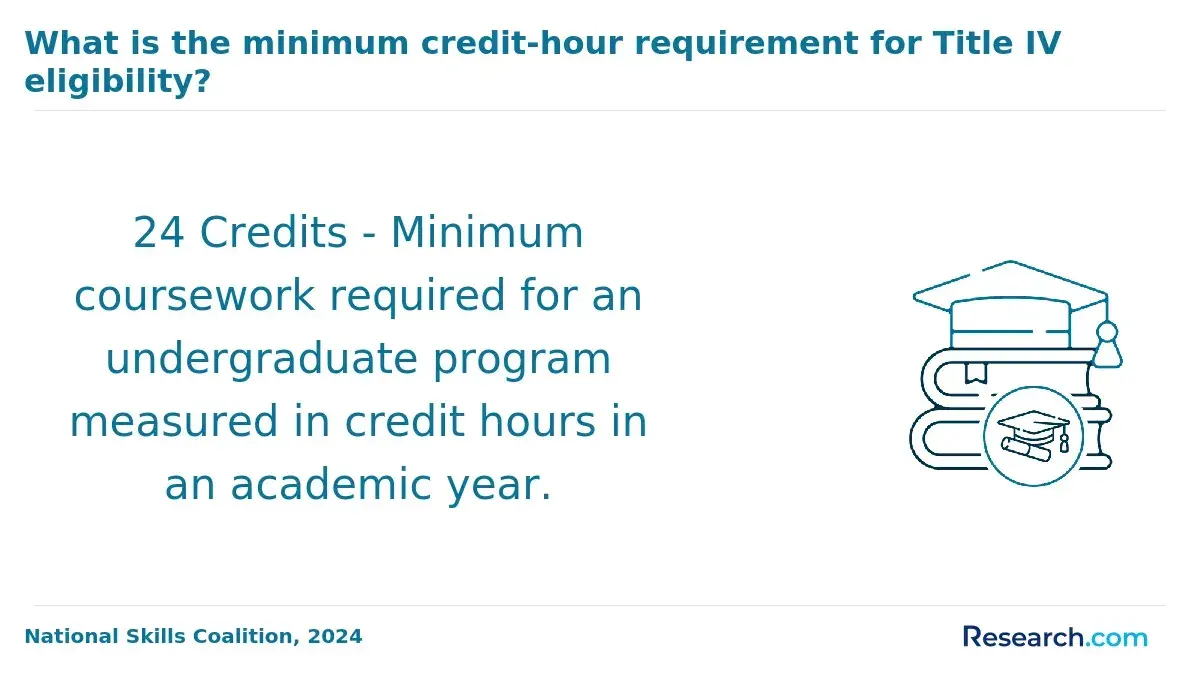
Many transfer-friendly online bachelor's programs advertise a maximum near 90 transfer credits, but that number is only the first filter. The more important question is how many credits apply to your exact computer science curriculum. A school may accept a history course, for example, but if your general education and elective slots are already full, that credit may not shorten your degree.
Transfer credit usually falls into several categories. Understanding the difference helps you avoid overestimating how close you are to graduation.
- Institutional acceptance: the school recognizes the credit as college-level and transferable.
- Degree applicability: the credit fills a requirement in the computer science degree plan.
- Major applicability: the credit replaces a required CS, math, or technical course.
- Elective applicability: the credit counts toward total credits but does not replace a required major course.
- Excess credit: the credit is accepted by the institution but does not reduce the courses you still need.
The table below shows how the same number of transfer credits can lead to very different graduation timelines depending on degree fit.
| Student profile | Credits earned before transfer | Credits that may actually shorten the CS degree | Likely outcome |
| Associate of Science with calculus and programming | 60 credits | High, if courses map to general education and lower-division CS | Often a strong degree-completion candidate |
| Associate of Arts with mostly general education | 60 credits | Moderate, because major prerequisites may still be missing | May still need two years of CS-heavy coursework |
| Career changer with unrelated bachelor's degree | 120+ credits | High for general education, low for CS major unless prerequisites are complete | Postbaccalaureate CS route may be more efficient |
| Student with many electives from several colleges | 90+ credits | Variable, because duplicate and excess electives may not apply | Needs a detailed audit before choosing a school |
| Student with IT certifications and some college | 30 to 75 credits | Variable, depending on ACE recommendations and school policy | May benefit from competency-based or prior-learning-friendly programs |
A common mistake is choosing the school that accepts the largest raw number of credits without checking the remaining course sequence. For computer science, 75 well-matched credits can be more valuable than 100 poorly matched credits.
How Can You Verify Accreditation for Fast Online Computer Science Degree Programs?
Accreditation is the quality-control step that protects your eligibility for federal financial aid, credit transfer, graduate school consideration, and employer recognition. For online computer science programs, the baseline is institutional accreditation from an agency recognized by the U.S. Department of Education or the Council for Higher Education Accreditation. Programmatic accreditation, such as ABET, can add value for some technical pathways but is not required for every software or computing job.
Use this process before applying to any "fast" online program:
- Confirm the institution's accreditation through the U.S. Department of Education's Database of Accredited Postsecondary Institutions and Programs or the accreditor's own directory.
- Check whether the online campus, extension division, or global campus is covered by the same institutional accreditation.
- Look for programmatic accreditation if you need it for a specific employer, graduate program, or engineering-adjacent pathway.
- Verify that the school participates in Title IV federal financial aid if you plan to use grants or federal loans.
- Ask whether credits from the program have transferred to graduate schools or other institutions, while remembering that receiving schools make their own decisions.
- Avoid schools that claim accreditation from agencies that are not recognized in the U.S. accreditation system.
Red flags include pressure to enroll before a credit evaluation, vague claims about "global accreditation," no clear accreditor listed on the institutional website, or promises that every previous credit will count. Legitimate schools may be generous, but they still follow catalog rules, major requirements, and faculty review processes.
ABET accreditation can matter more if you are planning a technical graduate program, certain federal roles, or engineering-related work. For many software development, data, cybersecurity, and IT roles, employers typically focus on the accredited degree, technical portfolio, internships, projects, and demonstrated skills.
Which Types of Transfer Credits Can Count Toward an Online Computer Science Degree?
Online computer science programs may evaluate several forms of prior credit. Traditional college coursework is the most straightforward, but many adult learners also bring exam credit, military training, industry certifications, or documented workplace learning.
The following credit types are commonly reviewed by transfer-friendly programs. Each one can help, but each is subject to school policy and degree fit.
- Regionally accredited college courses: often the most portable credits, especially for general education, math, science, and introductory computing.
- Community college associate degrees: useful when the school has articulation agreements, but CS major alignment still matters.
- Advanced Placement or International Baccalaureate credit: may satisfy general education or math requirements if scores meet school thresholds.
- CLEP, DSST, and similar exams: often used for general education requirements, not usually for upper-level computer science courses.
- ACE-evaluated workplace or training credit: may apply if the school accepts ACE recommendations and the learning matches degree requirements.
- Military credit: may apply through Joint Services Transcript evaluation, especially for technical, leadership, or elective requirements.
- Industry certifications: may count at some schools for IT, cybersecurity, networking, cloud, or database-related requirements.
- Portfolio or prior learning assessment: may award credit for documented college-level learning, though CS programs may limit its use for core theory courses.
Computer science departments tend to be cautious with upper-division major credit. A certification might show practical skill, but it may not replace a course in algorithms, theory of computation, operating systems, or advanced software design. That caution is not necessarily a bad sign; it helps preserve the academic value of the degree.
Students comparing fields should also note that transfer flexibility varies by discipline. For example, an online degree psychology may have different lab, practicum, or graduate-school preparation expectations than computer science, so policies from one major do not automatically predict another.
How Do Residency and Major Requirements Affect Transfer Credits for an Online Computer Science Degree?
Residency requirements determine how many credits you must complete through the degree-granting school. In many transfer-friendly bachelor's programs, the residency requirement is about 30 credits, but the exact rule varies. Some schools also require a minimum number of upper-division credits, major credits, or capstone credits to be completed in residence.
Major requirements can be even more important than the residency rule. A school might accept 90 credits but still require you to complete the full upper-division computer science sequence because those courses define the degree.
The table below explains the policy terms that most often affect transfer students' timelines.
| Policy term | What it means | Why it matters for speed |
| Residency requirement | Minimum credits completed at the school awarding the degree | Sets the shortest possible remaining credit load |
| Upper-division requirement | Minimum advanced-level credits needed for graduation | Can prevent lower-division transfer credits from replacing junior- or senior-level courses |
| Major residency | Minimum computer science credits taken at the school | May require core CS courses even if similar courses were taken elsewhere |
| Minimum grade requirement | Lowest grade accepted for transfer, often higher for major courses | Credits with low grades may not apply to CS requirements |
| Time limit or recency rule | Requirement that some technical credits be recent | Older programming or systems courses may need review or repetition |
| Capstone requirement | Final project or integrative course taken near graduation | Usually cannot be transferred and may be offered only in certain terms |
To avoid surprises, ask admissions and the department these specific questions before enrolling:
- How many credits must I complete with your institution after transfer?
- How many upper-division computer science credits must be completed through your program?
- Will my programming, calculus, discrete math, and data structures courses satisfy major requirements?
- Are any computer science transfer credits too old to apply automatically?
- Is the capstone offered every term, and what prerequisites must be completed first?
- Can I take remaining prerequisites at a community college after admission, or must I complete them through your school?
The biggest red flag is an enrollment estimate that discusses only total accepted credits. A trustworthy evaluation should show remaining requirements course by course.
Can Prior Learning, CLEP, Military Training, or Certifications Help You Finish an Online Computer Science Degree Faster?
Yes, nontraditional credit can shorten an online computer science degree, especially for general education, electives, IT fundamentals, and some applied technology requirements. However, it is less likely to replace the core theoretical sequence that distinguishes computer science from general IT or coding training.
Prior learning credit is most useful when it removes courses that are not prerequisites for advanced CS work. For example, CLEP exams may help with humanities or social science requirements, while military or certification credit may help with networking, security, systems administration, or elective categories.
Consider these options before enrolling, because some schools restrict alternative credit after matriculation:
- CLEP or DSST exams for general education courses if the target school publishes score equivalencies.
- Joint Services Transcript evaluation for military-affiliated students with technical training.
- ACE-evaluated certification credit for credentials in cloud computing, cybersecurity, networking, Linux, project management, or databases.
- Portfolio assessment for documented college-level learning, where available.
- Community college prerequisites for calculus, discrete math, or introductory programming if the receiving school confirms equivalency in writing.
Do not assume that a bootcamp certificate will automatically count for academic credit. Some universities have formal partnerships or prior-learning pathways, but many computer science departments still require transcripted college credit or faculty-reviewed assessment.
This distinction is important across professional online education. Programs tied to licensure or supervised practice, such as MSW best programs, may have stricter field-placement requirements, while computer science programs focus more on course equivalency, technical depth, and project-based evidence.
How Much Does a Fast Online Computer Science Degree Cost After Transfer Credits and Financial Aid?
The cost of a fast online computer science degree depends on remaining credits, tuition per credit or term, fees, books, software, transfer evaluation fees, and financial aid. Transfer credits can reduce tuition dramatically, but only if they apply to degree requirements. A student with 90 applicable transfer credits may pay for about one year of study, while a student with 90 mostly elective credits may still pay for many major courses.
College Board's 2024 Trends in College Pricing reported average published tuition and fees of $11,610 for in-state public four-year students and $43,350 for private nonprofit four-year students for 2024-25. Online tuition can be lower or higher than those benchmarks, so use them as context rather than as a direct quote for any specific online program.
When comparing costs, separate "price per credit" from "cost to finish." A school with a slightly higher per-credit rate may be cheaper if it accepts more applicable credits, offers more terms per year, or prevents you from retaking courses.
The following cost factors matter most for transfer students:
- Remaining required credits after the official degree audit.
- Tuition model, including per-credit pricing, subscription terms, military rates, or flat-rate terms.
- Technology, graduation, transcript, proctoring, lab, and course material fees.
- Whether you must retake prerequisites because of grade, age, or equivalency rules.
- Eligibility for Pell Grants, federal loans, employer tuition assistance, military education benefits, scholarships, or state aid.
- Opportunity cost, especially if a longer program delays job changes, internships, or graduate study.
The table below shows how transfer credits can change the cost equation. Replace the sample tuition assumptions with the exact tuition and fee data from each school you are considering.
| Remaining credits | Example tuition rate | Estimated tuition before aid | Planning takeaway |
| 30 credits | $350 per credit | $10,500 | Often the lowest-cost path if the 30 credits include all residency and major requirements |
| 45 credits | $350 per credit | $15,750 | May be realistic for students missing several CS prerequisites |
| 60 credits | $350 per credit | $21,000 | Common for associate degree holders whose credits are mostly general education |
| 30 credits | $500 per credit | $15,000 | A higher tuition rate may still be competitive if the school accepts more applicable credits |
Financial aid can change the net price. The maximum federal Pell Grant for 2024-25 was $7,395, but actual eligibility depends on the FAFSA, enrollment intensity, cost of attendance, and other aid. Students should compare net cost after aid, not just advertised tuition.
Computer science can also support strong long-term career options, but salary should never be treated as guaranteed. If return on investment is a major factor, compare likely roles, local labor markets, and technical skill requirements alongside broader data on the highest paying jobs.
How Do Accelerated, Competency-Based, and Self-Paced Online Computer Science Degree Programs Compare?
"Fast" can mean different things. Accelerated programs shorten course length. Competency-based programs let students progress by proving mastery. Self-paced features allow flexibility within a term. The fastest option depends on your learning style, schedule, prior knowledge, and ability to complete programming work independently.
The table below compares common online formats for transfer students. Use it to match the program structure to your actual study habits, not just your desired graduation date.
| Format | How it works | Why it can be fast | Main risk | Best fit |
| Accelerated term-based | Courses run in shorter sessions such as seven or eight weeks | Students can complete more terms per year | Heavy workload in compressed courses | Students who need structure and deadlines |
| Competency-based | Students advance by demonstrating mastery through assessments or projects | Prior knowledge can reduce time spent on familiar material | Requires strong self-management and independent learning | Experienced learners with coding, math, or IT background |
| Self-paced within term | Students control pacing but still follow term limits | Motivated students can finish assignments early | Procrastination can compress work near deadlines | Students with uneven work schedules |
| Traditional online semester | Courses follow standard academic terms | Predictable pacing may reduce failure or withdrawal risk | Calendar time may be longer | Students balancing work, family, and difficult CS courses |
| Postbaccalaureate CS | Second-degree students focus mainly on CS major coursework | Prior bachelor's degree may satisfy general education | May not accept all prior technical credits into the CS sequence | Career changers who already hold a bachelor's degree |
Competency-based programs can be the fastest for students who already know programming, databases, web development, networking, or discrete math. They can be frustrating for students who need more instructor-led teaching, because speed depends on mastery rather than seat time.
Students comparing online degree formats across disciplines should remember that "accelerated" does not mean the same workload everywhere. For example, online business, psychology, computer science, and AACSB accredited online MBA programs may use different course structures, accreditation expectations, and assessment models.
A good rule is to choose the fastest format you can complete successfully, not the fastest format advertised. A failed or withdrawn programming course can cost more time than taking a slightly slower course load.
Are Fast Accredited Online Computer Science Degrees Respected by Employers and Graduate Schools?
Fast accredited online computer science degrees can be respected when the school is properly accredited, the curriculum is rigorous, and the student can demonstrate technical ability. Employers rarely value speed by itself. They care about whether the degree is legitimate, whether the candidate has relevant skills, and whether the applicant can solve real problems.
The labor market remains favorable for computing skills, though competition varies by role and experience level. The U.S. Bureau of Labor Statistics projected computer and information technology occupations to grow much faster than average from 2023 to 2033, with about 356,700 openings each year on average. For students, this means the degree can be a useful credential, but projects, internships, GitHub work, certifications, and interview preparation still matter.
Graduate schools generally focus on institutional accreditation, GPA, prerequisite preparation, recommendation letters, statements of purpose, and sometimes test scores or portfolios. An online format is usually less important than whether the coursework includes sufficient math, algorithms, systems, and theory for the target graduate program.
To strengthen the value of a fast online degree, build evidence alongside the credential:
- Complete substantial projects in software development, data structures, databases, systems, AI, cybersecurity, or cloud computing.
- Use a public portfolio or GitHub profile to show code quality and documentation.
- Seek internships, apprenticeships, open-source contributions, research assistant roles, or freelance projects when possible.
- Choose electives that align with your target role, such as software engineering, data science, cybersecurity, machine learning, or systems programming.
- Prepare for technical interviews early instead of waiting until the final term.
- Ask graduate programs whether your online CS curriculum satisfies prerequisite expectations before enrolling if graduate school is a goal.
Common employer-facing red flags include unaccredited schools, vague degree names, lack of programming depth, no projects, and transcripts dominated by unrelated transfer credits. A fast path is strongest when it is also coherent: the remaining coursework should clearly build the computer science skills expected for the jobs or graduate programs you want.
Other Things You Should Know About Computer Science
Yes. Most transfer-friendly online programs evaluate individual courses, not just completed associate degrees. An associate degree can make evaluation easier, but standalone credits in English, math, science, programming, and general education may still apply.
Sometimes. General education credits often transfer even when they are older, but technical courses may face recency review because programming languages, platforms, and security practices change. Ask whether older CS courses require a syllabus review or department approval.
Unofficial transcripts can help schools estimate transfer credit quickly, but final credit usually requires official transcripts from every institution attended. Do not make enrollment or payment decisions based only on a verbal unofficial estimate.
Not automatically. A BS often includes more math, science, or technical depth, while a BA may allow more electives or interdisciplinary study. Employers and graduate schools usually look at accreditation, coursework, projects, skills, and prerequisites rather than the degree label alone.
References
- Best Online Computer Science Degree Programs 2025 https://www.onlineu.com/degrees/computer-science
- How to Get a Computer Science Degree Fast and Cheaply https://victoramartinez.com/posts/how-to-get-a-bscs-efficiently/
- Accreditation - ABET https://www.abet.org/accreditation/
- Top Online Schools That Accept Transfer Credits https://www.edvisorly.com/student-guides/online-schools-that-accept-transfer-credits
- Best Online Computer Science Degrees for Non-Traditional Students https://www.collegetransitions.com/blog/best-online-computer-science-degrees-for-non-traditional-students/
- Guide to Computer Science Degree and Program Accreditation https://www.computerscience.org/resources/college-accreditation/
- List of Accreditation Bodies for ICT and Professional Excellence https://ifgict.org/list-of-accreditation-bodies/