2027 Cheapest Accredited Online Computer Science Degree Programs: Tuition, Fees, and Financial Aid

Co-Founder and Chief Data Scientist
The cheapest online computer science degree is not always the one with the lowest tuition line. Students also need to compare accreditation, mandatory fees, transfer policies, FAFSA eligibility, and likely net price after aid. This guide is for first-time students, transfer students, and working adults comparing affordable accredited online computer science programs. The stakes are high: the U. S. Bureau of Labor Statistics reported a 2024 median pay of $133,080 for software developers, which makes cost control especially important when judging long-term value.
Key Things You Should Know
- Among widely available accredited options, University of the People often has the lowest published direct degree cost because it charges assessment and administrative fees instead of traditional tuition, while WGU can be very low-cost for fast completers at about $4,000 per six-month term.
- Public online programs can be bargains for residents: UF Online lists computer science tuition at $129.18 per credit for Florida residents, but nonresident pricing is much higher, so location can change the "cheapest" answer.
- Advertised tuition is only the starting point; the better comparison is net price after grants, scholarships, employer benefits, transfer credits, mandatory online fees, books, software, and technology costs.
What Are the Cheapest Accredited Online Computer Science Degree Programs?
The cheapest accredited online computer science degree programs usually fall into three groups: very low-cost nationally accredited programs, competency-based universities with flat term pricing, and public universities with low in-state online tuition. The table below compares affordable options using published pricing models, accreditation type, and practical cost caveats students should verify before enrolling.
| Program | Accreditation to verify | Published pricing model | Estimated sticker-cost position | Best fit |
| University of the People, BS in Computer Science | DEAC institutional accreditation | Tuition-free model with assessment and administrative fees | Often below traditional public-university totals, commonly described by the school as a low four-figure degree cost | Students who need the lowest direct cash cost and can confirm that the accreditation type fits employer, graduate school, and aid needs |
| Western Governors University, BS in Computer Science | NWCCU institutional accreditation | Flat tuition per six-month term, plus required student fees | Lowest for students who can complete many courses per term; total cost rises with each additional term | Self-directed learners with transfer credit, professional experience, or the ability to study intensively |
| University of Florida Online, BA in Computer Science | SACSCOC institutional accreditation | Per-credit public tuition; Florida resident pricing is much lower than nonresident pricing | Very low for Florida residents at $129.18 per credit before fees; substantially higher for nonresidents | Florida residents seeking a public university brand and federal financial aid eligibility |
| Fort Hays State University, BS in Computer Science | HLC institutional accreditation | Online undergraduate per-credit tuition | Low-to-moderate total tuition for a 120-credit bachelor's degree before fees and aid | Students who want a public university with straightforward online pricing |
| Southern New Hampshire University, BS in Computer Science | NECHE institutional accreditation | Per-credit private nonprofit online tuition | Moderate sticker price, often reduced through transfer credits, military benefits, or employer assistance | Working adults who need frequent start dates and transfer-friendly policies |
| University of Maryland Global Campus, BS in Computer Science | MSCHE institutional accreditation | Different rates for Maryland residents, out-of-state students, and military-affiliated students | Competitive for Maryland residents and military students; higher for many nonresidents | Adult learners, military students, and transfer students seeking a large online public university |
These programs should not be treated as a final ranking for every student because the lowest price depends on residency, transfer credits, pace, and aid. A Florida resident may find UF Online cheaper than many private options, while a motivated WGU student who finishes quickly may pay less than a student in a per-credit program.
Students comparing computer science with adjacent fields should also look closely at curriculum differences. For example, an AI degree online may include more machine learning, statistics, and data-focused coursework, while a general computer science degree usually keeps broader coverage in programming, algorithms, systems, software engineering, and theory.
How Were the Cheapest Online Computer Science Degree Programs Ranked?
The fairest way to rank cheap online computer science programs is to compare the cost a student is likely to pay for the credential, not just the school's most attractive advertised tuition rate. A useful affordability ranking gives preference to accredited programs with transparent pricing, federal aid access, realistic transfer policies, and fewer unavoidable fees.
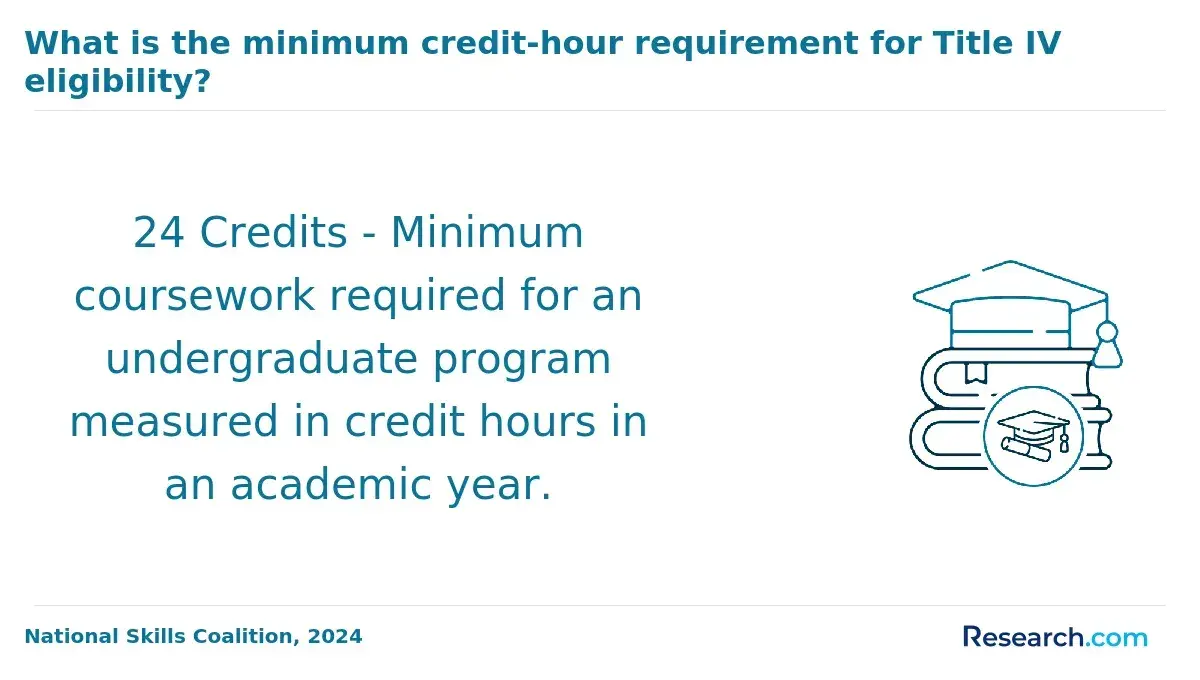
- Confirm institutional accreditation through a recognized accreditor and identify whether the school participates in Title IV federal student aid.
- Record the published tuition model, including per-credit, per-term, subscription, resident, nonresident, or competency-based pricing.
- Add mandatory fees that apply to online students, including technology, distance-learning, assessment, graduation, transcript, and program-specific charges.
- Estimate the total cost for the credits the student actually needs after transfer evaluation, not automatically for all 120 bachelor's credits.
- Compare aid options, including Pell Grants, state grants, institutional scholarships, employer tuition assistance, military benefits, and payment plans.
- Review quality indicators such as curriculum depth, faculty access, student support, career services, course availability, and whether the degree prepares students for target roles.
This ranking approach prevents a common mistake: treating a low per-credit rate as the final price. A program with slightly higher tuition but generous transfer credit, no out-of-state surcharge, and renewable grants may have a lower net price than a school with cheaper advertised tuition and heavy fees.
How Can You Verify the Accreditation of an Online Computer Science Degree Program?
Accreditation matters because it affects federal financial aid eligibility, transfer credit, graduate school admission, employer recognition, and overall consumer protection. For online computer science degrees, students should check both institutional accreditation and, when relevant, programmatic accreditation such as ABET.
- Search the school in the U.S. Department of Education's Database of Accredited Postsecondary Institutions and Programs and confirm that the institution is currently accredited.
- Check the accreditor name on the school's own accreditation page and make sure it matches the federal database listing.
- Use NCES College Navigator to confirm basic institutional information, federal aid participation, retention, graduation, and net price data when available.
- If ABET matters for your goal, search ABET's accredited program database for the exact computer science program name and delivery location.
- Ask the admissions office whether online students receive the same degree title and transcript wording as campus students.
- Confirm transfer rules with the registrar, not only with an enrollment counselor, especially if you plan to bring in community college, AP, CLEP, military, or prior university credits.
ABET accreditation is not required for many software development, web development, data, cybersecurity, or IT roles, but it can matter for certain employers, graduate programs, or technical pathways. Institutional accreditation is the baseline; programmatic accreditation is an additional quality signal that may or may not be necessary for your career plan.
How Much Does an Accredited Online Computer Science Degree Really Cost?
An accredited online computer science degree really costs more than tuition because students pay for credits, required fees, books, software, equipment, and time away from work. The total sticker price is the pre-aid amount, while net price is what remains after grants, scholarships, tuition benefits, and discounts that do not need to be repaid.
The table below breaks down the cost layers students should separate before choosing a program. This matters because two schools with the same tuition rate can produce different final bills once online fees, residency rules, and credit-transfer policies are included.
| Cost layer | What it means | Why it changes affordability |
| Tuition | The school's charge per credit, term, course, subscription period, or competency unit | It is usually the largest cost, but it may not include required online or program fees |
| Mandatory fees | Charges required for enrollment, technology access, assessment, registration, graduation, or online delivery | They can make a low-tuition program more expensive than it first appears |
| Total program cost | Tuition plus mandatory fees for the credits or terms needed to graduate | It shows the sticker price before aid and before optional living expenses |
| Financial aid | Federal, state, institutional, employer, military, or private support | Grants and scholarships reduce cost; loans delay payment but still must be repaid |
| Net price | The amount left after gift aid and discounts are applied | It is the most useful number for comparing what you may actually pay |
| Opportunity cost | Work hours, delayed earnings, or reduced income while studying | A cheaper but slower program may cost more if it delays career entry or advancement |
Salary data should be used carefully, but it gives helpful context for ROI. The BLS reported a 2024 median annual wage of $133,080 for software developers; however, pay varies by role, location, experience, portfolio, internships, and employer requirements, so students should compare program cost against realistic entry-level pathways rather than assuming a high salary immediately after graduation.
Computer science remains one of the fields commonly associated with strong earnings potential, but it is not the only cost-sensitive degree choice. Students exploring broader undergraduate ROI can compare computer science with other highest paying jobs linked to bachelor's-level education while still factoring in debt, completion time, and job-market fit.
Which Tuition Models Make Online Computer Science Degree Programs More Affordable?
Tuition models can make a major difference in online computer science affordability. The cheapest model depends on how many credits you transfer, how quickly you complete courses, whether you qualify for in-state rates, and whether the school charges separate online fees.
The table below summarizes the main pricing structures you are likely to see. Use it to identify which model matches your study pace and risk tolerance before comparing individual schools.
| Tuition model | How it works | When it can be cheaper | Main risk |
| Per-credit tuition | You pay for each credit attempted | Best when you transfer many credits or take a predictable course load | Repeating or withdrawing from courses can raise the final cost |
| Flat-rate term tuition | You pay one amount for a set term and complete as much approved coursework as possible | Best for fast, disciplined students who can finish many requirements per term | Slow progress makes each term another full charge |
| Competency-based tuition | You move through material by demonstrating mastery | Best for students with existing programming, IT, math, or professional experience | Not every learner thrives without a traditional weekly class structure |
| Resident online tuition | Public universities charge lower rates to in-state students | Best for residents of states with strong online public options | Nonresident rates can be several times higher |
| Military or employer-discounted tuition | Eligible students receive reduced rates or reimbursement | Best for active-duty, veteran, federal, corporate, or partner-employer students | Benefits may have grade, annual cap, repayment, or continued-employment rules |
Flat-rate and cohort pricing are common across online education, not only computer science. Students comparing business options such as AACSB accredited online MBA programs should use the same rule: divide the total expected bill by the credential's value to your actual career goal, not by the school's advertised rate alone.
A practical shortcut is to calculate three scenarios before enrolling: best case, likely case, and slow case. For example, a term-based program may look cheapest if you finish in four terms, but a per-credit public university may become cheaper if work or family obligations stretch your timeline.
What Fees and Hidden Costs Should Online Computer Science Degree Students Expect?
Online computer science students should expect costs beyond tuition, even when the program is advertised as low-cost. Some fees are small individually but become meaningful across multiple terms, especially in programs that charge registration, technology, or assessment fees every enrollment period.
Before enrolling, ask the school to identify which of the following costs are mandatory, which are optional, and which are already included in tuition. This list is especially important when comparing a low advertised tuition rate against a slightly higher all-inclusive rate.
- Technology or online learning fees charged per course, credit, term, or semester
- Application, enrollment, registration, transcript, graduation, and readmission fees
- Course materials, e-textbooks, lab platforms, exam proctoring, and coding environments
- Required hardware such as a laptop, webcam, headset, external storage, or upgraded internet service
- Software subscriptions for development tools, cloud platforms, virtualization, cybersecurity labs, or data tools
- Transfer-credit evaluation, portfolio assessment, prior-learning assessment, or standardized exam fees
- Course repeat charges, late payment fees, withdrawal penalties, and payment-plan service fees
The biggest red flag is a school that promotes a very low tuition rate but makes it hard to find the full fee schedule. A trustworthy program should be able to give you a written cost estimate that separates tuition, mandatory fees, optional expenses, expected credits after transfer, and aid assumptions.
How Does FAFSA and Federal Financial Aid Work for Online Computer Science Degree Programs?
FAFSA is the gateway to federal student aid for eligible U.S. students, including many students in accredited online computer science degree programs. Online students are generally evaluated under the same federal aid rules as campus students, but the school and program must be eligible, and the student must meet enrollment and satisfactory academic progress requirements.
The maximum Federal Pell Grant for the 2025-2026 award year is $7,395. That figure is important because Pell Grants do not need to be repaid, but eligibility depends on the FAFSA results, enrollment intensity, program cost, and federal rules.
- Confirm that the school participates in Title IV federal student aid and that the specific online computer science program is aid-eligible.
- Submit the FAFSA using the correct school code and review whether parent, spouse, or student contributor information is required.
- Compare the financial aid offer by separating grants and scholarships from federal loans and work-study.
- Check enrollment requirements because dropping below half-time may affect loans, and reduced enrollment can change grant amounts.
- Ask how aid is handled for accelerated terms, competency-based calendars, summer courses, repeated courses, and transfer credits.
- Review satisfactory academic progress rules so you understand the GPA, completion-rate, and maximum-timeframe standards needed to keep aid.
A common mistake is assuming that accreditation automatically means FAFSA eligibility. Some accredited institutions do not participate in federal aid programs, and some low-cost models are designed around direct payment rather than federal aid. Always verify aid eligibility before you build your budget.
Which Scholarships, Grants, and Tuition Benefits Can Help Pay for an Online Computer Science Degree?
Scholarships, grants, and tuition benefits can make a moderately priced online computer science degree cheaper than the school with the lowest tuition sticker price. The best strategy is to prioritize gift aid first, then employer or military benefits, and use loans only after calculating repayment risk.
The funding sources below can reduce out-of-pocket cost, but each one has different eligibility and renewal rules. Ask for the conditions in writing before assuming the award will continue every term.
- Federal grants, including Pell Grants for eligible undergraduate students
- State grants, which may require residency, FAFSA completion, income eligibility, or enrollment at an approved institution
- Institutional scholarships for transfer students, adult learners, first-generation students, military students, women in technology, or academic achievement
- Private scholarships from professional associations, community foundations, technology employers, nonprofits, and local organizations
- Employer tuition assistance, tuition reimbursement, apprenticeship-linked benefits, or workforce development programs
- Military and veteran education benefits, including GI Bill benefits, tuition assistance, Yellow Ribbon participation, and military-affiliated tuition discounts where available
- Payment plans that spread costs across a term, which can help cash flow but usually do not reduce the total price
Students comparing low-cost online degrees across fields will see similar aid patterns. For example, someone researching an online degree psychology should still separate grants and scholarships from loans, confirm whether awards are renewable, and calculate net price rather than relying on tuition alone.
The most overlooked scholarship question is renewal. A one-time $1,000 award helps, but a renewable $1,000 annual award can change the full degree budget more substantially if the student remains eligible.
Can Transfer Credits, Prior Learning, and Competency-Based Study Lower the Cost of an Online Computer Science Degree?
Transfer credit is one of the strongest cost-saving tools for an online computer science degree because most bachelor's programs require around 120 credits. Every accepted credit reduces the number of courses you must pay for, but schools differ in transfer limits, residency requirements, major-course rules, and how old technical credits can be.
Use the following steps before you enroll, not after you have already committed to a program. They can prevent paying twice for courses you have already completed.
- Request an official transfer evaluation that shows exactly which credits apply to general education, electives, prerequisites, and computer science major requirements.
- Ask whether programming, database, networking, cybersecurity, calculus, statistics, or discrete math credits expire after a certain number of years.
- Check the residency requirement, which is the minimum number of credits you must complete at the degree-granting school.
- Compare community college articulation agreements before taking lower-division courses because pre-approved pathways usually transfer more cleanly.
- Ask whether CLEP, DSST, AP, IB, military training, professional certifications, bootcamp coursework, or portfolio assessment can count toward degree requirements.
- For competency-based programs, estimate how many terms you realistically need rather than assuming the fastest advertised completion path.
Computer science can be more transfer-friendly than some practice-based fields because many general education, math, and introductory programming courses can be evaluated by syllabus and learning outcomes. Unlike clinical or field-placement-heavy programs such as MSW best programs, online computer science degrees often give students more room to reduce cost through accepted prior coursework.
One caution: transfer credits can lower tuition but may also affect institutional scholarship eligibility, full-time status, or financial aid pacing. Ask the financial aid office to model your award after transfer credits are applied.
How Should Students Compare the Net Price, Quality, and Return on Investment of Online Computer Science Degree Programs?
The best-value online computer science degree is the one with the lowest realistic net price for a program that is accredited, finishable, and aligned with your career goal. A cheap degree that lacks support, delays graduation, or does not teach the skills employers expect may cost more in the long run.
Compare programs using a written checklist so you are not swayed by the lowest advertised tuition. The right questions should connect cost, quality, completion, and career relevance.
- What is my total estimated cost after transfer credits, mandatory fees, books, software, and required equipment?
- What is my estimated net price after grants, scholarships, employer benefits, military benefits, and tuition discounts?
- Is the institution accredited, and does the accreditation type work for my employment, graduate school, transfer, or licensing goals?
- Does the curriculum include programming, algorithms, data structures, databases, operating systems, software engineering, math, and current electives such as AI, cloud, cybersecurity, or data science?
- How often are required courses offered, and can I graduate on my intended timeline without waiting for prerequisites?
- What student support is available online, including tutoring, advising, career coaching, technical help, internship guidance, and portfolio review?
- What outcomes does the school publish, such as retention, graduation, loan repayment, employment information, or alumni career examples?
- How much debt would I need, and what monthly payment could I reasonably handle if my first job pays less than hoped?
Current hiring trends make this comparison more important. AI tools are changing programming workflows, but they have not eliminated the need for fundamentals; employers still value problem-solving, debugging, software design, data literacy, teamwork, and the ability to learn new tools quickly. A slightly more expensive program may be worth considering if it offers stronger projects, advising, internship support, or a curriculum that keeps pace with modern development practices.
A strong final decision should name the program you can afford, the degree timeline you can finish, the aid you are likely to receive, and the career path you are targeting. If any of those four pieces is unclear, keep asking questions before you enroll.
Other Things You Should Know About Computer Science
Often, no. Many universities issue the same diploma for online and campus students, but policies vary. Ask the registrar whether the diploma or transcript identifies the delivery format before enrolling.
Not necessarily. A BA may include more electives or liberal arts requirements, while a BS may require more math, science, or technical coursework. Compare curriculum, prerequisites, and career goals instead of assuming one is always better.
Many students do, but computer science courses can be time-intensive because of programming projects, math, debugging, and labs. Part-time enrollment may be more realistic, though it can extend the timeline and affect aid eligibility.
You usually need a reliable laptop, stable internet, webcam, and enough memory to run development tools. Some advanced courses may require virtualization, cloud platforms, or specialized software, so request the program's technical requirements before buying equipment.
References
- Can I get financial aid for an online degree? | edX https://www.edx.org/resources/can-i-get-financial-aid-for-an-online-degree
- Paying for a Computer Science Degree | Scholarships, Grants, Loans https://www.computerscience.org/resources/how-to-pay-for-a-degree/
- Financial Aid For Online Colleges https://www.affordablecollegesonline.org/financial-aid/financial-aid-for-online-colleges/
- Earn an Online Computer Science Degree | OEDb.org https://www.oedb.org/rankings/online-computer-science-programs/
- Computer Science Degree Cost: 2026 Financial Guide https://www.computerdegreesonline.org/computer-science-degree-cost/
- How long does it take to complete an IT program? | WCC - Western Community College https://wcc.ca/blog/how-long-does-it-take-to-complete-an-it-program/
- Online College Costs: A Breakdown of Tuition and Fees | OnlineColleges.net https://www.onlinecolleges.net/for-students/online-college-costs/
- CS Scholarships and Funding for Students | Code.org https://code.org/en-US/students/scholarships
- 2025 Most Affordable Online Bachelor's Degrees in Computer Science https://www.onlineu.com/most-affordable-colleges/computer-science-degrees
- Average In-State vs. Out-of-State Tuition [2025]: Cost Comparison https://educationdata.org/average-in-state-vs-out-of-state-tuition