2027 Accredited Online Computer Science Degree Programs That Accept the Most Transfer Credits

Co-Founder and Chief Data Scientist
Transfer credits can be the difference between starting over and finishing a computer science degree efficiently. The stakes are high: the U. S. Bureau of Labor Statistics reports a $133,080 median annual wage for software developers, quality assurance analysts, and testers, with 15% projected job growth from 2024 to 2034. This guide is for students with prior college, military, professional, AP, CLEP, or associate-degree credits. You will learn which accredited online programs are most transfer-friendly, how credits are evaluated, and how to estimate whether a program will actually save you time and money.
Key Things You Should Know
- Many transfer-friendly online computer science bachelor's programs advertise maximum transfer limits of up to 90 credits, while some degree-completion-focused institutions may allow more if residency and major requirements are still met.
- The most important number is not the advertised maximum; it is how many of your credits apply to general education, electives, and required computer science courses after an official evaluation.
- Using 2024-2025 public tuition benchmarks, avoiding even 30 repeated credits can represent a meaningful cost difference, but savings depend on per-credit tuition, fees, residency rules, and remaining upper-division coursework.
Which Accredited Online Computer Science Degree Programs Accept the Most Transfer Credits?
The most transfer-friendly accredited online computer science programs are usually bachelor's completion programs or adult-focused online universities with generous residency policies. Most still require students to complete a minimum number of credits at the degree-granting institution, and computer science major requirements may reduce how many old or unrelated credits apply directly to the degree.
The table below summarizes accredited U.S. online computer science or closely computer-science-focused bachelor's options with publicly stated transfer-friendly policies. Treat these as starting points, not promises; schools make final decisions after reviewing transcripts, course levels, grades, accreditation, and degree requirements.
| Institution and online degree | Accreditation context | Published transfer-credit ceiling | Best fit | Important caution |
| Excelsior University, BS in Computer Science | Institutionally accredited by the Middle States Commission on Higher Education | Up to 113 credits may be transferable toward many bachelor's programs, subject to degree requirements | Students with extensive prior college, military, exams, or professional learning | High transfer volume does not remove the need to satisfy required computer science, capstone, and residency components |
| Southern New Hampshire University, online BS in Computer Science | Institutionally accredited by the New England Commission of Higher Education | Up to 90 transfer credits toward a 120-credit bachelor's degree | Students with an associate degree or mixed prior college credits | Major courses must still align with SNHU's curriculum; not all technology electives replace CS requirements |
| University of Maryland Global Campus, BS in Computer Science | Institutionally accredited by the Middle States Commission on Higher Education | Up to 90 transfer credits toward a bachelor's degree | Military-connected students, community college transfers, and adult learners | Students must still complete required upper-level and major-specific credits through approved coursework |
| Colorado State University Global, BS in Computer Science | Institutionally accredited by the Higher Learning Commission | Up to 90 transfer credits toward a 120-credit bachelor's degree | Students seeking a structured online degree-completion path | Transfer credits must map to general education, core, or elective categories to reduce the actual remaining workload |
| Western Governors University, BS in Computer Science | Institutionally accredited by the Northwest Commission on Colleges and Universities | Up to 75% of the program may be satisfied by transfer or approved prior learning | Students comfortable with competency-based online study | Accepted transfer depends heavily on course equivalency and whether prior work matches WGU competency areas |
| Liberty University, online BS in Computer Science | Institutionally accredited by the Southern Association of Colleges and Schools Commission on Colleges | Up to 75% of a bachelor's degree may be transferred, commonly up to 90 credits | Students who want broad online course availability and transfer flexibility | Some credits may apply as electives rather than reducing required CS major coursework |
| Franklin University, BS in Computer Science | Institutionally accredited by the Higher Learning Commission | Up to 94 transfer credits may be accepted for many bachelor's programs | Adult learners with substantial community college or prior university credits | Students should confirm how many transferred credits apply to upper-level major requirements |
How Do Online Computer Science Degree Programs Evaluate Transfer Credits?
Online computer science programs evaluate transfer credits by comparing your prior coursework with their degree map. A credit may be accepted by the university but still not count toward the computer science major, which is why the evaluation must show where each course applies.
Most schools review the following factors before awarding usable transfer credit:
- Institutional accreditation: Credits from regionally or institutionally accredited colleges usually transfer more predictably than credits from unaccredited providers.
- Course equivalency: A programming course may transfer as "Introduction to Programming" only if the syllabus, language, contact hours, and learning outcomes align.
- Grade minimums: Many institutions require at least a C or equivalent for undergraduate transfer credit, though exact rules vary.
- Course level: Lower-division credits may satisfy general education or introductory computing requirements but may not replace upper-division algorithms, systems, software engineering, or theory courses.
- Course age: Some programs scrutinize older technical courses because programming languages, security practices, cloud platforms, and development tools change quickly.
- Credit source: AP, CLEP, DSST, military training, industry certifications, and portfolio-based prior learning may be evaluated under different rules than college transcripts.
The safest approach is to request a course-by-course degree audit before enrolling. Ask the school to identify credits that meet general education, major, concentration, elective, and residency requirements separately.
How Can Transfer Credits Shorten an Online Computer Science Degree?
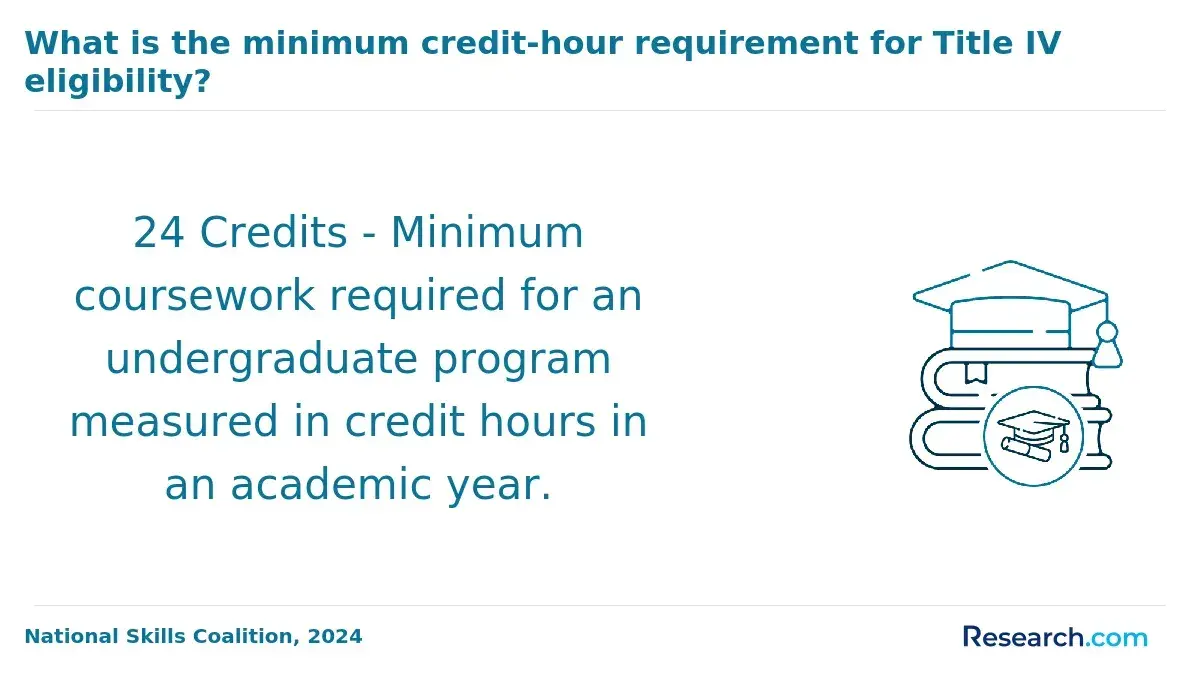
A standard U.S. bachelor's degree usually requires about 120 semester credits. Transfer credits shorten the degree only when they reduce the remaining credits required for graduation and when the student can access the remaining courses in a sequence that fits the program calendar.
The table below shows how different transfer-credit amounts can affect a 120-credit online computer science degree. It assumes the credits apply to actual degree requirements; if they transfer only as excess electives, the time savings may be smaller.
| Usable transfer credits | Approximate credits remaining | Typical student profile | Potential completion impact |
| 0 credits | 120 credits | First-time bachelor's student | Often about four years of full-time study, depending on terms and course load |
| 30 credits | 90 credits | One prior year of college or AP/CLEP plus some college coursework | May remove about one academic year if prerequisites align |
| 60 credits | 60 credits | Associate-degree holder or community college transfer | May create a two-year completion path if lower-division requirements are satisfied |
| 90 credits | 30 credits | Student with extensive prior college or prior bachelor's-level coursework | May leave mainly upper-division major, residency, and capstone requirements |
| 100+ credits | Varies by residency and major rules | Degree-completion student with broad prior learning | May be efficient only if the remaining requirements are available online and offered frequently |
Computer science sequencing is a common bottleneck. Even if a student transfers many credits, they may still need to complete prerequisites such as discrete mathematics, data structures, computer architecture, operating systems, algorithms, databases, software engineering, and a capstone in a set order.
Before choosing a program, students should follow a practical sequence:
- Collect official transcripts from every college attended, including dual-enrollment and community college records.
- Gather syllabi for older or technical courses, especially programming, math, databases, networks, and systems courses.
- Ask for a preliminary transfer review before applying if the school offers one.
- Request an official degree audit that shows exactly which requirements remain.
- Compare the remaining course sequence, not just the remaining credit count.
- Confirm whether required courses are offered every term, annually, or only in specific online sessions.
How Much Can Transfer Credits Reduce the Cost of an Online Computer Science Degree?
Transfer credits can reduce cost by lowering the number of credits you must pay for at the new institution. The savings are largest when the credits replace required courses at a higher-tuition school and when the program does not add fees that offset the reduction.
College Board's 2024-2025 tuition data reported average published tuition and fees of $11,610 for in-state students at public four-year institutions and $43,350 at private nonprofit four-year institutions. This matters because repeating credits at a bachelor's-granting institution can be far more expensive than applying completed community college, military, or prior university credits toward the degree.
The table below uses a simple per-credit illustration to show how transfer credits may affect tuition before fees, books, technology charges, and financial aid. It is not a quote from any school; use it as a comparison model when you receive actual tuition rates.
| Usable transfer credits | Credits still needed in a 120-credit degree | Estimated tuition at $350 per credit | Estimated tuition at $550 per credit |
| 0 | 120 | $42,000 | $66,000 |
| 30 | 90 | $31,500 | $49,500 |
| 60 | 60 | $21,000 | $33,000 |
| 90 | 30 | $10,500 | $16,500 |
Cost should be compared against career value, not viewed in isolation. Computer science can lead to software development, data engineering, systems analysis, cybersecurity, cloud computing, quality assurance, and technical product roles, but outcomes vary by skills, projects, internships, location, and experience. If salary potential is a central part of your ROI calculation, compare computer science with other highest paying jobs pathways before committing to a specific degree.
Common cost mistakes include assuming every transferred credit saves the same amount, ignoring online fees, overlooking financial aid rules for part-time enrollment, and choosing a higher-priced program solely because it accepts more credits. A more expensive program can still be worthwhile if it accepts substantially more usable credits, offers stronger career support, and allows faster completion, but the math should be confirmed with a written degree plan.
Can Military, Professional, or Prior Learning Credits Transfer to an Online Computer Science Degree?
Yes, many accredited online computer science programs consider military training, standardized exams, professional certifications, and prior learning portfolios. These credits often work best for electives, general education, IT foundations, or lower-level technical requirements, but they may not replace advanced computer science courses.
Students with nontraditional learning should understand how each credit source is usually evaluated before they rely on it in a completion plan:
- Military training: Schools may use American Council on Education recommendations to evaluate military courses and occupations, but each institution decides how the credit applies.
- CLEP, DSST, and AP exams: These can help satisfy general education or introductory requirements if the score meets the school's minimum.
- Industry certifications: Certifications in networking, cloud, security, project management, or programming may receive credit at some schools, particularly if the program has pre-approved equivalencies.
- Employer training: Corporate training may be considered if it has been ACE-reviewed or if the school has a prior learning assessment process.
- Portfolio assessment: Some adult-focused institutions allow students to document college-level learning from work experience, but portfolio credit can be time-consuming and is not always accepted for core CS theory courses.
The main red flag is assuming that professional experience automatically replaces degree requirements. A student who has worked as a developer may still need formal coursework in algorithms, discrete mathematics, operating systems, architecture, or software engineering if those areas are required for the degree.
Which Types of Previous College Credits Transfer Best to Online Computer Science Degrees?
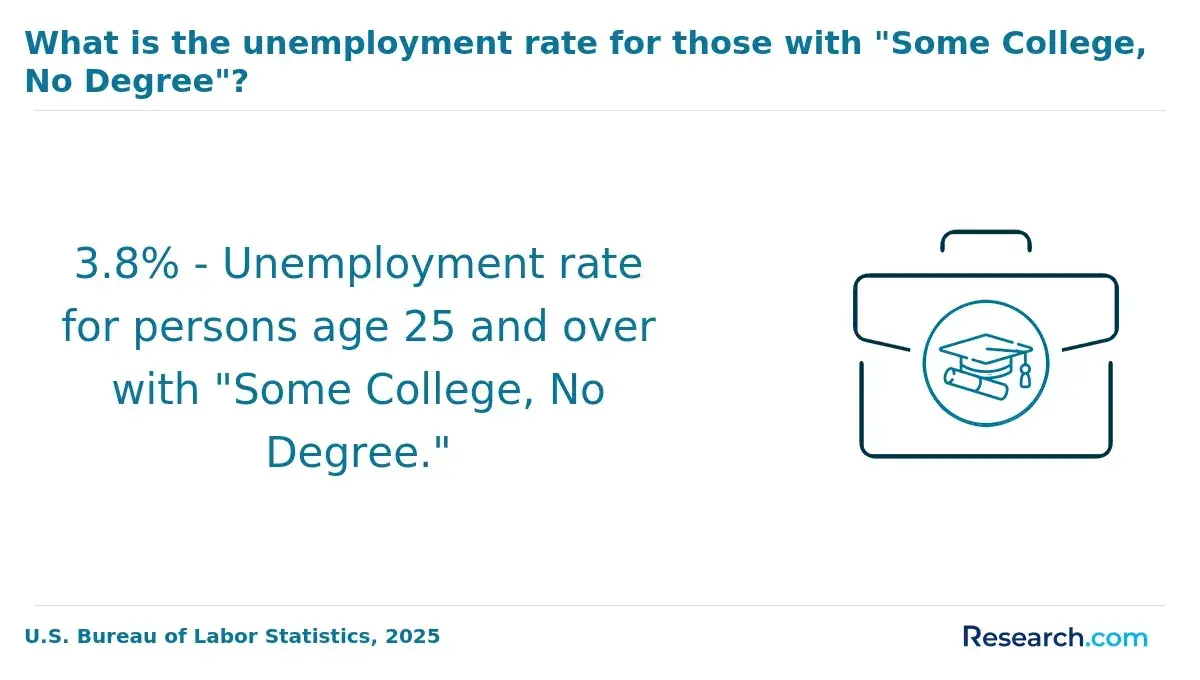
The credits that transfer best are usually recent, graded, college-level courses from accredited institutions that clearly match the receiving school's degree requirements. General education and lower-division math credits are often easier to place than specialized or outdated technical credits.
The table below shows how common prior credits tend to apply in online computer science programs. Actual acceptance varies by school, grade, course age, syllabus, and degree structure.
| Prior credit type | Transfer strength | Where it may apply | What to verify |
| English composition, communication, humanities, and social science | Often strong | General education | Whether the program has specific distribution requirements |
| College algebra, precalculus, calculus, and statistics | Often strong if aligned | Math prerequisites or quantitative requirements | Whether computer science requires calculus, discrete math, or both |
| Introductory programming | Moderate to strong | Intro CS or programming foundations | Programming language, syllabus depth, labs, and recency |
| Data structures or algorithms | Moderate | Core major requirements | Whether the prior course is equivalent in level and rigor |
| IT support, networking, or cybersecurity courses | Variable | Electives, concentrations, or technical foundations | Whether the CS degree treats IT coursework as major credit or elective credit |
| Old programming or systems courses | Variable to weak | Electives or foundations | Course age policy and whether content is still current |
| Developmental or remedial courses | Usually weak | Often not applicable to degree credit | Whether the credits are college-level and degree-applicable |
Students coming from another major should not assume unrelated credits are wasted. A prior business, psychology, criminal justice, or liberal arts transcript may cover general education and electives, leaving the student to focus mainly on math and computing. Students comparing career changes across fields may find that transfer rules differ substantially between computer science and an online degree psychology program because lab, statistics, practicum, and major-core requirements are structured differently.
How Do Transfer Agreements Affect Online Computer Science Degree Completion?
Transfer agreements can make online computer science degree completion more predictable. These agreements, often called articulation agreements, map courses from one institution to another so students know in advance which credits satisfy degree requirements.
For community college students, the strongest pathway is usually an associate degree designed for transfer, such as an Associate of Science in Computer Science or a state-approved transfer associate degree with calculus and programming. However, not every associate degree is equal: an applied associate degree may include career or technical courses that transfer as electives rather than major requirements.
Students should look for several features when reviewing transfer agreements:
- Course-by-course maps: These show whether programming, calculus, discrete math, and general education courses transfer into required categories.
- Guaranteed junior standing: This can reduce uncertainty, but only if the agreement applies to the specific online computer science degree.
- Major prerequisite alignment: The best agreements include required math and CS prerequisites, not just general education completion.
- Grade and GPA rules: Some agreements require minimum grades in major courses or a minimum cumulative GPA.
- Expiration or catalog rules: Students should confirm which catalog year applies and whether the agreement changes before they transfer.
Transfer agreements are especially useful when students plan early. If you are still at a community college, choosing the right calculus, programming, and discrete math sequence can save more time than simply accumulating elective credits.
What Transfer Policies Should Students Compare Before Choosing an Online Computer Science Degree?
The best transfer policy is the one that reduces your remaining required courses while preserving degree quality, accreditation, and career relevance. Comparing only the maximum number of accepted credits can lead to poor decisions because two schools with the same 90-credit ceiling may apply your transcript very differently.
Before applying, compare these policy details across programs:
- Maximum transfer credits: Identify the ceiling, but do not treat it as your expected award.
- Minimum residency requirement: Confirm how many credits must be completed at the institution awarding the degree.
- Major-credit transfer limits: Ask how many required computer science courses may be transferred, not just total credits.
- Upper-division requirements: Many programs require a minimum number of advanced courses through the school.
- Technical course age rules: Older programming, databases, systems, and security courses may receive reduced credit or elective placement.
- Prior learning rules: Check whether military, certifications, exams, or portfolios can satisfy major requirements or only electives.
- Accreditation: Verify institutional accreditation and determine whether ABET accreditation matters for your goals, employer, graduate school, or professional pathway.
- Tuition after transfer: Calculate cost from the remaining required credits, not the full advertised program cost.
- Course availability: A low remaining credit count is less useful if required courses are offered infrequently.
This same comparison mindset applies across online degrees. For example, students comparing computer science with business pathways such as AACSB accredited online MBA programs should recognize that graduate business accreditation, undergraduate transfer rules, and prerequisite expectations are evaluated very differently.
Red flags include schools that will not provide a clear degree audit before enrollment, programs that describe transfer credits only in marketing language, and evaluations that count many credits as electives while leaving most major requirements untouched.
Which Students Benefit Most From Transfer-Friendly Online Computer Science Degree Programs?
Transfer-friendly online computer science programs are most valuable for students who already have usable college-level credits and need a flexible way to finish a bachelor's degree. They can be especially helpful for adults who cannot pause work, relocate, or follow a traditional campus schedule.
The students most likely to benefit include:
- Associate-degree graduates: Students with an AS or AA that includes calculus, programming, and general education may enter with a large portion of the degree complete.
- Former computer science or engineering majors: Students who stopped out may be able to preserve math and foundational CS credits if the coursework is recent and aligned.
- Military-connected students: Military training, prior college, and exam credits can combine well at institutions experienced in evaluating nontraditional credit.
- Career changers with a prior bachelor's degree: These students may satisfy general education quickly and focus on the CS major, though some may prefer a postbaccalaureate CS route.
- Working IT professionals: Prior networking, security, programming, or certification-based learning may reduce electives or foundations, depending on the school.
Students who should avoid choosing primarily by transfer maximum include first-time college students, students with mostly remedial credits, students aiming for employers or graduate schools that strongly prefer ABET-accredited CS coursework, and students whose old technical courses no longer match modern curricula. Career changers considering people-focused or licensed fields should also compare how fieldwork and accreditation affect transfer value in options such as MSW best programs, where supervised practice requirements can limit the usefulness of unrelated credits.
How Should Students Choose an Online Computer Science Degree Based on Transfer Efficiency?
Students should choose an online computer science degree based on transfer efficiency, not transfer generosity alone. Transfer efficiency means the program accepts the maximum number of credits that actually reduce required coursework, total tuition, and time to graduation while still supporting the student's career goal.
A practical decision process should include the following steps:
- Define the career goal first: Software engineering, data science, cybersecurity, graduate school, and technical management may require different course choices.
- Shortlist only accredited institutions: Confirm institutional accreditation through recognized U.S. accrediting bodies and check whether programmatic accreditation matters for your intended path.
- Request evaluations from multiple schools: One school may apply your credits to the major while another counts the same credits as electives.
- Compare remaining courses: Review the actual degree audit, not just the transfer total.
- Calculate total completion cost: Include tuition, fees, books, technology costs, transcript fees, prior learning assessment fees, and lost income from heavier course loads.
- Check course sequencing: Make sure prerequisites, capstone courses, and upper-division requirements are available online in the terms you need.
- Evaluate career support: Look for portfolio projects, internship options, employer partnerships, coding interview preparation, GitHub-ready assignments, and alumni outcomes where available.
- Choose the best net outcome: The strongest option is the one that balances accepted credits, remaining cost, academic fit, scheduling, and career value.
Does accepting more transfer credits always mean a faster or cheaper degree? No. A program that accepts fewer total credits may still be better if it accepts the right credits, offers a clearer course sequence, has stronger computing coursework, or better matches your target role. Conversely, a high-transfer program can be the best investment when it turns prior learning into real progress toward a respected, career-relevant bachelor's degree.
Other Things You Should Know About Computer Science
Employers usually focus on the completed degree, skills, projects, experience, and interview performance rather than the number of transferred credits. However, the degree-granting institution should be accredited, and your transcript should support the technical background expected for the role.
Some schools allow additional transcripts, exam scores, or approved prior learning to be submitted after enrollment, but deadlines vary. Ask before enrolling because late submissions may not change your degree plan or financial aid status in time.
Many institutions issue the same diploma for online and campus students, but transcript and diploma wording varies by school. Ask the registrar directly if diploma language matters for your employer, graduate school, or personal preference.
They may be accepted, but most schools require a course-by-course evaluation from an approved credential evaluation agency. Students should also provide syllabi, grading scales, and official English translations when requested.
References
- Transfer & Articulation Agreements https://atlanticcape.edu/student-resources/transfer-planning/transfer-agreements.php
- Top Online Schools That Accept Transfer Credits https://www.edvisorly.com/student-guides/online-schools-that-accept-transfer-credits
- Postsecondary Articulation Agreements https://www.stevenscollege.edu/academics/postsecondary-articulation-agreements/
- Best Online Schools for Transferring Credits [2026 Guide] https://www.straighterline.com/blog/transfer-best-online-schools-for-transferring-credits
- Best Online Computer Science Degrees for Non-Traditional Students https://www.collegetransitions.com/blog/best-online-computer-science-degrees-for-non-traditional-students/