2027 How to Become a Radiology Technician in Texas

Co-Founder and Chief Data Scientist
Training for radiology technician jobs in Texas is a focused way to enter healthcare without spending the same amount of time in school required for many advanced clinical careers. The role combines patient care, anatomy, imaging equipment, safety protocols, and teamwork with physicians who rely on clear images to diagnose injuries and medical conditions.
This guide explains the full Texas pathway: education, clinical training, ARRT certification, state licensure, salary ranges, job settings, regional differences, technology changes, advancement options, and mistakes to avoid before choosing a program. It is written for students comparing allied health careers, adults changing careers, and current healthcare workers considering radiologic technology as a more technical patient-care role.
Quick answer: how do you become a radiology technician in Texas?
In Texas, the usual path is to graduate from an accredited radiologic technology program, often an associate degree completed in about two years, finish supervised clinical rotations, pass the American Registry of Radiologic Technologists exam, and apply for the required Texas authorization to practice. Most employers prefer or require ARRT certification, and technologists must keep credentials active through renewal and continuing education.
Key facts to know before you start
- Texas career sources describe demand as strong, with projected growth of about 17% through 2030, a rate higher than the national average.
- Radiology technician salaries in Texas are commonly reported at around $58,000 per year, but actual pay depends on location, employer, shift, specialty credentials, and experience.
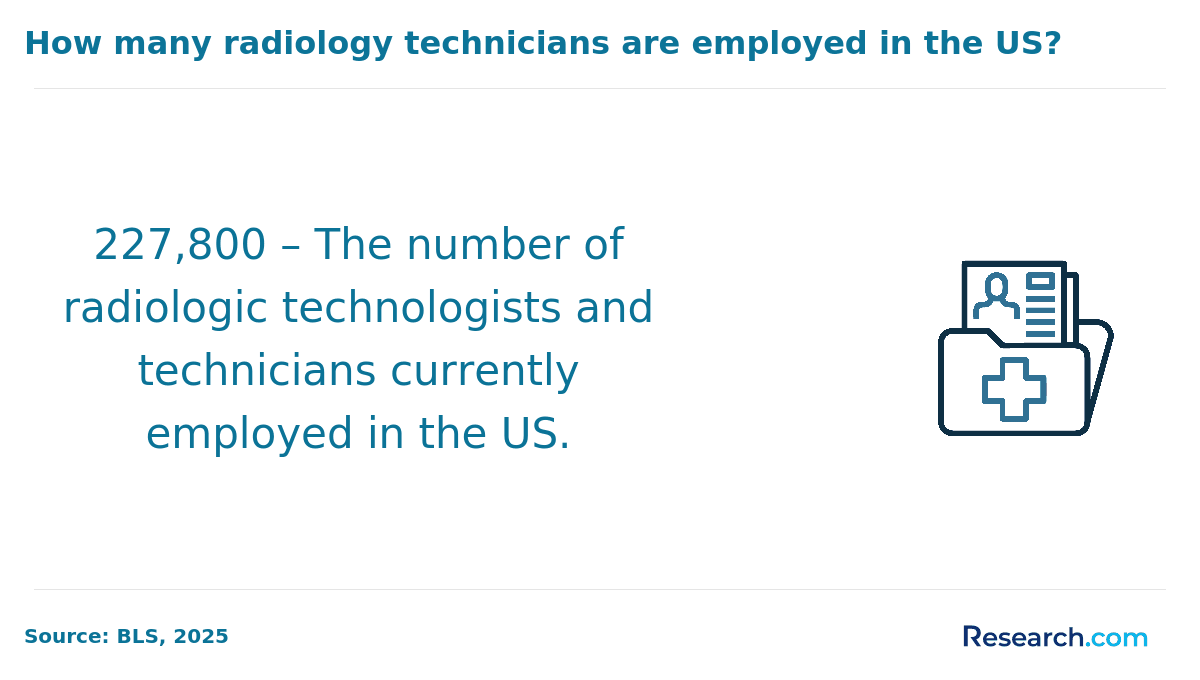
- Texas has around 12,000 employed radiologic technologists, so graduates enter a large and varied healthcare market.
- Hospitals are the main employer. About 60% of techs work in hospitals, where pay may be higher because the work often includes emergency imaging, high patient volume, and more complex procedures.
- Education required for Texas radiology technicians
- Skills needed for radiologic technology work
- Texas licensing and ARRT certification requirements
- Radiology technician salaries in Texas
- Texas job outlook for radiology technicians
- Best work settings for radiology technicians
- How to compare Texas radiology technician programs
- Whether nursing knowledge can support an imaging career
- How nursing-related credentials may broaden clinical skills
- Technology trends in radiology
- Challenges to expect in this career
- Legal and ethical responsibilities
- Career growth and professional development
- Work-life balance for radiology technicians in Texas
- Regional career differences across Texas
What level of education is required to become a radiology technician in Texas?
The most common entry route is a formal radiologic technology program. Many Texas students complete an associate degree in radiologic technology through a community college, technical college, or allied health institution. These programs usually take about two years and include both classroom learning and supervised clinical experience.
Accreditation should be your first checkpoint. Look for a program accredited by the Joint Review Committee on Education in Radiologic Technology, commonly known as JRCERT, or another recognized accreditor accepted for certification and licensure purposes. Before applying, confirm that the program is designed to prepare graduates for ARRT certification and Texas licensing expectations.
Radiologic technology coursework typically includes anatomy, physiology, radiation physics, radiographic procedures, patient care, image analysis, and radiation protection. Students learn more than how to use imaging equipment. They also learn why images are ordered, how to limit unnecessary exposure, how to evaluate image quality, and how to care for patients who may be injured, anxious, or medically unstable.
Clinical rotations are where the career becomes real. In hospitals, clinics, or imaging centers, students practice patient positioning, equipment operation, order verification, documentation, and radiation safety under supervision. These experiences help students decide whether they are comfortable with the pace, physical demands, patient interaction, and precision required in imaging work.
After graduation, candidates usually take the American Registry of Radiologic Technologists certification exam. Passing the ARRT exam and completing the Texas licensing process helps graduates qualify for radiologic technologist roles. If you are comparing earnings across states, Research.com’s guide to radiology tech salary by state can help you put Texas pay into context.
| Training component | Why it matters | What to check before enrolling |
| Accredited radiologic technology program | Builds the academic, clinical, safety, and licensure foundation needed for entry-level practice. | Verify JRCERT or another accepted accreditation and confirm ARRT exam preparation. |
| Associate degree pathway | Provides the standard educational route for many Texas radiologic technologist positions. | Review length, prerequisites, tuition, fees, clinical sites, and completion requirements. |
| Clinical rotations | Develops hands-on patient-care and imaging experience in supervised healthcare settings. | Ask which facilities host students, how placements are assigned, and which modalities are included. |
| ARRT exam preparation | Supports a credential that many employers expect and that fits the professional licensing pathway. | Ask about faculty qualifications, exam support, and graduate outcomes when available. |
What essential skills do you need to be a radiology technician in Texas?
Radiology technicians need technical accuracy, clinical judgment, communication skills, and a strong safety mindset. The work is not simply pressing a button. A good technologist understands patient condition, physician orders, anatomy, imaging protocols, equipment limits, and how to produce usable images while protecting patients and staff.
Equipment competence is essential. Depending on training and credentials, technologists may work with X-ray units, CT scanners, MRI systems, and digital imaging platforms. Some Texas career discussions describe demand for radiologic technologists as expected to grow by around 15% over the next decade, making current technical skills important for new graduates.
Precision matters on every exam. Poor positioning can reduce image quality, lead to repeat imaging, increase patient discomfort, or expose a patient to avoidable radiation. Strong technologists follow protocols closely while adjusting safely for patients who cannot move easily or who are in pain.
Communication is another core skill. Patients may arrive frightened, injured, confused, or unfamiliar with imaging procedures. Radiology technicians explain what will happen, confirm identity, give clear instructions, answer basic questions, and coordinate with nurses, physicians, radiologists, and schedulers.
Compliance knowledge is also required. Technologists must understand radiation protection, infection control, documentation standards, privacy rules, equipment checks, and Texas-specific credential expectations. These responsibilities are part of patient safety, not optional administrative tasks.
| Skill area | How it appears at work | Why employers care |
| Imaging equipment operation | Using X-ray, CT, MRI, and digital imaging systems according to protocol. | Supports accurate diagnostic images and reduces procedural errors. |
| Patient positioning | Placing the patient safely so the correct anatomy is captured. | Improves image quality and lowers the chance of repeat exams. |
| Patient communication | Explaining exams, giving instructions, and helping anxious patients cooperate. | Improves comfort, efficiency, and patient experience. |
| Radiation safety | Applying dose reduction practices and workplace safety procedures. | Protects patients, coworkers, and the technologist. |
| Team coordination | Communicating with radiologists, physicians, nurses, transport staff, and scheduling teams. | Keeps imaging orders, patient movement, and clinical decisions on track. |
What are the licensing or certification requirements for radiology technicians in Texas?
Radiology technicians in Texas generally need recognized professional certification and state authorization before working independently. The best-known credential is certification from the American Registry of Radiologic Technologists. ARRT certification indicates that a technologist completed an approved education pathway, met ethics requirements, and passed an exam covering patient care, safety, procedures, and clinical knowledge.
The usual order is to complete an accredited radiologic technology program, pass the ARRT certification exam, and then complete the Texas licensing process. Texas licensing information for this field commonly refers to oversight involving the Texas Medical Board and the Texas Department of State Health Services, so applicants should always verify the current process directly with the appropriate Texas authority before submitting an application.
Under the Texas pathway described for this career, applicants with valid ARRT credentials do not have to take a separate state exam. However, applicants should expect to submit documentation, complete a background check, and pay the required licensing fee. Renewal is required every two years, and technologists must maintain continuing education and ARRT good standing.
If you are comparing imaging professions, sonography is worth reviewing as a separate path. Research.com’s guide on becoming an ultrasound technician can help you compare training difficulty, patient-care duties, and credential requirements across imaging careers.
| Step | What happens | Decision tip |
| Graduate from an accredited program | Complete radiologic technology training that supports certification eligibility. | Confirm ARRT eligibility before you commit to the school. |
| Pass the ARRT exam | Show entry-level competence in patient care, imaging procedures, safety, and ethics. | Ask programs what exam preparation and graduate support they provide. |
| Apply for Texas licensure | Submit required credentials, complete screening, and pay the licensing fee. | Check current Texas instructions because requirements and processes may change. |
| Maintain credentials | Complete continuing education and renew the license every two years. | Track renewal deadlines so your work eligibility is not interrupted. |
How much can radiology technicians earn in Texas?
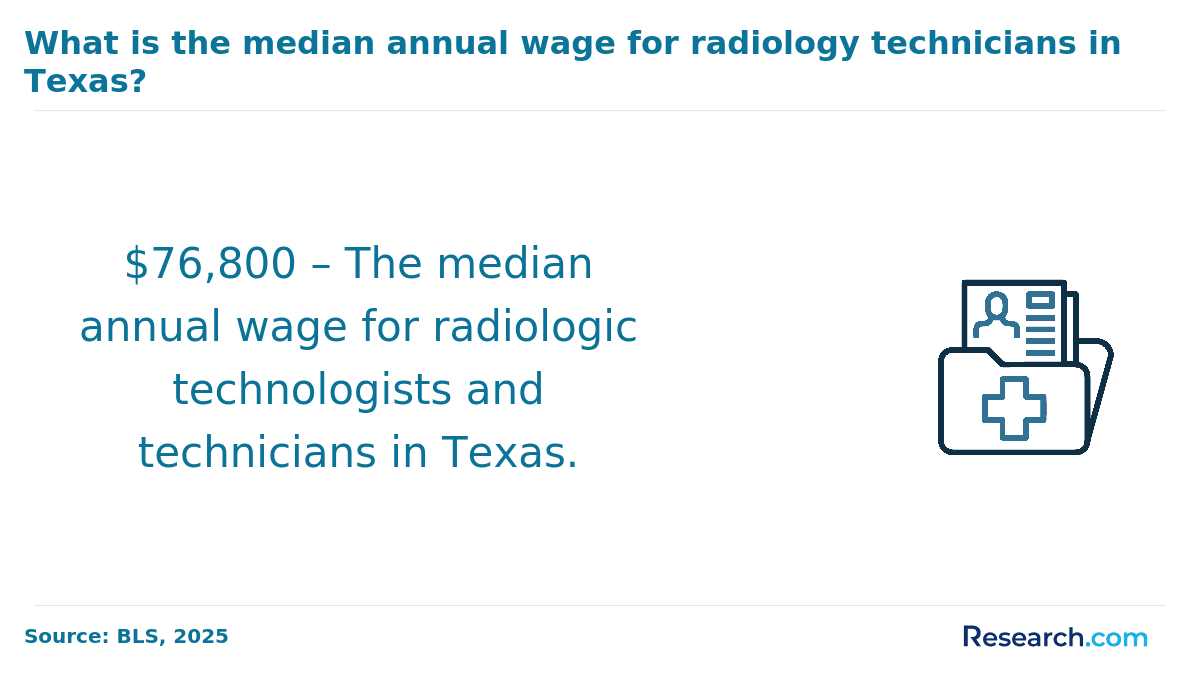
Radiology technician earnings in Texas vary by experience, specialty, employer, shift, city, and credential level. Entry-level roles are often described as paying between $45,000 and $55,000 per year, particularly in smaller clinics, nonprofit organizations, public health settings, or facilities with tighter compensation budgets.
Technologists with experience and advanced modality credentials can earn more. Advanced radiology techs are commonly described as earning anywhere from $65,000 to $85,000 annually, especially in large hospitals, government healthcare facilities, outpatient centers, and specialized imaging departments.
Several Texas salary estimates are used in career planning materials. Average pay is often cited at around $58,000 per year, and the mean annual salary is also described as around $59,000 as of 2023. Use these figures as planning benchmarks, not guaranteed outcomes. Your actual pay can change based on overtime, weekend or night differentials, local labor demand, employer policies, specialty certification, and benefits.
| Career stage or setting | Pay information cited | What may change earnings |
| Entry-level radiology technician | Between $45,000 and $55,000 per year | City, employer budget, shift, facility type, and initial credential level. |
| Average Texas radiology technician | Around $58,000 per year | Experience, local demand, and specialty preparation. |
| Mean annual salary cited for 2023 | Around $59,000 | Cost of living, employer type, and regional labor conditions. |
| Advanced or specialized technologist | Anywhere from $65,000 to $85,000 annually | CT, MRI, mammography, leadership duties, hospital volume, or government employment. |
Do not judge a job offer by wages alone. Health insurance, retirement contributions, tuition reimbursement, shift differentials, overtime rules, commute length, scheduling flexibility, and promotion opportunities can significantly affect the total value of a position. If you are comparing healthcare with other hands-on fields, Research.com’s guide to the best trade careers can help you weigh training time, stability, and earning potential.
What is the job outlook for radiology technicians in Texas?
The outlook for radiology technicians in Texas is positive for candidates who complete accredited education, earn ARRT certification, and remain flexible about work settings. Demand is supported by Texas’s large healthcare system, population growth, aging patients, emergency medicine, orthopedics, oncology, cardiology, outpatient care, and continued reliance on diagnostic imaging.
Major cities such as Houston, Dallas, and Austin usually offer more openings, larger imaging departments, more specialty roles, and greater access to advanced equipment. Rural and underserved communities may have fewer facilities, but qualified technologists may find broader responsibilities and potential recruitment incentives.
Career mobility improves when technologists keep adding skills. CT, MRI, mammography, and other modality training can make candidates more competitive and prepare them for higher-responsibility roles. If flexibility is important, compare campus programs with hybrid or online-supported options such as Research.com’s guide to online radiologic technology programs.
Texas pay also needs to be considered against regional living costs. Urban positions may offer higher wages but can involve more expensive housing and longer commutes. Smaller communities may offer lower costs, steadier schedules, or different incentives, even when base pay is lower.
Which industries provide the best opportunities for radiology technicians?
Hospitals are the largest employment setting for radiology technicians and often the most intense. About 60% of techs work in hospitals, where roles may pay more because technologists handle emergency imaging, inpatient care, surgery support, trauma cases, and high procedure volume. The trade-off is that hospital schedules can include evenings, weekends, holidays, and on-call assignments.
Outpatient imaging centers and diagnostic laboratories may appeal to technologists who want a more predictable routine. These settings may not always match hospital pay, but they can offer scheduled appointments, fewer emergency cases, and a more focused workflow.
Government facilities, public hospitals, military-related healthcare organizations, and veterans’ hospitals may be a good fit for people who value structured benefits, retirement plans, stability, and formal advancement systems. Private healthcare networks and corporate imaging groups may offer stronger pay in some markets, especially when hiring for newer equipment or specialty modalities.
Nonprofit healthcare organizations may not always lead on salary, but they can offer community-focused work, benefits, mission-driven care, and, in some cases, loan forgiveness opportunities. The right setting depends on whether you prioritize income, schedule, patient population, benefits, specialization, or advancement.
| Work setting | Best fit for | Trade-offs to evaluate |
| Hospitals | Technologists seeking complex cases, high-volume experience, and specialty exposure. | May require nights, weekends, holidays, emergency coverage, and a faster pace. |
| Outpatient imaging centers | Professionals who prefer scheduled exams and more predictable hours. | May offer fewer emergency, trauma, or highly specialized cases. |
| Diagnostic laboratories | Technologists who like structured procedures and consistent imaging workflows. | Variety may be limited depending on the facility’s services. |
| Government healthcare facilities | Workers who value benefits, job stability, and defined employment systems. | Compensation may not always be higher than private-sector offers. |
| Nonprofit organizations | People motivated by access to care, community health, and service-oriented work. | Salary growth and equipment upgrades may depend on budget limits. |
How do you choose the right radiology technician training program in Texas?
Your program choice affects nearly everything that follows: certification eligibility, clinical preparation, licensing readiness, cost, and employability. Begin with accreditation. A program that is not properly accredited or accepted for certification purposes may restrict your ability to take the ARRT exam or qualify for licensure.
Clinical placement quality is the next major factor. A strong program should place students in real healthcare environments, not rely only on simulation or classroom practice. Ask whether students rotate through hospitals, outpatient centers, trauma units, pediatric imaging areas, or specialty departments. Broader exposure can help you identify the work setting and modality that fit you best.
Affordability should include the full cost of attendance, not just posted tuition. Budget for fees, textbooks, uniforms, background checks, immunizations, parking, travel to clinical sites, exam fees, and possible lost income if you reduce work hours. Scholarships, financial aid, employer tuition assistance, and transfer credits can make a meaningful difference.
If you are still deciding among allied health careers, compare radiologic technology with other Texas options such as the top medical assistant schools and programs in Texas. Medical assisting and radiologic technology lead to different scopes of practice, but the comparison can clarify whether you prefer imaging-focused technical work or broader clinic-based duties.
| Question to ask a program | Why the answer matters |
| Is the program accredited by JRCERT or another accepted accreditor? | Accreditation can affect ARRT eligibility, licensure, and employer trust. |
| Does the curriculum prepare graduates for the ARRT exam? | ARRT certification is a central credential for many radiology technician roles. |
| Where are clinical rotations completed? | Clinical sites determine much of your practical experience and early professional network. |
| What is the complete cost beyond tuition? | Fees, supplies, commuting, background checks, and exam costs can change affordability. |
| What support is available for working adults? | Program scheduling can determine whether students with jobs or families can finish. |
| How are transfer credits evaluated? | Accepted credits may reduce both completion time and total cost. |
Could expanding your skill set into nursing enhance your radiology career in Texas?
Nursing and radiologic technology are different licensed professions, but nursing knowledge can help imaging professionals work more effectively with clinical teams. This is especially useful in hospitals, emergency departments, oncology imaging, surgical imaging, and facilities caring for medically complex patients.
You do not need to become a nurse to build a successful radiology career. Still, learning more about patient assessment, mobility support, medication safety, patient education, and care coordination can improve patient interactions and department workflow. Some radiology professionals later pursue nursing, leadership, education, or broader clinical roles because they want a wider scope of responsibility.
If you are thinking about a future career change or simply want to compare credential paths, Research.com’s guide on becoming a nurse in Texas explains nursing education, licensing, and training expectations.
How can radiology technicians expand their scope with complementary nursing credentials?
Radiology technicians who want broader clinical understanding can take targeted patient-care courses, earn focused healthcare certifications, or eventually pursue formal nursing education. The best choice depends on the goal. If you plan to remain in imaging, CT, MRI, mammography, or other modality credentials may be more directly useful. If you want a broader clinical role, nursing may be worth exploring.
Nursing-related knowledge can help with patient screening, recognizing changes in patient condition, communicating with nurses and physicians, and performing safe transfers or positioning. It may also support leadership growth in imaging departments that coordinate closely with inpatient units, emergency teams, and procedural areas.
Before investing in nursing coursework, compare time commitment, cost, licensure requirements, and likely career outcomes. Research.com’s guide to Texas nursing license requirements can help you decide whether nursing is a useful supplement, a future transition, or unnecessary for your career plan.
What are the latest trends and emerging technologies in radiology?
Radiology work is increasingly digital, connected, and technology-driven. Film-based processes have largely been replaced by digital image capture, electronic image storage, and fast image sharing across care teams. For Texas technologists, digital fluency is now part of everyday competence.
Artificial intelligence tools are increasingly used to support image review, prioritization, workflow management, and quality checks. These systems do not replace skilled technologists. They make image quality, protocol adherence, system awareness, and careful documentation even more important.
Remote image review and telemedicine also matter in Texas because the state is geographically large. Rural facilities may send images to specialists in larger medical centers, which makes accurate documentation, secure digital transmission, and privacy compliance essential.
Technologists who want to stay competitive should keep building skills in digital image acquisition, CT, MRI, digital X-ray, electronic health records, secure image transfer, cybersecurity basics, and patient communication in technology-supported care settings.
- Understand how digital X-ray, CT, MRI, and related systems are used in your target workplace.
- Follow employer policies for AI-supported imaging workflows and quality review.
- Learn privacy and cybersecurity practices for protecting patient images and health records.
- Communicate clearly when patients receive imaging through referrals, transfers, or telehealth-supported care.
- Use continuing education to stay current with equipment upgrades, safety rules, and workflow changes.
What challenges should you expect as a radiology technician in Texas?
Radiologic technology can be a strong career, but the training and work are demanding. Programs include anatomy, radiation physics, patient care, imaging procedures, radiation safety, and supervised clinical practice. Admission may be competitive, especially when schools require prerequisites such as high school biology and math.
Credentialing adds another responsibility. Graduates must pass the ARRT exam, complete Texas licensing requirements, and maintain continuing education while employed. Students who are balancing work, family, commuting, and clinical rotations should plan carefully before enrolling.
The job can also be physically and emotionally challenging. Technologists may stand for long shifts, move equipment, help position patients with limited mobility, work with trauma or emergency cases, and follow strict radiation safety rules. Hospital roles may include nights, weekends, holidays, or on-call coverage.
Opportunities can differ by region. Houston and Dallas often have more employers and specialty departments, while smaller communities may offer broader generalist duties. If you are still comparing healthcare programs, Research.com’s guide to online medical degree options can help you explore alternatives that may better match your schedule or long-term goals.
| Common mistake | Why it creates problems | Better choice |
| Enrolling without verifying accreditation | You may reduce or lose access to certification and licensure options. | Confirm accreditation and ARRT eligibility before applying. |
| Comparing programs by tuition only | Fees, transportation, clinical requirements, supplies, and exam costs can raise the true price. | Create a full program budget before making a decision. |
| Assuming online means fully remote | Radiologic technology requires in-person labs and clinical practice. | Ask exactly how labs and clinical rotations are completed. |
| Overlooking shift requirements | Hospital imaging jobs can require nights, weekends, holidays, and emergency coverage. | Ask programs, clinical sites, and employers about real scheduling expectations. |
| Treating salary estimates as guarantees | Pay changes by region, employer, specialty, experience, and benefits. | Compare current job postings and evaluate total compensation, not wages alone. |
What legal and ethical best practices should radiology technicians follow in Texas?
Radiology technicians work in a regulated healthcare role, so compliance is part of professional practice. Texas technologists must follow licensing rules, meet education and exam expectations, and keep credentials active through required continuing education. Failing to maintain these requirements can affect employment eligibility and professional standing.
Ethically, patient safety and privacy come first. Technologists must protect health information, follow HIPAA requirements, communicate only with authorized care team members, and stay within their training and facility protocols. They must also follow physician orders and avoid shortcuts that could increase radiation exposure or reduce image quality.
The ARRT Code of Ethics provides an important professional framework built around respect, competence, integrity, and safety. In daily practice, ethical imaging work includes confirming patient identity, explaining procedures clearly, using appropriate exposure techniques, documenting accurately, and speaking up when a situation appears unsafe.
- Use and maintain imaging equipment according to employer protocols.
- Explain procedures in clear language so patients know what to expect and how to participate safely.
- Apply radiation protection practices consistently for patients, staff, and yourself.
- Document exams, patient interactions, and required details accurately and on time.
- Complete continuing education, especially when technology, safety standards, or regulations change.
Texas has over 10,000 licensed radiologic technologists, and public trust depends on safe imaging practices, compliance, patient-centered care, and responsible use of technology.
What career and professional development opportunities exist for radiology technicians in Texas?
Radiology technicians in Texas can grow by earning specialty credentials, moving into advanced modalities, becoming lead technologists, teaching students, or taking on quality and department coordination roles. Common specialization areas include CT, MRI, mammography, and nuclear medicine. These options can increase responsibility and may improve earning potential.
Continuing education is required for credential maintenance. Texas radiologic technologists must earn continuing education credits every two years, which helps professionals stay current with imaging technology, patient safety practices, and regulatory expectations.
Professional groups and major healthcare organizations can also support advancement. The Texas Society of Radiologic Technologists offers workshops, seminars, conferences, and networking opportunities. Specialized training may be available through major healthcare centers, including the University of Texas MD Anderson Cancer Center for professionals interested in oncology imaging.
| Advancement option | Best fit | Possible benefit |
| CT certification | Technologists who want advanced cross-sectional imaging experience. | Can broaden opportunities in hospitals and imaging centers. |
| MRI specialization | Professionals interested in advanced imaging that does not use ionizing radiation. | May support specialized roles in hospital or outpatient settings. |
| Mammography | Technologists drawn to breast imaging, screening, and preventive care. | Can open opportunities in women’s health and diagnostic imaging centers. |
| Leadership or education | Experienced technologists who enjoy mentoring, quality control, scheduling, or team coordination. | Can move the career beyond direct imaging procedures. |
| Nuclear medicine or other specialty areas | Professionals seeking more specialized clinical responsibilities. | May require additional education, training, and credentialing. |
How Can Radiology Technicians Maintain Work-Life Balance in Texas?
Work-life balance in radiology depends on employer type, shift schedule, commute, patient volume, specialty, and staffing levels. Hospital imaging departments may be busy and may require long shifts, nights, weekends, holidays, or emergency coverage. Outpatient centers may offer more predictable hours, although they can still be fast-paced and productivity-focused.
Technologists can protect their well-being by asking about schedules before accepting a position, using employer wellness resources, taking breaks when permitted, staying physically conditioned, and building support with coworkers. Ergonomics and safe patient-handling habits also matter because the job often involves standing, moving equipment, and helping patients into position.
If schedule flexibility is one of your main concerns, compare radiography with nearby imaging careers. Research.com’s guide on becoming an ultrasound technician in Texas can help you decide whether sonography better matches your preferred work setting, patient population, and schedule.
How do regional variations in Texas impact radiology technician careers?
Location can change the salary, schedule, employer options, case mix, and advancement opportunities available to radiology technicians in Texas. Large metro areas such as Houston, Dallas, and Austin often provide access to major hospitals, trauma centers, specialty clinics, advanced equipment, and formal development pathways. These markets may also be more competitive and more expensive to live in.
Suburban and rural areas may offer different benefits. Technologists may perform a wider range of imaging duties, develop closer working relationships with providers, serve community-based patients, and find flexible scheduling or recruitment incentives. However, some specialty departments and advanced equipment may be less available than in major medical centers.
Your best region depends on your priorities. Choose a large metro market if you want specialization, high-volume experience, and access to major healthcare systems. Consider smaller communities if you prefer generalist responsibilities, community-based care, and potentially lower-pressure environments. If you want to compare broader patient-care roles, Research.com’s guide on becoming a medical assistant in Texas can help you evaluate other healthcare paths.
What do radiology technicians say about their careers in Texas?
"The radiology technician training I completed at Texas State University gave me the clinical exposure and faculty guidance I needed before entering a busy hospital department. I like knowing that the images I produce help physicians make treatment decisions. Working with patients across Texas has also shown me how much clear communication and cultural awareness matter in healthcare." -Aliah
"After completing my program at the University of Texas Health Science Center, I began working in a community healthcare facility. The job feels meaningful because diagnostic imaging directly supports treatment and recovery. Texas has many different healthcare needs, which keeps the work challenging, especially in communities where specialist access can be limited." -Jacob
"My radiologic technology education at Texas A&M University helped me gain technical confidence and improve my patient-care skills. I appreciate that the work combines equipment expertise with human interaction. Texas also offers many ways to keep developing through certifications and specializations, so the career continues to evolve." -Keisha
Related Articles for Nearby States
- 2027 How to Become a Radiology Technician in Louisiana
- 2027 How to Become a Radiology Technician in Oklahoma
- 2027 How to Become a Radiology Technician in Arkansas
- 2027 How to Become a Radiology Technician in New Mexico
- 2027 How to Become a Radiology Technician in Kansas
- 2027 How to Become a Radiology Technician in Missouri
- 2027 How to Become a Radiology Technician in Colorado
- 2027 How to Become a Radiology Technician in Mississippi
- 2027 How to Become a Radiology Technician in Tennessee
- 2027 How to Become a Radiology Technician in Arizona
Key Insights
- The standard Texas pathway is an accredited radiologic technology program, often an associate degree completed in about two years, followed by ARRT certification and Texas licensure.
- Accreditation is the most important program filter. Before enrolling, confirm that the school supports ARRT eligibility and aligns with Texas licensing expectations.
- Salary estimates should be used carefully. Entry-level roles are often described as paying between $45,000 and $55,000 per year, while advanced radiology techs may earn anywhere from $65,000 to $85,000 annually depending on credentials, specialty, employer, and location.
- Hospitals employ about 60% of techs and can offer strong clinical experience, but schedules may include nights, weekends, holidays, emergency cases, and on-call work.
- Outpatient imaging centers and diagnostic laboratories may offer more predictable schedules, while hospitals and specialty centers may provide more complex cases and advancement opportunities.
- Career growth often comes from specialization in CT, MRI, mammography, nuclear medicine, leadership, or education, but each option should be weighed against cost, training time, credential requirements, and local demand.
- Digital imaging, AI-assisted workflows, telemedicine, and secure image sharing are changing the field, so future-ready technologists need strong technical adaptability and compliance habits.
- Before choosing a program, ask about accreditation, clinical sites, ARRT preparation, full costs, transfer policies, working-adult support, and graduate outcomes.
References:
- Radiologic Technology | South Texas College https://www.southtexascollege.edu/academics/radiology/
- Radiological Technology | North Central Texas College https://www.nctc.edu/radiology
- Online Radiologic Technology - Associate of Applied Science Degree Completion Program https://www.chcp.edu/degrees-certificates/online/radiologic-technology-aas-completion-program/
- Radiologic Technology - Texas Southmost College https://www.tsc.edu/academics-and-career-programs/health-professions/radiologic-technology-program/
- Radiologic Technology | Blinn College https://www.blinn.edu/radiologic-technology/index.html
- Earn an Associate Degree in Radiologic Technology — TCC https://www.tccd.edu/academics/courses-and-programs/programs-a-z/credit/radiologic-technology/
- Radiologic Technologists - Workforce Solutions https://wrksolutions.com/for-individuals/career-exploration/radiologic-technologists
- Medical Radiologic Technology AAS Degree https://www.lonestar.edu/programs-of-study/medical-radiology-tech-aas.htm
- What Education Do Radiology Technologists Have? | All Allied Schools https://www.allalliedhealthschools.com/radiology-technician/training/
- What Is the Best Degree Path to Becoming a Radiologic Technologist? - Best Degree Programs https://www.bestdegreeprograms.org/faq/degree-path-radiologic-technologist/
Other Things You Should Know About How to Become a Radiology Technician in Texas
The Texas Medical Board does not issue a separate radiology technician license. Texas recognizes radiologic technologists through certification and registration standards tied to the Texas Department of State Health Services, and many employers also require ARRT certification.
In Texas, institutions such as Texas State University and El Centro College offer accredited radiology technician programs. Ensure the program is accredited by the Joint Review Committee on Education in Radiologic Technology (JRCERT) for eligibility to take the licensing exam.
To become a radiology technician in Texas in 2027, you need to complete an accredited radiologic technologist program, which typically results in an associate degree. Accreditation must be from the Joint Review Committee on Education in Radiologic Technology (JRCERT) or similar bodies.