
2027 What Medical Degrees Can I Get Online?

Co-Founder and Chief Data Scientist
Choosing an online medical degree is not just a question of convenience. It affects whether you can qualify for licensure, complete clinical training near home, use financial aid, and compete for healthcare jobs after graduation. Some healthcare degrees can be completed fully online, while others use a hybrid model because patient care, labs, imaging practice, or supervised clinical hours must happen in person.
This guide explains which medical and healthcare degrees are realistic to earn online, how employers evaluate them, what clinical requirements to expect, and how to compare programs before enrolling. It is designed for working adults, career changers, current healthcare workers, and students who want a flexible path into healthcare without choosing a program that fails to meet accreditation, certification, or licensing standards.
Quick Answer: Can You Get a Medical Degree Online?
Yes, many healthcare-related degrees are available online, but not every medical career can be trained fully online. Administrative, public health, informatics, medical billing, coding, and some healthcare management programs may be 100% online. Clinical fields such as nursing, respiratory therapy, radiologic technology, physician assistant studies, and pharmacy typically require hybrid study because students must complete supervised labs, clinical rotations, or practicums in approved healthcare settings.
- Best fully online options: Healthcare administration, public health, medical billing and coding, health informatics, and some biology-related programs.
- Best hybrid options: Nursing, respiratory therapy, radiologic technology, physician assistant studies, pharmacy, sonography, and other patient-facing programs.
- Most important requirement: Accreditation. A flexible format is useful only if the program qualifies you for licensing, certification, employment, or graduate study.
- Employer acceptance: Employers generally focus on accreditation, clinical readiness, licensure eligibility, and skills rather than whether lectures were delivered online.
- Top online medical degree options for 2027
- Are online medical degrees accepted by employers?
- Online medical degrees vs. campus programs: key differences
- How long online medical degrees usually take
- Common admission requirements
- Technology requirements for online healthcare students
- How clinical hours work in online and hybrid programs
- Benefits of earning a medical degree online
- How to choose the right online medical degree program
- How online programs support academic and career success
- Whether an online pharmacy degree can work
- Student support services to look for
- What makes an online medical degree crediblestudent success support
- How technology is changing online medical education
- How to compare affordable online MPH programs
- When an accelerated online biology degree may help
- Challenges of online medical degrees
- International recognition of online medical degreesonline learning challenges
- Professional certifications and career prospects
- Return on investment for an online medical degree
- How regulatory standards shape online medical programsROI considerationscertification valuenext steps
Top Online Medical Degree Options for 2027
The best online medical degree depends on whether you want direct patient care, healthcare leadership, imaging, respiratory care, or an advanced clinical role. The main decision is whether you can commit to in-person clinical training. If you need a fully remote program, administrative and data-focused healthcare fields are usually more realistic. If you want to treat patients, expect a hybrid format.
| Degree or Field | Typical Online Format | Best Fit | Major Caution |
| Nursing | Hybrid | Students seeking LPN, RN, BSN, MSN, or DNP pathways | Clinical placements and state licensure rules matter |
| Healthcare Administration | Often fully online | Students interested in management, operations, policy, or health systems leadership | Leadership roles may require experience in addition to the degree |
| Radiologic Technology | Hybrid | Students interested in diagnostic imaging and patient-facing technical roles | Hands-on imaging labs and clinical site access are essential |
| Respiratory Therapy | Hybrid | Students who want to work with patients who have breathing or cardiopulmonary conditions | Certification and licensure requirements must be verified before enrollment |
| Physician Assistant Studies | Hybrid | Students prepared for graduate-level clinical training and supervised practice | Admission is competitive and clinical rotations are extensive |
1. Nursing
Nursing is one of the most common healthcare fields with online and hybrid education pathways. Students may complete theory courses such as anatomy, pharmacology, pathophysiology, informatics, leadership, or community health online, but patient-care training must be completed in person. Depending on the credential, online options may include LPN bridge programs, ADN-to-RN pathways, RN-to-BSN programs, MSN degrees, and DNP programs.
For students who already hold college credits or healthcare experience, accelerated and bridge pathways may shorten the route. Research.com’s guide to the quickest way to become a nurse explains common accelerated routes and the trade-offs involved.
Career pathways in nursing
- Licensed Practical Nurse: Provides basic bedside care, monitors patients, and works under the supervision of RNs and physicians.
- Registered Nurse: Coordinates care, administers medications, educates patients, and works across hospitals, clinics, long-term care, and community health settings.
- Bachelor of Science in Nursing: Builds broader preparation in leadership, evidence-based care, public health, and professional nursing practice.
- Master of Science in Nursing and Doctor of Nursing Practice: Support advanced roles such as nurse practitioner, nurse educator, nurse leader, or nurse anesthetist, depending on program focus and licensure.
Salary and job outlook
- RNs earn an average annual salary of $94,480.
- Nurse Practitioners, who hold advanced degrees, earn an average of $128,490 annually.
- The demand for RNs is projected to grow 6% from 2023 to 2033, with even faster growth (40%) for nurse practitioners due to an increasing need for primary care providers.
2. Healthcare Administration
Healthcare administration is a strong online option because it focuses on the business, policy, technology, finance, and leadership side of healthcare rather than direct clinical care. Programs may cover healthcare law, quality improvement, reimbursement, operations, human resources, population health, ethics, and data-informed decision-making.
This route is especially useful for working adults who already understand healthcare settings and want to move into supervisory, operational, or executive roles. Students who want a shorter path may compare traditional programs with an accelerated healthcare administration degree online, but speed should not outweigh accreditation, curriculum quality, or employer recognition.
Career pathways in healthcare administration
- Healthcare administrator or medical and health services manager: Oversees staffing, budgets, compliance, patient services, and facility operations.
- Health informatics manager: Works with electronic health records, clinical data systems, reporting tools, and privacy requirements.
- Hospital or clinic director: Leads departments or facilities while coordinating quality, efficiency, regulatory compliance, and patient experience.
- Policy analyst or healthcare consultant: Evaluates healthcare programs, regulations, reimbursement models, and system-level performance.
Salary and job outlook
- Medical and health services managers earn an average of $134,440 per year.
- The employment of medical and health services managers is projected to grow 29% from 2023 to 2033, with about 61,400 openings, on average, each year. This job growth is much faster than the average for all occupations, due to an aging population and expanding healthcare services.
3. Radiologic Technology
Radiologic technology prepares students to operate medical imaging equipment, position patients, follow radiation safety protocols, and produce diagnostic images used by physicians. Because these skills cannot be mastered through lectures alone, online radiologic technology programs are usually hybrid. Students may study anatomy, patient care, radiation protection, image evaluation, and procedures online, then complete labs and clinical rotations in person.
Students should also understand the difference between radiology technicians and technologists before choosing a program. If affordability is a priority, compare program requirements, clinical access, and tuition through guides to radiology technician online programs.
Career pathways in radiologic technology
- Radiologic technologist: Produces diagnostic images and works with physicians and care teams to support diagnosis and treatment planning.
- MRI or CT technologist: Specializes in advanced imaging modalities such as magnetic resonance imaging or computed tomography.
- Radiation therapist: Helps deliver radiation treatment as part of an oncology care team.
- Diagnostic medical sonographer: Uses ultrasound equipment to capture images, often in specialties such as obstetrics, vascular imaging, or cardiac sonography. Students considering this route can review online sonography programs.
Salary and job outlook
- Radiologic technologists earn an average of $75,250 per year. Diagnostic medical sonographers earn an annual average salary of $89,020.
- Employment in radiologic technologists is projected to grow 6% from 2023 to 2033, with about 16,000 openings, on average, each year. This is driven by an aging population and increased demand for diagnostic imaging.
4. Respiratory Therapy
Respiratory therapy is a patient-care field focused on breathing and cardiopulmonary health. Students learn to assess patients, administer breathing treatments, manage ventilators, perform pulmonary testing, and respond to respiratory emergencies. Online coursework may cover anatomy, pharmacology, cardiopulmonary physiology, disease processes, and treatment planning, but students must complete supervised clinical practice in healthcare facilities.
Career pathways in respiratory therapy
- Registered respiratory therapist: Treats patients with breathing conditions, manages equipment, and collaborates with physicians and nurses.
- Pulmonary function technologist: Performs lung function testing used to diagnose and monitor respiratory disease.
- Neonatal or pediatric respiratory therapist: Works with infants and children who need respiratory support.
- Sleep disorder specialist: Assists with diagnosis and treatment of sleep-related breathing disorders such as sleep apnea.
Salary and job outlook
- Respiratory therapists earn an average salary of $80,340 per year.
- Employment of respiratory therapists is projected to grow 13% from 2023 to 2033, with over 8,200 openings, on average, each year. This job growth is much faster than the average for all occupations, due to an aging population and an increase in respiratory illnesses.
5. Physician Assistant
Physician assistant programs prepare graduate-level clinicians who evaluate patients, diagnose conditions, order and interpret tests, prescribe medications, assist with procedures, and work under physician supervision. Online PA programs are typically hybrid rather than fully remote. Didactic courses may be online, but clinical rotations must be completed in person across specialties.
This path is best for students who already have strong science preparation, patient-care exposure, and the ability to handle an intensive graduate curriculum. It can lead to one of the highest paid medical jobs, but students should confirm accreditation, certification exam eligibility, state requirements, and clinical placement expectations before applying.
Career pathways in physician assistance
- Primary care PA: Works in family medicine, internal medicine, or community care, often managing common conditions and long-term health needs.
- Emergency medicine PA: Assesses urgent cases, performs procedures, and supports emergency department teams.
- Surgical PA: Assists before, during, and after operations in collaboration with surgeons and operating room staff.
- Specialty PA: Practices in areas such as dermatology, cardiology, oncology, orthopedics, or other specialties.
Salary and job outlook
- Physician assistants earn an average salary of $130,490 per year, making it one of the highest paid medical jobs.
- Employment for PAs is projected to grow 28% from 2023 to 2033, with about 12,900 openings projected each year, on average.
Are Online Medical Degrees Accepted by Employers?
Employers generally accept online medical degrees when they come from accredited institutions and meet the requirements for the role. In healthcare, the delivery format is usually less important than whether the program is recognized by the appropriate accreditor, includes required clinical training, prepares students for certification or licensure, and produces graduates who can perform safely in healthcare settings.
Clinical employers pay close attention to hands-on preparation. For nursing, physician assistant studies, radiologic technology, respiratory therapy, and similar fields, a credible online program must include supervised in-person training. For nonclinical fields such as healthcare administration, public health, medical coding, and health informatics, fully online study can be a practical and widely accepted format when the curriculum and institution are reputable.
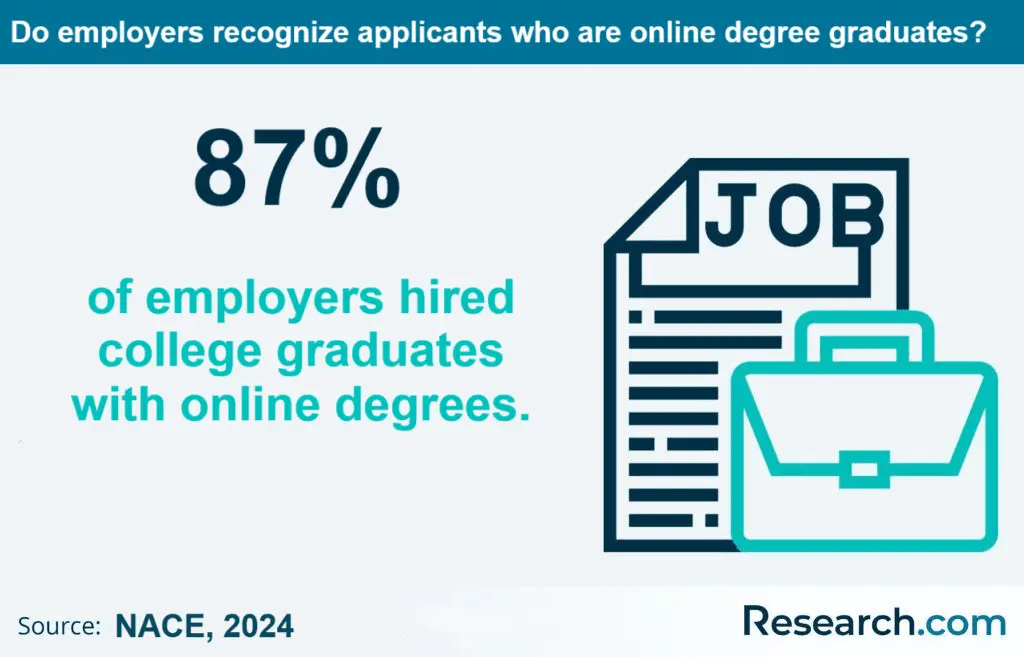
According to a survey by the National Association of Colleges and Employers, among employers that capture the degree modality of their new hires, 87% hired college graduates with online degrees. Moreover, there is no difference in the salaries of new hires with traditional degrees and those with online degrees.
Online Medical Degrees vs. Campus Programs: Key Differences
Online and campus-based medical programs can cover the same academic material, but they differ in scheduling, classroom interaction, lab access, clinical coordination, and day-to-day learning experience. Online study works well for independent learners who need flexibility. Campus study may be better for students who want face-to-face instruction, immediate access to labs, and a more structured weekly schedule.
| Factor | Online or Hybrid Medical Degree | Traditional Campus Program |
| Course delivery | Lectures, assignments, exams, and discussions are delivered online; some classes may be asynchronous or live | Most instruction happens in person on a set class schedule |
| Clinical training | Completed at approved sites, often near the student when the program allows it | Usually arranged through campus-affiliated local healthcare partners |
| Flexibility | Better for working adults, parents, military learners, and students outside commuting distance | Better for students who can attend classes and labs on campus regularly |
| Networking | Requires more effort through virtual events, faculty contact, clinical sites, and professional associations | More built-in opportunities through campus labs, classmates, faculty, and local partners |
| Best fit | Self-directed students who can manage deadlines and clinical logistics | Students who prefer in-person structure and direct access to campus resources |
Average salaries for selected healthcare occupations
| Healthcare Occupation | Average Annual Salary |
| Licensed Practical Nurse | $60,790 |
| Registered Nurses | $94,480 |
| Nurse Practitioners | $128,490 |
| Health Service Managers | $134,440 |
| Radiologic Technologist and Technicians | $75,250 |
| Radiation Therapist | $104,420 |
| Physician Assistants | $130,490 |
| Respiratory Therapists | $80,340 |
| Diagnostic Medical Sonographers | $89,020 |
How Long Online Medical Degrees Usually Take
Online medical degrees usually follow the same length as comparable campus programs. The format may make scheduling easier, but it does not remove clinical hours, labs, prerequisites, or competency requirements. Accelerated options can shorten completion time, but they often require heavier course loads and fewer breaks.
- Certificate and diploma programs: Entry-level options such as medical billing and coding, pharmacy technician, or medical assisting may take 6 months to 1 year.
- Associate degrees: Programs such as ADN nursing, respiratory therapy, and radiologic technology typically take 2 years.
- Bachelor’s degrees: Degrees such as BSN, healthcare administration, and public health often take about 4 years, while accelerated BSN programs for students with prior degrees may take 12–24 months.
- Master’s degrees: Graduate programs such as MSN, MHA, health informatics, or physician assistant studies commonly take 1.5 to 3 years.
- Doctoral degrees: Advanced options such as DNP, DHA, or PhD in Public Health may take 3 to 6 years, depending on enrollment pace and program structure.
Common Admission Requirements for Online Medical Degrees
Admission requirements vary by field and degree level. Nonclinical programs may have standard college admissions requirements, while clinical programs often add science prerequisites, entrance exams, background checks, immunization records, and proof of current licensure for bridge or advanced tracks.
- High school diploma or GED: Typically required for entry-level associate and bachelor’s programs.
- Prerequisite coursework: Biology, chemistry, anatomy, physiology, statistics, or math may be required for science-heavy and clinical programs.
- Minimum GPA: Many schools require a GPA of 2.5 or higher, though competitive clinical programs may expect stronger academic records.
- Current license or certification: RN-to-BSN and MSN programs usually require an active RN license; other bridge programs may require field-specific credentials.
- Entrance exams: Some programs may ask for SAT, ACT, GRE, or TEAS scores, although test-optional policies are common in some admissions processes.
- Recommendations and personal statement: Programs may ask applicants to explain career goals, prior experience, and readiness for online learning.
- Background checks and immunizations: Clinical programs commonly require screenings, drug tests, and vaccination documentation before students enter healthcare sites.
Technology Requirements for Online Healthcare Students
Online medical students need reliable technology because coursework may include live lectures, proctored exams, simulations, electronic health record practice, imaging software, discussion boards, and secure communication with faculty. Requirements vary by school, but students should budget for more than a basic phone or tablet.
Hardware and internet access
- Computer: A dependable laptop or desktop with at least 8GB of RAM, a multi-core processor, and a solid-state drive (SSD) for stronger performance.
- Internet: A stable broadband connection of at least 10 Mbps for lectures, video meetings, file uploads, and online testing.
- Webcam and microphone: Often required for virtual class meetings, skills check-ins, advising, group work, and proctored exams.
Common software tools
- Learning platform access: Schools commonly use systems such as Blackboard, Canvas, or Moodle.
- Browser: Updated versions of Google Chrome, Mozilla Firefox, or Microsoft Edge are commonly recommended.
- Productivity software: Microsoft Office or Google Workspace is often needed for papers, presentations, spreadsheets, and collaboration.
- Video conferencing: Zoom, Microsoft Teams, or Google Meet may be used for live sessions and faculty meetings.
Program-specific tools
- Virtual labs and simulations: Nursing, imaging, and allied health programs may use anatomy simulations, virtual patients, or imaging tools.
- Electronic health record training: Healthcare administration and informatics programs may require EHR simulation platforms.
Before enrolling, ask the program for its official technology checklist. A program that requires specialized software may also require a newer computer, secure testing software, or compatibility with specific operating systems.
How Clinical Hours Work in Online and Hybrid Medical Programs
Clinical hours give students supervised experience with patients, equipment, procedures, documentation, safety protocols, and professional communication. Online coursework can teach concepts, but licensure-oriented healthcare fields require students to demonstrate skills in approved settings.
- Program-arranged placements: Some schools coordinate sites through hospitals, clinics, and community healthcare partners.
- Student-identified sites: Some programs allow students to propose a local site, but the school must approve it before hours begin.
- Preceptor supervision: Students may work under licensed professionals who evaluate performance and verify competencies.
- Simulation and skills labs: Virtual or on-campus simulations may supplement clinical experience, but they do not always replace required in-person hours.
- Short campus residencies: Some hybrid programs require intensive campus visits for labs, assessments, or skills validation.
The most important question is not simply whether clinical hours are available. Ask who is responsible for finding the site, whether placements are available in your state, what happens if a site falls through, and whether the program meets your state’s licensing requirements.
Benefits of Earning a Medical Degree Online
An online medical degree can be worthwhile when it gives you flexibility without weakening accreditation, clinical training, or career readiness. The strongest programs are designed for adult learners and healthcare workers who need a realistic schedule but still want rigorous preparation.
- Flexible scheduling: Asynchronous courses can make it easier to study around work shifts, family responsibilities, or military obligations.
- Access beyond commuting distance: Students may apply to programs outside their immediate area without relocating, as long as clinical requirements can be completed locally.
- Career advancement: Bridge and graduate programs can help current healthcare workers qualify for leadership, advanced practice, or specialized roles.
- Potential cost savings: Students may save on commuting, relocation, and housing costs, though tuition and fees still require careful comparison.
- Technology-enhanced learning: Simulations, case-based learning, telehealth modules, and interactive tools can strengthen preparation when paired with supervised practice.
- Work-school balance: Many online programs are built for working adults, allowing students to continue earning income while studying.
How to Choose the Right Online Medical Degree Program
The best online medical program is the one that matches your career goal, qualifies you for required credentials, fits your schedule, and has transparent costs. A well-known school is not enough. You need proof that the program meets professional standards and can support you through clinical training, online coursework, and career preparation.
Program selection checklist
- Verify accreditation first: Look for recognized programmatic or institutional accreditation, especially in fields tied to licensure. For nursing students asking Is an online nursing degree credible?, accreditation is one of the clearest indicators.
- Confirm licensure eligibility: Ask whether the program meets requirements in the state where you plan to work, not just the state where the school is located.
- Match the format to your life: Decide whether you need asynchronous courses, live evening classes, part-time pacing, or an accelerated schedule.
- Ask about clinical placement responsibility: Do not assume the school will find your site. Get the policy in writing.
- Compare total cost: Include tuition, fees, textbooks, software, travel to clinical sites, background checks, uniforms, equipment, exams, and certification costs.
- Review faculty and student support: Strong online programs provide advising, tutoring, technical help, library access, career services, and clear communication channels.
- Check outcomes carefully: When available, review graduation rates, certification exam pass rates, job placement information, and student complaint patterns.
| Question to Ask | Why It Matters |
| Is the program accredited for my intended profession? | Accreditation can affect licensure, certification, transfer, graduate admission, and employer acceptance. |
| Will this program qualify me in my state? | Healthcare licensing is often state-specific, and online programs may not meet requirements everywhere. |
| Who arranges clinical placements? | Clinical-site uncertainty can delay graduation or create unexpected travel demands. |
| What is the total cost beyond tuition? | Fees, equipment, exams, travel, and software can change the real price of the program. |
| What support is available after enrollment? | Online students need advising, technical help, academic support, and career guidance to stay on track. |
How Online Programs Support Academic and Career Success
Strong online healthcare programs do more than post lectures. They create structured support systems that help students stay engaged, prepare for clinical practice, and move toward employment. Look for virtual tutoring, faculty office hours, peer discussion groups, advising, online library access, writing help, and career coaching.
Students considering short-term clinical entry routes should also compare costs and outcomes. For example, guides to the cost of medical assistant program options can help applicants understand how tuition, fees, and training length affect affordability.
Is an Online Pharmacy Degree a Viable Option?
An online pharmacy pathway can work for some students, but pharmacy education usually requires substantial in-person training. Programs may offer online didactic coursework, while labs, rotations, and experiential learning happen through approved sites. Before enrolling, verify accreditation, experiential requirements, state eligibility, and whether the program’s clinical network can support your location.
Students comparing pharmacy options can start with Research.com’s resource on PharmD online programs, then confirm each school’s accreditation and licensure preparation directly with the program.
Student Support Services to Look For
Online medical students need support that is easy to access outside a traditional campus schedule. A program may look flexible on paper but become difficult if advising is slow, clinical coordination is unclear, or technical issues interrupt exams and simulations.
- Academic advising: Helps students sequence prerequisites, clinical courses, and graduation requirements.
- Clinical coordination: Supports placement approval, documentation, preceptor communication, and site compliance.
- Virtual tutoring: Useful for anatomy, physiology, pharmacology, statistics, writing, and exam preparation.
- Career services: Provides resume help, interview preparation, employer connections, and internship or practicum guidance.
- Technology support: Helps students manage learning platforms, proctoring tools, simulations, and software access.
Students who want a fast entry point into clinical support roles may also compare quick medical assistant programs, while remembering that speed should not replace proper training or employer-recognized credentials.
What Makes an Online Medical Degree Credible?
Credibility comes from evidence, not marketing language. A credible online medical degree should show recognized accreditation, qualified faculty, appropriate clinical training, transparent policies, strong student support, and alignment with professional standards. In career-focused fields, employers also look for proof that graduates can apply what they learned.
- Accreditation: Confirms that the institution or program has been reviewed against external standards.
- Licensure alignment: Shows whether graduates can pursue required state or professional credentials.
- Clinical partnerships: Demonstrates that the program can provide supervised practice in real healthcare settings.
- Faculty qualifications: Indicates whether instructors have relevant academic, clinical, or leadership experience.
- Career outcomes: Helps students evaluate whether the degree supports employment or advancement goals.
For leadership-focused students, program credibility can affect access to competitive roles. Research.com’s overview of the best paying jobs in healthcare administration can help students connect degree choice with possible advancement paths.
How Technology Is Changing Online Medical Education
Online medical education is increasingly shaped by simulation, telehealth training, electronic health record practice, virtual patient cases, and interactive assessment tools. These technologies can improve preparation when they are thoughtfully integrated into the curriculum. They should not be treated as a substitute for required hands-on clinical practice in patient-facing fields.
Students entering imaging-related careers should pay close attention to whether technology training reflects current practice. Comparing programs linked to the best schools for ultrasound technician can help applicants understand what equipment access, lab expectations, and clinical preparation may look like.
How to Compare Affordable Online MPH Programs
An online Master of Public Health can be a strong option for students interested in epidemiology, health policy, community health, global health, biostatistics, or public health leadership. Because MPH programs are often nonclinical, they may be more compatible with fully online study than patient-care degrees.
Affordability should be evaluated alongside accreditation, curriculum, practicum requirements, faculty expertise, and student support. Reviewing the cheapest online MPH program options can be useful, but the lowest price is not automatically the best value if the program lacks the concentration, practicum support, or employer recognition you need.
Could an Accelerated Online Biology Degree Offer a Competitive Edge?
An accelerated online biology degree may help students who need a science foundation for healthcare, laboratory work, public health, graduate study, or allied health preparation. It can be useful for career changers who need to complete prerequisites efficiently, but it may not replace the specific clinical training required for licensed healthcare professions.
Students considering this route should compare course rigor, lab requirements, transfer policies, graduate school acceptance, and advising support. Research.com’s guide to the quickest biology online degree options can help identify accelerated formats that still require careful academic planning.
Common Challenges of Online Medical Degrees
Online medical programs can be flexible, but they are not easy by default. Healthcare coursework is demanding, clinical requirements can be complicated, and students must manage deadlines without the structure of daily campus attendance.
| Common Mistake | Better Approach |
| Choosing a program before checking accreditation | Confirm institutional and programmatic accreditation before applying. |
| Assuming online means fully remote | Ask whether labs, clinicals, practicums, or campus visits are required. |
| Looking only at tuition | Compare total cost, including fees, equipment, exams, software, travel, and lost work time. |
| Ignoring state licensure rules | Verify that the program meets requirements in the state where you plan to practice. |
| Underestimating time demands | Plan weekly study time, clinical travel, exam preparation, and group assignments before enrolling. |
| Relying only on rankings | Use rankings as one input, then evaluate accreditation, placement, support, and fit. |
- Limited hands-on interaction: Clinical learners need in-person practice, so choose programs with strong clinical placement systems.
- Self-discipline demands: Online students must manage schedules, assignments, exams, and communication without daily classroom reminders.
- Technology issues: Internet problems, software conflicts, and proctoring tools can interfere with coursework if students are unprepared.
- Networking gaps: Online students may need to be more intentional about joining study groups, attending virtual events, and building relationships at clinical sites.
- Clinical placement complexity: Students far from approved sites may face travel, scheduling conflicts, or placement delays.
Are Online Medical Degrees Recognized Internationally?
International recognition is not automatic. A program that is accredited and accepted in the United States may still require additional review, exams, documentation, supervised practice, or credential evaluation in another country. Students who plan to work abroad should contact the licensing authority, immigration authority, or professional board in the destination country before enrolling.
For students building a science foundation for international study or healthcare-adjacent roles, comparing online biology programs can help clarify how curriculum, labs, and academic expectations align with future graduate or professional goals.
Can Professional Certifications Improve Career Prospects?
Certifications can strengthen an online medical degree when they are recognized by employers and connected to a specific role. In some fields, certification or licensure is mandatory. In others, it can signal job-ready skills, especially for entry-level candidates or career changers.
The value of certification depends on the occupation. For example, students interested in medical assisting can review the steps in how to become a certified medical assistant to understand how training, exams, and credentials fit together.
What Is the Return on Investment for an Online Medical Degree?
The return on investment for an online medical degree depends on total program cost, time to completion, lost income while studying, certification or licensure costs, salary potential, and the likelihood of employment in your area. A lower-cost program is not always the best value if it lacks accreditation, weakens licensure eligibility, or provides poor clinical support.
Fields with shorter training timelines may offer faster entry into the workforce, while advanced clinical or management degrees may take longer but support higher-level roles. For students seeking a cost-conscious entry route, online medical billing and coding options may be worth comparing against longer degree programs.
ROI questions to ask before enrolling
- Will this program qualify me for the license, certification, or credential I need?
- What is the total cost, including fees, exams, equipment, and clinical travel?
- Can I keep working while enrolled, or will clinical schedules reduce my income?
- What salary range is realistic for entry-level roles in my state or region?
- Does the school publish outcomes such as completion rates, exam pass rates, or employment information?
How Regulatory Standards Shape Online Medical Degree Programs
Regulation is central to healthcare education because graduates may work with patients, protected health information, medications, diagnostic equipment, or clinical decision-making. Accreditation, state authorization, professional standards, clinical-site rules, and licensure requirements all influence what online medical programs can offer and where graduates may practice.
Students should be especially cautious when enrolling across state lines. A program may be authorized to teach online students but still not meet the professional requirements for every state. Programs in related science areas, including online biology programs, may have fewer licensure barriers, but students should still check transferability and graduate school expectations.
Key Insights
- Online medical degrees are real, but format matters: Administrative and data-focused healthcare programs may be fully online, while clinical programs usually require hybrid study with in-person training.
- Accreditation is the first filter: Do not compare tuition, speed, or convenience until you know whether the program is properly accredited and aligned with licensure or certification requirements.
- Clinical placement can make or break the experience: Ask whether the school arranges sites, whether placements are available near you, and what happens if a site is delayed.
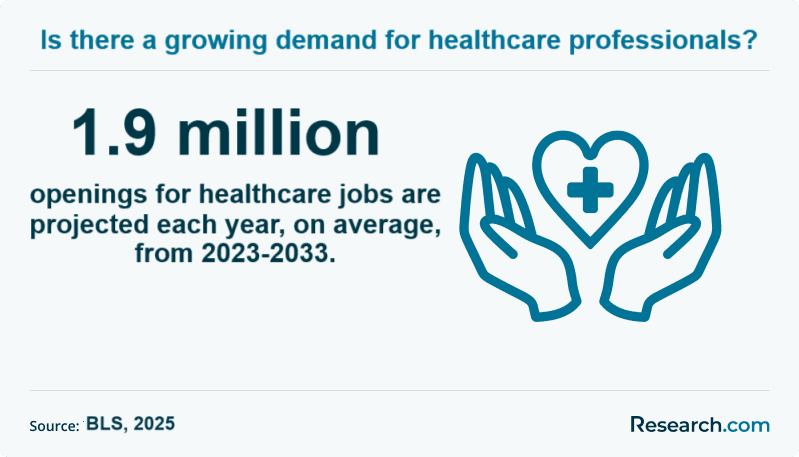
- Healthcare demand remains strong: The overall employment in healthcare occupations is projected to grow much faster than the 4% average for all occupations from 2023 to 2033, with about 1.9 million openings projected each year, on average, in these occupations due to employment growth and the need to replace workers who leave the occupations permanently.
- Salaries vary widely by role: RNs earn an average annual salary of $94,480, healthcare managers earn an average annual salary of $134,440, and physician assistants earn an average salary of $130,490 per year.
- Employer acceptance depends on quality, not just modality: Online degrees are more likely to be respected when they come from accredited schools, include appropriate practical training, and prepare graduates for required credentials.
- The best program is the one that fits your actual goal: A fast or cheap program is not a good investment if it does not qualify you for the role, state, credential, or graduate pathway you want.
References:
- Gray, K. (2024, January 30). Employers See Online Degrees as Comparable to In-Person Degrees. National Association of Colleges and Employers.
- United States Bureau of Labor Statistics. (2024, April 3). Occupational Employment and Wage Statistics: United States. BLS.
- United States Bureau of Labor Statistics. (2024, August 29). Occupational Outlook Handbook: Healthcare Occupations. BLS.
- United States Bureau of Labor Statistics. (2024, August 29). Occupational Outlook Handbook: Medical and Health Services Managers. BLS.
- United States Bureau of Labor Statistics. (2024, August 29). Occupational Outlook Handbook: Nurse Anesthetists, Nurse Midwives, and Nurse Practitioners. BLS.
- United States Bureau of Labor Statistics. (2024, August 29). Occupational Outlook Handbook: Physician Assistant. BLS.
- United States Bureau of Labor Statistics. (2024, August 29). Occupational Outlook Handbook: Radiologic and MRI Technologists. BLS.
- United States Bureau of Labor Statistics. (2024, August 29). Occupational Outlook Handbook: Registered Nurses. BLS.
- United States Bureau of Labor Statistics. (2024, August 29). Occupational Outlook Handbook: Respiratory Therapist. BLS.
Other Things You Should Know About Online Medical Degrees
In 2027, you can earn various medical degrees online, such as health administration and nursing. However, ensure programs are accredited and meet professional certification criteria. Some degrees may require in-person clinical practice to qualify for certifications.
No. Degrees in medicine, nursing, and most allied health fields require in-person supervised clinical rotations at approved hospitals or clinics. U.S. programs are typically accredited by bodies such as LCME, ACEN, or CAHIIM, and clinical hours are completed under licensed preceptors.
Most online medical degrees in 2027 require clinical practice hours at approved healthcare facilities. For example, an online nurse practitioner program might demand 500–750 clinical hours in a local hospital or clinic to meet certification prerequisites. Check each program's specific requirements.


