2027 Fastest Online Health Education Degree Programs

Co-Founder and Chief Data Scientist
Health education is an ideal field for people who see wellness as a community responsibility, not just a personal goal. These professionals work at the intersection of communication, behavior change, and public health, equipping populations with the knowledge to make informed decisions.
Whether the focus is on nutrition, disease prevention, or sexual health, students in an online health education degree program are often driven by a sense of urgency to make an impact. Online formats now accommodate this with accelerated, flexible structures that help learners move from coursework to outreach faster than ever.
In this article, I’ll guide you through the structure and scope of online health education degree programs, with a focus on how quickly you can earn your credentials. I’ll explore typical program lengths, tuition models, and what background knowledge helps students thrive.
What are the benefits of enrolling in a fast-track online health education degree program?
- Health education degree graduates can work in hospitals, schools, public health agencies, nonprofits, corporate wellness programs, and digital health platforms across communities.
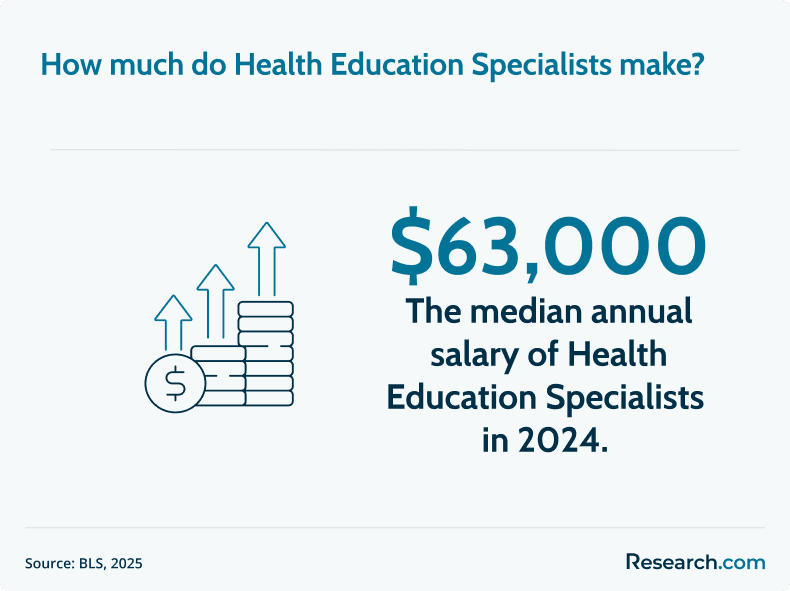
- Health education specialists earn a median annual salary of $63,000, with top roles in hospitals paying up to $82,870, while community health workers earn a median of $48,200.
- Accelerated online formats and generous transfer policies allow graduates to enter the workforce quickly without delaying licensure or job eligibility.
What can I expect from online health education degree programs?
Online health education degrees blend foundational theory with practical skills through fully remote delivery and accelerated pacing. Coursework typically unfolds in a modular format that allows motivated learners to complete core requirements more quickly than traditional terms, supporting faster degree completion without compromising academic quality. You will engage with evidence-based public health models, behavior change theories, and health promotion strategies tailored to online learning environments.
Many programs include:
- Asynchronous Instruction: Recorded lectures and interactive modules allow flexible scheduling while maintaining academic rigor.
- Real-World Projects: Case studies and campaign design assignments build experience in planning, assessment, and evaluation.
- Practicum or Internship: A supervised placement or final project connects students with health agencies or community organizations for practical exposure.
- Collaborative Learning: Group assignments and discussion forums support engagement and peer-to-peer learning across time zones.
- Accelerated Terms: Shorter course sessions and rolling start dates enable a faster pathway to graduation.
Support services such as online tutoring, academic advising, and career coaching are typically available to help students stay on track. Graduates are prepared to develop and implement health education initiatives in a variety of public and community settings.
Where can I work with an online health education degree?
Graduates of online health education degree programs find roles in public, private, and nonprofit sectors where prevention, advocacy, and behavior change are central to mission goals. Because many programs include practical fieldwork and streamlined pacing, students are prepared to move quickly into positions that make immediate community impact.
Common employment settings include:
- Healthcare Facilities: Hospitals and outpatient clinics hire health educators to coordinate wellness programs, support patient outreach, and improve chronic disease management.
- Public Health Agencies: City, county, and state departments rely on health education specialists to lead initiatives in areas like vaccination, nutrition, and reproductive health.
- Schools and Colleges: K–12 districts and universities employ educators to deliver curriculum-based health content, provide student wellness support, and lead campus outreach.
- Nonprofit Organizations: Community-based organizations focus on underserved populations, offering roles in grant-funded programming, advocacy, and data reporting.
- Corporate Wellness Programs: Employers across sectors invest in health educators to reduce risk factors, promote healthier lifestyles, and boost workforce engagement.
- Digital Health and Media: Health tech startups and telehealth platforms look for professionals who can translate evidence-based strategies into accessible digital content.
How much can I make with an online health education degree?
An online health education degree leads to careers with competitive salaries and strong upward mobility, especially in roles tied to community outreach, public health, and patient education.
The following key salary insights are from the U.S. Bureau of Labor Statistics (BLS):
- Health Education Specialists: Median annual wage of $63,000, with earnings ranging from $42,210 to over $112,900 depending on experience and sector (BLS, 2024).
- Community Health Workers: Median salary of $48,200, with entry-level roles starting around $35,560 and experienced professionals earning more than $60,740 (BLS, 2024).
- Top-Paying Sectors: Hospitals offer a median salary of $82,870 for health education specialists, followed by government agencies at $68,390 and outpatient care centers at $62,700 (BLS, 2024).
While salaries vary by region and employer type, roles in hospitals and public agencies tend to offer the highest compensation. Graduates who combine their degree with field experience or certification may also access advanced roles in program coordination and policy development.
- 2027 List of Online Health Education Degree Programs Programs List
- How long does it take to complete a fast-track online health education degree? How long does it take to complete a fast-track online health education degree?
- How do online health education degree programs compare to on-campus programs? How do online health education degree programs compare to on-campus programs?
- What is the average cost of an accelerated online health education degree? Average Cost
- What are the financial aid options for students enrolling in online health education degree programs? Financial Aid
- What are the prerequisites for enrolling in accelerated online health education degree programs? Prerequisites
- What courses are typically in online health education degree programs? Courses
- What types of specializations are available in online health education degree programs? What types of specializations are available in online health education degree programs?
- How to choose the best fast-track online health education degree programs? How to choose the best fast-track online health education degree programs?
- What career paths are available for graduates of online health education degree programs? What career paths are available for graduates of online health education degree programs?
- What is the job market for graduates of online health education degree programs? What is the job market for graduates of online health education degree programs?
- What accreditation standards and quality measures should I consider? What accreditation standards and quality measures should I consider?
- How can online health education degree programs prepare me for leadership roles? How can online health education degree programs prepare me for leadership roles?
- What emerging trends are shaping online health education degree programs? trends
- What challenges might I face in online health education programs? What challenges might I face in online health education programs?
2027 Guide to Online Health Education Degree Programs
Choosing an online health education degree is not just about finding the fastest program. Students also need to know whether the degree is accredited, whether it prepares them for roles in public health or community wellness, how much transfer credit they can use, and whether the curriculum supports credentials such as Certified Health Education Specialist (CHES).
This guide is designed for prospective undergraduate and graduate students comparing flexible health education, health sciences, public health, and community health programs. It explains how accelerated online formats work, what they cost, how to evaluate quality, what careers may follow, and which questions to ask before enrolling.
Quick answer: What is the best online health education degree?
The best online health education degree is the one that matches your career goal, transfer-credit status, budget, and credential needs. Students who want community health or public health education roles should prioritize programs with CEPH accreditation or CHES-aligned coursework. Students planning for healthcare administration, clinical preparation, or graduate study may prefer broader health sciences programs with flexible electives, field experience, and strong transfer policies.
How these online health education programs were selected
Programs in this list were reviewed using Research.com’s ranking methodology, with attention to academic credibility, online delivery, transfer-credit flexibility, accelerated scheduling, applied learning, and relevance to health promotion, public health, and health education careers.
Program information was checked against publicly available education datasets and institutional sources, including the Integrated Postsecondary Education Data System, Peterson’s Distance Learning database, the U.S. Department of Education’s College Scorecard, and the National Center for Education Statistics.
| School | Online degree | Best fit | Credits | Accreditation listed |
| New Mexico State University | Bachelor of Public Health | Students seeking CEPH-accredited public health training with supervised field experience | 120 | CEPH |
| University of Central Florida | Bachelor of Science in Health Sciences | Students deciding between pre-clinical preparation and health promotion | 120 | SACSCOC |
| Ohio State University Online | Bachelor of Science in Health Sciences | Transfer students or learners with prior clinical or college experience | 120 | HLC |
| University of West Florida | Bachelor of Science in Health Sciences | Students who want eight-week courses and multiple start dates | 120 | SACSCOC |
| University of North Dakota | Bachelor of Science in Public Health Education | Students seeking CHES-aligned public health education coursework and internship experience | 120 | CEPH |
| Rutgers University | Master of Public Health in Global Public Health | Graduate students interested in global health, policy, epidemiology, and systems-level work | 45 | CEPH |
| Marymount University | Bachelor of Science in Health Sciences | Students who want specialization choices or an accelerated BS-to-MS option | 120 | SACSCOC |
| Arizona State University | Bachelor of Science in Health Education and Health Promotion | Students focused on health communication, program planning, and behavior change | 120 | HLC |
| Colorado State University Global | Bachelor of Science in Healthcare Administration and Management | Students interested in healthcare operations, administration, and management | 120 | HLC |
| Southern New Hampshire University | Bachelor of Science in Community Health Education | Students looking for CHES-aligned competencies, eight-week terms, and frequent start dates | 120 | NECHE |
1. New Mexico State University
New Mexico State University offers a fully online Bachelor of Public Health for students preparing for community health, population health, and public health education roles. The program includes 320 hours of supervised field experience and year-round start dates, which can help motivated students keep steady progress toward graduation.
- Program Length: 4 years full-time, shorter with transfer credits
- Tracks/concentrations: General Public Health
- Cost per Credit: $395.40
- Required Credits to Graduate: 120
- Accreditation: Council on Education for Public Health (CEPH)
2. University of Central Florida
University of Central Florida provides a fully online Bachelor of Science in Health Sciences with options for students pursuing either clinical preparation or health promotion. The program includes virtual labs, a capstone project, and a transfer policy that accepts up to 90 transfer credits.
- Program Length: 4 years full-time, shorter with transfer credits
- Tracks/concentrations: Pre-Clinical and Health Promotion
- Cost per Credit: $179.19 (Florida resident); $715.80 (non-resident)
- Required Credits to Graduate: 120
- Accreditation: Southern Association of Colleges and Schools Commission on Colleges (SACSCOC)
3. Ohio State University Online
Ohio State University Online offers a Bachelor of Science in Health Sciences that works well for students who already have college credits or clinical exposure. Coursework covers areas such as health behavior theory, anatomy, and program planning, and many students complete the degree in just two years through asynchronous study and continuous enrollment.
- Program Length: Typically completed in 2 years with transfer credit
- Tracks/concentrations: General Health Sciences
- Cost per Credit: $480.21
- Required Credits to Graduate: 120
- Accreditation: Higher Learning Commission (HLC)
4. University of West Florida
University of West Florida offers a fully online Bachelor of Science in Health Sciences for students who want a transfer-friendly program with accelerated course scheduling. Eight-week courses, multiple start dates, and collaborative projects help students build applied skills in public and community health contexts.
- Program Length: 48 months full-time
- Tracks/concentrations: General Health Sciences
- Cost per Credit: $212 (Florida resident); $317 (Alabama resident); $642 (non-resident)
- Required Credits to Graduate: 120
- Accreditation: SACSCOC
5. University of North Dakota
University of North Dakota offers the state’s only fully online Bachelor of Science in Public Health Education. Students complete asynchronous courses, can begin through rolling start dates, and must complete a 12-credit internship. The curriculum incorporates service-learning and aligns with Certified Health Education Specialist (CHES) eligibility standards.
- Program Length: 4 years full-time
- Tracks/concentrations: Public Health Education
- Cost per Credit: $339.50 (resident); $549.00 (non-resident)
- Required Credits to Graduate: 120
- Accreditation: CEPH
6. Rutgers University
Rutgers University offers a fully online Master of Public Health in Global Public Health through its School of Public Health. The 45-credit program combines asynchronous coursework with training in epidemiology, health education, policy, and global public health systems, and full-time students can finish in about two years.
- Program Length: 2 years full-time
- Tracks/concentrations: Global Public Health
- Cost per Credit: $1,300
- Required Credits to Graduate: 45
- Accreditation: CEPH
7. Marymount University
Marymount University offers a fully online Bachelor of Science in Health Sciences with interdisciplinary coursework and five specialization tracks. Students may transfer up to 90 credits, complete team-based projects, and pursue an accelerated BS-to-MS pathway in Public Health Education and Promotion.
- Program Length: 4 years full-time, or 3 years with maximum transfer credits
- Tracks/concentrations: Exercise Science/Strength and Conditioning; Pre-Professional; Pre-Physical Therapy; Public Health; Pre-Speech-Language Pathology
- Cost per Credit: $870
- Required Credits to Graduate: 120
- Accreditation: SACSCOC
8. Arizona State University
Arizona State University offers a fully online Bachelor of Science in Health Education and Health Promotion for students interested in behavior change, outreach, program design, and public health messaging. The program is structured in 7.5-week courses, includes an internship, and allows up to 90 transfer credits.
- Program Length: 120 credit hours across 40 courses in 7.5-week modules
- Tracks/concentrations: Health Education and Health Promotion
- Cost per Credit: $561–$1,343
- Required Credits to Graduate: 120
- Accreditation: HLC
9. Colorado State University Global
Colorado State University Global, the nation’s first 100% online public university, offers a Bachelor of Science in Healthcare Administration and Management. Students take eight-week courses with monthly start dates, may transfer up to 90 credits including military and prior learning experience, and complete portfolio projects that connect coursework to workplace applications.
- Program Length: 2–3 years with transfer credits
- Tracks/concentrations: Healthcare Administration and Management
- Cost per Credit: $375
- Required Credits to Graduate: 120
- Accreditation: HLC
10. Southern New Hampshire University
Southern New Hampshire University offers a fully online Bachelor of Science in Community Health Education that follows CHES-aligned competencies. Students complete applied assignments through program ePortfolios and virtual labs, take courses in eight-week terms, and can choose from six start dates annually. Up to 90 transfer credits may be accepted.
- Program Length: 48 months full-time; shorter with transfer credits
- Tracks/concentrations: Community Health Education
- Cost per Credit: $342
- Required Credits to Graduate: 120
- Accreditation: New England Commission of Higher Education (NECHE)
How long does it take to finish a fast-track online health education degree?
A bachelor’s degree in health education, public health, or health sciences usually requires 120 credits and takes four years of full-time enrollment. Online students may finish faster when they bring in transfer credits, enroll year-round, choose eight-week or 7.5-week courses, or enter a program built for degree completion.
Many accelerated bachelor’s options can be completed in 2.5 years by students with substantial prior coursework. Competency-based formats may allow highly independent learners to finish in approximately two years by progressing after demonstrating mastery. This mirrors the logic behind the shortest master's degree in reading and literacy online, where pacing and transfer policies can significantly affect completion time.
At the graduate level, master’s programs commonly require between 35 and 50 credits and take about 2 to 2.5 years. Some accelerated graduate pathways can be completed in as little as 18 months when students study continuously. Part-time students should plan for a longer path, often three or more years depending on course load and field requirements.
| Pathway | Typical timeline | Who it fits best | Main factor that changes speed |
| Standard bachelor’s track | Four years of full-time study for 120 credits | First-time college students | Semester load and summer enrollment |
| Accelerated bachelor’s track | 2.5 to 3 years with prior learning credit and continuous enrollment | Transfer students and working adults | Accepted transfer credits |
| Competency-based model | Roughly two years, based on demonstration of subject mastery | Self-paced learners with strong study habits | How quickly competencies are completed |
| Graduate pathway | 18 to 30 months for a master’s degree | Students with a bachelor’s degree seeking advancement | Full-time versus part-time enrollment |
The fastest program is not always the best choice. Students should confirm that an accelerated schedule still includes the fieldwork, capstone, or internship experience needed for their career goals.
Accelerated online health education degrees vs. on-campus programs
Online and campus-based health education programs often cover similar core topics: public health foundations, behavior change, program planning, research methods, communication, and evaluation. The main difference is how students complete the work.
Campus programs typically rely on scheduled lectures, in-person labs, and local practicum arrangements. Online programs use asynchronous lessons, digital simulations, virtual collaboration, and supervised field experiences arranged near the student when possible. This flexibility can matter for working adults researching how to become a medical and health services manager or transition into health promotion without leaving their current job.
| Comparison point | Online accelerated program | On-campus program | Best choice when... |
| Schedule | Often asynchronous, with shorter terms and multiple starts | Usually follows set class meeting times and academic terms | Choose online if you need flexibility; choose campus if you prefer fixed structure |
| Field experience | May use virtual labs plus local internships or practicums | Often uses nearby campus-affiliated sites | Choose the format that has realistic placement options in your area |
| Peer interaction | Discussion boards, video meetings, virtual teams | In-person group work, events, and informal networking | Choose campus if face-to-face networking is essential to you |
| Cost considerations | May reduce commuting or housing costs | May include access to campus facilities and local services | Compare total cost, not tuition alone |
| Pacing | Can be faster through eight-week, 7.5-week, or year-round schedules | Often follows traditional semester pacing | Choose accelerated online study only if you can manage compressed deadlines |
Both formats can prepare students well when the institution is properly accredited and the curriculum includes applied learning. Online programs are especially useful for students who need speed, geographic flexibility, or the ability to balance work and school.
The chart below shows the scale of students enrolled exclusively in online programs.
How much does an accelerated online health education degree cost?
The cost of an online health education degree depends on the school, residency rules, public or private status, transfer-credit acceptance, and whether the program charges by credit or by term. Students comparing costs should also think about long-term value, especially if they are asking what you can earn with an MPH degree or whether graduate study will be necessary later.
| Cost category | Typical amount stated | What it means for students |
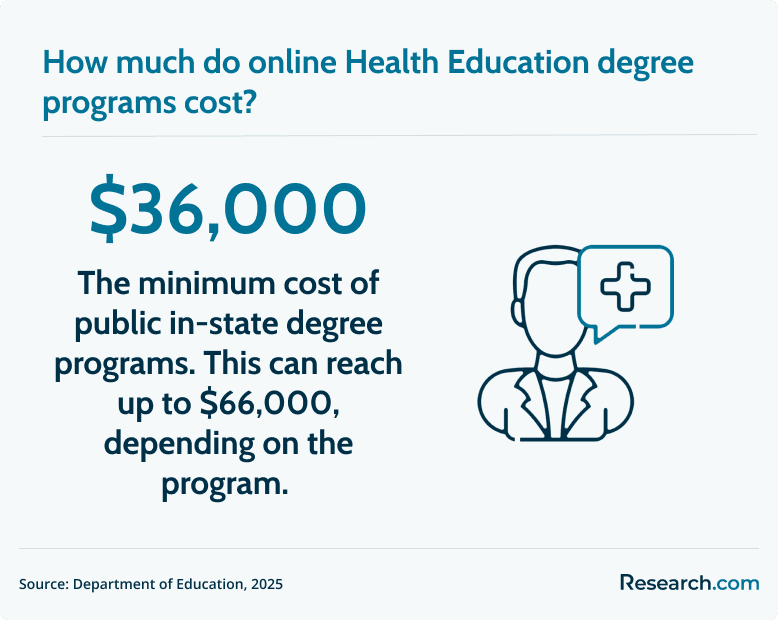
| Public in-state rates | Approximately $300–$400 per credit, totaling $36,000–$48,000 for a 120-credit bachelor’s degree (NCES, 2024) | Usually the lowest published tuition option for residents at public universities |
| Flat online rates | Many public universities set a uniform $450–$550 per credit rate for all students, bringing total tuition to $54,000–$66,000 (Department of Education, 2025) | Can benefit out-of-state students when no residency surcharge applies |
| Private institutions | Per-credit fees often range from $600 to $900, resulting in total costs of $72,000–$108,000 (College Scorecard, 2025) | May offer scholarships or transfer policies that reduce the final price |
| Competency-based models | Subscription pricing (e.g., $3,500 per six-month term) allows degree completion in two years for roughly $14,000 | Can be cost-effective for students who complete courses quickly |
Students should also budget for technology charges, virtual lab fees, background checks, practicum supervision, and course materials. These additional expenses may add $1,000–$2,000 across the program. The most affordable option is often the program that accepts the most usable transfer credit while still meeting accreditation and credentialing expectations.
Financial aid options for online health education students
Online health education students at eligible accredited institutions can often use the same types of financial aid available to campus students. The key is confirming that the school participates in federal aid programs and that the program itself is eligible. Students comparing other accelerated online pathways, such as the shortest artificial intelligence certification online, should apply the same rule: check aid eligibility before assuming a program qualifies.
- Federal Pell Grants: Need-based undergraduate grants that do not have to be repaid when eligibility rules are met.
- Direct Loans and PLUS Loans: Federal loan options for undergraduate students, graduate students, and parents of dependent students.
- Federal Work-Study: Part-time employment for eligible students, which may include school-affiliated or community-based roles.
- State and institutional aid: State grants, university scholarships, tuition waivers, or academic awards that may reduce out-of-pocket cost.
- Professional and private scholarships: Field-specific organizations, including the Society for Public Health Education, may offer scholarships, awards, or professional development support.
- Employer tuition assistance: Employers may reimburse up to $5,250 annually in tax-free education benefits for job-relevant study.
- Veteran and military benefits: The Post-9/11 GI Bill® can cover full tuition and provide living stipends for eligible military-affiliated students in accredited online programs.
Before enrolling, ask the financial aid office for a full cost-of-attendance estimate, including tuition, fees, books, technology, practicum expenses, and any residency-related charges.
Admission requirements for accelerated online health education programs
Admissions standards vary, but most online health education programs look for evidence that applicants can handle college-level work and the self-management required in an accelerated online format. Similar expectations appear in other skills-based online credentials, including the shortest medical billing and coding certificate online programs.
| Requirement | What schools may ask for | Why it matters |
| High school completion | A high school diploma or GED; some programs may require a minimum GPA, typically between 2.0 and 2.5 | Confirms baseline academic readiness for undergraduate study |
| Transfer credit review | Prior college coursework, often 30–60 transferable credits with a grade of “C” or better | Can shorten the time and cost required to graduate |
| General education background | English composition, college-level math, or introductory health sciences coursework | Helps students enter upper-level health courses without delays |
| Technology readiness | Reliable internet access and a computer that meets program requirements | Supports participation in online lectures, labs, simulations, and exams |
| Field placement readiness | Background checks, immunization records, or site-specific clearances when practicums are required | Prevents delays before internship or fieldwork placement |
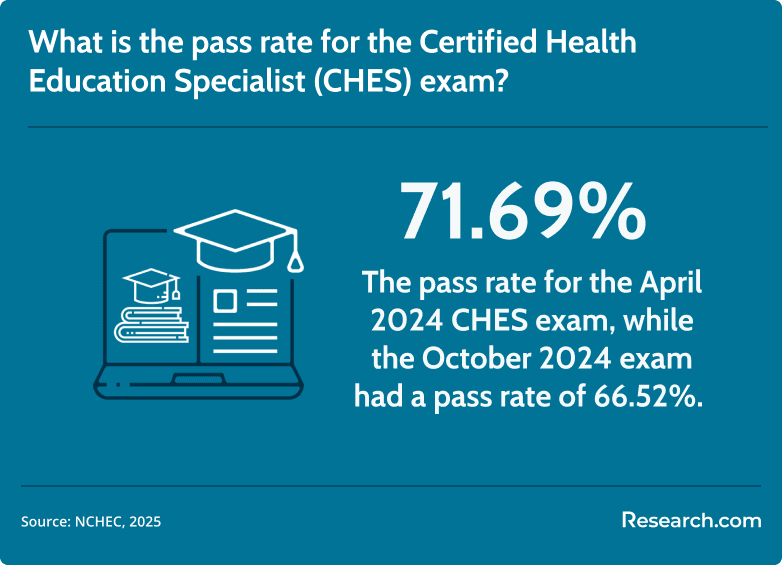
| Certification alignment | Confirmation that coursework supports eligibility for the Certified Health Education Specialist exam | Important for students planning to pursue CHES after graduation |
Applicants with prior college credits should request an official transfer evaluation before committing. A school may advertise that it accepts many credits, but only certain courses may apply to major, general education, or elective requirements.
Typical courses in online health education degree programs
Health education programs combine public health knowledge with practical skills in communication, program design, community engagement, research, and evaluation. The goal is to prepare students to identify health needs, develop education strategies, and measure whether those strategies work.
Coursework can also help students understand adjacent roles. For example, students asking what a healthcare coordinator does may find that courses in communication, care systems, and program planning are relevant to coordination work.
| Course area | What students study | Skill developed |
| Foundations of Public Health | Population health concepts, introductory epidemiology, and the role of health education | Understanding how community-level health problems are identified and addressed |
| Health Behavior Theory | Models such as the Health Belief Model and Social Cognitive Theory | Designing interventions that support behavior change |
| Program Planning and Evaluation | Logic models, needs assessments, implementation planning, and outcome measurement | Creating and assessing health education programs |
| Biostatistics and Research Methods | Data collection, analysis, and interpretation | Using evidence to evaluate public health initiatives |
| Health Communication | Message development, social media outreach, and audience-specific communication | Improving health literacy and public engagement |
| Cultural Competency | Health disparities, community context, and culturally responsive education | Serving diverse populations effectively |
| Environmental and Occupational Health | Environmental risks, workplace health issues, and prevention strategies | Recognizing how settings affect health outcomes |
| Capstone or Practicum | Supervised projects, internships, or field placements | Applying classroom learning in real-world settings |
Electives may cover global health, public health policy, informatics, maternal and child health, workplace wellness, or school health education.
Specializations available in online health education programs
Specializations help students focus their degree around a specific population, work setting, or public health function. Many concentrations require 9–15 credit hours and can often be completed within the standard degree plan.
Some concentrations also support related wellness paths. Students exploring online nutrition certification options, for example, may find that public health, behavior change, and wellness coursework complement nutrition-focused career interests.
| Specialization | Focus | Potential fit |
| Global Health Promotion | International health challenges, cultural awareness, and cross-border education strategies | Students interested in global nonprofits, international programs, or public health agencies |
| Workplace Wellness | Employee health initiatives, engagement, and chronic disease prevention | Students aiming for corporate wellness or organizational health roles |
| School Health Education | Health programming and curriculum development for K–12 settings | Students interested in youth health, prevention, and education environments |
| Maternal and Child Health | Prenatal education, infant health, and early childhood development | Students interested in family health programs and community outreach |
| Health Informatics | Health data, digital tools, tracking systems, and technology-supported education | Students who want to combine public health and data skills |
| Public Health Policy and Advocacy | Policy development, health equity, and legislative engagement | Students interested in systems change, advocacy, or nonprofit leadership |
Choose a specialization only if it strengthens your target career path. If you are undecided, a general health education or public health track may offer more flexibility.
How to choose the best fast-track online health education degree
A fast program is only valuable if it is credible, affordable, and aligned with the work you want to do. Students who plan to continue into graduate public health study may also want to compare standards used by top-ranked online CEPH-accredited MPH programs.
For students pursuing health education roles, CHES alignment is an important quality marker. The credential is offered by the National Commission for Health Education Credentialing and reflects readiness in planning, implementing, and evaluating health education programs.
| What to check | Questions to ask | Why it affects your decision |
| Institutional accreditation | Is the school recognized by an accreditor accepted by the U.S. Department of Education? | Accreditation can affect credit transfer, graduate admission, employer acceptance, and financial aid |
| Program-level alignment | Does the curriculum align with CEPH standards or CHES competencies? | Relevant for students pursuing public health education or certification-related roles |
| Transfer-credit policy | How many credits will apply to the degree, not just be accepted by the school? | Determines actual time and cost savings |
| Field experience | Does the program include a practicum, internship, capstone, or supervised project? | Applied experience can strengthen job readiness and credential preparation |
| Course pacing | Are courses offered in eight-week, 7.5-week, or year-round formats? | Accelerated pacing can reduce completion time but increases weekly workload |
| Student support | Are advising, tutoring, career coaching, library access, and technical help available online? | Support services are especially important for adult and remote learners |
| Outcomes data | Can the school share retention, graduation, job placement, or CHES pass-rate information? | Outcomes help you evaluate whether the program delivers results for students like you |
A strong program should be transparent about total cost, transfer rules, field placement expectations, and online student support before you apply.
Career paths for online health education degree graduates
Graduates of online health education programs may work in healthcare systems, public health departments, schools, nonprofits, community organizations, corporate wellness programs, and health communication roles. The right path depends on degree level, field experience, certification, and local employer requirements.
Students who want a broader view of the field can compare these roles with other options in health science careers. Those combining technology and healthcare interests may also explore how credentials such as the shortest Microsoft Azure dual certification programs online could support work in healthcare IT, digital health tools, or data-focused environments.
| Career path | What the role does | Helpful preparation |
| Health Education Specialist | Plans and delivers health education programs in hospitals, clinics, public health departments, or community organizations | CHES-aligned coursework, public health foundations, program evaluation |
| Community Health Worker | Connects people with services, provides peer education, and supports underserved communities | Community engagement, cultural competency, local field experience |
| School Health Educator | Develops and supports health education programming in elementary or secondary school settings | School health coursework, youth development, communication skills |
| Corporate Wellness Coordinator | Creates and manages employee wellness initiatives focused on prevention and engagement | Workplace wellness, behavior change, program planning |
| Public Health Program Manager | Coordinates community health projects, tracks outcomes, and supports grant or compliance requirements | Leadership, evaluation, budgeting, public health policy |
| Health Communication Specialist | Designs messages and campaigns that improve health literacy and influence behavior | Health communication, digital media, audience analysis |
| Public Health Research Assistant | Collects, organizes, and analyzes data for studies, program reviews, or policy work | Biostatistics, research methods, data interpretation |
Some graduates move directly into entry-level health education or outreach roles, while others use the bachelor’s degree as a foundation for an MPH, healthcare administration degree, or specialized graduate training.
Job market outlook for health education graduates
The employment outlook for health education and community health roles remains positive based on the figures cited in current labor projections. Health education specialist positions are expected to grow by 7%, with about 6,700 openings annually. Community health worker jobs are projected to grow 13%, with approximately 7,500 annual openings.
Broader labor categories also show continuing demand. Community and social service occupations overall are expected to see an estimated 299,400 job openings per year, while healthcare occupations are projected to produce roughly 1.9 million annual openings due to growth and replacement needs.
Recent hiring reports also point to continued activity in healthcare. In February 2024, the healthcare sector added 67,000 jobs, exceeding its 12-month average. In June 2025, the U.S. economy added 147,000 jobs, with notable gains in health care and state government education.
These numbers do not guarantee employment for any individual graduate. However, they show that health education, community outreach, and healthcare-related occupations remain active labor-market areas for students who build practical experience, communication skills, and relevant credentials.
The graph below compares median annual pay for health education careers with top salaries in the healthcare sector.
Accreditation and quality standards to verify before enrolling
Accreditation should be one of the first items you verify. Institutional accreditation helps confirm that a college or university meets recognized academic standards. Program-level accreditation or alignment, such as CEPH standards for public health programs, can be especially important for students pursuing public health education, graduate admission, or credential-related goals.
Quality review should go beyond the accreditation logo. Ask whether faculty have public health or community health experience, whether the curriculum is regularly updated, whether fieldwork is supervised, and whether the school publishes graduation, retention, placement, or credential-exam information. Similar quality checks are useful when comparing advanced online options such as the shortest online doctor of education degree.
Challenges students may face in online health education programs
Online health education programs are flexible, but they are not easier by default. Accelerated courses can require significant weekly reading, discussion, writing, group work, and project deadlines. Students also need reliable technology, comfort with learning platforms, and the discipline to study without regular in-person class meetings.
Another challenge is networking. Online students may need to be more intentional about joining professional associations, contacting faculty, participating in virtual events, and building relationships during practicum or internship experiences. Students comparing flexible degrees, including the fastest philosophy online degree, should honestly assess whether they can stay motivated in an asynchronous environment.
| Common challenge | Why it happens | How to reduce the risk |
| Falling behind in accelerated courses | Short terms compress assignments and exams | Block weekly study time before the term starts |
| Field placement delays | Sites may require background checks, immunizations, or supervisor approval | Ask about placement procedures before enrolling |
| Weak peer connection | Online learners may have fewer informal interactions | Use discussion boards, group projects, virtual office hours, and professional groups |
| Technology barriers | Courses may require video, simulations, virtual labs, or proctored exams | Confirm hardware, software, internet, and testing requirements early |
| Unclear credential fit | Not every health-related degree is designed for CHES preparation | Ask the program director how coursework maps to CHES competencies |
How online health education degrees can support leadership goals
Leadership preparation usually comes through coursework and projects in program management, advocacy, policy, communication, evaluation, and community partnership. Students learn how to plan initiatives, coordinate stakeholders, analyze outcomes, and communicate with diverse audiences.
For students who want senior roles in education, public health, nonprofit administration, or organizational leadership, a bachelor’s or master’s degree may be one step in a longer credential path. Professionals who plan to advance further can compare doctoral options such as the most affordable online doctorate in educational leadership.
Emerging trends shaping online health education programs
Online health education programs are increasingly affected by digital delivery, data-informed decision-making, virtual outreach, and interdisciplinary healthcare work. Programs may include telehealth concepts, health informatics, digital communication, simulation-based assignments, and collaborative projects that mirror modern health promotion work.
Students should look for programs that teach practical technology use without treating tools as a substitute for community engagement. Strong programs still emphasize cultural competency, ethics, evidence-based planning, program evaluation, and clear communication. Similar shifts toward digital learning and interdisciplinary skill-building can be seen in other online fields, including inexpensive MLIS online degrees.
Common mistakes to avoid when choosing an online health education degree
- Choosing speed over accreditation: A fast program can become a costly mistake if credits do not transfer or employers question the school’s credibility.
- Looking only at tuition: Fees, books, technology costs, fieldwork expenses, and lost transfer credits can change the real price.
- Assuming every health sciences degree prepares for CHES: Some programs are broad health sciences degrees, while others are specifically built around health education competencies.
- Ignoring practicum requirements: Fieldwork can affect your schedule, location options, background checks, and graduation timeline.
- Not asking how transfer credits apply: A school may accept credits as electives without reducing major requirements.
- Relying only on rankings: Rankings can help narrow a list, but your best program depends on cost, location, transfer status, credential goals, and support services.
- Assuming online means self-paced: Many online programs still have weekly deadlines, group assignments, exams, and required participation.
Questions to ask before you apply
- Is the institution accredited by a recognized accreditor?
- Is the program CEPH-accredited or aligned with CHES competencies?
- How many of my transfer credits will apply directly to graduation requirements?
- Are courses asynchronous, synchronous, or a mix of both?
- How often can I start, and are summer or year-round courses available?
- Does the program require an internship, practicum, capstone, or supervised field placement?
- Will the school help me find a field site near where I live?
- What is the full estimated cost, including fees and practicum expenses?
- What online student services are available for advising, tutoring, career planning, and technology support?
- Can the program share graduation, retention, placement, or CHES pass-rate data?
References
- Bureau of Labor Statistics. (2024). Community and social service occupations. Occupational Outlook Handbook. https://www.bls.gov/ooh/community-and-social-service/
- Bureau of Labor Statistics. (2024). Health educators and community health workers. Occupational Outlook Handbook. https://www.bls.gov/ooh/community-and-social-service/health-educators.htm
- Bureau of Labor Statistics. (2024). Healthcare occupations. Occupational Outlook Handbook. https://www.bls.gov/ooh/healthcare/
- Bureau of Labor Statistics. (2024). Occupational employment and wages, May 2024: Community health workers. https://www.bls.gov/oes/2023/may/oes211094.htm
- Bureau of Labor Statistics. (2024). Occupational employment and wages, May 2024: Health education specialists. https://www.bls.gov/oes/2023/may/oes211091.htm
- Centers for Disease Control and Prevention. (2023). Core competencies for public health professionals. https://www.cdc.gov/public-health-gateway/php/our-work/public-health-professionals-competencies.html
- Federal Student Aid. (2025). Federal student loans. U.S. Department of Education. https://studentaid.gov/understand-aid/types/loans
- Ma, J., Pender, M., & Oster, M. (2024). Trends in College Pricing and Student Aid 2024. New York, NY: College Board. https://research.collegeboard.org/media/pdf/Trends-in-College-Pricing-and-Student-Aid-2024-ADA.pdf
- National Center for Education Statistics. (2024). Distance education in IPEDS. U.S. Department of Education. https://nces.ed.gov/ipeds/use-the-data/distance-education-in-ipeds
- National Center for Education Statistics. (2024). Tuition costs for distance education students. https://nces.ed.gov/fastfacts/display.asp?id=80
- National Commission for Health Education Credentialing. (2024). Responsibilities & competencies. https://www.nchec.org/responsibilities--competencies
- Society for Public Health Education. (2023). Health Education Specialist Practice Analysis III (HESPA III). https://www.sophe.org/health-education-specialist-practice-analysis-iii-hespa/
- U.S. Department of Health and Human Services. (2023). Healthy People 2030 objectives. https://health.gov/healthypeople
- U.S. Department of Veterans Affairs. (2025). Post-9/11 GI Bill®. https://www.va.gov/education/about-gi-bill-benefits/post-9-11/
- U.S. Department of Veterans Affairs. Post-9/11 GI Bill® eligibility and benefits information. https://www.va.gov/education/about-gi-bill-benefits/post-9-11/
Key Insights
- The strongest online health education degree is not simply the fastest one; it should be accredited, career-aligned, affordable, and practical for your schedule.
- Transfer credit is the biggest factor in shortening a 120-credit bachelor’s degree. Always ask how credits apply to degree requirements before enrolling.
- Students pursuing health education specialist roles should verify CHES alignment and look for applied projects, internships, practicums, or capstones.
- CEPH accreditation is especially relevant for public health-focused programs, while regional institutional accreditation remains essential for financial aid, credit transfer, and employer recognition.
- Online programs can reduce commuting and housing costs, but students should still budget for technology, fees, field placement requirements, and course materials.
- Accelerated formats work best for organized students who can handle compressed deadlines, independent study, and proactive communication with instructors and advisors.
- Before choosing a program, compare total cost, accreditation, transfer policy, fieldwork support, online student services, and published student outcomes.
Other Things You Should Know About Online Health Education Degree Programs
Admission requirements typically include a high school diploma or equivalent, a minimum GPA, and SAT or ACT scores. Some programs may require prerequisite courses in biology or chemistry. Check specific program details for any additional criteria.
Yes. Look for regional accreditation and, when applicable, programmatic review by a recognized body such as CEPH for public health-related programs. Accreditation affects financial aid eligibility, transfer credit acceptance, and employer recognition, and it should be verified on the U.S. Department of Education database.