
2027 Best Online Healthcare Management Degrees

Co-Founder and Chief Data Scientist
Choosing an online healthcare management degree is no longer just a question of convenience. Healthcare organizations now need managers who understand operations, finance, compliance, patient experience, health information systems, and data-informed decision-making. That matters because experts predict the healthcare management systems market will grow from $34.43 billion in 2026 to $53.96 billion by 2030, with an annual growth rate of 11.9%.
This guide is for students, working healthcare staff, career changers, and professionals who want a flexible path into healthcare administration or management. You will learn what online healthcare management programs cover, how long they take, what they cost, how online study compares with campus learning, which careers may be available, and how to evaluate programs before enrolling.
Quick answer: Is an online healthcare management degree worth considering?
An online healthcare management degree can be a practical option if you want business and leadership training for healthcare settings while keeping flexibility for work or family responsibilities. Graduates may pursue roles in hospitals, physician offices, nursing and residential care facilities, government entities, outpatient care centers, and related healthcare organizations. The value of the degree depends on accreditation, total cost, transfer credit policies, practical experience, career support, and whether the curriculum matches your intended role.
- An online healthcare management degree can prepare students for administrative, operations, health information, quality improvement, and facility management roles in healthcare organizations.
- Entry-level salaries commonly fall between $60,000 and $80,000 annually, while the annual median pay for medical and health services managers is $104,830.
- Online study may reduce commuting and housing costs, but students should compare total program price, fees, financial aid, and employer tuition assistance before deciding.
What can I expect from an online healthcare management degree?
An online healthcare management degree combines healthcare knowledge with business, leadership, technology, and compliance training. Instead of preparing students for direct clinical practice, these programs focus on how healthcare organizations operate, how services are financed and delivered, how regulations affect decision-making, and how managers improve quality, staffing, workflow, and patient outcomes.
Common subjects include healthcare systems, finance, ethics, organizational behavior, healthcare information technology, policy, operations, quality improvement, and strategic planning. Students often complete case analyses, research assignments, group projects, simulations, practicums, or capstone projects that connect classroom concepts to real healthcare management problems. Many programs take three to four years and cost between $9,000 and $30,000, although actual cost varies by school, transfer credits, residency status, fees, and pace of completion.
| Program feature | What it usually means for students |
| Core focus | Healthcare operations, leadership, finance, compliance, quality, informatics, and organizational strategy |
| Typical length | Three to four years, depending on transfer credits, course load, and program format |
| Common learning activities | Case studies, research projects, capstones, simulations, group work, and sometimes local practicum experiences |
| Best fit | Students who want management roles in healthcare but do not necessarily want a clinical career |
| Key caution | Online format alone does not prove quality; accreditation, curriculum, outcomes, and employer relevance matter more |
Where can I work with an online healthcare management degree?
Graduates with an online healthcare management degree often work in organizations that deliver, finance, coordinate, regulate, or support healthcare services. These roles may involve budgeting, scheduling, compliance, patient records, staffing, process improvement, health information systems, policy implementation, or department leadership. Many positions are full-time, and some managers work more than 40 hours per week, especially in facilities that operate around the clock.
According to data published in 2024 by the BLS, the largest employers of graduates with a healthcare management degree are General Medical and Surgical Hospitals, Offices of Physicians, and Outpatient Care Centers.
- Hospitals (30%)
- Offices of Physicians (12%)
- Nursing and Residential Care Facilities (9%)
- Government Entities (7%)
- Outpatient care centers (7%)
How much can I make with an online healthcare management degree?
According to the BLS, medical and health services managers earn an annual median pay of around $104,830. Newer professionals may earn between $60,000 and $80,000 annually, while mid-career salaries may rise to $80,000 to $100,000 annually. Senior leadership and executive roles in healthcare organizations may offer earning potential beyond $100,000, but salary depends on employer, location, experience, responsibility level, credentials, and organization size.
An online healthcare management degree may also support preparation for related management, administrative, or human services roles, including:
- Social and Community Service Managers ($74,240)
- Purchasing Managers, Buyers, and Purchasing Agents ($75,120)
- Top Executives ($100,090)
- Administrative Services and Facilities Managers ($101,870)
- Human Resources Managers ($130,000)
- Best online healthcare management degree programs for 2027
- Typical completion time for an online healthcare management degree
- Online vs. on-campus healthcare management programs
- Average cost of an online healthcare management degree
- Financial aid options for online healthcare management students
- Admission requirements for online healthcare management programs
- Common courses in online healthcare management programs
- Specializations in healthcare management
- How to choose the right online healthcare management program
- How affordability affects your degree decision
- Career paths for healthcare management graduates
- Fast-tracking an online healthcare management degree
- Employer acceptance of online healthcare management degrees
- How to verify program quality and accreditation
- Using clinical credentials to strengthen a management career
- Job market outlook for healthcare management graduates
- Career services and networking in online programs
- Shorter healthcare education options
- Practical experience in online healthcare management programs
- Benefits of choosing an affordable healthcare management degree
- Advanced degrees for healthcare management professionals
- Technology, data analytics, and healthcare management
How do we rank our schools?
Research.com evaluates schools using a transparent ranking approach built on education data sources such as the IPEDS database, Peterson's database, the College Scorecard database, and the National Center for Education Statistics. These sources help compare online healthcare management programs using institutional and program-level data rather than marketing claims alone. For a fuller explanation of the ranking process, visit the Research.com methodology page.
Best Online Healthcare Management Degree Programs for 2027
The programs below are examples of online healthcare management degree options with different pricing models, credit requirements, completion formats, and accreditation details. Use the list as a starting point, then confirm tuition, fees, transfer policies, graduation requirements, and program outcomes directly with each school before applying.
| School | Program length | Credits required | Cost information | Notable feature |
| Western Governors University | Less than three years | 120 | $3,575 per six-month term | Flat-rate tuition by six-month term |
| South University | 4 years | 180 | $42 per credit | Business-focused healthcare management curriculum |
| Walden University | 1.75 to 4 years | 181 | $348.03 per credit | Traditional course-based and Tempo Learning options |
| Colorado Technical University | 4 years | 180 | $340 per credit | General Track and Health Informatics concentration |
| Maryville University | 4 years | 128 | $525 per credit | Practicum, capstone, and senior living management certificate preparation |
1. Western Governors University Online Healthcare Management Bachelor’s Degree Program
The Online Healthcare Management program at Western Governors University organizes coursework across six major areas: healthcare management, business core, business management, human resources, general education, and IT fundamentals. The program is accredited by four organizations and is designed to support both degree completion and certification preparation. Its tuition model charges a flat rate for each six-month term rather than billing strictly by credit, which may appeal to students who can move efficiently through coursework.
- Program Length: Less than three years
- Tracks/Concentrations: None available
- Cost per Six-Month Term: $3,575
- Required Credits to Graduate: 120
- Accreditation: Northwest Commission on Colleges and Universities, Higher Learning Commission, Accrediting Commission for Community and Junior Colleges of the Western Association of Schools and Colleges, Accrediting Commission for Senior Colleges and Universities of the Western Association of Schools and Colleges
2. South University Online Bachelor of Science in Healthcare Management
The Bachelor of Science in Healthcare Management from South University covers areas such as financial management, leadership, law and ethics, healthcare delivery systems, and marketing. Accredited by the Accreditation Council for Business Schools and Programs, the program emphasizes the analysis of business problems in healthcare organizations and the development of professional, ethical responses.
- Program Length: 4 years
- Tracks/Concentrations: None available
- Cost per Credit: $42
- Required Credits to Graduate: 180
- Accreditation: Accreditation Council for Business Schools and Programs
3. Walden University Online Bachelor of Science in Healthcare Management
The online BS in Healthcare Management at Walden University gives students a choice between a traditional course-based format and Tempo Learning, which can shorten completion from four years to less than two. The university also allows undergraduates to take graduate-level courses that may help them move more quickly into and through a master's degree in healthcare management. Coursework includes general education, core education, electives, and a capstone.
- Program Length: 1.75 to 4 years
- Tracks/Concentrations: None available
- Cost per Credit: $348.03
- Required Credits to Graduate: 181
- Accreditation: Higher Learning Commission
4. Colorado Technical University Online Bachelor of Science in Healthcare Management
Colorado Technical University offers an online Bachelor of Science in Healthcare Management with a general track and a health informatics concentration. The four-year curriculum focuses on business and administrative functions in healthcare, including patient access, revenue cycle management, project management, healthcare economics, marketing, human resource management fundamentals, and healthcare compliance.
- Program Length: 4 years
- Tracks/Concentrations: General Track, Health Informatics
- Cost per Credit: $340
- Required Credits to Graduate: 180
- Accreditation: Higher Learning Commission
5. Maryville University Online Bachelor of Science in Healthcare Management
The online Bachelor of Science in Healthcare Management from Maryville University uses an interdisciplinary curriculum that blends healthcare management, business, and general education. Students complete a comprehensive capstone project, and the program includes a practicum. It also offers preparation for a certificate in senior living management and includes advanced coursework options for students considering graduate study, including master's and PhD health administration programs.
- Program Length: 4 years
- Tracks/Concentrations: None available
- Cost per Credit: $525
- Required Credits to Graduate: 128
- Accreditation: Higher Learning Commission
What graduates say about online healthcare management study
"The online format made it possible for me to continue working while completing my coursework. I could manage my schedule more realistically, and the program exposed me to classmates with different healthcare backgrounds. That mix helped me connect management theory to real workplace issues." - Amanda
"Avoiding a commute was helpful, but the bigger benefit was learning through digital tools similar to those used in healthcare organizations. Online projects, virtual collaboration, and technology-based assignments made the coursework feel connected to the field." - Fred
"A lower-cost online option helped me start a degree I might otherwise have delayed. The format also gave me access to instructors and classmates outside my local area, which made the experience broader than I expected." - Bill
Key Findings
- Most online healthcare management degrees take about three to four years to complete, though transfer credits, part-time study, and accelerated formats can change the timeline.
- In 2026, in-state students paid around $10,500, while out-of-state students paid about $28,000 yearly for online healthcare management degrees.
- Students commonly study Healthcare Systems, Healthcare Policy, Quality Improvement, Operations Management, Informatics, and Strategic Planning.
- Possible roles include Healthcare Administrator, Health Information Manager, Medical Practice Manager, Healthcare Consultant, and Quality Improvement Coordinator.
- The Bureau of Labor Statistics expects a 23% increase in employment opportunities for medical and health services managers from 2024 to 2034.
How long does it take to complete an online healthcare management degree?
An online healthcare management degree usually takes three to four years. Students who enroll full time and enter with few transfer credits often follow the standard timeline. Those who study part time, pause enrollment, balance family responsibilities, or take lighter course loads may need more time. Students with previous college credits or an accelerated option may finish sooner if they can manage a more intensive pace.
| Student situation | How it may affect completion time |
| Full-time enrollment | Often supports completion within the standard three to four years |
| Part-time enrollment | Usually extends the timeline but may be more realistic for working adults |
| Transfer credits | Can shorten the degree if the school accepts prior coursework toward major or general education requirements |
| Accelerated format | May reduce time to completion, but requires consistent study time and strong self-management |
| Unexpected life or work demands | May require reducing course load, taking breaks, or extending graduation plans |
How does an online healthcare management program compare to an on-campus program?
Online and on-campus healthcare management programs can both prepare students for administrative and management roles. The right choice depends on how you learn best, how much schedule flexibility you need, whether you want in-person networking, and how much you can spend on tuition and related costs.
| Factor | Online healthcare management program | On-campus healthcare management program |
| Schedule | Often offers flexible or asynchronous coursework that can fit around work and caregiving | Usually follows set class times and campus-based schedules |
| Learning experience | Relies on digital classrooms, video lectures, online discussions, and remote collaboration | Provides face-to-face interaction with faculty, classmates, and campus resources |
| Practical learning | May use virtual simulations, local practicums, capstones, and case-based projects | May offer easier access to campus-based events, local internships, and in-person networking |
| Cost considerations | May reduce commuting, housing, and relocation costs, though technology and online fees can apply | May include housing, transportation, facility, parking, and campus service expenses |
| Best fit | Working adults, distance learners, military learners, parents, and students who need flexibility | Students who prefer in-person learning, campus life, and structured weekly routines |
What is the average cost of an online healthcare management degree?
In 2024, in-state students pay an average of $10,110, while out-of-state students pay $27,330 for online healthcare management degrees. After completing an undergraduate program, students may continue into graduate study, such as a masters degree in healthcare. Graduate programs cost around $11,769 for in-state students and $21,001 for out-of-state students annually. Vocational programs have an average cost of $22,871.
Online programs can be less expensive than campus programs when students avoid commuting, housing, and relocation expenses. However, tuition is only one part of the decision. Technology fees, course materials, proctoring fees, graduation fees, software costs, and student support charges can increase the total price.
What are the financial aid options for students enrolling in an online healthcare management program?
Students planning to pursue a healthcare management degree should compare financial aid options before choosing a school. The most useful approach is to calculate net price after grants, scholarships, employer benefits, and loans rather than judging programs by tuition alone.
- Federal Pell Grant. The Federal Pell Grant is need-based aid from the U.S. Department of Education that eligible students can use for tuition and other approved educational costs.
- FAFSA. Completing the Free Application for Federal Student Aid (FAFSA) is the main step for accessing federal grants, loans, and work-study opportunities. Many states and schools also use FAFSA information when awarding aid.
- Federal Direct Loans. Federal Direct Loans are administered by the U.S. Department of Education. Subsidized loans are based on financial need, while unsubsidized loans are not limited to students with demonstrated need.
- Scholarships. Colleges, professional associations, employers, and nonprofit organizations may offer scholarships for healthcare management or health information students. For example, the Health Information Management Systems Society (HIMSS) Foundation provides scholarships for students pursuing health information management education.
- Employer Tuition Assistance. Some healthcare employers help pay for approved degree programs, especially when the coursework supports internal promotion or workforce development needs.
- State Financial Aid Programs. Many states operate aid programs for residents attending college, including agencies such as the California Student Aid Commission and the New York State Higher Education Services Corporation.
What are the prerequisites for enrolling in an online healthcare management program?
Admission requirements vary by institution, but most online bachelor's programs in healthcare management expect applicants to show they are academically prepared and technically ready for online learning. Transfer students may also need to provide transcripts from every college previously attended.
- High School Diploma or Equivalent. Applicants generally need to have completed high school or earned an equivalent credential before entering a bachelor's program.
- Application Form. Schools require a completed application with personal, educational, and sometimes employment information.
- Transcripts. Programs usually ask for official high school transcripts, equivalent records, or college transcripts for transfer applicants.
- Letters of Recommendation. Some institutions request recommendations from teachers, supervisors, employers, or professionals who can discuss the applicant's readiness and potential.
- Personal Statement or Essay. Many schools ask applicants to explain why they are interested in healthcare management, what experience they bring, and what career goals they plan to pursue.
- Standardized Test Scores (Optional). SAT or ACT scores are only sometimes required, but some programs may consider them during admission review.
- Application Fee. Applicants may need to pay a fee when submitting the application.
- Laptop or Desktop Computer. A reliable computer is necessary for course platforms, assignments, exams, and virtual meetings.
- Smartphone or Tablet. A mobile device can help students check messages, review course updates, and stay connected while away from a computer.
- Stable Internet Connection. Consistent internet access is essential for lectures, learning management systems, discussion boards, and online assessments.
- Communication Apps. Students often use messaging, conferencing, and collaboration tools to interact with instructors and classmates.
- Additional Devices. Headsets, speakers, and webcams can improve participation in live sessions, presentations, and group meetings.
What courses are typically in an online healthcare management program?
Online healthcare management programs usually build from an introduction to the healthcare system toward more advanced work in policy, finance, operations, informatics, quality, and strategy. Exact course names vary by school, but many programs include topics like the following:
- Introduction to Healthcare Systems. This course explains how healthcare organizations, payers, providers, regulators, and patients interact. Students learn basic management concepts, organizational structures, service delivery models, and major challenges facing healthcare systems.
- Healthcare Policy. Students examine laws, regulations, ethical issues, patient rights, policy analysis, and the effects of policy decisions on healthcare organizations.
- Healthcare Quality Improvement. This course focuses on patient safety, quality management frameworks, process improvement, outcome measurement, and performance evaluation in healthcare settings.
- Healthcare Operations Management. Students study resource allocation, supply chain management, capacity planning, workflow improvement, budgeting for projects, quality initiatives, and lean management concepts.
- Healthcare Informatics. This course covers the use of information technology in healthcare administration, including EHRs, health information exchange, healthcare data analytics, privacy, security, and technology's role in organizational performance.
- Healthcare Strategic Planning. Students learn strategic analysis, decision-making, organizational behavior, healthcare marketing, change management, and how strategic planning applies across healthcare projects and organizations.
The chart below highlights common healthcare management career skill requirements that students may strengthen during a degree program:
What types of specializations are available in an online healthcare management program?
Specializations help students align a healthcare management degree with a specific work environment or career goal. A student interested in data and systems may choose health information management or healthcare information technology, while someone interested in regulation may prefer policy, compliance, or advocacy.
| Specialization | Best for students interested in |
| Healthcare Information Management | Patient records, healthcare data, information governance, and secure data systems |
| Healthcare Policy and Advocacy | Regulation, public policy, healthcare reform, and advocacy strategies |
| Healthcare Quality Improvement | Patient safety, process improvement, outcomes, and performance measurement |
| Healthcare Finance | Budgeting, financial planning, reimbursement, and financial analysis |
| Strategic Healthcare Management | Organizational strategy, leadership decisions, and long-term planning |
| Long-Term Care Administration | Nursing homes, residential care, senior services, and long-term care operations |
| Healthcare Leadership and Administration | Supervision, team leadership, organizational communication, and department management |
| Population Health Management | Community health outcomes, preventive strategies, and health improvement for defined groups |
| Healthcare Information Technology | Health IT systems, digital transformation, analytics tools, and technology implementation |
| Healthcare Marketing and Public Relations | Patient communication, service promotion, brand management, and public relations |
How to choose the best online healthcare management program?
The best online healthcare management program is the one that fits your career goal, budget, schedule, and learning needs while meeting recognized quality standards. Do not rely only on rankings or promotional language. Compare programs using evidence: accreditation, curriculum, total cost, faculty background, student support, transfer credit policies, practical learning, and graduate outcomes.
- Accreditation. Look for institutional and relevant programmatic recognition from respected organizations such as the Commission on Accreditation of Healthcare Management Education (CAHME), the Higher Learning Commission (HLC), the Accreditation Council for Business Schools and Programs (ACBSP), and the Association to Advance Collegiate Schools of Business (AACSB). For online delivery or continuing education, also review bodies such as the Distance Education Accrediting Commission (DEAC) and the Accreditation Council for Continuing Medical Education (ACCME), when applicable.
- Specializations. Choose a program with tracks or electives that support your intended role, such as informatics, long-term care, quality improvement, finance, or healthcare leadership.
- Financial Aid Options. Ask each school about grants, scholarships, federal loans, employer tuition assistance, payment plans, and transfer credit savings. The lowest advertised tuition is not always the lowest net cost.
- Certification Training. Some programs include preparation for credentials such as Certified Healthcare Administrator (CHA), Certified in Healthcare Compliance and Regulatory Affairs (CHCARA), Certified in Healthcare Informatics (CHI), and Certified Healthcare Quality Manager (CHQM). Certification preparation can be useful if it aligns with your target job market.
| Question to ask before enrolling | Why it matters |
| Is the institution accredited by a recognized accreditor? | Accreditation can affect credit transfer, financial aid eligibility, employer trust, and graduate school admission. |
| What is the full program cost, including fees? | Fees, software, books, and technology charges can change the real price. |
| How many transfer credits will the school accept? | Accepted credits can reduce both time and total cost. |
| Does the curriculum match my target role? | A student aiming for informatics needs different coursework than someone targeting long-term care administration. |
| Are internships, practicums, simulations, or capstones included? | Practical experience helps students show employers how they apply management concepts. |
| What career services are available to online students? | Resume support, mentoring, job boards, and alumni networking can improve the student experience. |
How can affordability impact the decision-making process for healthcare management students?
Affordability affects more than whether a student can enroll. It can shape debt levels, course load, ability to keep working, and how quickly a graduate can see financial benefit from the degree. A program with manageable costs may allow students to continue gaining experience while studying, which can be especially valuable in healthcare administration.
Budget-conscious programs can also expand access for students who are supporting families, changing careers, or returning to school after time away. Lower tuition, fewer relocation costs, and online scheduling can make the degree more realistic, but students should still evaluate academic quality and student support.
Students comparing bachelor's and graduate pathways may also review affordable MHA online programs if they plan to advance beyond entry-level management roles. The goal is not simply to find the cheapest program, but to find a credible program with a total cost that makes sense for expected career use.
A practical affordability strategy is to use savings for high-value add-ons: certification preparation, conference participation, professional association membership, analytics training, or practical experience that strengthens job readiness.
What career paths are available for graduates of online healthcare management programs?
An online healthcare management degree can lead to roles focused on improving how healthcare organizations operate, deliver services, handle data, maintain compliance, and manage resources. Some graduates continue into graduate programs or specialized clinical pathways, including online nurse practitioner programs, if their career goals shift toward advanced clinical practice.
| Career path | Common responsibilities | Good fit for students who enjoy |
| Healthcare Administrator | Overseeing operations, staffing, budgets, planning, and facility performance | Leadership, organization, and cross-functional problem-solving |
| Health Information Manager | Managing patient records, EHR systems, data privacy, and compliance with information regulations | Data systems, documentation, privacy, and accuracy |
| Medical Practice Manager | Running administrative functions in medical offices, including billing, scheduling, workflow, and compliance | Small-team leadership and day-to-day operations |
| Healthcare Consultant | Analyzing organizational problems and recommending improvements in service delivery or operations | Research, analysis, communication, and project-based work |
| Quality Improvement Coordinator | Designing initiatives to improve processes, patient safety, care quality, and outcomes | Measurement, process improvement, and patient-centered systems |
| Health Policy Analyst | Reviewing healthcare policies, evaluating regulatory impact, and supporting ethical policy implementation | Policy, research, regulation, and public health issues |
| Healthcare IT Manager | Supporting implementation and maintenance of healthcare technology systems | Technology, operations, vendor coordination, and systems thinking |
| Managed Care Coordinator | Working with insurers and healthcare organizations to coordinate care and control costs | Care coordination, communication, and cost management |
The chart below shows the annual mean salaries of healthcare managers in industries with the highest concentration of employment:
Can I fast-track my online healthcare management education?
Yes, some online healthcare management programs offer accelerated pathways for students who can handle compressed courses, heavier workloads, or competency-based pacing. These options can be useful for working professionals who already have healthcare experience or transfer credits, but they are not ideal for every learner. Faster programs require steady time management, reliable internet access, and the discipline to complete assignments without frequent in-person reminders. For additional comparisons, review Research.com's guide to an accelerated healthcare administration degree online.
Do employers value online healthcare management degrees?
Employers are more likely to value an online healthcare management degree when it comes from an accredited institution and includes a relevant curriculum, practical assignments, and evidence of career preparation. Most employers focus less on whether coursework was online and more on whether the graduate can manage people, budgets, systems, compliance issues, and healthcare operations. Students should also compare related training costs, such as medical billing and coding cost, when deciding whether a shorter credential or a full degree better fits their goals.
Which professional certifications can enhance my online healthcare management career?
Professional certifications can help graduates demonstrate focused expertise beyond the degree. Credentials in compliance, health information management, quality improvement, informatics, or process improvement may be especially useful for students who want to specialize. Certifications should be selected based on target roles, employer expectations, and eligibility rules rather than popularity alone. They can also support advancement into higher-responsibility medical careers connected to administration, operations, analytics, or compliance.
How can I confirm the quality and accreditation of an online healthcare management program?
To verify quality, start with the institution's accreditation status, then review the curriculum, faculty credentials, student support, graduation requirements, career services, and whether the school publishes transparent outcomes. Do not rely only on the program webpage. Check recognized accreditor databases, ask admissions staff direct questions, and speak with current students or alumni when possible. If you are comparing management degrees with faster practical healthcare training, Research.com's overview of quick medical assistant programs may help clarify the difference between administrative degree pathways and short clinical support training.
How can integrated clinical credentials enhance my healthcare management career?
Healthcare managers do not always need clinical credentials, but clinical knowledge can help leaders understand patient care workflows, provider needs, and operational realities. Some students pair management education with clinical certificates, licenses, or advanced healthcare study to build credibility in specialized settings. For example, students interested in pharmaceutical operations or medication-related leadership may explore accelerated pharmd degree programs. The best choice depends on whether your long-term goal is administrative leadership, clinical leadership, consulting, informatics, or executive management.
What is the job market for graduates with an online healthcare management degree?
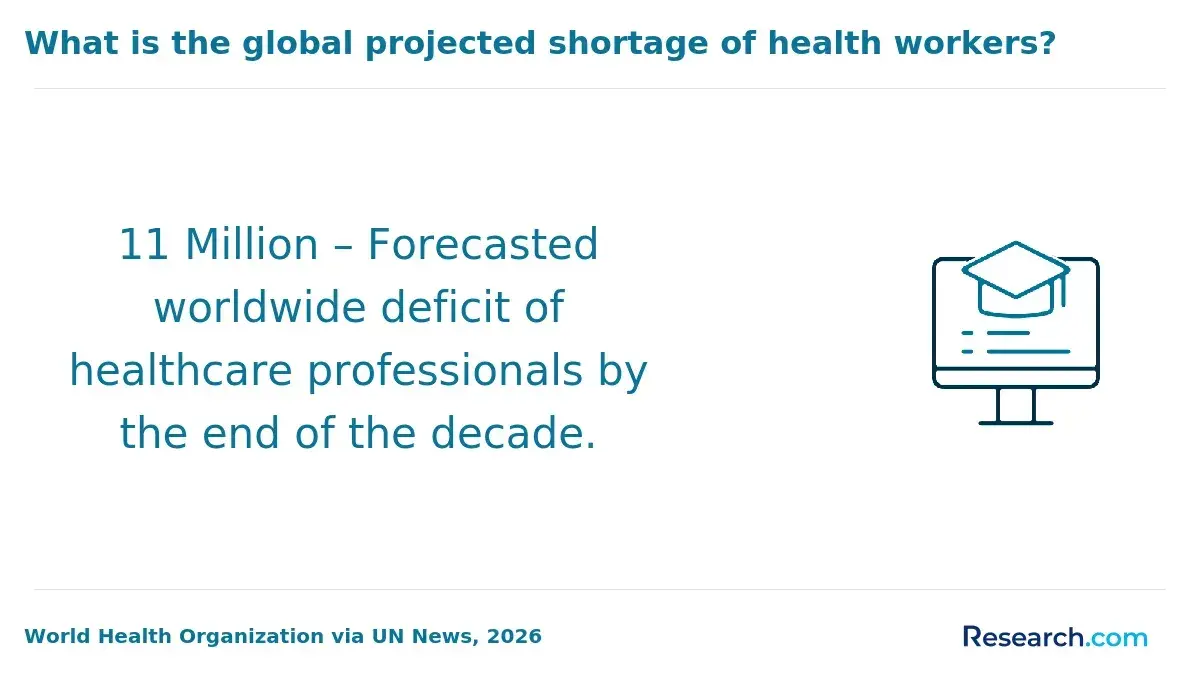
In 2024, the BLS reported that employment of medical and health services managers is projected to grow by 23% from 2024 to 2034. This growth is expected to create around 62,100 job openings yearly over the next decade. By 2034, online healthcare management graduates will see over 759,100 positions in different industries. Many openings are expected as workers change occupations or retire, while demand also reflects the need for healthcare organizations to deliver quality, cost-effective care to the aging population.
What career services and networking opportunities are provided with online healthcare management programs?
Strong online healthcare management programs usually offer career support designed for remote learners, not only campus students. Services may include career coaching, resume reviews, interview preparation, virtual career fairs, employer information sessions, mentoring, and alumni networks. These resources can help students translate coursework into job-search language and identify roles that fit their experience level. Students considering graduate study can also compare the benefits of MHA degree when deciding whether a bachelor's degree is enough for their goals.
What other degree options are available for those interested in a shorter healthcare program?
Not every healthcare career goal requires a bachelor's degree. Students who want faster entry into the workforce may consider certificates, diplomas, or associate degrees in healthcare-related fields. These shorter programs can be useful for medical office support, billing, coding, assisting, records, or entry-level technical roles, and they may later serve as a bridge to a bachelor's degree. Research.com's guide to 2-year medical degrees can help students compare shorter healthcare education pathways.
What types of practical experiences can I gain in an online healthcare management degree program?
Online does not have to mean theoretical only. Many healthcare management programs use applied assignments to help students practice decision-making, communication, data review, and problem-solving in realistic healthcare contexts.
- Virtual Simulations: Simulations place students in structured healthcare management scenarios involving issues such as budgeting, patient flow, staffing, emergency response, or service quality. Students can test decisions in a low-risk learning environment.
- Capstone Projects: Capstones typically require students to apply program concepts to a real or realistic healthcare problem. Projects may involve a business plan, research analysis, quality improvement proposal, or operational recommendation.
- Internships and Practicums: Some online programs help students complete supervised experience in a local healthcare organization, such as a hospital, clinic, administrative office, or long-term care setting.
- Case Studies and Group Projects: Case-based work asks students to analyze practical management challenges, such as EHR implementation, patient care process improvement, regulatory compliance, or quality standards.
What are the benefits of pursuing an affordable healthcare management degree?
An affordable healthcare management degree can reduce the financial pressure of college while still helping students build the leadership, operations, and healthcare knowledge needed for administrative roles. Programs listed among the cheapest online healthcare management degree options may be especially useful for students who need flexibility and want to limit debt.
Cost Savings
Lower tuition and reduced expenses for commuting, relocation, housing, or textbooks can make degree completion more realistic. Savings may also be redirected toward certifications, professional memberships, or skill-building workshops.
Career Accessibility
Healthcare management degrees can support entry into roles in hospitals, clinics, nursing homes, physician practices, and related organizations. Affordable options make that pathway more accessible to students who might otherwise delay enrollment.
High Return on Investment
Lower education costs can improve the degree's financial value if the program is accredited, career-relevant, and aligned with realistic job opportunities. Salary outcomes are not guaranteed, but reducing debt gives graduates more flexibility after completion.
Flexibility for Working Professionals
Many affordable online programs offer asynchronous courses, part-time enrollment, or accelerated options. These formats can help students continue working while building qualifications for advancement.
What advanced degree options can further enhance my healthcare management career?
Students who want senior leadership, specialized consulting, teaching, research, or executive roles may eventually consider graduate education. Options can include master's programs in healthcare administration, healthcare management, health informatics, business administration, public health, or specialized doctoral study. Professionals interested in pharmaceutical leadership or medication-related systems may also explore affordable online doctorate in pharmacy programs. The right advanced degree should match the role you want, not simply add another credential.
How do technology and data analytics shape healthcare management?
Technology and data analytics are now central to healthcare management. Managers increasingly work with EHRs, health information systems, dashboards, predictive analytics, privacy rules, cybersecurity concerns, and data used to improve staffing, patient flow, quality, and resource allocation.
Healthcare managers do not need to become software engineers, but they do need enough technical fluency to ask good questions, interpret reports, collaborate with IT teams, evaluate tools, and understand how data affects patient care and organizational performance. Informatics is especially important because it connects healthcare operations, information systems, compliance, and decision-making.
Artificial intelligence and machine learning are also changing expectations for healthcare leaders. Managers may need to evaluate automation tools, understand data limitations, protect patient privacy, and ensure technology supports care quality rather than creating new operational risks.
Students who want deeper preparation at the intersection of healthcare, analytics, and technology may consider a specialized health informatics degree online. This pathway can be useful for careers involving EHR systems, analytics, health data governance, implementation, and digital health strategy.
Common mistakes to avoid when choosing an online healthcare management degree
| Mistake | Better approach |
| Choosing a program without checking accreditation | Verify institutional and relevant programmatic accreditation before applying. |
| Comparing tuition only | Review total cost, fees, books, technology charges, transfer credits, and financial aid. |
| Assuming online degrees are automatically cheaper | Compare net price and required expenses across online and campus options. |
| Ignoring transfer credit policies | Ask for an official transfer evaluation before committing when possible. |
| Picking a specialization without a career plan | Match electives or concentrations to target roles such as informatics, quality, finance, or long-term care. |
| Assuming salary outcomes are guaranteed | Use salary data as context, but consider experience, location, employer type, and credentials. |
| Overlooking practical experience | Prioritize programs with capstones, simulations, practicums, projects, or employer-connected learning. |
| Relying only on rankings | Use rankings as a shortlist tool, then evaluate fit, cost, support, and outcomes yourself. |
Key Insights
- An online healthcare management degree is best for students who want to manage healthcare operations, people, information, budgets, quality, or strategy rather than provide direct clinical care.
- Program quality depends on accreditation, curriculum relevance, faculty expertise, applied learning, career support, and transparent costs; online delivery alone does not determine value.
- Most programs take three to four years, but transfer credits and accelerated formats can shorten the path for prepared students.
- Healthcare management graduates may work in hospitals, physician offices, nursing and residential care facilities, government entities, outpatient centers, and related organizations.
- The BLS reports an annual median pay of around $104,830 for medical and health services managers, but individual earnings vary by experience, location, employer, and role.
- Technology, informatics, and analytics are increasingly important in healthcare management, making digital fluency a valuable part of degree selection.
- The smartest program choice is not always the cheapest or highest-ranked option. Choose the accredited program that gives you the strongest fit among cost, flexibility, specialization, practical experience, and career support.
References:
- Delta Technical College. (2025). Medical Coding Enrollment and Outcomes 2024-2025. https://www.deltatechnicalcollege.com/programs/medical-coding-training/enrollment-and-outcomes/
- National Center for Education Statistics. (2025). Average tuition and fees for undergraduate students. U.S. Department of Education. https://nces.ed.gov/programs/digest/d23/tables/dt23_330.10.asp
- Research and Markets. (2026). Healthcare content management system market report 2026. https://www.researchandmarkets.com/reports/6174413/healthcare-content-management-system-market-report
- UN News. (2026). Global health systems 'at risk' as funding cuts bite, warns WHO. https://news.un.org/en/story/2026/02/1166869
- U.S. Bureau of Labor Statistics. (2025). Medical Assistants. https://www.bls.gov/ooh/healthcare/medical-assistants.htm
- U.S. Bureau of Labor Statistics. (2025). Occupational Outlook Handbook: Healthcare. https://www.bls.gov/ooh/healthcare/
Other Things You Should Know About Online Healthcare Management Degrees
Many online healthcare management degrees require a practicum or internship, often 100 to 120 hours, usually completed at an approved healthcare site. Some programs waive this requirement for students with relevant professional experience, while others make it mandatory for graduation.
US healthcare management programs incorporate current industry trends by including courses on telehealth, data analytics, and electronic health record systems. They emphasize digital healthcare tools and offer case studies and projects that align with the latest technological advancements and policy changes, preparing students for the dynamic healthcare environment.
Admission requirements typically include a completed application, official transcripts, a minimum GPA of 3.0, and, in some cases, professional healthcare experience. Some programs may also require letters of recommendation and a personal statement reflecting the applicant's goals and experience.


