2027 Best Certifications in Healthcare Management

Co-Founder and Chief Data Scientist
The healthcare management field is projected to grow an incredible 29% over the next decade, yet many talented professionals are watching these opportunities pass them by. For experienced clinicians blocked by a credential ceiling or career-changers trying to break into the industry, the path to a leadership role can feel unclear and out of reach. This is precisely where the right graduate certificate becomes the key to unlocking that next step.
This is more than just a list of programs. Our career planning experts, with over 10 years of experience, have created this comprehensive guide to help you understand the landscape. We're here to give you the direct, practical advice you need to select from the best healthcare management certifications and make a confident, strategic move in your career.
What are the benefits of getting a certification in healthcare management?
- It qualifies you for in-demand management roles where you can improve patient care and operational efficiency in hospitals, clinics, and health systems.
- It significantly boosts your earning potential, helping you move toward the six-figure median salary of over $117,000 for medical and health services managers.
- It offers the flexibility of online learning, allowing you to advance your career without having to pause it.
What can I expect from a certification in healthcare management?
You can expect a focused, graduate-level curriculum of four to six courses, which most students complete in about 9 to 12 months. This isn't about abstract theory. The learning is practical and built around real-world case studies, so you're working on the same kinds of problems you'll face on the job.
Many people think online learning is isolating, but quality programs are designed to prevent that. You'll learn alongside a group of peers, known as a cohort, who are also working professionals. This structure is perfect for building a strong professional network.
It’s important to see this as a specialized tool. Unlike a broad Master of Healthcare Administration (MHA) degree, a certificate offers a deep dive into the specific management skills you need to get your foot in the door or secure that first promotion.
Where can I work with a certification in healthcare management?
The demand for skilled managers is strong everywhere, but here’s where the primary opportunities are, based on industry data:
- Hospitals: This is the largest employment sector, accounting for 30% of all medical and health services management positions in settings from large urban medical centers to smaller community hospitals.
- Physician's Offices: A significant area of opportunity, with 12% of all managers working in private practices, specialty clinics, and other physician-led organizations.
- Nursing and Residential Care Facilities: This is a major growth area, contributing to the more than 9% new management jobs projected to open annually across the healthcare industry.
- Government Agencies: These roles in federal, state, and local health departments are a key part of the field's 7% management jobs.
How much can I make with a certification in healthcare management?
Here is a breakdown of the median annual wages for medical and health services managers in the top industries, according to the latest data:
- Government: Managers in federal, state, and local health agencies earn a median salary of $132,620 per year.
- Hospitals: This is the largest sector, offering a median salary of $130,690 per year for management roles.
- Outpatient Care Centers: In this growing field, managers earn a median of $106,990 per year.
- Offices of Physicians: Managers in private practices and clinics earn a median salary of $100,780 per year.
- Nursing and Residential Care Facilities: Leaders in this setting earn a median of $99,250 per year.
- List of the Best Certification in Healthcare Management Programs for 2027 List of Programs
- How long does it take to complete a certification in healthcare management program? Completion Time
- What is the average cost of a certification in healthcare management program? Program Cost
- What are the financial aid options for students enrolling in a certification in healthcare management program? Financial Aid
- What are the prerequisites for enrolling in a certification in healthcare management program? Requirements
- What courses are typically in a certification in healthcare management program? What courses are typically in a certification in healthcare management program?
- How Can You Supplement Your Certification with Affordable Skill-Building Courses? How Can You Supplement Your Certification with Affordable Skill-Building Courses?
- What types of specializations are available in a certification in healthcare management program? Specializations
- How to Choose the Best Certifications in Healthcare Management Program How to Choose the Best Certifications in Healthcare Management Program
- What career paths are available for graduates of a certification in healthcare management program? Career Paths
- What is the job market for graduates of a certification in healthcare management program? Job Market
Best Healthcare Management Certificate Programs for 2026
A healthcare management certificate can be a practical next step if you already work in healthcare, business, technology, finance, operations, or patient services and want to move into leadership without committing immediately to a full graduate degree. These programs usually focus on the business side of care delivery: budgeting, staffing, quality improvement, health policy, compliance, data use, and organizational leadership.
This guide is designed to help you compare healthcare management certificate programs by cost, length, credits, accreditation, stackability, and career fit. You will also learn how to evaluate return on investment, what admissions requirements to expect, which courses and specializations matter most, and what mistakes to avoid before enrolling.
Quick Answer: Is a Healthcare Management Certificate Worth It?
A healthcare management certificate may be worth it if you already have a bachelor’s degree or professional healthcare experience and need focused management training for roles such as clinic manager, practice manager, department supervisor, health information manager, or long-term care administrator. It is usually less expensive and faster than a full master’s degree, but it may not replace an MHA, MBA, or state-specific licensure requirement for senior executive or regulated administrator roles.
The strongest programs are accredited, career-aligned, taught by faculty with healthcare leadership experience, and built so credits can transfer into a related graduate degree. Before enrolling, compare the total tuition, fees, employer reimbursement options, time commitment, and whether the curriculum matches the type of healthcare organization where you want to work.
How This Ranking Was Built
Because certificate tuition can represent a meaningful professional investment, this ranking emphasizes transparent, decision-useful information. Research.com uses established education data sources, including the IPEDS database, Peterson's database, the College Scorecard database, and The National Center for Education Statistics.
These sources help support comparisons of programs, institutions, costs, and student-facing outcomes. To understand how Research.com evaluates education options, visit the Research.com methodology page.
At-a-Glance Comparison of Featured Healthcare Management Certificate Programs
| Rank | School and Program | Length | Credits | Published Cost | Accreditation Listed |
| 1 | University of Iowa – Graduate Certificate in Healthcare Management | 15 months | 15 | $1,250 per credit | Council on Education for Public Health (CEPH) |
| 2 | Carlow University – Graduate Certificate in Healthcare Management | As few as 12 months | 12 | $902 per credit | Middle States Commission on Higher Education (MSCHE) |
| 3 | Rockhurst University – Health Care Management Graduate Certificate | Up to 11 months | 10 | $825 per credit | Higher Learning Commission (HLC) |
| 4 | University of Wisconsin–Milwaukee – Health Care Management, Graduate Certificate | 6–12 months | 15 | Not listed | Higher Learning Commission (HLC) |
| 5 | Fairleigh Dickinson University – Health Care Management Graduate Certificate | Approximately 12 months | 18 | $698 per credit | Middle States Commission on Higher Education (MSCHE) |
| 6 | Marist College – Healthcare Management Certificate | Approximately 1 year | 9 | $990 per credit | Middle States Commission on Higher Education (MSCHE) |
| 7 | University of Portland – Healthcare Management Certificate | Approximately 1 year | 12 | $750 per credit | Northwest Commission on Colleges and Universities (NWCCU) |
| 8 | University of Connecticut – Long-Term Health Care Management Graduate Certificate | Up to 3 years | 12 | $1,150 per credit | Association to Advance Collegiate Schools of Business (AACSB) |
| 9 | University of Denver – Healthcare Management Graduate Certificate | As few as 9 months | 24 quarter credits | $20,616 total tuition | Higher Learning Commission (HLC) |
| 10 | Stevens Institute of Technology – Healthcare Management and Leadership Certificate | Approximately 1 year | 12 | $1,930 per credit | Middle States Commission on Higher Education (MSCHE) |
1. University of Iowa – Graduate Certificate in Healthcare Management
The University of Iowa’s graduate certificate is structured for professionals who want a cohort experience and a direct connection to graduate-level healthcare leadership coursework. The certificate uses courses from the Executive MHA curriculum, which makes it especially useful for students who may later want to continue into a full master’s program.
- Program Length: 15 months
- Required Credits to Graduate: 15
- Cost per Credit: $1,250
- Accreditation: Council on Education for Public Health (CEPH)
2. Carlow University – Graduate Certificate in Healthcare Management
Carlow University’s certificate is built around ethical decision-making, organizational management, finance, project management, and innovation in healthcare settings. Students who want a shorter graduate credential with a possible MBA pathway may find the credit-transfer structure especially valuable.
- Program Length: As few as 12 months
- Required Credits to Graduate: 12
- Cost per Credit: $902
- Accreditation: Middle States Commission on Higher Education (MSCHE)
3. Rockhurst University – Health Care Management Graduate Certificate
Rockhurst University’s certificate emphasizes healthcare policy, health information technology, leadership, and quality improvement. The program is also designed so certificate credits can apply to the Helzberg MBA, which may appeal to students who want a management credential now and a broader business degree later.
- Program Length: Up to 11 months
- Required Credits to Graduate: 10
- Cost per Credit: $825
- Accreditation: Higher Learning Commission (HLC)
4. University of Wisconsin–Milwaukee – Health Care Management, Graduate Certificate
The University of Wisconsin–Milwaukee offers a business-centered healthcare management sequence covering topics such as managed care, integrated health networks, and the operational realities of healthcare organizations. Its shorter completion window may suit students who want concentrated graduate coursework without a long enrollment timeline.
- Program Length: 6–12 months
- Required Credits to Graduate: 15
- Accreditation: Higher Learning Commission (HLC)
5. Fairleigh Dickinson University – Health Care Management Graduate Certificate
Fairleigh Dickinson University’s certificate can function as a standalone credential or as part of a path into the Master of Public Administration. Students build a foundation in public and nonprofit management, then use specialized healthcare courses to shape the credential around their career goals.
- Program Length: Approximately 12 months
- Required Credits to Graduate: 18
- Cost per Credit: $698
- Accreditation: Middle States Commission on Higher Education (MSCHE)
6. Marist College – Healthcare Management Certificate
Marist College’s fully online certificate is intended for working professionals who want a focused healthcare leadership credential without starting a full degree. The curriculum examines complex industry issues and helps students strengthen strategic judgment for management roles.
- Program Length: Approximately 1 year
- Required Credits to Graduate: 9
- Cost per Credit: $990
- Accreditation: Middle States Commission on Higher Education (MSCHE)
7. University of Portland – Healthcare Management Certificate
The University of Portland combines healthcare management with business analytics and informatics. This program may fit students who want stronger quantitative, IT, and decision-support skills for leadership in complex healthcare environments.
- Program Length: Approximately 1 year
- Required Credits to Graduate: 12
- Cost per Credit: $750
- Accreditation: Northwest Commission on Colleges and Universities (NWCCU)
8. University of Connecticut – Long-Term Health Care Management Graduate Certificate
The University of Connecticut offers a more specialized option for students targeting long-term care administration. The certificate is designed to meet all state licensure requirements for long-term care administrators and includes a 900-hour supervised internship, making it more practice-intensive than many general management certificates.
- Program Length: Up to 3 years
- Required Credits to Graduate: 12
- Cost per Credit: $1,150
- Accreditation: Association to Advance Collegiate Schools of Business (AACSB)
9. University of Denver – Healthcare Management Graduate Certificate
The University of Denver’s graduate certificate focuses on health equity, public policy, comparative health systems, and innovation. Its hybrid structure and elective options may work well for students who want flexibility while still tailoring coursework to a specific leadership interest.
- Program Length: As few as 9 months
- Required Quarter Credits to Graduate: 24
- Total Tuition: $20,616
- Accreditation: Higher Learning Commission (HLC)
10. Stevens Institute of Technology – Healthcare Management and Leadership Certificate
Stevens Institute of Technology’s certificate pairs healthcare-specific leadership with project management and organizational performance concepts. Students study areas such as risk management, performance evaluation, and organizational behavior, which can be useful for professionals moving into supervisory or project-based leadership roles.
- Program Length: Approximately 1 year
- Required Credits to Graduate: 12
- Cost per Credit: $1,930
- Accreditation: Middle States Commission on Higher Education (MSCHE)
How Long Does a Healthcare Management Certificate Take?
Most healthcare management certificate programs can be completed in about 9 to 12 months, especially when taken part time by working professionals. This timeline is common because many students are balancing coursework with full-time jobs in hospitals, clinics, health systems, insurance organizations, public health agencies, or related business roles.
Some programs offer faster full-time formats that can be completed in as little as six months, while others allow students to spread coursework across a longer period. Asynchronous online courses can make scheduling easier because students are not always required to attend live class sessions, but asynchronous does not mean self-paced without deadlines. Assignments, discussions, exams, and projects still follow a course calendar.
A graduate healthcare management certificate is usually more advanced than an entry-level clinical support credential, such as the shortest home health care aide certification online. The certificate is aimed at supervision, operations, policy, finance, and leadership rather than direct aide training.
| Timeline Option | Best For | Trade-Off |
| 6–9 months | Students who can handle a heavier course load and want a faster credential | Less flexibility for work, family, and internship obligations |
| 9–12 months | Working professionals seeking a realistic part-time schedule | Requires consistent weekly planning across multiple terms |
| Up to 3 years | Students in specialized or licensure-aligned tracks, such as long-term care administration | Longer time to credential completion, but potentially more field experience |
How Much Does a Healthcare Management Certificate Cost?
Based on the programs listed above, total tuition commonly falls between $8,250 and $23,160, with an average cost of about $13,787. The final price can change depending on credit load, university fees, technology fees, textbooks, residency requirements, and whether the program charges different rates for in-state, out-of-state, or online students.
Do not compare programs on tuition alone. Ask each school for the full estimated cost of attendance for the certificate, including required fees. If you may pursue a master’s degree later, also compare whether the certificate credits can be applied to a related graduate program, including options such as CAHME accredited MHA programs.
How to Think About ROI Before You Enroll
The most useful ROI question is not “Can I afford this certificate?” but “What specific career move could this certificate realistically support?” A $15,000 certificate that helps a student qualify for a role with a $30,000 salary increase would recover its tuition quickly, but that outcome depends on the student’s experience, local job market, employer needs, networking, and performance.
Use ROI as a planning tool, not a guarantee. Compare the total program cost with your target job postings, current salary, employer reimbursement, time to completion, and whether the credential helps close a clear skills gap.
| Cost Factor | Why It Matters | Question to Ask |
| Tuition per credit | Determines the largest part of the certificate cost | Is the listed rate the same for online and out-of-state students? |
| Required credits | A lower per-credit price can still lead to a higher total cost if more credits are required | How many credits are required to finish the certificate? |
| Fees and materials | Technology, graduation, books, and course materials can add to the bill | Can the school provide a complete fee schedule? |
| Stackable credits | Credits that apply to a future master’s degree can improve long-term value | Will every certificate credit transfer into a specific graduate program? |
| Employer support | Tuition reimbursement can sharply reduce out-of-pocket cost | Does my employer cover certificates, or only full degrees? |
Financial Aid Options for Healthcare Management Certificate Students
Students commonly fund healthcare management certificates through a mix of federal loans, employer tuition reimbursement, private loans, scholarships, grants, and personal payment plans. The right approach depends on whether the certificate is eligible for aid, whether you are already employed, and whether your employer views the program as job-related professional development.
Federal Student Loans
Some graduate certificate students may qualify for federal student loans, depending on the school and program eligibility. Start by completing the Free Application for Federal Student Aid (FAFSA). Then ask the financial aid office whether the specific certificate program is aid-eligible, not just whether the university participates in federal aid programs.
Employer Tuition Reimbursement
For employed healthcare workers, employer support can be the most practical funding source. Hospitals, health systems, clinics, insurers, and healthcare vendors may offer tuition assistance for programs connected to leadership development, compliance, operations, informatics, or finance. Before enrolling, ask HR whether reimbursement requires manager approval, a minimum grade, continued employment after completion, or enrollment at an approved institution.
Scholarships and Grants
Scholarships and grants do not need to be repaid, but they can be competitive and may have eligibility restrictions. Check the university, professional associations, local healthcare foundations, and employer-sponsored awards. Some funding opportunities are designed to expand access to leadership development among underrepresented professionals. In the field, 68% of managers are White, while Black professionals represent 13.5% and Hispanic professionals represent 12.8%. Understanding the career benefits of college certificate programs can help you decide whether a targeted scholarship-supported credential fits your goals.
The following chart provides more context on racial and ethnic representation in the field.
Healthcare Management Certificate Admission Requirements
Most graduate healthcare management certificates are built for adult learners and working professionals. Admissions committees typically care more about your degree history, work experience, resume, and career goals than standardized test scores.
- Bachelor’s degree: Most programs require a bachelor’s degree from an accredited institution. The degree does not always need to be in healthcare.
- Professional background: Some programs prefer applicants with experience in healthcare, administration, business, technology, finance, public health, or operations.
- No GRE or GMAT: Many certificate programs do not require graduate entrance exams.
- Application documents: Expect to submit transcripts, a resume, and a statement explaining your goals. Some schools may also request recommendations.
If you do not yet have a bachelor’s degree, a program such as a fast track health sciences degree online may be a better first step before applying to graduate-level certificate programs.
Do Age and Prior Career Experience Help?
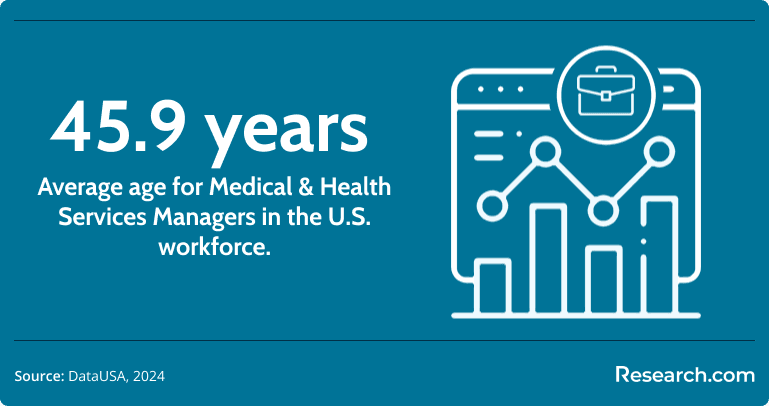
Experience can be an advantage in healthcare management education. The average age for a medical office manager is about 46, which reflects how often management roles draw on judgment, communication, supervision, and operational knowledge gained over time.
Applicants from other fields should not assume they are starting from zero. Finance, IT, logistics, human resources, customer service, compliance, and project management experience can transfer well into healthcare settings once paired with healthcare-specific training. This is similar to how some professionals approach nursing as a second career: prior work history can become a strength when combined with the right credential and clinical or industry knowledge.
The chart below shows how age distribution appears in this career area.
Common Courses in Healthcare Management Certificate Programs
Healthcare management certificates usually focus on how healthcare organizations operate as businesses, service providers, regulated institutions, and community health partners. The coursework helps students move from task-level work into decision-making, supervision, planning, and performance improvement.
- Healthcare finance: Students learn how budgets, revenue cycles, reimbursement, cost control, and financial planning affect departments and organizations.
- Healthcare law and ethics: Courses cover compliance, patient privacy, HIPAA-related responsibilities, ethical decision-making, and the legal environment of care delivery.
- Health informatics and data analytics: Students study how healthcare data, information systems, and reporting tools can support better operations and outcomes.
- Operations and quality improvement: Coursework examines workflow, safety, patient experience, process improvement, staffing, and performance measurement.
- Leadership and organizational behavior: Many programs include supervision, communication, change management, conflict resolution, and team leadership.
This curriculum is business- and management-focused. Students who are more interested in patient education, community health teaching, or wellness programming may want to compare it with the fastest online health education degree options.
How to Add Affordable Skill-Building Courses to Your Certificate
A certificate can give you a management framework, but short supplemental courses may help you close specific technical gaps. For example, affordable medical billing and coding classes can help future managers better understand claims, documentation, payer processes, and front-office revenue cycle work.
Choose add-on courses carefully. Look for direct relevance to your target role, credible instruction, employer recognition, and practical assignments. A low-cost course is only useful if it builds a skill you can apply at work or discuss confidently in an interview.
Healthcare Management Certificate Specializations
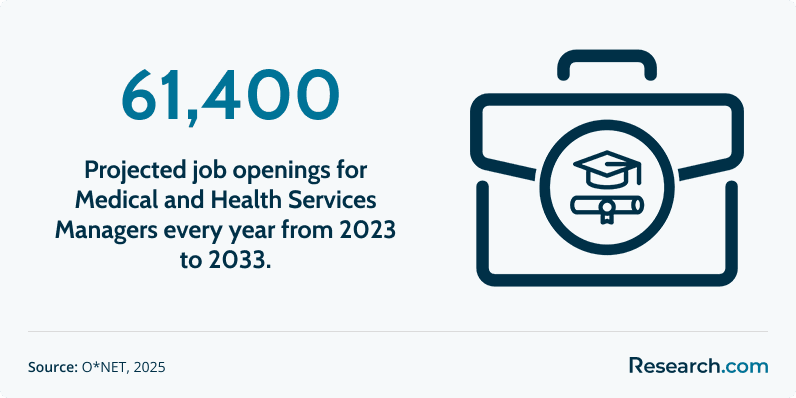
Specialization matters because healthcare management is broad. A general certificate can prepare you for supervisory roles, but a focused track may be more useful if you know the setting or function you want: informatics, finance, long-term care, policy, quality, or operations. With over 61,400 new management jobs opening up each year, a clear specialization can help you tell a stronger career story.
| Specialization | Best Fit | Roles It May Support |
| Health informatics and AI | Students with IT, analytics, data, EHR, or process improvement interests | Health information manager, informatics coordinator, analytics-focused operations roles |
| Healthcare finance | Students interested in budgets, reimbursement, revenue cycle, and cost control | Practice manager, financial operations analyst, department administrator |
| Long-term care administration | Students targeting nursing homes, assisted living, home health, or aging services | Long-term care administrator, facility operations manager, senior services manager |
| Quality improvement and operations | Students who want to improve workflow, safety, staffing, and patient experience | Clinic manager, operations coordinator, quality improvement specialist |
Health Informatics and AI
Healthcare organizations increasingly rely on data systems, electronic health records, reporting dashboards, and analytics-supported decision-making. A health informatics focus can be useful for students who want to connect management with technology and data. Students who want deeper preparation in this area can also compare the fastest online health information management degree programs.
Healthcare Finance
A finance-focused certificate can help students understand budgets, payer relationships, revenue cycle performance, staffing costs, and financial trade-offs. This path is a strong fit for professionals who enjoy numbers and want to support resource decisions in clinics, hospitals, or healthcare business offices.
Long-Term Care Administration
Long-term care management is a specialized pathway tied to aging services, nursing homes, assisted living, and home health organizations. Because some roles are regulated, students should verify state licensure requirements before assuming a certificate is sufficient.
The graphic below shows the scale of the job market connected to healthcare management.
How to Choose the Best Healthcare Management Certificate Program
The best program is not always the cheapest, fastest, or highest-ranked. The right choice is the one that matches your career target, budget, schedule, current education level, and future degree plans. Use the following decision points before applying.
- Confirm accreditation first. Make sure the institution is properly accredited and that any program-specific accreditation or certification status matters for your goal. For healthcare leadership degrees, students often compare programs listed through CAHME accredited or certified program resources. For information management pathways, programs connected to a CAHIIM-accredited health information management degree may be more relevant.
- Review faculty experience. Look for instructors with healthcare leadership, operations, finance, informatics, quality, compliance, or policy experience. Practitioner knowledge can make coursework more useful.
- Check whether credits are stackable. Ask whether certificate credits apply to an MHA, MBA, MPA, or related graduate degree. Get the answer in writing from the admissions or registrar’s office.
- Evaluate the format honestly. Online, hybrid, cohort-based, accelerated, and part-time formats all require different levels of structure. Choose a schedule you can sustain.
- Match coursework to job postings. Review roles you want and compare required skills with the curriculum. If postings emphasize revenue cycle, informatics, compliance, or quality improvement, make sure those topics appear in the program.
Questions to Ask Before Enrolling
| Question | Why It Matters |
| Is the certificate eligible for federal financial aid? | Not every graduate certificate qualifies, even at aid-participating schools. |
| Can certificate credits transfer into a master’s degree? | Stackable credits can protect your investment if you continue your education. |
| Does the program meet any licensure requirements? | This is especially important for long-term care administration and regulated roles. |
| What healthcare settings do graduates typically enter? | Graduate outcomes can reveal whether the program aligns with your career target. |
| Are courses taught by healthcare practitioners? | Faculty experience can affect how practical and current the coursework feels. |
| What is the complete cost, including fees? | The lowest tuition rate may not reflect the actual amount you will pay. |
Common Mistakes to Avoid
- Choosing based only on speed: A fast program is not helpful if it lacks the courses, support, or recognition you need.
- Ignoring accreditation: Accreditation affects employer recognition, credit transfer, financial aid eligibility, and future degree options.
- Assuming online means easier: Online certificates can be rigorous, especially when courses include group projects, case studies, and applied assignments.
- Overlooking licensure rules: Some healthcare administrator roles have state-specific requirements. Always verify before enrolling.
- Focusing only on tuition: Fees, transferability, employer reimbursement, and career relevance all affect total value.
- Expecting guaranteed salary gains: A certificate can strengthen your profile, but outcomes depend on experience, location, role, and employer demand.
Why Program Quality Affects Career Value
The median salary for medical office managers is around $77,000, but earnings can differ by industry, location, education, responsibilities, and experience. A certificate with respected accreditation, relevant coursework, strong faculty, and a useful professional network can better position students for competitive management roles.
The chart below illustrates average salary progression and why program selection should be treated as a career investment.
Career Paths After a Healthcare Management Certificate
A healthcare management certificate can help students move toward mid-level management and administrative leadership roles. It is not usually a direct route to executive positions such as hospital CEO, which typically require extensive leadership experience and often a graduate degree such as an MHA, MBA, or related credential. However, it can be a strong step toward the management track.
Clinic Manager
Clinic managers oversee daily operations in outpatient clinics, medical practices, specialty offices, and ambulatory care settings. Responsibilities may include staffing, scheduling, patient flow, billing coordination, vendor communication, compliance, and performance improvement.
Health Information Manager
Health information managers focus on patient data, records systems, privacy, documentation quality, and regulatory compliance. This path may appeal to students with technology, records, analytics, or compliance experience. Some professionals combine management training with specialized healthcare education, such as the shortest behavioral health science degree online, depending on the setting they want to enter.
Practice Manager
Practice managers run the business operations of physician offices or group practices. Their work may include budgeting, staff supervision, payer relationships, patient access, office policies, growth planning, and service quality.
Other Roles to Consider
- Department coordinator
- Healthcare operations supervisor
- Quality improvement specialist
- Long-term care administrator
- Patient services manager
- Revenue cycle supervisor
- Materials or supply chain manager in a healthcare organization
Job Market Outlook for Healthcare Management Certificate Graduates
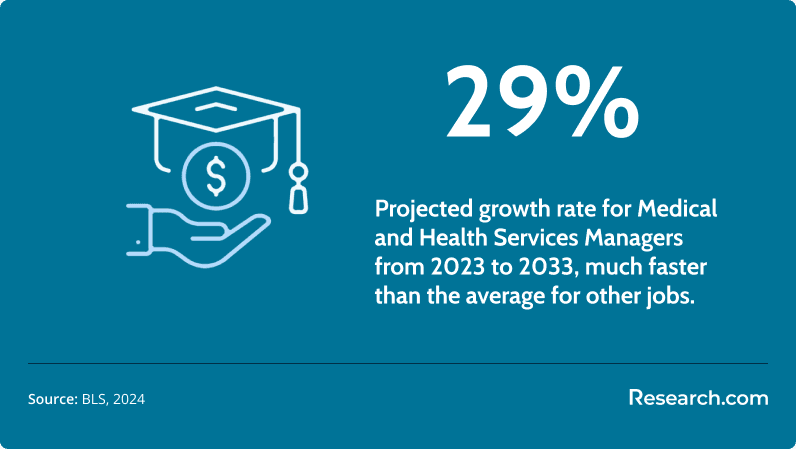
The labor market for healthcare management is strong. The U.S. Bureau of Labor Statistics projects 29% employment growth for medical and health services managers over the next decade, which is much faster than the average for all occupations.
That growth represents about 160,600 new management jobs added to the economy. Healthcare management certificates can help experienced workers compete for these opportunities when the credential is paired with relevant experience, strong interview preparation, and a clear career target.
Why Demand Is Growing
A major driver is the aging of the Baby Boomer population. As more people need medical services, healthcare organizations need managers who can coordinate staff, budgets, technology, compliance, patient access, and quality improvement across expanding systems of care.
Technology is also changing employer expectations. Managers are increasingly expected to understand data, digital health tools, electronic records, privacy requirements, workflow automation, and performance dashboards. A certificate that includes informatics, analytics, quality improvement, or operations can be especially useful for this environment.
The graphic below places this projected growth in context.
What Graduates Say About Healthcare Management Certificate Programs
- Anyssa: "I spent years as a respiratory therapist seeing ways our department could improve patient flow, but I struggled to turn those ideas into leadership-ready proposals. The certificate helped me connect clinical insight with operations, quality improvement, and data. Because I studied online while working, I could test ideas on the job almost immediately. After finishing, I moved into department management and finally had the tools to lead the changes I had been recommending for years."
- Keith: "I came from supply chain logistics outside healthcare, so I understood efficiency but did not know the language of hospitals. The certificate helped me translate my experience into healthcare operations. The most valuable part was learning with nurses, coordinators, and administrators who understood the daily realities of care delivery. That combination helped me explain my transferable skills and move into a materials management role with a regional hospital system."
- Soraya: "I was working as a patient services coordinator and wanted to move beyond support responsibilities, but I lacked formal preparation in healthcare finance, law, and leadership. The certificate gave me targeted training I could complete while staying employed. More than adding a line to my resume, it helped me speak with more confidence about management decisions and prepared me to pursue higher-level opportunities."
Key Insights
- A healthcare management certificate is best for professionals who want focused leadership training without immediately committing to a full graduate degree.
- Most programs take about 9 to 12 months, though some can be completed in as little as six months and others may extend up to 3 years.
- Typical total tuition ranges from $8,250 to $23,160, with an average cost of about $13,787 among the listed programs.
- Program value depends on more than price. Accreditation, stackable credits, faculty experience, format, and curriculum alignment with your target job all matter.
- Students interested in regulated roles, especially long-term care administration, should verify state licensure requirements before enrolling.
- The strongest ROI comes when the certificate fills a specific gap, such as healthcare finance, operations, informatics, quality improvement, or compliance.
- The job outlook is favorable, with 29% projected employment growth and about 160,600 new medical and health services management jobs expected over the next decade.
- A certificate can support roles such as clinic manager, practice manager, health information manager, quality improvement specialist, and healthcare operations supervisor, but senior executive roles often require more experience and advanced education.
References:
- Data USA. (2023). Medical & health services managers. Retrieved September 2, 2025, from https://datausa.io/profile/soc/medical-health-services-managers
- Payscale. (n.d.). Average Medical Office Manager Hourly Pay. Retrieved September 2, 2025, from https://www.payscale.com/research/US/Job=Medical_Office_Manager/Hourly_Rate
- Payscale. (n.d.). Certified Medical Office Manager (CMOM) Certification Salary. Retrieved September 2, 2025, from https://www.payscale.com/research/US/Certification=Certified_Medical_Office_Manager_(CMOM)/Salary
- U.S. Bureau of Labor Statistics. (2024, April 3). Occupational Employment and Wages, May 2023: 11-9111 Medical and Health Services Managers. Retrieved September 2, 2025, from https://www.bls.gov/oes/2023/may/oes119111.htm
- U.S. Bureau of Labor Statistics. (2024, September 4). Occupational Outlook Handbook: Medical and Health Services Managers. Retrieved September 2, 2025, from https://www.bls.gov/ooh/management/medical-and-health-services-managers.htm
- U.S. Department of Labor, Employment and Training Administration. (n.d.). 11-9111.00 - Medical and Health Services Managers. O*NET OnLine. Retrieved September 2, 2025, from https://www.onetonline.org/link/summary/11-9111.00
- Zippia. (n.d.). Medical office manager demographics and statistics in the US. Retrieved September 2, 2025, from https://www.zippia.com/medical-office-manager-jobs/demographics/
- ZipRecruiter. (n.d.). Medical Office Manager Salary. Retrieved September 2, 2025, from https://www.ziprecruiter.com/Salaries/Medical-Office-Manager-Salary
- Data USA. Medical & health services managers profile. https://datausa.io/profile/soc/medical-health-services-managers
Other Things You Should Know About Certification in Healthcare Management Programs
Candidates should prioritize certifications that align with their career goals, offer comprehensive coverage of healthcare management practices, and are recognized by industry employers. Notable options in 2027 include the Certified Healthcare Financial Professional (CHFP) and the Certified Professional in Healthcare Information and Management Systems (CPHIMS).
Most healthcare management certifications require renewal every 1 to 3 years and 20 to 60 continuing education credits, depending on the issuing body. For example, ACHE’s FACHE credential requires 36 approved continuing education credits during each three-year recertification cycle.
Prerequisites for top healthcare management certifications in 2027 typically include a bachelor's degree in a related field and relevant work experience. Some programs may require completion of certain courses or exams administered by organizations like the American College of Healthcare Executives (ACHE).