2027 Fastest Home Health Aide Certification Online

Co-Founder and Chief Data Scientist
According to Statista (2025), 75% of U.S. adults over age 50 want to remain in their homes as they age; a clear sign that demand for qualified home health aides (HHAs) is only going to rise. This shift toward home-based care is creating new opportunities for students, career changers, and caregivers who are ready to enter the healthcare field through fast, flexible training.
After researching various programs, I created this guide to help you find the fastest and most reliable online home health aide certification options in CURENT_YEAR. My team and I will cover what to expect from training, how to meet certification requirements, available career paths, and tips for getting hired as quickly as possible.
What are the benefits of opting for accelerated online home health aide certification programs?
- Employment of home health and personal care aides is projected to grow 21% from 2023 to 2033, which is much faster than the average for all occupations (Bureau of Labor Statistics, 2024).
- According to the U.S. Bureau of Labor Statistics, the median annual pay in 2024 for home health aides was $34,900 (BLS, 2024).
- Fast-track online programs can be completed in as little as 1 to 3 weeks, enabling students to begin working—and earning—much sooner than traditional programs.
What can I expect from an accelerated online home health aide certification program?
An accelerated home health aide (HHA) certification online program is designed to deliver essential caregiver training in a streamlined and efficient format. During the online sessions, students can expect a mix of interactive lessons, video demonstrations, readings, quizzes, and knowledge checks that cover the key areas of home health care.
Topics typically include personal care techniques, infection control, communication with clients and families, nutrition, safety procedures, and how to respond to emergencies. The content is often self-paced, allowing students to move through modules quickly while still mastering the material. Some programs may also include virtual labs or simulations to help students visualize real-world caregiving scenarios.
Where can I work after completing an online home health aide certification?
After completing an accelerated online home health aide certification, graduates are qualified to work in a wide variety of healthcare settings. The most common employers are Medicare- or Medicaid-certified home health agencies, where aides provide care to elderly, chronically ill, or disabled individuals in their homes. Other potential workplaces include hospice organizations, private home care agencies, assisted living facilities, and residential group homes.
Some HHAs may also work in community health programs or provide one-on-one care through private client arrangements. Because the certification meets federal standards, qualified aides are eligible for employment in settings that require compliance with national healthcare regulations.
How much can I make with an online home health aide certification?
Earning an accelerated home health aide (HHA) certification online can lead to immediate employment opportunities with competitive wages. According to the U.S. Bureau of Labor Statistics (BLS, 2024), the median annual pay for home health aides in 2024 was $34,900. However, actual earnings can vary depending on the type of employer and location.
As of May 2024, HHAs and personal care aides earned the following median annual salaries across various industries:
- Residential intellectual and developmental disability facilities: $36,400
- Assisted living and continuing care retirement communities: $36,280
- Home healthcare services: $35,250
- Individual and family services: $34,600
While entry-level roles may start lower, experienced HHAs or those who take on specialized roles (such as hospice or dementia care) may earn more. Some employers also offer shift differentials, overtime, and benefits such as healthcare coverage, especially for full-time positions.
An accelerated certification gives you a quick, affordable way to enter a stable and growing profession with clear earning potential.
- List of the Fastest Online Home Health Aide Certification Programs List of Programs
- What is the fastest way to become a licensed home health aide (HHA)? What is the fastest way to become a licensed home health aide (HHA)?
- What is the average cost of an online home health aide certification? Average Cost
- How can I fast-track an online home health aide certification? How can I fast-track an online home health aide certification?
- What core topics are covered in an accelerated online home health aide certification? Core Topics
- Do fast-track online home health aide certification programs include hands-on clinical training? Do fast-track online home health aide certification programs include hands-on clinical training?
- What essential skills do I need to succeed as a home health aide? Essential Skills
- Are there specialized tracks within an online home health aide certification? Specialized Tracks
- Is my HHA certification transferable between states? Is my HHA certification transferable between states?
- What are the typical career advancement paths after becoming a home health aide? Career Advancement
- How can I verify the quality of an online home health aide certification program? How can I verify the quality of an online home health aide certification program?
- What is the job market for certified home health aides? Job Market
- What prerequisites do I need to enroll in an online HHA certification program? What prerequisites do I need to enroll in an online HHA certification program?
- What additional certifications can enhance my HHA career? What additional certifications can enhance my HHA career?
- What challenges should I expect during my online HHA certification journey? What challenges should I expect during my online HHA certification journey?
Fastest Online Home Health Aide Certification Programs for 2027
Choosing a home health aide certification program is usually a speed-and-compliance decision: you want to start working quickly, but you also need training that your state, employer, or Medicare/Medicaid-certified agency will accept. The fastest online HHA programs can shorten the classroom portion of training, but most students still need supervised hands-on practice before they can work in regulated home care settings.
This guide explains how online HHA certification works, which fast-track programs are commonly considered by students, what the training costs, how clinical hours are handled, and how to avoid choosing a certificate that looks fast but does not meet employment requirements. It is written for first-time healthcare workers, family caregivers who want formal training, CNAs adding home care credentials, and adults looking for a short pathway into direct patient care.
Quick answer: What is the fastest online HHA certification?
The fastest online home health aide training options can be completed in a few days for basic caregiver education, but a full HHA pathway for Medicare/Medicaid-certified agency employment generally requires at least 75 hours of training, including supervised practical instruction. Some states and employers accept shorter or alternative caregiver courses, while others require state-approved training, a competency evaluation, registry listing, or additional documentation.
Before enrolling, verify three things: whether the program is approved in your state, whether it includes or helps arrange required clinical training, and whether the certificate qualifies you for the type of home care job you want.
How Research.com evaluates schools and training options
Because even a short certificate can affect your job eligibility and career options, this list emphasizes practical decision factors rather than advertising claims. Research.com’s education team reviews programs using a published ranking methodology that considers affordability, completion speed, student outcomes, and institutional credibility.
For education and institutional context, Research.com uses sources such as the IPEDS database, Peterson’s database, the College Scorecard, and the National Center for Education Statistics. For HHA programs specifically, students should also confirm state approval directly with the relevant health department, labor department, or licensing agency before paying tuition.
Fast online and hybrid HHA certification programs to compare
| Program | Best for | Program length | Cost | Approval or accreditation note |
| CareAcademy | Agency-based caregiver training and flexible online learning | As little as 8 hours for basic training; full HHA: 40–75 hours | Around $59–$249 depending on package | Approved by many state health departments; meets federal HHA training standards |
| Southern Technical Institute | Florida students seeking online or hybrid HHA training | 2 to 6 weeks, self-paced | Starts at $149 for online-only course | Licensed by the Florida Department of Education – Commission for Independent Education |
| MyCareer NJ | Eligible New Jersey residents looking for free or low-cost workforce training | Typically 2 to 4 weeks | Free for qualifying individuals | Approved by the New Jersey Department of Labor and Workforce Development |
| Angeles Institute | California CNAs who want a short HHA add-on pathway | 1 to 3 weeks | Approximately $350–$500 | Accredited by the Bureau for Private Postsecondary Education (BPPE), California |
| Kingsborough Community College (CUNY) | New York learners who prefer a community college-based non-credit program | 3 to 5 weeks | Around $600 | State-approved and operated under CUNY, City University of New York |
| American Caregiver Association | Private caregivers seeking a very fast online caregiver credential | 1–3 days | $99–$159 | Recognized as a National Accrediting Body for caregivers in the U.S. |
| Washington Care Academy | Washington caregivers preparing for state home care aide requirements | 2 to 4 weeks | Around $325–$450 | Approved by the Washington State Department of Social and Health Services (DSHS) |
1. CareAcademy
CareAcademy offers online caregiver and home health aide training designed for learners who need flexible access and employer-aligned instruction. Its modules cover practical care topics such as personal care, infection prevention, communication, and safety. Because the platform is widely used by home care agencies, it can be a strong fit for students whose employer already accepts or assigns CareAcademy training.
- Program length: As little as 8 hours for basic training; full HHA: 40–75 hours.
- Cost: Around $59–$249 depending on package.
- Approval or accreditation note: Approved by many state health departments; meets federal HHA training standards.
2. Southern Technical Institute
Southern Technical Institute provides home health aide training with online and hybrid options, especially relevant for students in Florida. The program is structured for learners who want an accelerated route into caregiving while covering essential topics such as nutrition, hygiene, safety, and patient support. Florida-based students may also benefit from the school’s job placement assistance.
- Program length: 2 to 6 weeks, self-paced.
- Cost: Starts at $149 for online-only course.
- Approval or accreditation note: Licensed by the Florida Department of Education – Commission for Independent Education.
3. MyCareer NJ
MyCareer NJ connects eligible New Jersey residents with workforce training options, including free or low-cost home health aide programs. This can be a practical route for unemployed, underemployed, or low-income learners who need a short training pathway tied to local job opportunities. Students should confirm current eligibility rules, start dates, and whether the selected course meets the requirements of the agencies they plan to apply to.
- Program length: Typically 2 to 4 weeks.
- Cost: Free for qualifying individuals.
- Approval or accreditation note: Approved by the New Jersey Department of Labor and Workforce Development.
4. Angeles Institute
Angeles Institute offers a California-based HHA program that combines classroom instruction with clinical training. It is not a fully online option, but digital theory components can help students move through the academic portion faster. The program is particularly relevant for CNAs who want to add home health aide preparation focused on home safety, senior care, and client communication.
- Program length: 1 to 3 weeks.
- Cost: Approximately $350–$500.
- Approval or accreditation note: Accredited by the Bureau for Private Postsecondary Education (BPPE), California.
5. Kingsborough Community College (CUNY)
Kingsborough Community College offers a non-credit HHA training option for students in Brooklyn and nearby New York communities. The program is mainly in person, though hybrid elements may be available at times. It is a better fit for students who value a public community college setting and want training connected to New York state-regulated home care employment.
- Program length: 3 to 5 weeks.
- Cost: Around $600.
- Approval or accreditation note: State-approved and operated under CUNY, City University of New York.
6. American Caregiver Association
The American Caregiver Association offers fully online caregiver and HHA-related training for learners who want a fast, self-paced credential. Because it can be completed quickly, it may appeal to private caregivers, family caregivers, and workers seeking general caregiver recognition. Students planning to work for Medicare/Medicaid-certified agencies should confirm whether this credential alone satisfies their state and employer requirements.
- Program length: 1–3 days.
- Cost: $99–$159.
- Approval or accreditation note: Recognized as a National Accrediting Body for caregivers in the U.S.
7. Washington Care Academy
Washington Care Academy offers a 75-hour online home care aide training program aligned with Washington requirements. It is designed for caregivers who need state-approved instruction and preparation for the next steps in certification. This option is most relevant for learners who plan to work in Washington and need training approved by the appropriate state agency.
- Program length: 2 to 4 weeks.
- Cost: Around $325–$450.
- Approval or accreditation note: Approved by the Washington State Department of Social and Health Services (DSHS).
What is the fastest way to become a home health aide?
The quickest reliable route is to enroll in a state-approved HHA program, complete the required training hours, pass any required competency evaluation, and get listed on the state registry if your state requires it. For Medicare/Medicaid-certified agency work, federal standards generally require at least 75 hours of training, including supervised practical instruction. This differs from some short online medical assistant certificate programs, which may follow different employer and state requirements.
Many students finish the training portion in 1 to 3 weeks. If your state requires a separate exam, registry review, fingerprinting, or document processing, the full timeline may extend by another 1–2 weeks.
Fast-track HHA timeline
| Step | What you do | Why it matters | Possible time frame |
| 1. Confirm state rules | Check whether your state requires specific approval, exams, clinical hours, or registry listing. | A fast certificate is only useful if employers can accept it. | Before enrollment |
| 2. Enroll in an approved program | Choose a program that meets federal and state expectations for your target job. | State approval protects you from paying for training that does not qualify you for regulated work. | Same day to several days |
| 3. Complete classroom training | Finish online or hybrid lessons in personal care, safety, infection control, communication, and documentation. | This builds the knowledge needed before direct client care. | Often within 1 to 3 weeks |
| 4. Complete supervised practical training | Practice required care skills under instructor or nurse supervision. | Hands-on training is required for many regulated HHA roles. | Varies by program and state |
| 5. Pass the competency evaluation | Complete a written test and skills demonstration if required. | The evaluation confirms that you can provide safe basic care. | Often shortly after training |
| 6. Complete registry or employer paperwork | Submit proof of training, background check documents, health records, or other required forms. | You may not be eligible to work until the administrative steps are complete. | Registration typically takes 1 to 2 weeks |
Florida is one example of a state with flexible HHA training options, including 40-hour or 75-hour HHA certificates. However, employment in a licensed home health agency may still require a state-approved competency exam or documented skills competency aligned with Agency for Health Care Administration (AHCA) standards.
How much does online home health aide certification cost?
A complete online home health aide certification program often costs $600 to $1,300 when it includes classroom instruction and support for clinical training. Lower-cost options may cost about $100 to $250, but students should read the details carefully because budget programs may not include in-person clinical hours, state exam preparation, registry support, or employer-recognized approval.
For many fast-track, state-approved online programs, students can expect a price range of $599 to $799. The best value is not always the cheapest listing; it is the program that gets you eligible for the job you want without requiring you to repeat training.
What affects the final cost?
| Cost factor | Why it changes the price | Question to ask before enrolling |
| State approval | Approved programs may include required documentation, instructor oversight, and compliance processes. | Is this program accepted by my state and by local home care agencies? |
| Clinical training | Hands-on hours may require lab space, a clinical site, instructor supervision, or separate scheduling. | Are clinical hours included, arranged, or left for me to find? |
| Exam or competency support | Some programs include practice tests, skills checklists, and exam scheduling help. | Does tuition include the competency evaluation or exam preparation? |
| Background and health requirements | TB tests, immunization records, physical exams, fingerprinting, and background checks may cost extra. | Which documents or screenings are not included in tuition? |
| Job placement assistance | Some programs maintain employer partnerships or help with agency applications. | What job placement support is available after completion? |
Payment plans may let students divide tuition over several months, sometimes with little or no interest. Workforce development funding may also be available through state job training agencies for eligible unemployed or low-income learners. Similar to how students research free and low-cost pharmacy technician certification options, future HHAs should check state-funded training, employer-sponsored programs, and Medicaid-related workforce initiatives.
One example is the Pennsylvania Homecare Association, which provides up to $500 per trainee through its Direct Care Worker Mentorship & Training Program for HHAs entering home health, hospice, or home care employment. The funding helps cover classroom and clinical training hours and is connected to passing the HHA track and working at least 40 hours with a qualified agency.
How can I complete an online HHA certification as quickly as possible?
Finishing quickly requires more than picking the shortest course. The real bottlenecks are usually clinical scheduling, document collection, exam availability, and registry processing. A student who plans those steps early can often move faster than someone who only rushes through online modules.
- Choose a program approved for your state and job goal. A one-day or three-day course may be useful for private caregiving, but it may not qualify you for all agency jobs. Confirm approval before paying.
- Block daily study time. If your course is self-paced, treat it like a work schedule. Studying 4 to 6 hours per day can help you complete the online portion quickly without falling behind.
- Ask about clinical placement before enrollment. If supervised practice is required, find out whether the school arranges it, where it happens, and how soon you can start.
- Prepare for the competency evaluation while you study. Review skills such as hand hygiene, safe transfers, bathing assistance, vital signs, and reporting changes in condition before test day.
- Gather paperwork early. Have your identification, TB test, immunization records, background check information, and physical exam documents ready if required.
- Use schools that help with registry submission. Programs that submit paperwork or guide you through the registry process can reduce avoidable delays.
The same discipline used in other accelerated online programs, including the shortest online master’s programs in data science, applies here: plan the timeline backward from your target start date, complete administrative requirements early, and avoid waiting until the end of training to schedule required next steps. With the right program and an open schedule, some students can complete training in 7 to 10 days, take the exam within a week, and be listed on the state registry within 1 to 2 weeks.
What do accelerated online HHA programs teach?
Accelerated HHA programs compress the schedule, not the core responsibilities of the job. Like other online healthcare certificate programs, HHA training must prepare students to provide safe, respectful, and legally compliant care. The exact curriculum varies by state and provider, but most programs cover the following areas.
| Training topic | What students learn | Why it matters on the job |
| Basic patient care | Bathing, grooming, dressing, toileting, skin care, and daily living support. | These tasks are central to maintaining comfort, hygiene, and dignity. |
| Infection control and safety | Hand hygiene, PPE use, disposal of contaminated items, and home safety practices. | HHAs must protect clients, families, and themselves from preventable harm. |
| Nutrition and meal preparation | Meal support, hydration, dietary restrictions, safe food handling, and feeding assistance. | Many clients need help maintaining nutrition and following care instructions. |
| Vital signs and basic monitoring | Temperature, pulse, respiration, blood pressure, and recognizing abnormal changes. | Accurate observation helps supervisors respond to health changes quickly. |
| Communication | Speaking with clients, families, nurses, and agency staff in a clear and respectful way. | Good communication reduces confusion and improves continuity of care. |
| Client rights and ethics | Confidentiality, consent, dignity, privacy, and professional boundaries. | Home care work requires trust and respect in a private living environment. |
| Mental health and social needs | Supporting clients experiencing loneliness, dementia, depression, anxiety, or confusion. | HHAs often notice emotional and cognitive changes first. |
| Mobility and transfers | Body mechanics, repositioning, walking assistance, gait belts, walkers, and wheelchairs. | Safe movement protects both the client and the aide from injury. |
| End-of-life care | Comfort support, emotional reassurance, hospice-related care awareness, and family sensitivity. | Some HHAs care for clients receiving palliative or hospice services. |
HHA students come from varied educational and career backgrounds. The data below shows that home health aides most commonly had educational backgrounds in Health (10,982), Business (9,162), and Education (7,297), followed by Psychology (4,534) and Social Science (4,294).
Do online HHA certification programs include hands-on clinical training?
Most fast-track online HHA programs that are intended for regulated agency employment include supervised practical training or help students arrange it. Online instruction can teach concepts, but it cannot fully replace hands-on practice for personal care, transfers, infection control, and client safety.
Federal regulations require HHAs to complete at least 75 total training hours, including a minimum of 16 hours of in-person, supervised practical training. This is true even though many healthcare career paths now include online coursework. For HHA preparation, the clinical component is not just a formality; it is where students prove they can safely perform essential care tasks.
During supervised training, students usually practice bathing assistance, toileting, feeding, dressing, mobility support, vital signs, hand hygiene, and safe equipment use. They may also learn how to report changes in a client’s condition to a nurse, supervisor, or agency care team.
Clinical training may take place in a long-term care facility, home health agency, simulation lab, or other approved setting depending on state rules and program design. Some accelerated programs offer weekend clinical sessions or help students locate approved sites near their home.
What skills do successful home health aides need?
Home health aides need a mix of technical care skills, reliability, emotional maturity, and communication ability. The work is personal and often performed with limited direct supervision, so employers look for caregivers who can follow care plans, notice changes, and treat clients with patience and respect.
- Personal care ability: HHAs assist with bathing, grooming, dressing, toileting, eating, and mobility while protecting the client’s dignity.
- Observation and reporting: Aides must recognize changes in condition and communicate them accurately to supervisors or healthcare professionals.
- Time management: Home visits require organization because aides often balance several tasks during a limited shift.
- Clear communication: HHAs interact with clients, families, agency coordinators, nurses, and other care team members.
- Compassion and emotional steadiness: Clients may be in pain, isolated, confused, frustrated, or nearing the end of life.
- Physical stamina: The job may involve standing, bending, lifting, repositioning, and assisting clients who have limited mobility.
- Safety and infection control awareness: Proper hand hygiene, PPE use, fall prevention, and home hazard recognition are essential.
Skills such as communication, time management, and resilience are useful beyond direct care as well. Professionals in broader leadership programs, including the fastest online MBA programs in sustainability, also rely on these core capabilities when coordinating teams, solving problems, and responding to people under stress.
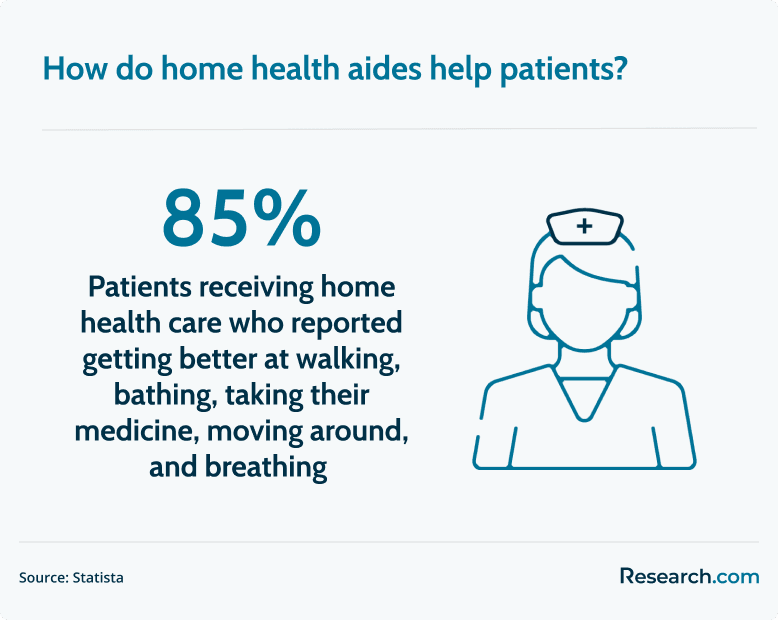
Statista (2024) reports that over 85% of home health patients improved in essential daily activities such as walking, bathing, medication management, mobility, and breathing. For HHAs, this reinforces why practical training matters: daily support can affect a client’s independence, safety, and recovery.
Are there specialized tracks in online home health aide certification?
Most HHA certification programs begin with a standard curriculum because students must first learn core care responsibilities. Some providers, employers, or continuing education programs then offer specialized training for aides who want to work with specific client populations or move into more advanced home care assignments.
- Hospice or palliative care: Focuses on comfort, emotional support, family sensitivity, and care for clients with serious or terminal illness.
- Alzheimer’s and dementia care: Covers communication, safety routines, behavioral support, and care strategies for clients with memory loss or confusion.
- Pediatric home care: Prepares aides to support children with disabilities, chronic conditions, or developmental needs in the home.
- Advanced personal care: Adds preparation for clients with more complex physical limitations, assistive devices, or higher daily support needs.
- Medication assistance, where state law allows: Teaches aides how to support self-administered medications, document accurately, and watch for side effects within legal limits.
In 2023, home health and personal care aides held about 4 million jobs (BLS, 2024). The chart below shows that nearly 49% worked in individual and family services and 24% worked in home healthcare services.
Other employment settings included residential facilities for individuals with developmental disabilities (7%) and assisted living communities (6%). These settings often value extra preparation in dementia care, disability support, senior care, and end-of-life care. Students interested in the broader social and historical context of healthcare systems can also explore interdisciplinary study through the best online bachelor’s programs in history, though such degrees are not required for HHA employment.
Can I transfer my HHA certification to another state?
HHA certification transfer depends on the state. Federal training standards can help, but they do not guarantee automatic reciprocity. Each state can set its own rules for registry listing, competency testing, background checks, additional hours, and employer eligibility.
Students who expect to move should choose training carefully. A certificate that works in one state may need extra documentation or supplemental training in another. For workers interested in longer-term healthcare technology roles, programs such as the top online cloud computing degrees may support future career shifts into health IT or digital care systems, but they do not replace state HHA requirements.
- Federal training can provide a foundation. If your program satisfies federal standards for Medicare/Medicaid agency work, another state may consider it relevant evidence of training.
- State registry rules still apply. You may need to apply to the new state’s registry and submit proof of training, employment history, identity, and background clearance.
- Additional checks may be required. States such as California, New Jersey, and New York may require transferred HHAs to complete fingerprinting, a state exam, or certain training components.
- Reciprocity is limited. HHA transfer rules are often less standardized than those for some licensed healthcare roles, so do not assume your certificate will move automatically.
If you plan to relocate, contact the new state’s Department of Health, licensing agency, or workforce department before enrolling or applying for jobs. Some training providers can also advise students about registry transfer or recertification. KFF (2024) reported that 47 states had shortages of home health aides in 2024, which may encourage some states and employers to streamline hiring where allowed.
The chart below also shows that 48 states reported shortages of personal care attendants and direct support professionals, 47 states reported shortages of nursing staff (RN/LPN), and 41 states lacked enough certified nurse aides. These shortages highlight the nationwide need for trained direct care workers, but they do not remove the need to follow each state’s certification rules.
What career paths can home health aides move into?
HHA certification can be a first step into healthcare. Some workers stay in home care and specialize, while others use the experience to pursue nursing, clinical support, care coordination, or administrative roles. Advancement usually requires additional training, certification, or a degree.
| Next role | How HHAs build toward it | When this path makes sense |
| Certified Nursing Assistant (CNA) | Complete CNA training and pass the state certification exam. | Best for HHAs who want broader clinical duties in nursing homes, hospitals, or long-term care settings. |
| Licensed Practical Nurse (LPN) | Enroll in a practical nursing program, typically 12 to 18 months. | Best for aides who want more clinical responsibility, including medication administration and charting under supervision. |
| Registered Nurse (RN) | Pursue an ADN or BSN; some workers progress through CNA experience and then use online CNA to RN bridge programs. | Best for students seeking greater responsibility, autonomy, and the highest salary potential among direct care roles. |
| Specialized caregiver | Add training in dementia care, hospice care, pediatric support, or disability services. | Best for HHAs who want to remain in home care but handle more complex client needs. |
| Care coordinator or supervisor | Gain experience, demonstrate reliability, and learn scheduling, documentation, and staff communication. | Best for aides who enjoy organization, mentoring, and serving as a link between clients and care teams. |
| Healthcare support worker | Complete short-term training for roles such as phlebotomist or patient care technician. | Best for HHAs who want to move into clinics, hospitals, or more technical support roles. |
| Medical assistant | Complete MA training that typically takes 9–12 months and includes administrative and clinical skills. | Best for HHAs who want outpatient clinic work; compare different medical assistant specialties before choosing a program. |
How do I verify the quality of an online HHA certification program?
Program quality is not just about reviews or completion speed. The most important question is whether the certificate will be accepted for your intended job in your state. A legitimate program should clearly explain approval status, training hours, clinical requirements, instructor qualifications, competency evaluation support, refund policies, and any costs not included in tuition.
Checklist before you enroll
- Confirm state approval. Ask for the exact agency that approves or recognizes the program, then verify it independently.
- Check the required hours. Make sure the program meets the training-hour rules for your target employer and state.
- Ask about clinical training. Find out whether supervised practical hours are included, arranged, or your responsibility.
- Review exam and registry support. A good program should explain how graduates complete competency evaluations and registry steps.
- Compare total cost, not only tuition. Include background checks, health screenings, supplies, exam fees, transportation, and clinical placement expenses.
- Look for employer relevance. Ask local home care agencies whether they hire graduates from the program.
- Read refund and completion policies. Fast programs may have strict rules for missed clinical sessions, extensions, or failed skills checks.
HHAs who later want to move into administration can build on caregiver experience through programs such as a low-cost online bachelor’s degree in healthcare administration, but administrative degrees are separate from basic HHA certification.
What is the job market for certified home health aides?
The job market for certified HHAs is supported by strong demand for in-home care, an aging population, and ongoing workforce shortages in direct care. According to the U.S. Bureau of Labor Statistics, an average of 718,900 job openings for home health and personal care aides are projected each year over the next decade. Those openings reflect both growing demand and replacement needs as workers retire or change careers.
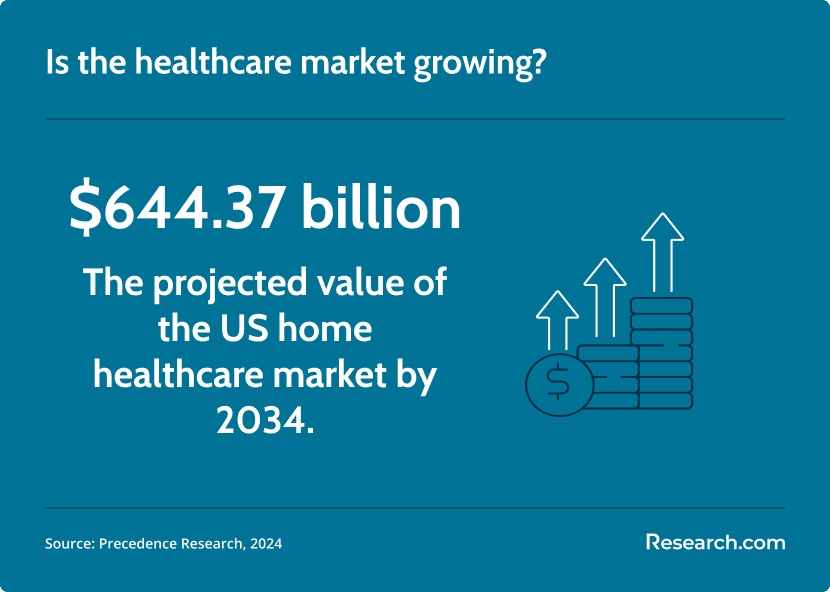
The broader market also points to continued expansion. The U.S. home healthcare market was valued at $171.60 billion in 2023 and is projected to reach $644.37 billion by 2034, with a compound annual growth rate (CAGR) of 12.74% (Precedence Research, 2024).
Healthcare spending trends also matter. U.S. healthcare spending rose by 7.5% in 2023 to $4.9 trillion, or $14,570 per person, representing 17.6% of the nation’s GDP (Centers for Medicare & Medicaid Services, 2024). As health systems and families look for cost-effective support outside hospitals and facilities, trained HHAs remain an important part of care delivery.
For students who want a short entry point into healthcare, HHA certification can be a practical option. It does not guarantee a specific job or salary, but it can qualify you for many direct care roles faster than longer healthcare programs.
What prerequisites do online HHA certification programs usually require?
Most online HHA programs ask applicants for a high school diploma or GED, government-issued identification, and basic health records such as immunizations or TB screening. Many programs and employers also require a background check, and some may ask for a physical exam or basic literacy and numeracy screening before clinical placement.
Requirements vary by state and provider, so students should request the full admissions checklist before enrolling. If you are interested in healthcare work that combines patient care knowledge with office-based skills, you may also compare the most affordable online medical billing and coding certification options.
What additional certifications can strengthen an HHA career?
Additional training can help HHAs qualify for specialized assignments, improve care quality, or prepare for supervisory roles. Useful add-ons may include dementia care, infection control, patient safety, CPR, hospice support, disability care, or medication assistance where state law allows.
For aides who want to move away from hands-on care and into records, compliance, or healthcare data roles, a program such as the most affordable online health information management degree may be a better long-term match than another direct care certificate.
What challenges should I expect in an online HHA certification program?
Online HHA training is flexible, but it is not always easy. Students must manage self-paced coursework, technology platforms, clinical scheduling, background checks, health documents, and state-specific rules. The most common delays happen when students finish online lessons but have not arranged supervised practical training or submitted required paperwork.
Common mistakes to avoid
| Mistake | Why it causes problems | Better approach |
| Choosing the shortest program without checking approval | The certificate may not qualify you for agency work in your state. | Verify state acceptance before paying. |
| Assuming online-only means fully certified | Many regulated roles require supervised practical training. | Ask exactly how clinical hours are completed. |
| Comparing only tuition | Low tuition may exclude exams, screenings, supplies, or registry support. | Calculate the full cost of completion. |
| Waiting to gather documents | Missing TB tests, immunization records, or background checks can delay clinical placement. | Collect required paperwork during the first week. |
| Assuming certification transfers automatically | States may require new registry steps, exams, or additional checks. | Contact the destination state before moving or applying. |
| Relying only on rankings or advertisements | A highly visible program may not be the right fit for your state or employer. | Confirm approval, outcomes, and employer recognition directly. |
Students who want to add administrative healthcare skills alongside clinical training can also compare online medical billing and coding schools with financial aid, especially if they want future roles outside direct personal care.
Key Insights
- The fastest HHA certificate is not always the best choice. A very short online course may help private caregivers, but regulated agency employment often requires state-approved training and supervised practical hours.
- For Medicare/Medicaid-certified agency work, plan around the 75-hour standard. Federal requirements include at least 75 total training hours and a minimum of 16 hours of in-person supervised practical training.
- Clinical scheduling is often the biggest delay. Ask about hands-on training before enrollment, not after you finish the online lessons.
- Costs vary widely. Budget courses may start around $100 to $250, while more complete fast-track programs commonly cost $599 to $799, and full programs may range from $600 to $1,300.
- State rules matter. HHA certification does not always transfer automatically, and some states require exams, registry applications, background checks, or additional training.
- HHA certification can be a short entry point into healthcare. It can lead to direct care jobs and provide experience for CNA, LPN, RN, medical assistant, care coordinator, or specialized caregiver pathways.
References
- Centers for Medicare & Medicaid Services. (2024). National health expenditure data – Historical. Retrieved from Centers for Medicare & Medicaid Services historical national health expenditure data
- Data USA. (n.d.). Home health aides. Retrieved from Data USA home health aides profile
- Kaiser Family Foundation. (2024). Payment rates for Medicaid home care: States’ responses to workforce challenges. Retrieved from KFF report on Medicaid home care workforce challenges
- Statista. (2024). Share of patients who improved in certain areas while receiving home health care in the U.S. as of 2024. Retrieved from Statista home health patient improvement data
- Statista. (2025). Home care in the U.S. - statistics & facts. Retrieved from Statista home care in the U.S. statistics
- U.S. Bureau of Labor Statistics. (2024). Home health and personal care aides. Occupational Outlook Handbook. Retrieved from BLS Occupational Outlook Handbook for home health and personal care aides
Other Things to Know About the Fastest Online Home Health Aide Certification
Online Home Health Aide certification programs in 2027 require a reliable internet connection, a computer or tablet with webcam capability, and updated software such as browsers and PDF readers. Specific programs may have additional technical specifications for accessing course materials and live video classes.
Most states require a criminal background check before HHA training or before employment placement. Many programs also require a negative TB test and proof of immunizations, such as MMR or varicella, before clinical hours begin. The exact screening list is set by the state or employer, not the online school.