
2027 Best Online Cloud Computing Degree Programs

Co-Founder and Chief Data Scientist
You see the headlines about high-paying cloud jobs, but when you look closer, you hit a wall of confusing terms and acronyms. It’s easy to feel overwhelmed and unsure where to even start. That complexity exists for a simple reason: the opportunity is enormous.
Industry analysis indicates that 90% of organizations will be impacted by a significant IT skills shortage. Companies desperately need qualified professionals, and an online cloud computing degree is a structured path to becoming one of them. This guide, prepared by career planning experts with over a decade of experience, provides the direct answers you need to move forward with confidence.
What are the benefits of getting an online cloud computing degree?
- You gain access to a high-demand and future-proof career path in the technology that powers modern business.
- The earning potential is significant, with the median annual salary for computer occupations exceeding $108,970.
- Top programs offer the dual benefit of a respected academic degree and preparation for industry-recognized certifications that are highly valued.
What can I expect from an online cloud computing degree?
You should expect a comprehensive curriculum that balances core computer science principles with specialized, hands-on cloud computing courses. This is far more than just watching video lectures; it's an interactive academic experience.
Quality online programs utilize virtual labs that provide practical experience on the same platforms used by top companies, such as Amazon Web Services (AWS) and Microsoft Azure. This allows you to build a portfolio of real project work before you even graduate.
Crucially, the best programs integrate preparation for multiple industry-recognized certifications directly into their coursework. This means you can graduate with both a respected bachelor's degree and the specific credentials that employers are currently seeking.
Where can I work with an online cloud computing degree?
You can work in nearly any industry you can think of. Finance, healthcare, entertainment, manufacturing, and government all rely on cloud technology to operate. This universal need opens up a wide range of possibilities for you.
This also means opportunities are not limited to traditional tech hubs. Remote work is standard for cloud roles, and demand is nationwide. For example, while central tech states like California (85,270 jobs) and Texas (59,680 jobs) lead the way, you'll find strong demand in other regions too, including Maryland (19,940 jobs) and Florida (18,320 jobs).
This is a key advantage. It enables you to leverage your past experience in a specific field alongside your new cloud expertise, making you a uniquely valuable candidate. An online cloud computing degree makes you a valuable asset, regardless of the industry.
How much can I make with an online cloud computing degree?
With an online cloud computing degree, you can enter a field where roles specifically in cloud computing command an average salary of $142,902. This reflects the high demand for professionals with these specialized skills.
This aligns with the broader tech landscape, where the median annual pay for all computer occupations is a robust $108,970. It confirms that the entire sector is well-compensated, and cloud expertise earns a premium.
While entry-level positions may start at a lower level, your degree is what qualifies you for advancement. With experience, you can transition into top-tier positions, such as IT architecture, where salaries average over $156,147. Your degree is the foundation for that long-term growth.
- List of the Best Online Cloud Computing Degree Programs for 2027 List of Programs
- How long does it take to complete an online cloud computing degree program? Completion Time
- How does an online cloud computing degree program compare to an on-campus program? How does an online cloud computing degree program compare to an on-campus program?
- What is the average cost of an online cloud computing degree program? Program Cost
- What are the financial aid options for students enrolling in an online cloud computing degree program? Financial Aid
- What are the prerequisites for enrolling in an online cloud computing degree program? What are the prerequisites for enrolling in an online cloud computing degree program?
- What courses are typically in an online cloud computing degree program? What courses are typically in an online cloud computing degree program?
- What types of specializations are available in an online cloud computing degree program? What types of specializations are available in an online cloud computing degree program?
- How to choose the best online cloud computing degree program? How to choose the best online cloud computing degree program?
- What key skills and competencies do employers expect from cloud computing graduates? What key skills and competencies do employers expect from cloud computing graduates?
- How does an online cloud computing degree compare to an online software engineering degree? How does an online cloud computing degree compare to an online software engineering degree?
- What career paths are available for graduates of an online cloud computing degree program? What career paths are available for graduates of an online cloud computing degree program?
- What is the job market for graduates with an online cloud computing degree? Job Market
- Can cloud computing expertise boost advancements in health informatics? Can cloud computing expertise boost advancements in health informatics?
- How can cloud computing transform healthcare administration? How can cloud computing transform healthcare administration?
Best Online Cloud Computing Degree Programs for 2027: How to Compare Programs, Costs, Careers, and ROI
An online cloud computing degree can help you move from general technology interest or entry-level IT work into cloud administration, cloud engineering, DevOps, cybersecurity, or cloud architecture. The decision is not just about finding a school with “cloud” in the program name. You need to know whether the degree is accredited, whether the curriculum includes hands-on labs, whether it prepares you for industry certifications, how much it will cost, and whether the timeline fits your work and family obligations.
This guide is for students comparing online bachelor’s programs in cloud computing, working adults trying to advance in IT, transfer students looking to finish a degree, and career changers who want a structured path into cloud infrastructure. You will find a ranked program list, cost and timeline comparisons, admissions expectations, common course topics, specialization options, career paths, financial aid guidance, and practical questions to ask before enrolling.
Quick answer: Is an online cloud computing degree worth considering?
An accredited online cloud computing degree is worth considering if you want a broad, career-building credential that combines IT fundamentals, cloud platforms, networking, security, automation, and business-ready problem-solving. It is a stronger long-term option than a short bootcamp for students who want advancement into engineering, architecture, security, or leadership roles. However, it may not be the fastest or lowest-cost path if you only need one narrow skill or a single vendor certification.
| Best fit | Why it makes sense | Potential drawback |
| New students entering IT | A degree builds the foundations needed for cloud, networking, security, and programming roles. | It usually takes longer than a bootcamp or certificate. |
| Working IT professionals | Transfer credits, prior learning credit, and certification alignment can shorten the path to a bachelor’s degree. | Balancing coursework with full-time work requires discipline. |
| Career changers | Structured coursework can replace scattered self-study with a clear sequence of skills. | Students without technical experience may need extra time for programming and networking concepts. |
| Students targeting senior roles | A bachelor’s degree can support advancement into cloud architecture, DevOps, and management tracks. | Degree completion alone does not guarantee a specific title or salary. |
How do we rank schools?
Research.com evaluates online cloud computing programs using official education data, program-level information, and factors that matter to prospective students: accreditation, affordability, curriculum relevance, flexibility, transfer options, and career preparation. The goal is to help readers compare legitimate programs rather than rely on advertising claims.
Our analysis uses trusted sources such as the U.S. Department of Education’s IPEDS database, College Scorecard, Peterson’s database, and the National Center for Education Statistics. For more detail on how Research.com reviews institutional and program data, see our ranking methodology.
1. Morgan State University - B.S. in Cloud Computing
Morgan State University offers a bachelor’s program built around practical cloud computing preparation for students who want to work in business, government, education, or technology organizations. The program is especially relevant for learners who want applied training for roles involving cloud administration, cloud architecture support, and cloud security operations.
- Program Length: 4 years
- Required Credits to Graduate: 120
- Cost per Credit: $242.29 (in-state); $705.21 (out-of-state)
- Accreditation: Middle States Commission on Higher Education (MSCHE)
2. Purdue University Global - Bachelor’s in Cloud Computing and Solutions
Purdue University Global is a strong option for students who already have some technology background and want a program that connects cloud infrastructure with business and leadership applications. The curriculum also emphasizes preparation for industry certifications from AWS, Microsoft, and CompTIA, which can help students document job-ready skills alongside the degree.
- Program Length: 4 years
- Areas of Expertise: Artificial Intelligence (AI), Cloud Security, and Blockchain
- Required Credits to Graduate: 120
- Cost per Credit: $371.00
- Accreditation: Higher Learning Commission (HLC)
3. ECPI University - B.S. in Information and Cybersecurity Operations
ECPI University may appeal to students who want an accelerated technology degree and are comfortable with a year-round academic format. Its Cloud Computing track combines cloud network planning and management with cybersecurity foundations, making it useful for students who want infrastructure skills with a security-oriented perspective.
- Program Length: 2.5 years (accelerated)
- Track: Cloud Computing
- Required Credits to Graduate: 120
- Cost per Credit: $363.00
- Accreditation: Southern Association of Colleges and Schools Commission on Colleges (SACSCOC)
4. Franklin University - B.S. Cloud Computing
Franklin University offers a fully online cloud computing degree designed with adult students and transfer learners in mind. Students can receive credit for prior coursework and eligible industry certifications, while the curriculum includes applied work with AWS, Azure, and Google Cloud and aligns with 11 industry credentials.
- Program Length: 4 years
- Required Credits to Graduate: 124
- Cost per Credit: $398.00
- Accreditation: Higher Learning Commission (HLC)
5. Thomas Edison State University - B.S. in Cloud Computing
Thomas Edison State University is a flexible online choice for adult learners, military-affiliated students, and professionals with prior work experience. The program’s CompTIA academic partnership is especially useful for students who want cloud computing coursework that also supports certification preparation.
- Program Length: 4 years
- Required Credits to Graduate: 120
- Cost per Credit: $440.00 (in-state); $573.00 (out-of-state)
- Accreditation: Middle States Commission on Higher Education (MSCHE)
6. Arkansas State University - B.S. in Digital Technology & Design
Arkansas State University offers an online digital technology degree with a Cloud Computing & Cybersecurity concentration. It is a practical option for students who want to study secure cloud policies and digital systems while potentially applying up to 90 transfer credit hours toward the degree.
- Program Length: 4 years
- Concentration: Cloud Computing & Cybersecurity
- Required Credits to Graduate: 120
- Cost per Credit: $282.00
- Accreditation: Higher Learning Commission (HLC)
7. Capella University - B.S. in Network and Cloud Computing
Capella University combines networking and cloud computing in a program focused on designing, supporting, and securing digital infrastructure. Students use applied tools associated with AWS and Cisco, and the Google IT Support Professional Certificate is included at no additional cost.
- Program Length: 4 years
- Required Credits to Graduate: 120
- Cost per Credit: $375 (1000-2000 level); $415 (3000-4000 level)
- Accreditation: Accreditation Board for Engineering and Technology (ABET)
8. King University Online - B.S. Cybersecurity and Cloud Computing
King University is designed for transfer students and technology professionals who want to complete a bachelor’s degree while strengthening both cybersecurity and cloud skills. The major coursework can be completed in 16 months and is aligned with professional certificates from Google Cloud and IBM.
- Program Length: Major coursework can be completed in 16 months
- Required Credits to Graduate: 124
- Cost per Credit: $350.00
- Accreditation: Southern Association of Colleges and Schools Commission on Colleges (SACSCOC)
9. University of Arizona - B.A.S. in Applied Computing
The University of Arizona offers an applied computing degree with a Cloud Computing emphasis for students who want a broader technology education with hands-on exposure to virtualization, AWS, and Microsoft Azure. The program is suited to students who want to solve applied computing problems across multiple technology areas rather than study cloud infrastructure alone.
- Program Length: 4 years
- Areas of Emphasis: Software Development, Information Management, Network Operations, Applied Artificial Intelligence, Cloud Computing, and DevOps
- Required Credits to Graduate: 120
- Cost per Credit: $525.00
- Accreditation: WASC Senior College and University Commission (WSCUC)
10. Western Governors University - B.S. in Cloud Computing
Western Governors University uses a competency-based model, which can benefit motivated students who want to move quickly through material they already understand. The program includes flat-rate tuition, 16 industry certifications, and optional AWS or Azure specializations for students who want deeper platform preparation.
- Program Length: Self-paced
- Specializations: Azure and AWS
- Required Competency Units to Graduate: 121+
- Tuition: $4,125 per 6-month term
- Accreditation: Northwest Commission on Colleges and Universities (NWCCU)
Program comparison at a glance
| School | Best for | Program length | Credits or units | Cost information |
| Morgan State University | Students seeking a public university cloud computing degree | 4 years | 120 | $242.29 (in-state); $705.21 (out-of-state) |
| Purdue University Global | IT professionals interested in cloud leadership and certifications | 4 years | 120 | $371.00 |
| ECPI University | Students seeking an accelerated cloud and cybersecurity pathway | 2.5 years (accelerated) | 120 | $363.00 |
| Franklin University | Transfer students and working adults | 4 years | 124 | $398.00 |
| Thomas Edison State University | Adult learners, military-affiliated students, and certification-focused learners | 4 years | 120 | $440.00 (in-state); $573.00 (out-of-state) |
| Arkansas State University | Students seeking cloud computing with cybersecurity policy training | 4 years | 120 | $282.00 |
| Capella University | Students interested in both networking and cloud infrastructure | 4 years | 120 | $375 (1000-2000 level); $415 (3000-4000 level) |
| King University Online | Transfer students who want a shorter major-coursework timeline | Major coursework can be completed in 16 months | 124 | $350.00 |
| University of Arizona | Students seeking applied computing with several emphasis options | 4 years | 120 | $525.00 |
| Western Governors University | Self-paced learners who want included certifications | Self-paced | 121+ | $4,125 per 6-month term |
How long does it take to complete an online cloud computing degree program?
Most online bachelor’s programs in cloud computing are structured as four-year degrees for full-time students. Your actual completion time can be shorter or longer depending on transfer credits, prior learning credit, accepted certifications, course load, academic calendar, and whether the program uses a traditional semester model or a competency-based format.
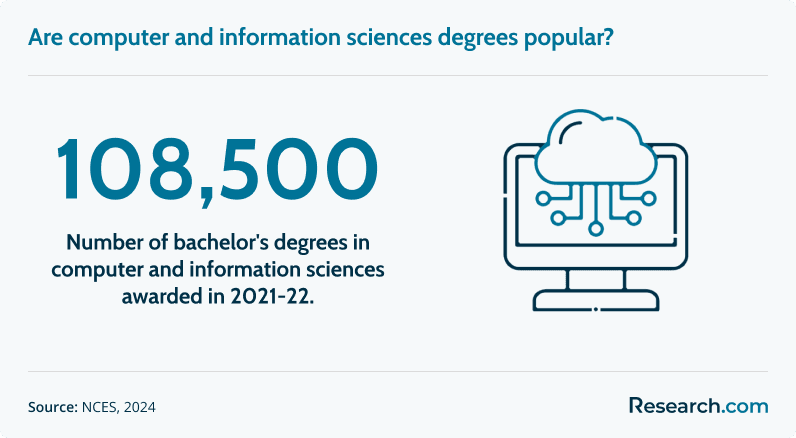
Cloud computing is part of the broader computer and information sciences field, which remains a major area of undergraduate study. More than 108,500 bachelor’s degrees in computer and information sciences were awarded in the 2021-22 academic year alone. That scale matters because it reflects sustained student interest and a large academic pipeline into technology roles.
Ways to shorten your degree timeline
If finishing quickly is one of your main priorities, compare programs by how they treat previously earned college credit, professional certifications, military training, and work-based learning. An accelerated program may advertise a shorter timeline, but the best option is the one that actually accepts the most applicable credit and lets you maintain a realistic pace.
| Acceleration option | How it can help | What to verify before enrolling |
| Transfer credits | Previously completed college courses may reduce the number of credits you still need. | Ask for an official transfer evaluation before committing. |
| Credit for certifications | Some schools award credit for approved IT or cloud credentials. | Confirm which certifications count, how many credits they provide, and whether they apply to major requirements. |
| Year-round study | Taking courses across more terms can reduce calendar time. | Make sure the workload is sustainable if you work full time. |
| Competency-based pacing | Students who already know the material may progress faster. | Ask how assessments work and what happens if you need more than one term. |
| Bootcamp or short training before a degree | Focused training can help you build confidence in one area before degree enrollment. | Remember that bootcamps usually do not replace the breadth of a bachelor’s curriculum. |
Students who need a faster, narrower skills boost sometimes consider accelerated online IT training options. These can be useful for learning a specific tool or preparing for a certification, but they are not the same as a full bachelor’s degree in cloud computing.
How does an online cloud computing degree program compare to an on-campus program?
An accredited online cloud computing degree can cover the same academic outcomes as a campus-based program, including networking, operating systems, cloud architecture, cybersecurity, programming, databases, and hands-on lab work. The main difference is delivery. Online programs are usually designed for students who need scheduling flexibility, live far from campus, work while studying, or prefer asynchronous coursework.
Interest in computer science and related technology degrees has grown substantially, with computer science bachelor’s degrees increasing by 129% over the last decade. Online options have become part of that growth because they allow students to pursue technical education without relocating or leaving the workforce.
Online vs. campus cloud computing degrees
| Factor | Online program | On-campus program | Best choice if... |
| Schedule | Often asynchronous or designed for working adults | Usually follows fixed class meeting times | Choose online if you need flexibility; choose campus if you prefer a set schedule. |
| Hands-on learning | Uses virtual labs, cloud sandboxes, and remote projects | May include physical labs and in-person collaboration | Choose the format with the strongest lab access and support. |
| Networking | Classmates may include working professionals from different regions | More in-person contact with peers, faculty, and campus employers | Choose based on how you prefer to build professional relationships. |
| Cost | May reduce housing, commuting, and relocation costs | May include more campus-related expenses | Compare total cost, not tuition alone. |
| Employer perception | Accreditation and school reputation matter most | Accreditation and school reputation matter most | Verify the diploma and transcript policies if the format concerns you. |
Some readers compare online cloud computing with online programs in other career fields. For example, specialized healthcare credentials such as a fast-track online graduate certificate in nurse midwifery also use distance learning to help professionals advance without stepping away from work, although the admissions requirements and clinical expectations are very different.
Degree vs. bootcamp: which path is better?
A bachelor’s degree and a bootcamp solve different problems. A degree is designed to build durable technical foundations and support long-term mobility. A bootcamp is usually designed to teach a narrower set of job skills quickly. Students who already have a degree or strong IT experience may use a bootcamp to add a specific capability, while students who want broad preparation often benefit more from the degree route.
| Path | Main purpose | Typical strength | Typical limitation |
| Online cloud computing bachelor’s degree | Builds a broad foundation in IT, cloud, security, systems, and architecture | Useful for long-term advancement and roles requiring a bachelor’s degree | Requires more time and financial planning |
| Cloud engineering bootcamp | Teaches targeted cloud tools and applied workflows | Faster training for specific technical tasks | May not provide the depth expected for senior roles |
| Vendor certification only | Validates knowledge of a specific platform or technology area | Helpful for demonstrating current technical skills | Does not replace a complete degree for many employers |
If you want a shorter, skills-focused option before committing to a degree, compare fast online cloud engineering bootcamps with the degree programs on your shortlist. The right choice depends on whether you need immediate training, a long-term credential, or both.
What is the average cost of an online cloud computing degree program?
The total tuition for an online bachelor’s in cloud computing can range from around $30,000 to over $80,000, depending on the school, tuition structure, residency status, number of transfer credits accepted, and whether fees are included. Some programs charge by credit, while others use term-based or competency-based tuition.
To evaluate cost accurately, look beyond the advertised price per credit. You should also estimate technology fees, course materials, certification exam costs, transfer credit value, financial aid eligibility, and the number of terms you realistically expect to complete. Online students may avoid some housing, commuting, and relocation costs, but that does not automatically make every online program affordable.
Cost factors to compare before choosing a program
| Cost factor | Why it matters | Question to ask |
| Tuition model | Per-credit and term-based pricing can produce very different totals. | What will my estimated total tuition be based on my transfer credits and pace? |
| Residency rate | Some public universities charge different rates for in-state and out-of-state students. | Do online students pay the same rate regardless of location? |
| Fees | Technology, registration, online learning, and graduation fees can add up. | Which fees are mandatory each term? |
| Certification costs | Cloud certifications can improve career readiness but may require exam fees. | Are certification exams included in tuition? |
| Transfer credit | Accepted credits can reduce both time and cost. | Which credits apply to general education, major, and elective requirements? |
| Employer support | Tuition reimbursement can significantly lower out-of-pocket costs. | Will my employer reimburse this specific program? |
How to think about return on investment
The ROI question is not simply “Which program is cheapest?” A lower-cost program with weak labs, poor career support, or limited certification alignment may not serve you well. A higher-cost program may be reasonable if it accepts more transfer credit, includes valuable certifications, and helps you qualify for roles with stronger long-term mobility.
Cloud computing also supports areas such as AI and machine learning because these systems require scalable computing power, storage, networking, and security. That makes cloud infrastructure knowledge valuable across many technology-driven sectors. Still, no degree guarantees employment, a promotion, or a specific salary.
Students in other professional fields face similar ROI questions. For instance, healthcare professionals evaluating short online nurse educator graduate certificate programs also need to compare tuition, completion speed, credential value, and career fit before enrolling.
The salary data below can help you understand how compensation may vary across technology roles and industries.
What are the financial aid options for students enrolling in an online cloud computing degree program?
Students in accredited online cloud computing programs may qualify for the same major categories of financial aid available to campus-based students. The first step is completing the Free Application for Federal Student Aid. The FAFSA determines eligibility for federal grants, federal student loans, and some school-based aid.
Do not assume that an online format automatically excludes you from aid. The more important question is whether the school and program are properly accredited and eligible for federal student aid. If you are unsure, ask the financial aid office to confirm eligibility before applying.
Common funding sources for online cloud computing students
| Funding source | Who should consider it | Important caution |
| Federal grants | Students who qualify based on FAFSA results | Grant eligibility varies by financial situation and enrollment status. |
| Federal student loans | Students who need to finance remaining costs | Borrow only what you need and understand repayment obligations. |
| Institutional scholarships | Students applying to schools with technology or adult learner awards | Deadlines may be earlier than admission deadlines. |
| Technology scholarships | Students from groups supported by workforce diversity programs | Eligibility requirements vary by sponsor. |
| Employer tuition reimbursement | Working professionals whose employers support IT education | Some employers require grade minimums, repayment agreements, or approved programs. |
| Military and veteran benefits | Eligible service members, veterans, and dependents | Confirm how benefits apply to online enrollment and term structure. |
Scholarships and employer-funded options
Technology-focused scholarships are available through professional associations, nonprofits, and major companies. Organizations such as the Society of Women Engineers (SWE) and Black Data Processing Associates (BDPA) offer awards that may be relevant to students pursuing computing fields. The Google Lime Scholarship is another example of a program designed to support students with disabilities.
If you already work in IT or a related business function, ask your employer about tuition reimbursement before you enroll. Cloud computing skills can directly benefit employers that rely on secure infrastructure, automation, data analytics, and AI-enabled systems, so some organizations are willing to fund part of an employee’s education.
What are the prerequisites for enrolling in an online cloud computing degree program?
Most online bachelor’s programs in cloud computing require a high school diploma or GED. Some programs expect applicants to be ready for college-level math, including algebra, and may review previous coursework, placement results, transfer transcripts, or professional experience. You usually do not need to be an advanced programmer before applying; many bachelor’s programs introduce programming and systems concepts as part of the curriculum.
Admissions requirements vary, especially for transfer-friendly and adult learner programs. Some schools use a holistic review process, which means they may consider work history, military experience, prior college credit, certifications, and evidence of interest in technology. Similar holistic review principles may appear in professional programs outside computing, including short online graduate certificates in nursing leadership, where experience and professional goals can matter alongside academic records.
How to strengthen your application
- Complete a basic IT or cloud course before applying. This can help you confirm that you enjoy the subject before investing in a degree.
- Document prior technical experience. Include help desk work, systems administration, cybersecurity exposure, programming projects, or cloud labs.
- Collect all transcripts early. Transfer evaluations take time, and missing transcripts can delay admission or credit decisions.
- Ask about certification credit. If you already hold IT credentials, find out whether they reduce your degree requirements.
- Prepare for math and programming placement. If you have been out of school for years, a refresher can make the first term easier.
Some students complete entry-level certification training before applying to show readiness. For example, short online CompTIA Cloud+ training programs can help students prepare for a cloud-focused credential and become more comfortable with cloud terminology.
What courses are typically in an online cloud computing degree program?
An online cloud computing degree usually combines general education, core computing courses, and specialized cloud coursework. The best programs do not focus only on one platform. They teach the underlying systems knowledge that helps graduates adapt as tools, vendors, and employer expectations change.
Common courses and what they teach
| Course area | What students learn | Why it matters for cloud careers |
| Programming | Languages such as Python or Java, scripting logic, and software basics | Cloud roles often require automation, troubleshooting, and working with infrastructure as code. |
| Data Structures and Algorithms | Efficient ways to organize, process, and retrieve data | These concepts support scalable systems and performance-aware design. |
| Networking and Security | Network protocols, access control, identity management, and system protection | Cloud environments depend on secure connectivity and controlled access. |
| Operating Systems | Linux, Windows, process management, storage, and system administration | Cloud engineers regularly work with virtual machines, containers, and server environments. |
| Cloud Architecture | Designing scalable, resilient, and cost-aware cloud systems | Architecture skills are central to engineering and solutions architect roles. |
| Databases | Relational and cloud-based data storage concepts | Cloud applications rely on secure and reliable data services. |
| DevOps and Automation | CI/CD, infrastructure as code, monitoring, and workflow automation | Employers value cloud professionals who can improve reliability and deployment speed. |
| Platform-Specific Labs | Hands-on work with major providers such as AWS and Azure | Students need practical experience with tools used by employers. |
Learning the cloud platforms employers use
Strong cloud computing programs give students hands-on exposure to major provider ecosystems, especially Amazon Web Services (AWS) and Microsoft Azure. Together, these two providers account for over half of the entire global market. That is why many programs include platform labs, certification preparation, and cloud architecture projects built around these environments.
The data below shows how platform demand and cloud market activity connect to the skills students are expected to build.
What types of specializations are available in an online cloud computing degree program?
Common online cloud computing specializations include Cloud Architecture, Cloud Security, DevOps, AI/Machine Learning, and sometimes platform-specific tracks such as AWS or Azure. The right specialization depends on the kind of work you want to do each day, not just which title sounds most impressive.
| Specialization | Best for students who like... | Possible career direction |
| Cloud Architecture | Designing systems, comparing trade-offs, and planning infrastructure | Cloud solutions architect, cloud engineer, infrastructure architect |
| Cloud Security | Protecting systems, managing access, and reducing risk | Cloud security analyst, cybersecurity engineer, security architect |
| DevOps | Automation, deployment pipelines, monitoring, and reliability | DevOps engineer, site reliability engineer, platform engineer |
| AI/Machine Learning | Data, intelligent systems, and high-performance computing environments | Cloud AI support roles, data infrastructure roles, machine learning operations support |
| AWS or Azure | Developing deeper skills in one major vendor ecosystem | Platform-specific cloud administrator, cloud engineer, implementation specialist |
Specialization spotlight: cloud security
Cloud security is a practical specialization for students who want to protect cloud-hosted applications, data, identities, networks, and infrastructure. It can be especially useful because organizations need professionals who understand both cloud platforms and cybersecurity principles.
This path can connect to some of the highest-paying cybersecurity career options, but students should be realistic: compensation depends on experience, certifications, location, industry, employer size, and role complexity. A degree can help you qualify for opportunities, but it does not guarantee a specific salary.
How to choose the best online cloud computing degree program?
The best online cloud computing degree is the one that is accredited, affordable for your situation, aligned with your career goals, and strong in hands-on learning. Do not choose based only on a school’s ranking, tuition rate, or the number of certifications mentioned on the website. You need to confirm how the program actually works for students like you.
Step-by-step checklist for comparing programs
- Verify accreditation. Confirm institutional accreditation before evaluating anything else.
- Request a transfer credit review. Ask how many credits will apply to the degree and which requirements remain.
- Review the cloud curriculum. Look for networking, Linux, security, automation, architecture, databases, and hands-on cloud labs.
- Check certification alignment. Find out whether the program prepares students for AWS, Azure, CompTIA, Cisco, Google Cloud, or other relevant credentials.
- Ask about lab access. Cloud computing cannot be learned effectively through readings alone.
- Compare total cost. Include tuition, fees, books, certification exams, and the cost impact of your expected completion time.
- Evaluate student support. Online learners need advising, tutoring, technical support, and career services that are actually accessible remotely.
- Look at career preparation. Ask whether students complete portfolios, capstones, cloud projects, mock interviews, or internship-related experiences.
Programs in other technical fields follow the same decision logic: rigorous coursework should be paired with applied practice. For example, students comparing fast online biotechnology master’s programs should also look for lab quality, faculty support, and career alignment rather than speed alone.
Questions to ask admissions advisors
| Question | Why it matters |
| Is the institution accredited, and by which accreditor? | Accreditation affects aid eligibility, credit transfer, and employer trust. |
| How many of my transfer credits will count toward graduation? | This determines your real timeline and cost. |
| Are cloud labs included in required courses? | Hands-on practice is essential for cloud computing readiness. |
| Which certifications are included or aligned with the curriculum? | Certification preparation can strengthen job applications. |
| Are certification exam fees included in tuition? | Included exams can reduce extra costs. |
| What career services are available to online students? | You need support with resumes, portfolios, interviews, and job searches. |
| Can I study part time without losing access to aid or course availability? | Working adults need a realistic completion plan. |
| What happens if I pause enrollment? | Life interruptions are common for online learners. |
Look for integrated certification preparation
A strong cloud computing program often connects coursework to industry credentials such as AWS Certified Solutions Architect, Microsoft Certified: Azure Administrator, CompTIA Cloud+, or related certifications. This does not mean a degree should become a certification cram course. It means the curriculum should teach concepts and applied skills that also help students prepare for recognized credentials.
Graduating with both a bachelor’s degree and relevant certifications can make your job search stronger, especially if you also build a portfolio of cloud projects. Certification alignment is one reason some students also compare cloud degrees with an accelerated online computer science degree, particularly if they want broader software, algorithms, and systems preparation.
What key skills and competencies do employers expect from cloud computing graduates?
Employers generally look for cloud computing graduates who can combine technical execution with sound judgment. Technical skills may include virtualization, networking, Linux or Windows administration, identity and access management, scripting, automation, containers, cloud storage, monitoring, backup planning, and security controls. Graduates should also be able to explain why a design is scalable, reliable, secure, and cost-aware.
Soft skills matter because cloud work is collaborative. Cloud professionals often coordinate with developers, cybersecurity teams, database administrators, finance teams, product owners, and business leaders. Communication, documentation, troubleshooting, project management, and the ability to keep learning are essential.
| Skill category | Examples | How to demonstrate it |
| Cloud platforms | AWS, Azure, Google Cloud | Build labs, earn certifications, and complete portfolio projects. |
| Automation | Scripting, infrastructure as code, deployment workflows | Create repeatable deployments and document the process. |
| Security | Access control, encryption, monitoring, compliance awareness | Show secure configurations and risk-based decision-making. |
| Networking | Routing, subnets, DNS, firewalls, VPNs | Design and troubleshoot cloud network diagrams. |
| Problem-solving | Incident response, debugging, root-cause analysis | Use project writeups to explain the issue, solution, and trade-offs. |
| Communication | Documentation, stakeholder updates, technical explanations | Prepare clear project documentation and presentation materials. |
How does an online cloud computing degree compare to an online software engineering degree?
An online cloud computing degree focuses on the infrastructure that supports applications: networks, servers, virtualization, storage, cloud platforms, security, automation, and scalable deployment. An online software engineering degree focuses more heavily on designing, building, testing, and maintaining software applications. Both can lead to technology careers, but they prepare students for different core responsibilities.
| Comparison area | Cloud computing degree | Software engineering degree |
| Main focus | Cloud infrastructure, systems, networking, deployment, and security | Application design, programming, testing, and software development methods |
| Common tools | AWS, Azure, Linux, containers, automation tools, monitoring platforms | Programming languages, IDEs, version control, testing frameworks, databases |
| Typical projects | Deploying cloud environments, designing secure architecture, automating infrastructure | Building applications, creating APIs, testing software, managing development projects |
| Career direction | Cloud engineer, cloud administrator, DevOps engineer, cloud security analyst | Software developer, software engineer, application developer, QA automation roles |
| Best fit | Students who like systems, platforms, reliability, and infrastructure | Students who enjoy coding, product building, and application logic |
If you are deciding between the two, review course lists carefully. A cloud program with little hands-on infrastructure work may not be strong enough for cloud roles, while a software engineering program with limited programming depth may not prepare you well for developer positions. Cost can also influence the decision, so compare options such as affordable online software engineering degrees if software development is your preferred path.
What career paths are available for graduates of an online cloud computing degree program?
Graduates of online cloud computing programs can pursue roles in cloud support, systems administration, cloud engineering, DevOps, cybersecurity, infrastructure operations, and cloud architecture. Entry-level graduates often begin in support or administrator roles, then move into engineering, security, automation, or architecture as they gain experience and certifications.
Common cloud computing career paths
| Role | What the role does | Common preparation |
| Cloud Support Specialist | Troubleshoots cloud services, user access, performance issues, and customer or internal support requests | Networking basics, cloud platform fundamentals, service desk experience |
| Cloud Administrator | Manages cloud resources, accounts, storage, backups, monitoring, and permissions | Operating systems, scripting, identity management, cloud labs |
| Cloud Engineer | Builds, deploys, monitors, and improves cloud infrastructure | Cloud architecture, automation, networking, security, certifications |
| DevOps Engineer | Automates deployment pipelines and improves reliability between development and operations teams | Scripting, CI/CD, containers, monitoring, infrastructure as code |
| Cloud Security Analyst | Protects cloud systems through access controls, monitoring, threat detection, and secure configuration | Cybersecurity fundamentals, cloud security tools, compliance awareness |
| Cloud Solutions Architect | Designs cloud environments that meet technical, business, security, and cost requirements | Broad cloud experience, architecture knowledge, communication skills, bachelor’s degree |
Some students also compare cloud computing careers with credentials in fields outside IT. For example, medical billing and coding professionals may compare CPC vs CCS certification when evaluating healthcare administration pathways. The lesson is the same across fields: choose the credential that matches the work you actually want to do.
The bachelor’s degree as a career foundation
A bachelor’s degree can be especially important for advancement beyond entry-level support roles. Industry data shows that 66% of cloud solutions architects hold a bachelor’s as their highest level of education. That does not mean every cloud job requires a bachelor’s degree, but it does show why many students use the degree as a foundation for long-term growth.
For experienced IT workers, the degree can also formalize what they already know. It may fill gaps in theory, strengthen credibility with hiring managers, and help clear HR screening requirements for roles that list a bachelor’s degree as preferred or required.
What is the job market for graduates with an online cloud computing degree?
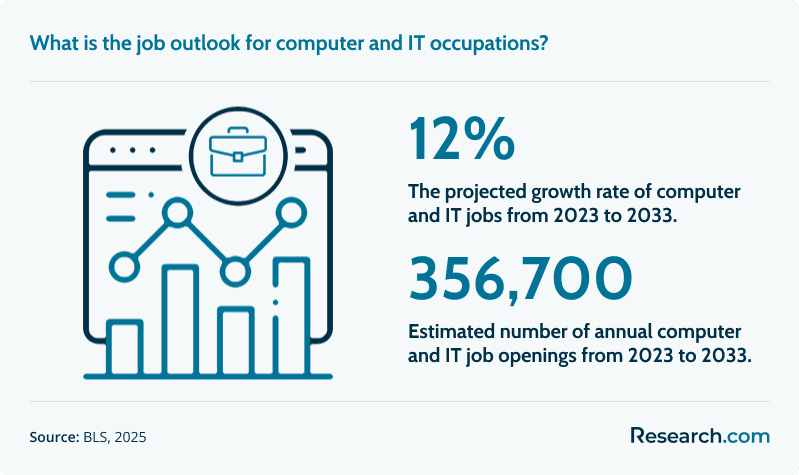
The job market for cloud computing graduates is tied to the broader demand for computer and information technology professionals. The U.S. Bureau of Labor Statistics projects 12% growth for computer and IT occupations over the next decade, with about 356,700 job openings each year. Cloud skills are relevant because organizations across industries rely on cloud infrastructure for applications, analytics, security, storage, collaboration, and AI-supported systems.
At the same time, students should avoid assuming that demand makes the job search effortless. Employers still evaluate experience, certifications, portfolios, communication skills, and the ability to solve real problems. A degree can help you compete, but practical evidence of skill is increasingly important.
Current trends affecting cloud computing students
- AI is increasing cloud infrastructure needs. AI and machine learning workloads depend on scalable compute, storage, networking, and security.
- Skills gaps remain a business concern. IDC reported that IT skills shortages are expected to affect nine out of ten organizations by 2026, with a cost of $5.5 trillion in delays, quality issues, and revenue loss.
- Cloud spending continues to expand. Synergy Research Group reported that the cloud market jumped to $330 billion in 2024, with GenAI driving half of the growth.
- Employers expect hands-on ability. Graduates need projects, labs, certifications, and troubleshooting experience, not just completed coursework.
- Security is becoming inseparable from cloud work. Cloud professionals must understand identity, access, monitoring, encryption, and risk management.
The AI effect: why cloud skills remain relevant
Artificial intelligence does not reduce the importance of cloud computing; it increases the need for reliable cloud infrastructure. AI systems require data pipelines, storage, compute capacity, security controls, monitoring, and scalable deployment environments. Cloud professionals who understand both infrastructure and automation are positioned to support the systems that make AI projects work.
The data below highlights the broader labor market and technology conditions shaping opportunities for cloud computing graduates.
Can cloud computing expertise boost advancements in health informatics?
Cloud computing can be highly relevant to health informatics because healthcare organizations manage large volumes of sensitive data, need secure interoperability, and increasingly rely on analytics to support clinical and operational decisions. Cloud-trained professionals can help design infrastructure for data storage, access control, reporting, telehealth systems, and real-time analytics while working within privacy and security expectations.
Students interested in the intersection of cloud, healthcare data, and information systems may also want to compare cloud programs with a fast online master’s in health informatics. The right choice depends on whether you want to specialize in cloud infrastructure, healthcare data systems, or both.
How can cloud computing transform healthcare administration?
Cloud computing can support healthcare administration by improving data access, interoperability, reporting, security, and workflow automation. Administrators can use cloud-based systems to coordinate records, analyze operational data, manage resources, and support more responsive decision-making. However, healthcare environments also require careful attention to privacy, vendor management, compliance, and secure access controls.
Professionals who want to combine technical infrastructure knowledge with administrative leadership may compare cloud computing education with an online healthcare administration degree. Cloud computing is more technical, while healthcare administration focuses more on operations, policy, finance, compliance, and organizational leadership.
Common mistakes to avoid when choosing an online cloud computing degree
| Mistake | Why it can hurt you | Better approach |
| Choosing a program without checking accreditation | Accreditation affects aid, transfer credit, employer recognition, and graduate school options. | Verify institutional accreditation before applying. |
| Looking only at tuition per credit | Fees, transfer credits, term length, and certification costs can change the real price. | Calculate estimated total cost to graduation. |
| Assuming every online program is flexible | Some online programs still have fixed deadlines, synchronous meetings, or limited course rotations. | Ask for a sample course schedule and weekly workload estimate. |
| Ignoring hands-on labs | Cloud employers want applied ability, not just theory. | Choose programs with cloud sandboxes, projects, and platform practice. |
| Overvaluing rankings | A highly ranked program may not be the best fit for your transfer credits, budget, or goals. | Use rankings as a starting point, then compare fit. |
| Assuming salary outcomes are guaranteed | Pay varies by role, experience, industry, location, and certifications. | Build a portfolio, gain experience, and use career services early. |
| Choosing a specialization too early | You may not know whether you prefer security, architecture, or DevOps until you complete core courses. | Pick a program that allows exploration before locking into a track. |
What graduates say about online cloud computing degree programs
- Kaelen: "Before enrolling, I was piecing together tutorials without understanding how everything connected. The degree gave me a full framework: networking, systems, security, and cloud architecture finally made sense together. After graduation, I moved into a cloud support position and felt like I had a real professional direction."
- Elara: "I did not want to learn one tool and then worry it would become outdated. The program helped me understand the principles underneath cloud platforms, and the online labs let me practice those ideas with AWS and Azure. Now new tools feel less intimidating because I understand the concepts behind them."
- Dion: "I had years of IT experience, but I wanted the credential and theory to match what I had learned on the job. The degree filled gaps I did not realize I had and gave structure to my experience. In technical meetings, I can now connect practice with architecture and strategy more confidently."
Key Insights
- Accreditation comes first. Do not compare costs, rankings, or course lists until you confirm the school is properly accredited.
- A cloud degree is broader than a bootcamp. Bootcamps can teach specific tools quickly, but a bachelor’s program builds the systems, security, networking, and architecture knowledge needed for long-term mobility.
- Transfer credit can change everything. The fastest or cheapest program on paper may not be your best option if another school accepts more of your previous credits or certifications.
- Hands-on labs are essential. Cloud computing is an applied field; look for programs with AWS, Azure, virtual labs, automation projects, and portfolio-building assignments.
- Certification alignment adds value. Programs that prepare students for AWS, Azure, CompTIA, Google Cloud, Cisco, or related credentials can make graduates more competitive.
- Cloud security and DevOps are strong specialization choices. They align with employer needs for secure, automated, scalable infrastructure.
- AI is increasing the importance of cloud infrastructure. AI systems depend on the compute, storage, security, and deployment environments that cloud professionals help build and maintain.
- Cost should be evaluated as total cost to graduation. Include tuition, fees, certification exams, transfer credit value, financial aid, and the number of terms you expect to study.
- A degree does not guarantee a job or salary. The strongest candidates combine the degree with certifications, projects, internships or work experience, and clear communication skills.
References:
- Bureau of Labor Statistics. (2024). Field of degree: Computer and information technology. U.S. Department of Labor. Retrieved July 24, 2025, from BLS.
- Bureau of Labor Statistics. (2025a). 15-1299 Computer occupations, all other. Occupational employment and wage statistics (OEWS) profiles. Retrieved July 24, 2025, from BLS.
- Bureau of Labor Statistics. (2025b). Computer and information technology occupations. U.S. Department of Labor. Retrieved July 24, 2025, from BLS.
- Bureau of Labor Statistics. (2025c). Computer programmers. U.S. Department of Labor. Retrieved July 24, 2025, from BLS.
- IDC. (2024). IT skills shortage expected to impact nine out of ten organizations by 2026 with a cost of $5.5 trillion in delays, quality issues and revenue loss, according to IDC. Retrieved July 24, 2025, from IDC.
- National Center for Education Statistics. (2024). Undergraduate degree fields. U.S. Department of Education, Institute of Education Sciences. Retrieved July 24, 2025, from NCES.
- Skillsoft. (2024). 2024-25 IT skills & salary report. Retrieved July 24, 2025, from Skillsoft.
- Synergy Research Group. (2025). Cloud market jumped to $330 billion in 2024 – GenAI is now driving half of the growth. Retrieved July 24, 2025, from Synergy.
- World Economic Forum. (2025). Future of jobs report 2025: Insight report. Retrieved July 24, 2025, from WEF.
- Zippia. (2025). Solutions architect education requirements. Retrieved July 24, 2025, from Zippia.
Other Things You Should Know About Online Cloud Computing Degree Programs
Most programs expect college algebra or equivalent preparation before enrollment. Some require one statistics course or a minimum placement score. Students without that background may need a prerequisite class before starting core cloud computing, networking, and systems courses.
Applicants should possess skills in cloud platforms like AWS or Azure, virtualization technologies, and network security. Proficiency in programming languages such as Python or Java is essential. These skills ensure readiness for advanced coursework in cloud systems.
In 2027, many top online cloud computing degree programs offer industry-aligned certifications such as AWS Certified Solutions Architect, Microsoft Certified: Azure Administrator Associate, and Google Cloud Professional Cloud Architect. These certifications enhance graduates' credentials, aligning education with industry standards and increasing employability in the competitive cloud computing field.


