
2027 Best Full-Stack Web Development Coding Bootcamps

Co-Founder and Chief Data Scientist
A full-stack web development coding bootcamp is a short, intensive training program for people who want to build complete web applications without spending years in a traditional degree program. The decision is not as simple as choosing the fastest or cheapest option. You need to compare curriculum depth, schedule, career support, financing terms, portfolio requirements, and whether the program fits your current experience level.
This guide is for career changers, working professionals, recent graduates, and self-taught learners comparing full-stack bootcamps. It explains what these programs teach, what they cost, how long they take, which career paths they may support, and how to evaluate whether a bootcamp is a practical investment for your goals.
Quick answer: Is a full-stack web development coding bootcamp worth considering?
A full-stack web development coding bootcamp can be worth considering if you want structured, project-based training in front-end and back-end development and are prepared for an intense learning schedule. These programs are often faster than degree programs and may help learners build portfolios for entry-level developer roles. However, outcomes are not guaranteed. Your results will depend on your prior preparation, portfolio quality, interview readiness, local or remote job market conditions, and the strength of the bootcamp’s career support.
What are the main benefits of completing a full-stack web development coding bootcamp?
- Broad technical preparation: Full-stack training can prepare learners for roles such as Full-Stack Developer, Front-End Developer, Back-End Developer, Junior Developer, Web Application Developer, and Software Engineer, depending on employer expectations and the graduate’s portfolio.
- Potential for competitive earnings: Professionals with full-stack development skills are often associated with salaries around $100,000 per year, while experienced developers in major technology markets may earn more. Individual salary outcomes vary by location, industry, technical stack, experience, and negotiation.
- Flexible learning formats: Online bootcamps can make training more accessible for students balancing work, caregiving, or relocation constraints. Some programs also offer part-time schedules, self-paced coursework, or hybrid learning.
- Portfolio-focused training: Many bootcamps emphasize practical projects, which can be more useful in a job search than coursework alone if the projects are well documented and deployed.
What can I expect from a full-stack web development coding bootcamp?
A full-stack web development coding bootcamp is designed to teach the technologies used to build both the visible parts of a website and the systems that run behind it. The front end includes page structure, layout, user interaction, and responsive design. The back end includes server-side logic, databases, APIs, authentication, and deployment.
Common technologies include HTML, CSS, JavaScript, Python, SQL, React, Node.js, and Django, though the exact stack varies by provider. Most programs combine lectures, coding exercises, labs, team projects, capstone projects, code reviews, and career preparation. The strongest bootcamps help students understand not only how to write code, but also how to debug, collaborate with version control, explain technical decisions, and maintain applications after deployment.
| Bootcamp component | What it usually includes | Why it matters for job readiness |
| Front-end development | HTML, CSS, JavaScript, responsive design, accessibility basics, and frameworks such as React, Angular, or Vue.js | Employers expect junior developers to build user interfaces that work across devices and browsers. |
| Back-end development | Server-side programming, APIs, databases, authentication, and deployment | Full-stack roles require understanding how data moves between the client, server, and database. |
| Version control and collaboration | Git, GitHub workflows, pull requests, and team coding practices | Most professional development teams rely on collaborative workflows, not isolated coding. |
| Projects and portfolio | Individual apps, group projects, capstones, and deployed web applications | A portfolio gives employers evidence of practical ability beyond a certificate. |
| Career support | Resume help, interview practice, networking, job search coaching, and employer events | Technical skill alone is rarely enough; candidates must also communicate and interview well. |
Where can I work after completing a full-stack web development coding bootcamp?
Bootcamp graduates may find opportunities in technology companies, startups, financial services, healthcare organizations, e-commerce businesses, education technology companies, media firms, government agencies, and nonprofits. Any organization that maintains customer portals, internal dashboards, web applications, online stores, or data-driven platforms may need web development talent.
Some graduates pursue remote work or freelance projects, especially after building a portfolio and client-facing communication skills. Others start in junior developer, support engineering, QA-adjacent, or web production roles before moving into more complex software development work. The best first role is not always the most glamorous one; it is often the role that gives you production experience, code review exposure, and mentorship.
How much can I make after completing a full-stack web development coding bootcamp?
Salary expectations should be realistic. Full-stack web development coding bootcamp graduates commonly target entry-level full-stack developer roles paying around $65,000 to $85,000 per year. With several years of experience, developers may reach $100,000 or more, depending on their market, employer, technical specialization, and performance.
Developers in major technology markets such as San Francisco, New York, or Seattle can earn upwards of $120,000 per year. Senior full-stack developers and developers with specialized high-demand framework experience can make $150,000 or more. Freelance developers may charge $50 to $100 per hour, although freelance income depends heavily on client acquisition, project scope, reputation, and business management skills.
- Best Full-Stack Web Development Coding Bootcamps for 2027
- How long does a full-stack web development coding bootcamp take?
- Online vs. on-campus full-stack coding bootcamps
- Average cost of a full-stack web development coding bootcamp
- Financial aid and payment options for coding bootcamp students
- Prerequisites for full-stack web development bootcamps
- Typical courses in a full-stack web development coding bootcamp
- Full-stack bootcamp specializations and technical tracks
- How to choose the best full-stack web development coding bootcamp
- Common challenges during a full-stack bootcamp
- Career paths for full-stack coding bootcamp graduates
- Job market for full-stack web development bootcamp graduates
- How to prepare for technical interviews after a bootcamp
- Further education options for full-stack developers
- How cybersecurity skills can strengthen a full-stack career
- How AI skills can support full-stack development work
- How to build a portfolio employers can evaluate
- Whether an advanced degree makes sense after a bootcamp
- How interdisciplinary fields can expand full-stack career options
Best Full-Stack Web Development Coding Bootcamps for 2027
How do we rank programs?
Choosing a full-stack web development coding bootcamp is a financial, time, and career decision. Research.com evaluates bootcamp options to help readers compare programs using structured information rather than marketing claims alone.
It is also important to understand accreditation. University-affiliated bootcamps are not always the same as accredited university degree programs. A bootcamp may use a university brand or campus partner while operating separately from the institution’s accredited academic programs. Before enrolling, review the syllabus, payment terms, refund policy, student support, career services, and outcomes reporting directly with the provider.
4Geeks Academy
4Geeks Academy offers a Full-Stack Developer Bootcamp built around practical coding and project-based learning. The program may suit beginners and learners with some previous coding exposure who want a structured path into web development. Delivery options include online and in-person formats.
- Duration: 18 weeks
- Cost: $2,000
- Format: Online, In-person
Arkansas Coding Academy
Arkansas Coding Academy provides a Full-Stack Web Development program focused on preparing learners for developer roles, particularly within the Arkansas technology market. The curriculum emphasizes modern web technologies and an immersive learning structure.
- Duration: 24 weeks
- Cost: $5,250
- Format: Online
Bethel Tech
Bethel Tech offers a Full-Stack Web Development program that combines technical instruction with professional development and a faith-integrated learning environment. The program may appeal to students who want both coding preparation and values-based career training.
- Duration: 39 weeks
- Cost: $515 per credit (36 credits)
- Format: Online and In-person
Bloom Institute of Technology (BloomTech)
BloomTech offers a Full-Stack Web Development program designed for learners pursuing a career transition into software development. The program uses a structured online format with projects, mentorship, and career readiness support.
- Duration: 24 weeks
- Cost: $13,500
- Format: Online
BrainStation
BrainStation provides a Full-Stack Web Development Diploma program covering core development concepts and applied technical skills. The program is available through online and in-person formats and includes career-oriented support and industry-focused learning.
- Duration: 12 weeks
- Cost: $166,500
- Format: Online, In-person
The chart below illustrates how developer earnings may change after completing a coding bootcamp. Use it as context, not a guarantee. Salary growth depends on local demand, skill level, portfolio quality, networking, and job search execution.
How long does it take to complete a Full-Stack Web Development Coding Bootcamp?
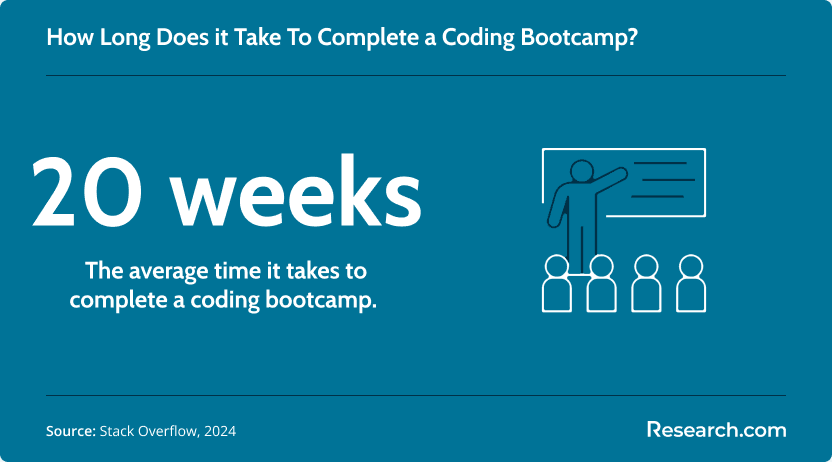
On average, it takes around 20 weeks to complete the best coding bootcamps. Full-stack programs vary because providers structure their schedules differently and because “full-stack” can mean a narrow JavaScript stack in one program and a broader multi-language curriculum in another.
| Program type | Typical pace | Best for | Trade-off |
| Full-time immersive | Often 8 to 16 weeks | Learners who can pause work or reduce outside commitments | Fast completion, but the workload can be demanding and difficult to combine with a full-time job. |
| Part-time bootcamp | Several months, sometimes up to 6 months or more | Working adults, parents, and learners who need evening or weekend study | More manageable schedule, but slower transition into the job market. |
| Self-paced program | Depends on learner progress | Disciplined students who can plan study time independently | Flexible, but easier to fall behind without deadlines and accountability. |
| Specialized or advanced bootcamp | Varies by curriculum | Learners targeting a specific stack, framework, or career niche | Can build deeper skills, but may be less suitable for complete beginners. |
- Program format matters: Full-time options are usually shorter and more intense, while part-time formats spread the workload over a longer period.
- Curriculum depth changes the timeline: Programs that include multiple frameworks, databases, deployment, testing, and career preparation generally require more time.
- Your starting point affects completion: Learners with prior HTML, CSS, JavaScript, or command-line experience may move through material more comfortably.
- Provider structure varies: Each bootcamp sets its own pacing, project requirements, attendance expectations, and graduation criteria.
How does an online Full-Stack Web Development Coding Bootcamp compare to an on-campus program?
Online and on-campus bootcamps can teach similar technical content, but the learning experience is different. The right choice depends on your schedule, learning style, access to local employers, and need for in-person accountability.
| Factor | Online bootcamp | On-campus bootcamp |
| Schedule flexibility | Often better for working learners or students outside major metro areas | Usually requires commuting and fixed class times |
| Learning environment | Requires self-discipline, reliable internet, and comfort asking for help remotely | Provides in-person structure, face-to-face collaboration, and immediate classroom interaction |
| Networking | May include virtual events, online communities, and remote employer connections | Can offer local networking, campus events, and regional employer access |
| Cost considerations | May reduce relocation and commuting costs | May involve transportation, housing, or local cost-of-living expenses |
| Best fit | Independent learners, career changers with schedule constraints, and remote job seekers | Learners who benefit from in-person accountability and local tech communities |
Before choosing, ask whether live instruction is included, how often mentors respond, whether classes are recorded, how group projects are managed, and whether career services support remote or local job searches.
What is the average cost of a Full-Stack Web Development Coding Bootcamp?
There is no single standard price for a full-stack web development coding bootcamp. Full-time immersive programs typically range from $5,000 to $20,000, while many others fall within the $10,000 to $15,000 range. Published tuition is only one part of the total cost, so compare the full financial commitment before enrolling.
| Cost factor | Why it affects price | Question to ask before enrolling |
| Location | In-person programs in major cities may have higher operating costs and may require commuting or relocation. | Will I need to pay for transportation, housing, parking, or a temporary move? |
| Program length | Longer programs may include more instruction, projects, and support. | What exactly is included in the tuition? |
| Curriculum scope | Programs that teach more technologies, deployment, testing, or specializations may cost more. | Does the curriculum match the roles I want? |
| Career services | More extensive job search coaching, employer partnerships, and interview preparation can increase price. | How long can I use career services after graduation? |
| Financing method | Loans, deferred tuition, and ISAs can change the final amount paid. | What is the total repayment amount under each option? |
- Location: Campus-based programs in expensive metro areas may cost more overall once living and commuting expenses are included.
- Length and intensity: More hours of instruction, labs, and mentorship can increase tuition.
- Curriculum depth: Programs with advanced frameworks, cloud deployment, testing, or specialization tracks may charge more.
- Reputation and support: Bootcamps with established employer networks and career teams may price programs higher.
- Online vs. campus delivery: Online programs may be more cost effective, but only if they provide enough live support and accountability for your learning style.
- Payment structure: Financing, scholarships, deferred tuition, and income share agreements can affect your final cost.
What are the financial aid options for students enrolling in a Full-Stack Web Development Coding Bootcamp?
Paying for a coding bootcamp can be one of the biggest barriers for prospective students. Reports show that 31% of coding bootcamp graduates secure jobs within three months, but a certificate alone does not guarantee employment or repayment ability. Review all payment options carefully and compare the total cost, not just the monthly payment.
Students may be able to use several financial aid options, depending on the provider, location, and eligibility requirements.
| Funding option | How it works | What to review carefully |
| Private loans | Borrowers use a lender that funds career training or bootcamp tuition. | Interest rate, repayment timeline, fees, deferment options, and whether payments begin before employment. |
| Income Share Agreements (ISAs) | Students pay a percentage of income after meeting certain employment or income conditions. | Payment cap, income threshold, repayment period, covered jobs, and what happens if your income changes. |
| Scholarships | Bootcamps or outside organizations may reduce tuition based on merit, need, background, or career goals. | Eligibility rules, deadlines, whether funds are guaranteed, and whether awards reduce financing balances. |
| Workforce funding | Some students may qualify for Workforce Innovation and Opportunity Act (WIOA) support. | Local eligibility rules and whether the chosen bootcamp is approved for funding. |
| Veteran benefits | Eligible veterans may use GI Bill benefits or the VET TEC program for approved training. | Program approval status, benefit limits, and any out-of-pocket costs. |
- Loans: Some private lenders offer financing for non-degree career training. Compare terms across lenders before signing.
- Income Share Agreements: ISAs can reduce upfront costs, but high earners may pay more than the listed tuition if the agreement allows it.
- Scholarships: Providers may offer awards based on financial need, academic background, career goals, or diversity initiatives.
- Workforce Funding: Local workforce agencies may help eligible students pay for approved job training through WIOA-related support.
- Veteran Benefits: Eligible veterans should verify whether GI Bill or VET TEC benefits can be used for a specific bootcamp before enrolling.
The following chart shows how long coding bootcamp graduates may take to secure employment. Use it to set job search expectations and plan savings, networking, and interview preparation before graduation.
What are the prerequisites for enrolling in a Full-Stack Web Development Coding Bootcamp?
In 2023, there were 222,600 web developers in the U.S. workforce. Bootcamps vary in selectivity, but most expect students to arrive with basic technical readiness and the ability to learn quickly. Even beginner-friendly programs may move too fast for students who have never written code or used development tools.
- Basic coding familiarity: Many programs recommend introductory experience with HTML, CSS, and JavaScript before the first day. Free resources such as Codecademy, freeCodeCamp, and Khan Academy can help you build a foundation.
- Pre-work completion: Some bootcamps assign required prep modules to make sure students understand core concepts before live instruction begins.
- Command-line comfort: Basic command-line skills help students navigate files, install tools, and use development workflows.
- Problem-solving habits: Logical thinking, debugging patience, and comfort breaking large problems into small steps are essential in an intensive program.
- Time availability: A bootcamp is difficult to complete passively. Students need scheduled study blocks for lectures, exercises, projects, and review.
What courses are typically in a Full-Stack Web Development Coding Bootcamp?
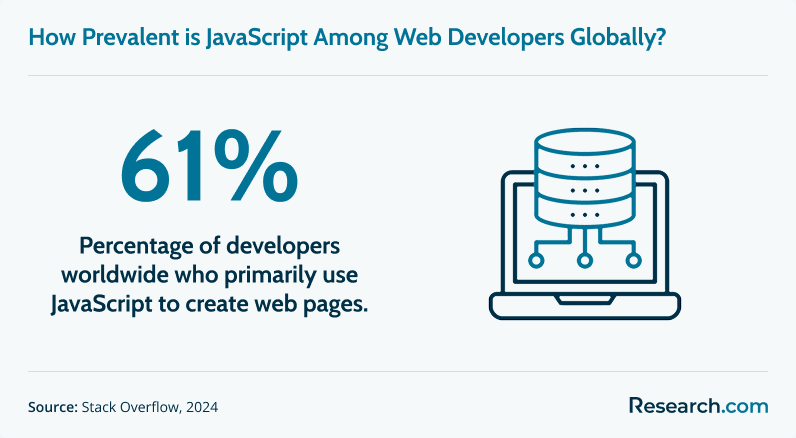
Full-stack web development coding bootcamps aim to provide a comprehensive skillset by combining client-side and server-side development. As of 2024, 61% of all developers worldwide use JavaScript to create web pages, which is why JavaScript is central to many bootcamp curricula.
Although each bootcamp has its own technology stack, most programs include the following subjects.
Front-End Development
- HTML: The markup language used to structure web content.
- CSS: The styling language used to control layout, spacing, typography, color, and responsive design.
- JavaScript: The programming language used to create interactive browser-based functionality.
- Front-end frameworks: Libraries or frameworks such as React, Angular, or Vue.js that help developers build more complex user interfaces efficiently.
If your main goal is client-side development, you may want to compare full-stack programs with top coding bootcamps for front end development to see whether a more focused program would be a better fit.
Back-End Development
- Server-side languages: Technologies such as Node.js, Python, Ruby, or Java used to create application logic outside the browser.
- Databases: Training in SQL databases, NoSQL databases, data modeling, querying, and database integration.
- APIs: Instruction on building, consuming, testing, and documenting application programming interfaces.
- Deployment and server basics: Practice preparing applications for hosting and production environments.
Students who want deeper preparation in data storage, database architecture, and information systems may also compare bootcamp training with the best database management bachelor's degrees.
What types of specializations are available in Full-Stack Web Development Coding Bootcamps ?
Many full-stack bootcamps teach a general web development foundation, while some 6-month certificate programs that pay well include specialized tracks or stack-specific training. A specialization can be helpful if you already know what type of work you want, but it may be limiting if you still need broad exposure.
| Specialization | What it emphasizes | When it may make sense |
| MERN or MEAN stack | MongoDB, Express.js, React or Angular, and Node.js | You want a JavaScript-heavy path into web application development. |
| Python/Django or Ruby on Rails | Back-end web frameworks and server-side application development | You are targeting employers or projects that use these frameworks. |
| E-commerce development | Online stores, payment integrations, product catalogs, and platform workflows | You want to build retail, marketplace, or small-business web applications. |
| Data-focused web applications | Data visualization, API integrations, and database-driven products | You are interested in analytics-heavy products or dashboards. |
| Mobile-first development | Responsive design and mobile-optimized user experiences | You want to build applications where mobile usability is central. |
| Cloud deployment | AWS, Azure, hosting, deployment pipelines, and production environments | You want stronger preparation for real-world deployment and operations workflows. |
| Security-aware development | Secure coding habits and common web application risks | You want to build safer applications and reduce preventable vulnerabilities. |
- Specific technology stacks: Some programs concentrate on MERN, MEAN, Python/Django, or Ruby on Rails to give students deeper practice with one development ecosystem.
- JavaScript-centered training: Because JavaScript is widely used, some bootcamps focus heavily on advanced JavaScript, React, and Node.js.
- E-commerce development: These tracks may cover shopping carts, payment gateways, product databases, and integrations with e-commerce platforms.
- Data science integration: Some programs introduce data visualization, API work, and database skills for data-driven applications. Learners who want deeper analytical training may compare these options with top-rated data science bootcamps.
- Mobile-first development: These programs emphasize responsive layouts, accessibility, and usability across smaller screens.
- Cloud computing: Some bootcamps introduce deployment and cloud tools such as AWS or Azure.
- Cybersecurity awareness: Security modules may cover safer coding practices, authentication, and common vulnerabilities. Learners seeking a security-focused path can explore cyber security certifications online.
How does one choose the best Full-Stack Web Development Coding Bootcamp?
The best bootcamp is not necessarily the one with the most recognizable brand or the shortest completion time. It is the program that matches your target role, schedule, budget, learning style, and support needs. Compare bootcamps alongside other online certifications if you are deciding between short-term career training options.
| Selection factor | What to verify | Red flag |
| Curriculum | Technologies taught, project requirements, deployment practice, testing, and portfolio expectations | Vague course descriptions or no clear project outcomes |
| Instructor and mentor support | Instructor background, office hours, code review process, and response times | Heavy reliance on prerecorded material with limited feedback |
| Career services | Resume help, mock interviews, employer introductions, job search support, and alumni access | Placement claims without transparent methodology |
| Student outcomes | Graduation rates, job search timelines, salary reporting methods, and eligible job definitions | Guaranteed employment language or unclear reporting |
| Cost and contract terms | Total tuition, fees, refund policy, financing cost, ISA caps, and repayment triggers | Pressure to sign before you understand the repayment terms |
| Learning format | Live classes, asynchronous work, group projects, attendance rules, and support hours | A schedule that conflicts with your work or family obligations |
Before enrolling, attend an information session, ask to review the syllabus, speak with alumni if possible, and compare at least three programs. Ask what happens if you fall behind, whether you can pause enrollment, how projects are graded, and how long career services remain available after graduation.
What challenges should I anticipate during a full-stack bootcamp experience?
Full-stack bootcamps can be challenging because students are learning multiple layers of application development at the same time. You may need to absorb new syntax, debugging workflows, database concepts, API patterns, and deployment steps within a compressed timeline. The pace can be especially difficult for learners who are also working full time or managing family responsibilities.
Common obstacles include falling behind on assignments, underestimating the time needed for projects, struggling to ask for help, comparing yourself to classmates, and neglecting career preparation until the final weeks. Build a weekly study plan before the program starts, schedule review time after each lesson, and use instructor feedback early. If you have a specific interest area, such as interactive applications or gaming, selective coursework from an online college for game design may help you connect web development skills to a niche portfolio direction.
What career paths are available for graduates of Full-Stack Web Development Coding Bootcamps?
One survey found that most bootcampers’ salaries increased after graduation, with the most common increase range being between $10,000 and $20,000 per year. Full-stack training can support several computer coding jobs, but job titles vary widely by employer. Some companies use “software engineer” for roles that include full-stack work, while others reserve that title for candidates with more experience or computer science backgrounds.
| Career path | Main responsibilities | Good fit for |
| Full-Stack Web Developer | Builds and maintains both front-end interfaces and back-end systems | Learners who enjoy working across the full application lifecycle |
| Front-End Developer | Creates user interfaces, implements designs, and improves browser-based user experiences | Students who prefer visual problem-solving and client-side interactivity |
| Back-End Developer | Develops APIs, database logic, authentication, and server-side application behavior | Learners who enjoy data flow, systems logic, and application architecture |
| Software Engineer | Designs, develops, tests, and maintains software applications | Graduates with strong projects, fundamentals, and problem-solving ability |
| Web Application Developer | Builds specialized web apps for business, e-commerce, social, or internal use cases | Students who want to build complete digital products |
| Junior Developer or Associate Developer | Contributes to codebases under senior supervision while building professional experience | Most bootcamp graduates seeking an entry point into development |
| Freelance Web Developer | Builds websites or applications for clients independently | Developers with client communication, scoping, pricing, and self-management skills |
Full-Stack Web Developer
- Works on both front-end and back-end features for websites and web applications.
- May handle interface development, API integration, database work, debugging, and deployment tasks.
Front-End Developer
- Focuses on the user-facing side of websites and applications.
- Uses HTML, CSS, JavaScript, and frameworks such as React or Angular.
Back-End Developer
- Builds the server-side logic, APIs, authentication systems, and database connections that support applications.
- Often works with Node.js, Python, Ruby, SQL, MongoDB, or related back-end technologies.
Software Engineer
- Bootcamp graduates may enter software engineering roles, especially at startups, smaller companies, or employers that emphasize demonstrated skills.
- Responsibilities can include designing, building, testing, documenting, and maintaining software systems.
Web Application Developer
- Builds web-based tools or platforms for business functions, e-commerce, social applications, internal operations, or customer-facing products.
Junior Developer/Associate Developer
- Entry-level roles where graduates can gain professional experience while learning from senior developers and participating in code reviews.
Freelance Web Developer
- Works independently with clients, which can provide flexibility but also requires business development, contracts, pricing, and client management.
For a broader look at programming-related occupations, review this computer programmer career guide.
The chart below shows commonly used programming languages among developers. These trends can help you prioritize skills, but do not choose a bootcamp based on popularity alone. Match the curriculum to your target roles and local or remote employer demand.
What is the job market for graduates of a Full-Stack Web Development Coding Bootcamp?
The job market for full-stack web development bootcamp graduates can be promising, but it is competitive. Employers may be open to non-degree candidates when they can demonstrate practical ability, but many entry-level applicants are competing for the same junior roles. A bootcamp certificate is rarely enough by itself.
Demand for developer skills
- Organizations across industries need websites, internal tools, customer platforms, and web applications.
- Businesses of different sizes, including startups and large companies, rely on development talent to build and maintain digital systems.
Value of full-stack versatility
- Full-stack developers can contribute to both client-side and server-side tasks, which can be valuable on smaller teams.
- A broad skill set can create more job options, but applicants still need enough depth to pass technical interviews and contribute to production code.
Expansion of digital products and services
- E-commerce, digital platforms, online services, and internal business applications continue to create demand for web development expertise.
- As organizations depend more heavily on online tools, developers who can build maintainable, secure, and user-friendly applications remain important.
To compete effectively, graduates should build a portfolio with deployed projects, practice explaining code decisions, prepare for technical and behavioral interviews, continue learning after graduation, and network with developers, recruiters, alumni, and local or online tech communities.
Here’s What Developers Have To Say About Coding Bootcamps
Choosing an online full-stack bootcamp gave me enough structure to keep progressing while I continued working. The schedule was manageable, and the projects helped me speak more confidently in interviews. After about six months, I was able to move into my first junior developer role. Mark
I was unsure whether online coding training would work for me, but the live sessions, practice exercises, and peer support made a difference. I now work with clients as a freelance web developer, and the portfolio I built during the program helped me get started. Sophia
I entered the bootcamp with no professional coding background. The structured lessons, mentoring, and repeated project work helped me understand how front-end and back-end pieces fit together. Online study also made it possible to learn without leaving my current responsibilities behind. Jason
How can I effectively prepare for technical interviews following a bootcamp?
Technical interview preparation should begin before graduation. Start by reviewing the technologies used in your portfolio projects and practicing how to explain trade-offs, bugs, database choices, API design, and deployment decisions. Employers often want to know how you think, not just whether your app works.
Practice coding challenges under time limits, but do not rely on challenge platforms alone. Also rehearse common behavioral questions, pair-programming scenarios, take-home project reviews, and whiteboard-style problem solving. Mock interviews with peers, mentors, alumni, or working developers can help you identify weak explanations and improve confidence. If you want to connect technical skills to a specialized field, a program such as a low cost nursing informatics online program may help you understand how software is applied in data-heavy healthcare environments.
What further educational opportunities can enhance my full-stack development career?
A bootcamp can launch your training, but continued education is often necessary because web development tools, frameworks, and employer expectations change. After graduation, consider targeted certifications, advanced framework courses, cloud training, testing and DevOps modules, security training, or academic coursework in computer science fundamentals.
Some professionals eventually choose a formal academic path to strengthen theory, algorithms, systems design, and long-term advancement prospects. A structured option such as a 2-year online computer science degree may complement bootcamp experience for learners who want broader academic preparation.
How can integrating cybersecurity practices fortify my full-stack development career?
Cybersecurity awareness is increasingly important for full-stack developers because web applications often handle accounts, payments, personal information, forms, and internal business data. Secure coding habits can reduce preventable risks and make your projects more credible to employers.
Focus on authentication, authorization, input validation, encryption basics, dependency management, secure API design, and vulnerability testing. Developers who want deeper security knowledge may consider formal study, including options such as the cheapest online master's in cyber security, especially if they want to move toward secure software development, application security, or security engineering roles.
Can integrating AI enhance my full-stack development career?
AI can strengthen a full-stack development career when it is used to solve real product problems rather than added as a buzzword. Full-stack developers may use AI-related tools for coding assistance, documentation, testing support, search features, chat interfaces, personalization, data analysis, or natural language processing features.
To make AI skills credible, build portfolio projects that clearly show how data is collected, processed, protected, and used. Explain what the AI feature does, what its limitations are, and how it improves the application. Learners who want a more formal foundation can compare options such as the cheapest degree in artificial intelligence with shorter AI-focused certificates or project-based courses.
How can I build a standout portfolio that impresses employers?
A strong portfolio should show that you can build, explain, deploy, and maintain working applications. Employers need evidence that you can move beyond tutorials, make technical decisions, debug problems, and communicate clearly about your work.
| Portfolio element | What to include | Why employers care |
| Deployed projects | Live links to applications, not only screenshots | Shows that you can move code into a usable environment. |
| Readable code repositories | Clean file organization, meaningful commit history, and clear README files | Helps reviewers assess your development habits. |
| Full-stack functionality | Authentication, database use, API calls, forms, state management, and error handling | Demonstrates practical experience across the application stack. |
| Project explanations | Problem statement, user goals, tools used, trade-offs, and future improvements | Shows that you understand product thinking and technical decision-making. |
| Original work | Personal projects, open-source contributions, or customized capstones | Separates you from candidates whose portfolios look like standard tutorials. |
Choose projects that connect to real business or user problems. For example, dashboards, booking tools, e-commerce prototypes, workflow apps, data visualizations, or industry-specific tools can be more persuasive than simple clones. If you are interested in healthcare technology, resources on careers for masters in health informatics may help you identify domain-specific project ideas.
Should I pursue an advanced degree to complement my bootcamp experience?
An advanced degree is not required for every full-stack development career, but it can be useful for specific goals. Consider graduate study if you want to move into data science, machine learning, technical leadership, research-oriented roles, or positions where employers prefer formal academic credentials.
A degree may also help strengthen theory, statistics, algorithms, systems thinking, and analytical reasoning that bootcamps may cover only briefly. For learners who want to combine software development with data analytics, a program such as the cheapest online master in data science may be worth comparing with shorter certificates, employer-sponsored training, or self-study.
Can exploring interdisciplinary fields like biotechnology boost my full-stack development career?
Interdisciplinary knowledge can help full-stack developers stand out when they apply technical skills to specialized industries. Fields such as biotechnology, digital health, bioinformatics, finance, education, and logistics often need developers who understand both software and domain-specific workflows.
Biotechnology-related software work may involve data systems, research tools, regulated workflows, laboratory platforms, or healthcare-adjacent applications. Developers who understand domain terminology and constraints may be better prepared to build useful products for specialized teams. If this direction interests you, explore how software skills may connect with masters of biotechnology jobs.
Common mistakes to avoid when choosing a full-stack coding bootcamp
- Choosing only by price: Low tuition is attractive, but weak instruction, limited projects, or poor support can reduce value.
- Ignoring financing terms: Loans, deferred tuition, and ISAs can create obligations that last well beyond graduation.
- Assuming a certificate guarantees a job: Employers evaluate skills, projects, communication, and interview performance.
- Skipping prerequisites: Entering without basic HTML, CSS, JavaScript, or command-line comfort can make the first weeks overwhelming.
- Relying only on rankings: Rankings can help you discover programs, but they cannot tell you whether a bootcamp fits your schedule, learning style, or local job market.
- Not checking career support details: Ask what support is included, how long it lasts, and whether the bootcamp has employer relationships relevant to your goals.
- Building generic projects: Tutorial clones rarely stand out. Customize projects and explain the problem each one solves.
Questions to ask before enrolling
- What technologies are taught, and how often is the curriculum updated?
- How many deployed full-stack projects will I complete?
- Will I receive code reviews from instructors or mentors?
- What happens if I fall behind or need to pause the program?
- What are the total costs, including fees, financing, and repayment obligations?
- How are job placement statistics calculated?
- Which employers have hired recent graduates?
- Does career support continue after graduation?
- Can I speak with alumni who had a similar background to mine?
- Does the program prepare students for technical interviews, behavioral interviews, and portfolio reviews?
Key Insights
- Full-stack bootcamps can be a practical path into web development, but they work best for students who prepare before enrolling and commit to building a serious portfolio.
- On average, it takes around 20 weeks to complete coding bootcamps, though full-time, part-time, and self-paced formats differ significantly.
- Full-time immersive coding bootcamps typically range from $5,000 to $20,000, with many programs falling within the $10,000 to $15,000 range.
- Reports show that 31% of coding bootcamp graduates secure jobs within three months, but employment outcomes depend on market conditions, portfolio quality, networking, and interview performance.
- In 2023, there were 222,600 web developers in the U.S. workforce, and bootcamp graduates enter a field where practical skills and continuous learning matter.
- JavaScript remains a core web development skill, with 61% of all developers worldwide using it to create web pages as of 2024.
- One survey found that most bootcampers’ salaries increased after graduation, with the most common increase range being between $10,000 and $20,000 per year.
- The best bootcamp is the one that fits your target role, schedule, budget, support needs, and learning style—not simply the one with the shortest timeline or boldest placement claim.
References
- Bureau of Labor Statistics. (2025). Occupational employment and wages, computer programmers.
- Bureau of Labor Statistics. (2025). Web developers.
- Course Report. (2024). November 2024 coding bootcamp news.
- JetBrains. (2024). Developer ecosystem 2024.
- Stack Overflow. (2024). Stack Overflow developer survey 2024.
- Stack Overflow Blog. (2025). Developers want more, more, more: The 2024 results from Stack Overflow’s annual developer survey.
- Technical.ly. (2024). Are coding bootcamps worth it in 2024?
Other Things You Should Know About the Best Full-Stack Web Development Coding Bootcamps
The top full-stack web development coding bootcamps in 2027 include Springboard, App Academy, and Le Wagon. They offer immersive curricula, industry-relevant projects, and strong job placement support to equip students with the skills needed to become proficient full-stack developers.
In 2027, admission requirements for full-stack web development bootcamps typically include basic programming knowledge, a completed application form, and often an interview or assessment. Some bootcamps may also require a portfolio showcasing coding projects or proof of coding proficiency through online courses or certifications.


